Roadmachine
vsRoubaix
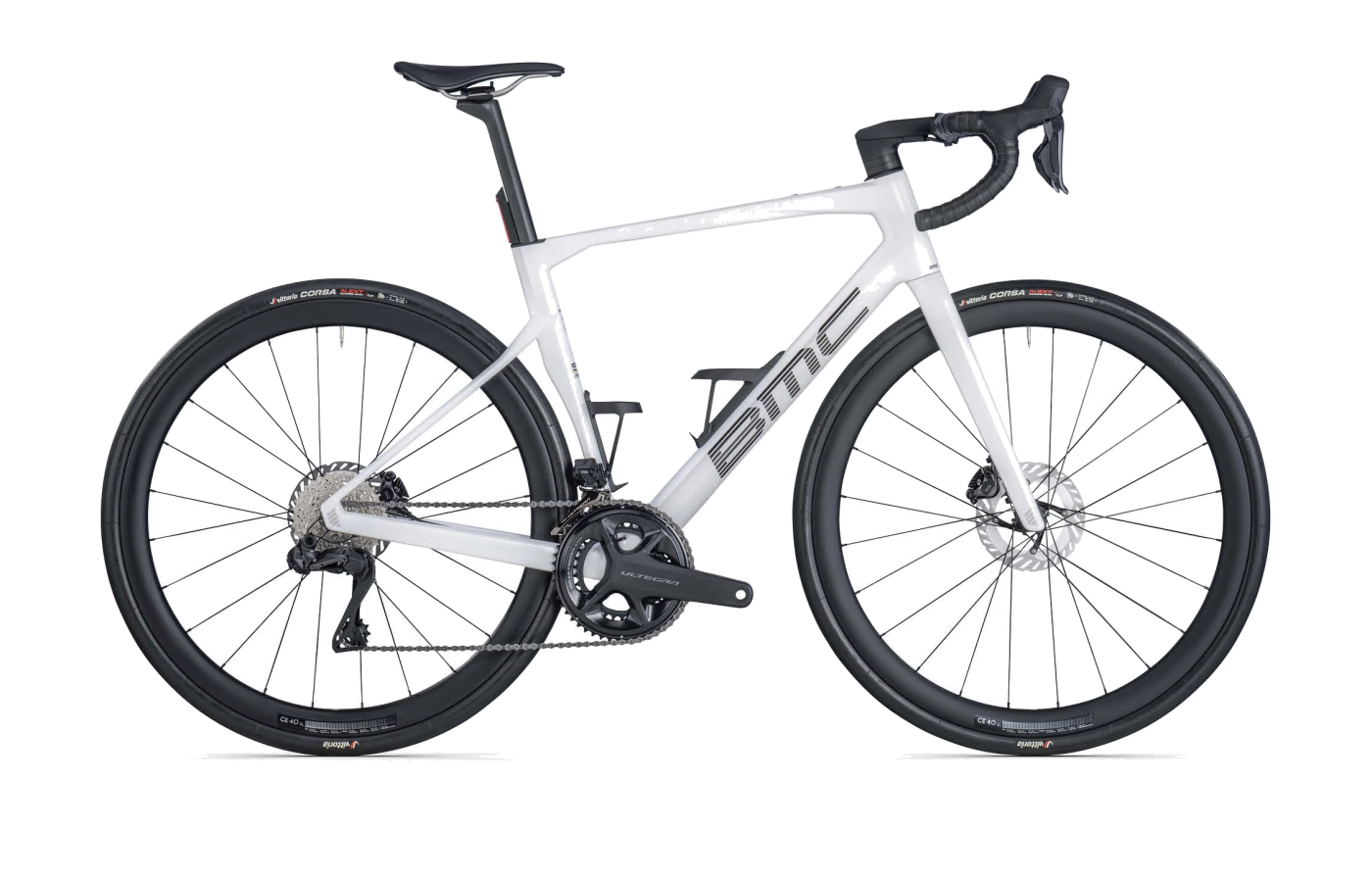
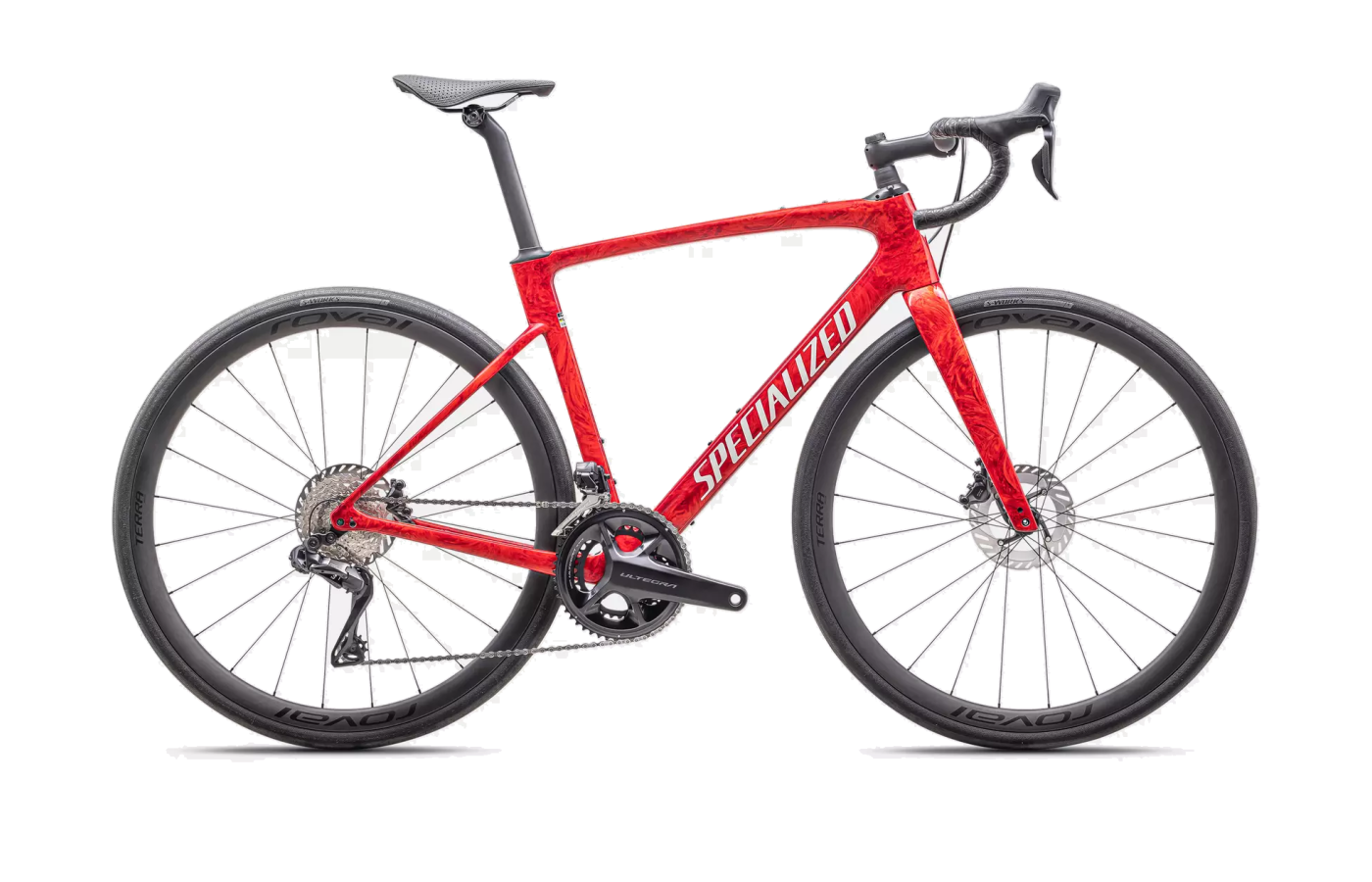
Two endurance bikes, two ways to absorb the road.
The Roadmachine engineers comfort into the carbon itself. The Roubaix bolts a 20 mm spring above the headtube and lets the rider tune it.
Roadmachine
- Race-bike feel without the punishment — short 415 mm chainstays and stiff BB give it the urgency the Roubaix lacks.
- Cleanest integration in the segment — internal downtube storage, integrated rear light, ICS cockpit, no exposed boot.
- Compliance with no moving parts — ~20 mm of seatpost deflection from frame architecture alone, nothing to service.
- Premium 01 frames carry an immense price for the weight (claimed 963 g, size 54).
- ICS cockpit ships in one bar width per frame size — fit customization needs a dealer swap.
Roubaix
- Future Shock isolation is genuine — 20 mm of axial travel kills hand and wrist fatigue on rough roads in a way no frame compliance can match.
- Cheapest entry into the platform — $2,799 base build with Tiagra vs $3,299 for the lowest 105 Roadmachine.
- Threaded BB and long service support — Specialized commits to 5 years of Future Shock parts after a model is discontinued.
- Tall front end (585 mm stack at size 54, plus 15 mm of Hover-bar rise) feels sky-high to riders coming off race geometry.
- Mid-tier Expert build still ships SRAM Rival at a price where competitors offer Force AXS or Ultegra Di2.
Editor’s analysis
Both promise long-day comfort with 40 mm tire room — but they get there via opposite philosophies, and the feel on the road is wildly different.
On paper these two read as siblings: modern endurance carbon, 40 mm tire clearance (38 mm officially on the Roubaix, 36–40 mm on the Roadmachine depending on source), threaded BB, integrated downtube storage on both, mounts for fenders and a third bottle. Both top out around $13,000 with a Dura-Ace flagship; both reach down to a sub-$3,500 105 build. Spec-sheet shoppers will find them hard to separate.
Spend a ride on each, though, and the philosophies diverge fast. The Specialized Roubaix isolates you with a Future Shock 3.0 cartridge — 20 mm of axial travel above the headtube — plus an AfterShock D-shaped Pavé seatpost claimed to flex 18 mm. Reviewers describe it as a magic-carpet ride: front wheel "vacuumed to the asphalt" on rough descents, almost zero vibration reaching the hands. The trade-off is a tall, plush front end that some find sky-high, plus a slight front-rear imbalance — the spring up front out-cushions the seatpost out back.
The BMC Roadmachine refuses the mechanical route. BMC's 27%-more-compliant claim comes entirely from a redesigned rear triangle: kinked seatstays, a slimmed seat tube, a D-shaped post, and a node at the seat-cluster engineered to deflect ~20 mm. Up front, the ICS Carbon Evo one-piece cockpit does the damping. The result, per BikeRadar's Oscar Huckle, is "the most compliant endurance bike I have ever ridden" — but with the lateral stiffness and short 415 mm chainstays of a real road bike. It feels like a fast Tarmac that someone secretly made comfortable.
Put another way: the Roubaix is the safer pick if your roads are genuinely awful or if your wrists and neck already complain after two hours. The Roadmachine is the better bike if you want a road bike that just happens to be unusually comfortable — and you'd rather not look at a suspension boot or maintain a hydraulic cartridge.
Where the builds differ.
Comparing our editor's-pick builds side-by-side. Winners highlighted row-by-row — lower price and weight, and the better-spec component, each mark a point.
Build variants & pricing
Both span ~$3.3k to ~$12.5k. The Roubaix opens lower with a Tiagra build; the Roadmachine starts at 105 and reaches a marginally higher Dura-Ace flagship.
Prices are current US MSRP. Editor's picks are tier-matched at Shimano Ultegra Di2 to keep the spec table apples-to-apples; the BMC 01 Four sits on the Premium 01 carbon frame, which is BMC's top grade — the Roubaix Pro uses Specialized's mid-grade FACT 10R. If FACT 12R parity matters, you're shopping S-Works.
How they fit, how they steer.
Sizing conventions diverge — the Roadmachine 51 and Roubaix 54 are the fit-picked frames for the same rider. The Roubaix sits 35 mm taller in stack at that fit, with virtually identical reach (381 mm vs 379 mm); add the 15 mm Hover-bar rise and the Specialized front end is dramatically more upright. Trail differs by only 2 mm — the geometry feel comes from the stack gap, not the steering.
Which size should I buy?
Size recommendations based on stack, reach, and effective top tube. Both ranges cover roughly the same rider envelope; the Roubaix runs to a 61 cm with a 665 mm stack, the tallest endurance front end on the market.
→These are starting points. Flexibility, riding style, and preferred position all shift the answer — if you’re between sizes, a professional fit beats a chart.
What the magazines said.
Published reviews from trusted cycling outlets. Click through for the full write-up.
Which one should you buy?
If your roads are rough and your body is tired of being beaten up, get the Roubaix. If you want a fast road bike that's unusually comfortable, get the Roadmachine.
Roadmachine
If you want a real road bike — short chainstays, lateral stiffness, the urgency to chase a sprint sign — but you've outgrown frames that punish you on a four-hour ride, this is the cleanest expression of that brief on the market. The integrated storage and rear light are practical bonuses; the absence of a hydraulic cartridge to maintain is a long-term one.
Roubaix
If your local tarmac is genuinely awful, if you ride 100+ km days, or if you already have wrist or neck issues that flare up on a stiff bike, the Future Shock does what no amount of compliance carbon can. It's also the only bike here that genuinely doubles as a light-gravel machine without modification.
Questions buyers actually ask.
Short answers to the things we get emailed about most often.
01Which is more comfortable?
The Roubaix, by a clear margin on rough surfaces. The Future Shock 3.0 delivers 20 mm of axial travel above the headtube — actual mechanical isolation that no frame compliance can match for sharp impacts (potholes, expansion joints, cobbles). Reviewers describe a "vacuumed to the asphalt" sensation on broken pavement.
The Roadmachine is exceptional for a frame-compliance design — BikeRadar called it "the most compliant endurance bike I have ever ridden" — but the front end damps high-frequency buzz, not square-edge hits. On smooth tarmac and chip-seal the gap closes; on truly rough stuff, the Specialized wins.
02Which is faster on a fast group ride?
The Roadmachine, marginally. Its 415 mm chainstays (vs 420 mm on the Roubaix at size 54) and stiffer overall feel give it more snap out of corners and during sprints. Reviewers consistently describe it as having "race-bike feel" without the harshness.
The Roubaix is no slouch — Specialized claims a 4-watt drag reduction over its predecessor and the bottom bracket is genuinely stiff — but the taller front end and the slight weight penalty of the Future Shock cartridge cost it some of that razor edge. For an A-group hammerfest, the BMC is the sharper tool.
03What's the maximum tire clearance?
BMC Roadmachine: 36 mm officially per Velora's data, with reviewers and BMC's own marketing citing 40 mm — there's some ambiguity in the published specs. Stock tires are 32 mm Vittoria Corsa N.EXT.
Specialized Roubaix SL8: 38 mm officially, with measured frame clearance often quoted at 40 mm. Stock tires are 32 mm S-Works Mondo 2BR, which measure closer to 34 mm on the wider Roval rims.
Both comfortably fit a true 35 mm gravel tire; either can serve as a light-gravel bike with a tire swap. Neither replaces a dedicated gravel rig for sustained off-road.
04How serviceable is the Future Shock?
Better than it used to be. The 3.0 generation introduced improved seals on both the boot and the cartridge to keep grit out, and spring swaps (Specialized ships soft/medium/firm coil options) can be done in minutes with the unit still on the bike.
The 3.3 cartridge (S-Works and Pro models) adds an on-the-fly damping dial — 5–7 click positions from soft to firm. The 3.2 (Expert and Comp) is hydraulically damped but not adjustable on the fly; you tune it via spring swaps and preload washers. Specialized offers the 3.3 as a $400 aftermarket upgrade and commits to producing replacement Future Shocks for 5 years after a model is discontinued.
05How adjustable is the BMC's integrated cockpit?
Limited — and this is the Roadmachine's biggest livability caveat. The ICS Carbon Evo (on 01 One/Two) and ICS2 (on 01 Three/Four) are one-piece units; bar width is fixed per frame size. Stem length can be changed by 10 mm without cutting hoses (BMC stores up to 30 mm of slack), and one spacer's worth of height adjustment is possible without bleeding.
Reviewers including Velo and Ben Delaney flag this as a buy-time conversation: get the dealer to swap to your preferred bar width before you take delivery, because doing it later is a parts-and-labor headache. The lower-tier Roadmachine builds use a more conventional alloy bar/stem combo that's freely adjustable.
06Which has better integrated storage?
Both have downtube storage — this is one of the rare segments where it's table stakes. BMC's solution is sealed via an easy turn dial and ships with a fitted stash bag plus a bespoke bottle cage; the cavity is dirt-sealed and keeps contents dry.
The Roubaix's downtube door is similarly executed. Neither cavity fits a true gravel-sized inner tube or full-size mini-pump comfortably — they're sized for a road tube, CO2, and a multitool.
The Roadmachine adds an integrated 20-lumen StVZO-compliant rear light flush with the seatpost; the Roubaix does not.
07Which holds a more aggressive position?
The Roadmachine, decisively. At size 54, BMC's stack is 570 mm vs the Roubaix size-54's 585 mm — and the Specialized adds another 15 mm via the Hover bar. Reach is nearly identical (383 mm vs 381 mm), so the difference is almost entirely vertical.
If you came off a race bike and find most endurance frames sit you up too high, the BMC will feel familiar. If you actively want a more upright posture for long-distance comfort or to relieve back/neck strain, the Roubaix is built for that brief.
08Can either work as a gravel bike?
For light gravel — packed dirt, fire roads, the white roads of Tuscan stages — yes, both. Swap to a 35 mm semi-slick and they'll handle it. The Roubaix has the suspension advantage on chunky surfaces; the Roadmachine has the snappier handling.
For anything genuinely rough — chunder, mixed-terrain bikepacking, technical doubletrack — neither replaces a real gravel bike. BikeRadar specifically described feeling "underbiked" on the Roadmachine X with 34 mm tires on rougher sections, and the Roubaix's road geometry has the same ceiling. If gravel is more than ~20% of your riding, look at a Diverge or a Crux instead.
Similar bikes
If your priorities don’t map cleanly onto either of these, one of these adjacent bikes probably fits better.
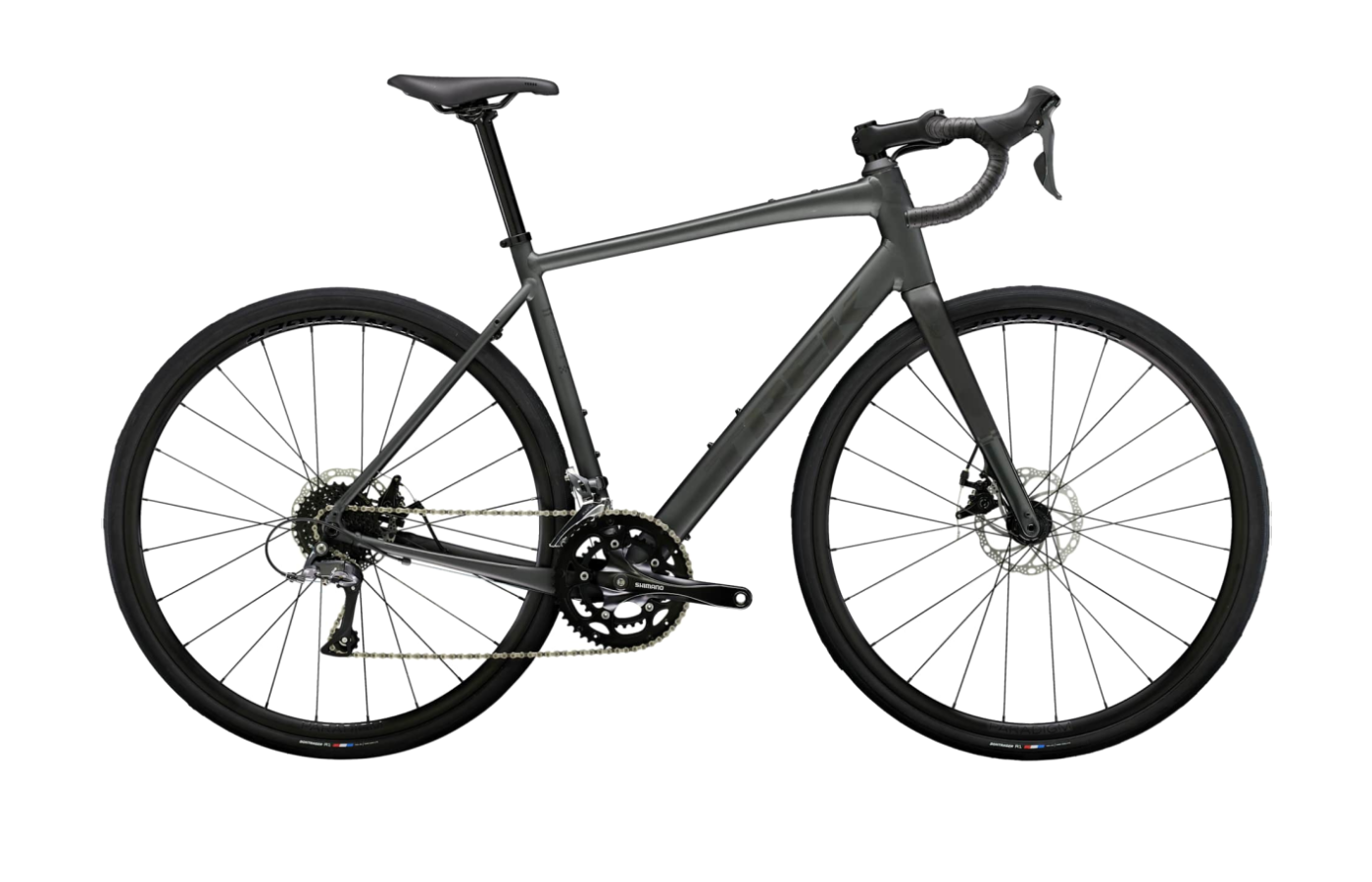
Domane
Trek's IsoSpeed decoupler hits the rear-compliance brief from a third angle — a pivoting seatmast junction instead of a spring or a flexed post. Add internal downtube storage and Trek's well-developed dealer network and it's the third bike most cross-shoppers should drive.
Compare →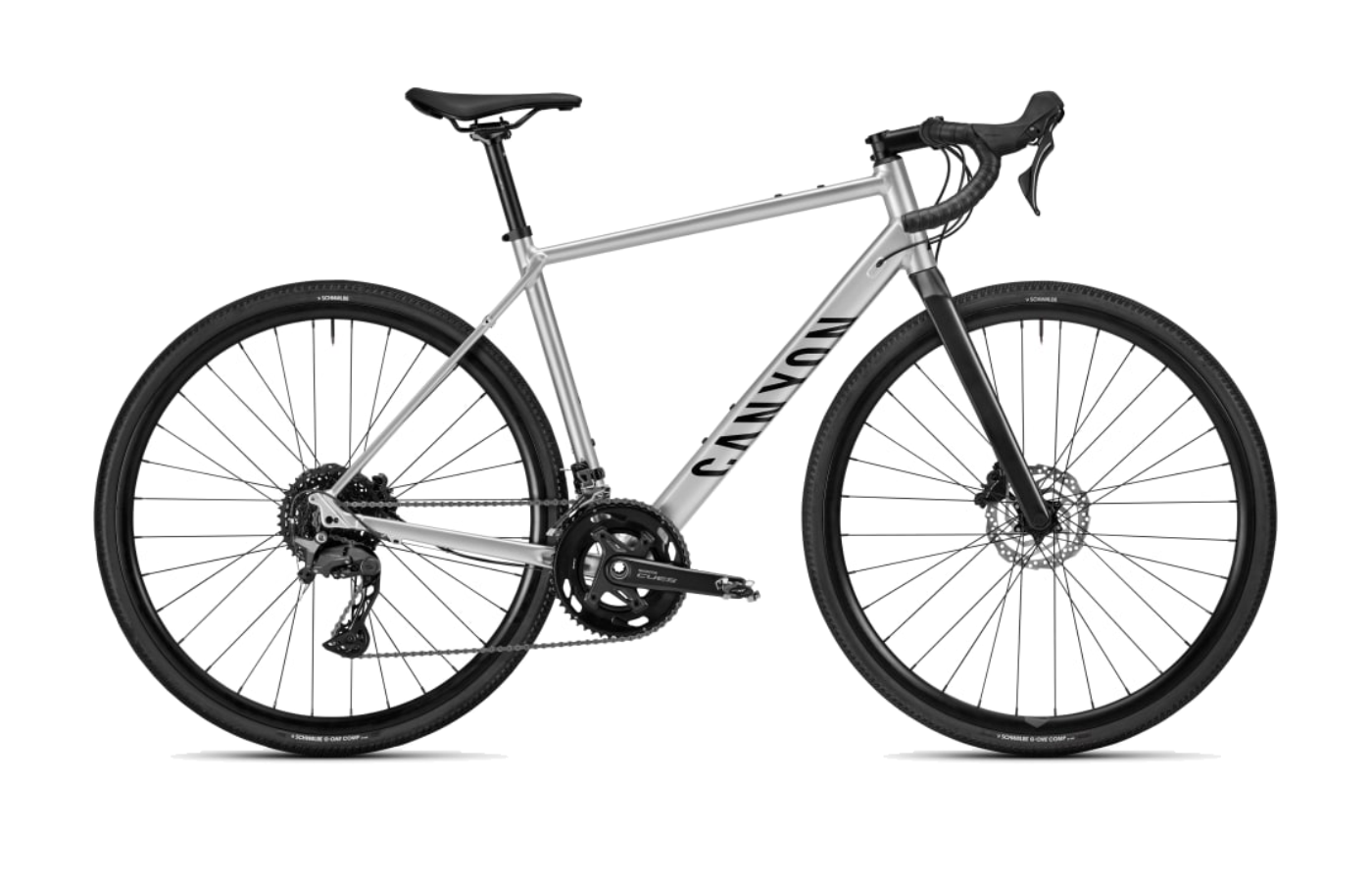
Endurace
The direct-to-consumer value play. The Endurace skips both the mechanical shock and the engineered seat-cluster compliance, leaning on a split VCLS seatpost and tire volume for the smoothing — and lands ~30% cheaper than either of these. Fit at your own risk.
Compare →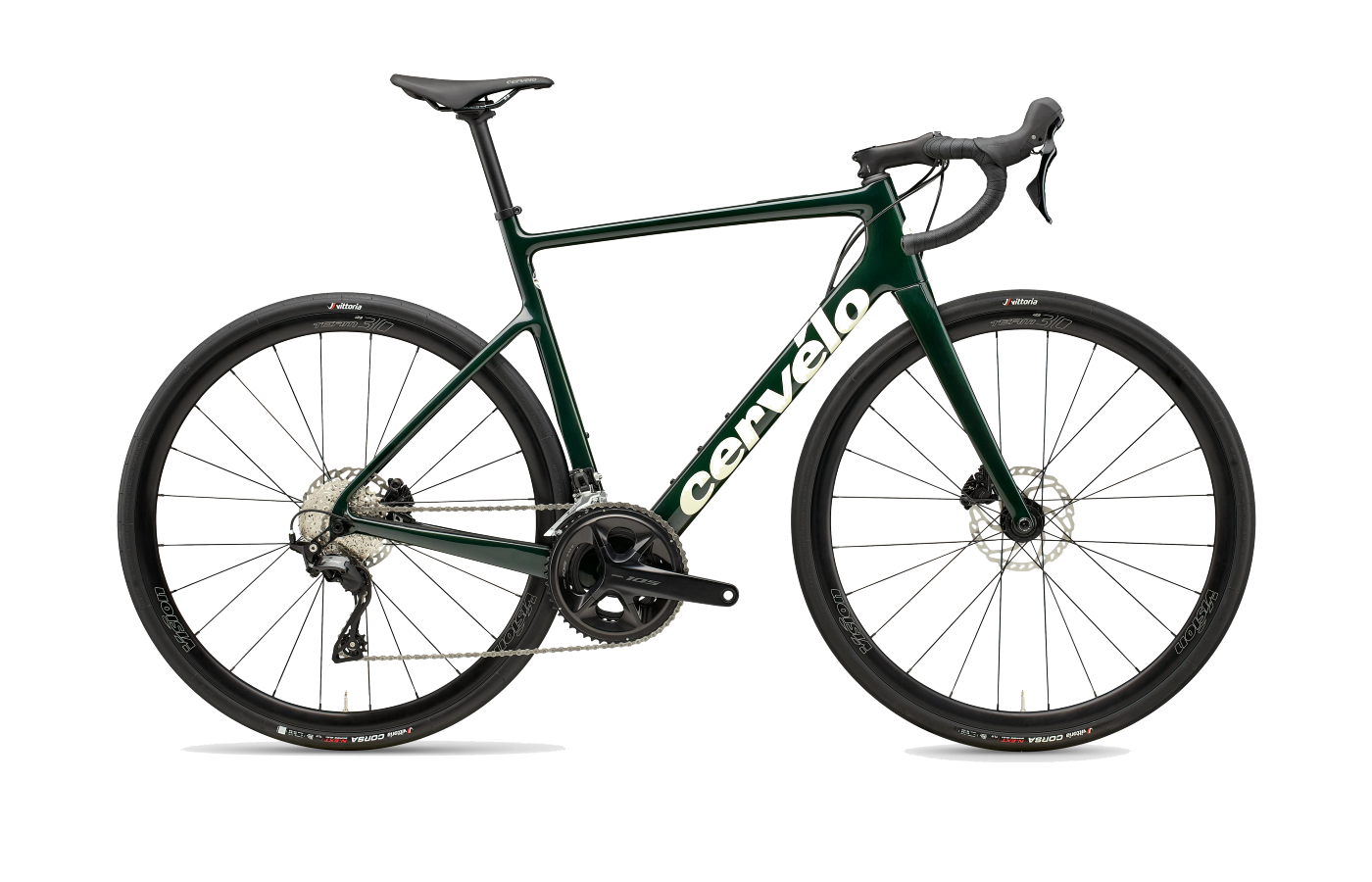
Caledonia
If the Roubaix feels too tall and the Roadmachine too compliance-obsessed, Cervélo's Caledonia is the racier middle path — endurance geometry with a faster, more direct-feeling ride, and no proprietary compliance tech to maintain.
Compare →