Roadmachine
vsTeammachine
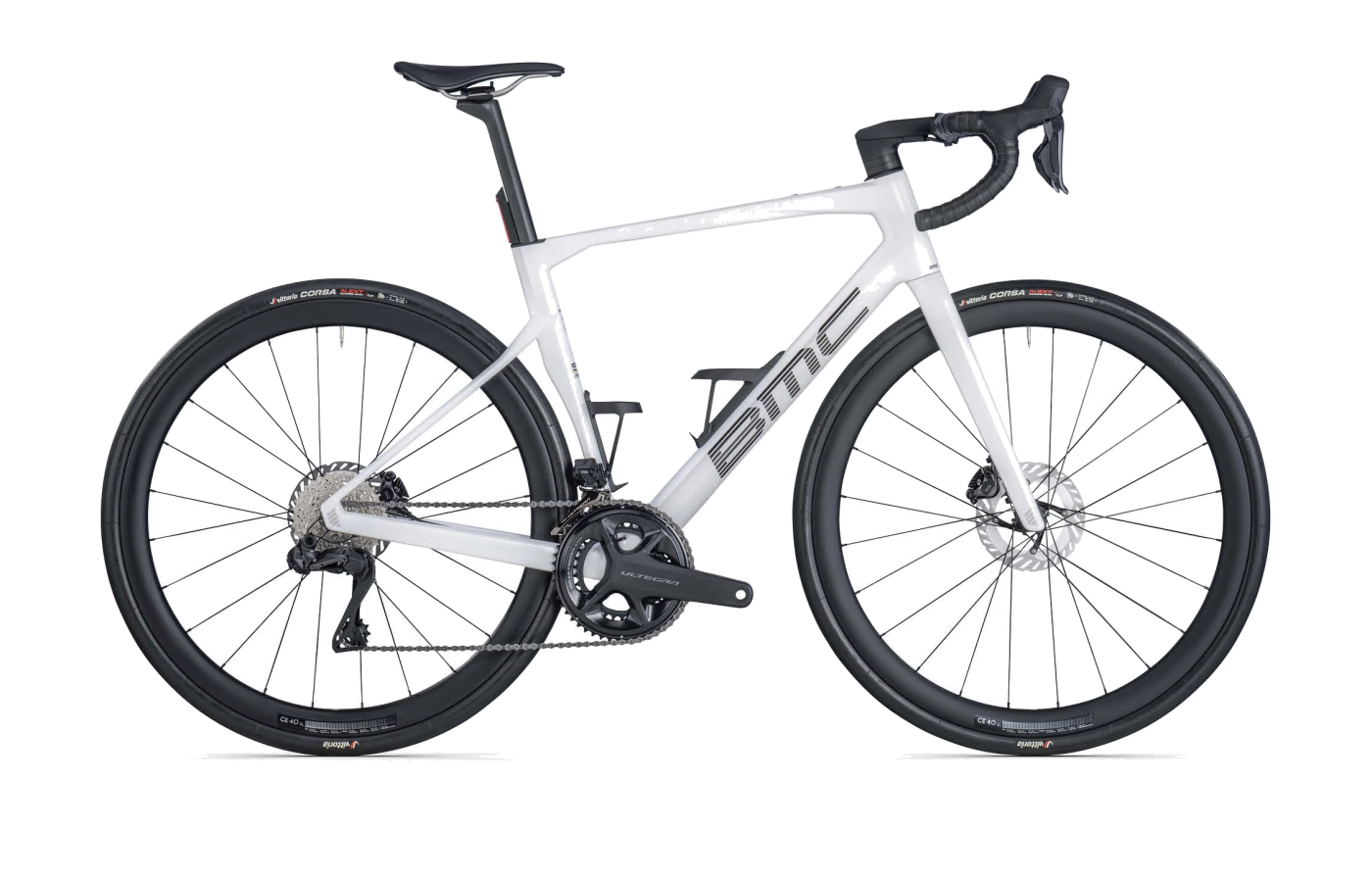
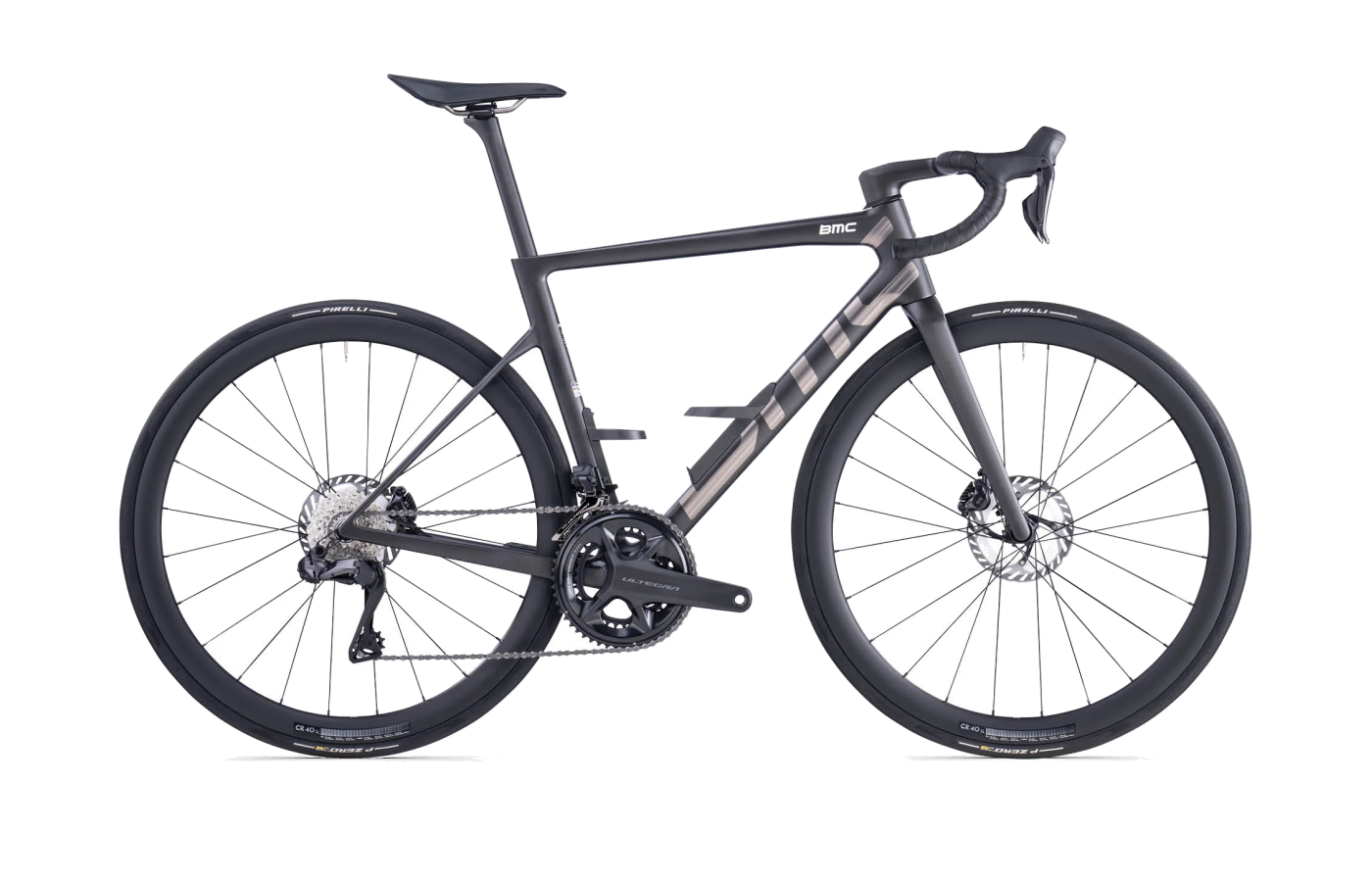
Same Swiss DNA, two very different jobs.
The Roadmachine is BMC's all-day endurance platform with 40 mm tire room. The Teammachine SLR is the climbing race bike that just shed 222 grams.
Roadmachine
- 40 mm tire clearance — the widest in this side of endurance road, opening real all-road and light-gravel use.
- Genuinely compliant frame — a claimed 27% more give than gen 2, with up to 20 mm of seatpost deflection on rough surfaces.
- Integrated downtube storage and rear light come stock, so the bike rides cleaner and you carry less on your back.
- Heavier than the Teammachine SLR by ~900 g at equivalent build tier — felt on long climbs.
- The 01 frame is 963 g claimed at size 54, which reviewers note is not class-leading at this price.
Teammachine
- 6.6 kg flagship build — a true sub-UCI-limit climbing platform for vertical-gain hunters.
- Pinpoint descending — the BMC-signature 63 mm trail with a stiffer race chassis is what reviewers call 'planted at speed.'
- Sharper acceleration — 16% less chassis weight and a stiffer bottom bracket reward standing efforts and short attacks.
- Tire clearance caps at 32 mm and the geometry is tuned for 26 mm — narrower than most modern road bikes.
- No downtube storage, no integrated light, and a starting price ($4,799) above the Roadmachine's ($3,299).
Editor’s analysis
Both wear the BMC badge and share the same 63 mm trail signature — but one is built to absorb the road and the other to attack it.
On paper these look like cousins: both Swiss, both sold with Dura-Ace Di2 at the top, both running BMC's ICS integrated front end and stealth cable routing. Spend a single ride on each and the family resemblance ends. The Roadmachine is BMC's endurance pillar — the new third-gen frame is engineered for a claimed 27% more compliance, with kinked seatstays, a D-shaped post, and a 40 mm tire ceiling. The Teammachine SLR is the racer that won Tours and Worlds; Gen 5 dropped 222 g (16% off the chassis) and explicitly optimizes its geometry around 26 mm rubber.
The Roadmachine plays the long game. Its chainstays are 415 mm — short by endurance standards — paired with a 75 mm bottom bracket drop that plants the rider 'in' the bike rather than on top of it. Add the integrated downtube storage, an integrated rear light, and tire room for proper all-road rubber, and you get a bike Velo described as 'a fast road bike but with more stability and comfort.' BikeRadar called it the most compliant endurance bike they'd ever ridden.
The Teammachine SLR sharpens every spec around the climb. Chainstays are 410 mm, bottom bracket drop is 69 mm, and the published claim is 6.6 kg in a size 54 with a Red AXS build. Tire clearance is 32 mm — fine, but the bike's handling is tuned for 26 mm. Reviewers consistently flag this as 'odd' for 2026, but the trade is deliberate: less rolling weight, sharper turn-in, immediate response when you're standing on the pedals at 11%. Velo called the acceleration 'punchier and firmer' than even a Specialized Aethos.
Put another way: the Roadmachine is the bike you buy if your weekly ride list includes a 5-hour gran fondo, a chip-seal training loop, and the occasional gravel diversion. The Teammachine SLR is the bike you buy if those same hours go into climbing repeats and race-day prep. They share a brand and a steering signature — beyond that, they're answering different questions.
Where the builds differ.
Comparing our editor's-pick builds side-by-side. Winners highlighted row-by-row — lower price and weight, and the better-spec component, each mark a point.
Build variants & pricing
The Roadmachine spans $3,299 to $12,999 across seven builds; the Teammachine starts higher at $4,799 and tops out at $13,649 across SLR (climber) and R (aero) sub-platforms.
Prices are current US MSRP. The Teammachine line splits into SLR 01 (lightweight climbing) and R 01 (aero); the editor's-pick comparison here uses the SLR 01, since it's the closer character match to the Roadmachine. If you only care about flat-out aero, look at the R 01 builds instead.
How they fit, how they steer.
The fit-picked sizes differ by label because BMC's two platforms size differently — both land a 173 cm rider in similar reach territory (~379–386 mm) but the Teammachine sits 20 mm lower in stack and uses a 0.9° steeper head tube angle.
Which size should I buy?
Sizes recommended from stack, reach, and effective top tube. Roadmachine sizing skews taller at the front; Teammachine sizing is the more aggressive race fit.
→These are starting points. Flexibility, riding style, and preferred position all shift the answer — if you’re between sizes, a professional fit beats a chart.
What the magazines said.
Published reviews from trusted cycling outlets. Click through for the full write-up.
Which one should you buy?
If you ride 4-hour mixed-surface days and want one bike to do everything, get the Roadmachine. If most of your saddle time is going up, get the Teammachine SLR.
Roadmachine
If your typical week is a chip-seal training loop, a Sunday century, and the occasional gravel connector — this is the smarter buy. The 40 mm clearance, downtube storage, and engineered compliance solve real problems on long days.
Teammachine
If your weekend is HC climbs and your race calendar is hilly road events, the SLR's 222 g diet and direct power transfer are exactly the right tools. Just accept the 32 mm tire ceiling and the race-bike fit.
Questions buyers actually ask.
Short answers to the things we get emailed about most often.
01Which is more comfortable on long rides?
The BMC Roadmachine, by a real margin. BMC engineered the new gen-3 frame for a claimed 27% more compliance — the kinked seatstays, a thinner seat tube, and the D-shaped carbon post combine to deliver up to 20 mm of vertical deflection at the saddle for heavier riders. BikeRadar's Oscar Huckle called it 'the most compliant endurance bike I have ever ridden.'
The Teammachine SLR is no buckboard — BMC claims 14 mm of saddle deflection over a simulated pothole — but it's tuned firmer and is best at 26-30 mm tires, where the Roadmachine clears all the way to 40 mm.
02Which is faster up a long climb?
The Teammachine SLR, comfortably. BMC's gen-5 SLR frameset weighs 700 g (size 54, painted) and the SLR 01 One flagship hits 6.6 kg complete — about 900 g lighter than the Roadmachine 01 Two at 7.5 kg in the same size. On a 30-minute climb at 250 W for a 70 kg rider, that weight delta is worth roughly 15-20 seconds.
More importantly, the SLR's stiffer bottom bracket and 410 mm chainstays (5 mm shorter than the Roadmachine's 415 mm) make standing efforts feel sharper. Reviewers consistently described its acceleration as 'punchy.'
03What's the maximum tire clearance on each?
Roadmachine: 40 mm officially — class-leading for endurance road, and enough that the X variant ships with 34 mm WTB Byways and a suspension stem. Most riders fit a true 32 mm Vittoria Corsa N.EXT comfortably as stock.
Teammachine SLR: 32 mm officially, up from 30 mm on gen 4. BMC explicitly states the geometry is 'optimized for 26 mm tires,' which is unusual in 2026 — most reviewers flag it as a curious choice. You can fit 28 mm or 30 mm without issue, but you're moving away from the bike's intended handling tune.
04What's the difference between the Teammachine SLR and Teammachine R?
Teammachine SLR is the lightweight climbing platform — a 700 g frame, 38 mm shallow wheels stock, and a 6.6 kg complete weight target.
Teammachine R is the aero racer — heavier (7.0 kg complete with Red AXS), with deeper 65 mm wheels and a 12.5° flared aero cockpit. BMC says the SLR is 4.22% less aero than the R, which is meaningful at race speeds but invisible at endurance pace.
If you spend more time climbing than chasing flat-road segments, pick the SLR. If you race crits or rolling road events at 40 km/h average, look at the R.
05Are the integrated cockpits adjustable?
Both bikes use one-piece carbon cockpits at the top end (ICS Carbon Evo on the Roadmachine 01 and Teammachine SLR 01) and the renderer is the same: width and stem length are fixed per part number. Changing either means buying a new cockpit (typically $400-500).
What both do allow without re-routing hoses: one stack spacer of height adjustment, and stem-length swaps with up to 30 mm of internal hose storage. BikeRadar called the BMC system 'one of the easier integrated cockpits to work on.' Lower-tier builds use a two-piece BMC RSM 01 cockpit which adjusts conventionally.
06Do both come with downtube storage?
Only the Roadmachine. BMC integrated a sealed downtube compartment on the gen-3 Roadmachine frame, accessed via a turn-dial on the bottle cage. It's dirt-sealed and ships with a stash bag, sized for tools and a tube — not a full mini-pump.
The Teammachine SLR omits storage entirely; it's a weight-saving decision consistent with the platform's climbing focus. If hidden tools matter to your daily riding, that gap is a real factor in the choice.
07How do the frame warranties compare?
Both ship with BMC's lifetime frame warranty to the original owner against manufacturing defects, and both are eligible for BMC's crash-replacement program (regional pricing varies). Cyclonline specifically called out 'excellent warranty and assistance' on the Roadmachine review.
08Which holds up better on poor pavement?
The Roadmachine, by design. With a 75 mm bottom bracket drop, 40 mm tire room, and the engineered seatpost flex, it shrugs off chip-seal and broken tarmac in a way the Teammachine simply isn't built for. Velo's reviewer described running over potholes and feeling them 'disappear under you.'
The Teammachine SLR is impressively comfortable for a race bike — Bike-x measured rear comfort at 200 N/mm — but it's still tuned for smooth race surfaces. Reviewers explicitly note it's 'not endurance bike level of comfort.'
Similar bikes
If your priorities don’t map cleanly onto either of these, one of these adjacent bikes probably fits better.
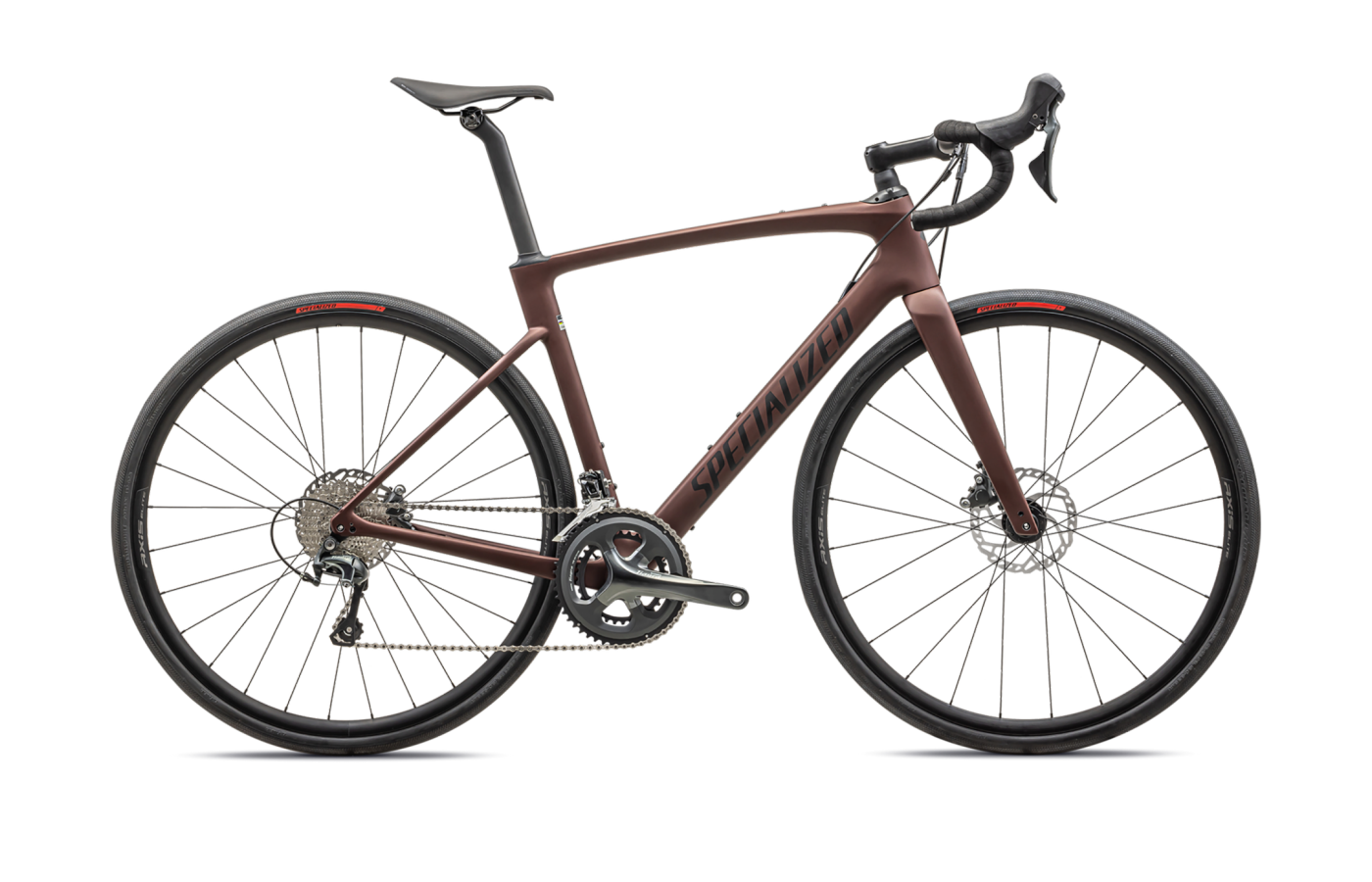
Roubaix
The direct endurance-road rival to the Roadmachine — also clears 40 mm tires, but uses Specialized's mechanical Future Shock head-tube damper instead of frame compliance. Worth a look if you want suspension you can feel.
Compare →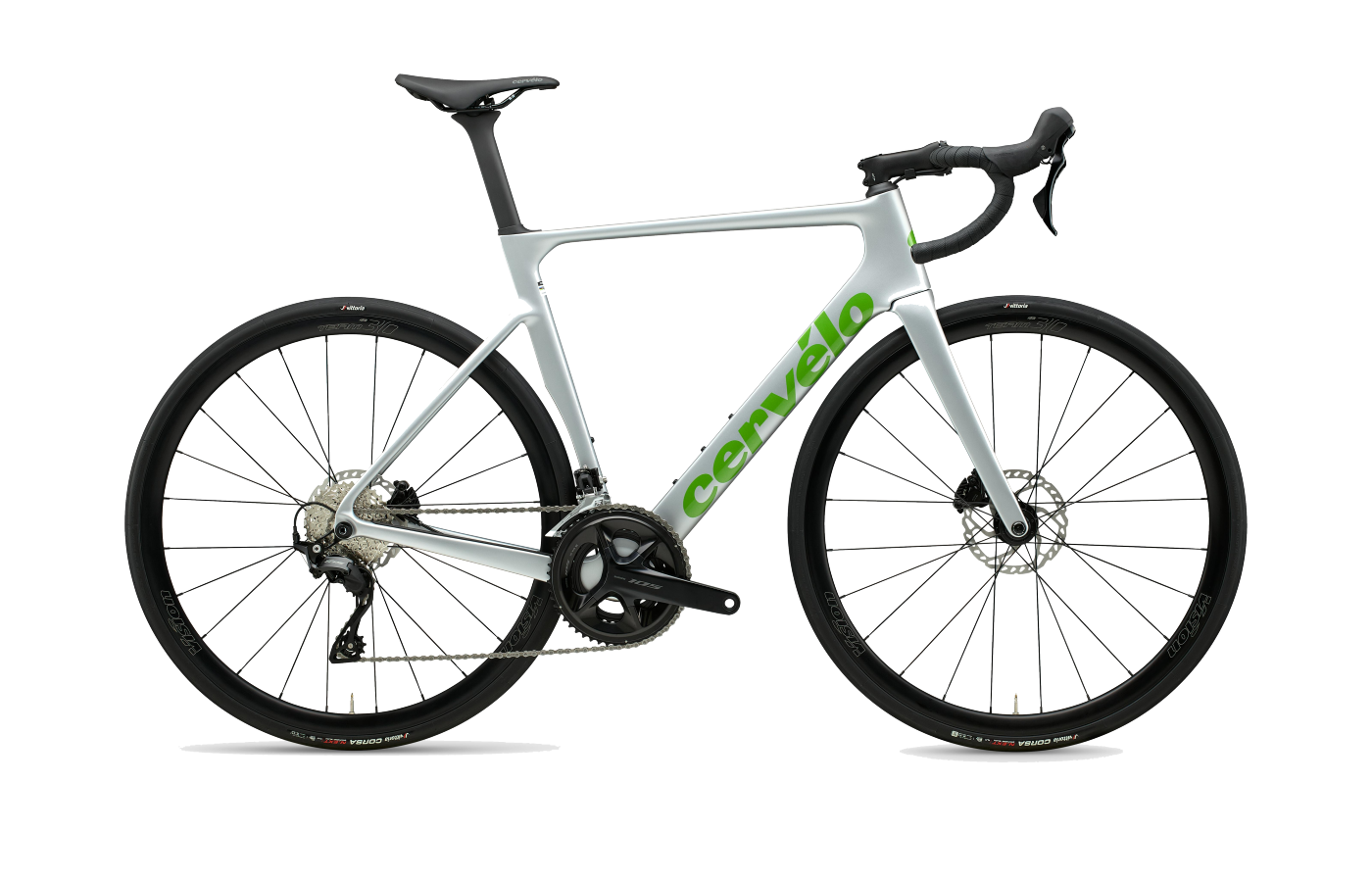
Soloist
Cervélo's middle ground — more aero than the Teammachine SLR, sharper-handling than the Roadmachine. The pick if you want one bike that splits the difference instead of two that don't.
Compare →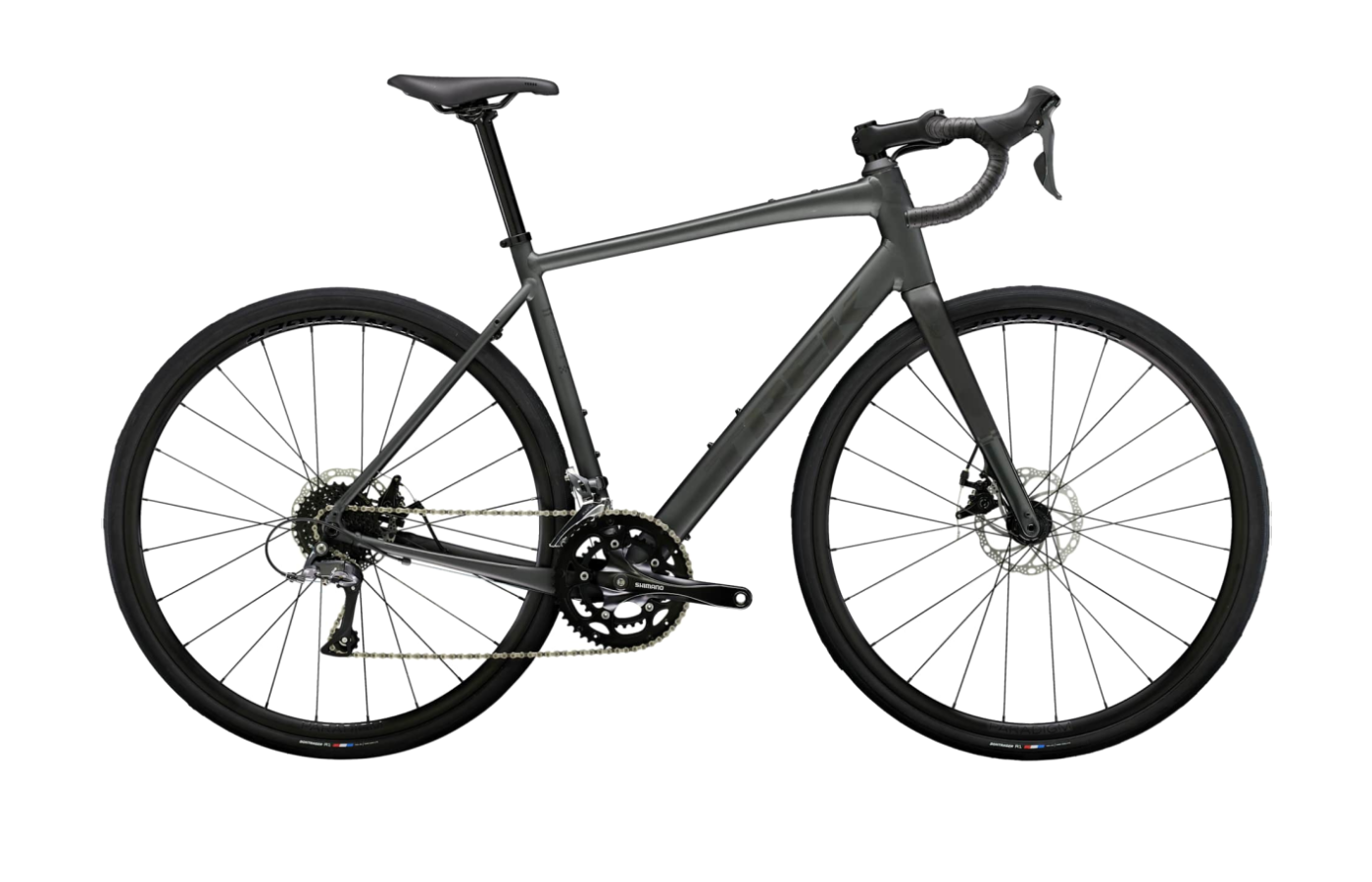
Domane
Trek's endurance flagship with the IsoSpeed decoupler and integrated downtube storage of its own. Heavier than the Roadmachine 01 frames, but the compliance system is more mechanical and arguably more tunable.
Compare →