Habit
vsSpectral
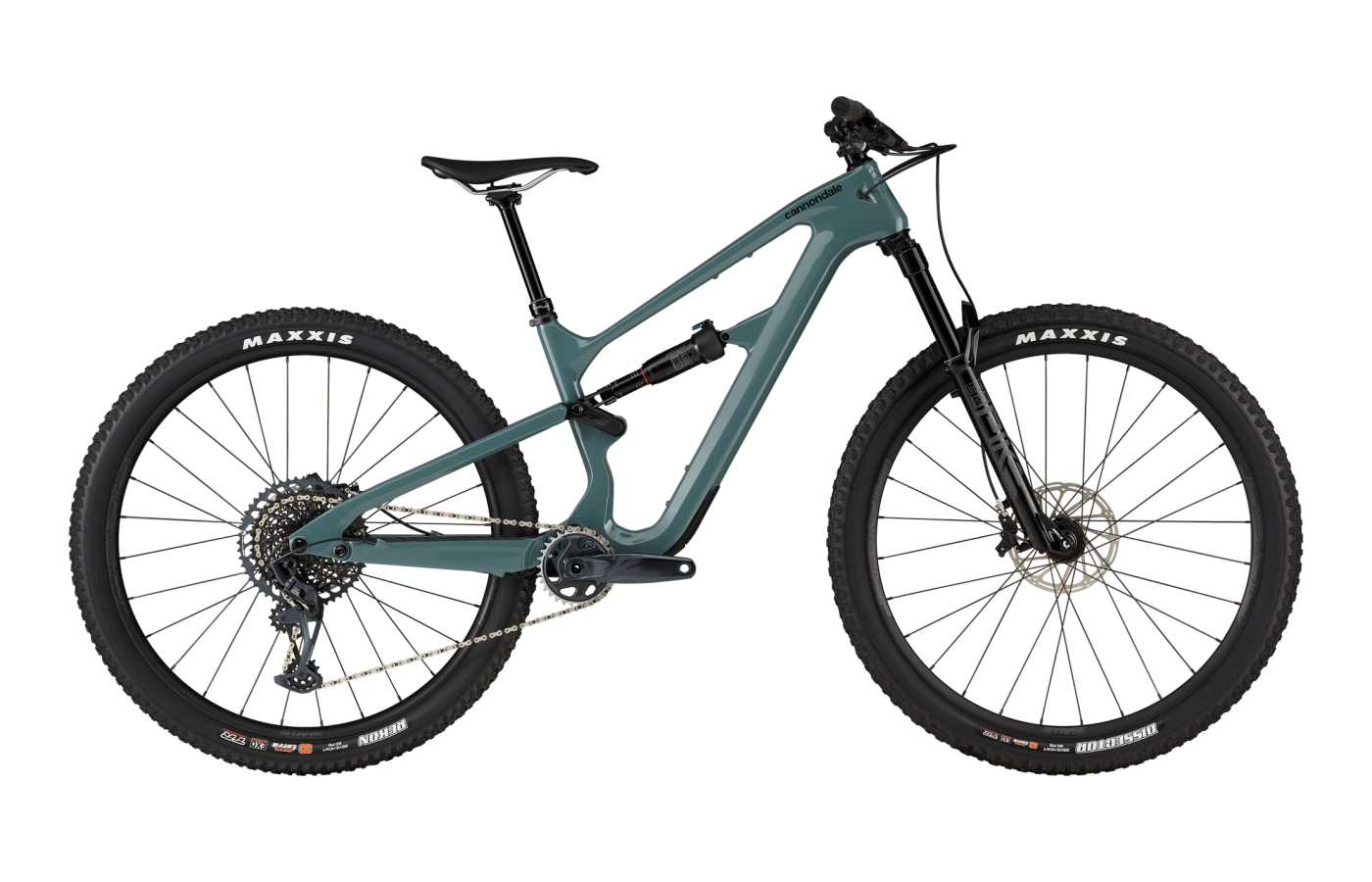
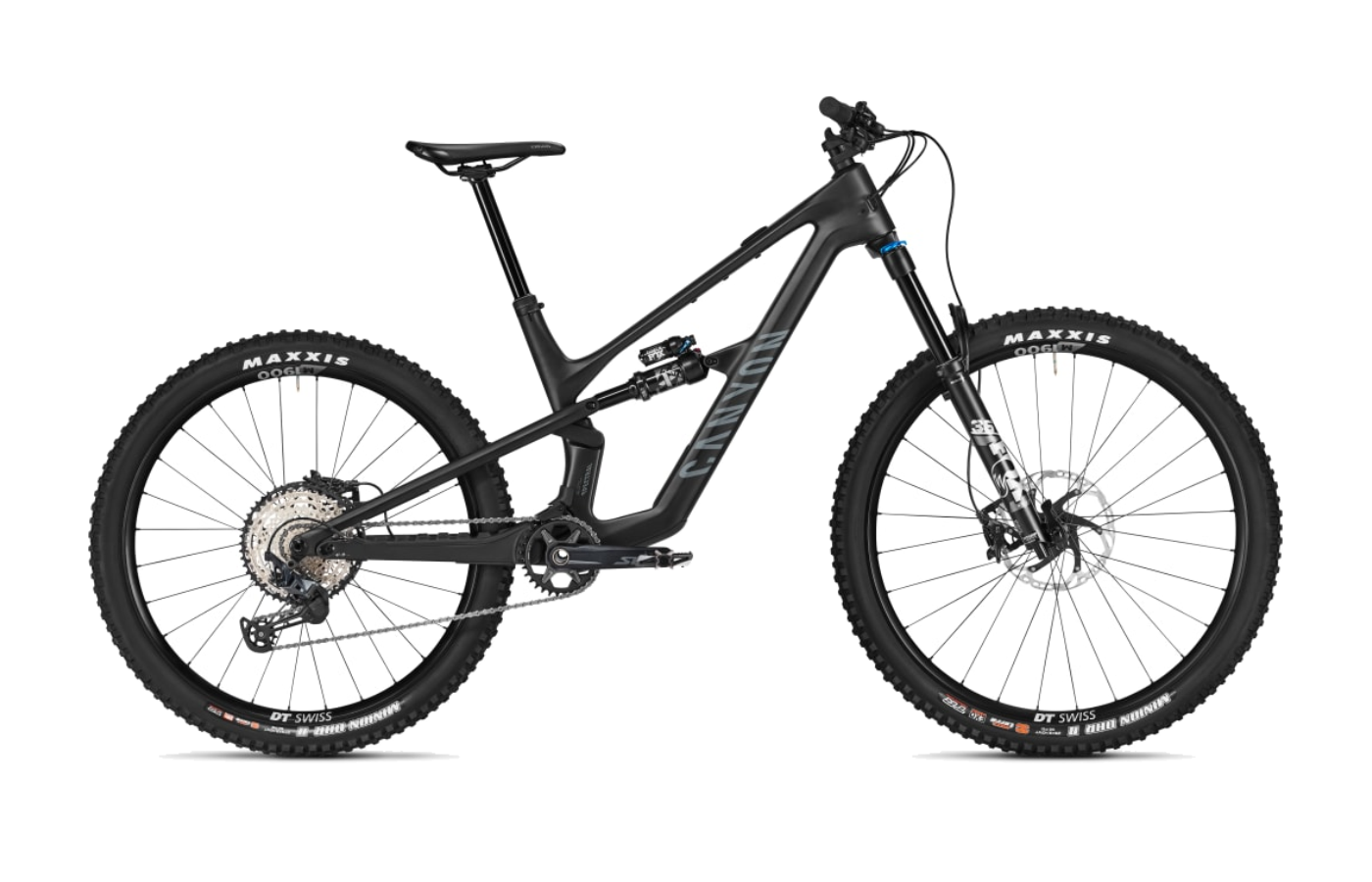
Two trail bikes, two religions.
The Habit is a quiet, fixed-geometry trail bike that just rides. The Spectral is a feature-stuffed, flip-chip carbon platform built to be tinkered with.
Habit
- Size-tuned chainstays — 434 mm on XS up to 445 mm on XL keeps the weight balance sane across the range.
- Quiet, low-fuss frame — no flip chip, no damper, no creaky storage door to track down on the trail.
- Wide price ladder — alloy builds from $1,599 give it a far lower entry point than the Spectral.
- Less travel (130/140 mm) and a steeper 65.5° head angle means it gives ground at high speed on chunky terrain.
- Entry-level Recon RL fork on the Habit 4 is the spec's weak link — fine for the price, but the first thing aggressive riders will outgrow.
Spectral
- More travel and a slacker front end — 140 mm rear / 150 mm front and a 64° head angle stay composed on steeper, faster trails.
- Flip-chip wheel-size swap — 29er or 27.5" rear (chainstay drops to ~429 mm in mullet) without breaking the geometry.
- Direct-to-consumer value — full-carbon frame from $3,199 with the same shape as the $5,799 flagship.
- K.I.S. steering damper is divisive — multiple reviewers either love it or remove it.
- Heavier than its travel suggests; G5 grips are widely panned and usually swapped on day one.
Editor’s analysis
This isn't 130 mm vs 140 mm — it's Cannondale's faith in proportions against Canyon's faith in adjustability.
On paper the Cannondale Habit and Canyon Spectral land in the same mid-travel-trail bracket. Both are 29ers (XS gets 27.5" on each), both run Horst-link rear ends, both lean on RockShox or Fox suspension and SRAM/Shimano drivetrains. Spend any time with the geometry charts and the philosophies start pulling apart.
The Cannondale Habit is built around a single idea: dial the bike per size, then leave it alone. 130 mm rear / 140 mm front, fixed 65.5° head angle across every size, and Cannondale's Proportional Response chainstays (434 mm on XS, 440 mm on Large, 445 mm on XL) so a smaller rider doesn't ride a long-rear-end Large in disguise. There's no flip chip, no steering damper, no in-frame storage hatch — just a frame that's been engineered around a fit and asked to do trail work without distraction. Reviewers consistently call it neutral, balanced, and quiet.
The Canyon Spectral is the opposite bet. 140 mm rear / 150 mm front, a slacker 64° head angle, a flip chip for 29 vs. mullet, the LOAD downtube storage door, and Canyon's polarizing K.I.S. spring-centering steering damper standard on every CF build. Reach numbers are noticeably longer at every size — a Spectral Large is 500 mm vs. the Habit's 480 mm — and the seat tube is a steeper 76.5°. Reviewers describe it as zesty, poppy, and confidence-inspiring at speed, with the caveat that you'll want to spend the first ride dialing the shock, the K.I.S. tension, and probably swapping the G5 grips.
Put another way: the Habit is the bike for the rider who wants their setup to disappear under them. The Spectral is the bike for the rider who treats setup as part of the sport. Both are real trail bikes; they're just optimizing for different relationships with the machine.
Where the builds differ.
Comparing our editor's-pick builds side-by-side. Winners highlighted row-by-row — lower price and weight, and the better-spec component, each mark a point.
Build variants & pricing
Habit ladder runs $1,599 to $6,799 across alloy and carbon. Spectral is carbon-only above $3,099 and tops out at $5,799.
Prices are current US MSRP. Cannondale offers the Habit in alloy down to $1,599; the Spectral has no equivalent budget tier in the US — only the CF7 carbon and the alloy 6 land below $3,500.
How they fit, how they steer.
Habit MD vs Spectral S — fit-picked for a 5'8" rider on each platform. The Habit MD sits 11 mm taller and 5 mm shorter in reach (632/455) than the Spectral S (621/450), and its 65.5° head angle is 1.5° steeper than the Spectral's 64°. Chainstays are 435 mm vs 437 mm — closer than the marketing suggests.
Which size should I buy?
The Spectral's reach jumps roughly 25 mm per size; the Habit's steps are tighter, so smaller riders have more incremental options.
→These are starting points. Flexibility, riding style, and preferred position all shift the answer — if you’re between sizes, a professional fit beats a chart.
What the magazines said.
Published reviews from trusted cycling outlets. Click through for the full write-up.
Which one should you buy?
If you want a quiet trail bike that works out of the box, get the Habit. If you want a configurable platform with more travel and a slacker front end, get the Spectral.
Habit
If you'd rather ride than tinker — and especially if your budget tops out around $3,500 — the Habit is the cleaner choice. Size-tuned chainstays, fixed geometry, and a price ladder that starts at $1,599 make it the more accessible platform.
Spectral
If you like swapping wheel sizes, dialing damper tension, and chasing setup — and you ride faster, steeper terrain — the Spectral rewards it. More travel, slacker geometry, and a flip-chip platform that adapts to how you want to ride.
Questions buyers actually ask.
Short answers to the things we get emailed about most often.
01How much travel does each bike have?
Cannondale Habit: 130 mm rear / 140 mm front across all builds. (The longer-travel Habit LT exists as a separate model at 140/150 mm.)
Canyon Spectral: 140 mm rear / 150 mm front across all CF and AL builds.
The Spectral has 10 mm more rear travel and 10 mm more fork — meaningful but not category-changing. Both are squarely in the modern trail-bike bracket.
02Which is more capable on steep, fast descents?
The Spectral. The combination of a 64° head angle (vs the Habit's 65.5°), 10 mm more travel at both ends, and a longer wheelbase (~1,221 mm at size S vs 1,200 mm at the Habit's MD) makes it noticeably more composed at speed. Reviewers consistently call it "unphased by speed" and "sure-footed" on chunky descents.
The Habit isn't a slouch — it's still a modern trail bike with 140 mm of fork — but it gives ground when the trail gets really rough or fast.
03Which climbs better?
Closer than you'd expect. The Spectral has a steeper 76.5° seat tube angle that puts you more squarely over the pedals, and reviewers (Off.road.cc, Theloamwolf) describe it as a strong technical climber thanks to its active rear suspension and reduced anti-squat.
The Habit climbs efficiently too — slightly less travel means slightly less bob, and the steeper 65.5° head angle keeps the front from wandering on switchbacks. Neither bike has a dedicated climb-bike pedigree, but both handle long days in the saddle well.
04What is K.I.S. and do I want it?
K.I.S. (Keep It Stable) is Canyon's spring-loaded steering damper that self-centers the front wheel. It comes standard on every Spectral CF build and is adjustable for spring tension and fully removable with a blanking plate.
Reviewer reactions split: Off.road.cc and Bike Perfect found it useful in steep, loose, or rough terrain; Pinkbike, Singletrackworld, and Jeff Kendall-Weed found it lethargic in tight corners or removed it outright.
The Habit has no equivalent system — its handling is whatever the geometry gives you.
05Can I run a mullet (mixed wheel) setup?
Spectral: yes, via the frame's flip chip — swap to a 27.5" rear wheel and the geometry adjusts to keep BB height and head angle in spec. Chainstays drop to roughly 429 mm in mullet mode for a snappier rear end.
Habit: no factory support. The XS frame ships with 27.5" wheels at both ends, but every other size is 29er-only without geometry-correcting hardware.
06What about in-frame storage?
Spectral: yes — Canyon's LOAD system is a downtube door with included tool/spares pouches. Reviewers note the latch can feel "fiddly" but the system works and is genuinely useful.
Habit: no downtube storage hatch. Cannondale's design philosophy on the Habit is deliberately minimal — bottle and accessory mounts on the frame, but no internal cargo compartment.
07Which has a wider build range?
The Habit, by a wide margin. It runs from the alloy Habit 26 at $1,599 up to the carbon LTD at $6,799 — six builds, alloy and carbon, microSHIFT to SRAM XO AXS Transmission.
The Spectral is narrower in the US: four builds from the alloy 6 at $3,099 to the CF 9 X0 AXS at $5,799. Canyon offers more SKUs in Europe, but US buyers get a tighter ladder concentrated in the carbon mid-tiers.
08What's the geometry difference at the size I'd ride?
For a 5'8" rider, the fit algorithm picks Habit MD and Spectral S — and these aren't quite apples-to-apples because of the different sizing conventions.
At those picks: reach is 455 mm (Habit) vs 450 mm (Spectral) — within 5 mm. Stack is 632 vs 621 — Habit sits 11 mm taller. Head angle is 65.5° vs 64° — Habit is steeper. Chainstays are 435 vs 437 mm — essentially identical. Wheelbase is 1,200 vs 1,221 — Spectral is 21 mm longer.
The net: the Habit feels a touch more upright and steerable; the Spectral feels longer and more planted.
Similar bikes
If your priorities don’t map cleanly onto either of these, one of these adjacent bikes probably fits better.
Stumpjumper
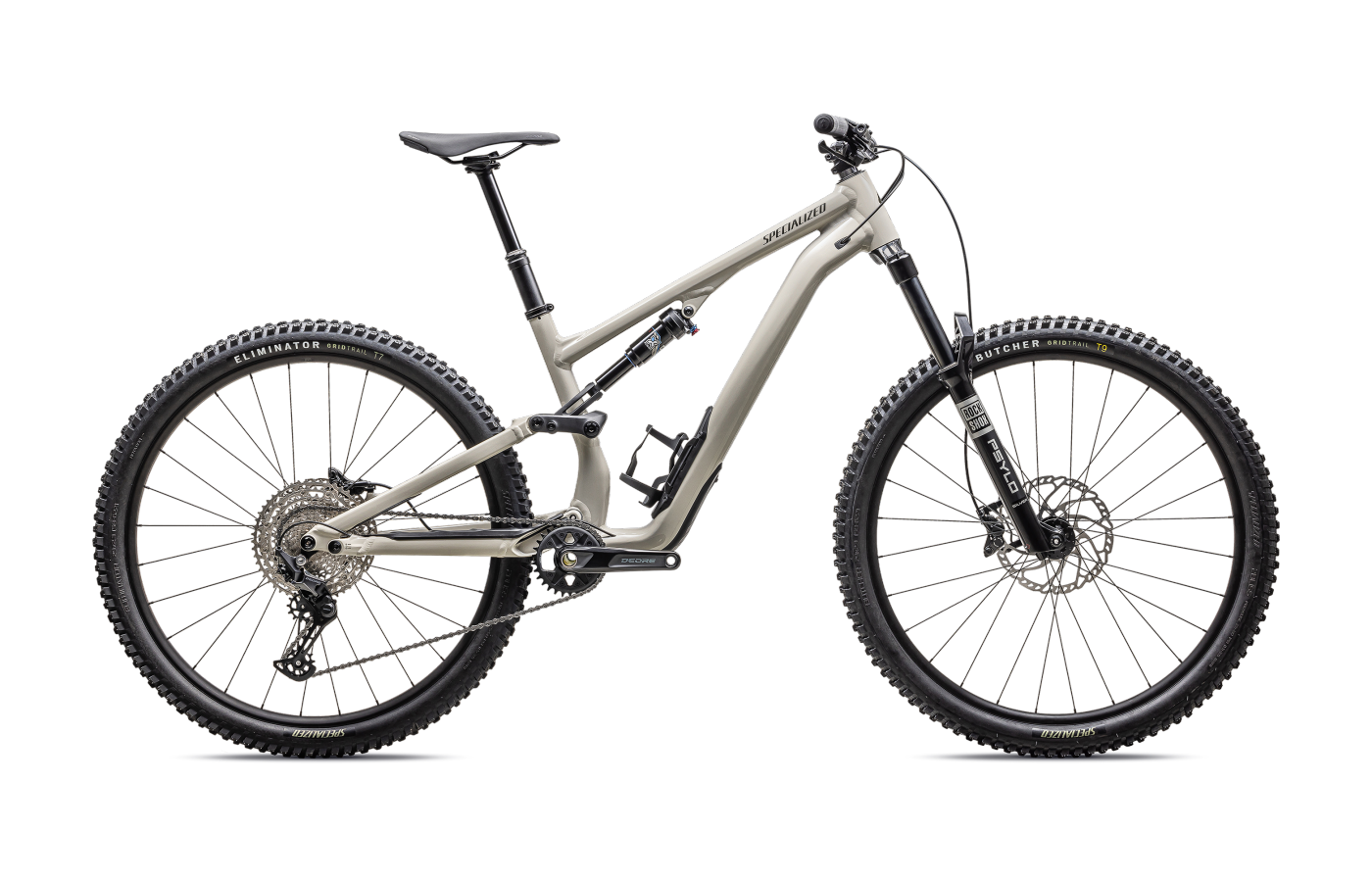
The Specialized Stumpjumper is the segment's reference point — comparable travel, in-frame storage Canyon clearly studied, and a SWAT-equipped frame sold through dealers. Pick it if you want demo rides and shop support.
Compare →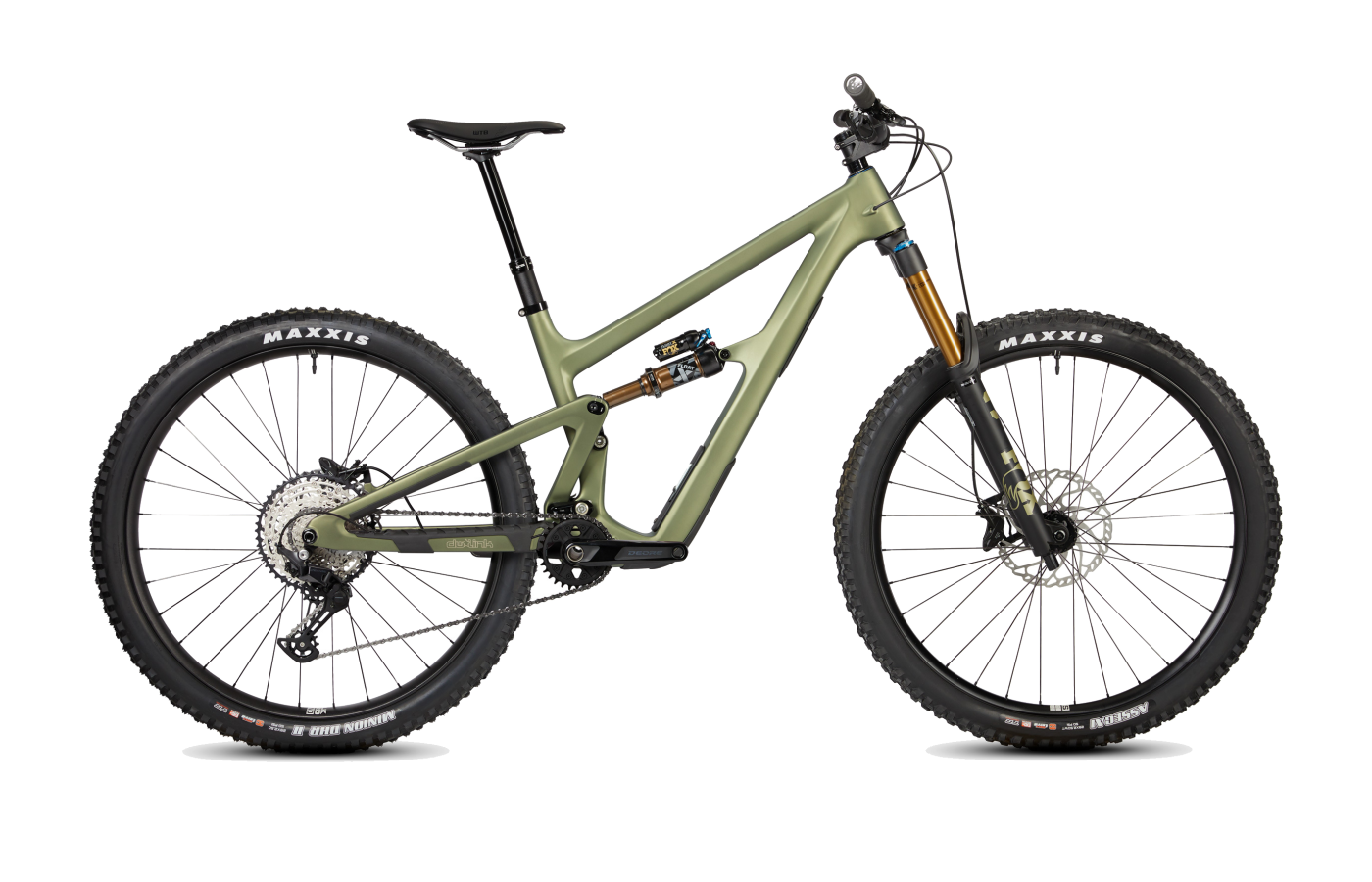
Ripmo
The Ibis Ripmo runs a dw-link rear with more rear travel (~147 mm) and a famously efficient pedaling platform. Better choice if your trails reward a stiffer-feeling, more pedal-friendly suspension than the active Horst-link feel of either bike here.
Compare →Jeffsy
The YT Jeffsy is the other direct-to-consumer trail benchmark — similar value math to the Spectral, similarly aggressive geometry, but without the K.I.S. damper if that's a dealbreaker.
Compare →