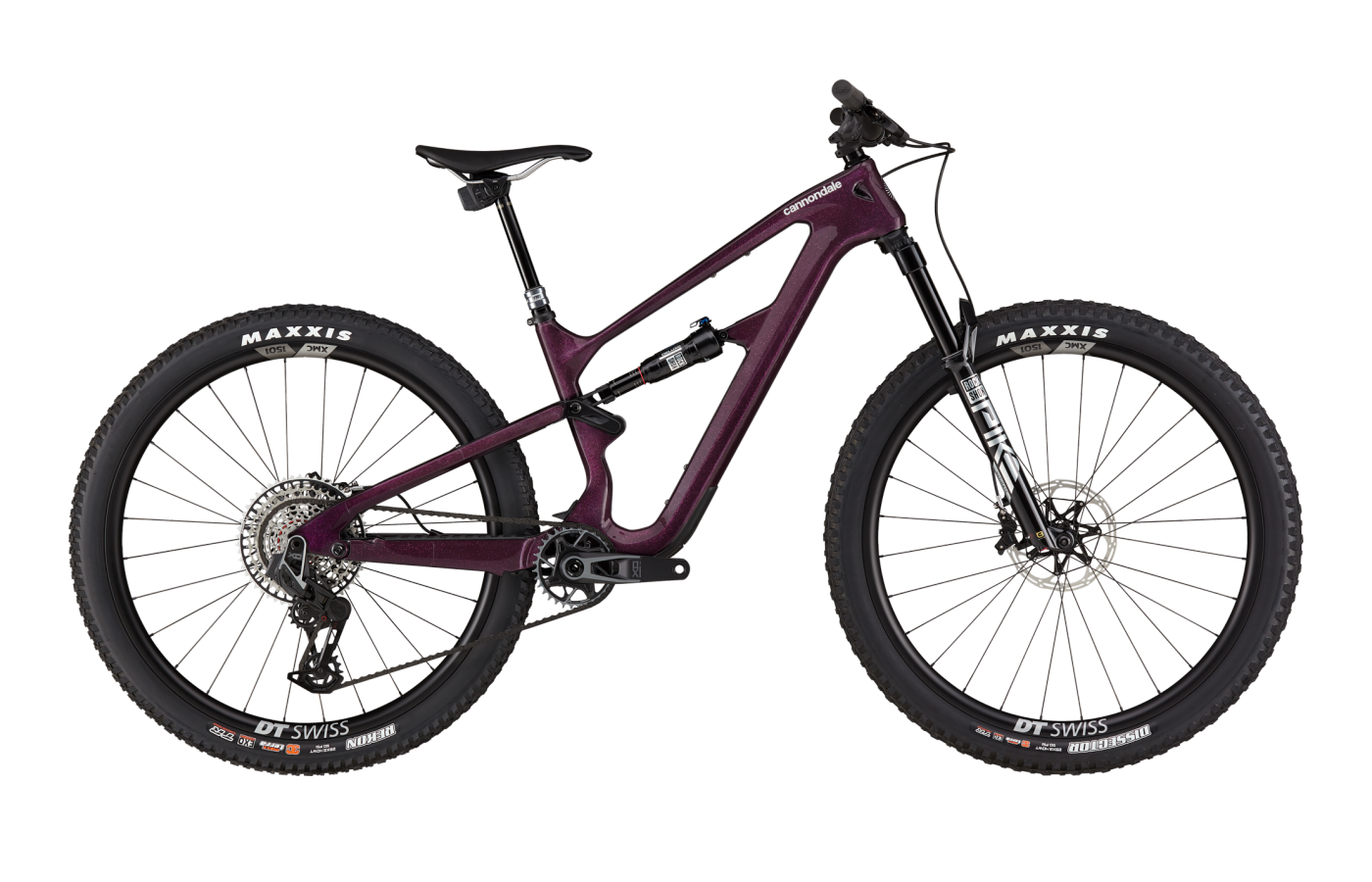
Cannondale HabitvsTrek Roscoe
The Trek Roscoe Gen 4 fits a massive 200mm dropper post on a size medium frame, a feat that makes the Cannondale Habit’s 150mm limit look decidedly old-school. While one is a full-suspension trail bike and the other a hardcore hardtail, they both fight for the same patch of dirt: aggressive, daily-driver trail riding.

Overview
The Cannondale Habit is a no-nonsense machine that swaps out flip-chips and head-angle adjustments for a dialed, fixed geometry. It is an everyday rider's choice, built to be quiet and predictable on the trail. Trek’s Roscoe Gen 4 is an alloy brawler that uses high-end Alpha Platinum Aluminum from Trek's gravity platforms to create a hardtail that is often more aggressive than the full-suspension Habit. Positioning these two is a study in simplicity versus capability. The Habit targets the rider who wants the comfort of rear travel without getting lost in suspension setup, while the Roscoe Gen 4 moves away from its entry-level roots to become a legitimate high-performance trail machine. The Trek makes the argument that a well-built hardtail with a 150mm fork can handle the same 'dangerous jungles' of technical trails as a dedicated short-travel full-suspension rig.
Ride and handling
The Habit feels poppy on flow trails, where you can double rollers and pump for speed with ease. Reviewers noted a trapdoor sensation on the lower-end Habit 4, where the 130mm of rear travel can suddenly give up its support and bottoming out hard enough to hurt your teeth. It tracks well through chunk, but it isn't a plow bike; it requires the active input of a rider who likes to choose lines rather than bash through them. The Roscoe 8 is a different beast entirely. With a 150mm Fox Rhythm 36 fork, it has more front-end insurance than the Habit's standard 140mm setup. It zooms on flats despite a 32.5lb weight, and the Rapid Drive 108 hub provides nearly instantaneous engagement for ratcheting through technical rock gardens. While the Habit might wallow under heavy out-of-the-saddle sprinting, the Roscoe stays predictably stiff, relying on its insane 203mm front brake rotor to keep things under control when the terrain gets steep. On the downhill, the Habit integrates the rider nicely between the wheels, inspiring immediate confidence. The weight distribution is balanced enough that you don't have to fight to keep the front wheel tracking in open corners. The Roscoe mirrors this stability with a long-and-slack stance that prevents it from feeling like a sluggish tank on flatter transitions. Both bikes manage to be playful, but the Roscoe’s 200mm dropper allows the saddle to essentially disappear, giving you more room to move than the Habit provides.
Specifications
At the entry level, the Habit 4 is held back by its parts. The 32mm RockShox Recon RL fork is skinny and prone to twisting under heavy load, whereas the Roscoe 8 brings a much sturdier Fox 36 to the table at a similar price. Trek’s inclusion of the Rapid Drive 108 hub is a clear win over the Habit’s more basic Shimano or Formula hubs, which can feel laggy on technical climbs where every degree of engagement matters. Braking is another point of divergence. The Roscoe 8 uses Shimano Deore 4-piston brakes that stop on a dime, while the Habit 4 often ships with lower-power SRAM DB8s or Shimano MT200s. Reviewers found the Habit's entry-level brakes lacked the meaningful power required for such a capable frame. It is worth noting that the specific Habit 26 build is a junior-specific option with 26-inch wheels and a square-taper bottom bracket, which isn't in the same league as the Roscoe 8's modern threaded BB and 12-speed Deore drivetrain. Cannondale does spec carbon bars on higher-end LT models, but that money might have been better spent on better brakes or more durable wheels. The WTB KOM Trail alloy wheels on the Habit LT 1 have a reputation for denting easily, whereas the Roscoe’s Bontrager Line 30 rims feel appropriately burly for the bike's hardcore hardtail intentions.
| Habit | Roscoe | |
|---|---|---|
| FRAMESET | ||
| Frame | SmartForm C3 Alloy, 120mm travel, 1-1/8" to 1-1/2" tapered headtube, IS disc mount, StraightShot internal cable routing, dropper post compatible, BSA-73, 142x12mm thru-axle, UDH derailleur hanger | — |
| Fork | SR Suntour XCR34, 120mm travel, air spring, 15x110 Boost thru-axle, 46mm offset | — |
| Rear shock | X-Fusion O2 Pro w/ Rebound Adjust | — |
| GROUPSET | ||
| Shift levers | microSHIFT Advent X, trigger style, 10-speed | — |
| Front derailleur | — | — |
| Rear derailleur | microSHIFT Advent X | — |
| Cassette | microSHIFT, 11-48T, 10-speed | — |
| Chain | KMC X10, 10-speed | — |
| Crankset | Prowheel Charm 30T | — |
| Bottom bracket | Sealed cartridge bearing, square taper | — |
| Front brake | Tektro M275 hydraulic disc | — |
| Rear brake | Tektro M275 hydraulic disc | — |
| WHEELSET | ||
| Front wheel | WTB STX i25, 32h; Formula, 15x110mm thru-axle; Stainless steel, 14g | — |
| Rear wheel | WTB STX i25, 32h; Formula, 12x148mm thru-axle; Stainless steel, 14g | — |
| Front tire | WTB Vigilante, 26x2.4" | — |
| Rear tire | WTB Vigilante, 26x2.4" | — |
| COCKPIT | ||
| Stem | 6061 Alloy, 31.8mm clamp, 7° | — |
| Handlebars | Cannondale Riser, 6061 Alloy, 25mm rise, 8° sweep, 6° rise, 720mm | — |
| Saddle | Cannondale Stage 3 | — |
| Seatpost | Cannondale 3, 6061 Alloy, 31.6x350mm | — |
| Grips/Tape | Cannondale Dual-Density | — |
Geometry and fit comparison
Stack height is the Habit's defining geometry trait. A size large sits at 641mm, a figure usually reserved for enduro sleds. This creates a comfortable, upright position that prevents hand fatigue but requires the rider to actively weight the front wheel in flat corners to keep the tires from sliding. The Roscoe's geometry is equally modern, sporting a 65-degree head angle and a 470mm reach on the large. Both bikes use size-proportional chainstays to maintain a consistent feel across the size range. The Habit grows from 434mm to 445mm, aiming for a neutral balance that reviewers call IKEA modern—clean, functional, and predictable. The Roscoe uses a 76-degree seat tube angle to keep the rider centered during climbs, which helps keep the front end from wandering despite the slack head angle. For shorter riders, the Roscoe’s lack of seat-tube bottle mounts is a major technical win. By clearing that space, Trek allows for massive dropper post insertion depths. This lets a size medium rider run a 200mm dropper, a luxury that allows for an incredible range of motion on steep descents that the Habit’s shorter 150mm posts can't match.
| FIT GEO | Habit | Roscoe | |
|---|---|---|---|
| Stack | 641 | — | — |
| Reach | 480 | — | — |
| Top tube | 617 | — | — |
| Headtube length | 130 | — | — |
| Standover height | 751 | — | — |
| Seat tube length | 445 | — | — |
| HANDLING | Habit | Roscoe | |
|---|---|---|---|
| Headtube angle | 65.5 | — | — |
| Seat tube angle | 72 | — | — |
| BB height | 341 | — | — |
| BB drop | 38 | — | — |
| Trail | 127 | — | — |
| Offset | 42 | — | — |
| Front center | 796 | — | — |
| Wheelbase | 1234 | — | — |
| Chainstay length | 440 | — | — |
Who each one is for
Cannondale Habit
For the rider who wants a predictable, silent trail companion for weekend loops on blue and black trails. It is a great fit if you prefer set-and-forget simplicity over tinkering with settings and want the comfort of rear travel to mask occasional poor line choices on technical terrain. The high stack height also makes it a strong candidate for riders who suffer from lower back or wrist pain on longer rides.
Trek Roscoe
For the hardtail purist who wants to get wild at the bike park without the maintenance headaches of a rear shock. If you value high-engagement hubs for technical ratcheting and want a bike that feels burly enough to follow enduro rigs down steep, chunky terrain, the Roscoe is your hammer. It's for the rider who treats the trail like a playground rather than a race course.