SuperX
vsCrux
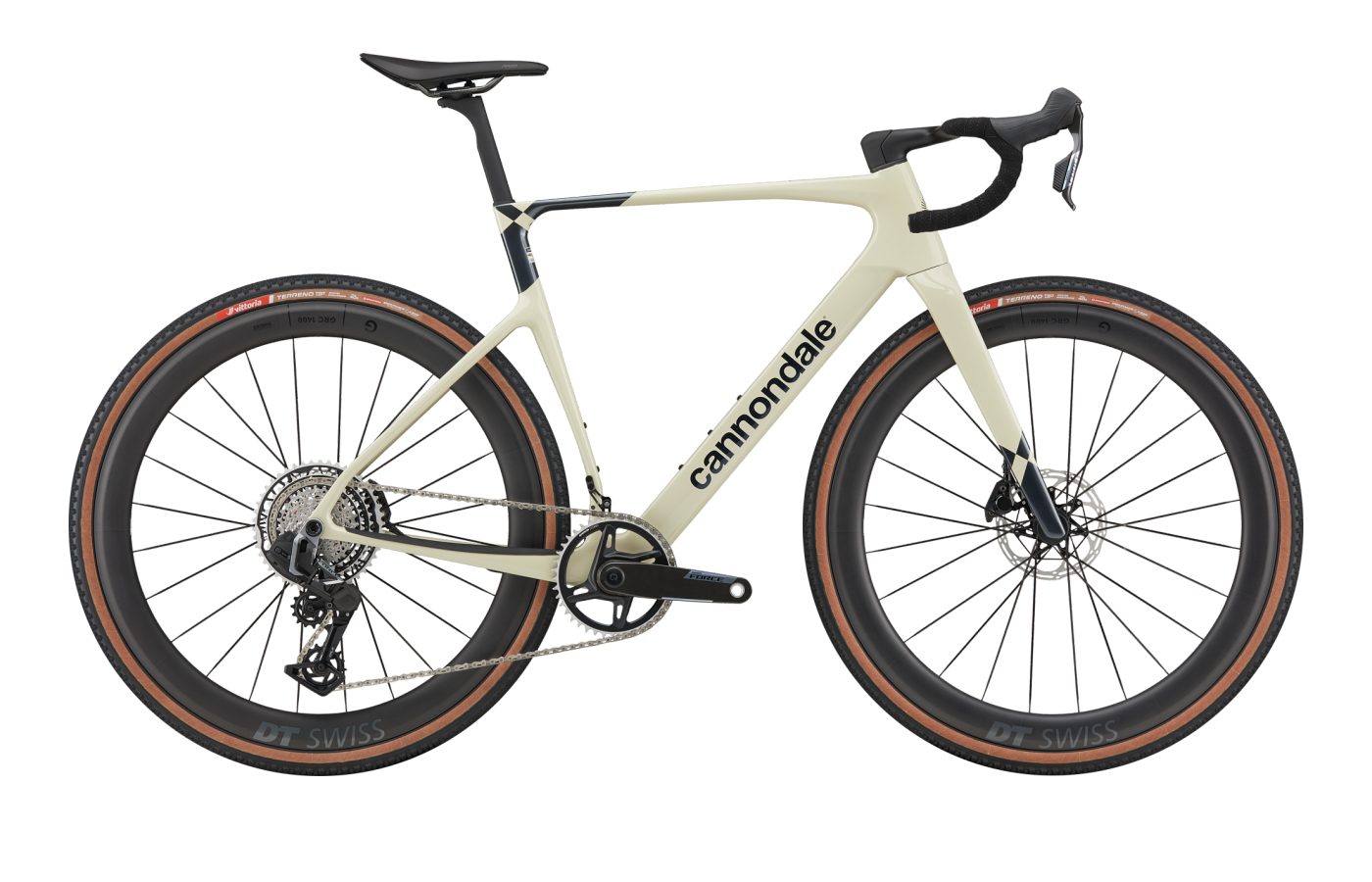
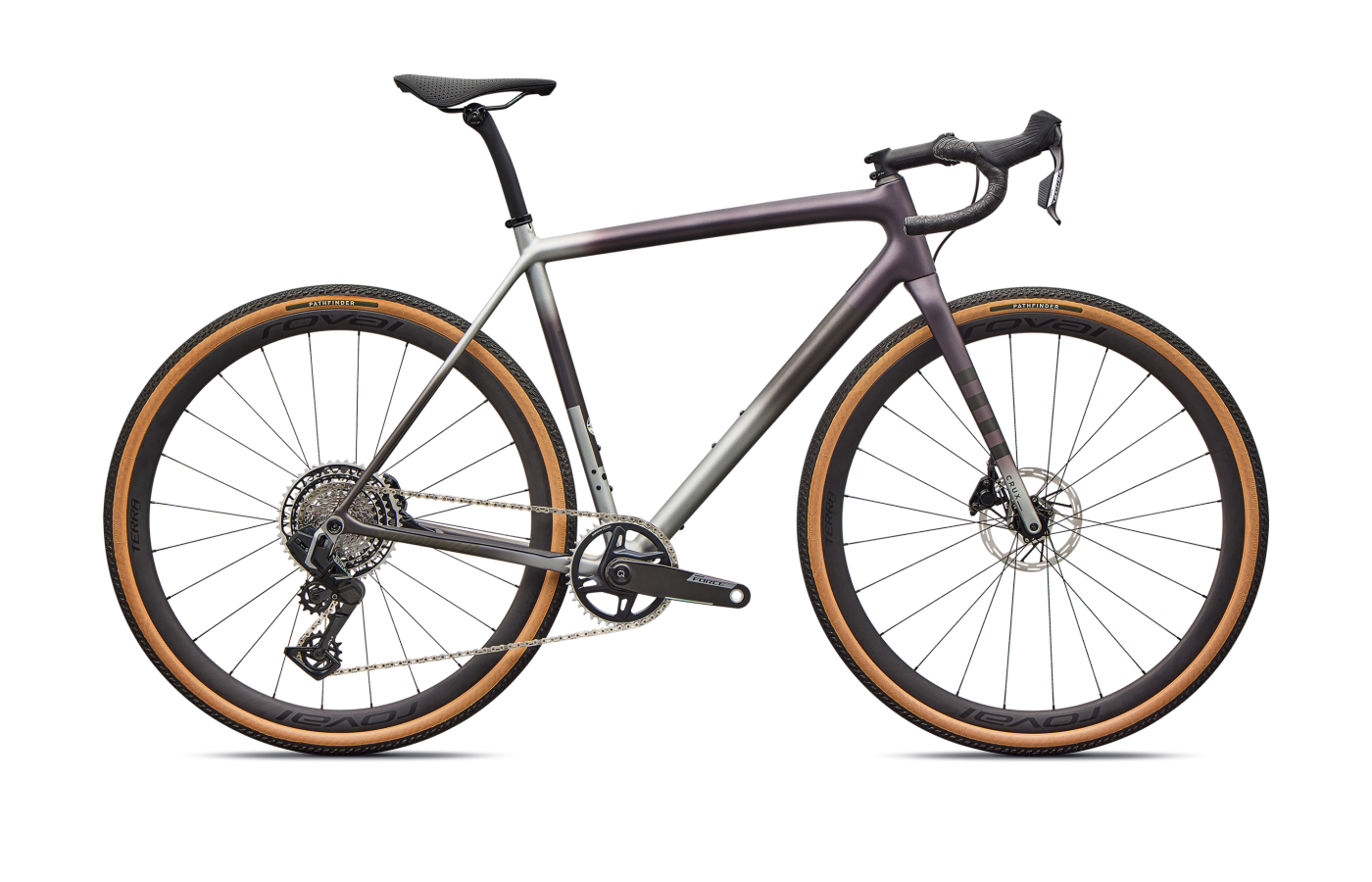
Two gravel racers, two opposite playbooks.
The Cannondale SuperX bets on aero integration. The Specialized Crux bets on weight savings and traditional standards.
SuperX
- Class-leading tire clearance — 48 mm rear, 51 mm front lets you race chunkier courses than the Crux can.
- Composed at race pace — OutFront geometry and 1,034 mm wheelbase make 35+ km/h feel boring, in a good way.
- Aero integration as standard — Delta steerer, integrated SystemBar R-One cockpit, and aero bottles cut frontal area meaningfully.
- Heavier than the Crux — 8.53 kg as tested in size 56, so climbs cost you watts.
- Proprietary cockpit and Delta steerer make stem swaps and bar changes a workshop job.
Crux
- Featherweight frame — FACT 10r builds land 7.6–8.0 kg, S-Works near 6.94 kg, lighter than many road bikes.
- Standards-friendly build — threaded BSA BB, 27.2 mm round seatpost, two-piece cockpit; serviceability is a real long-term asset.
- Broader price range — starts at $2,799 on the alloy DSW Comp; SuperX entry is $4,199.
- Firm front end — multiple reviewers cite hand fatigue on long, chunky descents.
- Minimalist mounts — no fender or rack bosses; bikepacking means strap-on bags only.
Editor’s analysis
Both bikes chase the same finish line — the front of a modern gravel race — but they take almost contradictory roads to get there.
On paper, the Cannondale SuperX and Specialized Crux belong in the same conversation: race geometry, room for 47–48 mm tires, carbon frames built for fast laps. Spend any time with the spec sheets and the philosophies split immediately. The SuperX is a tech-forward aero rig with a Delta steerer, integrated SystemBar R-One cockpit, and aero-shaped water bottles. The Crux is a deliberate throwback — round tubes, threaded BSA bottom bracket, two-piece cockpit, an exposed 27.2 mm seatpost.
Weight is the headline gap. A 56 cm S-Works Crux frame is a claimed 725 g, and Pro/Expert builds with the FACT 10r frame come in around 7.6–8.0 kg complete — closer to a road bike than most race-gravel rigs. The SuperX 2 in size 56 is 8.53 kg as tested by GRAN FONDO. That is a real climbing advantage for the Crux, and it shows: reviewers describe it as climbing 'like a mountain goat' and accelerating 'like the clappers' out of corners.
The SuperX answers with stability and aero. Cannondale's OutFront geometry pairs a 71° head angle with a long 55 mm fork offset for composed steering at speed; the wheelbase on a size 56 is 1,034 mm versus 1,023 mm on a 54 cm Crux, despite the Crux running 3 mm longer chainstays. On flat, fast Unbound-style courses where a steady 35 km/h matters more than a climbing punch, the SuperX is the more efficient tool. The Crux is happier on twisty singletrack, hilly cyclocross loops, and anywhere acceleration matters more than top-end speed.
There is also a serviceability gap that will matter to a lot of buyers. The Specialized Crux uses standard cockpit, seatpost, and BB parts — fit changes take minutes. The SuperX's Delta steerer and integrated bar look fast and are a headache to live with, especially if your fit needs tweaking. Pick the Cannondale SuperX for raw race speed; pick the Crux if you want a frame you can grow with for a decade.
Where the builds differ.
Comparing our editor's-pick builds side-by-side. Winners highlighted row-by-row — lower price and weight, and the better-spec component, each mark a point.
Build variants & pricing
The Crux casts a wider net — five carbon trims plus an alloy DSW Comp from $2,799. The SuperX is carbon-only, with five builds from $4,199 up to the $12,499 LAB71 flagship.
Prices are current US MSRP. Cannondale does not offer a sub-$4k SuperX, so if your ceiling is closer to $3k the Crux Comp ($3,999) or DSW Comp ($2,799) is the only way into either platform. Both flagship builds run SRAM Red XPLR AXS with power.
How they fit, how they steer.
Sizes 56 (SuperX) and 54 (Crux) are the fit-picked frames for the same rider. The Crux sits 15 mm lower in stack with 3 mm more reach — a longer, more stretched race position. The SuperX runs 11 mm more wheelbase and 3 mm shorter chainstays, trading some agility for high-speed composure.
Which size should I buy?
Size recommendations based on stack, reach, and effective top tube length. The Crux extends one size smaller (49 vs 46) at the bottom of the range; both top out at 61.
→These are starting points. Flexibility, riding style, and preferred position all shift the answer — if you’re between sizes, a professional fit beats a chart.
What the magazines said.
Published reviews from trusted cycling outlets. Click through for the full write-up.
Which one should you buy?
If you race long, fast, mostly-flat gravel and want every aero gain, get the SuperX. If you want a featherweight all-rounder with standards you can service forever, get the Crux.
SuperX
If your calendar is built around Unbound, SBT GRVL, or anything where 200+ km at a steady high pace decides the day, the SuperX's wheelbase, integrated cockpit, and 48 mm rear clearance pay back. It is also the better choice if you genuinely want one bike for fast group road rides and gravel events.
Crux
If you climb a lot, race cyclocross, or just want the lightest, liveliest gravel frame on the market with parts you can service in your garage forever, the Crux is the obvious answer. It rewards a skilled, engaged rider and punishes anyone hoping to plow through chunder.
Questions buyers actually ask.
Short answers to the things we get emailed about most often.
01Which bike is lighter?
The Specialized Crux, by a meaningful margin. The S-Works Crux comes in at a claimed 6.94 kg in size 56, and even the FACT 10r Pro/Expert builds land in the 7.6–8.0 kg range. GRAN FONDO weighed the Cannondale SuperX 2 at 8.53 kg in size 56.
On a 30-minute climb, that 500–800 g delta is worth roughly 8–12 seconds for a 70 kg rider — small in absolute terms, but real over the course of a long event with multiple climbs.
02Which has more tire clearance?
The Cannondale SuperX, narrowly. Cannondale rates it for 48 mm rear and 51 mm front — at the upper end of what gravel-race frames currently allow.
The Specialized Crux clears 47 mm (700c) or 2.1" on 650b. In practice both fit a true 45 mm tire with mud room, so the gap only matters if you want to push toward 50 mm rubber for genuinely rough courses.
03Which is faster on flat, fast gravel?
The SuperX, by Cannondale's design intent. The Delta steerer, integrated SystemBar R-One cockpit, and aero-shaped tube profiles are all aimed at the 35 km/h race-pace zone. GRAN FONDO's race-bike test pegged it as the most aero-focused bike in their group.
The Crux ignores aero entirely — Specialized borrowed the Aethos road bike's round-tube philosophy. On a flat, sustained 200 km effort the SuperX should be the faster tool. Swap to a hilly course and the Crux's weight advantage starts to chip into that gap.
04Which is easier to live with day-to-day?
The Crux, decisively. It uses a threaded BSA bottom bracket, a round 27.2 mm seatpost, a two-piece alloy or carbon cockpit, and a tapered round steerer. Stem swaps, bar changes, and BB service are all straightforward.
The SuperX runs Cannondale's Delta steerer (a non-round steerer tube) plus a one-piece integrated SystemBar R-One cockpit on the higher trims. Fit changes typically mean buying a new cockpit unit, and routing work takes time. If you change positions often or hate proprietary parts, the Crux wins this category outright.
05Can either bike double as a cyclocross bike?
Yes — both, but the Crux is the more natural fit. The Crux name has been a UCI cyclocross platform for a decade, and the current bike retains the geometry, low weight, and handling that make it easy to shoulder and accelerate out of corners.
The SuperX nameplate also has cyclocross heritage — the original 2010 SuperX was a CX bike — and Cannondale describes the current frame as race-gravel that can 'double up for cyclocross duties.' At 8.5+ kg it is heavier to shoulder over barriers, though, and the integrated cockpit is harder to crash-replace.
06Which has better build value at the mid-tier?
Close — but the SuperX has a slight edge at the ~$7.5k Force AXS tier. The SuperX 1 (`$7,499`) ships with a full SRAM Force XPLR AXS group, an XPLR power meter, and DT Swiss GRC 1400 DICUT carbon wheels plus the carbon SystemBar R-One cockpit.
The Crux Pro at `$7,999` runs Force AXS E1 with a Quarq power meter and Roval Terra CL carbon wheels — a strong build, but with an alloy two-piece cockpit. You pay $500 more for the Specialized name and the lighter frame; you get less integration.
07Which has a wider build range?
The Crux. Specialized sells it from the DSW Comp ($2,799 alloy) all the way up to the S-Works ($11,999 FACT 12r carbon) — eight builds across two model years, including 2025 and 2026 trims of the Pro, Expert, and Comp.
The SuperX is carbon-only and runs five builds from $4,199 (Apex AXS) to $12,499 (LAB71). If your budget tops out around $3k, the SuperX is simply not in the conversation; the Crux Comp or DSW Comp is.
08Can I bikepack on either of these?
Not really — both are race-first frames. The Crux is the more minimalist of the two: three bottle cage mounts and not much else, no fender or rack bosses. Multiple reviewers flag this as the bike's biggest functional limitation.
The SuperX is similarly stripped down. For loaded touring or multi-day bikepacking, look at the Specialized Diverge (Future Shock plus rack/fender mounts) or a frame like the Salsa Cutthroat. Both bikes here can carry strap-on bags, but neither is designed for it.
Similar bikes
If your priorities don’t map cleanly onto either of these, one of these adjacent bikes probably fits better.
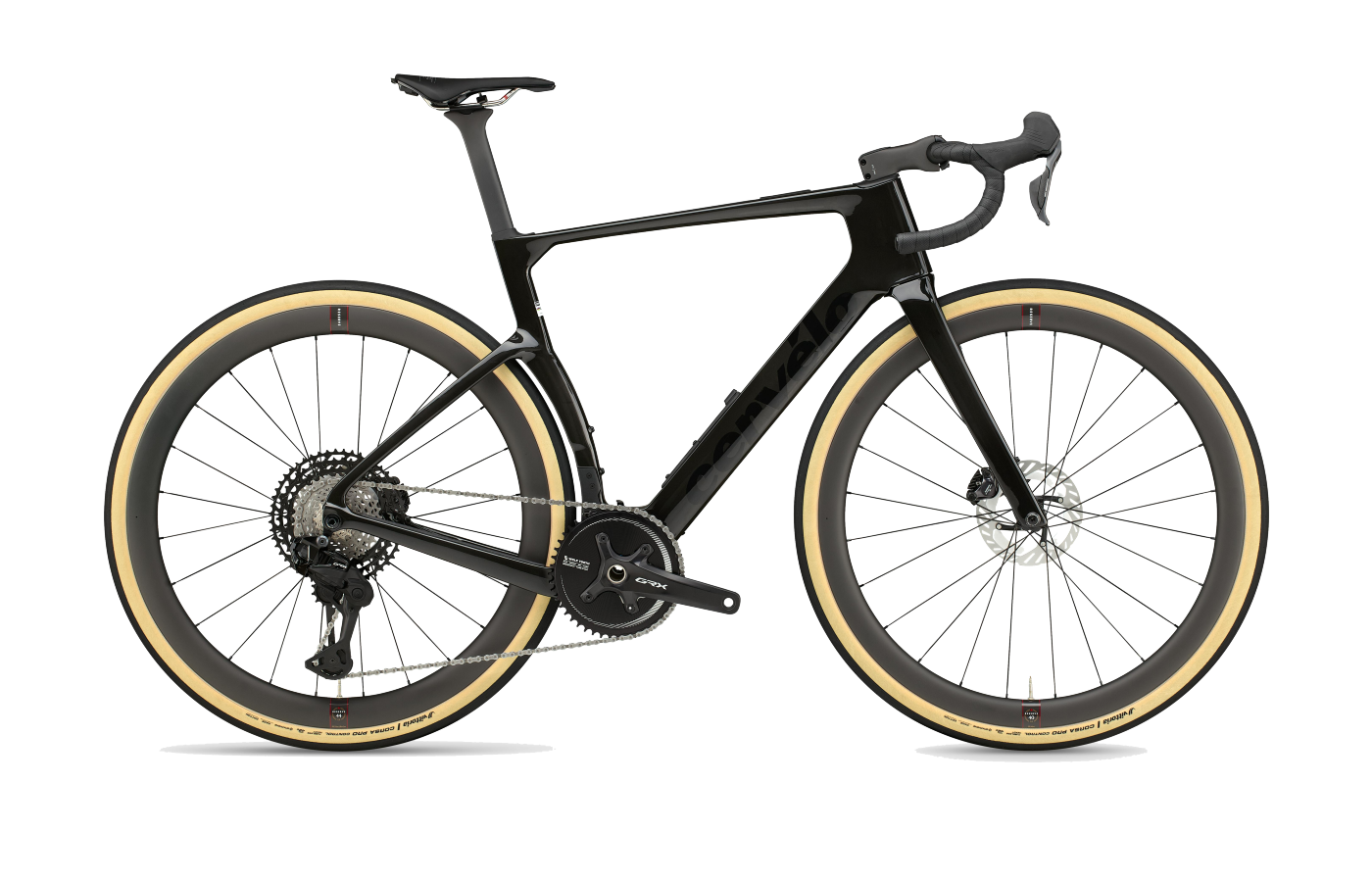
Aspero-5
Cervélo's pure race-aero gravel bike — like the SuperX in spirit, but with the TrailMix flip-chip that lets you toggle between a sharper race geometry and a more stable adventure setup.
Compare →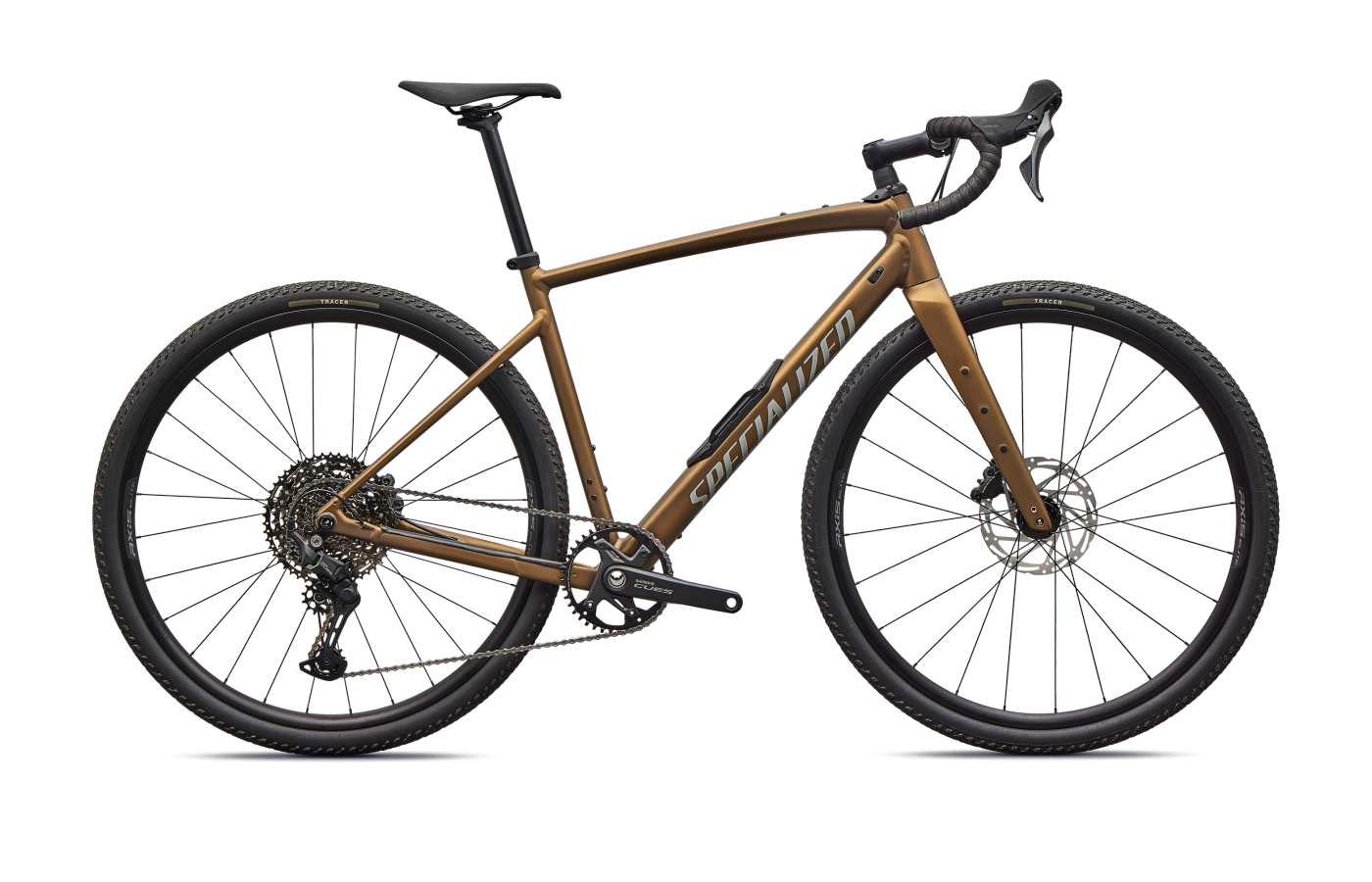
Diverge
If the Specialized Crux's firm ride and zero mounts sound like the wrong tool, the Specialized Diverge keeps the brand fit but adds Future Shock front-end suspension and full bikepacking utility — the long-day counterpoint.
Compare →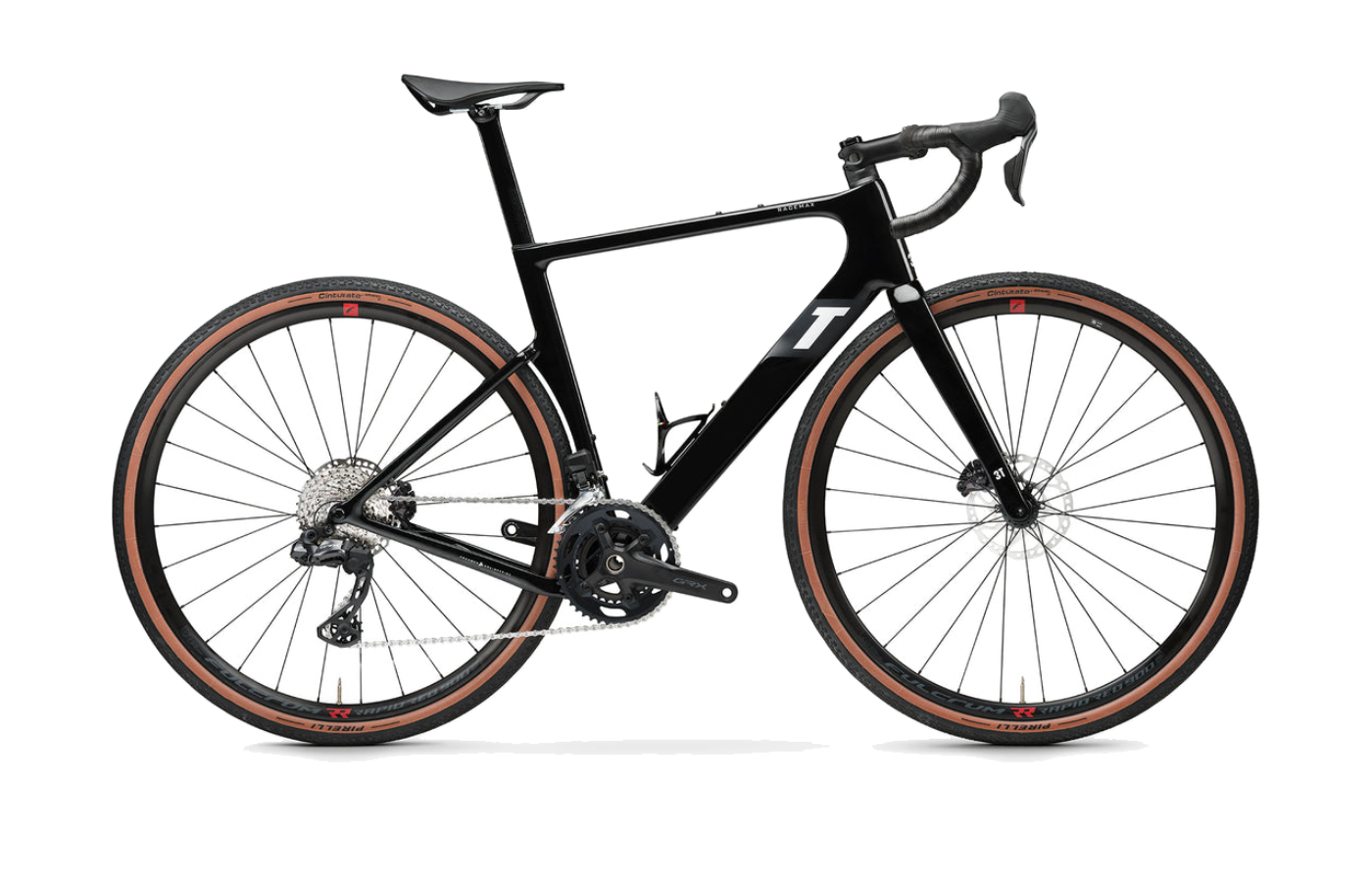
RaceMax
The original aero-gravel rig. The 3T RaceMax's tube shapes are designed around tire airflow, not around the rider — quirky to look at, but a genuine alternative if you like the SuperX's aero pitch.
Compare →