Trail
vsMarlin
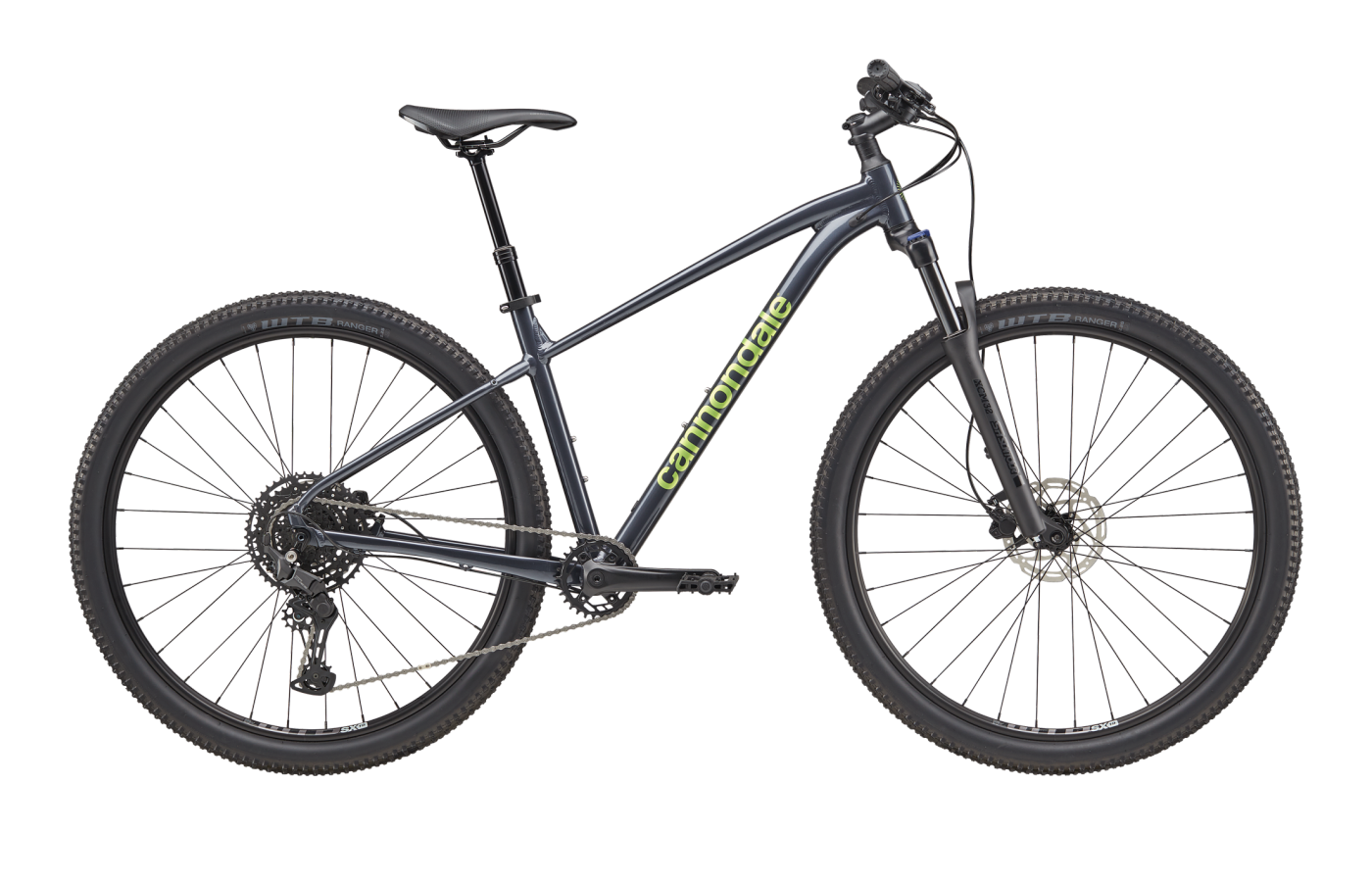
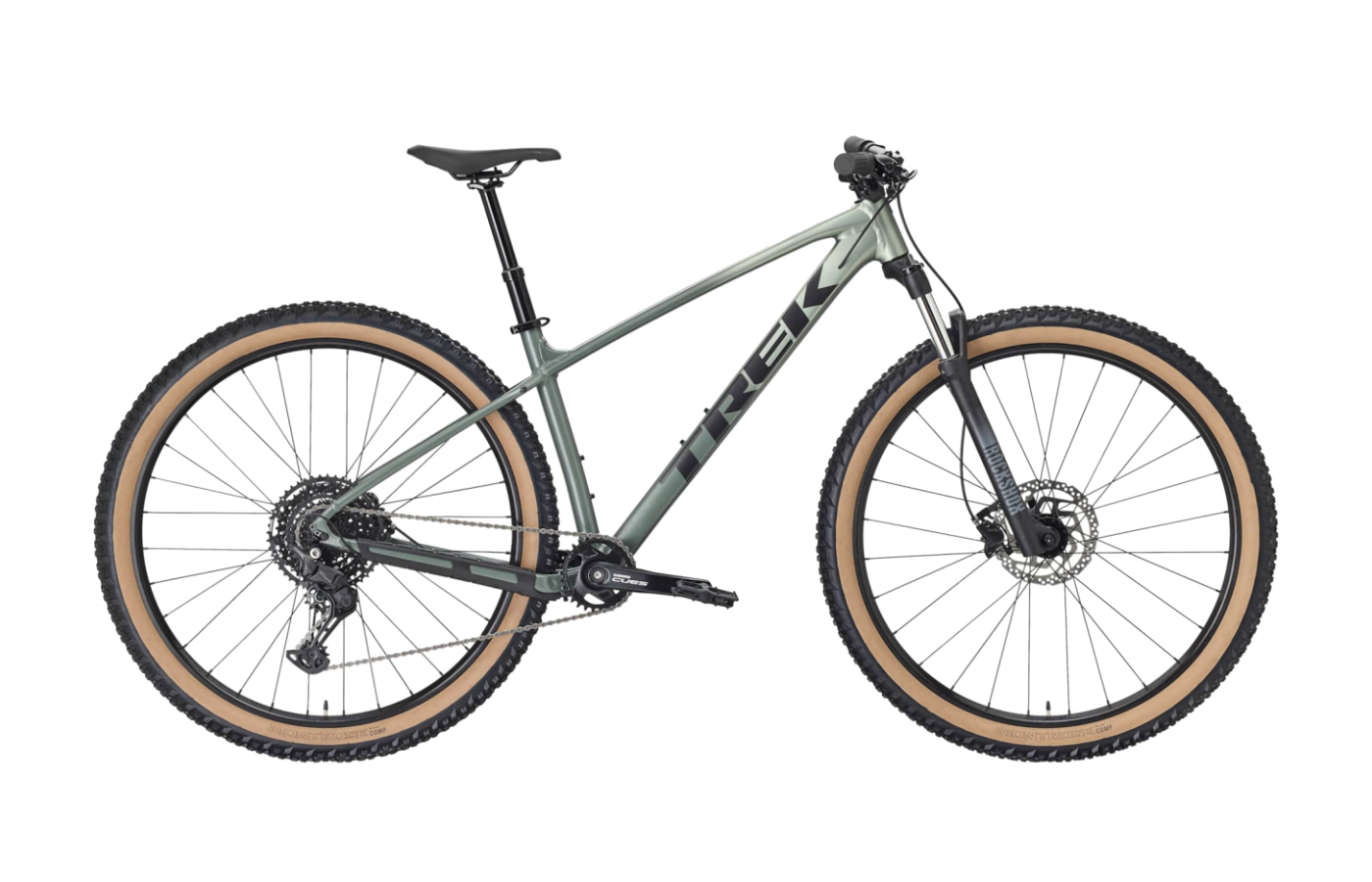
Two beginner hardtails — same money, different geometry bets.
The Cannondale Trail keeps it nimble and XC-flavored. The Trek Marlin Gen 3 went long and slack to chase real trail.
Trail
- Quicker, lighter steering — a 68° head angle and 425 mm reach turn faster on tight, flowy XC and gravel.
- Deepest range at the low end with seven builds spanning $699 to $1,175 and a true women's-specific SE option.
- Right-sized wheels — XS/S frames roll on 27.5", M and up on 29", so smaller riders aren't stuck on oversize hoops.
- No factory dropper post anywhere in the standard Trail lineup — only the SE variants get one.
- Coil forks across the board at this price; no air spring until you spec the SE.
Marlin
- Modern trail geometry — 66.5° head angle and 440 mm reach on M makes steep descents feel calm, not skittish.
- Air fork plus dropper at $1,399 (Marlin 7) — the only build in this comparison that ships trail-ready out of the box.
- Internal dropper routing on every frame — easy upgrade path even on the cheapest Marlin 4.
- Quick-release rear ("ThruSkew") instead of a true thru-axle — limits future wheelset upgrades.
- Heavy: 14.15–15.10 kg across the lineup; a noticeable penalty on long climbs.
Editor’s analysis
At $999 they sell the same drivetrain on the same fork travel — but the geometry tells you which kind of beginner they're each pitching to.
On paper, the price-matched pair — Trail 1 and Marlin 6 Gen 3 — look almost interchangeable. Both ring up at $999. Both run Shimano CUES U6000 10-speed with a 30T narrow-wide ring. Both ship with a 100 mm coil fork, hydraulic disc brakes, and a tubeless-ready 23 mm rim. Spec-sheet shopping won't separate them.
Geometry will. The Trek Marlin Gen 3 sits at a 66.5° head tube angle with a 440 mm reach and a 1,163 mm wheelbase on a size M — long, slack, and built around the assumption that the rider wants to point downhill. The Cannondale Trail holds a more traditional 68° head angle, 425 mm reach, and a 1,140 mm wheelbase at the same size. The Trail is the sharper-turning, quicker-climbing bike; the Marlin is the more planted descender. Trail also gets ~14 mm more stack at size M (623 vs 609), so it sits the rider a touch more upright.
Both lineups have a personality on the components. Trek's Marlin 7 ($1,399) is the only build in either family with an air-spring fork (RockShox Judy Silver) and a factory dropper post — meaningful upgrades if you actually plan to ride blue and red trails. Cannondale answers higher up with the Women's SE 4 at $1,175, which adds a 120 mm coil fork, Shimano Deore 10-speed, and a slacker stance via the SE geometry — but no dropper. The Trail line goes deeper at the bottom (Trail 8 starts at $699, the cheapest way into a Cannondale hardtail), and the Marlin starts $70 lower at $629 with a 3x8 Shimano M315 setup.
Put another way: the Cannondale Trail is the bike for someone whose riding day is half gravel rail-trail and half mellow singletrack. The Trek Marlin Gen 3 is the bike for someone who wants to learn to mountain bike on real terrain, with the geometry already ready for them when their skills catch up.
Where the builds differ.
Comparing our editor's-pick builds side-by-side. Winners highlighted row-by-row — lower price and weight, and the better-spec component, each mark a point.
Build variants & pricing
Cannondale offers seven Trail builds from $699 to $1,175; Trek runs four Marlin Gen 3 builds from $629 to $1,399.
Prices are current US MSRP. Cannondale tops out below Trek's flagship Marlin 7, which is the only build in this comparison with both a dropper post and an air-spring fork from the factory.
How they fit, how they steer.
Both compared at size M. The Marlin sits 14 mm lower in stack and 15 mm longer in reach — a 1.5° slacker head tube and 9 mm more trail tilt it toward stability, while the Trail's 7 mm longer chainstay and 23 mm shorter wheelbase keep it quicker to flick through tight turns.
Which size should I buy?
Both ranges cover XS through XL; Trek adds an XXL and an in-between ML. Use stack and reach to land in the right size for your inseam and torso.
→These are starting points. Flexibility, riding style, and preferred position all shift the answer — if you’re between sizes, a professional fit beats a chart.
What the magazines said.
Published reviews from trusted cycling outlets. Click through for the full write-up.
Which one should you buy?
If your riding is mostly gravel paths and mellow singletrack, get the Trail. If you want to learn on real trails, get the Marlin.
Trail
If your weekly riding is half commute, half bike-path, with the occasional Saturday loop on a green or easy-blue trail, the Trail's lighter, quicker-handling geometry and seven-build range make it the more flexible pick. The right-sized wheels also make it a smarter buy for shorter or younger riders.
Marlin
If you actually want to learn to mountain bike — descend blues, work up to reds — the Marlin Gen 3's slacker, longer geometry will hold your hand on terrain where the Trail starts to feel busy. Step up to the Marlin 7 for the air fork and factory dropper.
Questions buyers actually ask.
Short answers to the things we get emailed about most often.
01Which one is better for actual mountain biking?
The Trek Marlin Gen 3 is the more capable trail bike out of the box. Its 66.5° head tube angle is 1.5° slacker than the Trail's 68°, and its 1,163 mm wheelbase (size M) is 23 mm longer — both numbers push it toward calmer, more planted descending on real singletrack.
The Cannondale Trail's geometry is more old-school cross-country: shorter, steeper, lighter on its feet. It's the better bike for fire roads, gravel, and gentle singletrack, but starts to feel busy when the trail steepens or gets technical.
02At $999, which build is the better value?
The price-matched pair is the Cannondale Trail 1 vs the Trek Marlin 6 Gen 3 — both $999, both running Shimano CUES U6000 10-speed, both on a 100 mm coil fork.
The Marlin 6 has the better tire spec (Maxxis Rekon Race or Bontrager Montrose 2.4" on a tubeless-ready Bontrager Kovee wheel with 23 mm internal width) and a wider 750 mm bar. The Trail 1 has a slightly lighter wheel/tire package and the more agile geometry. Pick on which kind of riding you do more often — there's no clear winner on spec alone.
03Does either come with a dropper post from the factory?
Trek Marlin 7 Gen 3 ($1,399) ships with a TranzX dropper. That's the only build in this comparison with a factory dropper.
Cannondale only spec drops on the SE variants (which aren't part of the standard Trail lineup shown here). All other Trail and Marlin builds come with a rigid post — but every Gen 3 Marlin frame is internally routed for a dropper, making it an easy aftermarket upgrade.
04How much do these weigh?
Trek publishes weights for the Marlin Gen 3: 14.15 kg (31.2 lb) for the Marlin 7, 15.00 kg for the Marlin 6, 15.10 kg for the Marlin 5, and 14.90 kg for the Marlin 4 — all at size M.
Cannondale doesn't publish per-build weights for the Trail, but reviews put the Trail 8 at around 14.9 kg / 32.9 lb. Both are heavy by mountain bike standards — that's the cost of an aluminum frame at this price.
05Tire clearance — how wide can you fit?
Cannondale Trail: rated to roughly 57 mm (about 2.25") on the standard models, with stock builds running 2.25" WTB Trail Boss or Ranger Comp tires.
Trek Marlin Gen 3: Trek dropped the drive-side chainstay to clear a true 29x2.4" tire on M and up — the Marlin 7 ships with Maxxis Rekon 2.4" stock.
Neither is a plus-tire bike, but the Marlin gives you slightly more rubber to work with at the same wheel size.
06Can I upgrade to a better fork later?
On the Marlin Gen 3, yes — the frame is rated for up to 120 mm of travel. The catch is the straight 1-1/8" head tube; if you upgrade to a fork with a tapered steerer, you'll need a new headset crown race too.
On the Trail, the standard 100 mm builds use a similar 1-1/8" headtube. Cannondale doesn't publish a max-travel rating, but jumping much past 100 mm changes the geometry meaningfully — the SE variants come stock with a 120 mm fork if that's the look you want.
07What about warranty?
Trek backs the Marlin frame with a lifetime warranty to the original owner — frequently cited by reviewers as a real reason to choose the Marlin.
Cannondale offers a lifetime frame warranty to the original owner as well. Both also offer crash-replacement programs, though terms and pricing vary by region.
08Which holds resale value better?
Both are entry-level alloy hardtails — neither holds value especially well on the used market. Trek's broader dealer network and longer-running model name generally translate to slightly faster sales when you list a used one.
If resale matters, buying a one-year-old bike from either brand at 30–40% off retail is the right play — let someone else absorb the depreciation.
Similar bikes
If your priorities don’t map cleanly onto either of these, one of these adjacent bikes probably fits better.
Roscoe
If the Marlin's quick-release rear and 100 mm fork start to feel like a ceiling on the trails you actually ride, the Trek Roscoe steps up to true thru-axles, 140 mm of travel, and a properly burlier frame — at a meaningful price jump.
Compare →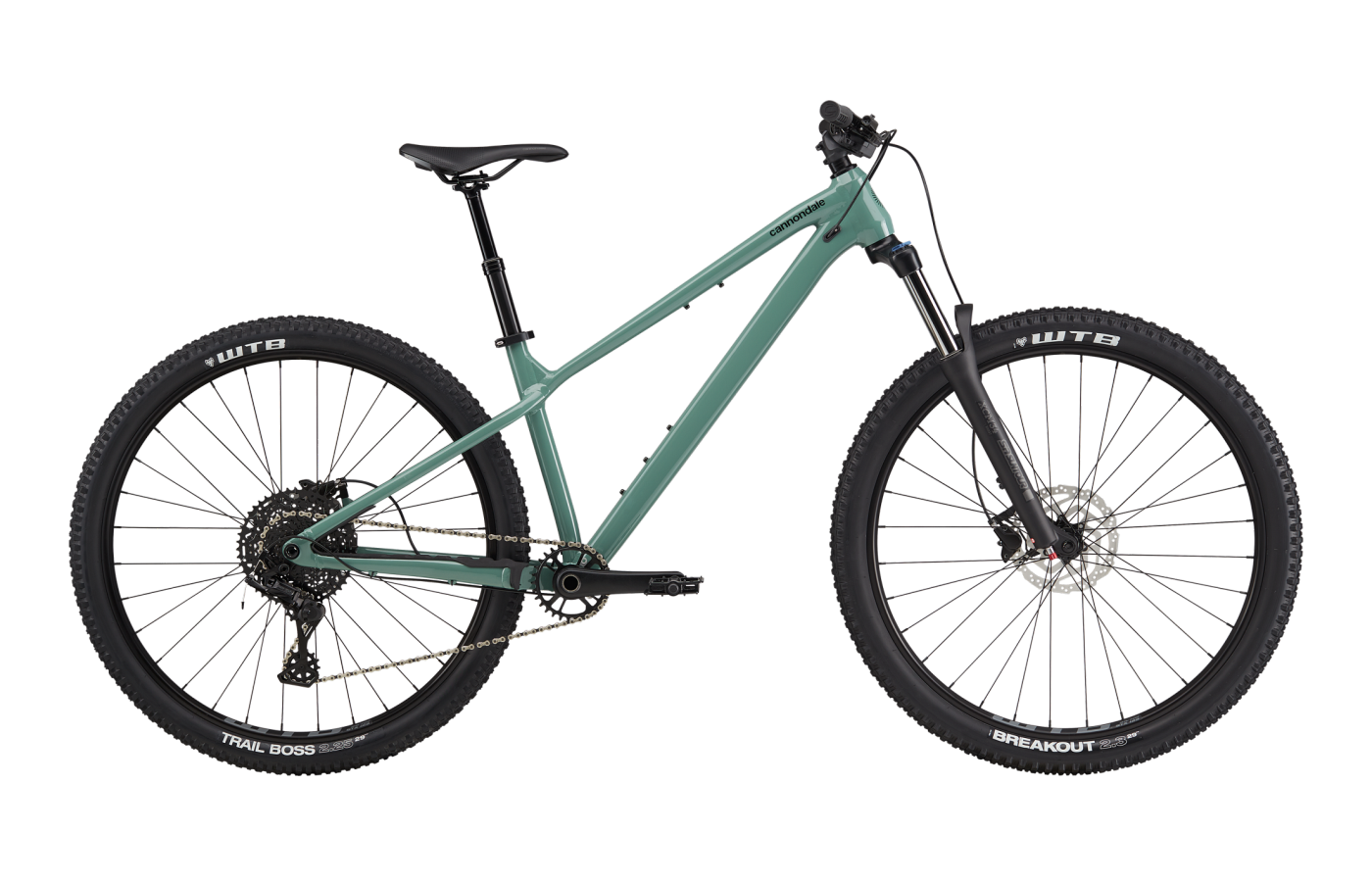
Habit HT
Cannondale's modern, aggressive hardtail-trail answer. Slacker and longer than the standard Trail, with the kind of geometry the Marlin Gen 3 has been chasing — for riders who like the brand but want a real trail-ready stance.
Compare →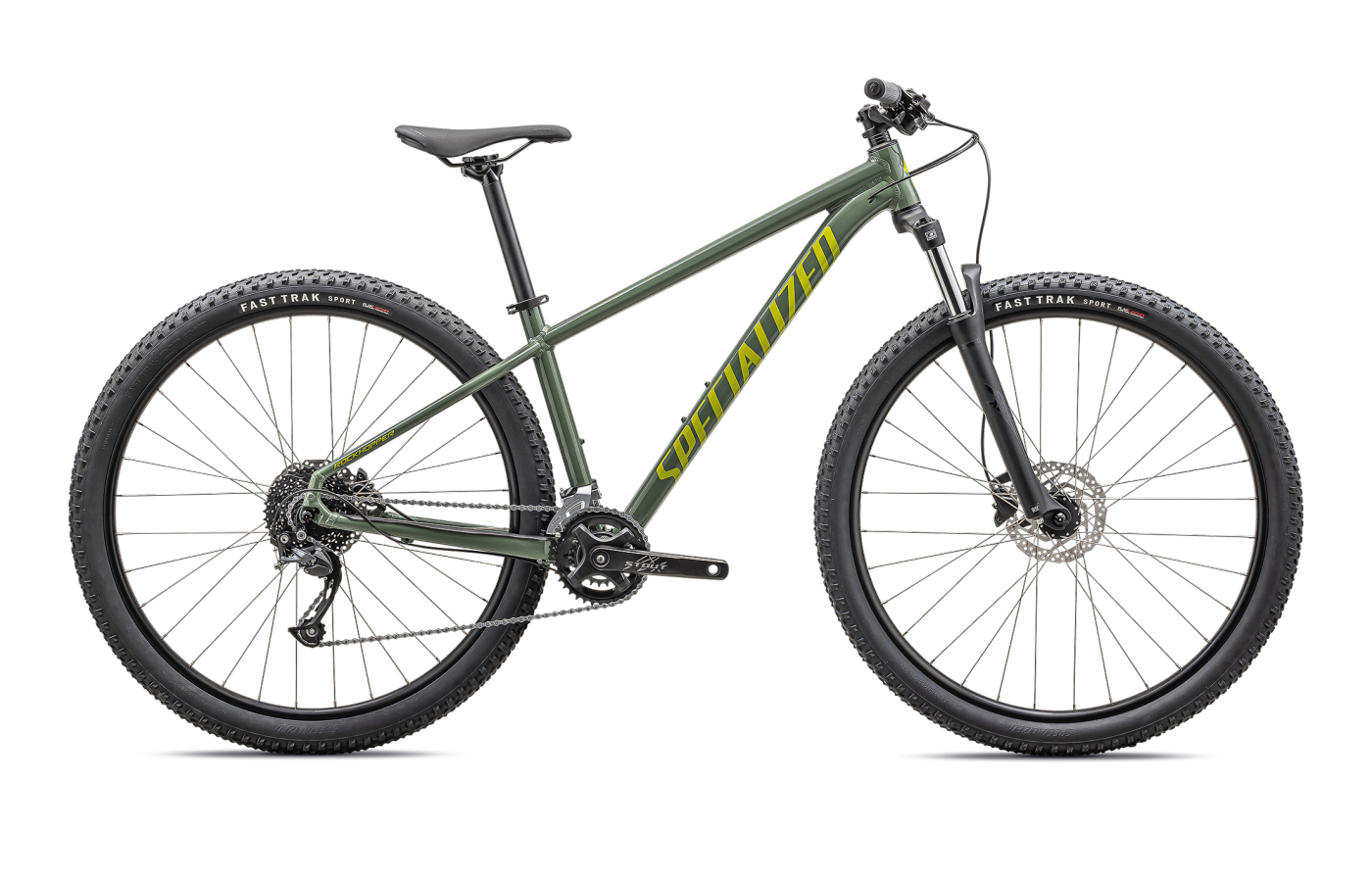
Rockhopper
Specialized's direct rival to both. Cross-country focus, a massive size and wheel-option range, and a build ladder that competes head-to-head at almost every price point in this comparison.
Compare →