Grail
vsCrux
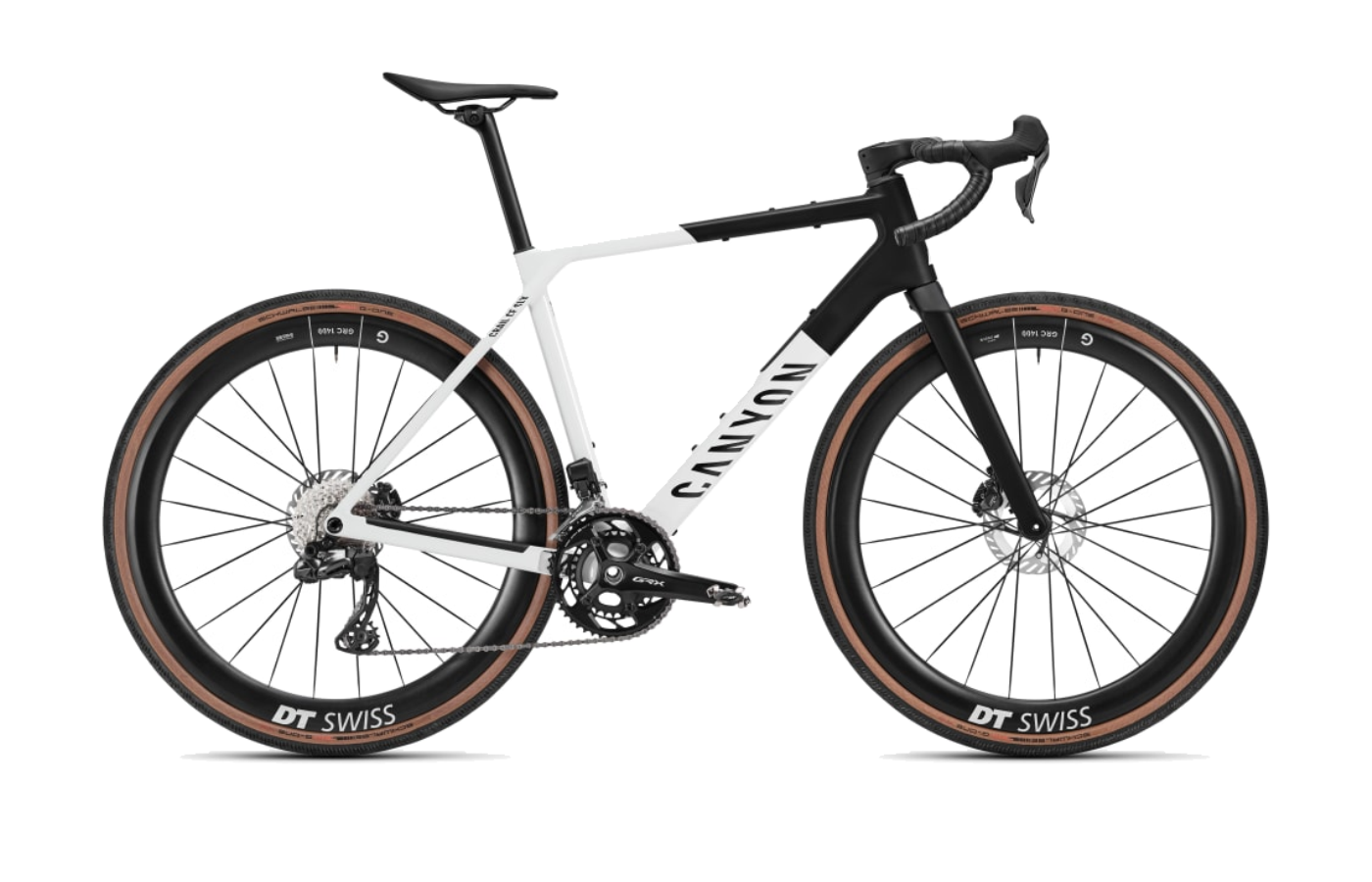
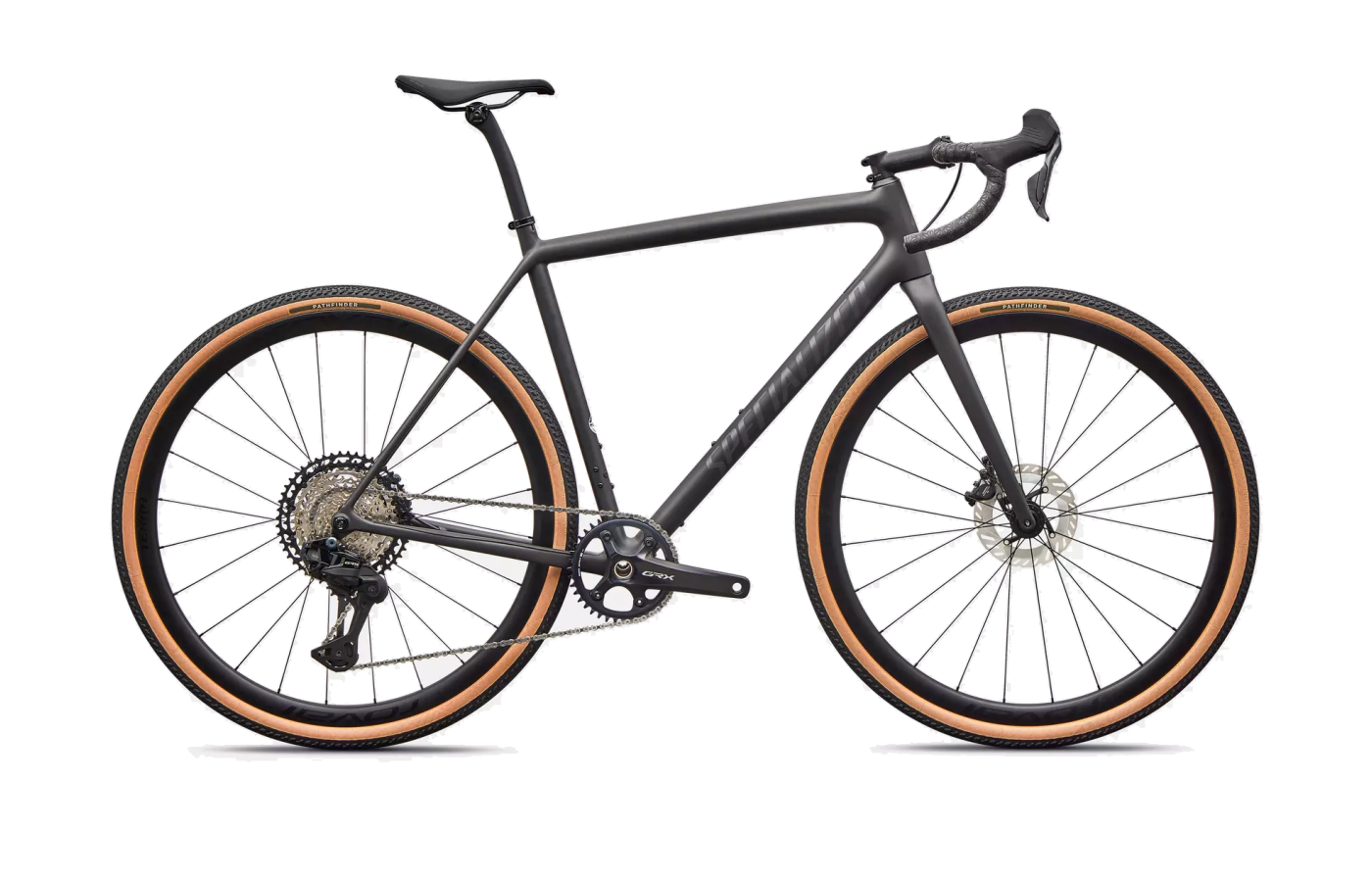
Two gravel racers, two religions.
The Canyon Grail is an aero system bolted to a value sticker. The Specialized Crux is a stripped-down featherweight that hates proprietary parts.
Grail
- Aero-optimized at speed — Canyon claims 9.1 watts saved at 45 km/h vs the previous Grail, with the integrated cockpit and Aero Load System contributing measurably above 30 km/h.
- Class-leading value — full GRX Di2 12-speed and DT Swiss GRC 1400 carbon wheels at $5,599, undercutting equivalently-specced rivals by $1,000+.
- High-speed stability — a 27 mm-longer wheelbase than its predecessor and a slacker 71° HTA make the Grail track straight on rough, fast descents.
- Tire clearance caps at 42 mm — limiting for technical or rocky terrain.
- Proprietary integrated cockpit means fit changes get expensive; mid-ride hose adjustments require shop time.
Crux
- Featherweight frame — a claimed 725 g for the S-Works frame and 7.95 kg complete on the Expert, lighter than many road bikes and addictive on climbs.
- All standard parts — threaded BSA bottom bracket, 27.2 mm round seatpost, two-piece cockpit, externally routed cables. Maintenance is shop-friendly and upgrades are unconstrained.
- 47 mm tire clearance — enough rubber to dual-purpose as a CX race bike or run wide tubeless for chunky singletrack.
- Aggressive race posture and stiff frame can feel harsh on rough ground without high-volume tires.
- Higher entry price at the same tier — and lower-spec Comp builds get criticized for heavy aluminum wheels.
Editor’s analysis
Same race podium, opposite blueprints — aero integration on one side, minimalist grams on the other.
Both bikes target the same fast-gravel buyer — Unbound starters, mixed-surface racers, riders who'd rather ride one drop-bar bike than two. But spend ten minutes with the spec sheets and the design philosophies couldn't be further apart. Canyon went full system-integration with the Gen 2 Grail: aero tube shapes pulled from its Ultimate road bike, an integrated Double Drop cockpit, internal down-tube storage, a magnetically attached Fidlock frame bag, and a claimed 9.1-watt savings at 45 km/h over the previous Grail. Specialized went the other direction with the Crux, applying its Aethos lightweight playbook to dirt — round tubes, a threaded BSA bottom bracket, a 27.2 mm round seatpost, and a two-piece alloy cockpit. No cables through the headset, no proprietary anything.
The weight gap reflects that. The Crux S-Works frame is a claimed 725 g; the FACT 10r Expert build comes in at 7.95 kg complete. Canyon doesn't publish frame weights for the CF SLX, but the Grail CF SLX 8 Di2 weighs 8.68 kg complete — about 730 g more bike. That's noticeable on long climbs, especially in the second half of a six-hour day. The Crux climbs like a road bike with knobbies; the Grail wants the rider seated, holding watts, and using its 1,024 mm wheelbase to stay planted at speed.
Tire clearance widens the gap further. The Crux clears a true 700x47c — enough rubber for chunky NorCal singletrack or a CX race in the slop. The Canyon Grail tops out at 42 mm, which is fine for fast hardpack and chip-seal but tight for anything genuinely rough. Reviewers consistently flag the Grail's clearance as its biggest functional limit. Pair that with a stiffer-than-old-Grail D-shaped seatpost and you have a bike optimized for what Canyon calls champagne gravel — Kansas, Vermont, gravel-race courses with smooth surfaces and steady tempo.
Then there's the buy-it-and-live-with-it side. Canyon's direct-to-consumer pricing is the Grail's strongest argument — the CF SLX 8 Di2 lands at $5,599 with full GRX Di2 12-speed and DT Swiss GRC 1400 carbon wheels, a build the closest comparable Specialized Crux Expert matches at $6,299. But pick a stem length you don't love and the Grail asks you to buy a new $400+ Canyon cockpit; the Crux takes any standard stem and bar. Same trade-off on storage, on warranty support, on how easy it is to swap a worn-out part five years in.
Where the builds differ.
Comparing our editor's-pick builds side-by-side. Winners highlighted row-by-row — lower price and weight, and the better-spec component, each mark a point.
Build variants & pricing
The Grail tops out at $6,099; the Crux climbs all the way to a $11,999 S-Works. Both offer entry points just under $3k, but the Crux has a wider middle.
Prices are current US MSRP. The Crux's range is wider — alloy DSW Comp at $2,799 up to S-Works at $11,999 — while the Grail's lineup tops out at $6,099 with no S-Works-equivalent flagship in the US.
How they fit, how they steer.
Grail XS vs Crux 54 — the fit-picked sizes for a 5'8" rider on each bike. Stack and reach land within a few mm; the Crux runs a 0.5° steeper head angle and a 1 mm shorter wheelbase, so it'll feel marginally quicker through tight turns.
Which size should I buy?
Sizes are picked by stack, reach, and effective top tube. The Grail uses XXS–XXL labels, the Crux uses numeric 49–61.
→These are starting points. Flexibility, riding style, and preferred position all shift the answer — if you’re between sizes, a professional fit beats a chart.
What the magazines said.
Published reviews from trusted cycling outlets. Click through for the full write-up.
Which one should you buy?
If you race fast hardpack and want maximum bike for the money, get the Grail. If you want one bike that'll do gravel, CX, and a road group ride, get the Crux.
Grail
If your season is built around mass-start gravel events on smooth-to-moderate terrain — Unbound, Mid South, BWR Kansas — the Grail's aero shaping and direct-to-consumer pricing are hard to argue with. You get a Force AXS or GRX Di2 bike with carbon wheels for what the competition charges for Rival.
Crux
If you want one drop-bar bike to handle Saturday's road group ride, Sunday's gravel race, and a CX race in November, the Crux is the answer. The featherlight frame climbs like a road bike, the 47 mm clearance lets you run real off-road tires, and the standard parts mean you can fix or upgrade anything yourself.
Questions buyers actually ask.
Short answers to the things we get emailed about most often.
01Which is faster on smooth gravel?
The Canyon Grail, by a small but real margin above 30 km/h. Canyon claims a 9.1-watt savings at 45 km/h versus the previous Grail, attributable to the deeper tube shapes pulled from the Ultimate road frame and the integrated Double Drop cockpit. Bike Perfect, Granfondo, and Cycling News all describe it as feeling "explosively fast" and "fast in a straight line" on hardpack and fire road.
Below 25 km/h or on rolling terrain where you're constantly accelerating, the Crux's lighter weight tends to even things out — most riders won't feel the aero difference at social-ride speeds.
02Which climbs better?
The Specialized Crux, decisively. The S-Works Crux frame is a claimed 725 g; the Expert build (FACT 10r carbon, GRX Di2) weighs 7.95 kg complete. The closest equivalent Canyon Grail CF SLX 8 Di2 is 8.68 kg complete — about 730 g heavier. On a 30-minute sustained climb that's worth roughly 15–20 seconds for a 70 kg rider, and it's noticeable in the snap when you stand up.
The Crux also has a steeper seat angle on its mid sizes and a slightly more aggressive race posture, which most reviewers describe as feeling "like a road bike with knobbies" on climbs.
03What's the maximum tire clearance?
Canyon Grail: 42 mm officially. Reviewers note this is on the low end for modern gravel bikes and that the 42 mm clearance is the Grail's biggest functional limit on technical terrain.
Specialized Crux: 47 mm with 700c wheels, or 2.1" with 650b. That's enough rubber for chunky singletrack, CX racing in the mud, or running 45 mm tubeless for compliance on rough courses.
For anything genuinely rocky or root-heavy, the Crux is the more capable platform; for fast hardpack and chip-seal, both are plenty.
04Can I run a 2x drivetrain on either?
Both can run 2x electronic. The Grail CF SLX 8 Di2 ships 2x stock with Shimano GRX 48/31T, paired with an 11-34T cassette. The Crux supports 2x electronic but not 2x mechanical — the frame's cable routing only accommodates a single front shifter cable, which Velo, Cycling News, and BikeRadar all flag.
If you want a mechanical front derailleur, the Crux is off the table. Most current builds for both bikes are 1x anyway — Force XPLR or Rival XPLR on the AXS-equipped models.
05How serviceable are the integrated cockpits?
The Grail's CP0039 integrated cockpit is one-piece carbon with semi-integrated cable routing. Adjusting bar width or stem length means buying a new unit — the cockpit options run $300–$450 — and brake hose work requires a partial disassembly. Canyon does use a standard 1 1/8" steerer, so aftermarket cockpit swaps are possible but expensive.
The Crux uses a conventional two-piece cockpit — Specialized Pro SL alloy bar and stem on the Expert, S-Works SL on the top builds. Standard 31.8 mm clamp, externally routed cables. You can swap stem length, bar width, or both for the price of the parts and a few minutes with hex keys. This is one of the Crux's most consistently praised practical advantages.
06Which has better long-term value with upgrades?
The Crux, mostly because of its standards. The threaded BSA bottom bracket avoids the press-fit creak issues that BikeRadar and Cycling Weekly note on the Grail; the round 27.2 mm seatpost and two-piece cockpit mean every upgrade path is open without proprietary parts. Specialized also sells the frame standalone (FACT 12r at $5,000, FACT 10r at $3,200) for custom builds.
The Grail is the better out-of-the-box value at a given price point, but the Crux's open architecture pays back over years of ownership.
07Are these bikes good for bikepacking?
Neither is a bikepacking-first bike. The Crux has minimal mounts — fork bosses and a third bottle mount, no rack or fender provisions — which Velo, BikeRadar, and Bicycling all flag as a limitation. The Grail has more luggage thinking baked in (the integrated Aero Load System, internal down-tube storage on the SLX/CFR frames, the Fidlock frame bag), but it's still a race bike, not a tourer.
For multi-day off-road trips, the Canyon Grizl or Specialized Diverge are the right calls in their respective lineups — both are listed in the also-consider section below.
08What warranty do they come with?
Both frames come with a lifetime frame warranty to the original owner against manufacturing defects. Specialized offers crash-replacement pricing through its dealer network; Canyon handles warranty and crash-replacement claims directly through its consumer-direct service channel.
The practical difference is the dealer relationship: a Specialized warranty issue gets routed through your local shop, while a Canyon issue means shipping the frame back to Canyon's service center. For riders without strong local shop support, Canyon's direct model can be a wash; for riders who lean on their LBS, Specialized's dealer network is a real plus.
Similar bikes
If your priorities don’t map cleanly onto either of these, one of these adjacent bikes probably fits better.
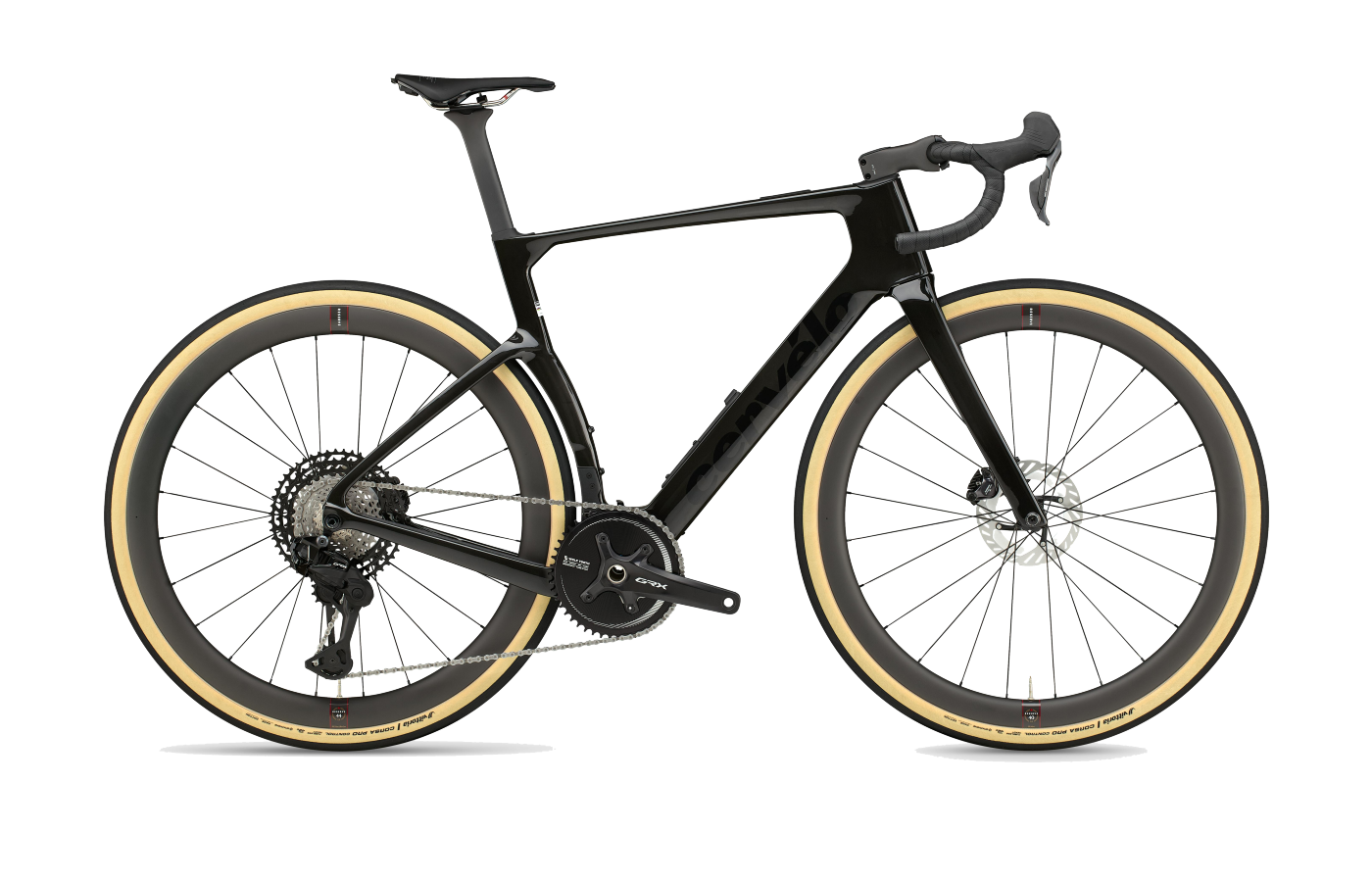
Aspero-5
The middle ground — Cervelo's aero-shaped Aspero-5 borrows the Grail's wind-tunnel thinking but pairs it with sharper, more Crux-like handling. A focused racer that splits the difference.
Compare →Grizl
Canyon's adventure-leaning sibling to the Grail. 50 mm tire clearance, more relaxed geometry, and a non-integrated cockpit — the bike to choose if the Grail's 42 mm limit and proprietary parts are dealbreakers.
Compare →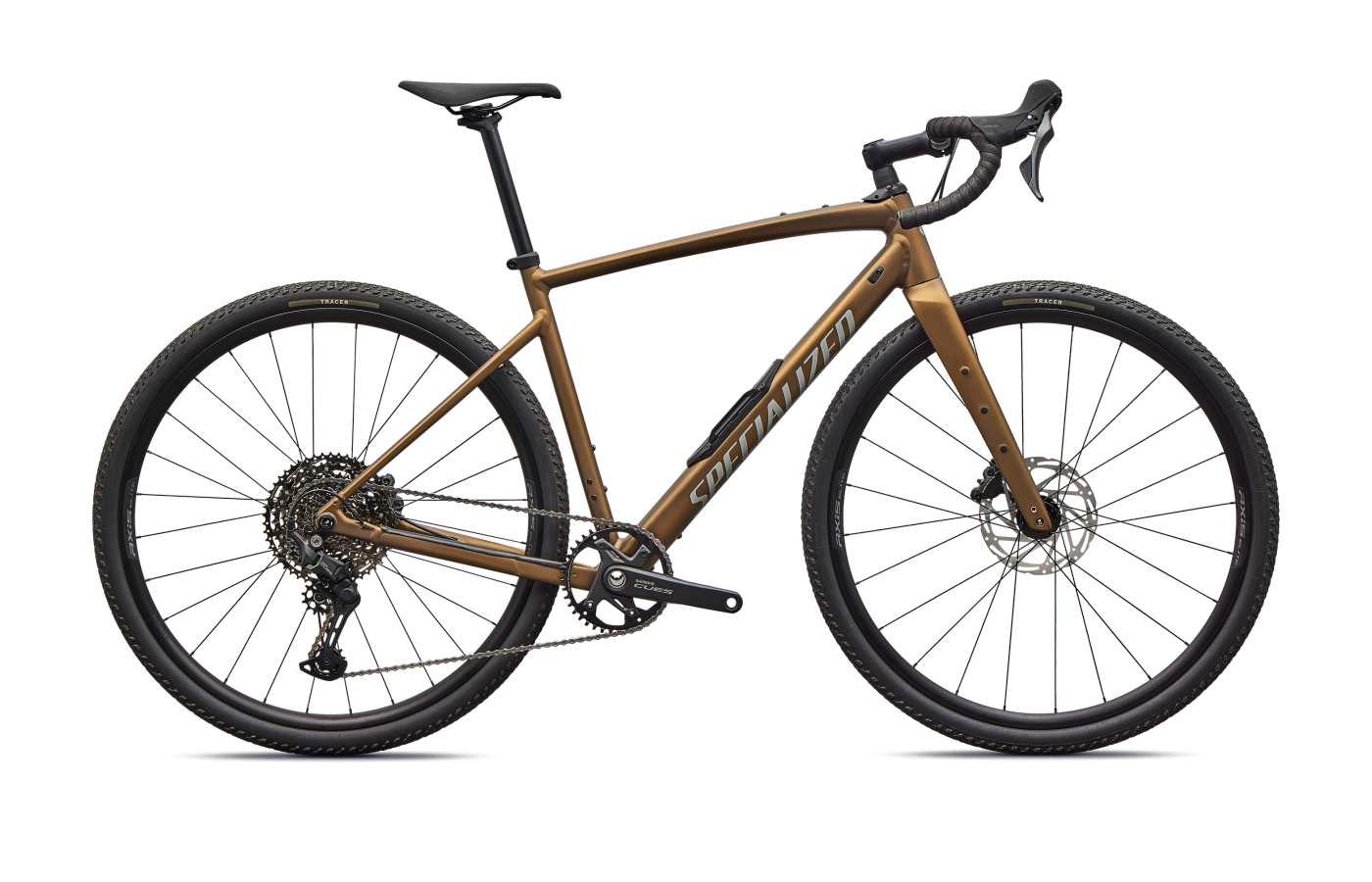
Diverge
Specialized's Future Shock-equipped all-road option. If you want the Crux's Specialized fit and dealer network but need real suspension and internal storage, the Diverge is the long-day answer.
Compare →