Lux Trail
vsNeuron
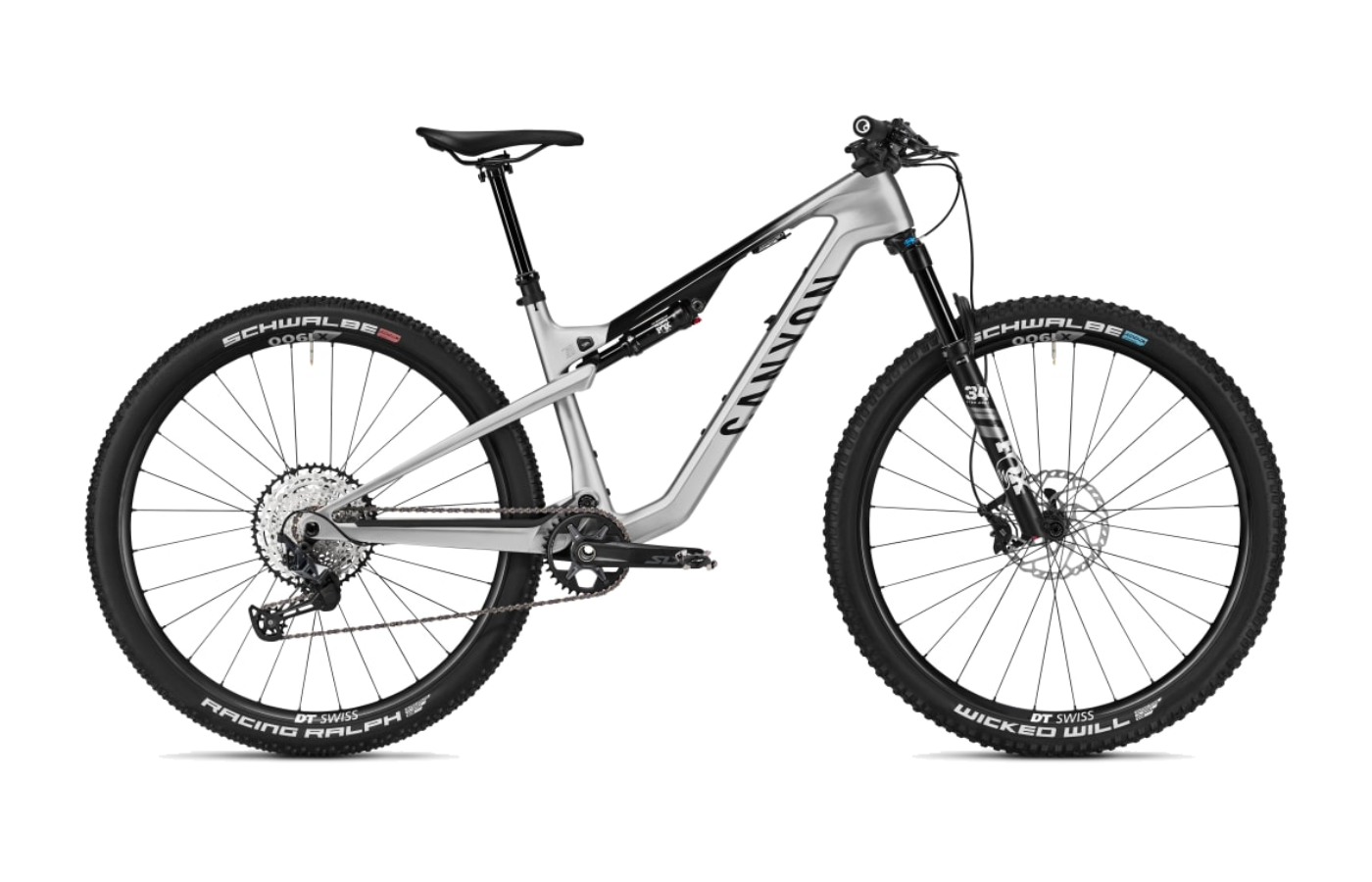
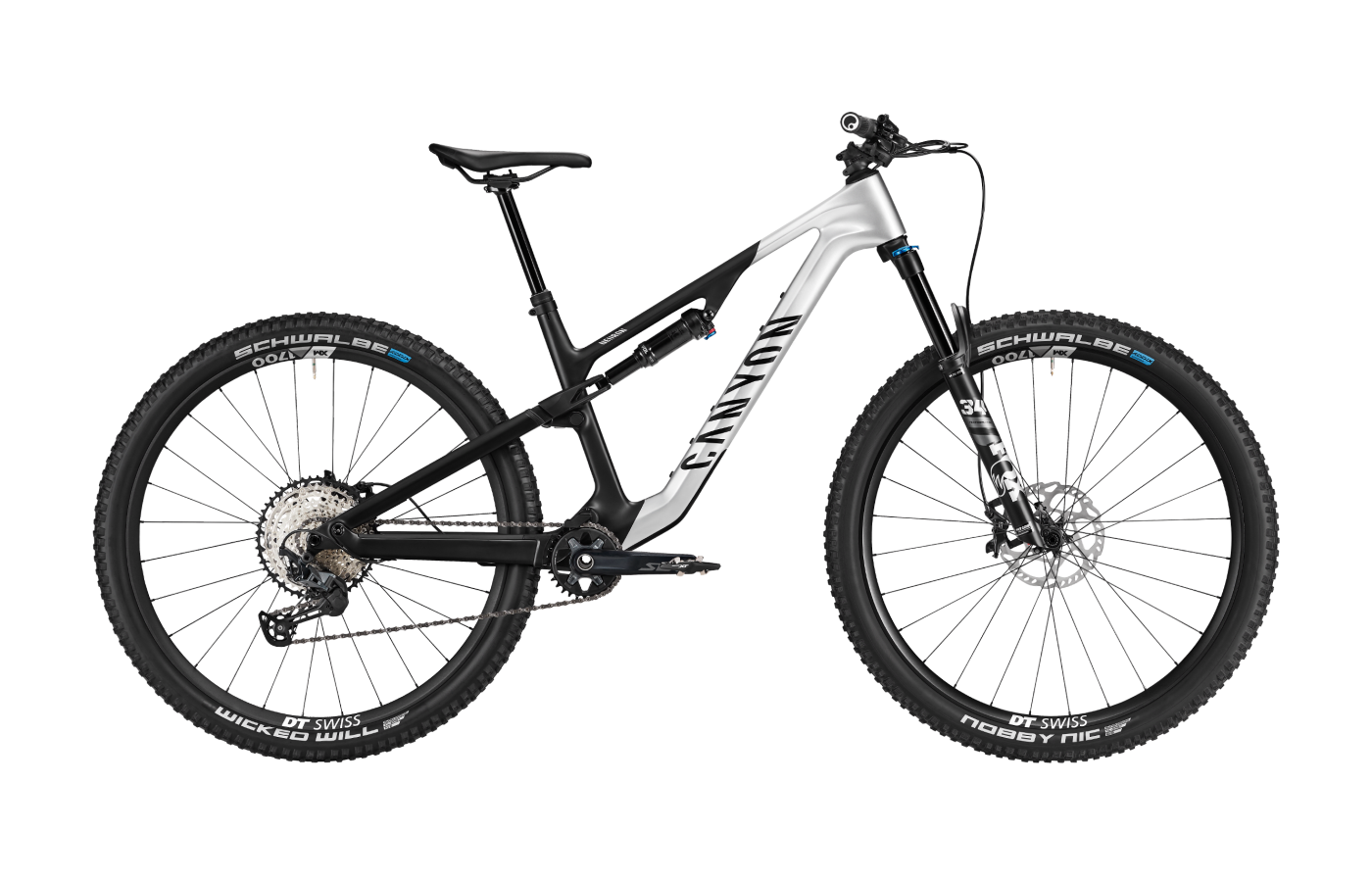
Same brand, two answers to one question.
The Lux Trail is a race bike with trail manners. The Neuron is a trail bike that climbs like an XC rig. Adjacent on the showroom floor, miles apart in intent.
Lux Trail
- Lighter, more efficient — a measured 11.28 kg on the CFR build; even mid-tier CF 6/7 builds keep up with full XC race bikes on long climbs.
- Sharper, more flickable on tight singletrack — short 435 mm chainstays and the lighter Stepcast fork reward precise, active riders.
- Real downcountry pedigree — purpose-built front triangle (not a warmed-over XC race frame), 3-position remote lockout, internal storage.
- Conservative 67-degree head angle gets exposed in steep, technical terrain — Pinkbike noted the front wheel can tuck.
- Internal storage door is widely reported (MBR) to warp and let water in over time.
Neuron
- More descending headroom — 66-degree head angle, 140 mm fork, and longer wheelbase make rough or steep terrain noticeably less stressful.
- Broader build range — $1,699 alloy entry to $4,399 carbon GX AXS; the Lux Trail starts at $3,299 and is carbon-only.
- More upright, all-day cockpit — 28 mm taller stack at size M than the Lux Trail; reviewers call it the better long-day bike.
- Heavier and less urgent than the Lux Trail on sustained climbs and flat singletrack.
- Stock Schwalbe Nobby Nic / Wicked Will tires are fast-rolling but light on grip in the wet — most reviewers swap them.
Editor’s analysis
Canyon sells these two as siblings, but the riding experience splits them more sharply than the spec sheet suggests — one wants to go fast, the other wants to go everywhere.
On paper the gap looks small: both are full-carbon (in their middle builds), both 29ers, both wear Shimano SLX, both ride on Fox 34. The Canyon Lux Trail runs 115 mm rear / 120 mm front; the Canyon Neuron runs 130 mm rear / 140 mm front. Twenty-five millimeters of suspension is the entire pitch — and it changes everything.
The Lux Trail is the sharper, more demanding tool. A 67-degree head angle, 435 mm chainstays, and the lighter Fox 34 Stepcast fork make it whippy on tight, flowing singletrack and a slingshot out of berms. Reviewers (Flow Mountain Bike, MBR) call it a 'mini trail bike' that retains its XC spirit — fast, urgent, and best ridden assertively. Push it into truly steep terrain and the conservative head angle starts to bite back; Pinkbike's Dario DiGiulio described the descending feel as 'sharp and a bit squirrelly.'
The Canyon Neuron picks the opposite trade. A degree slacker up front (66 vs 67), 5 mm longer chainstays, a beefier non-Stepcast Fox 34 with 140 mm of travel, and a notably taller stack (626 vs 598 at size M) put the rider in a more upright, more forgiving cockpit. Flow describes it as 'calmer and more stable at speed,' MBR calls the geometry 'friendly yet rewarding.' It's the bike you reach for when the descent is a question mark, not a rehearsed segment.
Put another way: the Lux Trail rewards riders who already know the trail and want to attack it. The Neuron rewards riders who want a bike that handles whatever the trail throws back. Both share a Canyon trait — direct-to-consumer pricing that undercuts Specialized and Trek by 20–30% on equivalent spec — but they answer fundamentally different questions about how you ride.
Where the builds differ.
Comparing our editor's-pick builds side-by-side. Winners highlighted row-by-row — lower price and weight, and the better-spec component, each mark a point.
Build variants & pricing
Lux Trail is carbon-only and lives in a tight $3,299–$3,499 band. The Neuron spans $1,699 alloy to $4,399 GX AXS carbon — far more flexibility on price.
Prices are current US MSRP. The editor's-pick comparison is built around the Shimano SLX trim on each bike — the cleanest apples-to-apples cross-section, since the Lux Trail isn't sold with SRAM mechanical and the Neuron isn't sold with Deore. Canyon ships direct; allow shipping and assembly time on top of the listed price.
How they fit, how they steer.
Both at size M. The Neuron sits 28 mm taller in stack (626 vs 598), runs a degree slacker up front (66 vs 67), and adds 5 mm of chainstay (440 vs 435) — every number points the Neuron toward stability and the Lux Trail toward agility.
Which size should I buy?
Canyon uses the same XS–XL labeling on both bikes, but the Neuron's stack and reach numbers run a touch larger size-for-size. Both fit a 173 cm rider best in size M.
→These are starting points. Flexibility, riding style, and preferred position all shift the answer — if you’re between sizes, a professional fit beats a chart.
What the magazines said.
Published reviews from trusted cycling outlets. Click through for the full write-up.
Which one should you buy?
If you want one bike for fast singletrack, marathons, and Strava PRs, get the Lux Trail. If you want one bike for everything from forest tracks to the occasional rowdy descent, get the Neuron.
Lux Trail
If your home trails are flowy, your weekends include marathon events, and you'd rather climb fast than descend gnarly — the Lux Trail is the sharper tool. It's the bike you buy when you already know what segments you want to chase.
Neuron
If you want one mountain bike that handles whatever the day brings — fire roads, singletrack, an unexpected steep chute — the Neuron is the safer, friendlier pick. It's also the only way into the Canyon trail platform under $3,000.
Questions buyers actually ask.
Short answers to the things we get emailed about most often.
01How much suspension travel do they actually have?
The Canyon Lux Trail runs 115 mm rear / 120 mm front (Fox 34 Stepcast). MBR's long-term test measured the rear at closer to 105 mm in practice, which is worth knowing if you're sizing the bike against a hard 120 mm number.
The Canyon Neuron runs 130 mm rear / 140 mm front (standard Fox 34 or RockShox Pike depending on build). The frame is rated for a 150 mm fork if you want to push it further toward trail.
02Which one climbs better?
The Lux Trail, comfortably. It's lighter, has a 3-position remote lockout (Open / Pedal / Locked), and the 76-degree seat tube angle puts you in an efficient, forward climbing position. Reviewers consistently call it 'urgent' and 'efficient' on climbs.
The Neuron also has a 76-degree seat tube and climbs well for a 130 mm trail bike — but it's heavier, has more travel to bob through, and lacks a remote lockout on most builds. On a fire-road grind or a marathon stage, the Lux Trail will feel meaningfully faster.
03Which one descends better?
The Neuron, also comfortably. The slacker 66-degree head angle, 140 mm fork, longer chainstays, and longer wheelbase all add up to a bike that's calmer when things get fast or steep. Flow Mountain Bike calls it 'settled at speed rather than edgy.'
The Lux Trail is fun on familiar, flowing terrain but its 67-degree head angle and lighter Stepcast fork start to feel exposed on steep, chunky descents. Pinkbike specifically flagged the front end as 'sharp and a bit squirrelly' compared to modern XC bikes with slacker geometry.
04Are they really both made for the same kind of riding?
No — Canyon positions them adjacent in the lineup, but they're different categories. The Lux Trail is downcountry: a race-derived chassis with just enough travel and burlier parts to handle harder trails. The Neuron is a true trail bike with stability and descent confidence as design priorities.
Think of it this way: if 80% of your riding is pedaling and 20% is descending, lean Lux Trail. If it's closer to 50/50, or your descents are technical, lean Neuron.
05How does the build range compare on price?
Lux Trail: $3,299 to $3,499 in the builds we track — carbon-only, no alloy version offered. The lineup is tight: CF 6 Deore at $3,299–$3,499 and CF 7 SLX at $3,499.
Neuron: $1,699 to $4,399. The bottom two builds (Neuron 5 SX and Neuron 6 NX) use an aluminum frame; the CF 8 SLX ($3,199) and CF 8 GX AXS ($4,399) move to carbon. If your budget tops out under $3,000, the Neuron is the only option of the two.
06What's the deal with internal frame storage?
The Lux Trail has Canyon's first MTB internal storage compartment in the down tube. Reviewers like Flow praised the convenience, but MBR's long-term review documented the storage door warping out of shape and letting water into the frame — worth weighing if you ride in wet conditions or expect to keep the bike for years.
The Neuron does not have internal storage. For some riders that's a feature, not a bug: fewer failure points.
07Are the headset cable routings as bad as people say?
Both bikes route cables through the headset — a divisive design choice. The visual is clean, but it makes routine maintenance (headset bearing replacement, brake bleeds) significantly more involved and expensive. Reviewers from Pinkbike, Flow, and MBR all flag it as a long-term ownership concern on both bikes.
If you do most of your own wrenching, factor in extra time. If you take the bike to a shop, factor in extra labor cost — especially in wet climates where headset bearings wear faster.
08Which has the better resale value?
Both are direct-to-consumer Canyons, which historically depreciate slightly faster on the used market than dealer-network brands like Specialized or Trek (which carry crash-replacement and dealer-service value). Between the two, the Neuron has a broader buyer pool — it appeals to entry-level trail riders, all-day pedalers, and step-up XC riders alike — and tends to move faster used. The Lux Trail has a narrower audience (downcountry/marathon racers) but holds value reasonably well within that niche.
Similar bikes
If your priorities don’t map cleanly onto either of these, one of these adjacent bikes probably fits better.

Izzo
Another direct-to-consumer downcountry option — pared-back trail-bike feel with a more solid chassis than the Lux Trail, though the rear suspension runs firmer. A direct cross-shop if the Lux Trail's price-to-spec appeals.
Compare →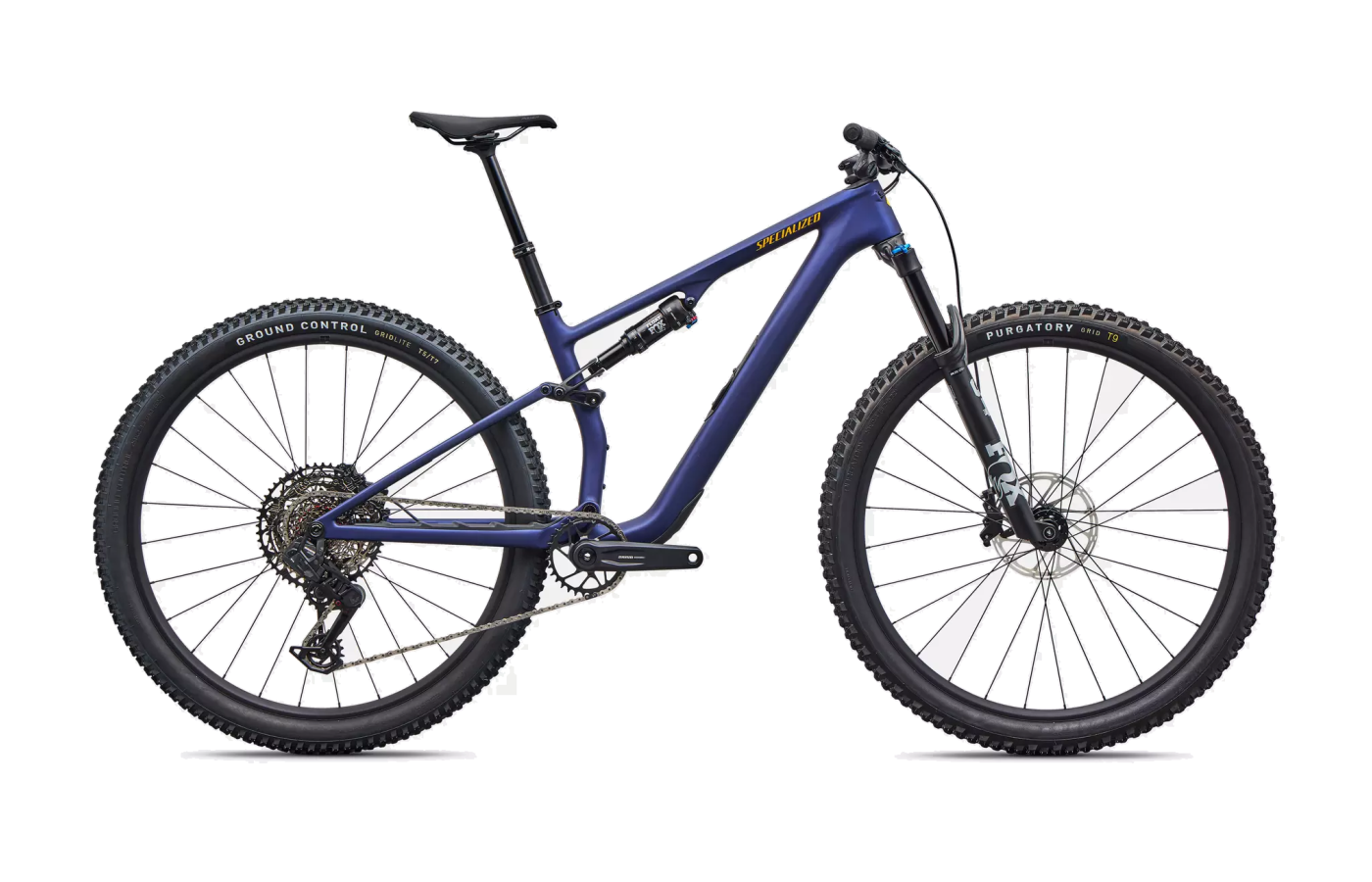
Epic Evo
The category benchmark — more frame compliance and more capable descending geometry than the Lux Trail. You pay a real premium for it, but the Epic Evo is what every downcountry bike (including the Lux Trail) gets compared to.
Compare →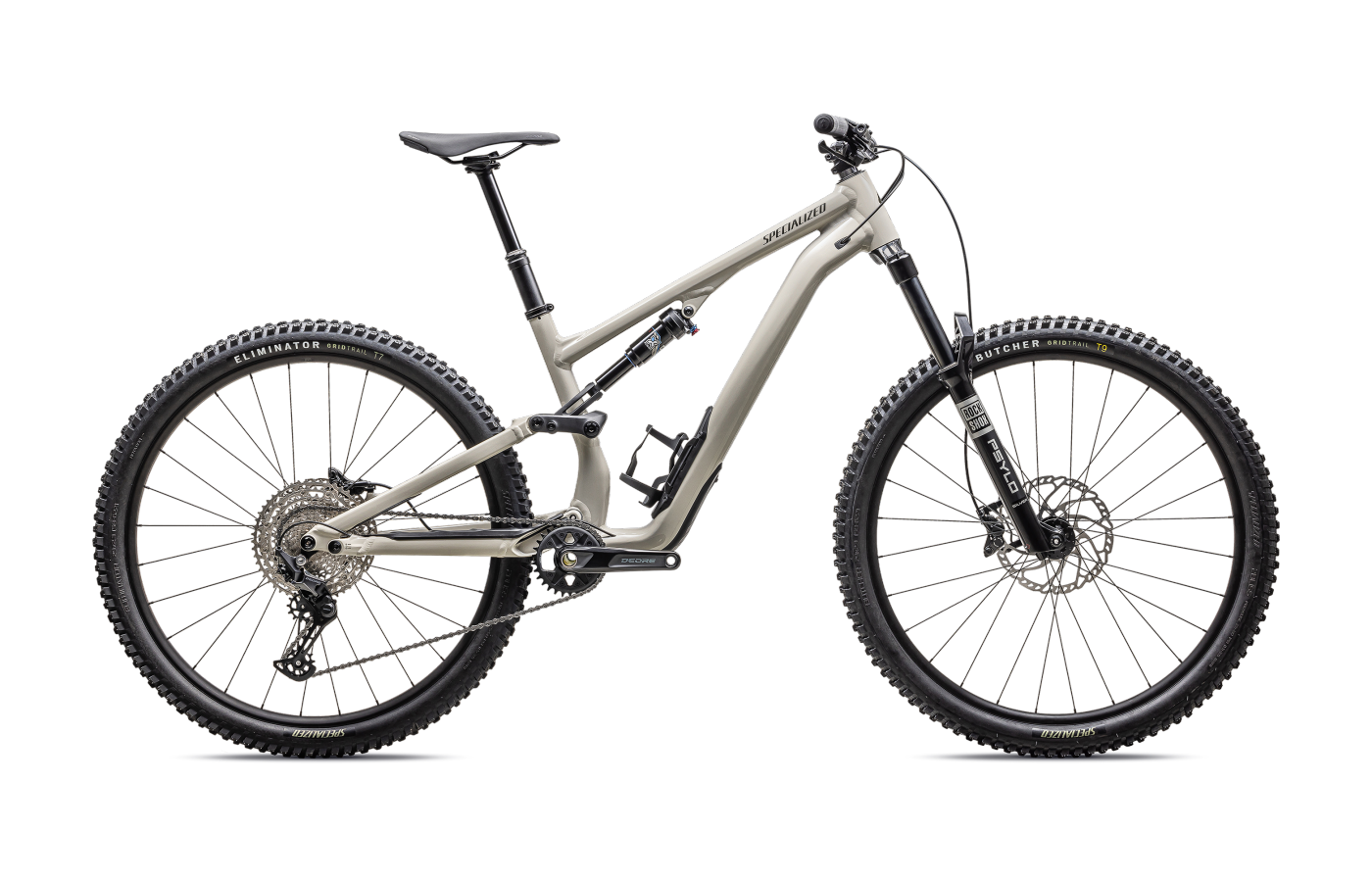
Stumpjumper
The trail-bike alternative to the Neuron, with a more refined in-frame storage system and Specialized's mature carbon layup. Costs noticeably more for equivalent components but the dealer network is the trade-off worth considering.
Compare →