Lux Trail
vsSpectral
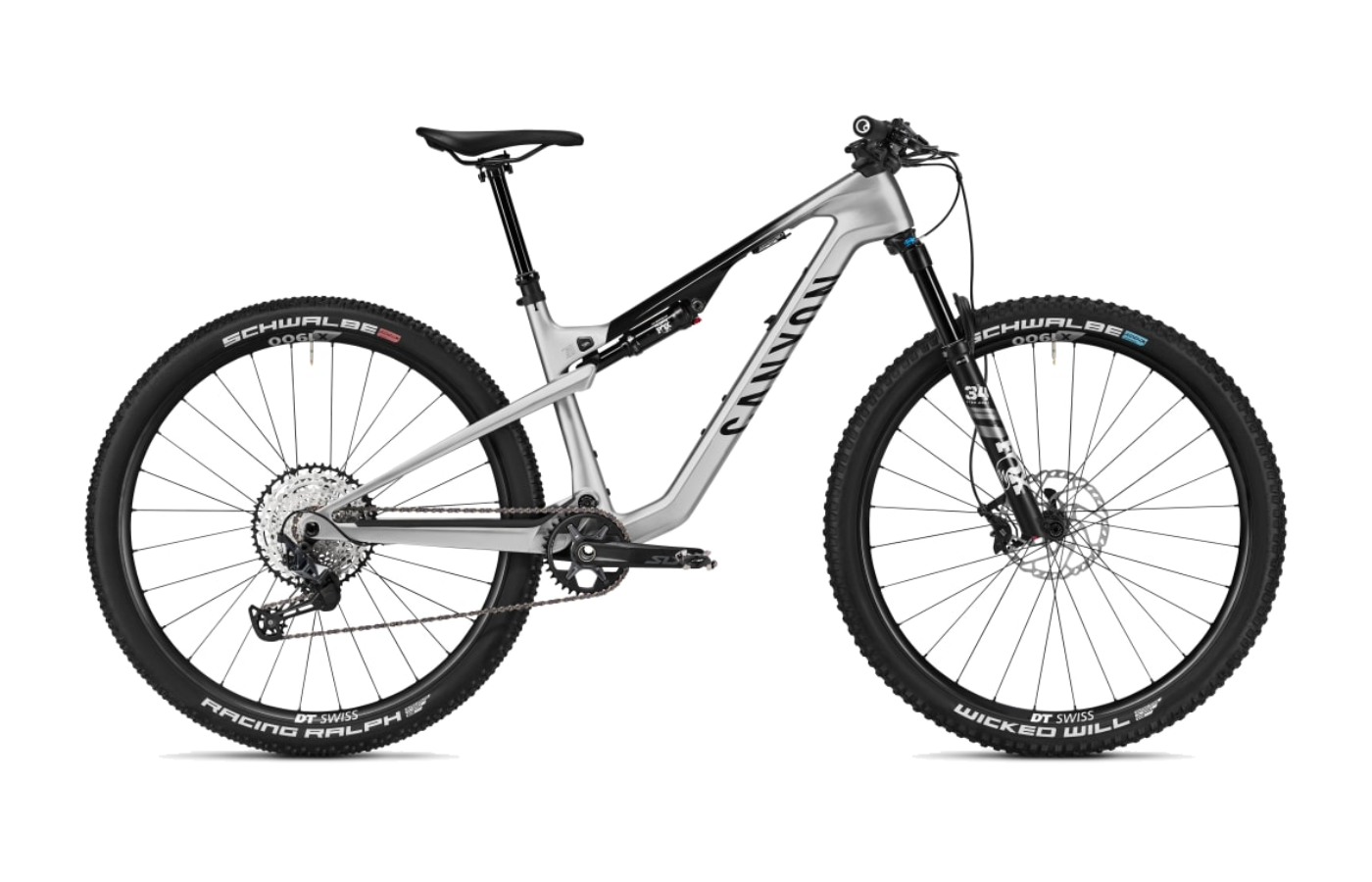
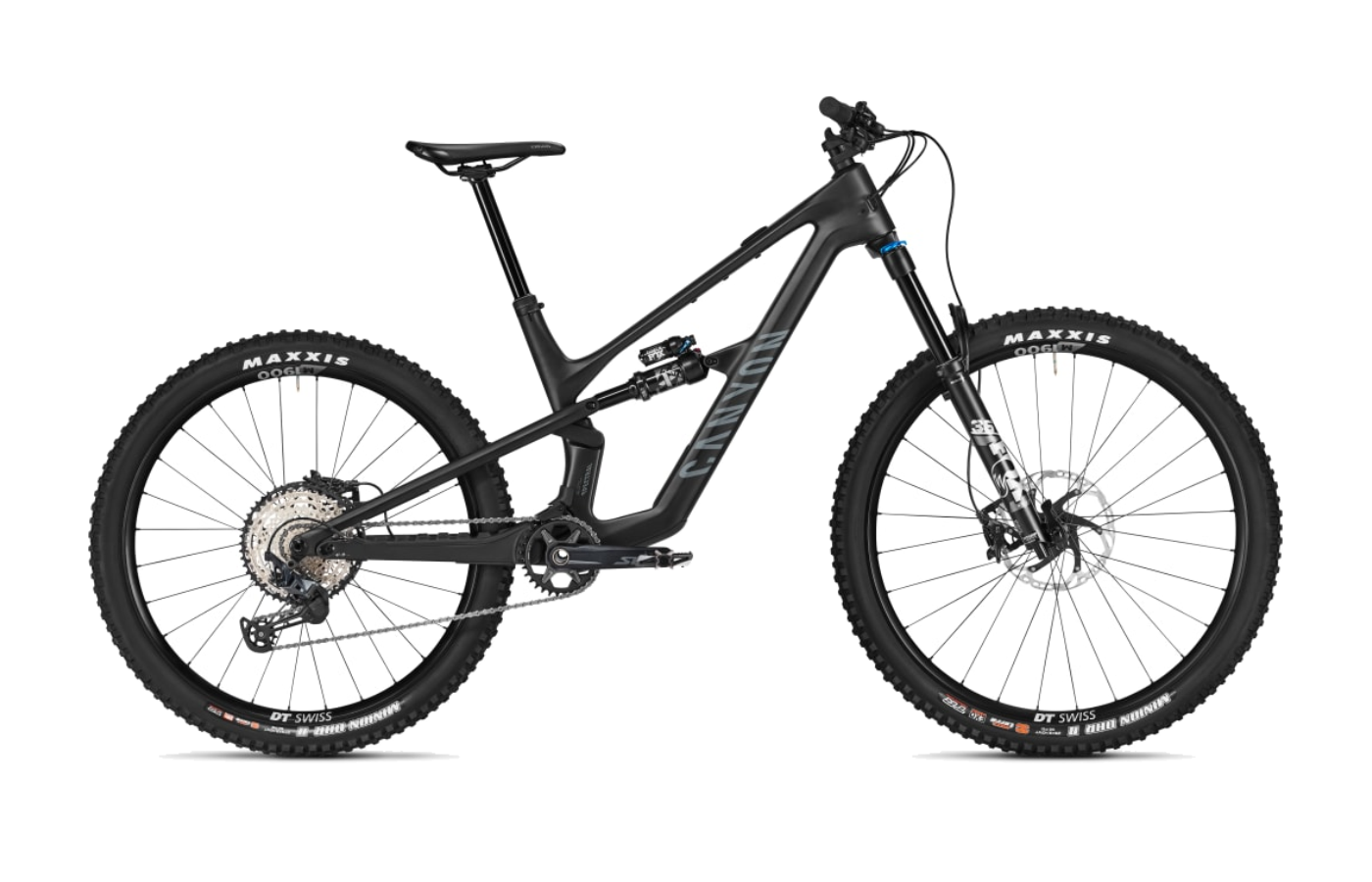
Same brand, opposite intent.
The Lux Trail is a downcountry mileage bike with XC roots. The Spectral is a 140/150 mm trail ripper built around descending.
Lux Trail
- Genuine XC efficiency — a 120 mm Fox 34 Stepcast and three-position remote lockout make all-day pedaling feel almost gravel-bike efficient.
- Lightweight by trail standards — Bike-test weighed the CFR at 11.4 kg, and even mid-spec carbon builds stay well under modern trail weights.
- Cheapest way into a full carbon downcountry frame — $3,299 for the entry CF 6, with no alloy version diluting the lineup.
- 67° head angle and short wheelbase can feel squirrelly when descents get steep and loose.
- Two-position Fox Transfer SL dropper and stock Schwalbe Racing Ralph rear tire are the first things most reviewers swap.
Spectral
- Calm at speed, supple in the chatter — the new 140 mm kinematic and slimmer chainstays add real rear-end compliance without losing pop.
- Mullet-or-29er flip chip — same frame, two wheel-size personalities, and a 437 mm chainstay that drops to 429 mm in mullet mode.
- Burly trail spec at trail-bike money — Fox 36 forks across the lineup, Maxxis Minion DHR IIs stock, and a Category 4 frame rating.
- Heavier than rivals — multiple reviewers flagged it as relatively heavy for its travel.
- K.I.S. steering stabilizer is divisive (and rattles on some units), though it's removable with a blanking plate.
Editor’s analysis
Both wear the Canyon badge and the same direct-to-consumer price tag — but one is built to cover ground, and the other is built to attack it.
On paper the gap looks like a category — 115 mm of rear travel and a 120 mm Fox 34 on the Lux Trail, versus 140 mm rear and a 150 mm Fox 36 on the Spectral. In practice the gap is wider than the numbers suggest. The Lux Trail's 67° head angle and 1180 mm wheelbase (size M) want to carve and flick. The Spectral's 64° head angle and 1221 mm size-S wheelbase want to plow and stomp.
The Canyon Lux Trail leans hard into XC DNA. Reviewers consistently describe it as urgent, sporty, and demanding — the kind of bike that rewards an active rider and slingshots out of berms, but tucks the front under you when descents get truly steep. Flow Mountain Bike calls it a mini trail bike that retains its XC spirit; MBR measured the rear travel at 105 mm rather than the claimed 115 mm and added grippier tires before it really came into its own.
The Canyon Spectral is the joyful rescue dog. The 2024 generation actually lost rear travel (down to 140 mm from prior versions) in service of a livelier, more poppy character, and the slimmed chainstays and updated kinematics deliver what reviewers describe as a magic-carpet rear end — composed at speed, supple over chatter, eager to launch. The K.I.S. steering stabilizer is included on every CF build and divides opinion, but it's removable with a blanking plate.
Put another way: the Lux Trail is the bike if your day is a 40-mile loop with one good descent at the end. The Spectral is the bike if your day is a chairlift, a shuttle, or a punishing climb you tolerate to earn the way back down.
Where the builds differ.
Comparing our editor's-pick builds side-by-side. Winners highlighted row-by-row — lower price and weight, and the better-spec component, each mark a point.
Build variants & pricing
Both lineups land in the same direct-to-consumer value zone. The Spectral spans alloy through SRAM X0 AXS; the Lux Trail stays carbon-only across a tighter $3.3k–$3.5k window in the US.
Prices shown are current US MSRP. Several Spectral trims (the CF LTD, CFR, and CF 8 CLLCTV coil build mentioned in international reviews) aren't sold in the US — only the CF 7, CF 8, CF 9, and the alloy CF 6 ship here. The Lux Trail US lineup currently tops out at the CF 7.
How they fit, how they steer.
Different sizes for the same 5'8" rider — the Spectral runs significantly longer per size label, so the fit-picked Lux Trail M (460 mm reach) lines up with a Spectral S (450 mm reach). The Spectral still sits 23 mm taller in stack and three degrees slacker at the head tube.
Which size should I buy?
Use the picker if you're outside the 170–178 cm range — the Spectral's reach jumps 25 mm per size, so going up or down can swing the fit dramatically.
→These are starting points. Flexibility, riding style, and preferred position all shift the answer — if you’re between sizes, a professional fit beats a chart.
What the magazines said.
Published reviews from trusted cycling outlets. Click through for the full write-up.
Which one should you buy?
If you ride to ride — long miles, big loops, the occasional technical bit — get the Lux Trail. If you ride to descend, get the Spectral.
Lux Trail
If your local trails are more flow than freeride and your rides are measured in hours rather than vertical feet, the Lux Trail is the rare downcountry bike that actually feels like one. Lighter, snappier, and cheaper to get into than almost anything in its class.
Spectral
If you'd rather earn one big descent than tick off thirty rolling miles, the Spectral is the easier sell. The 140/150 mm package, Maxxis DHR IIs, and Cat 4 frame let you push harder on the way down without anything feeling overmatched.
Questions buyers actually ask.
Short answers to the things we get emailed about most often.
01How much travel does each bike actually have?
The Canyon Lux Trail runs 115 mm rear travel and a 120 mm fork (Fox 34 Stepcast across all current US builds). MBR's long-term test measured the rear closer to 105 mm in practice, so the on-trail feel is firmly in downcountry territory.
The Canyon Spectral runs 140 mm rear travel and a 150 mm fork (Fox 36 Rhythm on the CF 7, RockShox Lyrik or Fox 36 Factory higher up). Notably, this generation actually reduced rear travel from prior Spectrals to make the bike livelier.
02Which is faster on the climbs?
The Lux Trail, by a clear margin. It's lighter (Flow weighed the CFR at 11.28 kg, Bike-test at 11.4 kg), runs faster-rolling Schwalbe Wicked Will / Racing Ralph tires, and has a three-position remote lockout for road and fire-road sections.
The Spectral climbs better than its travel suggests — reviewers praise the steep 76.5° seat angle and the way reduced anti-squat keeps the rear wheel hooked up on technical ascents — but it's a 14+ kg trail bike on Maxxis DHR IIs. On a sustained fire-road climb, the Lux Trail will pull away.
03Which is more capable on descents?
The Spectral, comfortably. Its 64° head angle is a full three degrees slacker than the Lux Trail's 67°, the wheelbase is longer at every size, and the 140/150 mm suspension has more margin when things get rough.
The Lux Trail can punch above its weight on flowy descents — Flow Mountain Bike praised its stability and called it bizarrely competent on technical terrain — but on truly steep, chunky descents, MBR specifically noted that the 67° head angle can let the front wheel tuck. Different jobs.
04Do I really need the K.I.S. steering stabilizer on the Spectral?
No. Canyon ships every Spectral CF with K.I.S. installed, but it's removable in 10–20 minutes and includes a blanking plate to cover the top-tube opening. Reviewer opinion is genuinely split — some find it useful in steep, loose conditions; others find it adds lethargy in tight corners or rattles inside the top tube.
It's offered at no extra cost, so you're not paying for something you might not want. Try it, decide for yourself, take it out if it bugs you.
05Can the Spectral run a mullet (29/27.5) setup?
Yes — that's the headline frame feature. The Spectral CF frame has a flip chip that swaps between full-29er and mullet (29-front, 27.5-rear) without changing the core geometry. In mullet mode the chainstay shortens from 437 mm to 429 mm, and reviewers describe the bike as more eager to scrub and slash corners.
The Lux Trail is 29er-only — no mullet option, no flip chip.
06How does the spec compare at the editor's pick price point?
The picks here are the Lux Trail CF 7 SLX ($3,499) and the Spectral CF 7 ($3,199) — both full carbon, both Shimano SLX M7100 1x12 drivetrains, both DT Swiss alloy wheels with 30 mm internal width.
The big spec divergence is the suspension. The Lux Trail CF 7 runs a 120 mm Fox 34 Stepcast Performance with a 3-position remote lockout and a Fox Float SL shock. The Spectral CF 7 runs a 150 mm Fox 36 Rhythm and a Fox X Performance 2-position shock. The Spectral's fork is a full travel category up — heavier, stiffer, built for impacts the Lux's 34 isn't asked to handle.
07Are the stock tires good?
Lux Trail: Schwalbe Wicked Will 2.4 front / Racing Ralph 2.35 rear. Fast-rolling, but reviewers consistently noted the Racing Ralph rear is the first upgrade — Flow and MBR both flagged grip and braking issues, and MBR specifically recommended Maxxis Forekasters for wet or aggressive UK conditions.
Spectral: Maxxis Minion DHR II 2.4 in EXO front / EXO+ rear. Already the right tire for the job — grippy, durable, what most riders would put on the bike anyway.
08Can I service either of these myself?
Both have headset cable routing, which reviewers across both bikes call out as a maintenance headache. Routine cable or hose replacement is fine; bleeding brakes or replacing headset bearings is a 60–90 minute job that usually means a shop visit.
Both use threaded BSA bottom brackets (universally praised), UDH derailleur hangers, and have internal frame storage. The Lux Trail's storage door has been criticized by MBR for warping and letting water in over long-term testing — worth a check during setup.
Similar bikes
If your priorities don’t map cleanly onto either of these, one of these adjacent bikes probably fits better.
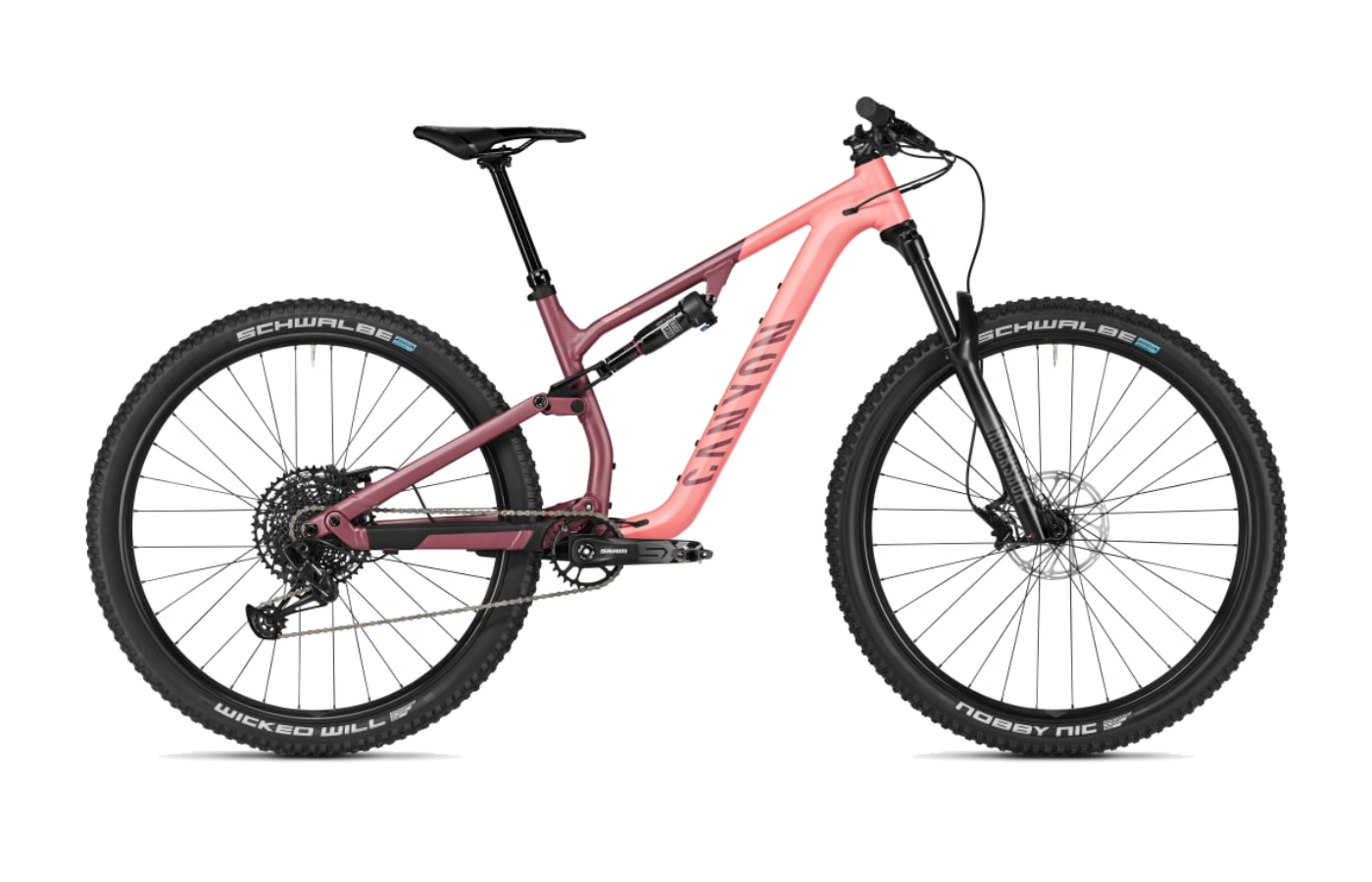
Neuron
Canyon's middle child — a 130 mm trail bike with a more conservative adventure geometry that splits the difference between the Lux Trail's XC bias and the Spectral's descending appetite. The bike to look at if neither extreme feels right.
Compare →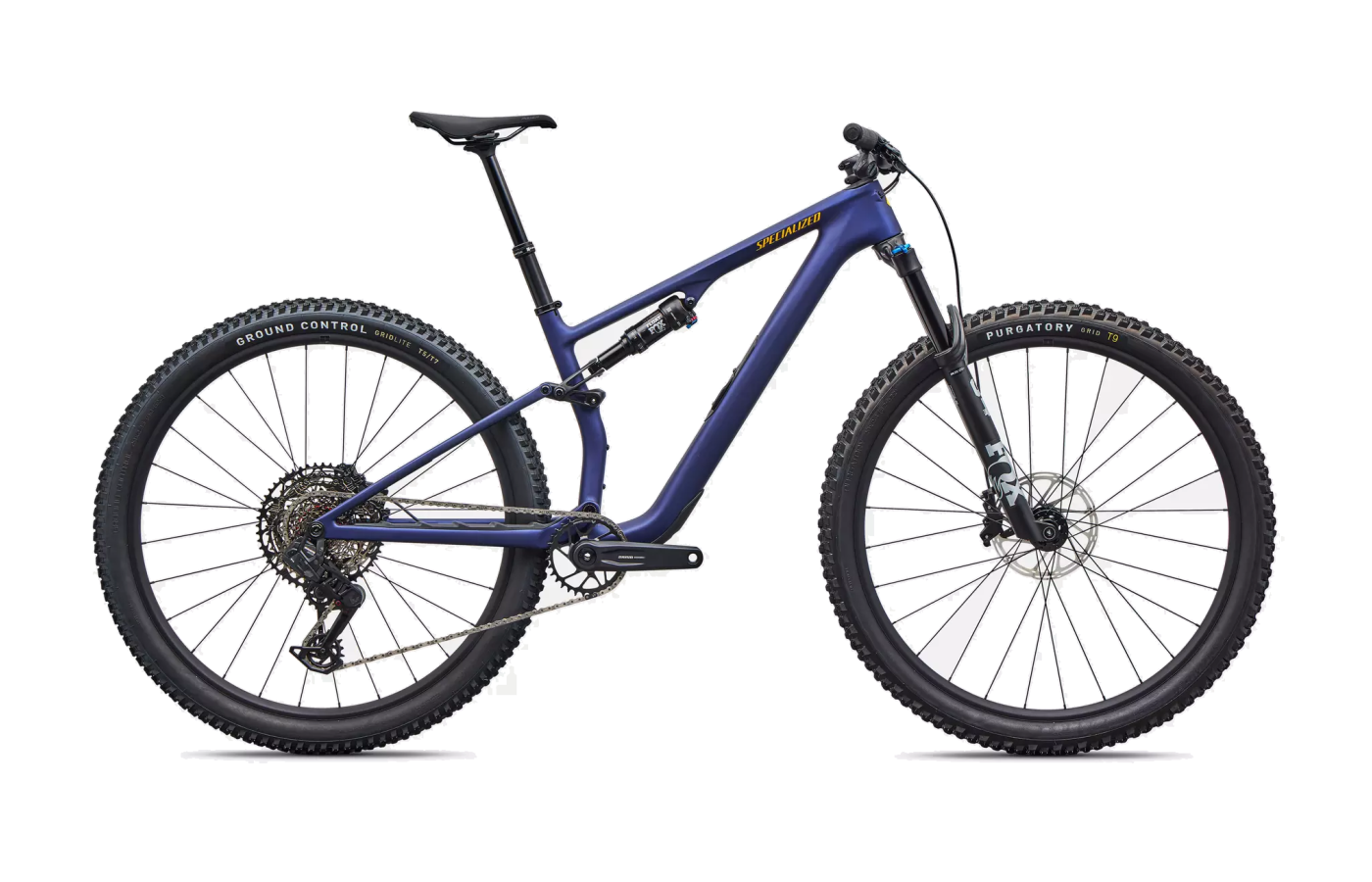
Epic Evo
The Lux Trail's most direct rival from Specialized — similar lightweight downcountry brief, but with a more modern, slacker front end that handles steeper descents with more confidence. Pricier through a shop, with the dealer-network upside the Lux can't match.
Compare →Jeffsy
Direct-to-consumer competitor to the Spectral with a slightly more plow-heavy, gravity-biased character. If the Spectral feels a touch playful for what you ride, the Jeffsy is the heavier-handed alternative at similar money.
Compare →