Lux World Cup
vsSupercaliber
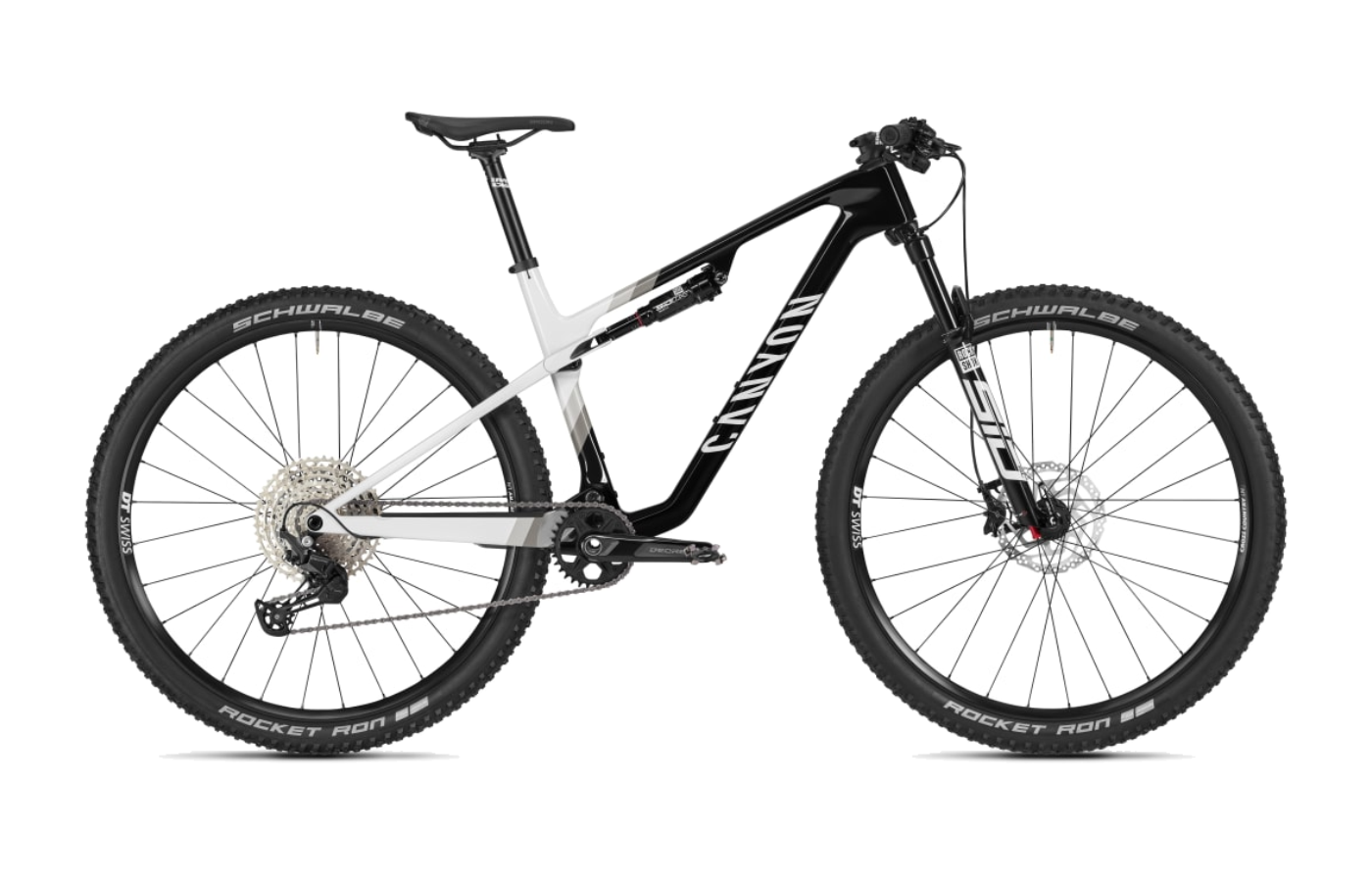
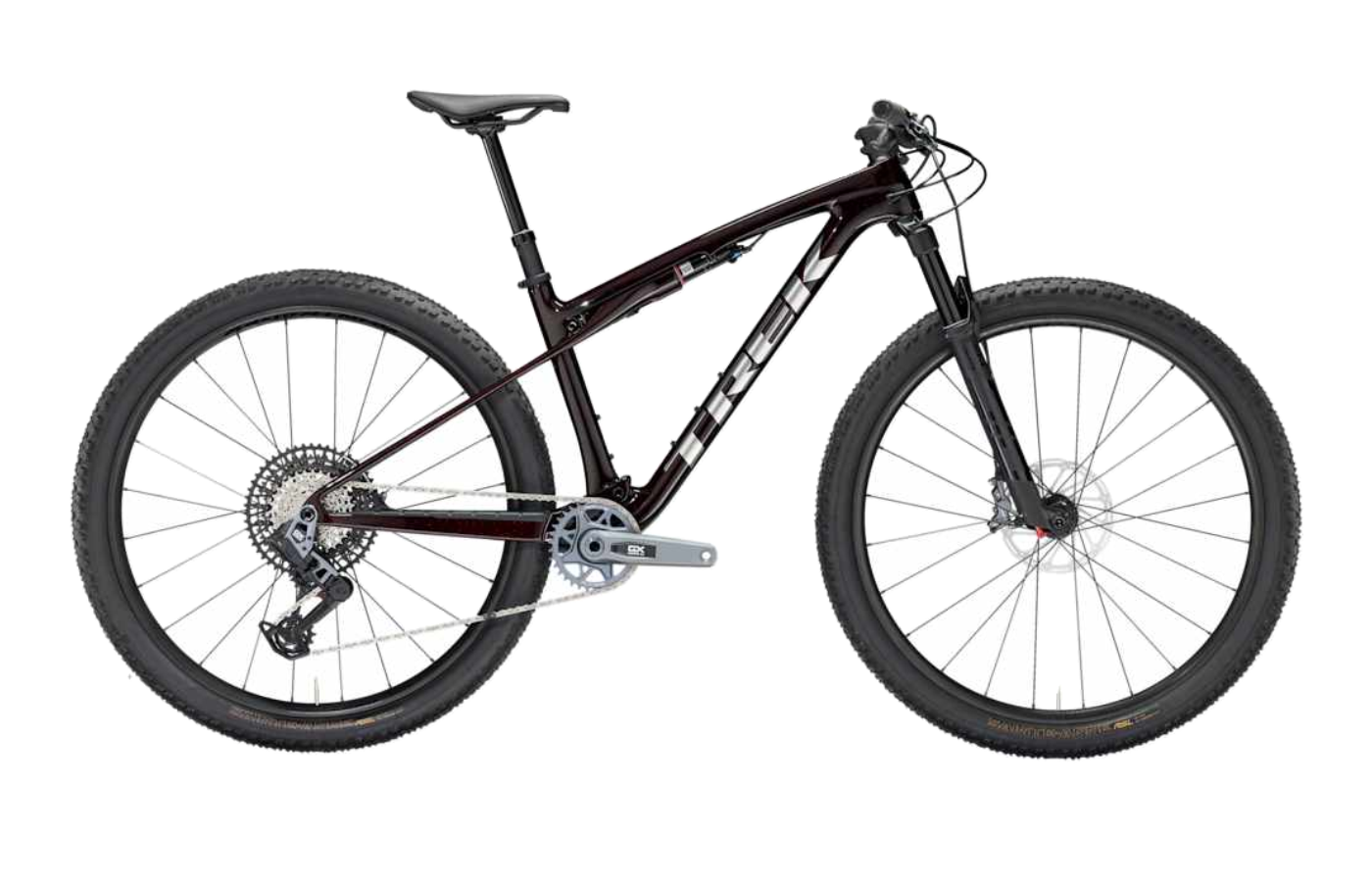
Two race bikes, two different bets on what XC is becoming.
The Canyon Lux World Cup chases the lightest possible 100 mm rig at a direct-to-consumer price. The Trek Supercaliber wraps an 80 mm IsoStrut around modern, slacker geometry and a stock dropper.
Lux World Cup
- Direct-to-consumer pricing — $3,399 for a carbon full-suspension XC race bike with a SID SL is unmatched in this comparison.
- 100 mm of rear travel with single-pivot flex-stay efficiency that lets you skip the lockout on most singletrack.
- Steep 75 degree seat tube keeps weight forward and the front wheel planted on the nastiest seated climbs.
- Stock fixed carbon seatpost — no dropper, and the frame's headset routing makes retrofitting one a 'mechanic's nightmare.'
- Firm ride that 'doesn't come alive until speeds are high' — punishing on long days for non-elite riders.
Supercaliber
- Slacker, more capable geometry — 67.5 degree head angle and longer wheelbase make it 'planted' where the Lux gets skittish.
- Dropper post standard on every build — even the $4,799 SL 9.6, eliminating an immediate aftermarket project.
- Eight builds from $4,799 to $14,999 with two frame tiers (SL and SLR) so you can buy the IsoStrut platform at almost any budget.
- IsoStrut tops out at 80 mm — bottoms harshly on chunky terrain or huck-to-flats.
- No stock power meter even on the $14,999 flagship; PF92 press-fit BB remains a long-term creak risk.
Editor’s analysis
On paper they look like the same bike. On the trail, they're solving opposite halves of the modern XC course.
Both target the rider who treats every gram as a personal insult. Both pair a sub-100 mm rear platform with a 110 mm fork, both run a 34 T chainring, both pass the lap times that justify their existence. Then you look at the geometry chart and realize they are not making the same bet at all.
The Canyon Lux World Cup is the older argument: 100 mm front and rear, a 68.5 degree head angle, a 75 degree seat tube, and the lowest stack in the segment. Reviewers describe it as 'ruthlessly efficient' and capable of taking off 'like a scorched cat' — and also 'skittish on steep downhill tech' and 'forced too far forward' on real descents because Canyon ships it with a fixed carbon seatpost. It is the climbing-and-flats bike, with the implicit assumption that the descents are smooth enough to survive in a high-saddle attack position.
The Trek Supercaliber Gen 2 is the newer argument: less rear travel (80 mm via the IsoStrut, where the shock is a structural member of the frame), but a degree slacker up front at 67.5, a longer wheelbase, and — crucially — a dropper post on every single build, including the entry-level $4,799 SL 9.6. The IsoStrut is firm, the geometry is contemporary, and reviewers consistently describe descents as 'planted' and 'predictable' where the Lux is 'nervous.' Trek built a bike that admits modern XCO courses have rock gardens.
Then there's the price gap. The Canyon comes in exactly one build — Shimano Deore M6100, RockShox SID SL, $3,399 — and that's it. The Trek lineup runs from $4,799 to $14,999 across eight builds. If you want a sub-$5k carbon full-suspension XC bike with high-end suspension, the Lux World Cup is essentially uncontested. If you have $6k+ and want the more capable platform and a dropper, the Supercaliber is hard to argue with.
Where the builds differ.
Comparing our editor's-pick builds side-by-side. Winners highlighted row-by-row — lower price and weight, and the better-spec component, each mark a point.
Build variants & pricing
The Lux ships in exactly one spec at $3,399. The Supercaliber spans eight builds from $4,799 to $14,999 across two frame tiers (SL and SLR).
The lineups don't really overlap in price. Canyon's only Lux World Cup build undercuts even Trek's cheapest Supercaliber by $1,400 — that's the direct-to-consumer dividend. We picked the SL 9.7 GX AXS T-Type ($6,249) for the spec table because it's the closest-in-price Trek build with a competitive electronic drivetrain; just understand the Canyon is competing against Trek's value tier from below, not head-to-head.
How they fit, how they steer.
Both compared at the fit-picked size. Reach is identical at 450 mm; the Trek sits 8 mm taller in stack (590 vs 582), runs a degree slacker up front (67.5 vs 68.5), and stretches the wheelbase 11 mm longer (1153 vs 1142). The Canyon's steeper seat tube (75 vs 71 degrees) is the bigger functional difference — it's a much more aggressive climbing position.
Which size should I buy?
Sizes overlap closely in reach and stack across the middle of each range; pick by reach first, then top-tube length to confirm fit.
→These are starting points. Flexibility, riding style, and preferred position all shift the answer — if you’re between sizes, a professional fit beats a chart.
What the magazines said.
Published reviews from trusted cycling outlets. Click through for the full write-up.
Which one should you buy?
If your budget is under $4k and you ride smoother XC courses, get the Lux. If you have $6k+ and your races include real descents, get the Supercaliber.
Lux World Cup
If you want carbon full-suspension XC for less than the price of a Trek's wheel upgrade, the Lux is the only honest answer in this comparison. Plan to live with a fixed seatpost on the descents — or budget another afternoon and a creative cable routing job to add a dropper.
Supercaliber
If your local races have rock gardens, drops, and steep chutes, the Supercaliber's slacker front end and stock dropper actually make you faster than a lighter, twitchier bike would. The IsoStrut is a real piece of engineering, not just a marketing diagram — it's stiff, supportive, and surprisingly supple once it beds in.
Questions buyers actually ask.
Short answers to the things we get emailed about most often.
01Which one climbs faster?
Roughly a wash on smooth climbs, with the Lux edging it on the steeps. Both bikes are described as 'ruthlessly efficient,' and both let reviewers leave the lockout open on singletrack. The Lux's 75 degree seat tube angle keeps weight further forward — Canyon test riders reported 'even on the nastiest climbs, you can make it up without the front wheel lifting.'
The Supercaliber, by contrast, has a 71 degree seat tube at size M/ML, which is noticeably slacker — Trek raised the bottom bracket 7 mm and increased anti-squat to compensate, and reviewers still call it a 'mountain goat' on technical climbs. On flat or rolling pedal sections, neither bike gives up meaningful watts to the other.
02Which one descends better?
The Supercaliber, and it isn't close. The 67.5 degree head angle and longer wheelbase make it 'planted' and 'predictable' where the Lux is described as 'skittish on steep downhill tech' and prone to 'hair-raising moments.'
The other half of this gap is the dropper post. Every Trek Supercaliber ships with one. The Lux ships with a fixed carbon seatpost on its only build, and reviewers were 'forced too far forward' on steep descents as a result. You can retrofit a dropper on the Lux, but the headset cable routing makes it a 'total mechanics nightmare.'
03What's the rear travel difference and does it matter?
Lux World Cup: 100 mm rear, 110 mm fork.
Supercaliber Gen 2: 80 mm rear (via the IsoStrut), 110 mm fork.
On paper the Lux has 20 mm more rear travel. In practice, reviewers describe the Supercaliber's IsoStrut as 'supple' once bedded in and capable of glossing over chatter the Lux passes through to the rider. The Lux's rear suspension is firmer and more 'binary' — fast and efficient when pushed, but harsh at lower speeds.
Where the Trek's 80 mm shows its limit is on big square-edge hits and huck-to-flats — multiple reviewers reported a 'metallic' or 'harsh' bottom-out on chunky terrain. The Lux's extra 20 mm helps in those moments, but the Trek's slacker geometry helps you avoid them in the first place.
04How big is the price gap, really?
Big. The Lux World Cup comes in exactly one build at $3,399 — Shimano Deore M6100, RockShox SID SL, alloy DT Swiss wheels. That is the entire lineup.
The Supercaliber Gen 2 starts at $4,799 for the SL 9.6 and tops out at $14,999 for the SLR 9.9 XX Flight Attendant. The closest-in-price comparable Trek build is the SL 9.7 GX AXS T-Type at $6,249 — still nearly double the Canyon. If your budget is under $5,000, the Lux is essentially uncontested in this matchup.
05Can I add a dropper post to the Canyon Lux World Cup?
Yes, but it's not friendly. The frame routes cables through the headset, and reviewers reported 'no dedicated routing tube for a dropper cable,' requiring 'patience and cable-routing wizardry' or 'gutting the poor thing' to thread one through. Plan on a shop visit, not an evening project.
The Supercaliber sidesteps this entirely — every build ships with a dropper, and Trek deliberately chose traditional internal cable routing over the headset-routed trend specifically to keep service simple.
06What about the IsoStrut — is it reliable?
Mostly yes, with caveats. The Gen 2 IsoStrut is now made by RockShox (not Fox, as in Gen 1), and uses a 38 mm stanchion that shares bushings and seals with the Zeb enduro fork — meaning torsional stiffness is excellent and service parts are not exotic. RockShox spec'd a 100-hour service interval on the air can.
That said: Flow Mountain Bike's review unit arrived with insufficient lubrication from the factory and felt 'stubborn' for the first ~10 hours of ride time. Escape Collective reported a damper leak early in testing. If you buy one, check lubrication out of the box and pay attention during the bedding-in period.
07Which one is lighter?
Comparing the most equivalent builds: the Canyon Lux World Cup CF 7 Shimano Deore is the only build Canyon offers and it's a solid mid-spec. The Trek SL 9.7 GX AXS T-Type at $6,249 weighs 11.88 kg in size M (with sealant, no tubes).
If you go up the Trek lineup, the SLR 9.9 XTR Di2 hits 10.08 kg at $11,499 and the SLR 9.9 XX Flight Attendant flagship hits 10.28 kg at $14,999. The Lux's published flagship CFR weights from external reviews land in the same 10.2–10.6 kg range, but Canyon doesn't sell that build in the US — what you can actually buy is the $3,399 build, which Canyon doesn't publish a complete-bike weight for.
08Which holds up better as a daily trail bike?
Neither — both are 'sharply focused race tools' that prioritize stiffness and pedaling efficiency over plushness. That said, the Supercaliber is the more honest answer if you'll spend any time on rough trails. The slacker geometry, the dropper, and the more progressive RockShox-made IsoStrut all make it more forgiving when the trail turns mean.
The Lux has a notably 'firm' ride that 'doesn't come alive until speeds are high,' and the lack of a dropper limits where you can confidently push it. If most of your riding is fire road, smooth singletrack, and the occasional XCO race, the Lux is plenty. If you want one bike for racing AND your local rocky trails, the Supercaliber is the better tool.
Similar bikes
If your priorities don’t map cleanly onto either of these, one of these adjacent bikes probably fits better.
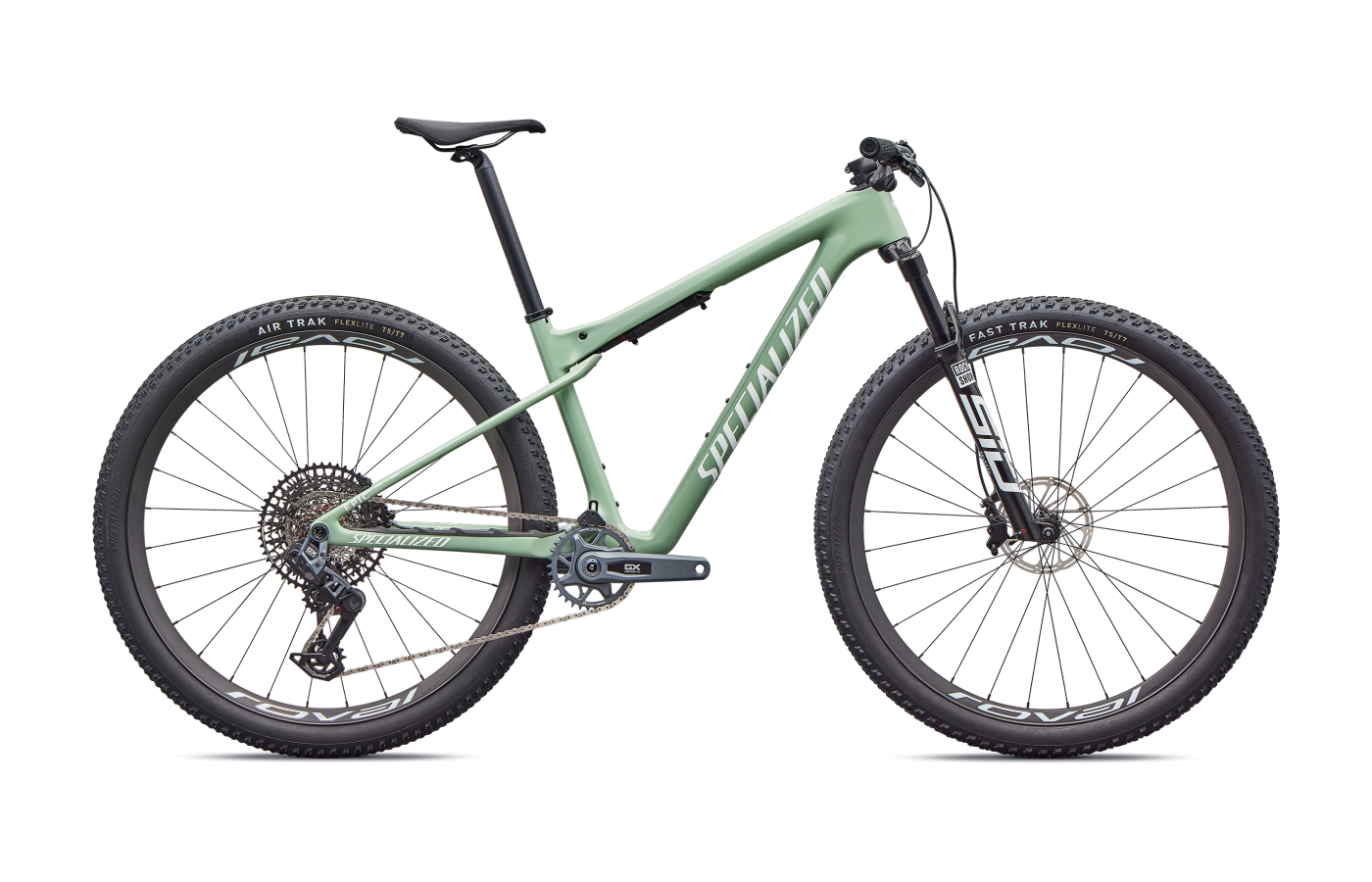
Epic World Cup
The most direct rival to the Supercaliber's design philosophy — short rear travel (75 mm) with an integrated shock layout aimed squarely at the same hardtail-like-but-not-quite niche. Specialized's 'Brain' damper is the alternative answer to Trek's IsoStrut for the same problem.
Compare →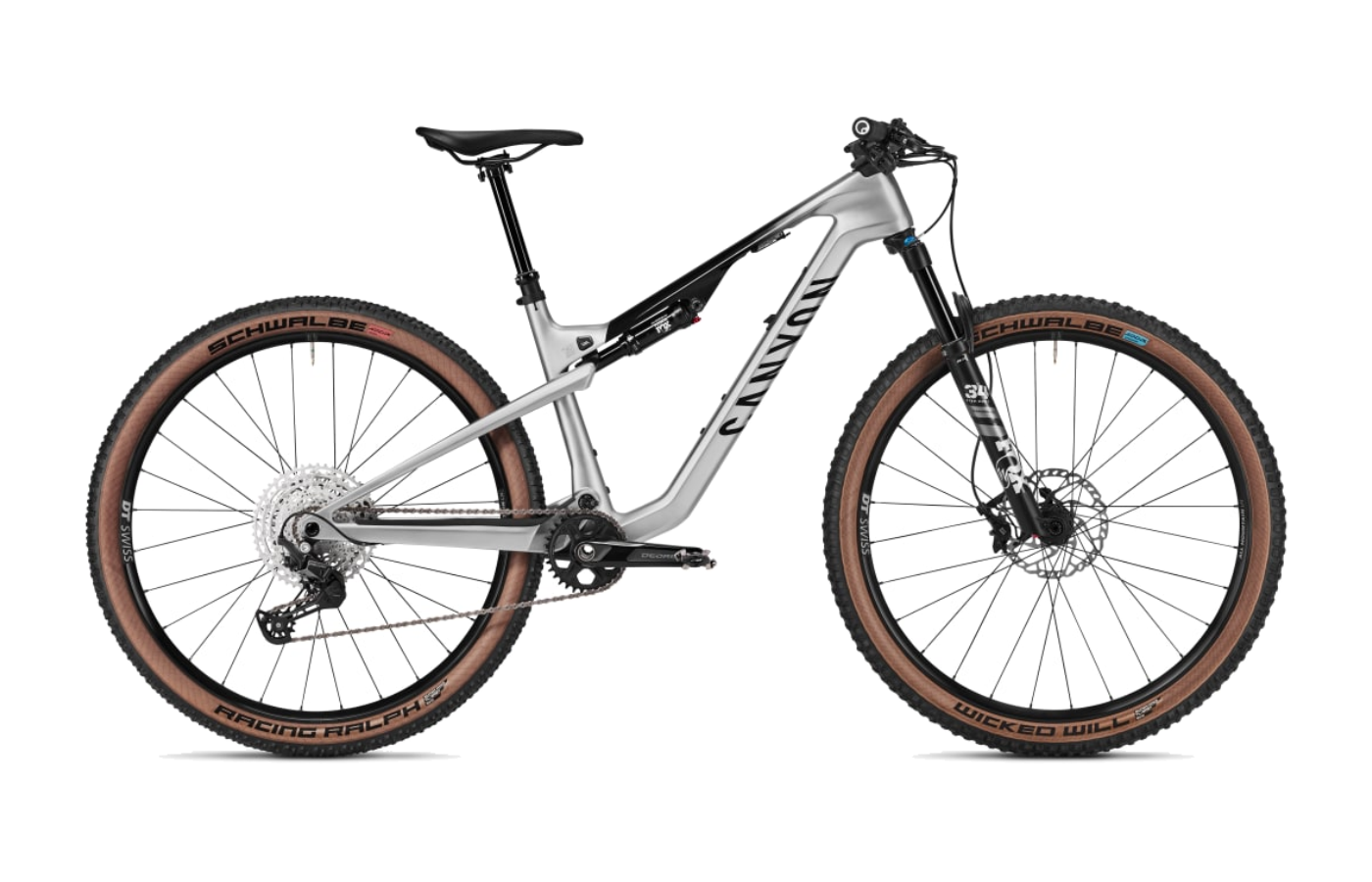
Lux Trail
Canyon's own answer if you find the World Cup model too harsh. More travel, slacker front end, and a stock dropper — basically the Lux for riders who admit modern XC has descents.
Compare →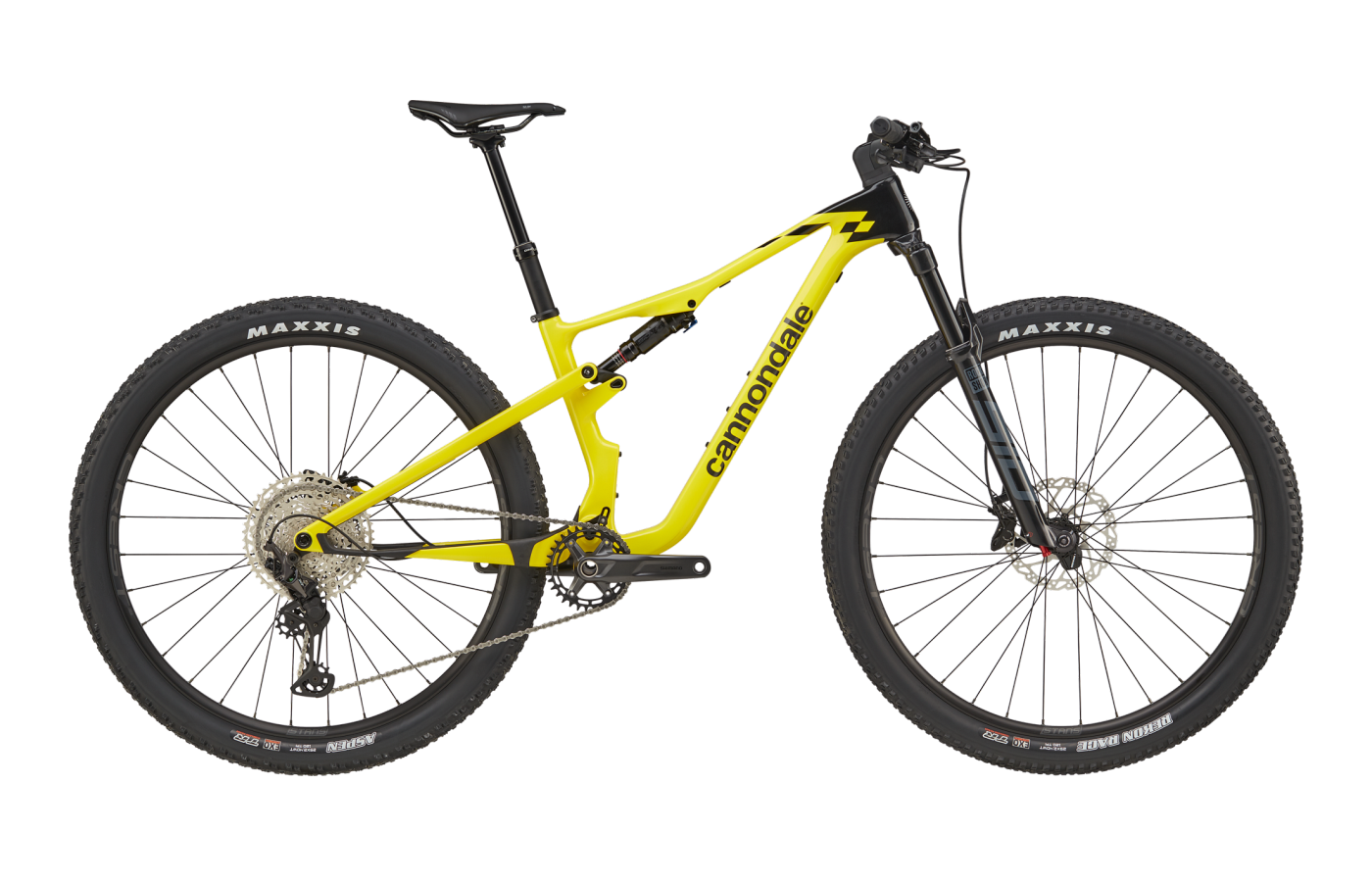
Scalpel
Cannondale's benchmark XC racer. Traditional Horst-link suspension layout instead of a flex-stay or IsoStrut, but it descends better than the Lux while staying competitive on the scale. The conservative-engineering pick.
Compare →