Sender
vsRage
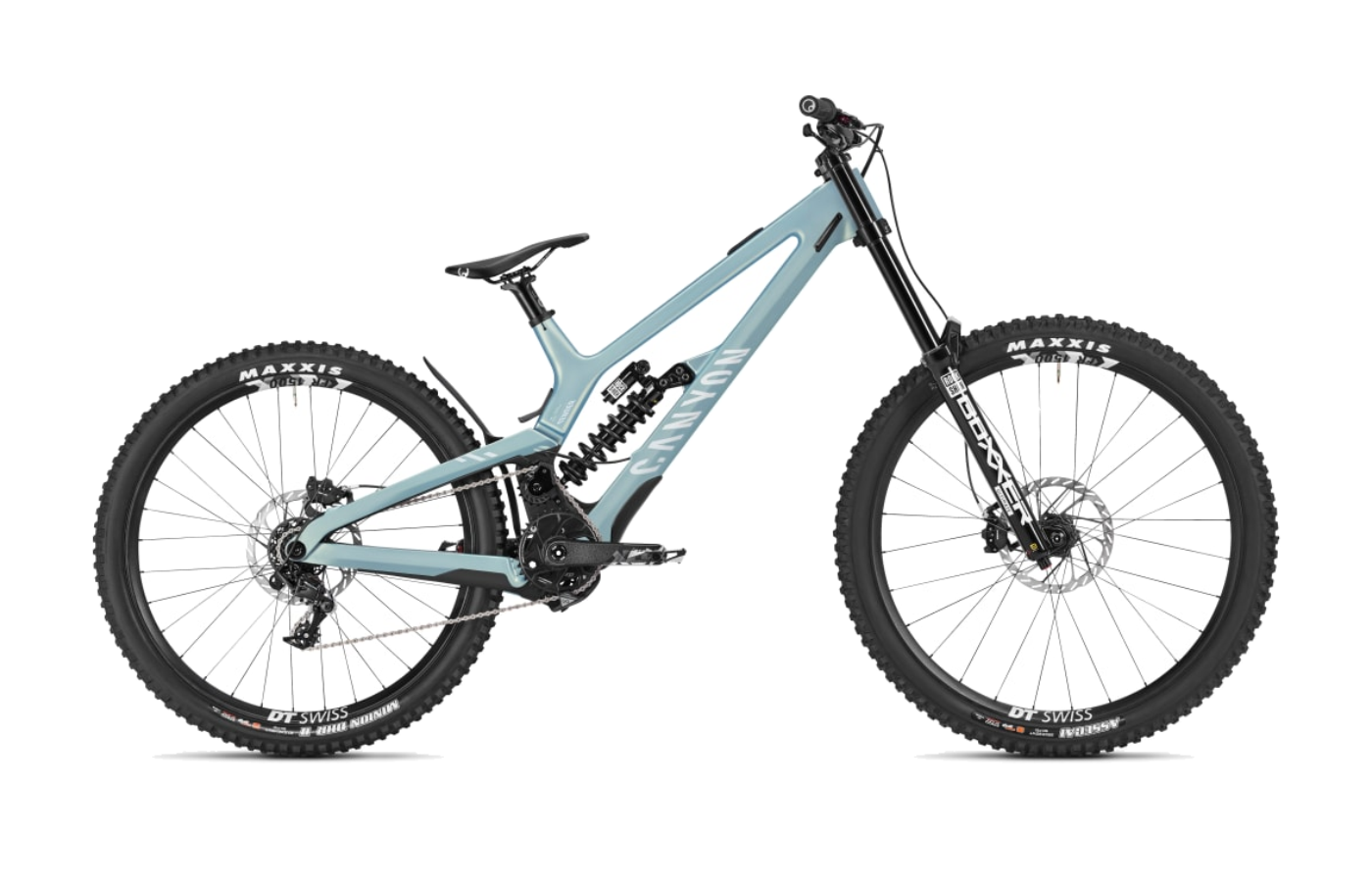
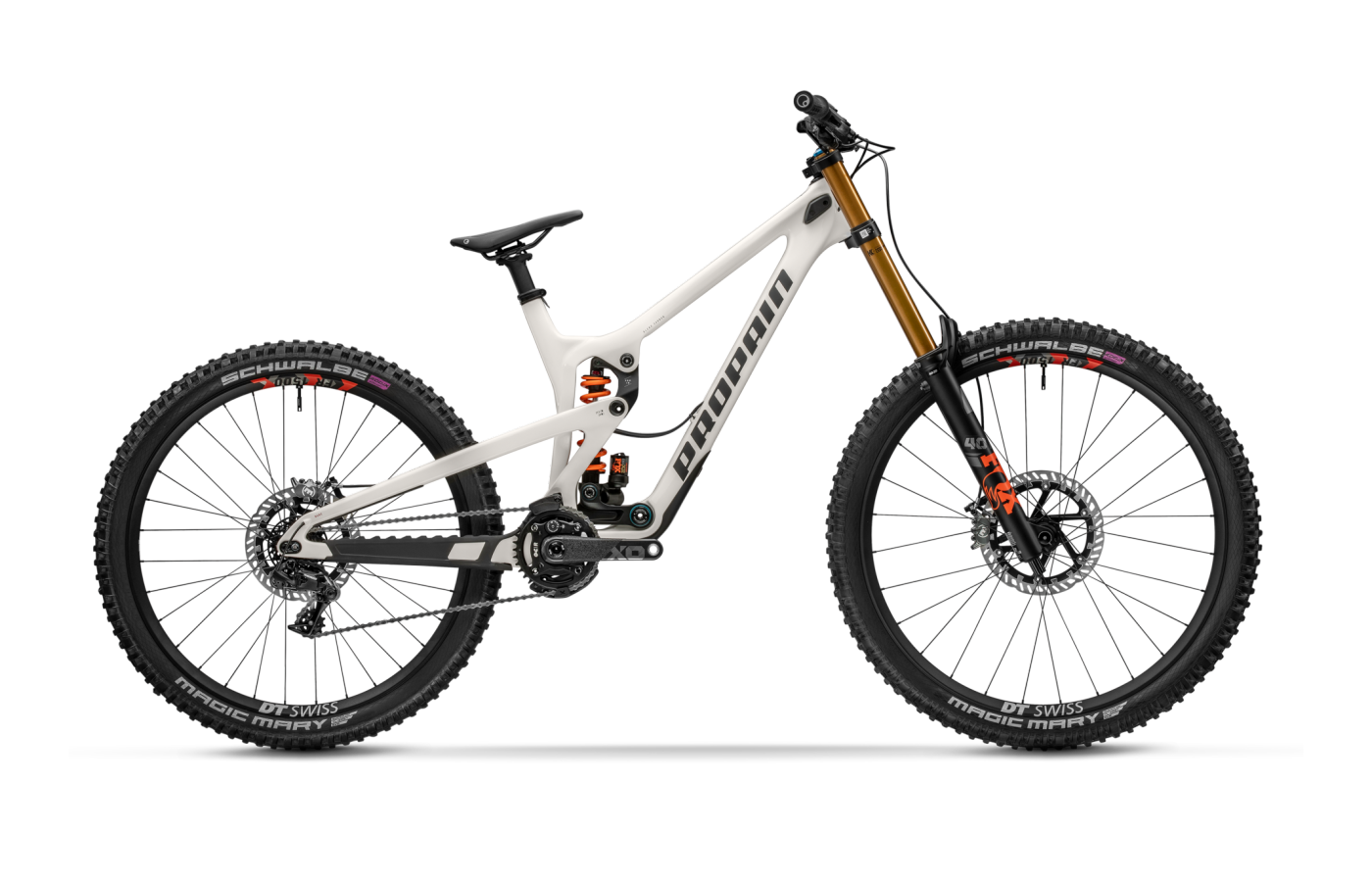
Two downhill bikes, two attitudes.
The Canyon Sender is a single-purpose World Cup race sled. The Propain Rage is the carbon park bike that re-shapes itself around your weekend.
Sender
- Unmatched high-speed composure — the high-pivot rearward axle path keeps the rear wheel out of square edges where other DH bikes stall.
- Race-ready spec out of the box — RockShox BoXXer Ultimate, Vivid Coil Ultimate, SRAM Maven brakes, Maxxis MaxxGrip DH casing. Enduro MTB's 'tuning tip: none.'
- Deep frame adjustability — ±8 mm reach via headset cups, 5 mm BB height flip, linear/progressive shock mount.
- Single build at $7,799 — no cheaper way into the platform in the US.
- Demands an active, committed rider. Reviewers say it feels 'underutilized' and 'ka-chunky' at park speeds.
Rage
- Genuinely versatile chassis — flip-chip mullet/29 swap and 445/460 mm chainstays let one frame play multiple roles.
- Lively, jump-friendly suspension — 38% progression and supportive mid-stroke deliver the 'pop' reviewers consistently call out.
- Carbon DH starting at $3,999 — the Base build is one of the cheapest carbon downhill frames you can buy new.
- Less composed than dedicated race bikes on the very roughest terrain — BikeRadar called it 'almost skittery' in fast rock gardens.
- Ride is reportedly noisy; multiple reviewers noted rattling through rock gardens and on heavy landings.
Editor’s analysis
Both run 200 mm forks, both come straight from a German direct-to-consumer factory, both cost less than the boutique competition — but the kind of downhill bike they want to be could not be further apart.
The Canyon Sender is unapologetic. Gen 3 was, in the brand's own words, designed to win World Cup races — not park rats, not flow-trail jibbers. The high-pivot MX-Link rear end with idler pulley, the 17.5 mm rearward axle path, and the 124–130% anti-rise are all in service of one thing: holding speed through the kind of square-edged chatter that stalls everyone else's bike. Reviewers describe a 'freight train feel' and stability that 'thrives when you hit things hard and fast.' At 18.4 kg in size L it is the heaviest analog DH bike Enduro MTB tested last season, and that mass is part of the point.
The Propain Rage is the opposite philosophy expressed through a similar parts list. PRO10 four-bar suspension, 215 mm rear travel, and a 38% progression rate that lets it run coil or air without bottoming. But the headline is the adjustability — flip chip for full 29 or mullet, flip chip for 445 mm or 460 mm chainstays, straight 1.5" head tube that accepts any aftermarket angle and reach adjuster. Reviewers consistently describe it as 'playful,' 'easy to manual,' and 'a blast to throw around in the air.'
On the trail the gap is real but nuanced. The Sender is faster on the ragged stuff and noticeably more composed at race pace; the Rage is sharper out of berms and more willing to leave the ground. BikeRadar flagged the Rage as 'not quite as composed at high-speed as other downhill bikes' and 'almost skittery in nature when hitting a rock garden at speed' — exactly the terrain the Sender was built to dominate. Conversely, NSMB found the Sender 'underutilized' and 'ka-chunking around' at park speeds where the Rage feels alive.
Put another way: the Sender is the bike you buy if your weekends are timed runs at Windrock or shuttled laps at Whistler's Garbanzo. The Rage is the bike you buy if your weekends look different every weekend — full 29 for that gravity enduro, mullet for the bike park, short stays for the jump line, long for the Alps trip.
Where the builds differ.
Comparing our editor's-pick builds side-by-side. Winners highlighted row-by-row — lower price and weight, and the better-spec component, each mark a point.
Build variants & pricing
The Sender ships in a single CFR Team trim in the US. The Rage spans nearly $3,400 of range across four builds, from a $3,999 Base to the $7,389 Factory.
Prices are current US MSRP. Canyon's CFR (one tier below CFR Team) is sold in Europe but not the US. The Rage's editor's-pick Factory build runs Fox 40 Factory and DHX2 Coil instead of the Canyon's RockShox suite, but matches the same SRAM X01 DH 7-speed drivetrain tier.
How they fit, how they steer.
Apples-to-apples by fit, not by label. The Sender M and Rage L both work out to roughly 465–468 mm of reach, and both run a 63° head tube. The Rage sits 8 mm taller in the stack and the Canyon's chainstays are fixed at 438 mm where the Rage offers a 445/460 mm flip.
Which size should I buy?
Pick by reach and effective top tube; both brands' size charts overlap closely in the middle but the Sender runs a longer reach for the same nominal label.
→These are starting points. Flexibility, riding style, and preferred position all shift the answer — if you’re between sizes, a professional fit beats a chart.
What the magazines said.
Published reviews from trusted cycling outlets. Click through for the full write-up.
Which one should you buy?
If you race or live for raw downhill speed on rough tracks, get the Sender. If your DH bike has to double as your park bike and your jump bike, get the Rage.
Sender
If your year revolves around timed runs, regional DH series, or shuttle days on the gnarliest tracks you can find, the Sender's high-pivot composure and race-ready spec are exactly the tool. It rewards an active rider who pushes the front and punishes anyone who doesn't.
Rage
If most of your time on a DH bike is at the park hunting jump lines and pump-track shapes — and your travel plans change every season — the Rage's flip-chip versatility and playful PRO10 feel make it the more rewarding daily driver. You give up a sliver of high-speed composure for a lot more fun at park speeds.
Questions buyers actually ask.
Short answers to the things we get emailed about most often.
01Which is faster on a World Cup-style track?
The Canyon Sender, fairly clearly. The high-pivot MX-Link with its 17.5 mm of rearward axle path and 124–130% anti-rise was engineered specifically to maintain speed through square-edged chatter and to keep the chassis composed under heavy braking. Reviewers across NSMB, Theloamwolf, and Enduro MTB all describe a 'freight train' feel that 'thrives when you hit things hard and fast.'
The Rage is no slouch on a race course — Propain has had it under World Cup riders for years — but BikeRadar specifically called it 'not quite as composed at high-speed as other downhill bikes' and noted it can feel 'almost skittery' in fast rock gardens.
02Which is more fun in the bike park?
The Propain Rage, by most reviewer accounts. The PRO10 suspension's 38% progression rate gives it noticeable 'pop' off jumps without bottoming, and the short 445 mm chainstay setting plus mullet option make it easy to manual, whip, and throw around. Multiple reviewers used the words 'playful' and 'a blast to throw around in the air.'
The Sender can absolutely be fun in the park — the 438 mm chainstays and mullet wheels keep it agile for a DH bike — but NSMB observed it can feel 'underutilized' and 'ka-chunking around' at slower park speeds. It really wants to go fast.
03How much travel does each have?
Canyon Sender: 200 mm front (RockShox BoXXer Ultimate) and ~204 mm rear via the high-pivot MX-Link layout.
Propain Rage: 200 mm front and 215 mm rear via the PRO10 four-bar layout. The Rage's slightly longer rear travel plus its 38% progression curve is what gives reviewers the 'forgiveness when over-jumping to flat' feel they keep mentioning.
04Can I run mullet wheels on both?
The Sender is mullet-only — 29" front, 27.5" rear, no full 29 option. Canyon designed the kinematics around that wheel pairing.
The Rage is the more flexible one: a flip chip in the rear linkage lets you switch between full 29 and a 29/27.5 mullet setup while preserving geometry. If you want to swap configurations seasonally, that's a real Propain advantage.
05What's the warranty like?
Propain offers a 5-year frame warranty (called out specifically in the Bike-test reviews of both Mullet and Start 29 builds).
Canyon's warranty terms aren't quoted in the reviews we drew on; check Canyon's site for current details. Both brands have crash-replacement programs in practice, though specifics shift over time.
06How serviceable are these high-pivot/multi-link layouts?
The Sender has a lot of pivots and links — Canyon acknowledges this — but they're engineered for home maintenance. All bearing seals are accessible from the non-drive side, every bolt threads into a replaceable aluminum insert (so an over-torqued bolt doesn't kill your frame), and Canyon ships a long Allen key for the buried lower shock mount. Cable routing is fully guided internally.
The Rage uses the simpler PRO10 four-bar layout, which is easier to work on in absolute terms. Sleeved internal cable routing, a threaded BB, Acros stainless bearings with Dirt Shields, and replaceable frame protection all make it friendly for privateers.
07Why is the Rage so much cheaper?
Both Canyon and Propain are direct-to-consumer brands, which is why both undercut traditional DH bikes from boutique competitors. The Rage starts lower (Base at $3,999, Ultimate at $5,679) primarily because Propain offers more entry-level builds with simpler suspension and brakes — the Sender CFR Team is the only US trim and ships fully race-spec.
Editor-to-editor (Sender CFR Team at $7,799 vs Rage Factory at $7,389), the price gap is only $410, and you're getting comparable component tiers at the top.
08Which has better adjustability?
The Rage, fairly comfortably. Out of the box you get flip chips for mullet vs 29 wheel size and for 445 vs 460 mm chainstay length, and the straight 1.5" head tube accepts any aftermarket reach or angle adjuster you want to bolt in.
The Sender is no slouch: ±8 mm reach via swappable headset cups, 5 mm of BB height adjustment, and a 180°-rotatable upper shock mount that toggles between 32.7% and 37% leverage progression. But the Rage's wheel-size and chainstay swaps are bigger structural changes than anything the Sender lets you make.
Similar bikes
If your priorities don’t map cleanly onto either of these, one of these adjacent bikes probably fits better.
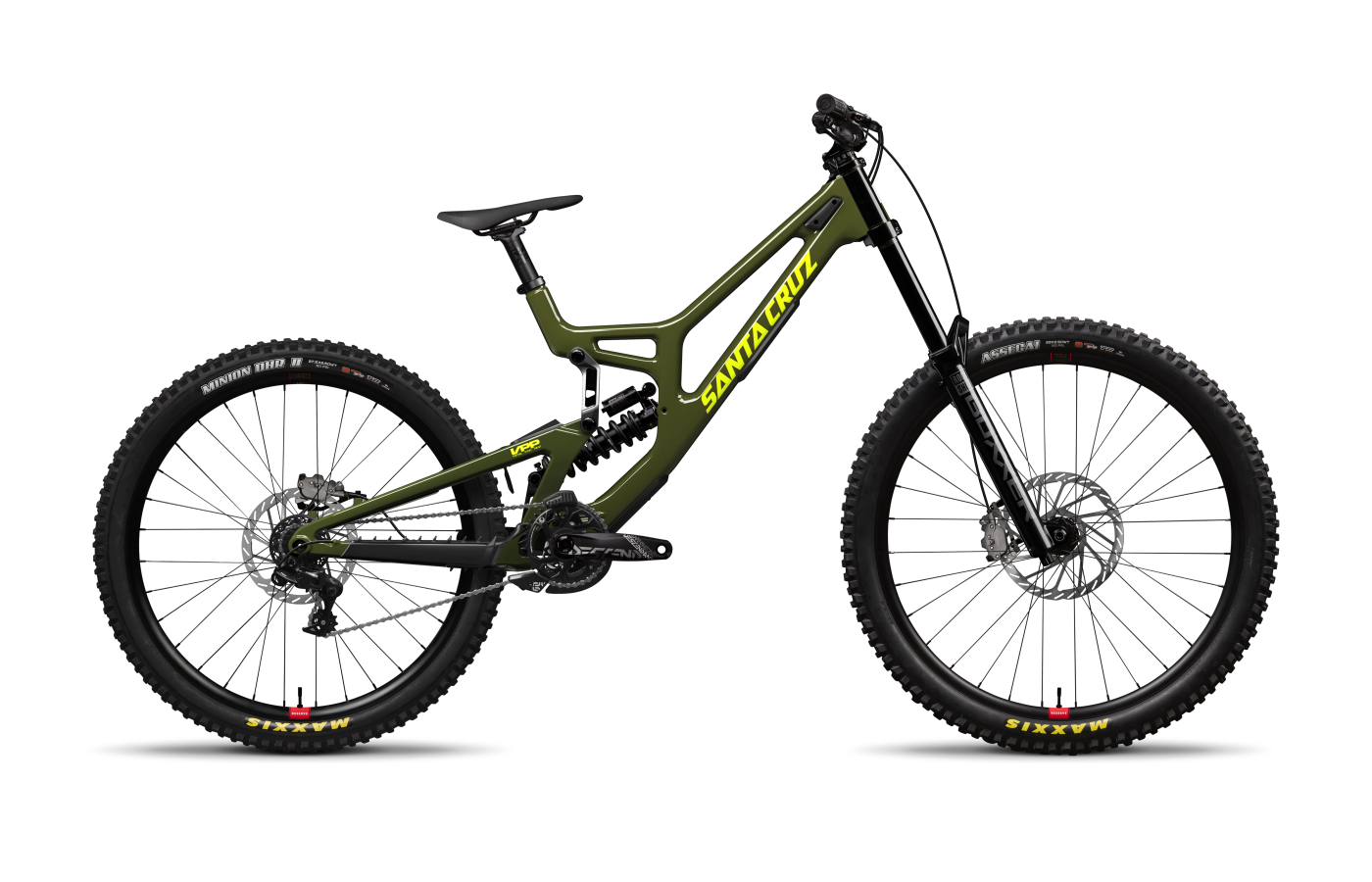
V10
The benchmark VPP downhill bike. If you want the Sender's pedigree and stability without the high-pivot complexity — idler pulley, more pivots, more bearings to service — this is the more conventional path.
Compare →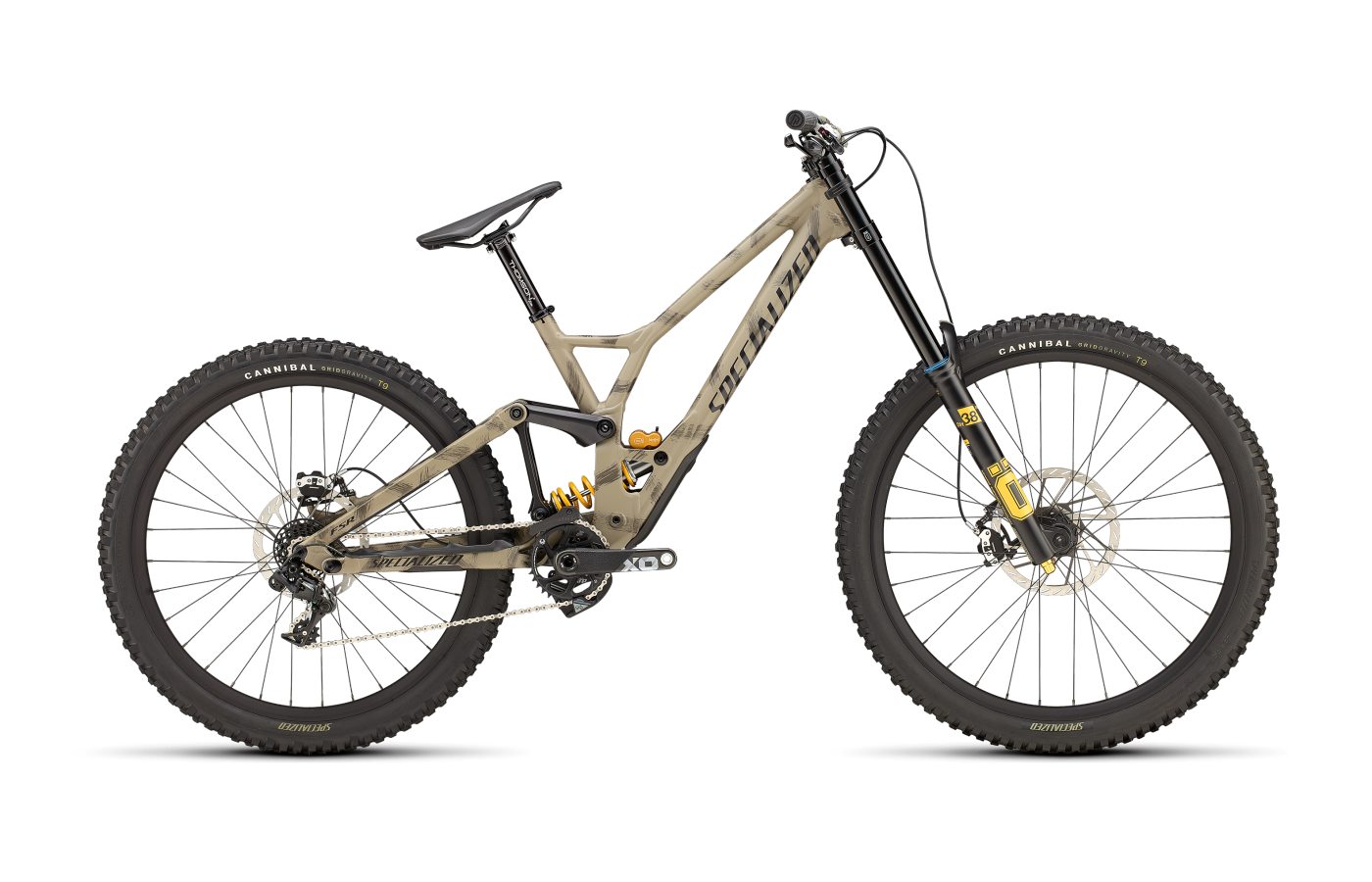
Demo
Specialized's bulldozer. Closer in personality to the Sender than the Rage — stable, composed, race-ready — but with full 29 wheels and a national dealer network if local shop support matters.
Compare →Tues
The Rage's spiritual peer: another DTC carbon DH bike that prioritizes playfulness over pure race pace. A great pick if you want a less demanding ride than the Sender at a similar discount-by-cutting-the-dealer price.
Compare →