Sender
vsV10
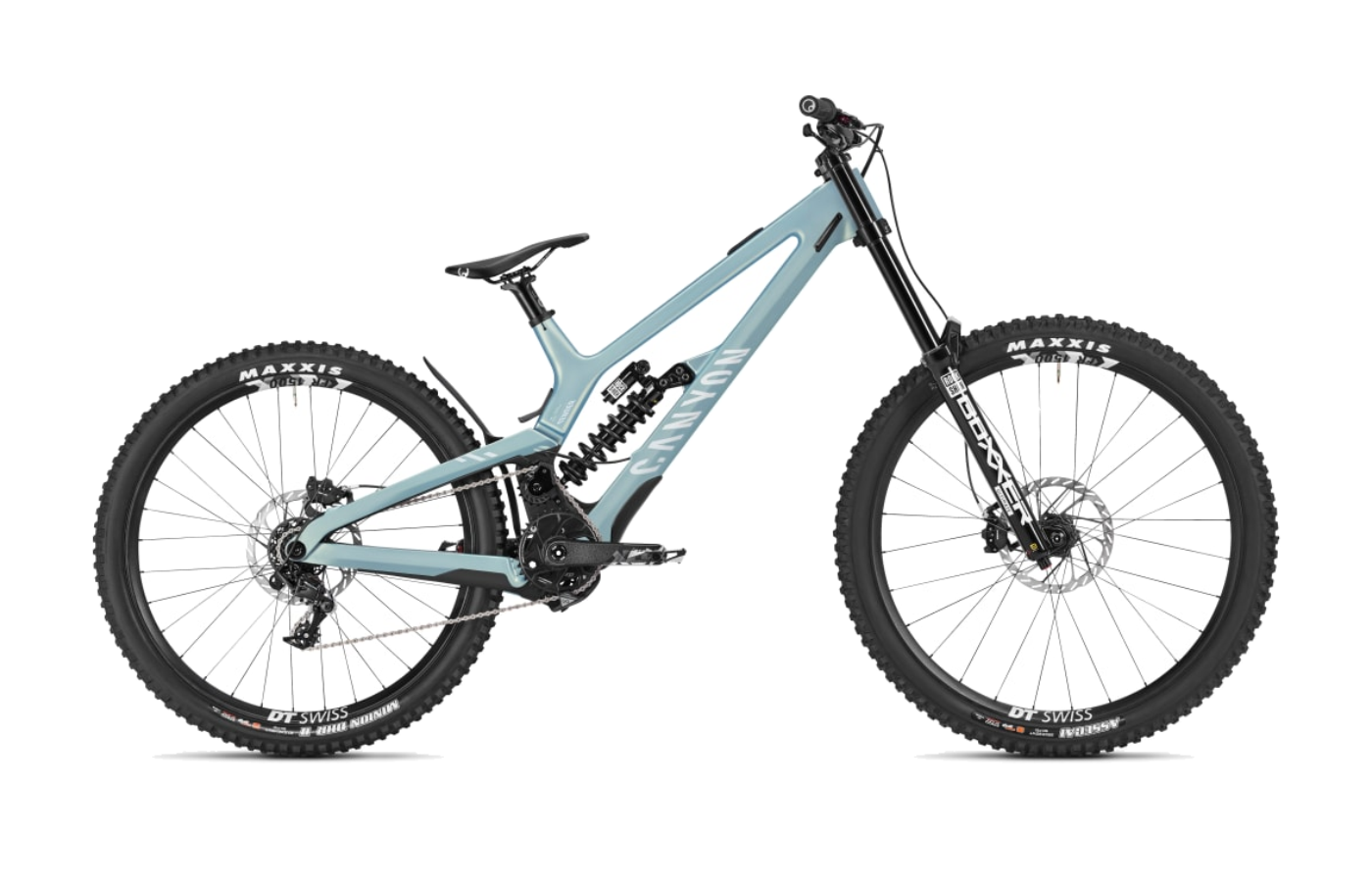
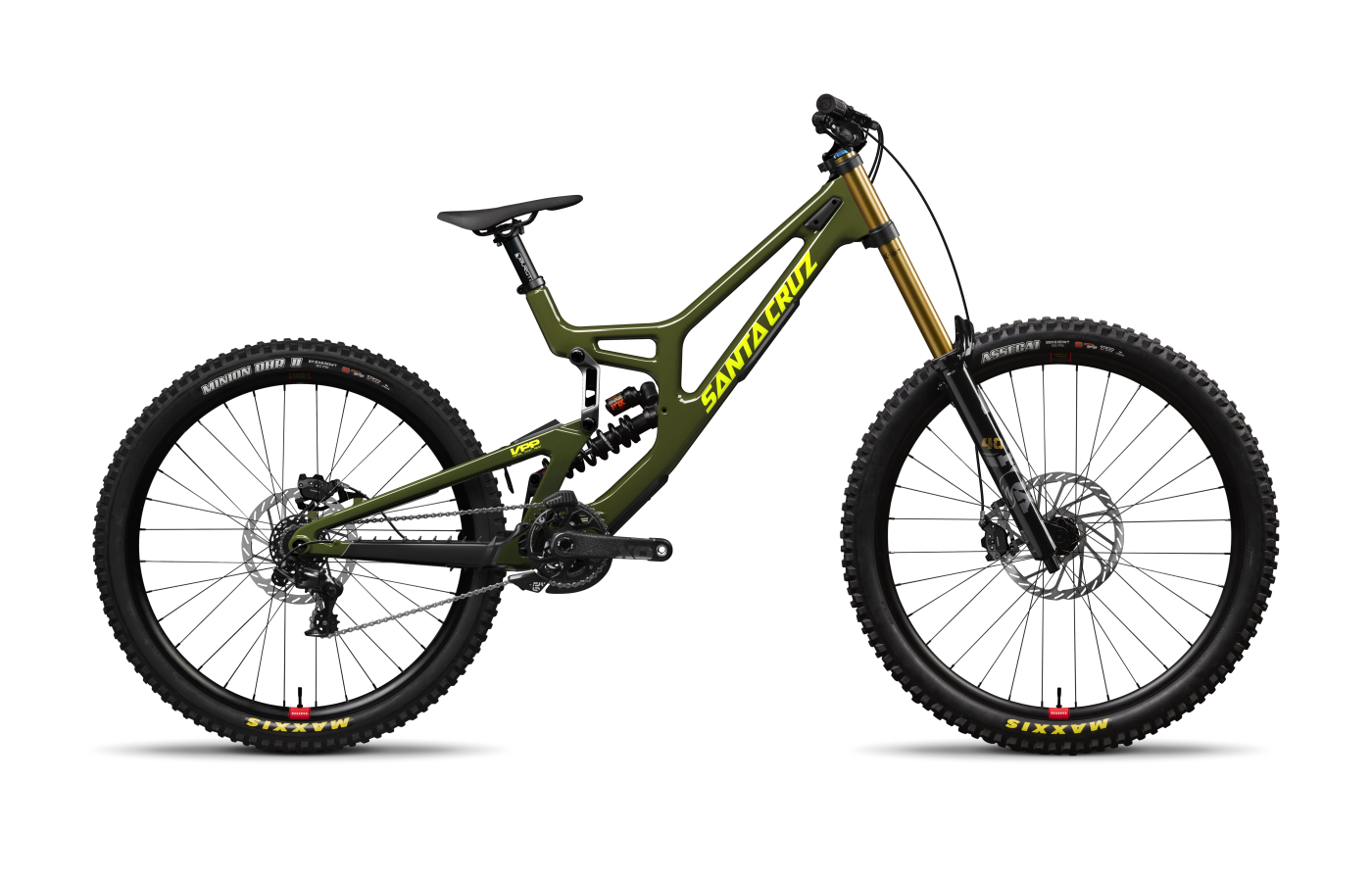
Two World Cup weapons, two suspension philosophies.
The Canyon Sender went all-in on a high-pivot idler. The Santa Cruz V10 doubled down on its VPP layout. Both win races — they just get there differently.
Sender
- High-pivot grip in the rough — 17.5 mm rearward axle path eats square-edge hits in a way the V10 can't match.
- Stable under heavy braking — ~124% anti-rise at sag keeps geometry planted when you brake late into chutes.
- Direct-to-consumer price — $7,799 for a CFR Team build with full RockShox Ultimate and SRAM Maven brakes.
- Feels "underutilized" or ka-chunky at slow speeds — demands an active, committed rider.
- Static 438 mm chainstays — no swap option like the V10's chips.
V10
- Intuitive, poppy, easy to ride — VPP snap rewards low-speed trickery and doesn't punish a tired rider.
- Class-leading adjustability — ±8 mm reach, ±5 mm chainstay, BB/HTA flip chip, all hardware in the box.
- Lifetime warranty + free pivot bearings — Santa Cruz's ownership package softens the sticker shock over time.
- $8,899 for the X01 build — about $1,100 above the Sender CFR Team.
- XL is full 29er only; if you're 6'+ and want a mullet, you're out of luck.
Editor’s analysis
This isn't a fight about which is faster on a stopwatch — both have proven that — it's a question of how you want to be fast.
On paper the Canyon Sender and Santa Cruz V10 are the same bike: 200 mm of coil travel front and rear, mullet wheels, 63-degree head angles, race-team pedigree. Both have podiumed at World Cup rounds in the last two seasons. Cross-shop them and you'll find their prices land within $1,100 of each other on equivalent X01 DH builds. But spend any time reading what the test riders actually say, and the bikes split hard along their suspension layouts.
The Canyon Sender is the high-pivot specialist. An idler pulley unlocks a 17.5 mm rearward axle path that lets the rear wheel get out of the way of square-edged hits, ironing out chatter and root carpets in a way that feels almost unfair when the trail goes ugly. The trade is character: reviewers describe it as a bike that feels "underutilized" or even "ka-chunky" if you're not pushing — it wakes up at race pace and demands an active rider. Anti-rise around 124–130% at sag keeps the chassis planted under heavy braking, the kind of detail Troy Brosnan won a World Cup on.
Santa Cruz tested high-pivot prototypes for the V10.8 and threw them out. Their factory riders preferred the traditional VPP layout for acceleration and snap, and the production bike inherits that bias. The V10 is the "flying carpet" — described by Enduro MTB as cornering "as if it could read your mind," and by Revolutionmtb as the "Ferrari of mountain bikes." It's the more intuitive bike at low speeds, the easier bike when you're tired, and the better bike for pumping and popping. Where the Sender plows, the V10 carves.
Geometry-wise the Sender is the longer, more committed shape — 468 mm reach in size M vs the V10's 447 mm — which is part of why it feels "underutilized" off the gas. Both offer ±8 mm reach adjust, both offer BB-height tuning, but only the V10 lets you swap chainstay length (±5 mm). Put plainly: the Sender is the bike you buy because you race, and you want every second the high-pivot can give you. The V10 is the bike you buy because you ride downhill bikes for a living and for fun, and you don't want to choose.
Where the builds differ.
Comparing our editor's-pick builds side-by-side. Winners highlighted row-by-row — lower price and weight, and the better-spec component, each mark a point.
Build variants & pricing
The Sender ships in one build in the US ($7,799 CFR Team). The V10 spans $7,049 (DH S, GX) to $8,899 (DH X01).
Prices are current US MSRP. We've matched the V10 DH X01 against the Sender CFR Team because both run SRAM X01 DH and top-tier coil suspension — the V10 DH S would put a GX-equipped build against the Sender's flagship and skew the read.
How they fit, how they steer.
Both at size Medium — the fit-picked size for a 5'8" rider on each bike. The Sender is the longer, more committed shape: 468 mm reach vs the V10's 447 mm, with a near-identical 630 mm stack and the same 63° head angle. Chainstays are the bigger story — Sender's 438 mm vs V10's 445 mm — but the Sender's rearward axle path effectively grows that to ~455 mm at sag.
Which size should I buy?
Size recommendations based on stack, reach, and effective top tube. The Sender runs noticeably longer in reach at every size, so a rider on the boundary between two V10 sizes may sit one size smaller on the Canyon.
→These are starting points. Flexibility, riding style, and preferred position all shift the answer — if you’re between sizes, a professional fit beats a chart.
What the magazines said.
Published reviews from trusted cycling outlets. Click through for the full write-up.
Which one should you buy?
If you race the gnarliest tracks and want every second the high-pivot can give you, get the Sender. If you want a downhill bike that's also a bike park bike, get the V10.
Sender
If you spend your weekends timing segments at Windrock or chasing race plates in the PNW, the Sender is the sharper tool — provided you're willing to ride it hard enough to wake it up. The high-pivot earns its keep on rough, fast tracks where straight-line composure pays in seconds.
V10
If your downhill bike pulls double duty — race weekends, jump lines, off-day laps with friends — the V10 is the more intuitive, more forgiving choice. Pair the lifetime warranty and free bearings with a frame that's still World Cup-fast, and the premium starts to make sense.
Questions buyers actually ask.
Short answers to the things we get emailed about most often.
01Which is faster in a straight line over rough terrain?
The Canyon Sender, by most accounts. The high-pivot layout with its 17.5 mm rearward axle path lets the rear wheel get out of the way of square-edge hits, which translates to less speed loss through chunky sections. Enduro MTB described a "freight train feel" that "propels you ahead" in roots and chatter, and Theloamwolf noted the bike "loves when it gets super rough."
The V10 isn't slow in the rough — its VPP layout is famously composed — but it absorbs trail noise more than it negates it. On a smooth, jumpy track, the V10's snap can put it ahead. On a rough World Cup course, the Sender's axle path is the bigger weapon.
02Which is easier to ride?
The Santa Cruz V10, clearly. Reviewers across Enduro MTB, Revolutionmtb, and Pinkbike describe it as "intuitive," "easy to ride when you're tired," and a bike that "reads your mind" through corners. Its shorter reach (447 mm in M vs the Sender's 468 mm), VPP snap, and more neutral cornering character make it forgiving at any pace.
The Sender, by contrast, "demands direction, pressure and an active riding style," per Enduro MTB. NSMB called it "underutilized" and "ka-chunking" at slower speeds. It's a tool that earns its keep at race pace — not a bike to cruise.
03How does the suspension actually differ?
Both bikes run 200 mm of coil-sprung travel front and 200–208 mm rear, but the layouts are opposites.
Sender: high-pivot single-pivot with an idler pulley. Generates a 17.5 mm rearward axle path from 0% to sag, which lets the rear wheel travel up and back over square-edge hits — the defining trait of the platform. Anti-rise sits around 124–130% at sag, which keeps the chassis level under heavy braking.
V10: Santa Cruz's lower-link VPP (Virtual Pivot Point) layout, which Santa Cruz's own engineers tested high-pivot prototypes against and rejected — they preferred the VPP for acceleration and maneuverability. The result is a poppier, snappier bike with more mid-stroke support for pumping and jumping.
04What's the price difference and is it justified?
The Sender CFR Team is $7,799 in the US (the only build sold here). The V10 DH X01 is $8,899 — about $1,100 more for an equivalent SRAM X01 DH drivetrain and top-tier coil suspension. The V10 DH S brings the entry point down to $7,049, but with a GX drivetrain and RockShox Base-tier suspension.
What you get for the V10 premium: a lifetime warranty on the frame and Reserve wheels, free pivot bearings for life, and every adjustability part (headset cups, chainstay chips) included in the box. For a privateer who plans to keep the bike for years, that's real money. For a racer who'll burn through frames anyway, the Canyon's $1,100 saved goes a long way toward race entries and lift tickets.
05How adjustable are they?
Both offer ±8 mm of reach via interchangeable headset cups and a 5 mm bottom bracket adjustment.
The V10 adds chainstay length adjustment — three positions over a 5 mm range — plus a flip chip that ties BB height to head tube angle. Pinkbike's Matt Beer used the chainstay swap to shift weight forward and dial out understeer on flatter tracks. The Sender's 438 mm chainstays are static, though its rearward axle path effectively grows the rear-center to ~455 mm at sag.
Bottom line: both are deeply tunable, but the V10 gives you one more axis to play with.
06Are the brakes good enough on both?
Sender: SRAM Maven Silver four-piston brakes with large rotors, across the board. Theloamwolf noted they were "just 'ok'" out of the box but improved significantly after bedding in. Otherwise, well-regarded.
V10 DH X01: SRAM Code-tier brakes with a 220 mm front rotor — a smart spec on a bike this fast. Pinkbike and Enduro MTB both flagged that Code brakes can reach their thermal limits on heavier riders and very steep, sustained descents. If you're 90 kg+ and ride lift-served steeps all day, the Sender's Maven spec is the safer call out of the box.
07What about wheel size — mullet or full 29?
Both bikes are mullet (29" front, 27.5" rear) in S, M, and L. The Sender stays mullet in XL as well; the V10's XL is full 29er only. Pinkbike called this a potential "handcuff" for taller riders who prefer a smaller rear wheel for maneuverability.
If you're 6'0" or taller and want the agility of a 27.5" rear, the Sender is the only choice between these two.
08How serviceable are they at home?
Both brands clearly engineered for home maintenance. Canyon uses threaded aluminum inserts at every bolt point so over-torqueing won't damage carbon, plus fully guided internal cable routing and supplied tools for the harder-to-reach pivots.
Santa Cruz includes all geometry-adjustment hardware in the box (headset cups, chainstay chips, dropout inserts) and uses drop-in (not press-fit) headset cups for easy DIY reach changes — but the same drop-in design has a known headset creak issue when sand and dust migrate past the seals. Some long-term testers reported needing to clean and re-grease as often as once a week in dry conditions to keep it silent.
Similar bikes
If your priorities don’t map cleanly onto either of these, one of these adjacent bikes probably fits better.
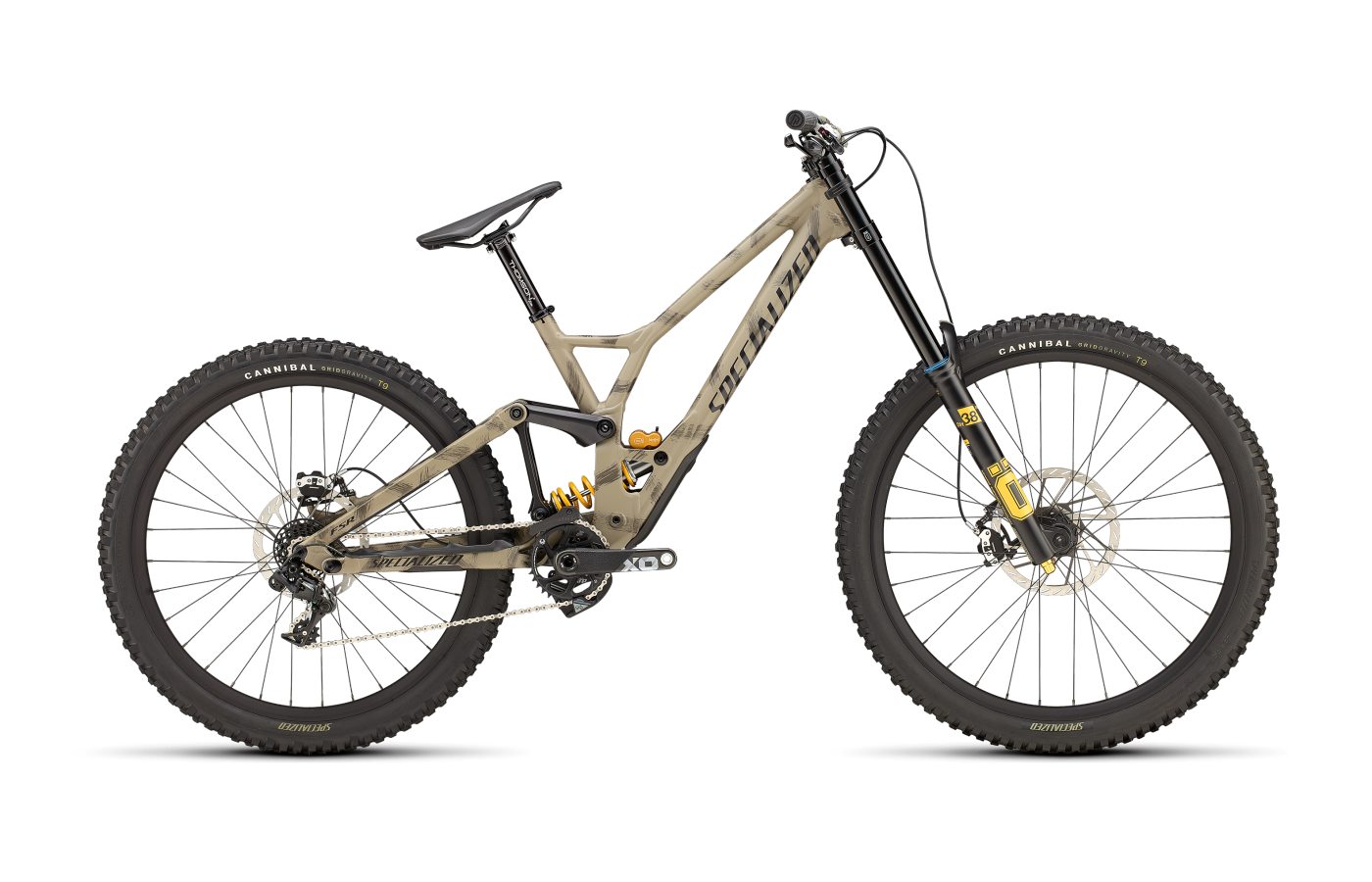
Demo
Specialized's race-prototype DH platform with a more traditional four-bar feel — a middle path between the Sender's high-pivot plow and the V10's VPP snap, and a podium regular in its own right.
Compare →Session
Trek's high-pivot answer to the Sender, with the same plow-it character but more wheel-size flexibility (full 29, mullet, or full 27.5). Worth a look if you want axle-path benefits without locking into mullet only.
Compare →Tues
If the V10 is too expensive and the Sender too demanding, the Tues splits the difference — a poppy, playful park bike with a real DH frame at a price that doesn't sting. The privateer's privateer bike.
Compare →