Spectral
vsRipmo
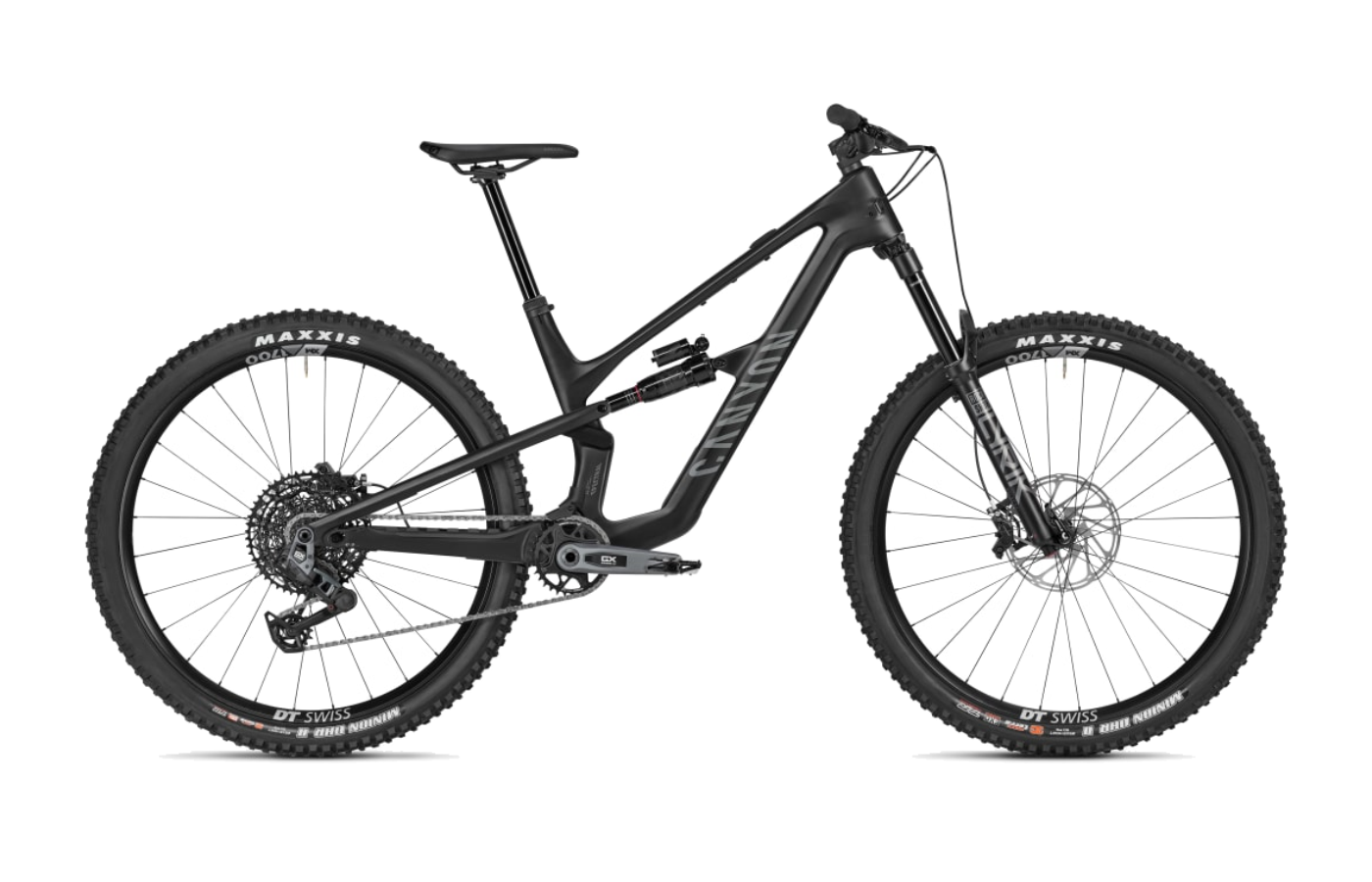
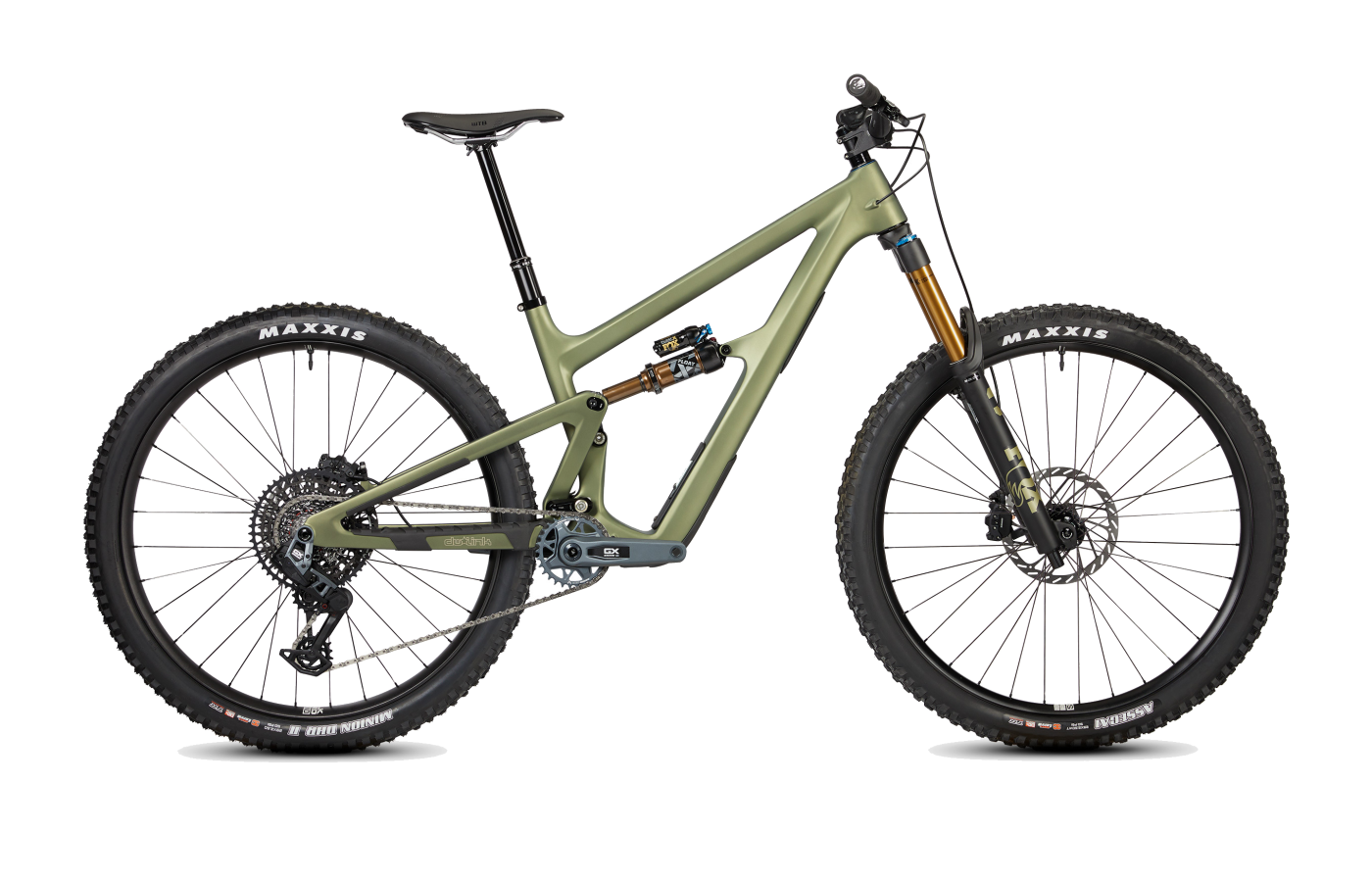
Two trail bikes, two price tags.
The Canyon Spectral is the direct-to-consumer value play at 140/150 mm. The Ibis Ripmo is the boutique all-mountain bike with 10 mm more front and rear travel.
Spectral
- Direct-to-consumer pricing — full carbon frame, GX AXS Transmission, and Lyrik Select+ for $5,099.
- Playful character — reviewers repeatedly call it zesty, lively, and a corner-ripper with short 437 mm chainstays.
- Deep internal storage plus multi-wheel flip chip and a 34.9 mm dropper standard across the range.
- K.I.S. steering stabilizer is polarizing — some riders pull the blanking plate within a week.
- Stock G5 grips are near-universally panned; plan to swap them.
Ripmo
- Class-leading DW-Link climber — reviewers call the climbing position and traction among the best in the 150 mm category.
- More bike, 10 mm each end — 150/160 mm travel with a slacker 64.5-degree head angle for bigger descents.
- Dealer-supported boutique with a threaded BB, IGUS bushings under a lifetime warranty, and thoughtful integrated storage.
- Price floor roughly $2,000 above the Spectral at matching component tiers.
- Stock Fox 36 GRIP X / 180 mm rear rotor pairing draws criticism from reviewers pushing the bike hard.
Editor’s analysis
This isn't trail-vs-enduro. It's how much bike you need — and how much you're willing to pay to get it from a dealer instead of a cardboard box.
On paper these overlap more than they diverge. Both run Fox 36 forks, both use flip-chips for mullet conversion, both ship on Maxxis DHR II rears, both hit a 64-point-something head angle. But the travel numbers set the tone: the Canyon Spectral is 140 mm rear / 150 mm fork; the Ibis Ripmo is 150 mm rear / 160 mm fork. A single click on each end, but the bikes are tuned around it — and so is the price tag.
The Canyon Spectral is the playful one. Slimmed chainstays, a new linear-progressive kinematic, and a reputation reviewers consistently sum up as zesty and lively. Flow Mountain Bike calls it a corner-ripping machine. Bike Perfect's CF 7 got filed as the best affordable trail MTB they've ever ridden. At $5,099 for the CF 8 with GX AXS Transmission, RockShox Lyrik Select+, a 34.9 mm dropper, and internal frame storage, the build sheet is genuinely hard to match at the price. The catch is K.I.S. — Canyon's steering stabilizer is polarizing (reviewers' words), rattle-prone on some units, and either you like the self-centering front end or you pull the blanking plate and forget it.
The Ibis Ripmo V3 is the composed one. DW-Link suspension that reviewers called hoverbike-like on chunky climbs. Size-specific everything — chainstays, seat angles, even bottom-bracket heights grow with the frame. A 160 mm Fox 36 Factory with the GRIP X2 damper on every build from the $5,699 Eagle 90 up. The floor is $5,199 for the Deore build and the ceiling is $9,999 for the XTR Di2. You're paying roughly 50% more than the equivalent-tier Spectral for a bike that's genuinely burlier, has a slacker 64.5-degree head angle, and comes with a threaded BB, IGUS bushings under a lifetime warranty, and Cotopaxi-designed storage bags.
Put another way: the Canyon Spectral is the bike you buy when you want a modern trail bike and don't want to spend more than $5k. The Ibis Ripmo is the bike you buy when you want one bike for every trail on the mountain, you'd rather pedal a 150 than a 170, and the dealer relationship matters.
Where the builds differ.
Comparing our editor's-pick builds side-by-side. Winners highlighted row-by-row — lower price and weight, and the better-spec component, each mark a point.
Build variants & pricing
The Spectral starts at $3,099 (alloy) and tops out at $5,799. The Ripmo starts at $5,199 and runs to $9,999 — the two ranges barely overlap.
Prices are current US MSRP. Canyon is direct-to-consumer only — no dealers, no demos, and the US lineup is limited to the CF 7 and CF 8. Ibis sells through its dealer network and holds its carbon frame price higher across every tier.
How they fit, how they steer.
Spectral size S (reach 450, stack 621) against Ripmo MD (reach 456, stack 622). Near-identical cockpit dimensions; the Ripmo is half a degree slacker at 64.5 vs 64 degrees head angle, and its chainstays are 2 mm shorter at 435 mm.
Which size should I buy?
Canyon's published reach figures run long — reviewers widely recommend sizing down one. Ibis sizes by top-tube length rather than reach, so cross-check before ordering.
→These are starting points. Flexibility, riding style, and preferred position all shift the answer — if you’re between sizes, a professional fit beats a chart.
What the magazines said.
Published reviews from trusted cycling outlets. Click through for the full write-up.
Which one should you buy?
If you want a modern carbon trail bike under $5.5k, get the Spectral. If you want 10 mm more bike on each end and a dealer behind it, get the Ripmo.
Spectral
If you ride varied terrain — flow, moderate tech, the occasional bike-park lap — and you'd rather spend $2,000 less on the bike and more on travel, tires, or suspension tuning, the Spectral is hard to beat. Playful, poppy, and fully feature-equipped for well under $5k.
Ripmo
If your rides involve big climbs followed by rough descents, you want the DW-Link uphill platform, and the dealer experience matters, the Ripmo pays back the premium. More travel, more stability, and a refined frame designed for long ownership.
Questions buyers actually ask.
Short answers to the things we get emailed about most often.
01Which one climbs better?
The Ibis Ripmo, comfortably. DW-Link is one of the most efficient climbing suspension platforms in the business — reviewers call the seated position hoverbike-like on rough ground and note the bike feels energetic even without the climb switch.
The Spectral climbs well too — reduced anti-squat gives it excellent traction on technical terrain — but reviewers also flag occasional pedal bob and an ideal cadence that rewards a slow-and-steady style over stand-and-mash efforts. Add the Ripmo's higher, size-specific bottom bracket (fewer pedal strikes on steep tech) and the Ripmo is the stronger climber for most riders.
02Which descends harder?
The Ibis Ripmo, by margin of travel and geometry. 150 mm rear / 160 mm front and a 64.5-degree head angle put it closer to light-enduro territory; reviewers agree the V3 is the most capable descending Ripmo to date.
The Spectral is only one click back on travel (140/150) but sits at 64 degrees and is built around playfulness rather than plow. On steep, truly rough terrain the Ripmo feels more planted; on flow trails and moderate tech, the Spectral's pop and short rear end are more fun.
03Why is the Ibis so much more expensive?
Two main reasons.
Distribution model. Canyon sells direct — no dealer margin, no showroom cost. Ibis sells through shops, which adds cost at every tier but also means hands-on service, demo rides, and a local contact for warranty work.
Component mix. At the mid-tier, the Ripmo GX Transmission ($7,799) ships with a Fox 36 Factory (vs the Spectral CF 8's RockShox Lyrik Select+) and a Float X Factory (vs Super Deluxe Select+). Both are strong packages, but the Ripmo is one damper tier up on each end. You also get the IGUS lifetime bushing warranty, the Cotopaxi storage bags, and a threaded BB.
04What about the Canyon K.I.S. system — is it a deal-breaker?
Not really. K.I.S. (Keep It Stable) is a spring-loaded steering stabilizer that self-centers the bars. Reviewers are split: some find it genuinely useful on loose, steep, or chunky climbs; others find it adds lethargy to tight cornering or introduces a faint rattle.
Canyon sells it fully removable, with a blanking plate in the box. If you hate it, 20 minutes with an Allen key and it's gone. Tension is also adjustable if you want to dial it back without removing it entirely. It is, functionally, a free option — not an imposed one.
05Can I size between the two?
Both fit a default 5'8" / 173 cm rider well, but on different sizes. The Spectral's fit-picked size is S (450 mm reach, 621 mm stack). The Ripmo's is MD (456 mm reach, 622 mm stack).
The Spectral's reach figures run long for the named size — reviewers repeatedly note it feels a size bigger than expected and recommend sizing down. The Ripmo uses top-tube length rather than reach for size naming, which can muddy the waters. If you're between sizes on either bike, lean toward the smaller frame for more maneuverability.
06Which has better long-term durability?
Both are Category-4-rated carbon frames with robust chainstay protection and internal storage. Ibis has a slight edge on frame-level details: threaded bottom bracket (vs Canyon's press-fit), IGUS lower-link bushings with a lifetime replacement warranty, and 34.9 mm seatpost on both sides.
On components, both get DT Swiss or Blackbird Send alloy wheels that reviewers describe as tough. Common upgrade paths on the Ripmo include a 200 mm rear rotor and Doubledown-casing rear tire for aggressive riders; on the Spectral, most riders swap the G5 grips and add volume spacers to the rear shock within the first few rides.
07Is it worth stepping up to the Ripmo XTR or Spectral CF 9?
Depends on what you want from the upgrade.
Spectral CF 9 ($5,799) — steps up from the CF 8's Lyrik Select+ and SRAM GX to a Fox 36 Factory and SRAM X0 Eagle AXS Transmission. Worth it if you want full electronic top-tier SRAM and the Fox 36 Factory's small-bump sensitivity on high-speed chatter.
Ripmo XTR Di2 ($9,999) — steps up from the GX build's alloy wheels to Ibis S35 Carbon rims on Industry Nine Hydra hubs, plus Shimano XTR Di2 shift. The carbon wheel upgrade alone is worth a serious chunk of the price bump on rough terrain; if that matters to you, it's a defensible jump.
08Which is better for a rider who wants one bike for everything?
Both aim at it, but differently. The Spectral is built to be a quiver-killer for riders whose everything leans trail — fast singletrack, flow, moderate descents — and who prefer a playful, poppy bike.
The Ripmo is built to be a quiver-killer for riders whose everything leans all-mountain — big climbs, rough descents, the occasional enduro lap. Ibis even markets it as a Ripley-convertible frame (short-travel clevis swap) for riders who want that flexibility. For most trail riders, either works; for rougher terrain or bike-park days, lean Ripmo.
Similar bikes
If your priorities don’t map cleanly onto either of these, one of these adjacent bikes probably fits better.
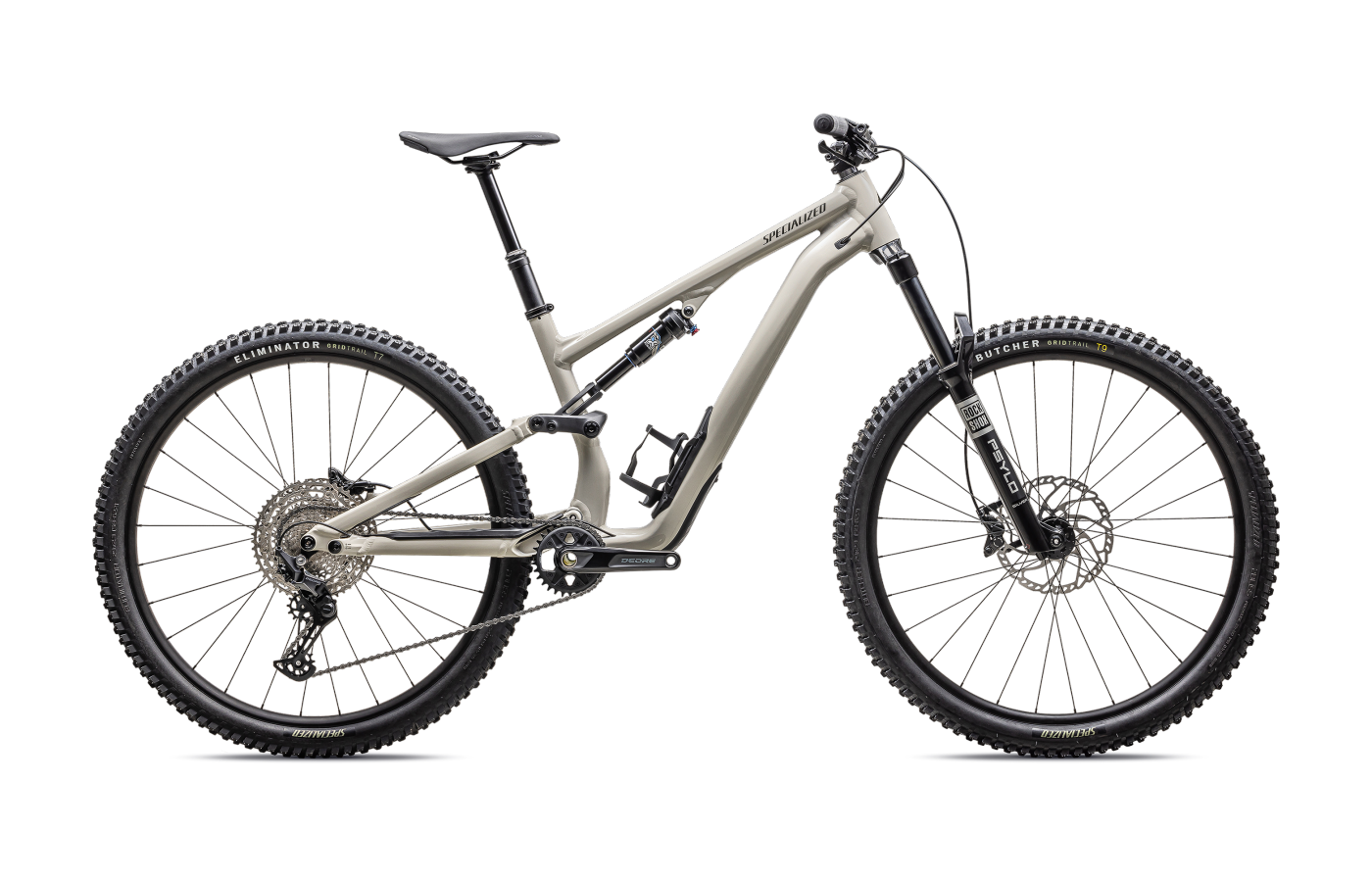
Stumpjumper
The most cross-shopped trail bike in North America — 145/150 mm, genuinely modular geometry, and Specialized dealer reach. Splits the difference between the Spectral's playfulness and the Ripmo's composure.
Compare →Jeffsy
YT's direct-to-consumer answer to the Spectral — similar price ceiling, similar aggressive-trail intent, distinct character. Worth a cross-shop if you've already made peace with buying without a dealer.
Compare →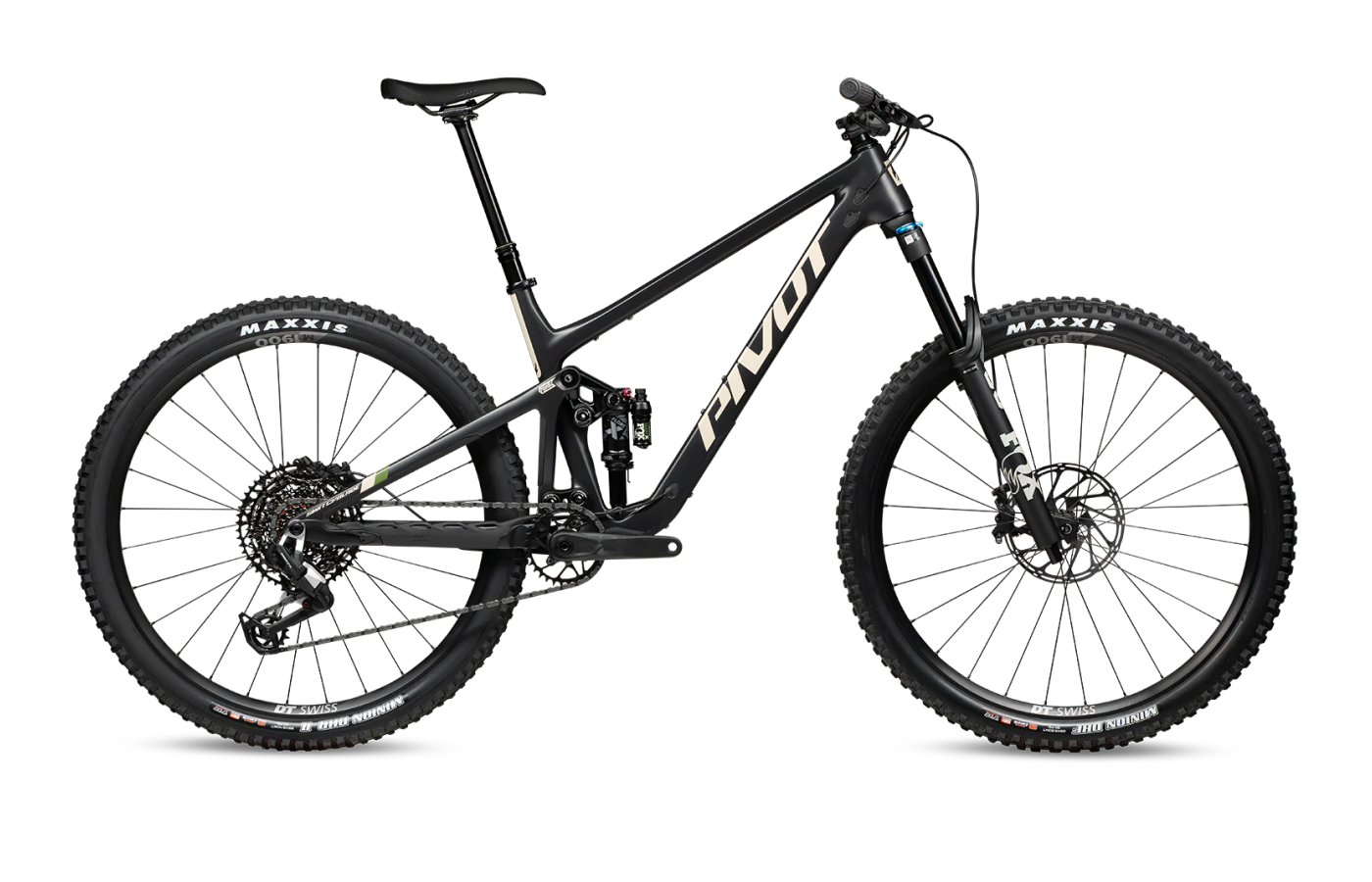
Switchblade
Pivot's DW-Link counterpart to the Ripmo — 142/160 mm, similar climbing efficiency, and a longer top tube that some riders prefer. Boutique price tag in the same bracket as the Ibis.
Compare →