Caledonia-5
vsRoubaix
Two roads to all-day comfort.
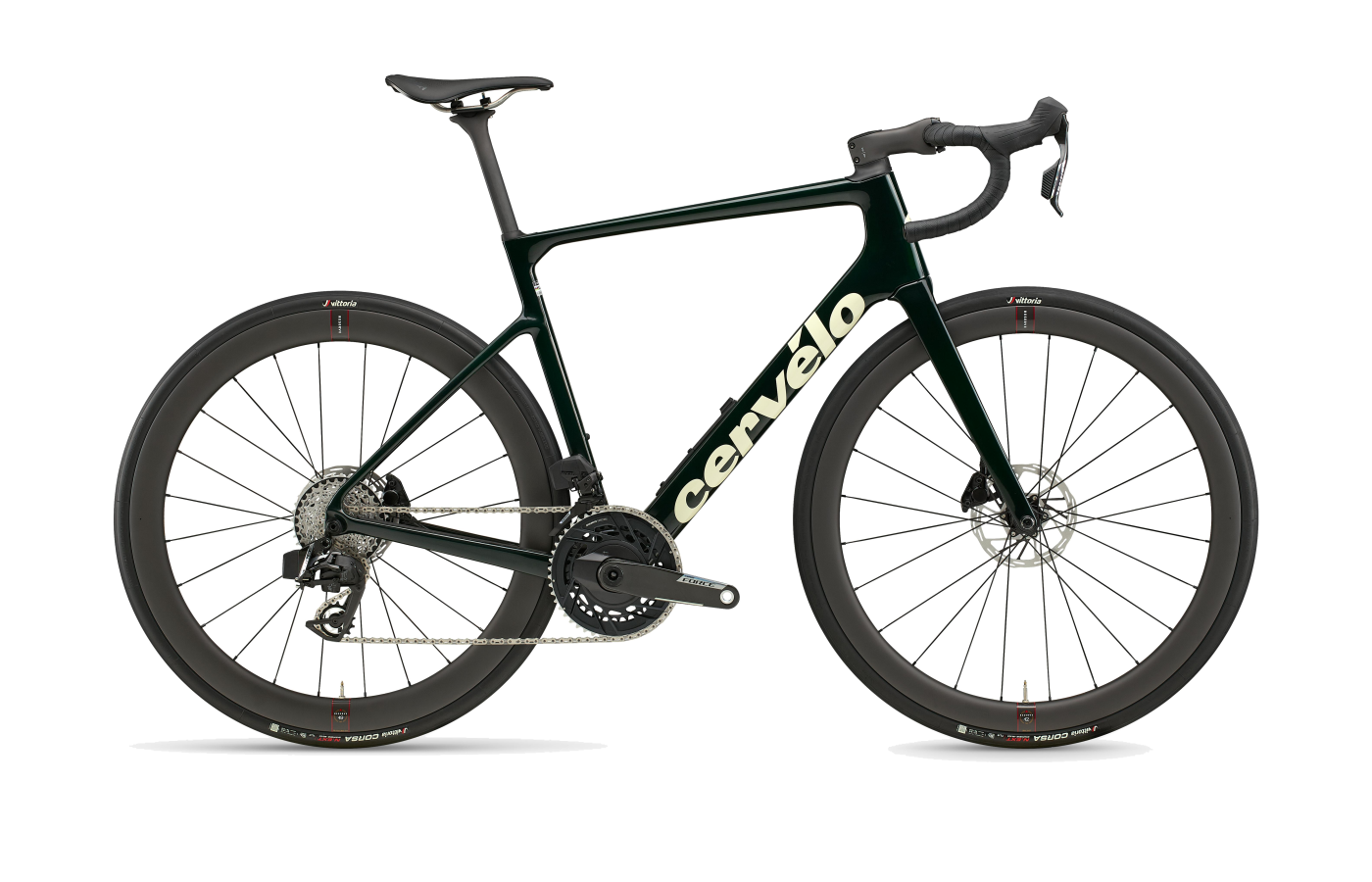
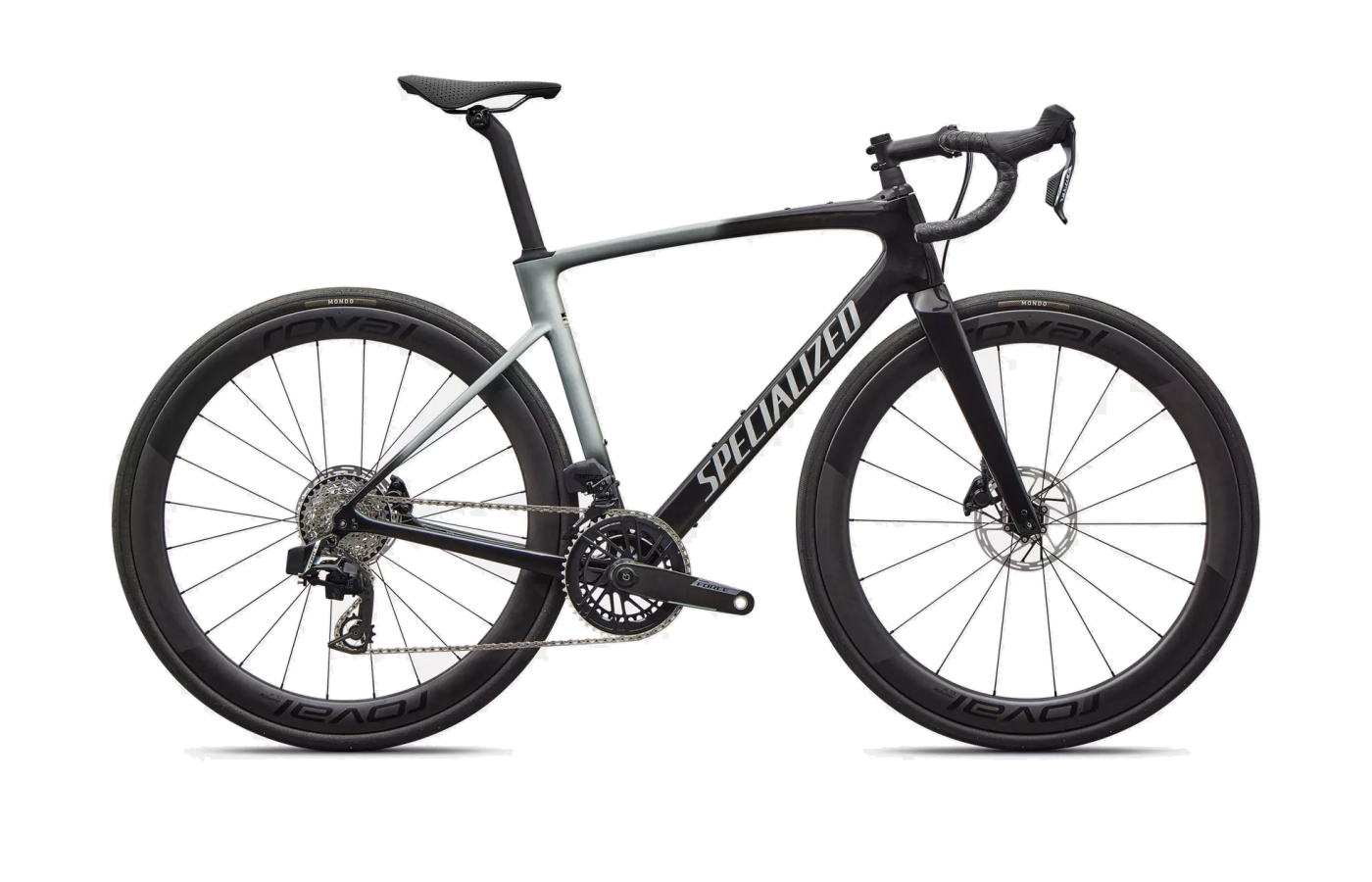
The Caledonia-5 is an endurance bike that rides like a race bike. The Roubaix is a race bike that rides like a couch — with a literal shock absorber on the front.
Caledonia-5
- Sharper handling — 415 mm chainstays and integrated cockpit make it feel like a race bike that simply tolerates wider tires.
- Power meter on every build — from the $7,400 Rival AXS up to the $12,750 Red AXS, the spider-based meter is included.
- Reserve carbon wheels standard across the whole range — no entry-level alloy hoops to upgrade out of.
- No build under $7,400 — there's no budget entry to the platform.
- Less tire clearance and no active suspension if your roads are genuinely broken.
Roubaix
- Future Shock 3.0 front suspension — 20 mm of axial travel that genuinely changes what counts as ridable pavement.
- Wider tire clearance (38 mm officially, ~40 mm measured) — light gravel is squarely on the menu.
- Massive build range from $2,799 (Tiagra) to $12,499 (S-Works) — the cheapest way into a modern endurance carbon platform.
- Tall, upright fit limits how aero a position you can get.
- Future Shock 3.2 on Expert and below is fixed-damping — only Pro and S-Works get the 3.3's on-the-fly adjuster dial.
Editor’s analysis
Same job — long days, neglected pavement, the occasional dirt detour — but two completely different answers to how soft is too soft.
The Cervelo Caledonia-5 and Specialized Roubaix sit in the same endurance bracket on paper. Both clear 36 mm or wider tires, both come with disc brakes and tubeless wheels, both pitch themselves as the bike you'd ride from your front door to the next time zone. Squint at the spec sheets and they look like rivals. Ride them back-to-back and they barely belong in the same conversation.
The Cervelo Caledonia-5 is the racier read. 415 mm chainstays (5 mm shorter than the Roubaix), a 72 degree head tube angle at size 54, integrated cockpit, and a stiff aero-influenced down tube — it's an S5 platform that's been told to behave. Compliance comes from frame layup and a D-shaped seatpost, not from any active mechanism. You feel the road; the road just doesn't yell at you. Tire clearance tops out at a generous 36 mm.
The Specialized Roubaix takes the opposite swing. Future Shock 3.0 puts 20 mm of axial suspension travel above the head tube, the AfterShock D-shaped Pavé seatpost flexes another claimed 18 mm out back, and clearance jumps to 38 mm officially (40 mm measured per multiple reviews). The geometry is taller and slacker — the size 54 stacks 30 mm higher than the Cervelo, with a 72.3 degree HTA. It's not subtle. On chip-seal it feels vacuumed to the asphalt; on smooth tarmac the front end can feel a half-step slower to talk back.
Put another way: the Caledonia-5 is the bike for the rider who'd own a race bike if their roads were better. The Roubaix is the bike for the rider whose roads aren't getting better any time soon.
Where the builds differ.
Comparing our editor's-pick builds side-by-side. Winners highlighted row-by-row — lower price and weight, and the better-spec component, each mark a point.
Build variants & pricing
Both run the full SRAM Force AXS / Shimano Ultegra Di2 / Red AXS / Dura-Ace ladder. The Roubaix extends much further down — Tiagra and 105 builds the Caledonia-5 simply doesn't offer.
Prices are current US MSRP. The Caledonia-5 floor is $7,400 (Rival AXS); the Roubaix floor is $2,799 (Tiagra). If you want a sub-$5k carbon endurance bike, the Cervelo isn't in the conversation.
How they fit, how they steer.
Both at size 54. The Roubaix sits 30 mm taller (585 vs 555 mm stack) and 3 mm longer in reach — a much more upright posture. The Caledonia-5's chainstays are 5 mm shorter (415 vs 420 mm), a measurable agility edge.
Which size should I buy?
Size recommendations based on stack, reach, and effective top tube. The Roubaix runs 7 sizes (44–61), the Caledonia-5 6 sizes (48–61) — the Specialized goes smaller at the bottom end.
→These are starting points. Flexibility, riding style, and preferred position all shift the answer — if you’re between sizes, a professional fit beats a chart.
What the magazines said.
Published reviews from trusted cycling outlets. Click through for the full write-up.
Which one should you buy?
If your roads are decent and you want a fast bike that's slightly civilized, get the Caledonia-5. If your roads are rough — or your hands hurt by hour four — get the Roubaix.
Caledonia-5
If you want the look, feel, and handling of a race bike but with room for a 32 mm tire and an extra 20 mm of stack, the Caledonia-5 is the sharper tool. It rewards riders who still want to chase the front of the group ride after five hours.
Roubaix
If your priority is finishing a 200 km day with no aches and no numb hands — or if your local roads are genuinely rough — the Future Shock and 38 mm clearance change what's possible. It's also the only platform here with a real budget on-ramp.
Questions buyers actually ask.
Short answers to the things we get emailed about most often.
01What's the maximum tire clearance on each?
Cervelo Caledonia-5: 36 mm officially. Cervelo confirms room for slightly more, but doesn't certify it.
Specialized Roubaix: 38 mm officially, with multiple reviewers (Cycling Weekly, Road.cc) measuring closer to 40 mm on the wide Roval Terra rims that ship on most builds.
Both are over-tired stock at 30–32 mm, leaving meaningful headroom for genuine all-road use.
02Is the Future Shock actually different from just running wider tires?
Yes. The 20 mm of axial travel on the Future Shock 3.0 isolates the rider's hands from high-frequency impacts and bigger hits in a way that tire pressure alone can't replicate — Specialized cites a 53% impact reduction vs competitors in their internal testing, and reviewers across Cycling Weekly, Escape Collective, and Bicycling consistently call out the difference on rough roads.
The trade-off is some perceived suspension bob when standing on steep climbs (more pronounced for heavier riders), and a slightly less direct front end on smooth tarmac.
03Which has better climbing performance?
The Cervelo Caledonia-5, narrowly. It's stiffer laterally, has no suspension to absorb out-of-saddle inputs, and uses shorter 415 mm chainstays for a snappier feel under power. Reviewers consistently note it climbs more like a race bike than a typical endurance machine.
The Roubaix is no slouch — Cyclist and Road.cc both report no meaningful pedal bob from lighter riders on the Future Shock — but it's heavier in equivalent trim and the upright stack puts you in a less-efficient climbing posture.
04What groupset comes on the editor's-pick builds?
Both run SRAM Force AXS with a power meter. The Caledonia-5 Force AXS is $9,000; the Roubaix SL8 Pro Force AXS is $8,299 — a ~$700 gap that mostly reflects the Cervelo's pricier wheelset and integrated cockpit.
If you'd rather have Shimano, both platforms also sell an Ultegra Di2 build (Caledonia-5 Ultegra Di2 at $8,950; Roubaix SL8 Pro Ultegra Di2 at $7,499).
05Can either take fenders or extra mounts?
Yes to both. The Roubaix SL8 added mudguard mounts plus a top-tube pack mount and a third bottle cage in this generation — Specialized has explicitly leaned into year-round and bikepacking use.
The Caledonia-5 also accepts full mudguards (Cervelo claims you can run up to 34 mm tires with them fitted) and adds an integrated downtube storage hatch, which the Roubaix doesn't have.
06How serviceable are the suspension and integrated parts?
The Future Shock 3.0 has been redesigned for better sealing and easier service — spring swaps now take a few minutes with the unit still on the bike, and Specialized offers a separate two-year warranty on the cartridge plus a five-year parts commitment after each generation ends production.
The Caledonia-5 has no active suspension to service. Its integrated ST31/HB13 cockpit is a one-piece carbon assembly though — changing bar width or stem length means a new unit, not a swap.
07Are the geometries actually that different?
At size 54, yes. The Roubaix stacks 585 mm with 381 mm reach and a 72.3 degree HTA. The Caledonia-5 stacks 555 mm with 378 mm reach and a 72 degree HTA — that's 30 mm of stack difference (over an inch), with the Specialized adding more via its Hover bar's 15 mm of rise.
The Caledonia-5 also runs 5 mm shorter chainstays (415 vs 420 mm) for a tighter, more agile rear end. If you want a low aggressive position, the Cervelo is the only one that lets you get there.
08Which holds resale value better?
Neither has the depreciation data of a Tarmac or S-Works flagship, but Cervelo's smaller production runs and more exclusive brand positioning have historically supported slightly stronger resale on used-market sites like The Pro's Closet.
The Roubaix's broader build range cuts both ways — there's more inventory to compete with, but also a bigger pool of buyers shopping the platform at any given price point.
Similar bikes
If your priorities don’t map cleanly onto either of these, one of these adjacent bikes probably fits better.
Domane
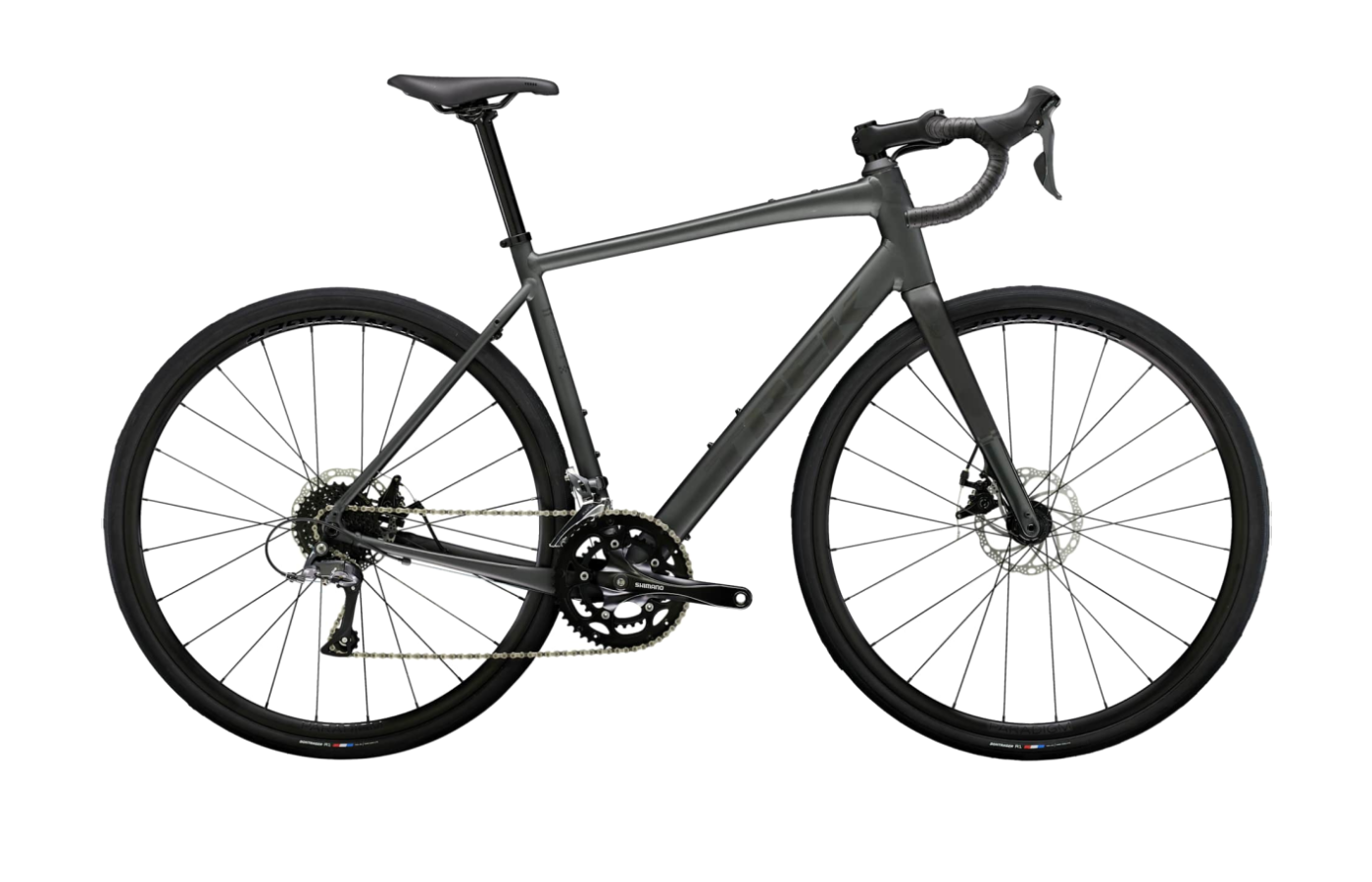
The direct rival to the Roubaix — Trek's IsoSpeed decoupler tackles the same comfort puzzle from the rear end instead of the front, and there's no Future Shock to maintain. A cleaner cockpit too.
Compare →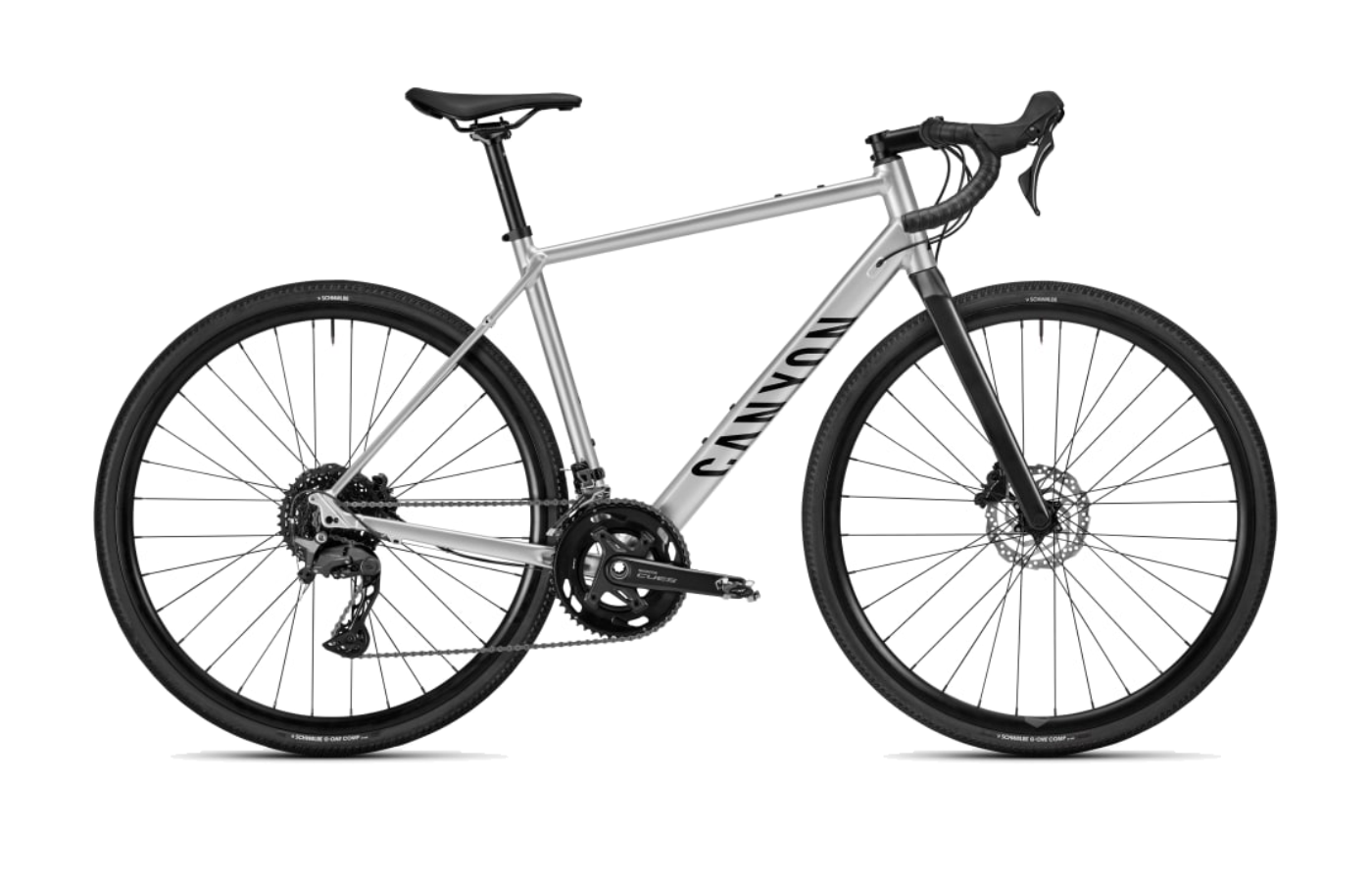
Endurace
Direct-to-consumer pricing makes this the high-value play in the category — a leaf-spring seatpost handles rear compliance, and the geometry leans closer to the Caledonia-5's racier numbers.
Compare →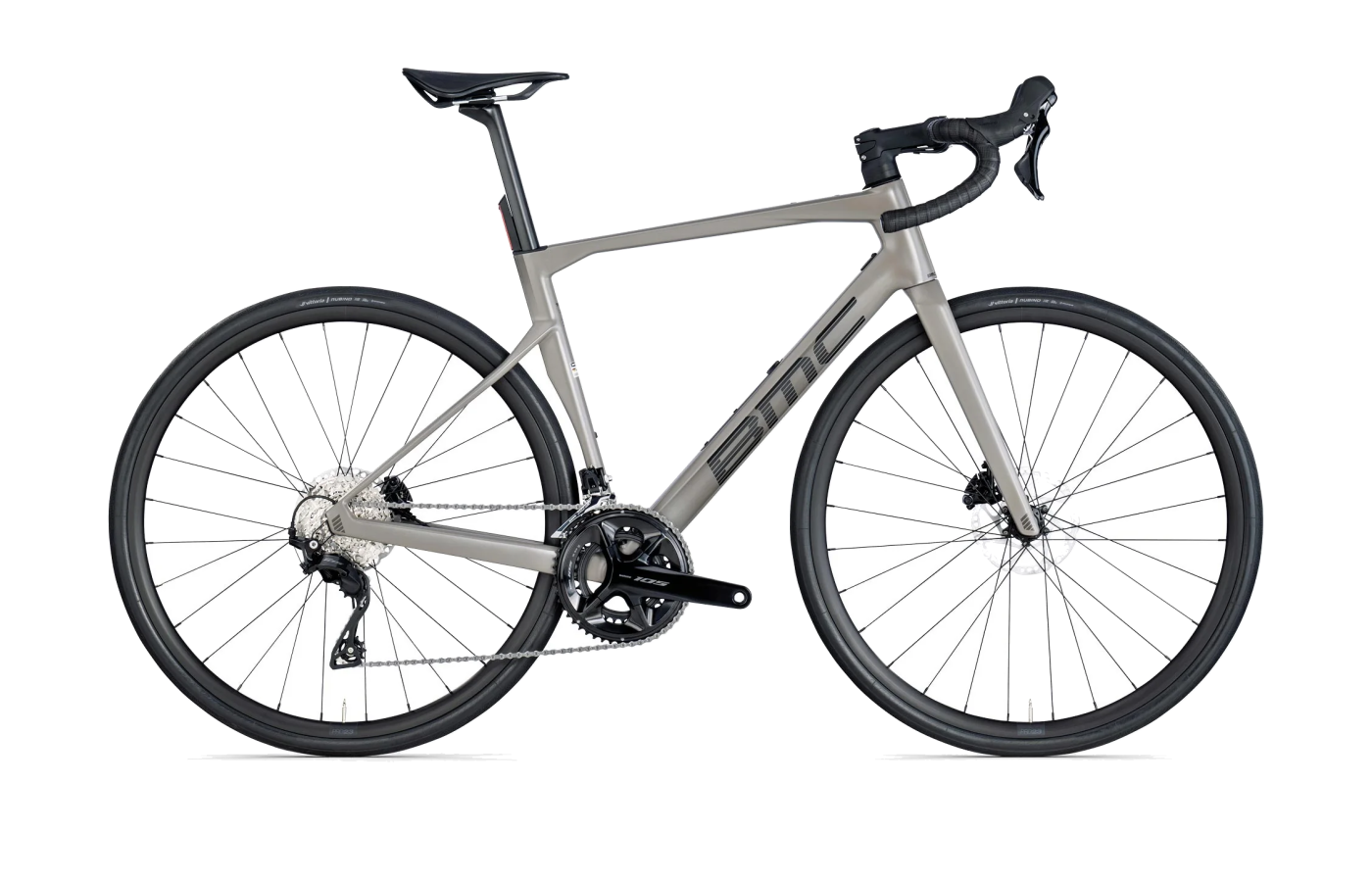
Roadmachine
Closer in spirit to the Caledonia-5: an integrated, fast-looking endurance bike that solves comfort with carbon layup rather than active suspension. A solid alternative if you like the Cervelo's approach but want a different brand.
Compare →