S5
vsONE
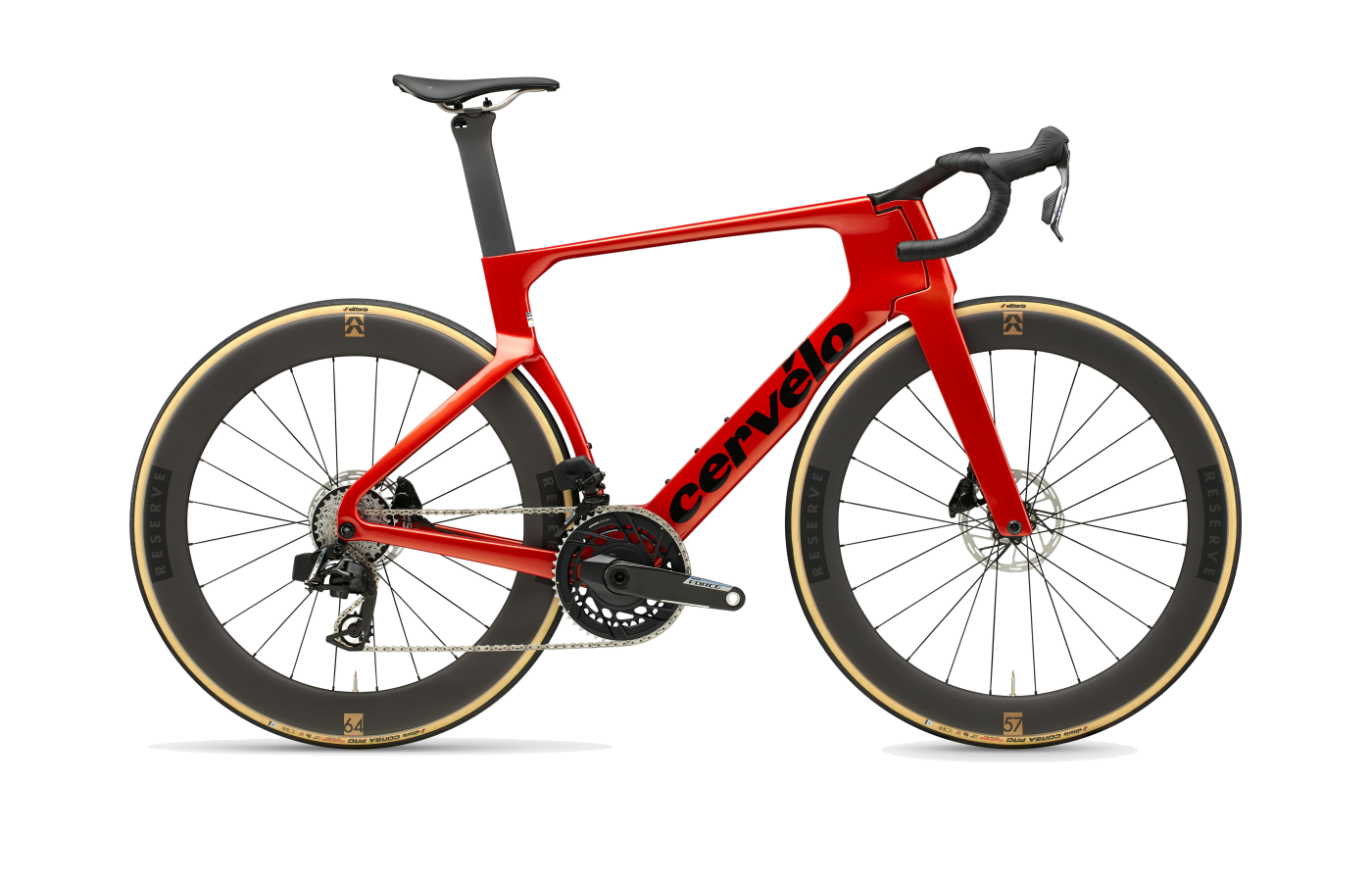
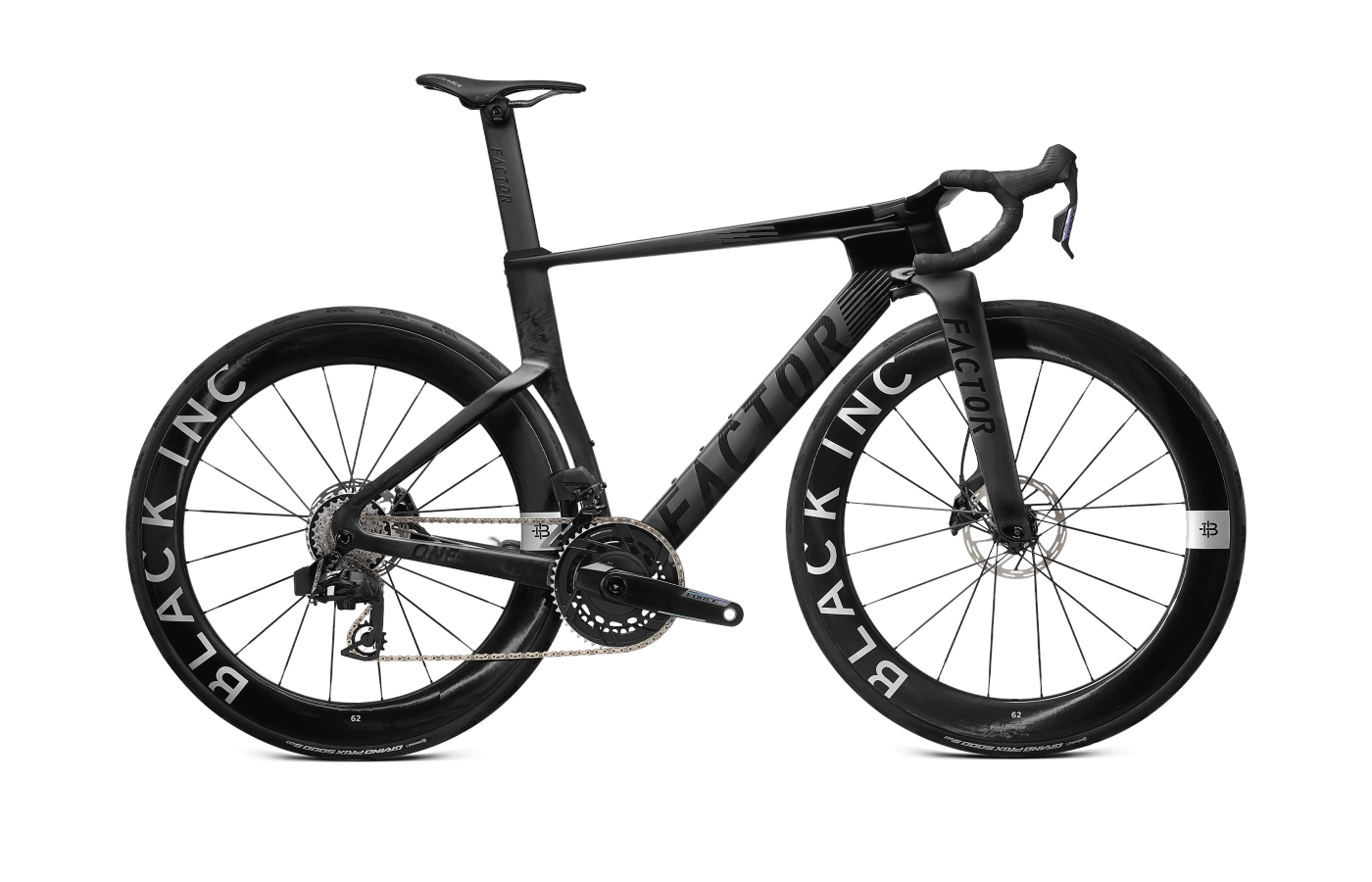
Two aero bikes, two ideas of what 'fast' looks like.
The Cervelo S5 is the proven WorldTour weapon. The Factor ONE is the bet that the next race bike won't fit you the way the last one did.
S5
- Lower price floor — Force AXS build starts at $10,100 vs. $11,999 for the cheapest Factor ONE.
- Better-resolved package — Reserve 57|64 wheels, the HB19 cockpit, and a 60-day bar-swap policy add up to fewer compromises out of the box.
- Conventional fit — 73-degree STA and standard reach numbers mean your existing fit transfers without rethinking saddle position or crank length.
- BBright press-fit BB is a known service hassle, especially since the Di2 battery lives behind it.
- Stiff and not playful at low speeds — reviews agree it 'lacks snap' until you're putting real watts in.
ONE
- Most aggressive geometry in the segment — 76-degree STA and 20 mm more reach at the same stack as the S5, built around forward-saddle, short-crank fits.
- Front end as stiff as anything in the category — bars mount directly to the fork crown; Factor claims 50% stiffer than their prior aero cockpit.
- T47A threaded BB and Mini UDH — two of the more serviceable choices on a bike this integrated.
- Stock Black Inc SIXTY TWO wheels drew real crosswind complaints from multiple reviewers.
- Cockpit ships in 380 mm width only — wider riders are not the target customer.
Editor’s analysis
Both claim the fastest UCI-legal frame on the planet — the difference is what they ask of you to ride one.
On the wind-tunnel scoreboard these bikes are basically tied. Cycling News' tunnel test had the Cervelo S5 saving 27.57 W vs. a baseline at 40 km/h with a rider on top; the Factor ONE was "infinitesimally" closer still, edging it for the lowest CdA in the bike-only test. For practical purposes, anyone telling you one is decisively faster than the other in real wind is selling something.
The Cervelo S5 reaches that speed by being a refined, fully developed system. The 2025 redesign cut 124 g and 6.3 W against the prior generation, paired the frame with co-developed Reserve 57|64 Turbulent Aero wheels, and integrated the new HB19 cockpit — all without forcing the rider into anything unusual. Geometry is aggressive but conventional: 73-degree seat tube on a size 54, 384 mm reach, 542 mm stack, 55.6 mm trail. It's the bike Visma-Lease a Bike rides on flat stages and in the mountains. You can put a 29 mm tire on it stock and ride a century without a fight.
The Factor ONE goes the other way. Same 542 mm stack at size 54 — but 20 mm more reach (404 mm), a 76-degree seat tube, and 58 mm trail. Factor's bet is that elite riders are already pushing their saddles forward and dropping crank length, and that the frame should meet them there instead of fighting it. The bars mount directly to the fork crown (no stem in the conventional sense), which Factor claims is 50% stiffer than their previous aero bar. The cockpit ships in a 380 mm width only. If you need wider bars, Factor's answer is essentially: this bike isn't for you.
Component-wise the Cervelo S5 is the cleaner package. Reserve 57|64 wheels are universally praised and Cervelo offers a 60-day cockpit-swap policy that defuses the integration risk. The Factor ONE ships with Black Inc SIXTY TWO wheels that drew real criticism from Velo and NERO Cycling for crosswind manners — at $12k+ that's a notable footnote. The Factor ONE is also heavier in equivalent build (Velo measured 7.54 kg in 54 cm; Granfondo measured the S5 at 7.44 kg in 56), which on extended climbs the reviews say you'll feel.
Where the builds differ.
Comparing our editor's-pick builds side-by-side. Winners highlighted row-by-row — lower price and weight, and the better-spec component, each mark a point.
Build variants & pricing
Force AXS on both sides — same drivetrain tier, same brake hoods, so what you're really comparing here is the frame, the wheels, and the cockpit.
Prices are current US MSRP. The Factor ONE has no Tiagra/105/Rival entry — its lineup starts at $11,999 on Ultegra Di2. The Cervelo S5 starts at $10,100 and tops out at $14,500.
How they fit, how they steer.
Both at size 54 — same stack (542 mm) but the Factor ONE adds 20 mm of reach, a 3-degree steeper seat tube (76 vs. 73), 2.4 mm more trail, and a 13 mm longer wheelbase. It's a measurably more committed riding position.
Which size should I buy?
The S5's range covers 48–61; the Factor ONE runs 47–58. Both are sized in cm, but the labels don't translate one-to-one given Factor's longer-reach geometry — pick by stack/reach, not by the number on the seat tube.
→These are starting points. Flexibility, riding style, and preferred position all shift the answer — if you’re between sizes, a professional fit beats a chart.
What the magazines said.
Published reviews from trusted cycling outlets. Click through for the full write-up.
Which one should you buy?
If you want a proven, refined aero bike you can ride every day, get the Cervelo S5. If you've already moved your saddle forward and shortened your cranks chasing a more aggressive position, the Factor ONE is the frame built for that fit.
S5
If most of your riding is fast solo or fast group, you want the gains of an aero superbike without rethinking your fit, and you'd rather not gamble on your wheels — the S5 is the safer, more universally good answer. It's also $1,900 cheaper at the Force AXS tier.
ONE
If you've already pushed your saddle to the front of the rails, dropped to 165–170 mm cranks, and run 38 cm bars, the Factor ONE is the only mainstream frame designed around that position from the start. Expect to swap the wheels eventually.
Questions buyers actually ask.
Short answers to the things we get emailed about most often.
01Which bike is actually faster in the wind tunnel?
Effectively tied. Cycling News' rider-on-bike test had the Cervelo S5 as the fastest bike they'd ever measured at 40 km/h. Their later Factor ONE test had the ONE edging it by a margin they called "infinitesimally and incomprehensibly" small — within measurement error.
Factor's own marketing claims the ONE is 15% faster than the S5, but those numbers come from a frame-only protocol that excludes the rider, where small CdA deltas get magnified into big-sounding percentages. With a human on top, treat them as a tie.
02Why is the Factor ONE more expensive at the entry level?
The Factor ONE simply doesn't have a budget build. Its cheapest configuration is Shimano Ultegra Di2 at $11,999. The Cervelo S5's cheapest is Ultegra Di2 at $10,100 — a $1,900 floor difference at the same drivetrain tier.
At the SRAM Force AXS level we picked here, it's $10,250 for the S5 vs. $12,199 for the Factor ONE — same $1,950 gap. Both bikes share the same frame across all builds, so what you're paying extra for on the Factor side is mostly the brand position, not the spec.
03How different is the Factor ONE's geometry, really?
Significantly. At size 54, the Cervelo S5 has a 73-degree seat tube, 384 mm reach, and 55.6 mm trail. The Factor ONE has a 76-degree seat tube (3 degrees steeper), 404 mm reach (20 mm longer), and 58 mm trail at the same 542 mm stack.
In practice that means the ONE rotates you forward over the bottom bracket — riders who've already moved to a forward saddle position with shorter cranks will find their fit naturally. Riders running a traditional setup will likely need to lower their saddle and may feel cramped, even though the reach number is longer.
04Are the stock wheels a real problem on the Factor ONE?
Multiple reviewers raised it as a genuine concern — not a deal-breaker, but notable at this price. NERO Cycling was the most direct ("I think the wheels suck"), citing poor crosswind manners on the Black Inc SIXTY TWO. Velo and Cycling Weekly noted the same — the deep rim profile gets pushed around more than they'd expect for the price.
The Cervelo S5's Reserve 57|64 wheels, by contrast, get consistent praise across every review for handling and aerodynamics. If you ride windy terrain, factor in a wheel upgrade on the Factor.
05Which climbs better?
Slight edge to the Cervelo S5. Granfondo measured a 56 cm S5 at 7.44 kg; Velo measured a 54 cm Factor ONE at 7.54 kg — call it ~100 g in the S5's favor at equivalent build, though the size-vs-size comparison isn't perfectly clean.
More importantly, reviewers describe the S5 as having "climbing performance way above average for an aero bike" and call out Visma-Lease a Bike using it on mountain stages. The Factor ONE earned surprised praise for climbing despite the weight, particularly seated, but it's still the heavier of the two and reviewers consistently flag it as a bike for flat-to-rolling efforts more than mountains.
06Can I run wider tires on either?
Both claim 34 mm tire clearance, putting them ahead of most pure aero bikes. The S5 ships with Vittoria Corsa Pro 29 mm tires on Reserve rims with 23 mm internal width, which mounts up close to 31.5 mm.
The Factor ONE ships on similar 28–30 mm rubber. Neither is a gravel bike — for anything rougher than chip-seal, look at a Cervelo Aspero or Specialized Roubaix instead.
07How serviceable are these bikes long-term?
Mixed on both, but with different specifics.
The Cervelo S5 uses a proprietary BBright press-fit bottom bracket that reviewers consistently call out as a service hassle, and the Di2 battery lives behind it. Plus side: the new HB19 cockpit is markedly easier to work on than the prior generation (no steerer to cut, easier headset access), and Cervelo offers a 60-day no-charge cockpit swap to dial in fit.
The Factor ONE uses a T47A threaded bottom bracket and a Mini UDH derailleur hanger — both more serviceable choices than the S5's BBright. The integrated bar/stem and proprietary seatpost are the usual aero-bike trade-offs.
08Is the Factor ONE's 380 mm cockpit really the only width?
Yes. Factor offers five reach lengths in the integrated cockpit but only one bar width: 380 mm. Their position is that elite riders have moved to narrower bars for aero gain, and the bike is built for that rider.
If you ride 40 cm or wider bars and don't want to retrain your fit, the Cervelo S5's HB19 is offered in conventional widths and Cervelo will swap it within 60 days at no extra charge. That alone disqualifies the Factor for a meaningful slice of buyers.
Similar bikes
If your priorities don’t map cleanly onto either of these, one of these adjacent bikes probably fits better.
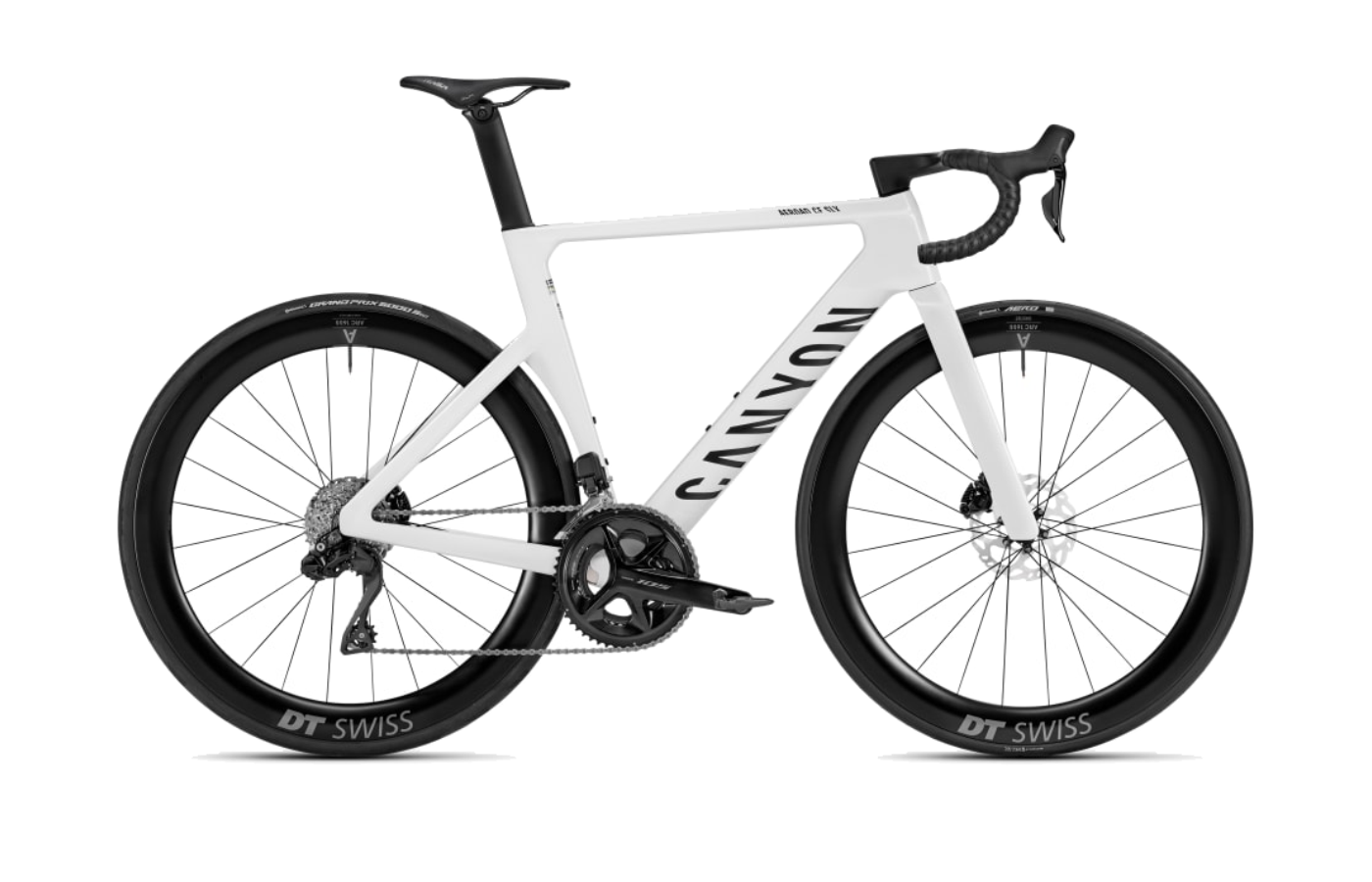
Aeroad
Canyon's WorldTour-aero answer at direct-to-consumer pricing — typically 25–30% cheaper than the Cervelo S5 and Factor ONE for similar spec. The catch: no dealer network for fit support.
Compare →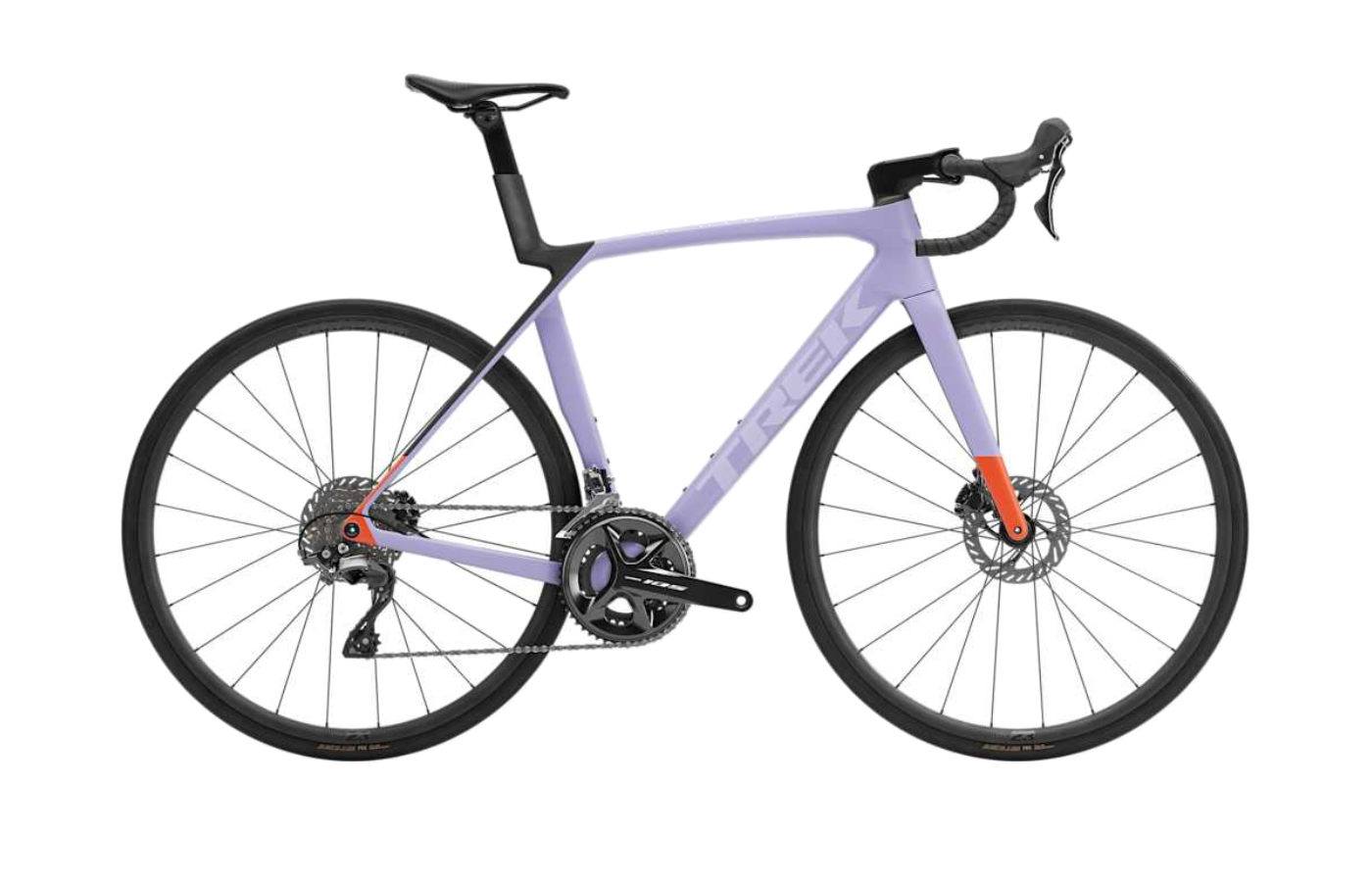
Madone
Trek's aero flagship adds the IsoFlow decoupler for genuine seated compliance, and lands closer to a true 1-bike-for-everything than either of these. Lighter than the Factor ONE, more comfortable than the Cervelo S5.
Compare →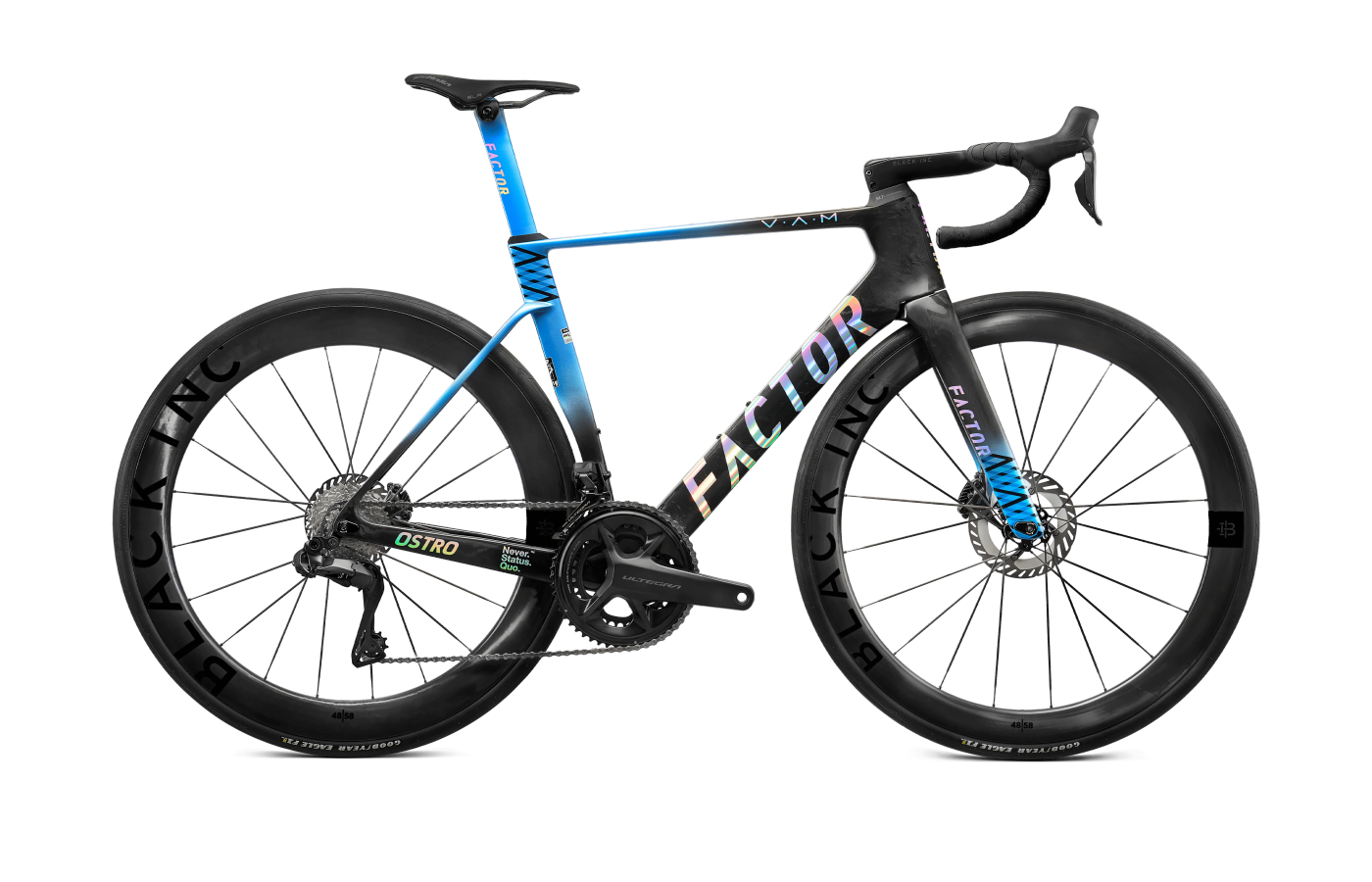
Ostro VAM
Same brand, very different bike — Factor's all-rounder. If the ONE's geometry is too aggressive but you're sold on Factor, the Ostro VAM is the lighter, more conventional option that still wins in the wind.
Compare →