Troy
vsRipmo
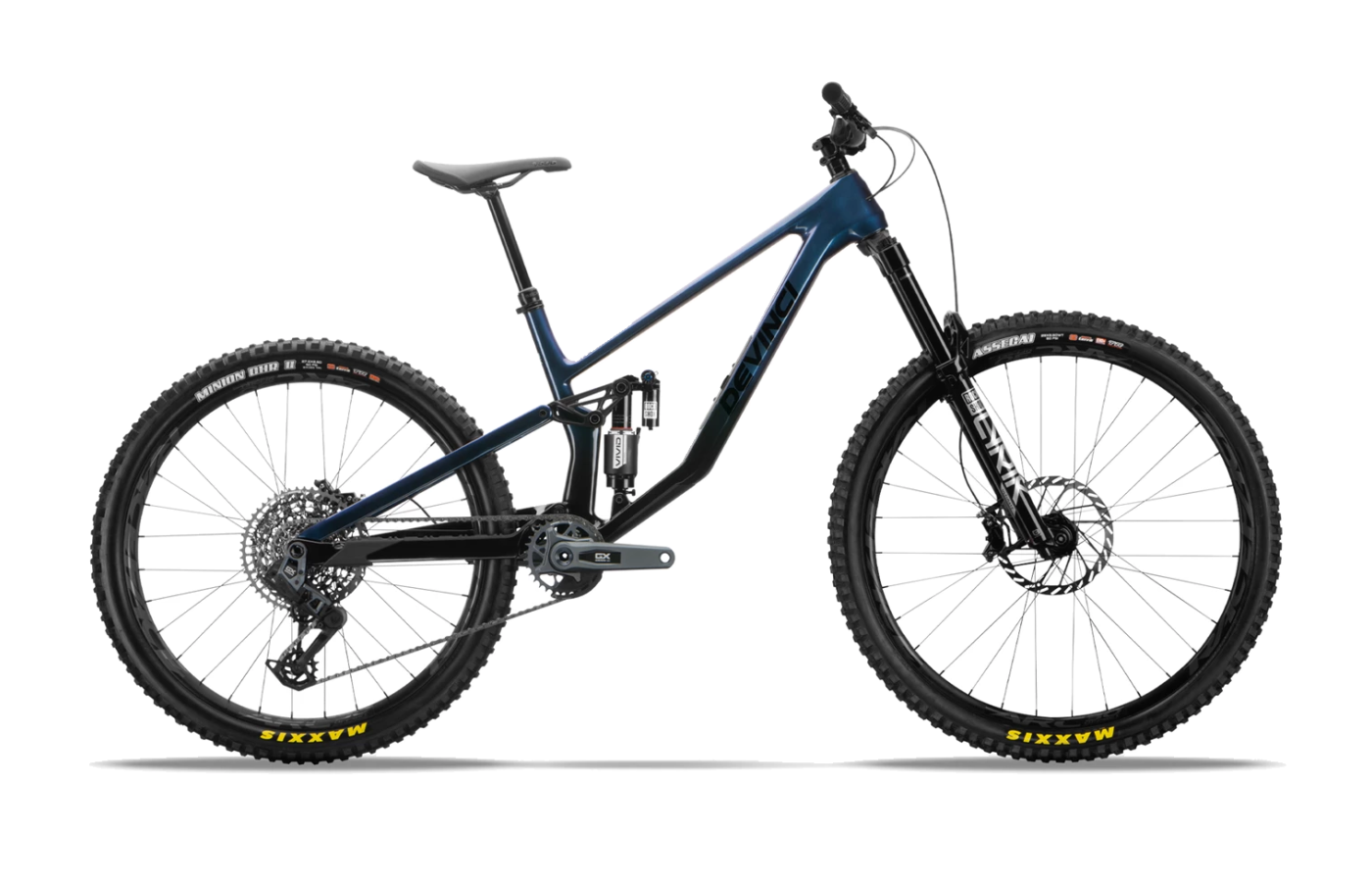
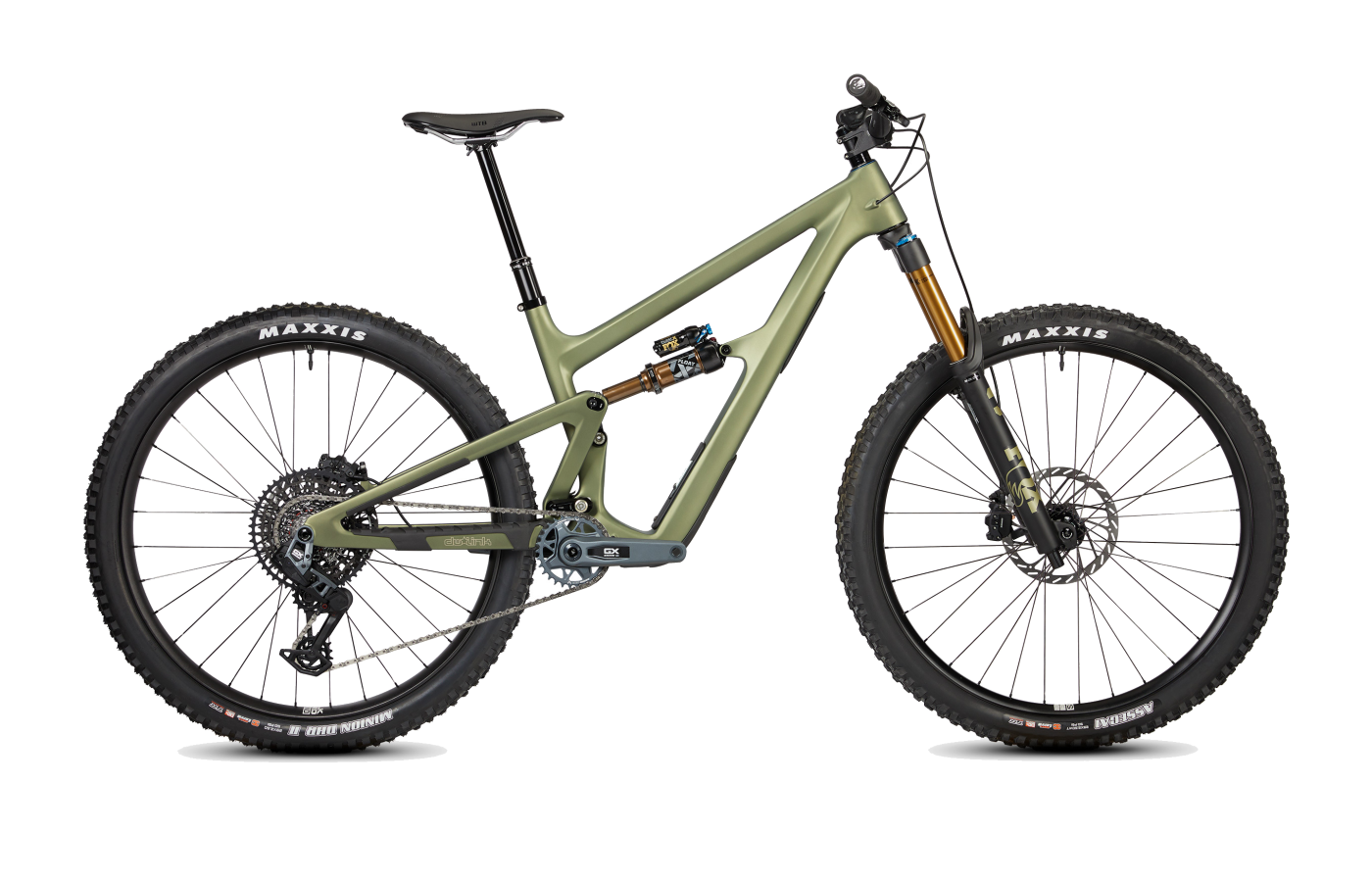
Two 150/160 trail bikes, two personalities.
Same travel, same head angle ballpark, same target rider — but the Troy plays the planted Canadian workhorse and the Ripmo plays the lively Californian.
Troy
- Composed at speed — 64° HTA and Split Pivot's high-anti-squat tune track straight through chunder where livelier bikes get busy.
- Cheaper entry point at $3,199 for the Deore alloy build — Ripmo's lineup doesn't start until $5,199.
- Carbon for almost no premium — Devinci's carbon Troy is roughly $350 over the equivalent alloy build, an outlier in the segment.
- Heavier than the Ripmo at most build tiers — the Carbon GX AXS still rolls in around 15 kg on a medium.
- Reviewers note frame rattle from the SHED storage door and cables; chainslap protection is light.
Ripmo
- Climbs better than its travel suggests — DW-Link's anti-squat platform earns 'best in class' nods from multiple reviewers for sustained pedalling efficiency.
- Poppy and playful — short 435 mm chainstays and a supportive mid-stroke make it easy to manual, gap, and whip.
- Size-specific everything — chainstays, BB height, seat angle, and shock tune all change with size, not just the front triangle.
- Carbon-only and pricey — starts at $5,199 and tops $9,999, no alloy version of the V3 yet.
- Pinkbike's testers found the stock Fox 36 GRIP X damper underdone and the bike 'nervous' in the steepest fast terrain.
Editor’s analysis
On paper they look almost identical. On the trail they pick opposite sides of the composed-vs-poppy coin.
The Devinci Troy and Ibis Ripmo land in the same niche: 150 mm rear, 160 mm fork, mixed-wheel-or-29er flip chip, frame storage, lifetime warranty, 'quiver killer' marketing copy. Both target the rider who wants one trail bike for everything from epic backcountry days to bike-park laps. The geometry numbers are nearly on top of each other — reach within 4 mm, identical stack, identical chainstays at the medium size.
Where they diverge is character. The Troy's Split Pivot suspension is tuned to feel planted — reviewers consistently use words like 'composed,' 'sure-footed,' and 'butter through' rough sections. The 64° head tube angle is half a degree slacker than the Ripmo's 64.5°, and Devinci's high-anti-squat tune means it rides high and tracks straight at speed. It's the bike you point at a rough line and trust.
The Ripmo plays the opposite hand. Ibis's DW-Link is famously poppy and energetic — it wants to be pumped, jumped, and flicked between turns. Reviewers describe it as 'fluttery,' 'lively,' 'eager to whip the rear end around.' That same liveliness is what Pinkbike's testers called 'busy' and 'nervous' on the gnarliest rough descents. It rewards an active rider and punishes a passive one.
Pricing tells the same story differently. The Troy starts at $3,199 with a Deore build and scales up; the Ripmo's floor is $5,199 (also Deore) and the carbon-only lineup tops out at $9,999 for the XTR Di2. If your budget is under $5k the Troy is the only conversation. Above that, the question is whether you want a bike that holds your line or one that asks you to dance with it.
Where the builds differ.
Comparing our editor's-pick builds side-by-side. Winners highlighted row-by-row — lower price and weight, and the better-spec component, each mark a point.
Build variants & pricing
Both editor's picks land on SRAM's GX AXS Transmission — the apples-to-apples mid-tier. The Troy lineup also reaches a $3,199 Deore floor; the Ripmo doesn't.
Prices are current US MSRP. The Troy's $7,499 Carbon GX AXS and the Ripmo's $7,799 GX Transmission are the closest tier-matched pair — both carbon, both wireless GX, both Fox/RockShox flagship-adjacent suspension. Below that, the Troy spans $3,199–$5,699 of options with no Ripmo equivalent.
How they fit, how they steer.
Stack is identical at 622 mm and chainstays match at 435 mm. The Troy is 4 mm longer in reach (460 vs 456) but slacker by 0.5° at the head tube; its seat tube angle is a much steeper 77.8° vs 76.5°, putting the rider further forward on climbs.
Which size should I buy?
Both ranges cover roughly the same rider heights through the middle sizes; Ibis's extra XM size between M and L gives a finer step for riders sized between conventions.
→These are starting points. Flexibility, riding style, and preferred position all shift the answer — if you’re between sizes, a professional fit beats a chart.
What the magazines said.
Published reviews from trusted cycling outlets. Click through for the full write-up.
Which one should you buy?
If you want a planted bike that holds your line on rough descents and your budget isn't open-ended, get the Troy. If you want a poppy, pump-and-jump trail bike that climbs like a shorter-travel rig, get the Ripmo.
Troy
If most of your riding is rough, fast, and not particularly jump-line-shaped — long alpine descents, rocky chunder, repeated medium hits — the Troy's composure is the right tool. It's also the only choice under $5k.
Ripmo
If you pump terrain for speed, look for gaps and lips, and treat climbs as an excuse to go ride more singletrack, the Ripmo's energetic DW-Link will reward you. Just plan to budget for the platform — carbon-only, $5,199 floor.
Questions buyers actually ask.
Short answers to the things we get emailed about most often.
01Which one climbs better?
The Ibis Ripmo, by consensus. DW-Link is one of the most efficient pedalling platforms in the trail-bike segment — reviewers across Enduro-MTB, NSMB, and The Radavist call it 'best in class' for a 150 mm bike, with a firm platform that rarely needs the climb switch.
The Troy is no slouch — its 77.8° seat tube angle is actually a degree steeper than the Ripmo's 76.5°, which keeps weight forward on steep pitches — but Split Pivot bobs slightly more under hard power and the carbon GX AXS build is a bit heavier overall.
02Which one is more capable on rough descents?
The Devinci Troy, narrowly. Both bikes run 150 mm rear / 160 mm front, but the Troy's 64° head angle is half a degree slacker than the Ripmo's 64.5°, and reviewers consistently describe Split Pivot as more 'planted' through repeated medium hits.
Pinkbike's Field Test specifically flagged the Ripmo as feeling 'busy' and 'nervous' in the gnarliest rough sections, in part due to the stock Fox 36 GRIP X damper. The Troy ships with a Lyrik Ultimate (Charger 3.1) on the GX AXS build, which several reviewers rated above the Ripmo's stock fork.
03What's the price difference?
Devinci Troy: $3,199 (Deore alloy) to $7,499 (Carbon GX AXS).
Ibis Ripmo V3: $5,199 (Deore carbon) to $9,999 (XTR Di2).
At the editor's-pick tier — both on SRAM GX AXS Transmission, both carbon — the Troy is $7,499 vs the Ripmo at $7,799. A near-even fight there. Below $5,200 the Troy is the only option in this matchup.
04Are they both mixed-wheel?
Both ship MX (29" front, 27.5" rear) on the smaller sizes and offer a flip chip to convert to full 29". On the Troy, the MX setup must use the flip chip's High position; full 29" works in either Hi or Lo. On the Ripmo, the MX/29er decision is also flip-chip controlled and Ibis explicitly designed both configurations into the kinematics.
Troy reviewers (notably Pinkbike's Mike Kazimer) preferred the full-29" setup for added stability with minimal loss in maneuverability. Ripmo reviewers were more split.
05How do the geometry numbers compare at the medium size?
At Troy M vs Ripmo MD they're remarkably close: stack 622 mm on both, chainstays 435 mm on both, reach 460 vs 456 mm. The differences:
- Head angle: Troy 64° vs Ripmo 64.5° — Troy is half a degree slacker.
- Seat angle: Troy 77.8° vs Ripmo 76.5° — Troy is 1.3° steeper.
- Wheelbase: Troy 1230 vs Ripmo 1219 mm — Troy is 11 mm longer.
Fit-wise they cover the same rider; ride-feel-wise the Troy biases toward stability, the Ripmo toward agility.
06Are the frames coil-compatible?
Yes on both. The Troy's Split Pivot kinematics are explicitly noted as coil-compatible by The Loam Wolf. The Ripmo V3's progression curve was redesigned in part to play nicely with coil shocks — The Radavist and Bebikes both flagged this as an improvement over the V2.
Neither ships with a coil from the factory at the editor's-pick tier.
07Does either one have in-frame storage?
Both do. The Troy's SHED compartment lives in the down tube and the storage door doubles as a side-entry water bottle cage — every frame size fits a 500 ml bottle plus the storage. The Ripmo's downtube storage hatch ships with two Cotopaxi-designed pouches and is widely cited as one of the cleaner executions in the segment.
If storage execution matters to you, both are credible. Reviewers more often praised the Ripmo's hatch for being rattle-free; some Troy reviewers noted its door can rattle on rough terrain.
08What's the warranty story?
Both come with a lifetime frame warranty to the original owner. Devinci backs both the carbon and (Canadian-made) aluminum frames; one important caveat is that running a 170 mm fork voids the warranty — stay at the stock 160 mm. Ibis additionally offers lifetime replacement on the lower-link IGUS bushings, a detail multiple reviewers called out as a confidence signal.
Similar bikes
If your priorities don’t map cleanly onto either of these, one of these adjacent bikes probably fits better.
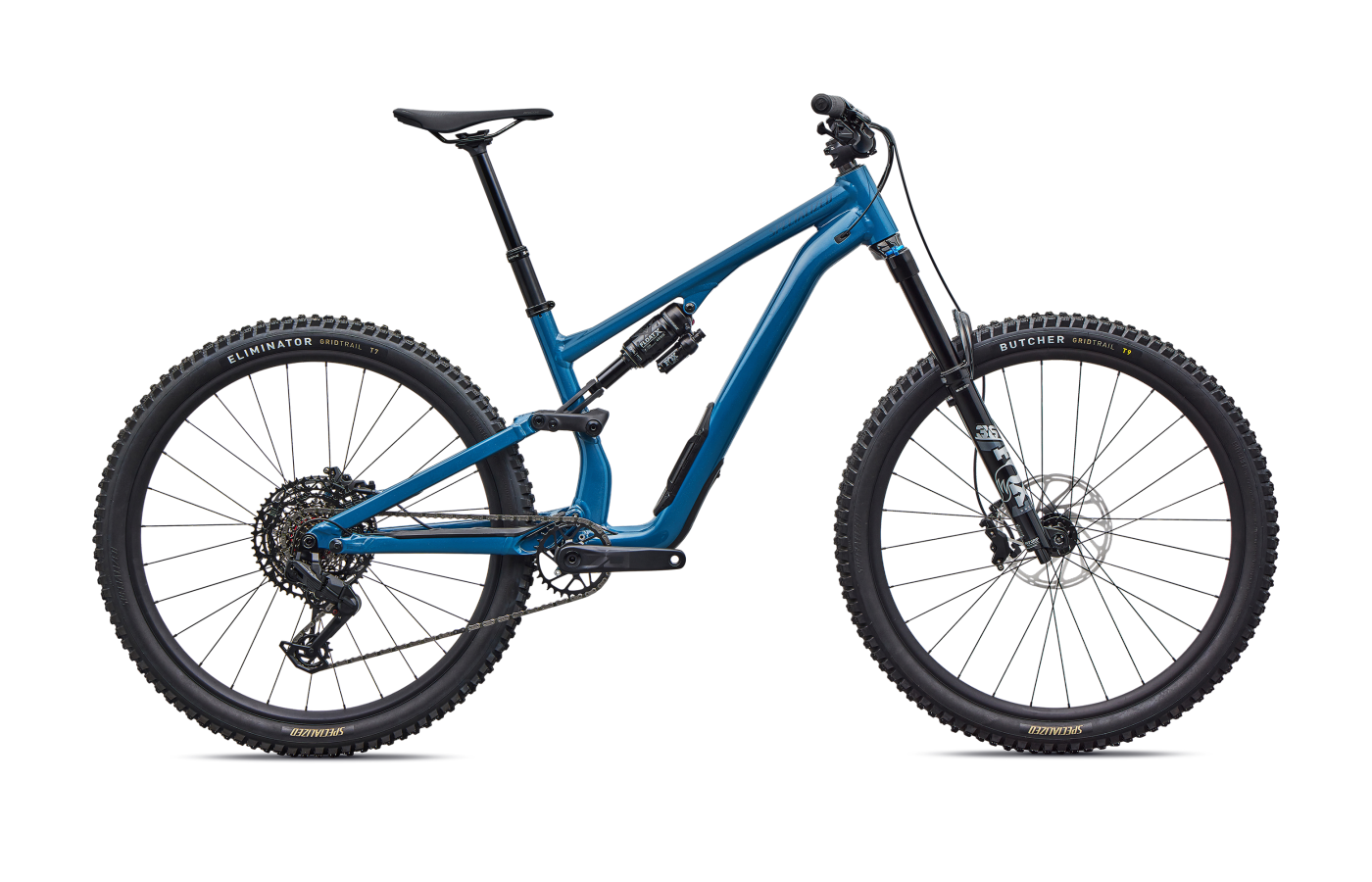
Stumpjumper Evo
The most adjustable of the three — Specialized's Stumpjumper Evo has six geometry positions via flip chips and headset cups, letting one frame cover the same trail-to-enduro range these two split between them.
Compare →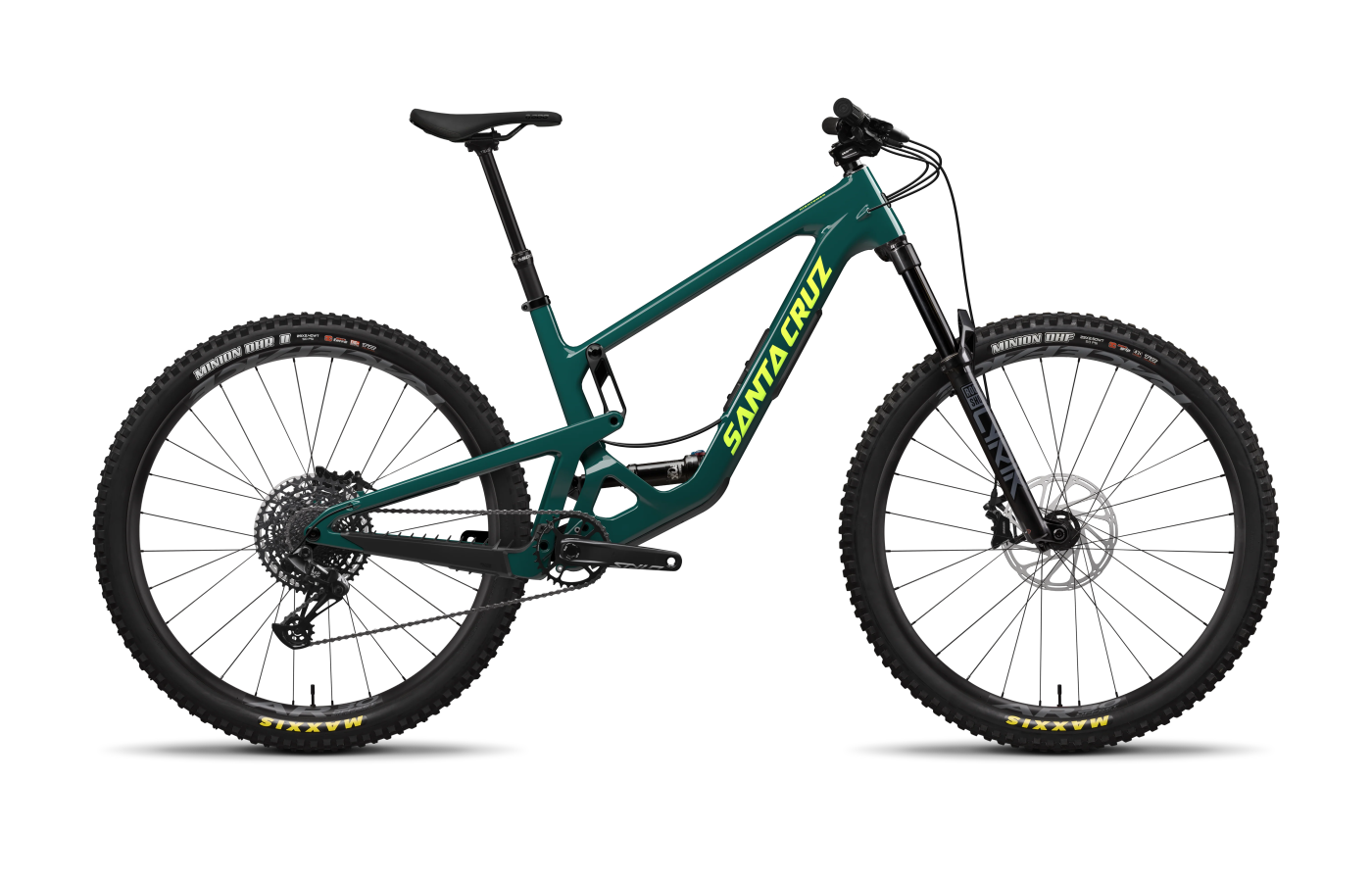
Hightower
Santa Cruz's Hightower runs the same VPP-style lower-link kinematics in spirit as the DW-Link Ripmo but tunes for a more planted feel — a useful middle ground if the Troy reads as too sleepy and the Ripmo as too busy.
Compare →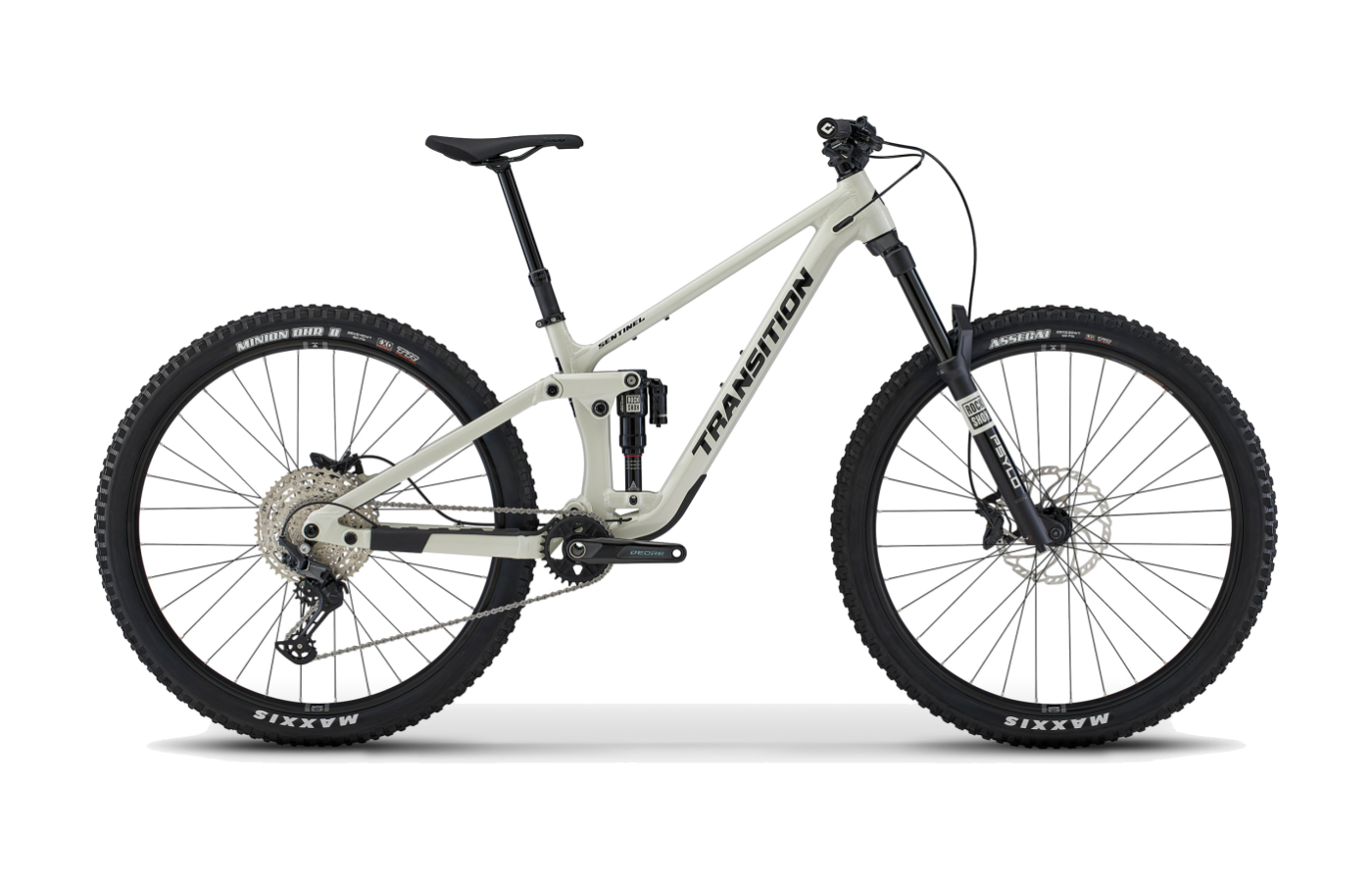
Sentinel
Transition's Sentinel goes longer and slacker than either bike here — the right call if you liked the Troy's composure but want the geometry pushed further toward enduro-bike territory.
Compare →