Fire Mountain
vsHonzo
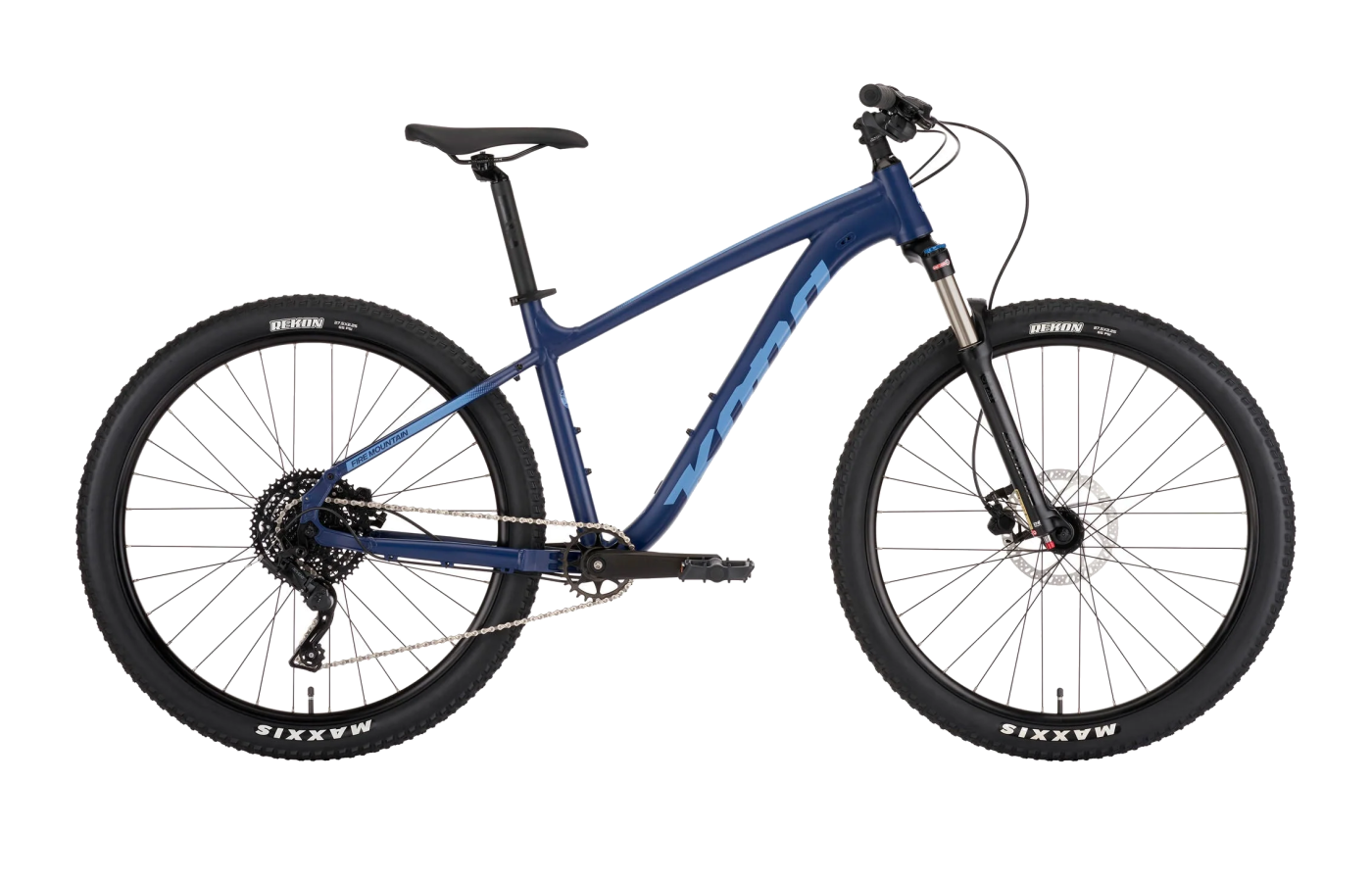
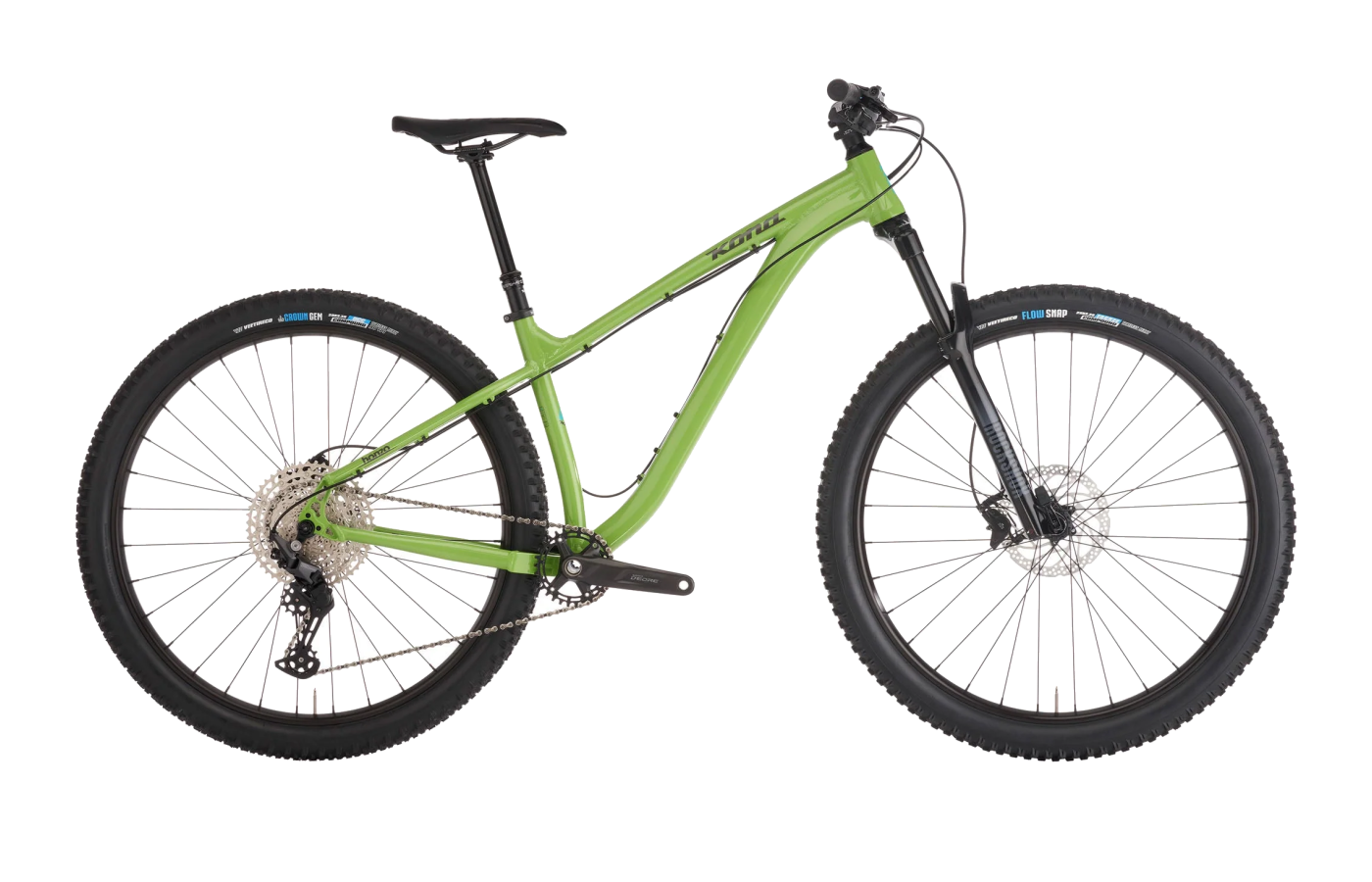
Two Kona hardtails, two completely different missions.
The Fire Mountain is a $749 gateway hardtail for new riders. The Honzo is a $1,299-and-up aggressive trail bike for people who want to send it.
Fire Mountain
- Lowest barrier to entry at $749 — one of the cheapest hardtails with hydraulic disc brakes and a clutch derailleur.
- Beginner-friendly geometry with a stable 68-degree head angle and longer 435 mm chainstays — predictable on trails, forgiving of mistakes.
- Hydraulic discs as standard — Tektro HD-M275 stoppers outclass the mechanical brakes still found on most $700-tier rivals.
- No dropper post and no provision for one — limits you to mellow trails where you can ride seated.
- Coil fork and 1x9 drivetrain are intentionally basic; you'll outgrow this bike fast if you progress.
Honzo
- Aggressive trail geometry — a 66.5-degree head angle and 425 mm chainstays make it playful, snappy, and confidence-inspiring on descents.
- Dropper post on every build — even the $1,299 Base includes a TranzX dropper, unlocking real descending posture.
- Real upgrade path from $1,299 alloy Base up to the $2,399 chromoly ESD 36SR with a 150 mm Marzocchi Z1 fork.
- Aluminum frame ride is widely described as stiff and harsh — fatiguing on long, chunky descents, especially for lighter riders.
- Stock Shimano MT410 brakes use resin-only rotors that limit upgrade options and fade on long, hot descents.
Editor’s analysis
Same brand, same aluminum hardtail formula — but one is built to teach you to ride, and the other is built to reward you once you already know how.
On paper, both bikes are 6061 aluminum hardtails wearing the Kona badge. Spec sheets and geometry charts make the gap obvious almost immediately. The Fire Mountain ships in a single $749 build with a 100 mm SR Suntour coil fork, microSHIFT Advent 1x9 drivetrain, and 26 or 27.5-inch wheels depending on frame size. The Honzo Base — the cheapest Honzo at $1,299 — runs a 130 mm RockShox Recon air fork, Shimano Deore 11-speed, and 29-inch wheels across every size. That's roughly $550 of separation, and you can see where every dollar went.
The geometries tell the same story in numbers. Fire Mountain's 68-degree head tube angle and 435 mm chainstays are stable, conservative, and friendly to a beginner who's still figuring out where their weight goes. Honzo's 66.5-degree head angle and 425 mm chainstays push the front wheel out and pull the rear in — slacker, snappier, and more demanding. Reviewers consistently call the Honzo "playful," "zippy," and "a ripper." Reviewers call the Fire Mountain "comfortable" and "forgiving." That's the whole pitch in two adjectives.
The Honzo also assumes you'll actually descend on it. Every Honzo build ships with a dropper post stock; the Fire Mountain doesn't include one at any price. That single component changes what the bike is for. With a dropper you can drop the saddle and ride steep, technical terrain with body weight where it needs to be. Without one, the Fire Mountain expects you to mostly stay seated and stay on the gentler stuff — which is exactly its target rider.
Put plainly: the Fire Mountain is the bike you buy when you're not yet sure if mountain biking is for you. The Honzo is the bike you buy after you already know it is, and you want a hardtail that won't hold you back on real trails.
Where the builds differ.
Comparing our editor's-pick builds side-by-side. Winners highlighted row-by-row — lower price and weight, and the better-spec component, each mark a point.
Build variants & pricing
The Fire Mountain ships as a single $749 build. The Honzo spans four builds from $1,299 to $2,399, with the cheapest Honzo costing nearly twice the Fire Mountain.
These platforms barely overlap on price — the Fire Mountain has no equivalent to the Honzo's air fork, dropper post, or 29-inch wheels at any price. We've matched the entry-level Fire Mountain Standard against the entry-level Honzo Base because that's the closest the lineups get.
How they fit, how they steer.
Both at size M. The Honzo sits 47 mm taller in stack (mostly from its longer fork), with 15 mm more reach, a 1.5-degree slacker head angle, and 10 mm shorter chainstays. Different bikes by every meaningful number.
Which size should I buy?
Both bikes use simple S/M/L/XL sizing. The Fire Mountain offers an extra XS for shorter riders; Honzo starts at S.
→These are starting points. Flexibility, riding style, and preferred position all shift the answer — if you’re between sizes, a professional fit beats a chart.
What the magazines said.
Published reviews from trusted cycling outlets. Click through for the full write-up.
Which one should you buy?
If you're new to mountain biking and want a real hardtail without overspending, get the Fire Mountain. If you already ride and want a playful, capable bike for actual trails, get the Honzo.
Fire Mountain
If you're just getting into the sport, riding green and easy blue trails, or want an honest first hardtail without spending more than $800, the Fire Mountain delivers. It's forgiving, stable, and surprisingly well-equipped for the money.
Honzo
If you ride real trails, want a bike that's playful in the air and stable on the descent, and you're willing to deal with a stiff aluminum ride, the Honzo is one of the best aggressive hardtails at this price. It's also a legitimate platform you can upgrade as you progress.
Questions buyers actually ask.
Short answers to the things we get emailed about most often.
01Which one should I buy as my first mountain bike?
Almost certainly the Fire Mountain, unless you already know you want to ride aggressive trails. At $749 it's a low-risk entry into the sport — if you discover mountain biking isn't for you, you haven't lost much. If you fall in love with it, the Fire Mountain will take you through a season of green and blue trails before you start feeling its limits.
The Honzo's slacker geometry and dropper post will feel like overkill on mellow terrain, and at $1,299-and-up it's a bigger bet to place sight-unseen.
02What's the deal with the wheel sizes?
The Fire Mountain runs 26-inch wheels on the XS and S frames, and 27.5-inch wheels on M, L, and XL — Kona sized the wheels to the rider rather than committing to one size across the range. It's a beginner-friendly choice that keeps the smaller frames proportional.
The Honzo runs 29-inch wheels on every size, including the smallest S. Bigger wheels roll over obstacles more smoothly and carry momentum better, which matters more when you're actually riding rough trail. It's part of why the Honzo is the more capable bike.
03Does the Fire Mountain come with a dropper post?
No. The Fire Mountain has a fixed seatpost at every spec level, and the frame doesn't have internal dropper routing — adding one later is possible but means external cable routing and a meaningful cost relative to the bike's $749 price.
Every Honzo build, by contrast, includes a TranzX dropper post stock. If you plan to ride anything steep enough to want your saddle out of the way on descents, that's a meaningful difference.
04How does the suspension compare?
Fire Mountain: 100 mm SR Suntour XCR 32, X1 LO-R, or RST Omega coil-spring fork. Coil forks are heavier and less tunable than air forks but require zero setup — pump it up once and you're done. Reviewers describe it as adequate for absorbing bumps on moderate singletrack but say it gets overwhelmed quickly on rougher terrain.
Honzo Base: 130 mm RockShox Recon RL Solo Air fork. Air-sprung, tunable to your weight, and 30 mm more travel. The Honzo DL ($1,599) bumps to a 140 mm Revelation, and the ESD models go to a 150 mm Marzocchi Bomber Z1. None of this is comparable to what the Fire Mountain ships with.
05What kind of terrain is each bike actually built for?
Fire Mountain: bike paths, gravel rail trails, dirt roads, and easy singletrack — the classic green and gentler-blue trails. It will technically survive harder stuff but the geometry, brakes, and lack of a dropper make it the wrong tool.
Honzo: real trail riding — flowy blues, rocky technical blacks, jumps, and modest enduro-style descents. It's an aggressive hardtail in the modern sense, and reviewers regularly compare it to other slack, dropper-equipped trail hardtails in the $1,500–2,500 range.
06Is the Honzo's aluminum frame really that harsh?
It depends on rider weight and terrain. Reviewers consistently describe the alloy Honzo as stiff and bouncy in chunky terrain — one explicitly said lighter riders (under ~180 lbs) will "feel how stiff it is," while heavier riders (200+ lbs) often appreciate the lack of flex.
If you're light and ride mostly rocky technical trails, look at the steel Honzo ESD ($2,299) or a similar chromoly hardtail — they're noticeably more compliant. On smoother flow trails, the alloy Honzo's stiffness becomes a virtue: it accelerates hard and feels lively.
07Can I upgrade the Fire Mountain into something more capable?
You can, but you probably shouldn't. The frame's geometry — 68-degree head angle, no dropper routing, short fork travel — caps how far you can take it before you're spending more than the price of a stock Honzo on parts. Upgrading the brakes or tires makes sense; replacing the fork and adding a dropper does not.
If you've outgrown the Fire Mountain, the more sensible move is to sell it and step up to a purpose-built bike — like, well, a Honzo.
08How do they compare on warranty and dealer support?
Both are Kona, so the warranty is the same — a lifetime frame warranty to the original owner against manufacturing defects. Kona also has a wide North American dealer network, which makes parts, service, and warranty work straightforward.
Reviewers have noted Kona's customer service responds quickly to defects out of the box (NSMB documented a prompt replacement on a Honzo dropper lever), which is worth knowing for either bike.
Similar bikes
If your priorities don’t map cleanly onto either of these, one of these adjacent bikes probably fits better.
Marlin
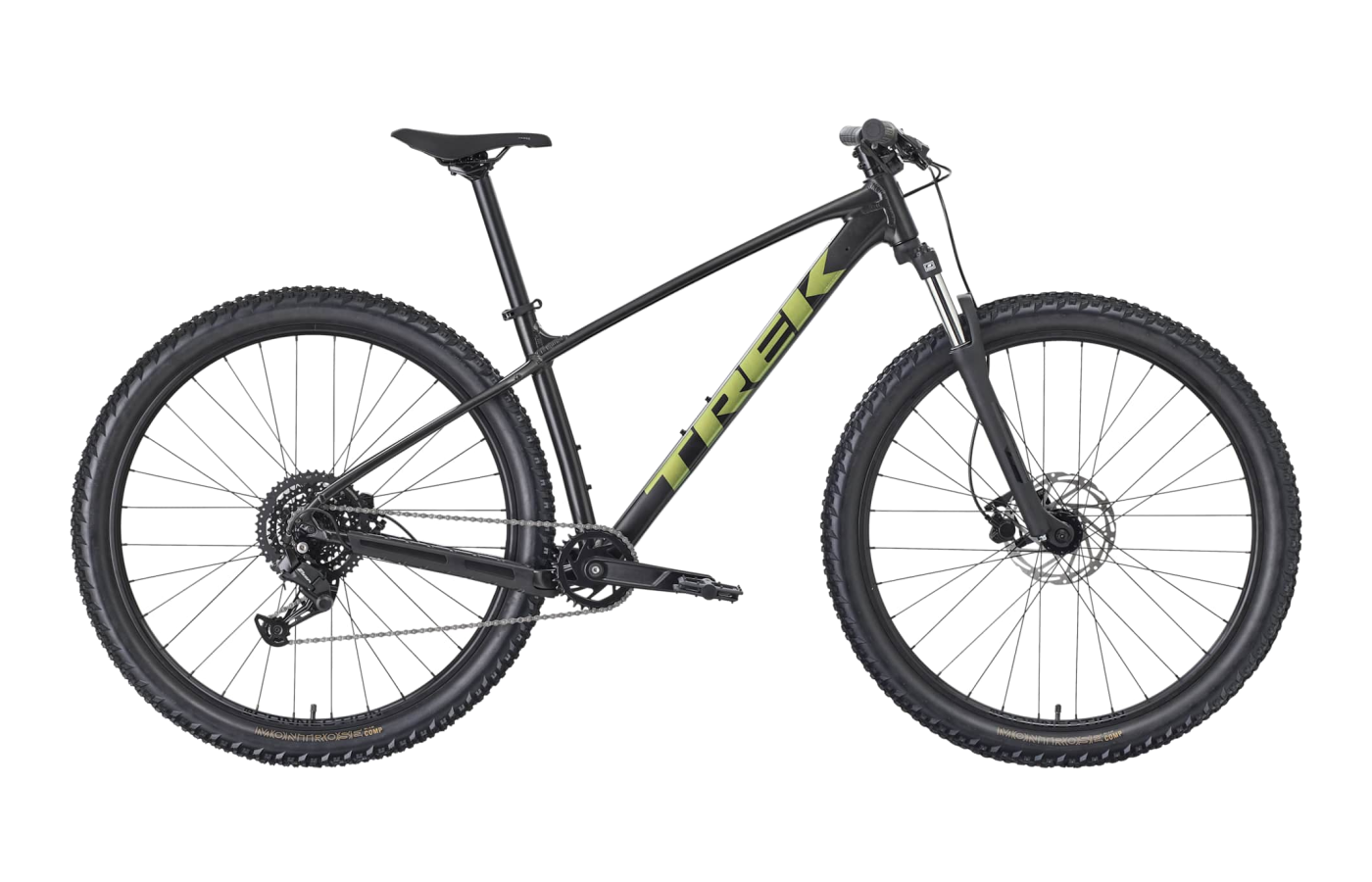
The Trek Marlin is the default cross-shop for the Fire Mountain — another high-volume entry hardtail with a similar spec philosophy and Trek's massive dealer network behind it. Worth a side-by-side test ride if you have both shops nearby.
Compare →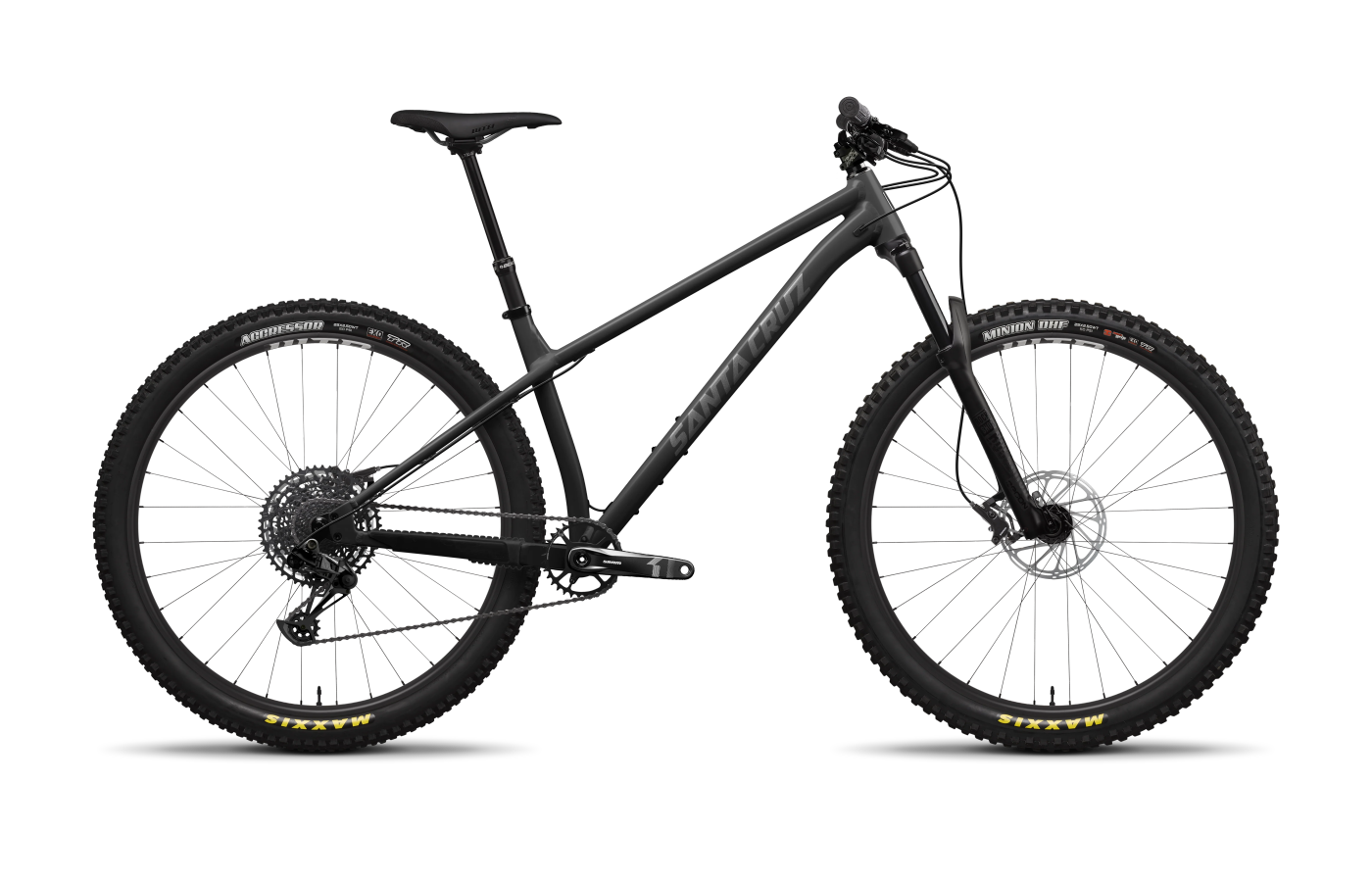
Chameleon
The Santa Cruz Chameleon is the Honzo's most direct competitor — playful aggressive hardtail, dropper post stock, builds spanning alloy to carbon. Reviewers regularly compare the two head-to-head; the Chameleon is slightly more compliant, the Honzo slightly more aggressive.
Compare →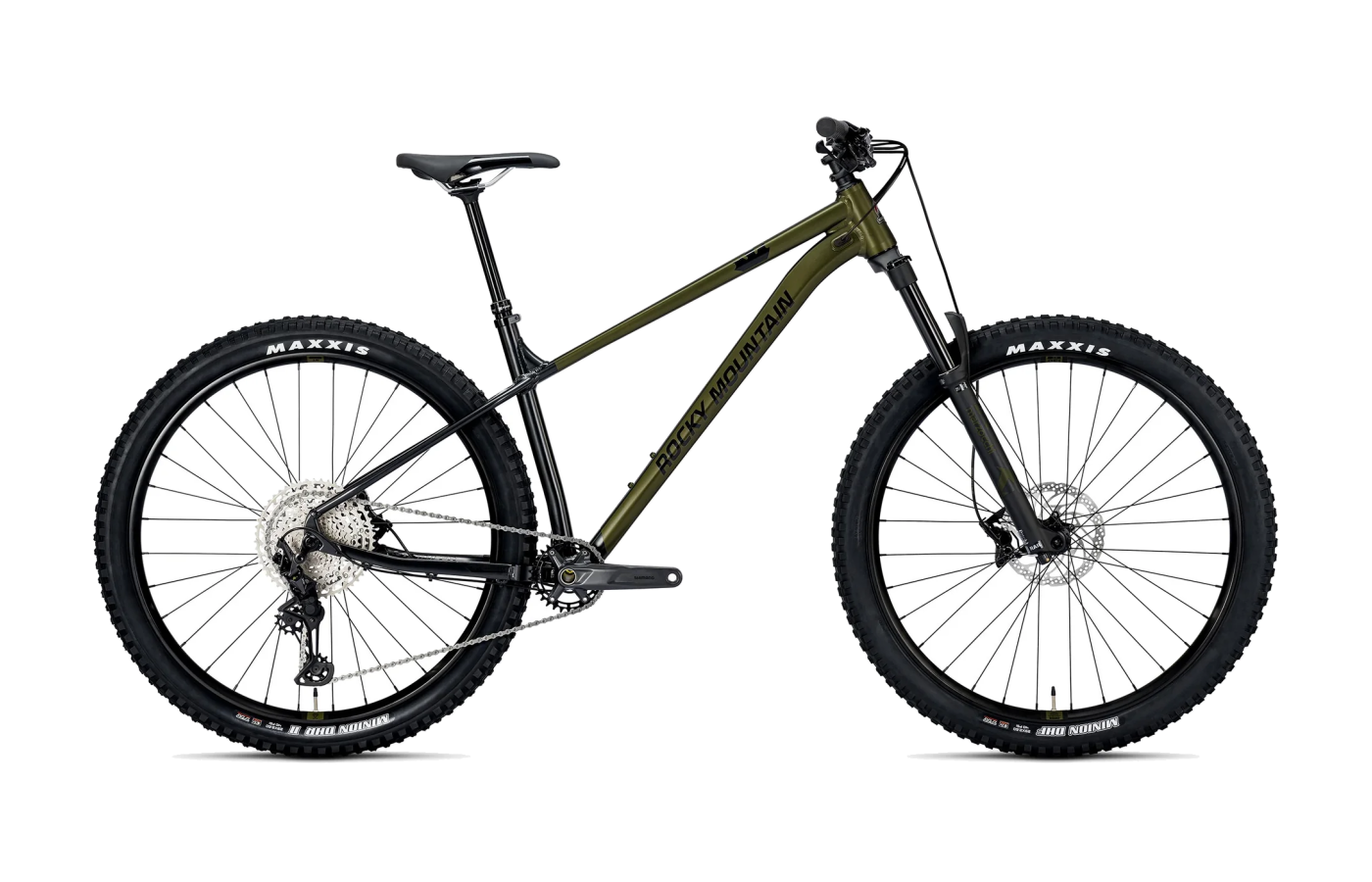
Growler
The Rocky Mountain Growler is another aggressive aluminum hardtail in the Honzo's exact lane — slack, dropper-equipped, dropper-routed, and priced competitively. Worth a look if Honzo dealers are scarce in your area.
Compare →