Mahuna
vsMarlin
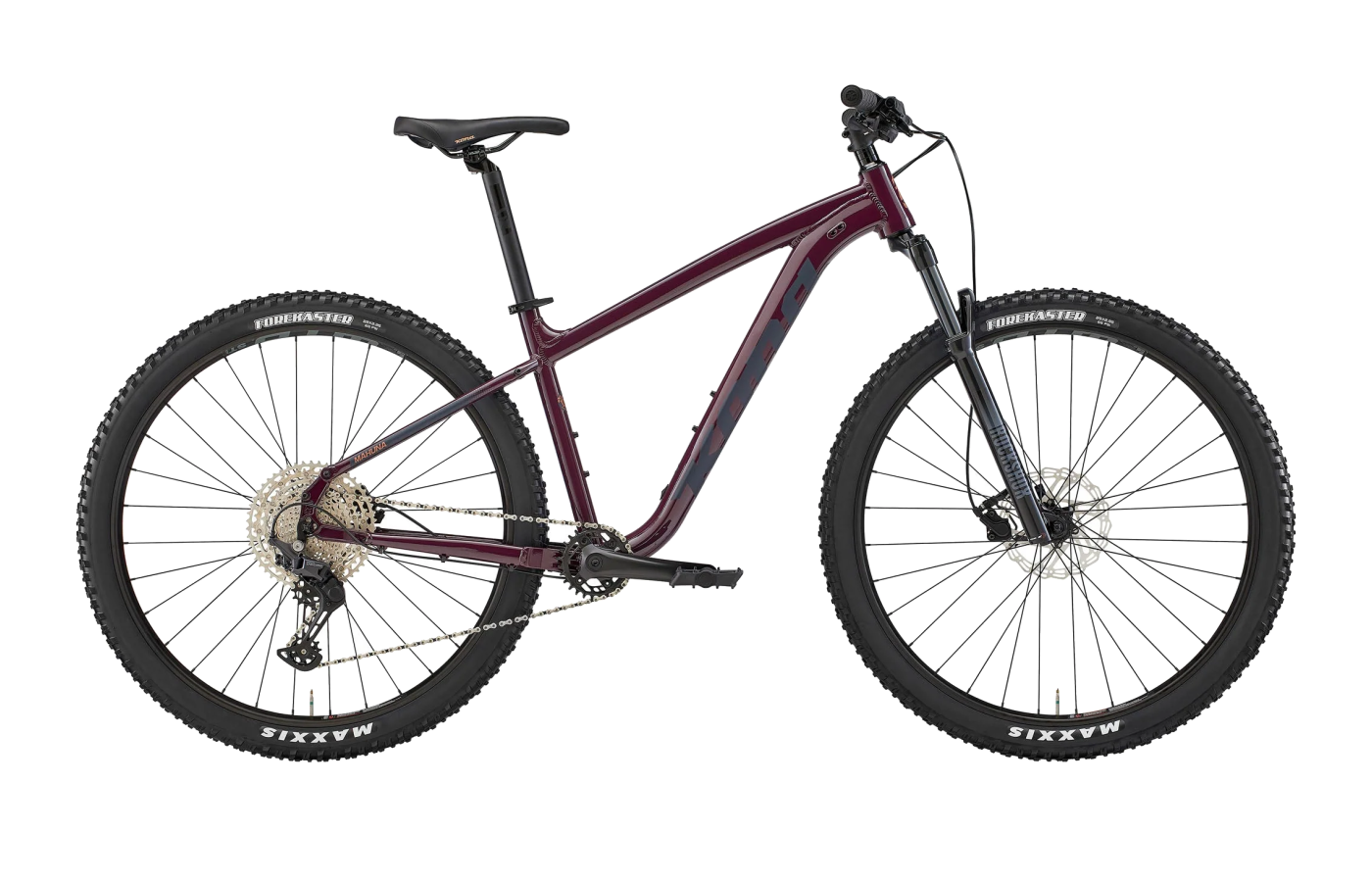
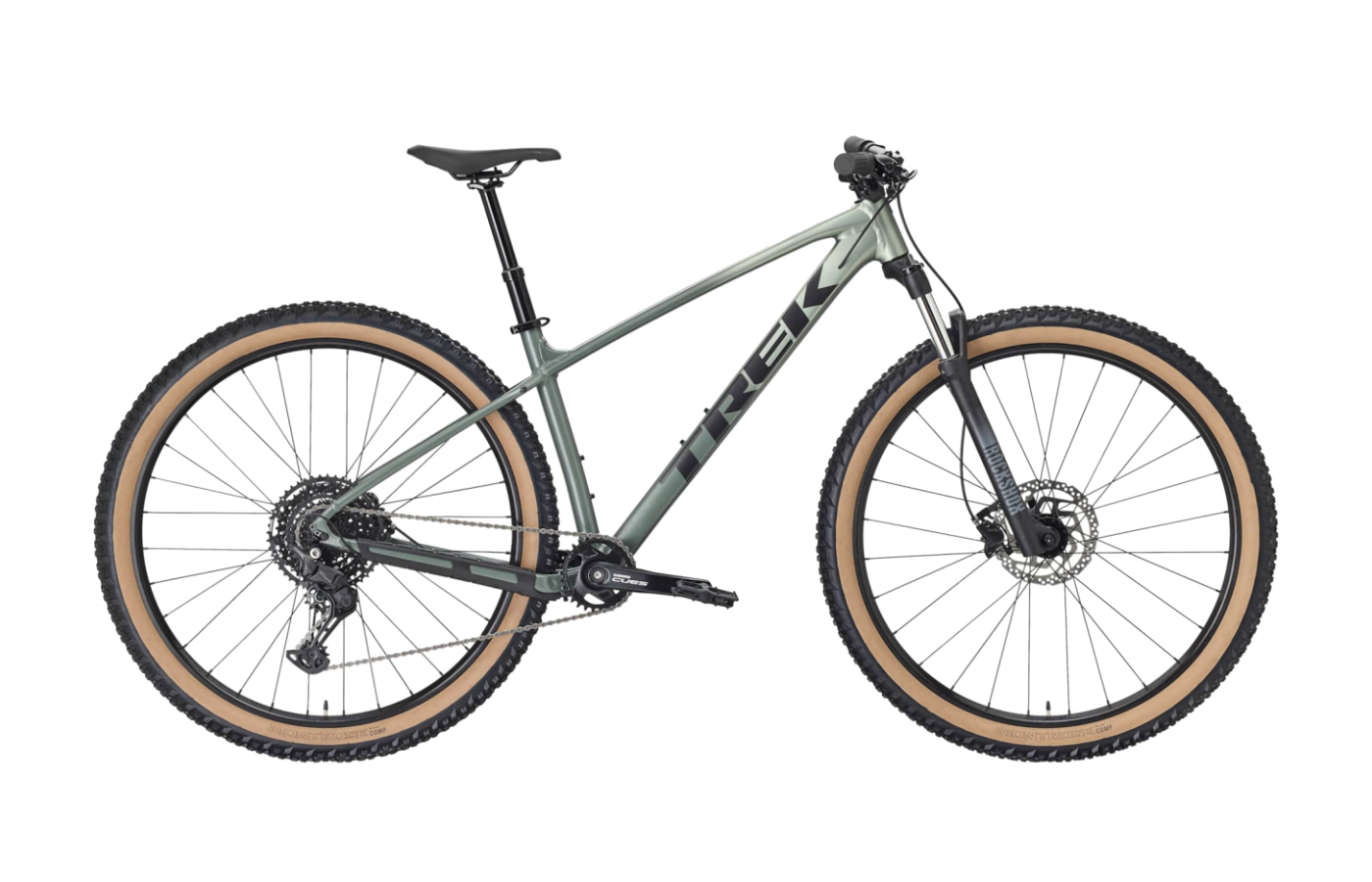
Two sub-$1k hardtails, two different bets.
The Mahuna spends its budget on a frame that rides like steel. The Marlin spends its on modern trail geometry and dual-duty utility.
Mahuna
- Frame quality well above its price — 6061 butted aluminum that reviewers compare to steel for ride feel.
- Long 450 mm chainstays smooth out chatter and give it stability that approaches a full-suspension trail bike's wheelbase.
- Air-sprung Judy and Shimano Deore 11-speed at $899 — both a step above what most rivals offer at this price.
- Square-taper bottom bracket flexes under hard pedaling — universally cited as the first upgrade.
- Only four sizes with a 35 mm reach jump between L and XL — fit gaps for some riders.
Marlin
- Modern 66.5-degree head tube angle and longer reach — descends with the composure of bikes a tier up.
- Seven sizes from XS to XXL with size-specific wheels (27.5" on XS/S, 29" from M up) — easiest fit in this segment.
- True dual-duty package — rack, fender, and kickstand mounts plus a 25-year frame warranty.
- Alpha Silver aluminum is Trek's heaviest alloy; bikes weigh 14.2–15.1 kg depending on trim.
- Straight 1-1/8" head tube and ThruSkew axles cap long-term fork and wheel upgrades.
Editor’s analysis
Both run a 100 mm Judy and quick-release axles. After that, they could not be more different — what is each brand willing to skimp on to land at this price?
Kona puts the money in the frame. The Mahuna's 6061 butted aluminum chassis gets near-universal praise for a compliance reviewers compare to steel — Bike Perfect calls it a 'cultured feel,' MBR named the same frame their Hardtail of the Year. The 450 mm chainstays (long for an XC bike by current standards) damp chatter and keep the front wheel planted on steep climbs. The cost: only one build at $899 with a square-taper bottom bracket and QR axles front and rear — every reviewer flags the BB as the first thing you'll want to upgrade.
Trek spends the money on geometry and reach. The Marlin Gen 3 dropped the head tube angle to 66.5 degrees — a full 3 degrees slacker than its predecessor and 1.5 degrees slacker than the Mahuna — and added a longer reach and wheelbase. The result is a bike that descends with the calm of something a tier above. The cost: Alpha Silver aluminum (Trek's heaviest alloy), a straight 1-1/8" head tube that limits future fork upgrades, and a ThruSkew rear axle that locks you out of standard thru-axle wheelsets.
Build-to-build, the Marlin lineup spans $629 to $1,399 across four trims; the Mahuna offers exactly one $899 build. Compared head-to-head at similar money — Mahuna Standard against the Marlin 6 at $999 — the Mahuna gets you a cleaner Shimano Deore 11-speed drivetrain and an air-sprung Judy fork. The Marlin 6 runs a coil Judy and Shimano CUES, but throws in size-specific cockpits, dropper-post routing already in use on the higher trims, and rack/fender/kickstand mounts that make it a credible commuter on Monday morning.
Put another way: the Mahuna is a focused trail hardtail with a flagship-grade frame and budget components hanging off it. The Marlin is a versatile entry bike with modern geometry and a smaller per-component compromise. Pick the Mahuna if you want a frame you can grow into. Pick the Marlin if you want a bike that's already in the right ballpark out of the box — and you'll use the rack mounts.
Where the builds differ.
Comparing our editor's-pick builds side-by-side. Winners highlighted row-by-row — lower price and weight, and the better-spec component, each mark a point.
Build variants & pricing
Kona offers a single $899 Mahuna build. Trek's Marlin Gen 3 spans four trims from $629 to $1,399.
Prices are current US MSRP. The Mahuna's lone build sits between the Marlin 5 ($849) and Marlin 6 ($999). The flagship Marlin 7 at $1,399 adds SRAM SX Eagle 12-speed, an air-sprung Judy Silver, and a TranzX dropper — but reviewers consistently prefer the Shimano drivetrains lower in the range.
How they fit, how they steer.
Both at size M. The Marlin sits 2 mm lower with identical 440 mm reach, but its 66.5-degree head tube angle is 1.5 degrees slacker than the Mahuna's 68 — and its 438 mm chainstays are 12 mm shorter, so the Trek pivots more eagerly while the Kona feels longer and more planted.
Which size should I buy?
Trek offers seven sizes (XS to XXL) with size-specific wheel diameters; Kona offers four (S to XL) with a 35 mm reach jump from L to XL that may leave taller riders between sizes.
→These are starting points. Flexibility, riding style, and preferred position all shift the answer — if you’re between sizes, a professional fit beats a chart.
What the magazines said.
Published reviews from trusted cycling outlets. Click through for the full write-up.
Which one should you buy?
If you want a frame you can keep upgrading parts onto for years, get the Kona Mahuna. If you want a do-everything entry bike that's already in the right shape, get the Trek Marlin.
Mahuna
If you ride mostly XC and rolling singletrack and you'd rather start with a great frame and slowly upgrade the parts hanging off it, this is the play. The square-taper BB and QR axles will eventually go; the frame will outlast all of it.
Marlin
If one bike has to handle the weekday commute and the weekend trail loop, the Marlin is built for exactly that life. Modern geometry makes descents feel safer; rack and kickstand mounts make Monday easy. Pick the trim that fits your budget and stop overthinking it.
Questions buyers actually ask.
Short answers to the things we get emailed about most often.
01Which is better for descending?
The Trek Marlin, by a clear margin on geometry. Its 66.5-degree head tube angle is 1.5 degrees slacker than the Mahuna's 68, and its wheelbase at size M (1,163 mm) is essentially equal to the Kona's (1,164 mm) — but the slacker front end makes the Trek feel calmer when the trail tips down.
That said, both bikes share the same descending bottleneck: a 100 mm RockShox Judy fork on a quick-release front axle. Reviewers noted twangy, flexy front-end behavior on both bikes once you push them past their intended scope.
02Which is more comfortable on long XC rides?
The Kona Mahuna. Its 6061 butted aluminum frame draws repeated comparisons to steel for its compliance — Guy Kesteven at Bike Perfect described it as having a 'cultured feel,' and MBR called it the surface that made them name it Hardtail of the Year 2022.
The Mahuna's 450 mm chainstays — long by current XC standards — damp trail chatter in a way the Marlin's 438 mm rear end does not. If your rides are 2+ hours of rolling singletrack, you'll finish less beat up on the Kona.
03Can I commute on either of these?
Yes, but the Marlin is the better commuter out of the box. It ships with mounts for a rear rack, fenders, and a kickstand — Trek explicitly designs the Gen 3 as a dual-duty bike.
The Mahuna does have rack and mudguard mounts and twin bottle cage bosses too, but its character is more singular: it's an XC hardtail that can commute in a pinch. The Marlin is genuinely built to do both jobs.
04How do the drivetrains compare at similar price points?
Comparing the Mahuna ($899, Shimano Deore 11-speed) to the Marlin 6 ($999, Shimano CUES U6000 10-speed): both are entry-tier Shimano. Deore 11-speed is the older, established platform that reviewers consistently call crisp and reliable. CUES is Shimano's newer entry-level standard designed for cross-compatibility across MTB and gravel.
The step-up Marlin 7 at $1,399 swaps to SRAM SX Eagle 12-speed, but multiple reviewers (BikeRadar specifically) called out the SX derailleur's plastic components as a long-term durability concern. For drivetrain reliability at this tier, the Mahuna's Deore is the better choice.
05What are the suspension differences?
Both run 100 mm of front travel with a quick-release axle — there's no rear suspension on either.
Mahuna ($899): RockShox Judy Silver TK with a Solo Air spring and external rebound adjustment. The air spring lets you tune for rider weight.
Marlin 6 ($999): RockShox Judy with a coil spring and TurnKey lockout — heavier and not weight-tunable, but the lockout helps on smooth roads.
Marlin 7 ($1,399): Steps up to the same Judy Silver Solo Air the Mahuna uses, plus a TurnKey hydraulic lockout.
Reviewers across both bikes agreed the Judy hits its limit on technical descents — the 30 mm stanchions and QR axle introduce noticeable flex when you push hard.
06Which has better future upgrade potential?
Mahuna, despite the lower starting spec. The 6061 frame is the same chassis Kona uses up to its higher-end Kahuna DL build, and it's rated for forks up to 120 mm. Replacing the square-taper BB and adding a dropper post (the frame is pre-routed) are obvious early wins.
Marlin has two structural caps reviewers flagged repeatedly: a straight 1-1/8" head tube means upgrading to a tapered-steerer fork requires a new headset, and the 'ThruSkew' rear axle is not a true thru-axle, which limits compatibility with most quality aftermarket wheelsets. You can still make the Marlin nicer; you just can't take it as far.
07What's the warranty on each frame?
Trek Marlin: lifetime frame warranty (Trek calls it a 25-year guarantee on the frame against manufacturing defects), one of the most generous in the segment.
Kona Mahuna: limited lifetime frame warranty to the original owner against manufacturing defects.
Both are strong. Trek's dealer network is larger in the US, which can matter for warranty claims.
08Which is heavier?
Roughly comparable. The Marlin 6 (size M) weighs 15.0 kg / 33.07 lb per Trek's published spec; the Marlin 7 comes in at 14.15 kg / 31.2 lb.
Reviewers reported the Mahuna at around 14.3–14.6 kg for its single $899 build (Bike Perfect: 14.28 kg; MBR: 14.6 kg).
So the Mahuna lands roughly between the Marlin 6 and Marlin 7 on weight — not a meaningful differentiator at this tier.
Similar bikes
If your priorities don’t map cleanly onto either of these, one of these adjacent bikes probably fits better.
Roscoe
Trek's actual trail hardtail — adds a 140 mm fork and real thru-axles. If the Marlin's 100 mm Judy and QR feels limited within a season, this is the next stop in the same family.
Compare →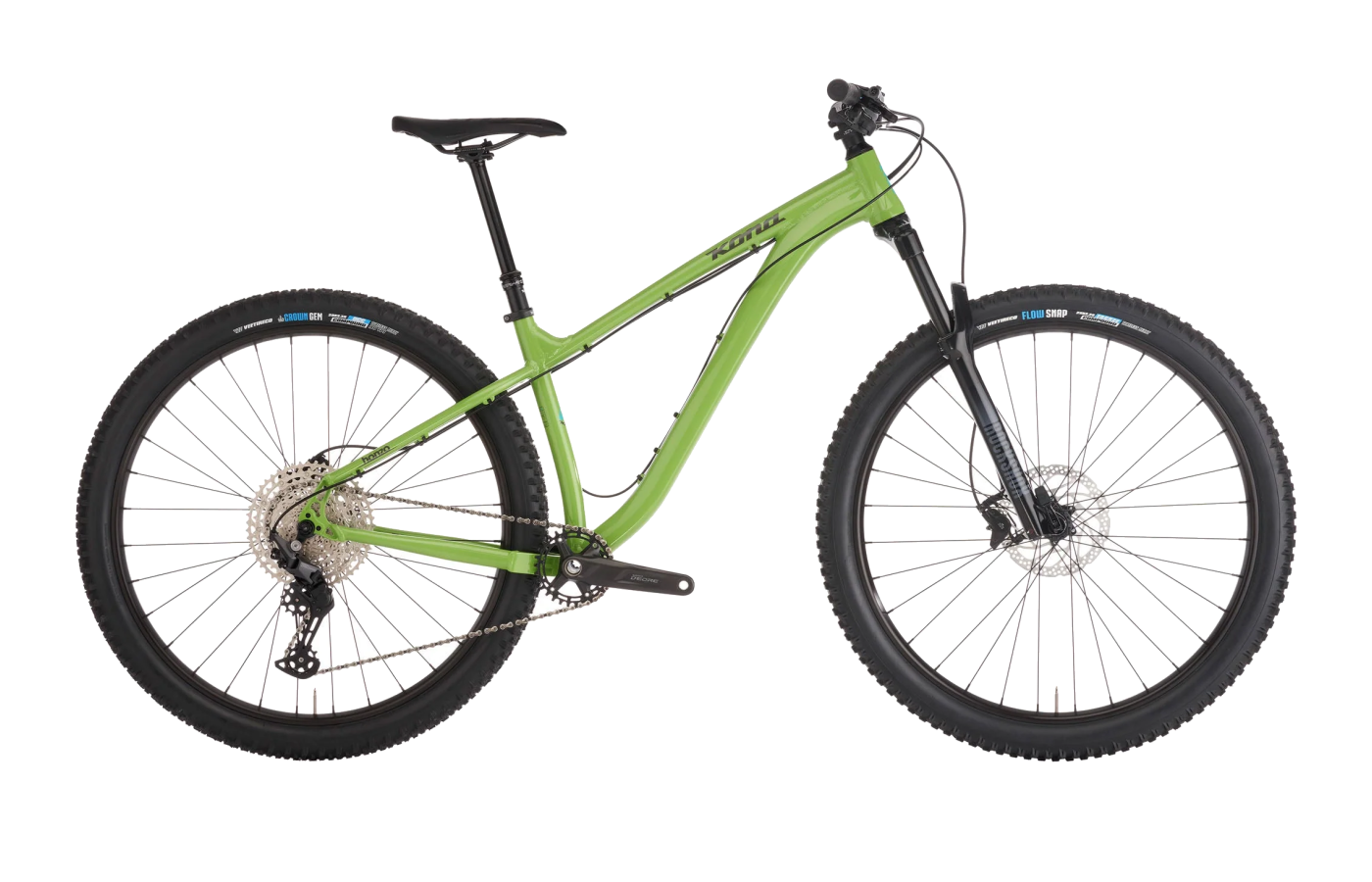
Honzo
Kona's slacker, more aggressive hardtail. If you love how the Mahuna frame feels but want geometry built for steeper, faster descents, the Honzo is the upgrade path.
Compare →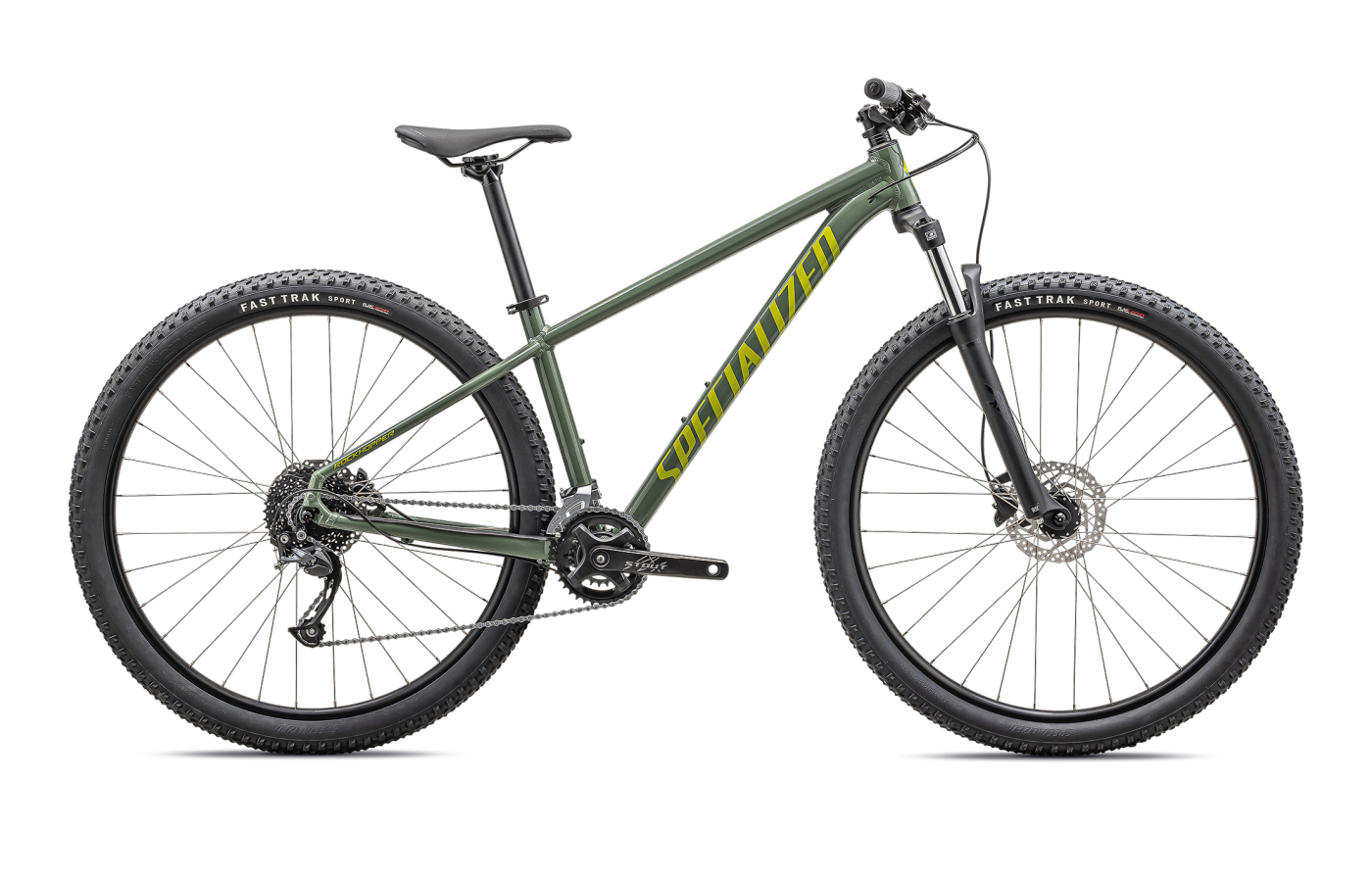
Rockhopper
The Marlin's most direct rival — Specialized's entry hardtail with a similarly broad price ladder and the same XC-to-trail versatility. Often the deciding factor is which dealer is closer.
Compare →