Process 153
vsBronson
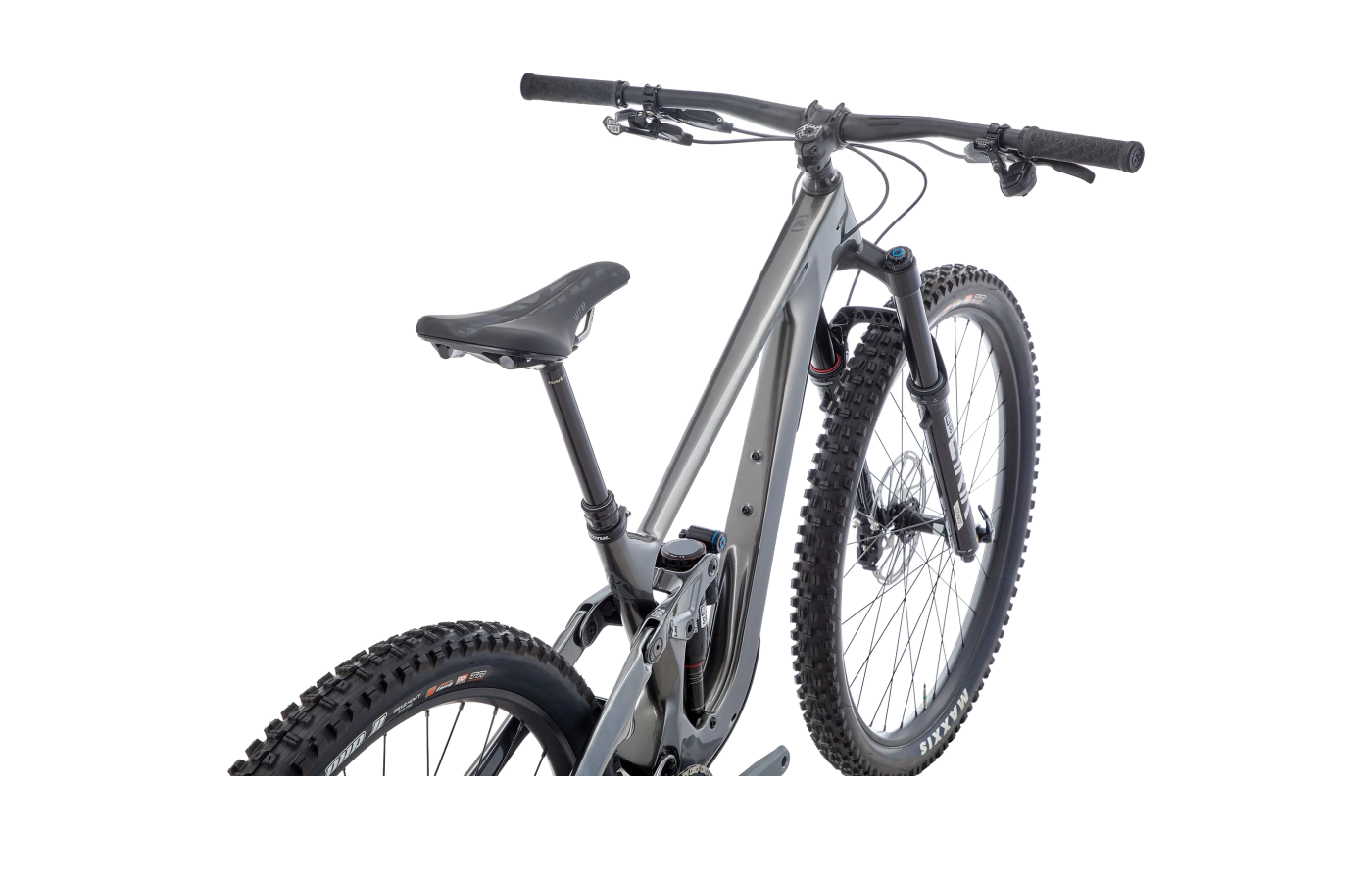
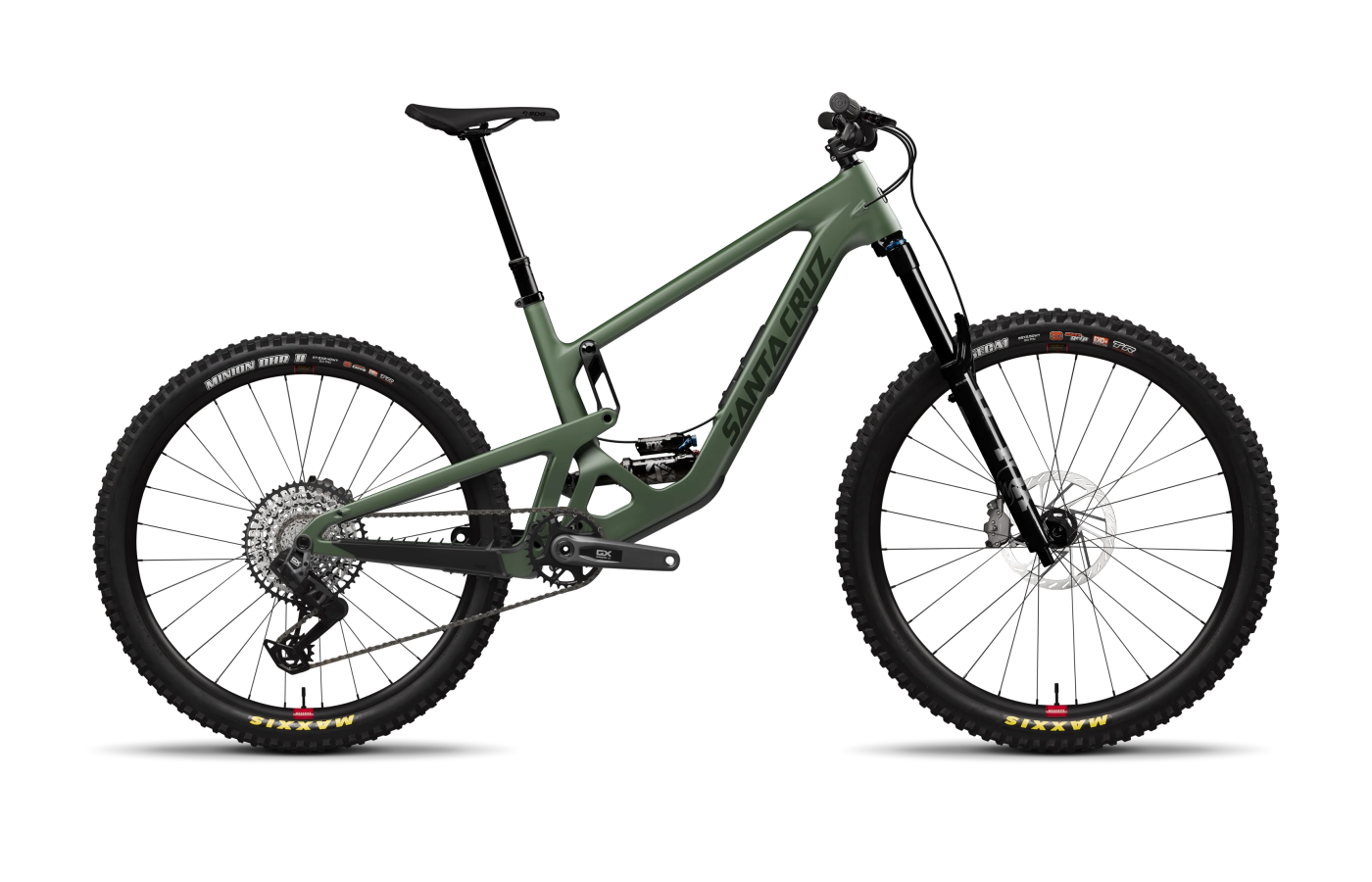
Two 150mm trail bikes, two completely different personalities.
The Kona Process 153 is a silent, agile carving tool. The Santa Cruz Bronson is a mullet-flavored party bike with a lifetime warranty.
Process 153
- Cheapest entry point at $2,599 for an alloy build — half the cost of the cheapest Bronson.
- Silent on the trail — tube-in-tube internal routing is widely cited as the quietest in the segment.
- Snappy in tight terrain — short 435 mm chainstays and a 1215 mm M wheelbase reward precise riders on janky trails.
- Single-pivot rear can feel jittery on high-speed, repeated chunk — Pinkbike and NSMB both flag the limit.
- Stock SRAM G2 RSC brakes are universally panned as underpowered for a 160 mm-fork bike — plan to upgrade.
Bronson
- Strong VPP climber — reviewers say the climb switch is essentially decorative; 77.9° effective STA puts you over the cranks.
- Lifetime support — frame warranty plus free lifetime pivot-bearing replacement, both for the original owner.
- Mullet agility with size-specific chainstays (437–448 mm) keep weight balanced as the frame grows.
- Carbon-only — no alloy frame option, so the floor is $4,999.
- Spec-per-dollar is below DTC competitors, especially the entry-level NX Eagle / Lyrik Base R build at $4,999.
Editor’s analysis
Same travel, same head angle, same intended terrain — and yet almost nothing else about how these bikes ride is the same.
On the spec sheet, the Kona Process 153 and Santa Cruz Bronson look like siblings. Both run 153–150 mm of rear travel paired with a 160 mm fork, both sit at roughly a 64.2–64.5° head angle, and both are pitched as the do-it-all bike for a rider who wants one full-suspension rig. Pull back from the numbers and the philosophies diverge fast.
The Kona Process 153 is a 29er built around a single-pivot Rocker linkage, a static 435 mm chainstay across every size, and a frame that reviewers consistently call the quietest on the trail thanks to tube-in-tube internal routing. It feels short — wheelbase is 1215 mm in size M and 1244 mm in L — and Pinkbike likened the personality to "carving skis or a hot hatchback." It rewards precise riders on tight, janky terrain and starts at $2,599 for an alloy build, which is $2,400 below the cheapest Bronson.
The Santa Cruz Bronson goes the other direction. It's a dedicated mullet (29F/27.5R), built on a refined VPP layout, with size-specific chainstays from 437 to 448 mm. The frame is taller — 632 mm of stack on the medium vs the Kona's 615 — and the steeper 77.9° effective seat tube angle plus VPP anti-squat make it the more efficient climber. Reviewers from Vital, BikeRadar, and Pinkbike all describe it as a "playbike" that wants to be manualed, popped, and slashed rather than steamrolled.
Put the two side-by-side and the choice is character, not capability. The Kona Process 153 is the precision tool — silent, snappy, undemanding on the wallet, but demanding on rider input when speeds get truly warp. The Santa Cruz Bronson is the playful bruiser — taller, livelier on jumps, a stronger climber, but it costs nearly double once you're in carbon and the entry-level builds skimp on components in ways the price tag doesn't reflect.
Where the builds differ.
Comparing our editor's-pick builds side-by-side. Winners highlighted row-by-row — lower price and weight, and the better-spec component, each mark a point.
Build variants & pricing
The Kona spans $2,599 to $5,099 across three builds; the Bronson runs $4,999 to $9,349 across seven, all carbon.
Prices are current US MSRP. The Kona's $5,099 CR/DL carbon build undercuts the equivalent-tier Bronson GX AXS by about $2,150 — most of that gap is paying for Santa Cruz's CC/C carbon layup, lifetime bearings, and brand premium rather than headline parts.
How they fit, how they steer.
The Bronson medium sits 17 mm taller in stack and runs a 5 mm longer reach, with a steeper 77.9° seat tube angle vs the Kona's 76.9°. The Kona is shorter overall — 25 mm less wheelbase and 4 mm shorter chainstays — which is exactly why it changes direction faster on tight terrain.
Which size should I buy?
Both ranges cover roughly the same height span; the Kona's S–XL ladder is more conservative, the Bronson stretches up to XXL.
→These are starting points. Flexibility, riding style, and preferred position all shift the answer — if you’re between sizes, a professional fit beats a chart.
What the magazines said.
Published reviews from trusted cycling outlets. Click through for the full write-up.
Which one should you buy?
If your trails are tight and technical and your budget matters, get the Kona. If you want a livelier, taller-feeling mullet bike with industry-leading aftercare, get the Bronson.
Process 153
If you ride tight, rooty, janky terrain — Pacific Northwest, New England chunk, anything that rewards precise line choice over straight-line speed — the Process 153 is the sharper instrument and the cheaper one. Plan a brake upgrade and you've still spent less than the cheapest Bronson.
Bronson
If you want a versatile mullet bike that climbs well, manuals easily, and comes with a lifetime warranty plus free bearing replacements, the Bronson V4 earns its premium. It's the one to buy if you'll keep the bike for five years and ride a mix of jump lines, alpine epics, and technical descents.
Questions buyers actually ask.
Short answers to the things we get emailed about most often.
01Which climbs better?
The Santa Cruz Bronson, by a meaningful margin. Reviewers from Vital MTB and The Loam Wolf both note that the VPP rear suspension's anti-squat is so effective that the climb switch is essentially decorative, and the steeper 77.9° effective seat tube angle on the medium puts you well over the cranks.
The Kona Process 153 is no slouch — its Rocker single pivot does a "superb job minimizing pedal bob" per Mountain Bike Action — but the actual seat tube angle slacks out to roughly 69° as you raise the saddle, which leaves taller riders feeling stretched on long, steep climbs. The Loam Wolf also noted the single-pivot rear can sit a bit deep in its travel on repeated, sequential technical climbing moves.
02Which is faster on rough, high-speed descents?
Honestly, neither is a dedicated enduro race bike, and both have a ceiling that the other doesn't. With 153 mm rear / 160 mm front and a 64.5° head angle, the Kona has marginally more travel and a slacker fork stance, but Pinkbike, NSMB, and Blister all flag that its short geometry and single-pivot rear start to feel "overwhelmed" or "jittery" on high-speed chunk.
The Bronson is more composed at speed thanks to its longer wheelbase and refined VPP, but BikeRadar and The Loam Wolf both note that 150 mm of mullet travel can feel "overwhelmed" on truly double-black terrain — the 27.5" rear wheel can hang up where the 29" front rolls through. For relentless, fast, rough enduro tracks, both bikes have a ceiling. A Megatower or a longer-travel enduro rig would feel more planted.
03Mullet or full 29 — which works better here?
The Bronson V4 is mullet-only (29" front, 27.5" rear) — that's the platform's defining feature. Reviewers consistently credit the small rear wheel for the bike's poppy, manual-happy personality.
The Kona Process 153 ships as a full 29er (except size S, which is mullet stock) but includes a flip chip that lets any size run a mullet setup without compromising geometry. NSMB found mulleting "improved agility and performance on the steeps" but also said the high-speed jittery feel got more pronounced. Blister noted the already-short 435 mm chainstay paired with a 27.5 rear can lead to an excessively quick turn-in. If you want the mullet character full-time, the Bronson is built around it; on the Kona it's a tunable add-on.
04How are the brakes on each?
Both bikes have a brake problem at the spec'd price. Across reviews, the Kona CR/DL's stock SRAM G2 RSC brakes are described as "underpowered," "out-gunned," and not belonging on a bike with a 160 mm fork — Pinkbike was the bluntest, calling the pads "damp tissue paper." Plan to upgrade to SRAM Codes or Mavens.
The Bronson isn't always better. BikeRadar and Enduro-MTB both criticized Santa Cruz for fitting a 180 mm rear rotor (and historically G2-tier brakes on lower builds), recommending an upgrade to a 200 mm rear rotor for sustained descents. Top-tier builds get better calipers, but a brake-line audit before bombing big descents is wise on either bike.
05What's the price gap between equivalent builds?
Roughly $2,150 at the GX Transmission tier we picked. The Kona Process 153 CR/DL is $5,099 with SRAM GX Eagle Transmission AXS, RockShox Lyrik Ultimate / Super Deluxe Ultimate, and DT Swiss 350 hubs. The Bronson GX AXS is $7,249 with SRAM GX Eagle AXS T-Type, FOX 36 Performance Elite Grip X2 / Float X Performance Elite, and DT Swiss 370 hubs.
Most of that gap pays for Santa Cruz's Carbon C frame, lifetime bearing replacement, and brand premium — not headline parts. The Loam Wolf's broader take on Santa Cruz pricing applies here: spec-per-dollar isn't competitive with DTC brands, but resale and aftercare are.
06How does the warranty and aftercare compare?
Santa Cruz offers a lifetime warranty on the frame and free lifetime pivot-bearing replacement for the original owner — multiple reviewers (Vital MTB, MTB-Mag) cite this as the single biggest reason the "Santa Cruz Tax" is defensible. The brand's "No Missed Rides" program also keeps spare parts deeply stocked.
Kona is more conventional. The brand recently returned to its original founders (Dan Gerhard and Jake Heilbron) and there's renewed enthusiasm in reviews about build quality and frame durability, but the warranty offering isn't called out as a differentiator. If long-term ownership economics matter to you, that's a real point in the Bronson's favor.
07Which is quieter?
The Kona, decisively. Reviewers across NSMB, Mountain Bike Action, and Full Cycle Ottawa all single out the tube-in-tube internal routing as making the Process 153 one of the quietest bikes on the trail — "dead silent," "no rattles."
The Bronson is well-protected and the sleeved cable routing keeps things mostly tidy, but Pinkbike noted that chain slap from the SRAM AXS derailleur can be louder than expected. If silence is part of what you want from a bike, the Kona wins this one.
08Is the entry-level Bronson worth it over the cheapest Kona?
Probably not, on parts-per-dollar grounds. The Bronson R at $4,999 ships with SRAM NX Eagle and a RockShox Lyrik Base — components that BikeRadar specifically called "not great for the money." The Kona Process 153 G3 alloy at $2,599 has even more entry-level parts (Microshift Advent X), but at roughly half the price.
The middle Kona DL G3 at $2,999 — alloy frame, RockShox Lyrik Select RC fork, SRAM NX/GX Eagle — is arguably the best value in either lineup. If you want the Bronson's frame quality and aftercare, you're really shopping the S ($5,899) or GX AXS ($7,249) builds, where Santa Cruz's price premium starts to make more sense.
Similar bikes
If your priorities don’t map cleanly onto either of these, one of these adjacent bikes probably fits better.
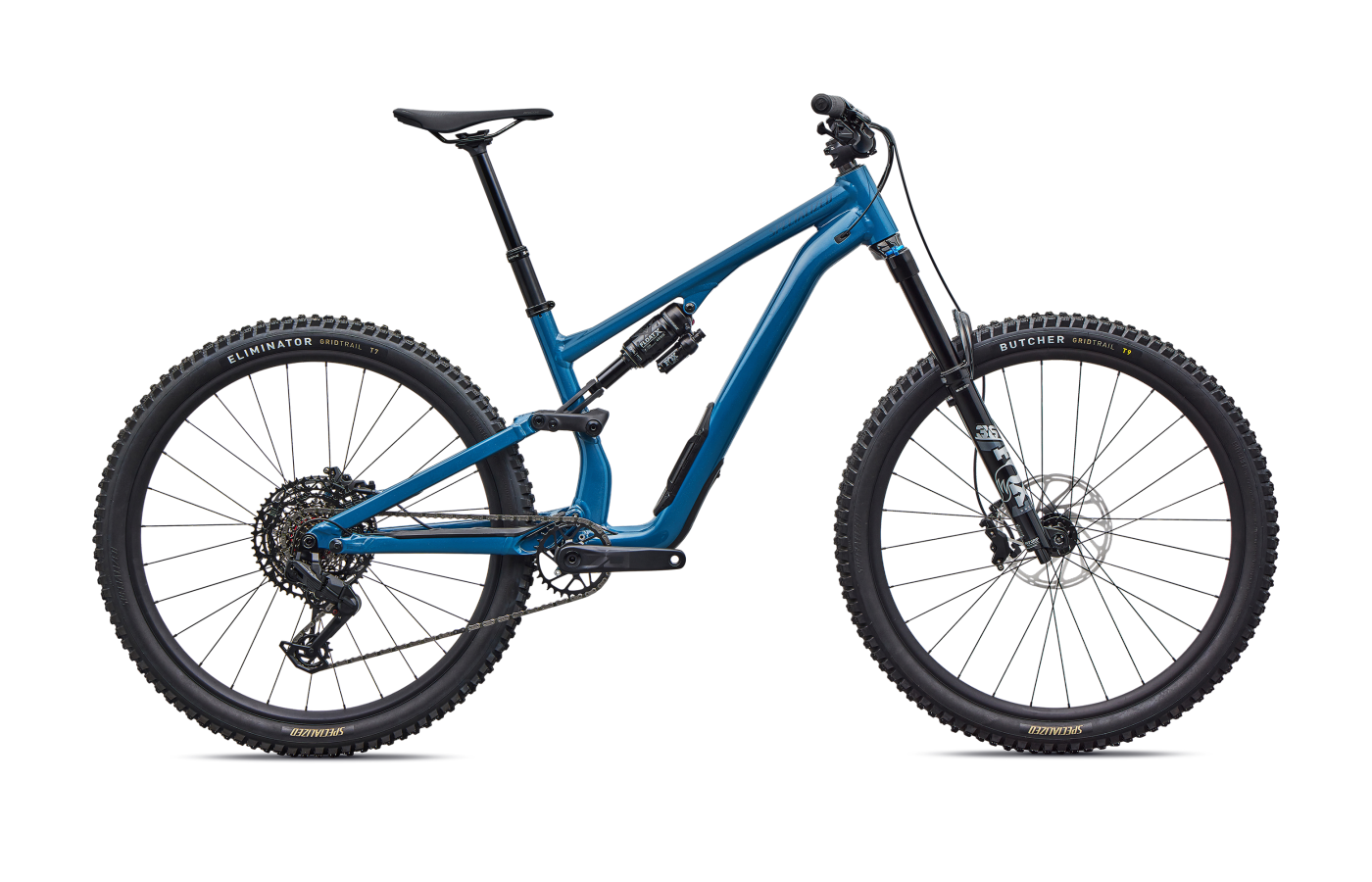
Stumpjumper Evo
The Stumpjumper Evo is the obvious cross-shop — same do-it-all 150 mm bracket, but with six geometry positions and a mullet link if you want them. More tunable than either bike here, and Specialized's S-Sizing throws out traditional S/M/L thinking entirely.
Compare →Patrol
Transition's Patrol leans further into the hooligan side of the mullet conversation than the Bronson — slacker, more aggressive geometry, and Transition's signature party-bike attitude. Pick this if the Bronson tempts you but you wish it were rowdier.
Compare →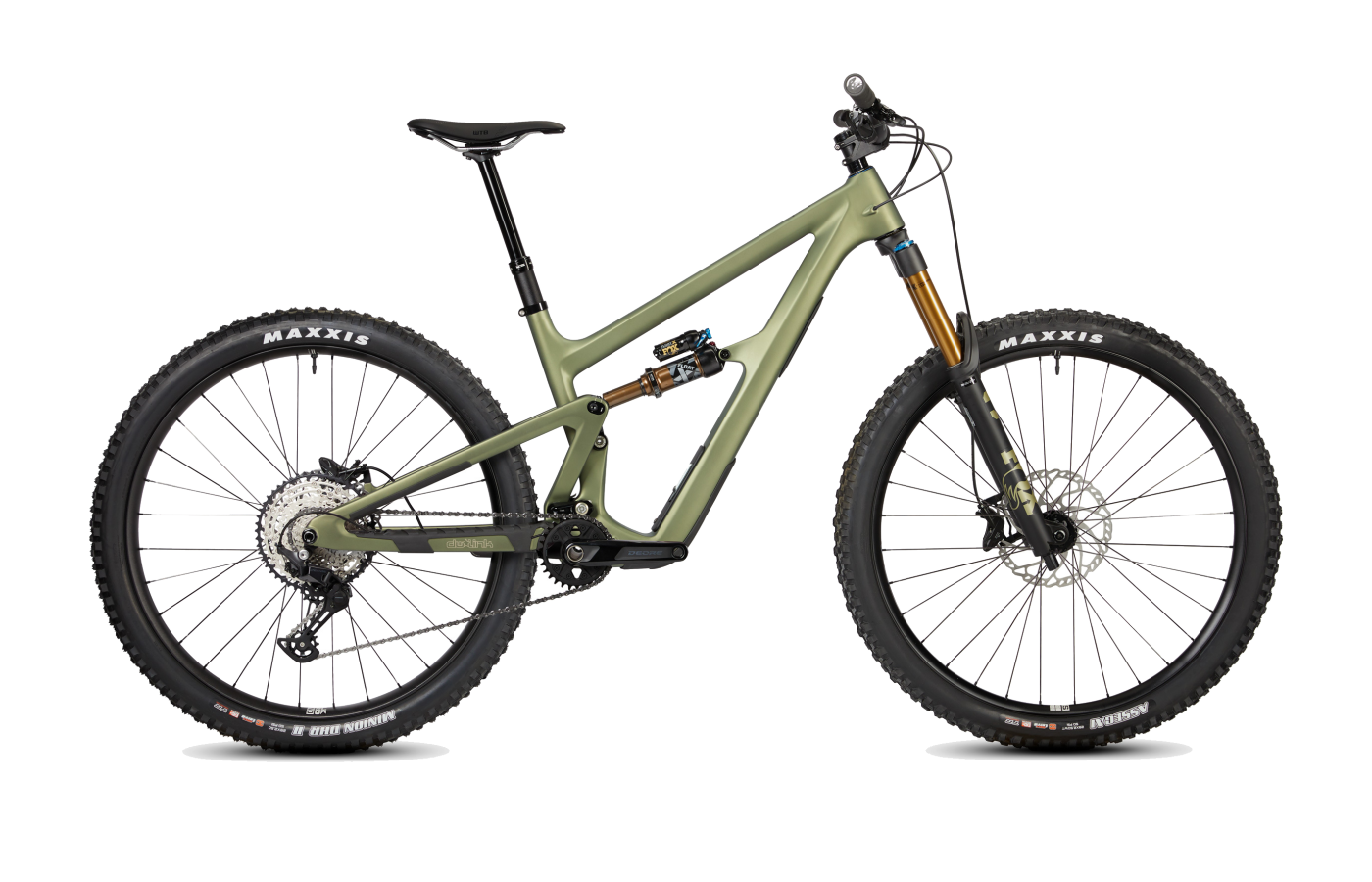
Ripmo
Ibis Ripmo is the full-29er counter-argument — matches both bikes for climbing efficiency but feels more planted at speed thanks to the bigger rear wheel. The bike to consider if your typical descent is fast and rough rather than tight and technical.
Compare →