Sutra
vsVaya
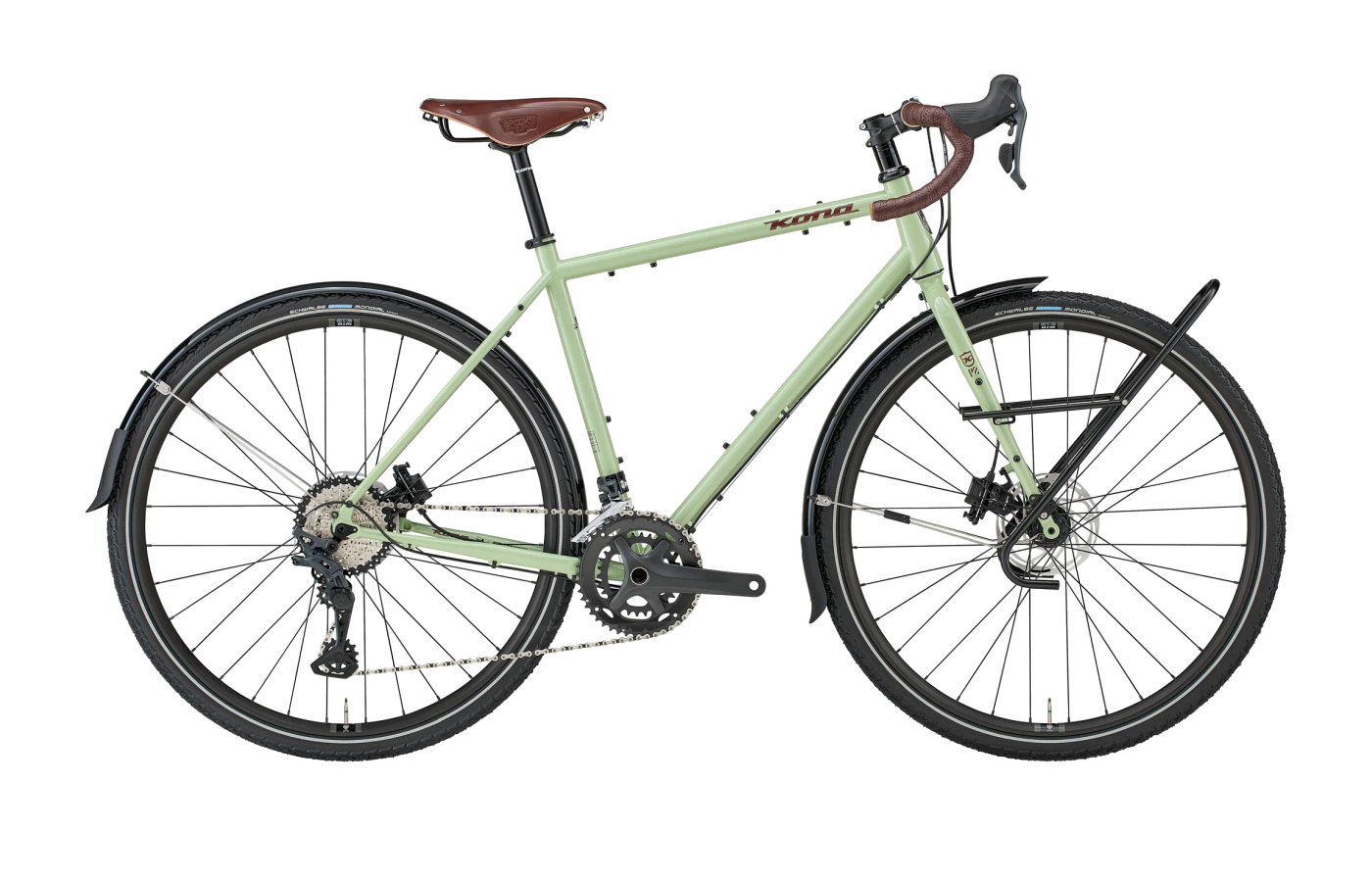
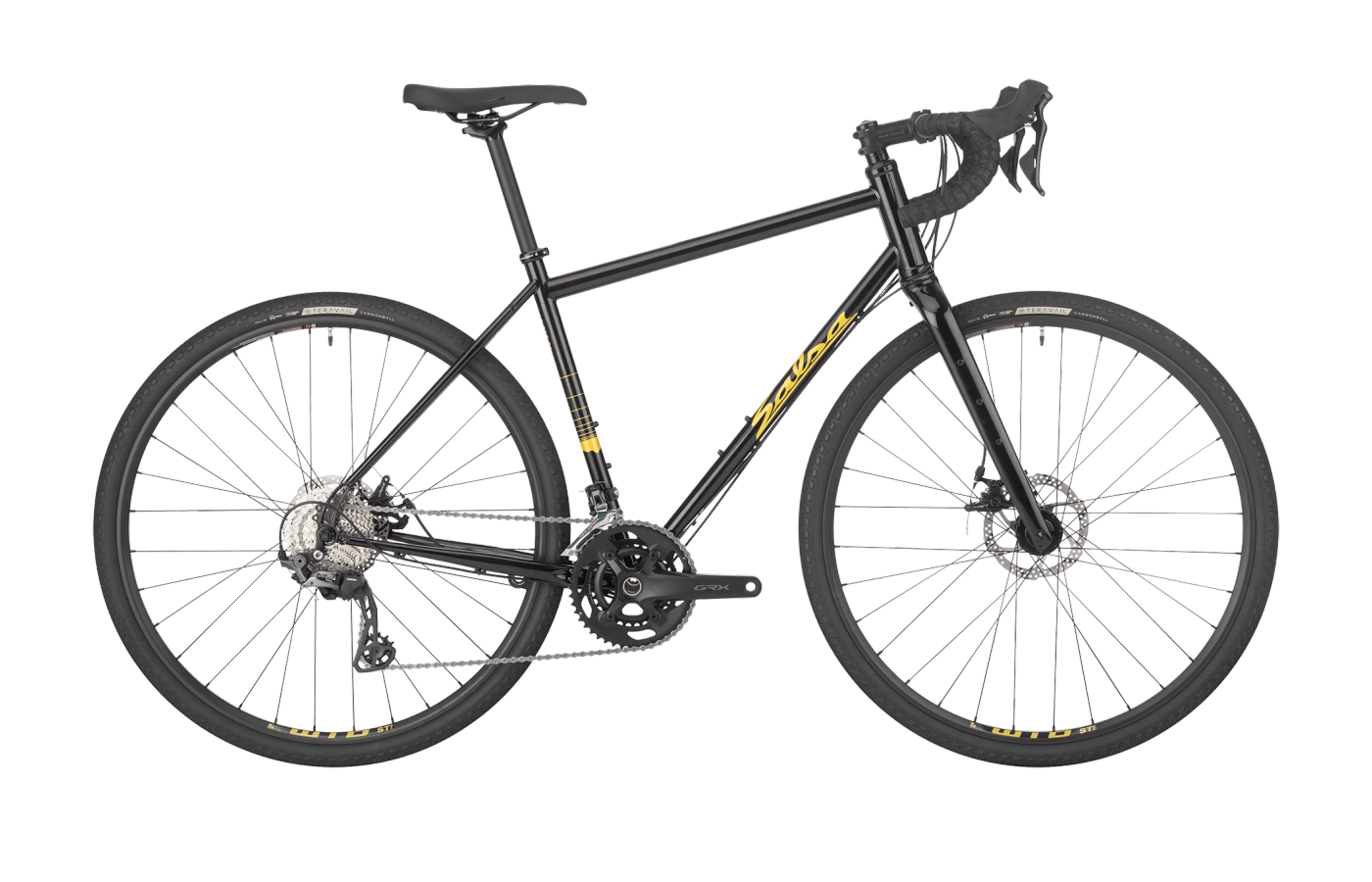
Two steel touring bikes, two definitions of 'loaded'.
The Kona Sutra is the heavy-duty pannier hauler. The Salsa Vaya is the relaxed all-road cruiser that takes a light bikepacking kit in stride.
Sutra
- Touring kit included — Brooks B17 saddle, fenders, and Tubus Tara front rack ship in the box, not as accessories.
- Wider tire clearance at 50 mm — leaves real room to roll wider rubber for rougher routes.
- Built to carry weight — reviewers note it 'sails along better' under panniers, with seven-plus mounting points across the frame and fork.
- Heavier than the Vaya — around 32 lb vs the Vaya's claimed 25 lb on similar sizes.
- The Standard build's Microshift Sword drivetrain is dependable but a step below the Vaya's Shimano 105/GRX combo for shifting feel.
Vaya
- Brand-name drivetrain — Shimano 105 shifters with GRX RX810 derailleurs and a 46/30T crankset, all crisp and serviceable anywhere.
- Lighter on the climbs at a claimed 25 lb (55cm) — noticeably more eager unloaded than the Sutra.
- Upright, all-day fit — at the fit-picked size, the Vaya sits 58 mm taller in the stack than the Sutra, easing the back and neck on long days.
- TRP Spyre-C mechanical discs lack the modulation of the Sutra's HY/RD hybrid hydraulic stoppers.
- Tighter 45 mm tire clearance and a 135 mm QR rear hub — less future-proof than the Sutra's 12x142 mm thru-axle.
Editor’s analysis
Both run butted chromoly, both ship with 2x drivetrains and 700c wheels — but one is built to carry the world, and the other to cover the miles.
On paper, the Kona Sutra and Salsa Vaya look like the same bike: butted chromoly steel front and rear, 700c wheels, 2x gravel drivetrains, mounting points everywhere, and a price tag well under $3k. They're both classic-cut steel adventure rigs that survived the gravel boom by refusing to chase it. But the moment you load them up — or compare what they ship with — the philosophies diverge.
The Sutra is the dedicated touring workhorse. It's heavier (around 32 lb on a 58cm), runs longer 445 mm chainstays paired with a slacker 70.5 degree head tube, and ships with a Brooks B17 leather saddle, fenders, and a Tubus Tara low-rider front rack as standard. Reviewers say it 'sails along better with some additional weight' — its handling literally improves under panniers. The 50 mm official tire clearance leaves room to swap up to wider rubber for rougher gravel without buying a different bike.
The Salsa Vaya plays the same instrument differently. It's lighter (a claimed 25 lb on the 55cm), runs a steeper 71.5 degree head angle, and pairs a tighter 45 mm tire clearance with stock 38 mm Teravail Cannonballs — a setup tuned for fast pavement, smooth gravel, and the occasional 50-mile loaded weekend. The geometry runs taller in the front: at the fit-picked sizes, the Vaya 57cm sits 58 mm higher than the Sutra 50 with reach within 8 mm. It's the more upright of the two despite the steeper steering.
Put another way: the Sutra is the bike you choose when 'touring' means four panniers and a continent. The Vaya is the bike you choose when 'touring' means a credit card, a frame bag, and 50 miles of mixed surfaces between coffee stops.
Where the builds differ.
Comparing our editor's-pick builds side-by-side. Winners highlighted row-by-row — lower price and weight, and the better-spec component, each mark a point.
Build variants & pricing
Kona offers three Sutras from $1,599 to $2,899; Salsa sells the Vaya in a single $2,749 GRX 600 build.
Editor's-pick comparison is the Sutra Standard ($1,599) against the Vaya GRX 600 ($2,749) — they're the closest match on intent (classic 2x touring, Brooks/leather-style cockpit, 38–40 mm road-touring tires), and the Vaya simply has no other build to choose from. Expect the Vaya to outshine the Standard's Microshift drivetrain on shift quality; expect the Sutra to clearly out-tour it on included accessories and tire clearance.
How they fit, how they steer.
Fit-picked for a 5'8" rider on each bike. The Vaya 57cm sits 58 mm taller in stack with reach within 8 mm of the Sutra 50 — it's the more upright cockpit despite running a 1 degree steeper head tube and 5 mm longer chainstays.
Which size should I buy?
Size labels differ across brands (Kona uses cm; Salsa uses cm with a 'cm' suffix). Both lineups overlap closely through the middle; pick by stack and reach rather than by number.
→These are starting points. Flexibility, riding style, and preferred position all shift the answer — if you’re between sizes, a professional fit beats a chart.
What the magazines said.
Published reviews from trusted cycling outlets. Click through for the full write-up.
Which one should you buy?
If you're loading panniers and disappearing for weeks, get the Sutra. If you want a comfortable steel all-rounder for commuting plus the occasional bikepacking weekend, get the Vaya.
Sutra
If your version of a great trip involves four panniers, a Tubus rack, and a route that crosses borders, the Sutra is built for it. The Brooks B17 and fenders ship stock, the frame welcomes more weight than less, and the 50 mm tire clearance leaves the door open for chunkier rubber when the route gets rough.
Vaya
If most of your riding is the daily commute, smooth gravel weekends, and the occasional light bikepacking trip with a frame bag and 22 lb of kit, the Vaya is the more comfortable, lighter, better-shifting choice. It's a true all-rounder rather than a dedicated tourer.
Questions buyers actually ask.
Short answers to the things we get emailed about most often.
01Which is better for loaded multi-day touring?
The Kona Sutra, decisively. It ships with a Brooks B17 saddle, front and rear fenders, and a Tubus Tara low-rider front rack as standard equipment — not as upgrades. Reviewers consistently note it 'sails along better with some additional weight,' and the long 445 mm chainstays plus slacker 70.5 degree head tube give it the planted feel that loaded riding rewards.
The Vaya can certainly tour — one reviewer happily logged a bikepacking trip with 22 lb of gear — but it's tuned more toward an all-road bike that can carry a light kit than a dedicated touring rig built around panniers.
02How much tire clearance do I get on each?
Kona Sutra Standard: 50 mm officially (700x50c front and rear), with the LTD builds shipping 29x2.25" Maxxis Rekons that confirm the frame really does take that much rubber.
Salsa Vaya GRX 600: 45 mm officially (700x45c). Stock tires are 38 mm Teravail Cannonballs, leaving room to step up to ~42–45 mm for rougher gravel.
For most touring use this is academic — both run wider than typical road tires. The Sutra's clearance edge matters most if you want one bike that can also do real off-road bikepacking on chunky tread.
03Which has the better drivetrain?
The Vaya GRX 600, on shift quality. It pairs Shimano 105 brifters with a Shimano GRX RX810 rear derailleur and a 46/30T crankset — a brand-name 2x11 setup that shifts crisply and is serviceable at any bike shop in the world. Reviewers single out the 22-cog range as smooth and the gearing as well-suited for loaded climbing.
The Sutra Standard runs a Microshift Sword 2x10 group with a Prowheel 30/46T crankset. It's reliable and the gear range is excellent — but Microshift shifts are a notch behind Shimano on feel and parts availability. Step up to the Sutra LTD ($2,299) if drivetrain quality matters: it gets SRAM Rival 1 and pulls even with the Vaya on component class.
04What about the brakes?
Sutra Standard: TRP HY/RD hybrid mechanical-hydraulic disc brakes. The lever pulls a cable, but the caliper is hydraulic — you get most of the modulation of full hydraulics with the field-serviceability of cable actuation. Reviewers consistently praise this setup for touring.
Vaya GRX 600: TRP Spyre-C, fully mechanical disc brakes. Reliable and easy to bleed (because there's nothing to bleed), but they don't match the HY/RD's stopping power or modulation. It's the spec choice on the Vaya that most stands out as 'budget' relative to the rest of the build.
05Which is more comfortable on long days?
Both score very high — they're steel-framed touring bikes built around comfort. The differences are about fit posture, not material.
At the fit-picked sizes for a 5'8" rider, the Vaya 57cm sits 58 mm taller in the stack than the Sutra 50 with reach within 8 mm. That puts the Vaya rider in a noticeably more upright position out of the box. The Sutra has plenty of steerer tube and stem stack to dial in the same posture, but the Vaya gets you there sooner. For riders with back or neck issues, the Vaya's stock geometry is the easier starting point.
06What's the weight difference?
Salsa lists the Vaya GRX 600 at 25 lb (55cm). Kona doesn't publish a Sutra weight, but reviewers consistently report the Sutra Standard around 31–32 lb on similar sizes (Bike Rumor measured a 54cm at 31.06 lb; Bikepacking.com put a 58cm 'around 32 pounds').
That's a meaningful 6–7 lb spread — about 3 kg — which you'll feel most on climbs and starting from stops. The flip side: the Sutra's weight comes from heavier-duty tubes and stock-included rack and fenders. Pull the rack and fenders off and the gap shrinks.
07Are these good first gravel bikes, or are they really tourers?
Both are touring bikes that double as gravel bikes for smoother gravel. Reviewers explicitly call the Sutra a 'gateway bike to gravel grinding' — it works for casual gravel, but it's not a race-day weapon and it's noticeably heavier than dedicated gravel bikes.
The Vaya is positioned similarly: a versatile all-road bike that's quick enough for commuting and light gravel but is 'not the most responsive bike out there.' If your priority is racing or fast group rides on gravel, look at lighter, more aggressive bikes (Salsa's Journeyer is a more gravel-focused option from the same brand). For relaxed exploration, both are excellent first picks.
08Are the rear axles compatible with modern thru-axle wheels?
Sutra: 12x142 mm thru-axle front and rear — modern standard, good aftermarket wheel availability.
Vaya GRX 600: 12x100 mm thru-axle up front, but 135 mm quick-release at the rear — an older spec that limits aftermarket wheel choices, especially for thru-axle hubs. It's not a dealbreaker (the supplied WTB ST i19 wheels are perfectly capable), but it's worth knowing if you plan to upgrade or build custom wheels later.
Similar bikes
If your priorities don’t map cleanly onto either of these, one of these adjacent bikes probably fits better.

Four Corners
The Marin Four Corners is the third pillar of the affordable steel touring bike — same chromoly frame, similar mounting count, and a price point that often undercuts both the Sutra and the Vaya. Worth a look if value is the deciding factor.
Compare →
Fargo
Salsa's own Fargo is the bike to consider if you'd rather load up the Sutra LTD's off-road capability than the Vaya's road-touring polish — drop-bar mountain bike geometry, massive tire clearance, and a serious bikepacking pedigree.
Compare →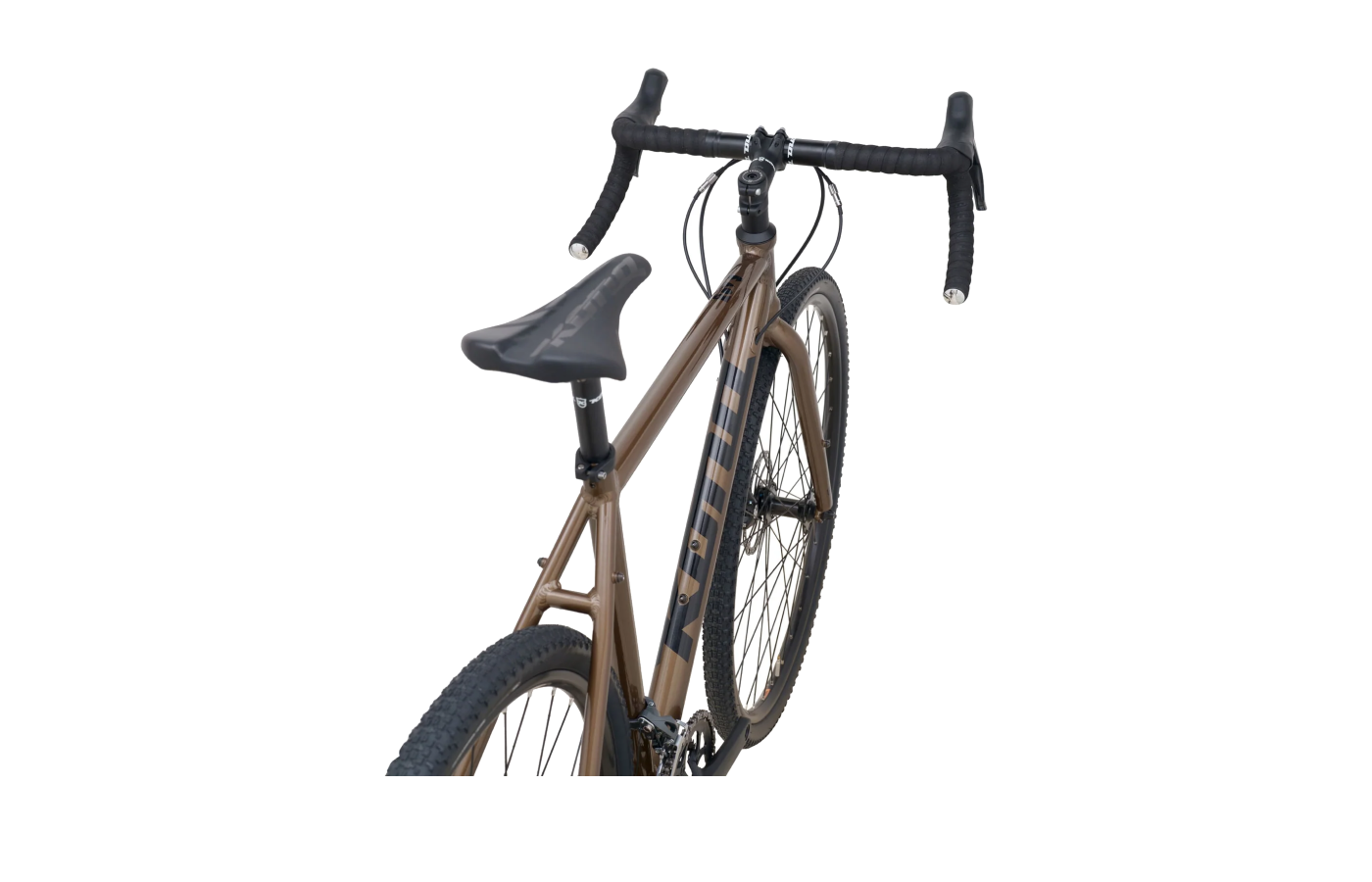
Rove
The Kona Rove sits a notch sportier than the Sutra in Kona's own line — same steel-bike feel but with less touring-specific kit, making it a better fit for riders leaning toward spirited gravel days over fully loaded expeditions.
Compare →