San Quentin
vsMarlin
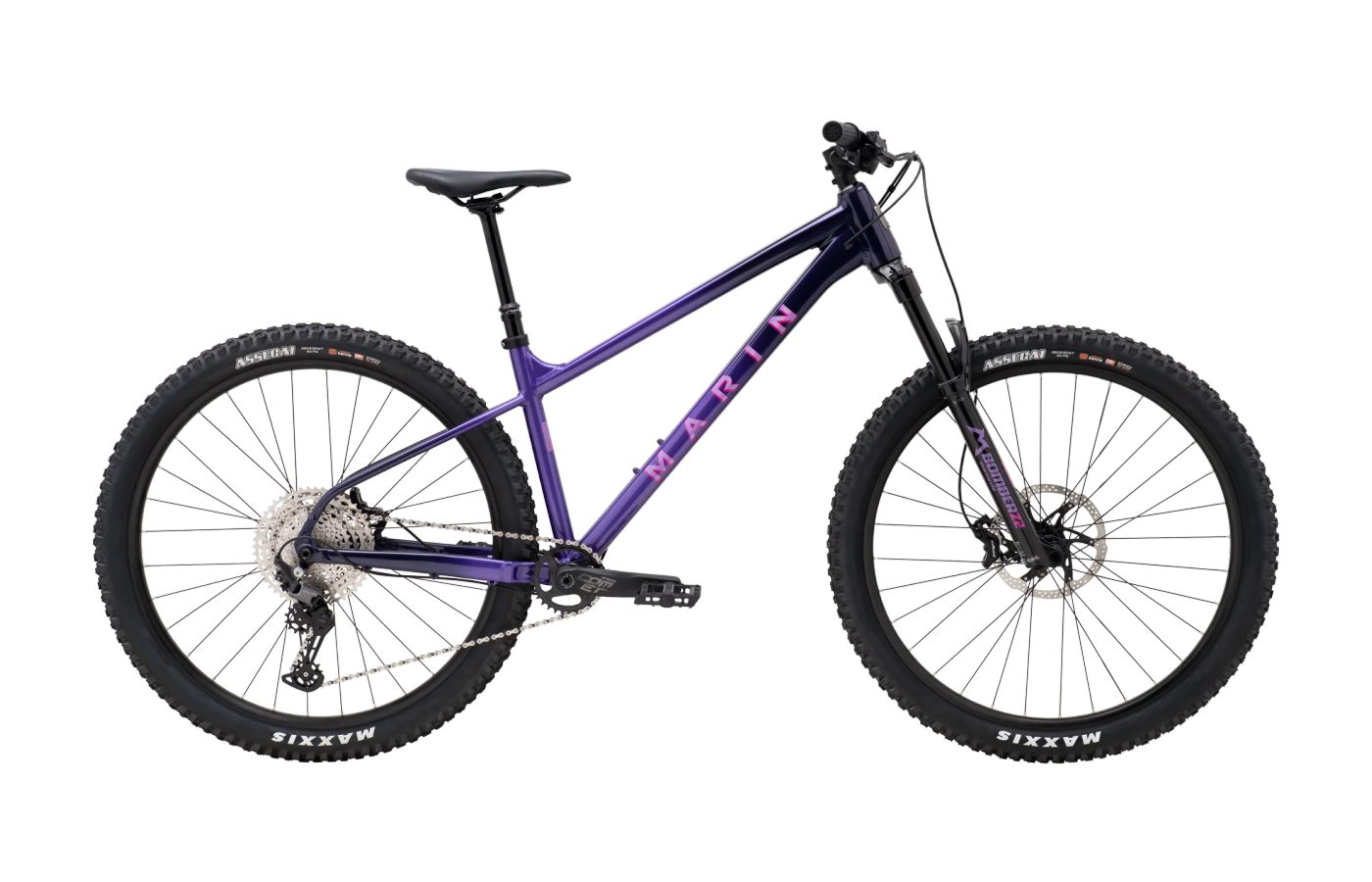
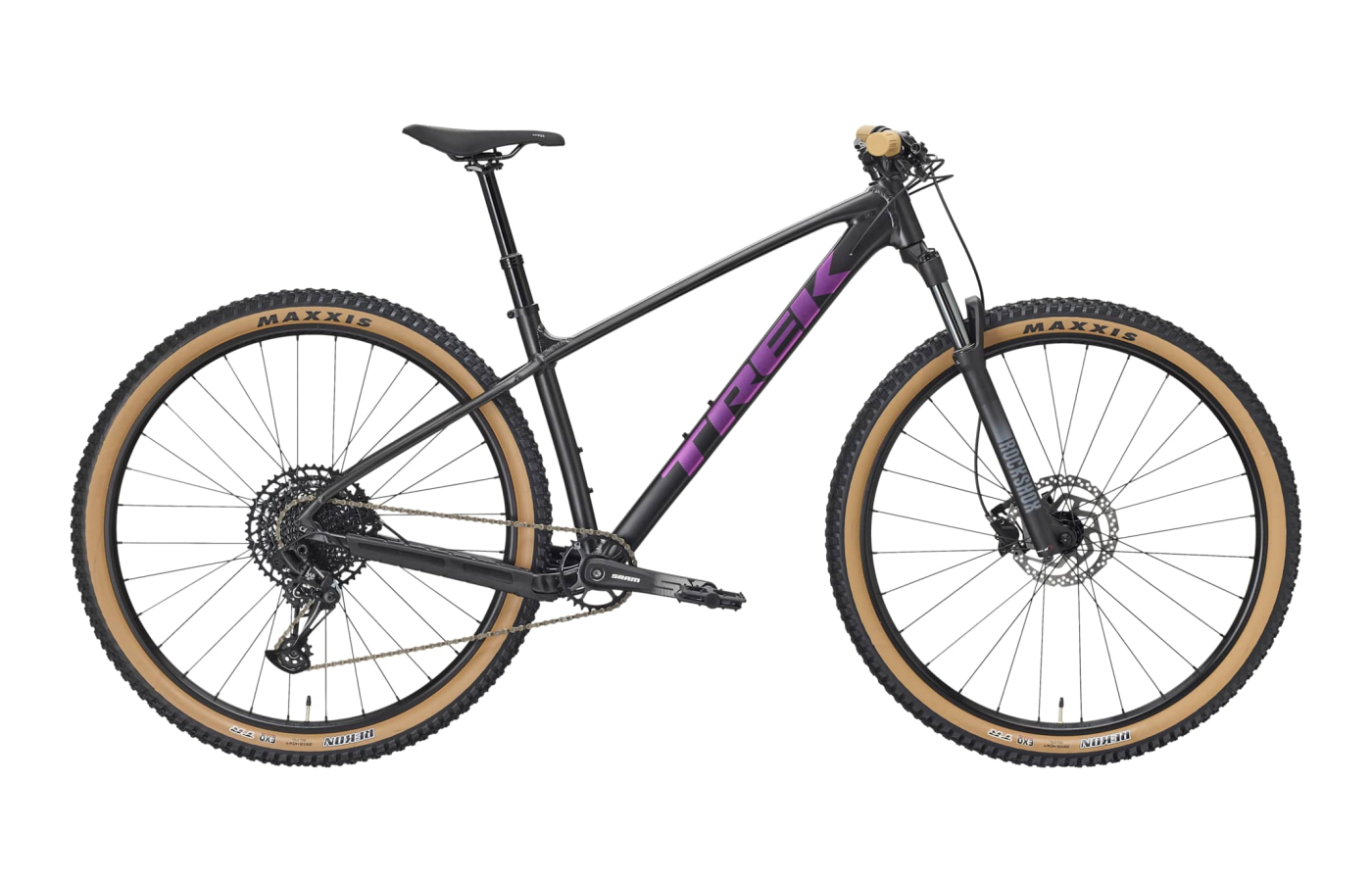
Two aluminum hardtails, two completely different jobs.
The San Quentin is a hardcore trail bike with dirt-jump DNA. The Marlin is a do-it-all entry-level hardtail built to commute, cruise, and dabble on dirt.
San Quentin
- Hardcore-hardtail geometry — 64-degree head angle and 425 mm chainstays at a price most competitors charge for XC fit.
- Trail-ready out of the box — Marzocchi Z2 fork, Deore 12-speed, and 4-piston brakes that reviewers say need zero upgrades.
- Surprisingly compliant frame — thin seat stays earn comparisons to bikes like the Banshee Paradox.
- Heavy, slow-rolling Assegai tires punish efficiency on flat or smooth terrain.
- Cheapest build (San Quentin 1) has flawed components — the SQ3 is the build the platform was designed around.
Marlin
- True dual-duty hardtail — rack, fender, and kickstand mounts make it as competent on the commute as on light singletrack.
- Modern Gen 3 geometry — a 3-degree slacker head angle than Gen 2 turned the Marlin into a real trail bike, not a hybrid with a fork.
- Trek's lifetime frame warranty — rare at this price and a real reason new riders pick it.
- 100 mm fork and QR/ThruSkew axles cap how hard the bike can be pushed on technical trails.
- SRAM SX Eagle drivetrain on the top build feels cheap and breaks easily — Shimano Deore would be the better long-term spec.
Editor’s analysis
Same category on paper, almost nothing in common on the trail — one is built to charge, the other to get you started.
Both bikes sit in the aluminum-hardtail bracket and both top out under $2k, which is roughly where the similarity ends. The Marin San Quentin is a 64-degree head angle, 140 mm-fork hardcore hardtail aimed at jump lines and technical descents. The Trek Marlin is a 66.5-degree, 100 mm-fork XC/commuter platform with rack and kickstand mounts. They share a wheel count and a frame material — that's about it.
Geometry tells the story. At size M, the San Quentin runs a slack 64-degree head tube, a steep 77-degree seat angle, and short 425 mm chainstays — numbers that show up in modern enduro hardtails costing twice as much. The Marlin's 66.5-degree front end and 438 mm chainstays are a meaningful update from previous Marlins, but they're tuned for stability on green and blue trails, not for charging black diamonds. Reviewers consistently flag the Marlin as 'easily overwhelmed' once the trail gets fast and rough.
The component spec follows the same split. The Marin San Quentin 3 ($1,999) ships with a 140 mm Marzocchi Bomber Z2 air fork, Shimano Deore 12-speed, TRP Slate 4-piston brakes with a 203 mm front rotor, and Maxxis Assegai 2.5" tires — a build that reviewers say doesn't need a single upgrade. The Marlin 7 Gen 3 ($1,399) brings a 100 mm RockShox Judy Silver air fork, SRAM SX Eagle 12-speed, Shimano 2-piston brakes, and Maxxis Rekon 2.4" tires. The Marlin's parts are appropriate for what it does; they aren't trying to do what the San Quentin does.
Put another way: the Marin San Quentin is the bike you buy when you already know you want to ride trails aggressively. The Trek Marlin is the bike you buy when you're not sure yet — and want one bike that can handle the bike path on Tuesday and a green singletrack loop on Saturday.
Where the builds differ.
Comparing our editor's-pick builds side-by-side. Winners highlighted row-by-row — lower price and weight, and the better-spec component, each mark a point.
Build variants & pricing
The San Quentin spans $1,049 to $1,999 across three builds; the Marlin runs from $629 to $1,399 across four. The editor's picks below are the top builds of each platform.
Prices are current US MSRP. The picks aren't price-matched — the Marin San Quentin 3 ($1,999) sits $600 above the Marlin 7 Gen 3 ($1,399) — but they are the most comparable air-fork, 12-speed builds in each lineup, and the categories diverge below this point. Marin doesn't sell a sub-$1k San Quentin variant the way Trek sells the Marlin 4 and 5.
How they fit, how they steer.
Both at size M. The San Quentin's head tube is 2.5 degrees slacker (64 vs 66.5), its seat tube 3.6 degrees steeper (77 vs 73.4), and its chainstays 13 mm shorter (425 vs 438) — the geometry is built for charging, not for cruising.
Which size should I buy?
Size recommendations based on stack, reach, and effective top tube. The Marlin offers a wider size range (XS through XXL); the San Quentin runs from S through XL only.
→These are starting points. Flexibility, riding style, and preferred position all shift the answer — if you’re between sizes, a professional fit beats a chart.
What the magazines said.
Published reviews from trusted cycling outlets. Click through for the full write-up.
Which one should you buy?
If you want to ride trails aggressively, get the San Quentin. If you want one bike that does the commute, the bike path, and the occasional trail loop, get the Marlin.
San Quentin
If your weekends involve jump lines, technical descents, or rocky enduro trails — and you want a hardtail that can keep up — the San Quentin 3 is the pick. The geometry and component spec are the real deal at the price.
Marlin
If you're getting into mountain biking or want a single bike that can commute Monday through Friday and hit a green or blue trail on the weekend, the Marlin 7 Gen 3 is the safer, more versatile pick. Modern geometry, a name-brand warranty, and rack mounts that make it actually useful Monday morning.
Questions buyers actually ask.
Short answers to the things we get emailed about most often.
01Which bike is better for a complete beginner?
The Trek Marlin, by a wide margin. The Marlin Gen 3 is built specifically for new riders — a balanced 66.5-degree head angle, an upright sporty fit, hydraulic disc brakes from the Marlin 5 and up, and rack/fender mounts so it doubles as a commuter. The Marlin 5 at $849 and the Marlin 6 at $999 are both legitimate first-bike picks.
The Marin San Quentin's 64-degree head angle and 140 mm fork are tuned for aggressive descending. A first-time rider would be over-biked and over-budget — and the slack front end can feel vague at low speeds on flat trails.
02Which one is faster on flat ground or smooth trails?
The Trek Marlin. Reviewers consistently call out the San Quentin 3's Maxxis Assegai 2.5" tires as 'feeling like tar' on smooth or flat terrain — they grip exceptionally well but roll slowly. The Marlin 7's Maxxis Rekon 2.4" tires are noticeably faster on hardpack, and the bike's lighter rotational weight and steeper head angle make it easier to maintain speed on a fire road or bike path.
If most of your riding is mellow singletrack, gravel, or commuting, the San Quentin will feel like it's working against you.
03Which one is better for technical descents and jumps?
The Marin San Quentin, and not by a small margin. Its 64-degree head tube angle, 140 mm Marzocchi Z2 fork, short 425 mm chainstays, and 4-piston TRP brakes with a 203 mm front rotor are built for the kind of riding the Marlin's chassis explicitly can't handle. Reviewers describe the Marlin as 'easily overwhelmed' on fast and rough terrain.
If you ride jump lines, rocky descents, or want a hardtail that can session bike-park flow trails, the San Quentin 3 is the bike.
04How does the suspension differ?
Marin San Quentin 3: 140 mm Marzocchi Bomber Z2 air fork with rebound and compression adjustment — reviewers consistently rate it as one of the better forks at this price. The lower-spec San Quentin 2 drops to a 140 mm X-Fusion Slide; the SQ1 uses a basic 130 mm SR Suntour XCM34 coil.
Trek Marlin 7 / 8: 100 mm RockShox Judy Silver air fork with hydraulic lockout. Solid for the price but limited by the QR axle, which reviewers note can feel 'twangy' under load. The Marlin 5 and 4 step down to coil SR Suntour forks without lockout.
05Are the frames upgrade-friendly long-term?
San Quentin uses modern standards across the board — 12x148 mm Boost thru-axle, tapered head tube, ISCG mounts, dropper-routed. You can throw a longer fork, better wheelset, or burlier brakes at it without hitting standards walls.
Marlin Gen 3 is more limited. The straight (non-tapered) 1 1/8" head tube means a fork upgrade also requires a new headset. The 135x5 mm 'ThruSkew' rear and QR front limit aftermarket wheel options. The frame can take a 120 mm fork, but reviewers note that riders with serious upgrade ambitions are better off stepping up to the Trek Roscoe.
06Which has the better warranty and support?
Both come with lifetime frame warranties to the original owner. Trek's dealer network is significantly larger in the US — for a first-time mountain biker, walking into a local Trek shop for fit, service, or warranty questions is meaningfully easier. Marin has fewer dealers but the same warranty coverage. Both brands honor crash-replacement programs (typically 30-50% off a replacement frame) on a case-by-case basis.
07Can either one handle bikepacking or long gravel rides?
The Marlin is the more obvious bikepacking platform — it's built with rack, fender, and kickstand mounts and the geometry is comfortable for sustained seated pedaling. Pair it with a faster-rolling tire and it's a credible adventure bike.
The San Quentin will physically do it, but the steep seat tube and aggressive Assegai tires aren't ideal for long days in the saddle. Reviewers specifically note that the SQ1's seat angle 'puts weight through your hands and sit bones' on long flat sections.
08What size should a 5'8" rider get?
Both bikes fit a size Medium for a 5'8" / 173 cm rider — that's the size shown in the geometry comparison above. The Marlin offers more sizing granularity (XS, S, M, ML, L, XL, XXL) so taller and shorter riders have more options; the San Quentin runs S through XL only. If you're between sizes on the Marlin, the ML adds 15 mm of reach without adding stack — a useful step for riders around 5'10".
Similar bikes
If your priorities don’t map cleanly onto either of these, one of these adjacent bikes probably fits better.
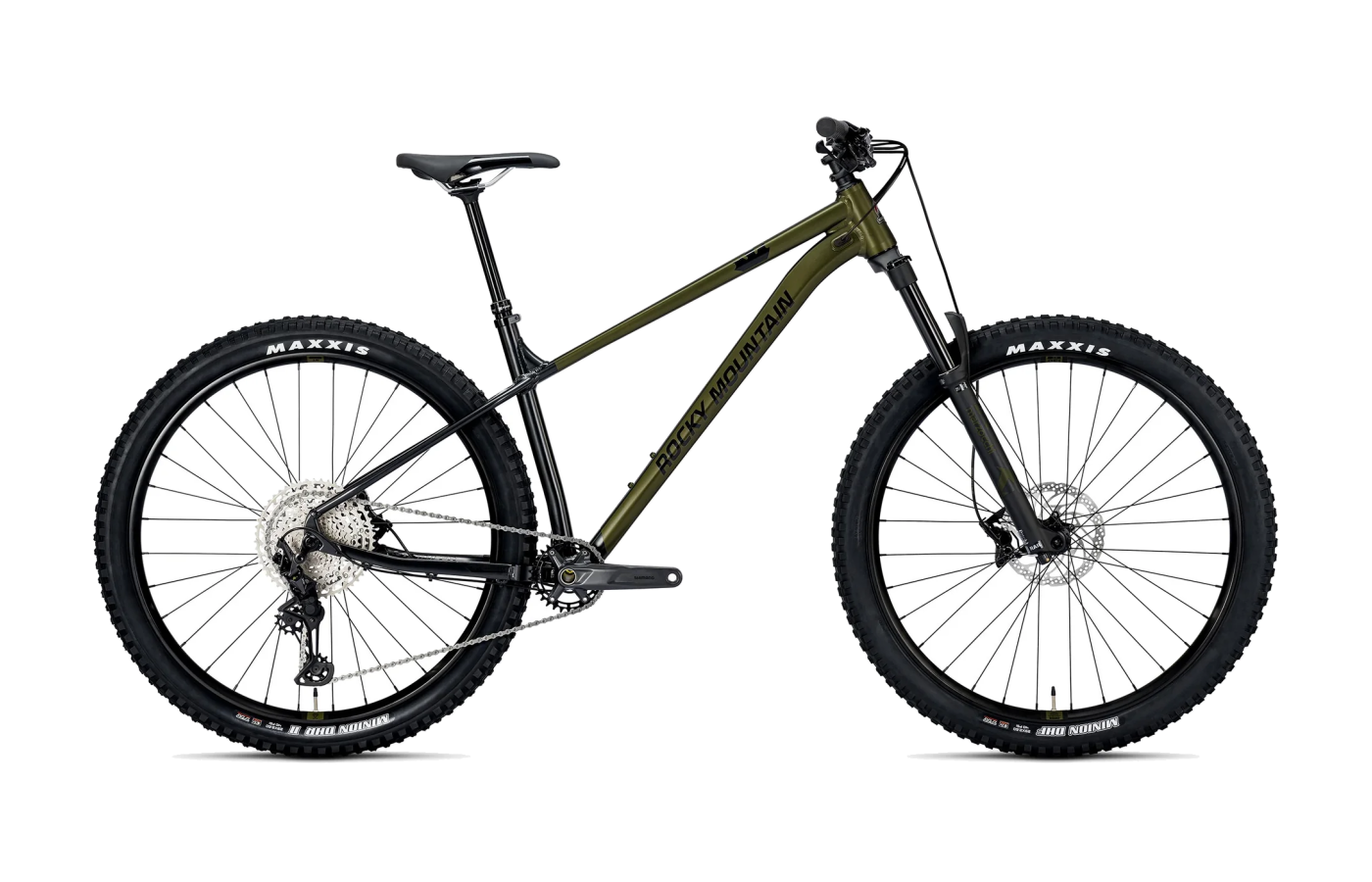
Growler
Another aggressive hardcore hardtail in the San Quentin's category — more planted at speed and less playful. A good cross-shop for riders who prefer high-speed stability over manualing and popping.
Compare →Roscoe
Trek's step up from the Marlin — more travel, slacker geometry, and burlier components. Closer in spirit to the San Quentin without leaving the Trek dealer network.
Compare →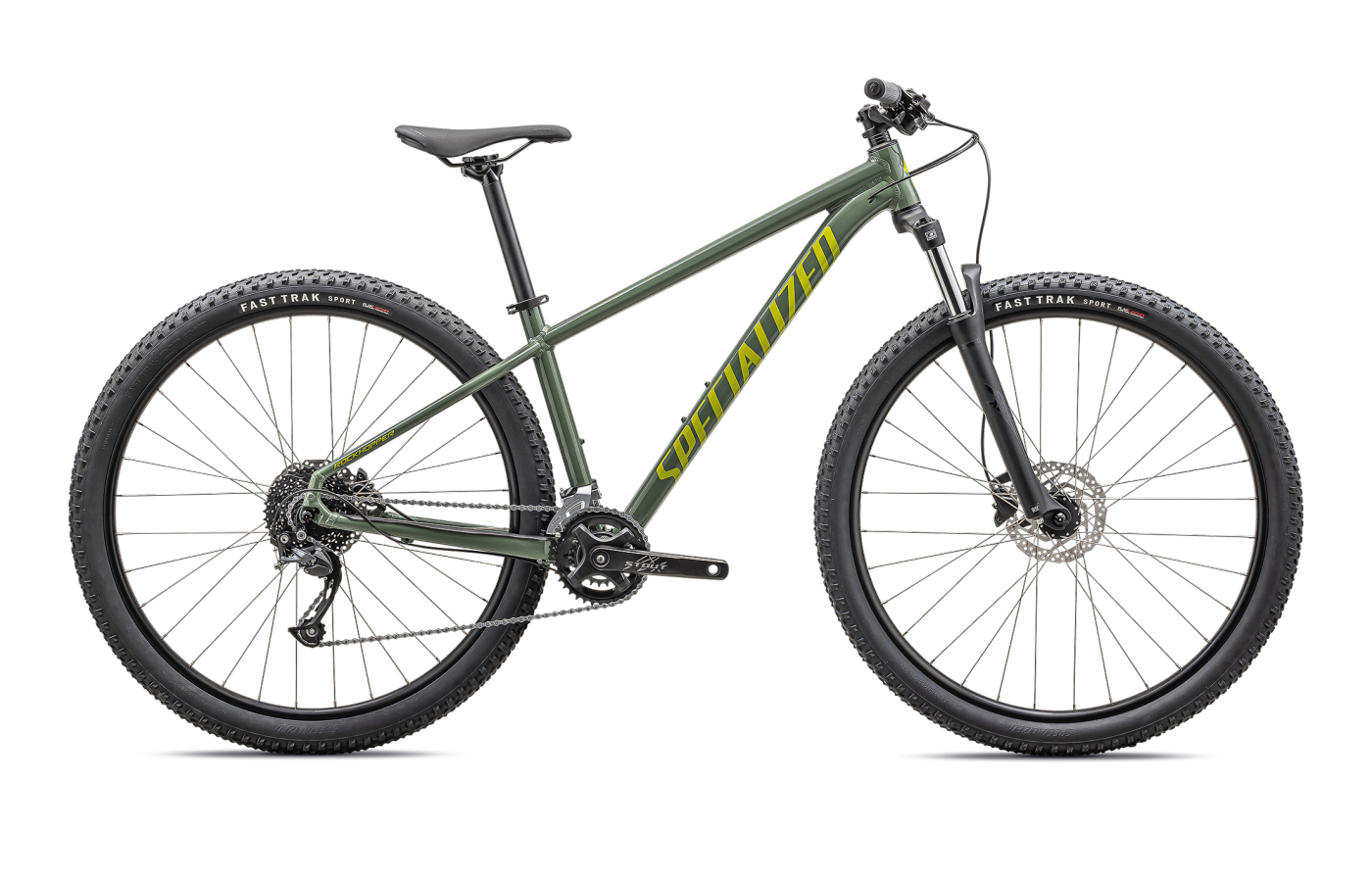
Rockhopper
Specialized's entry-level hardtail and the most direct cross-shop for the Marlin. Similar dual-duty intent and price band, with a similarly broad size range.
Compare →