Dogma XC
vsSupercaliber
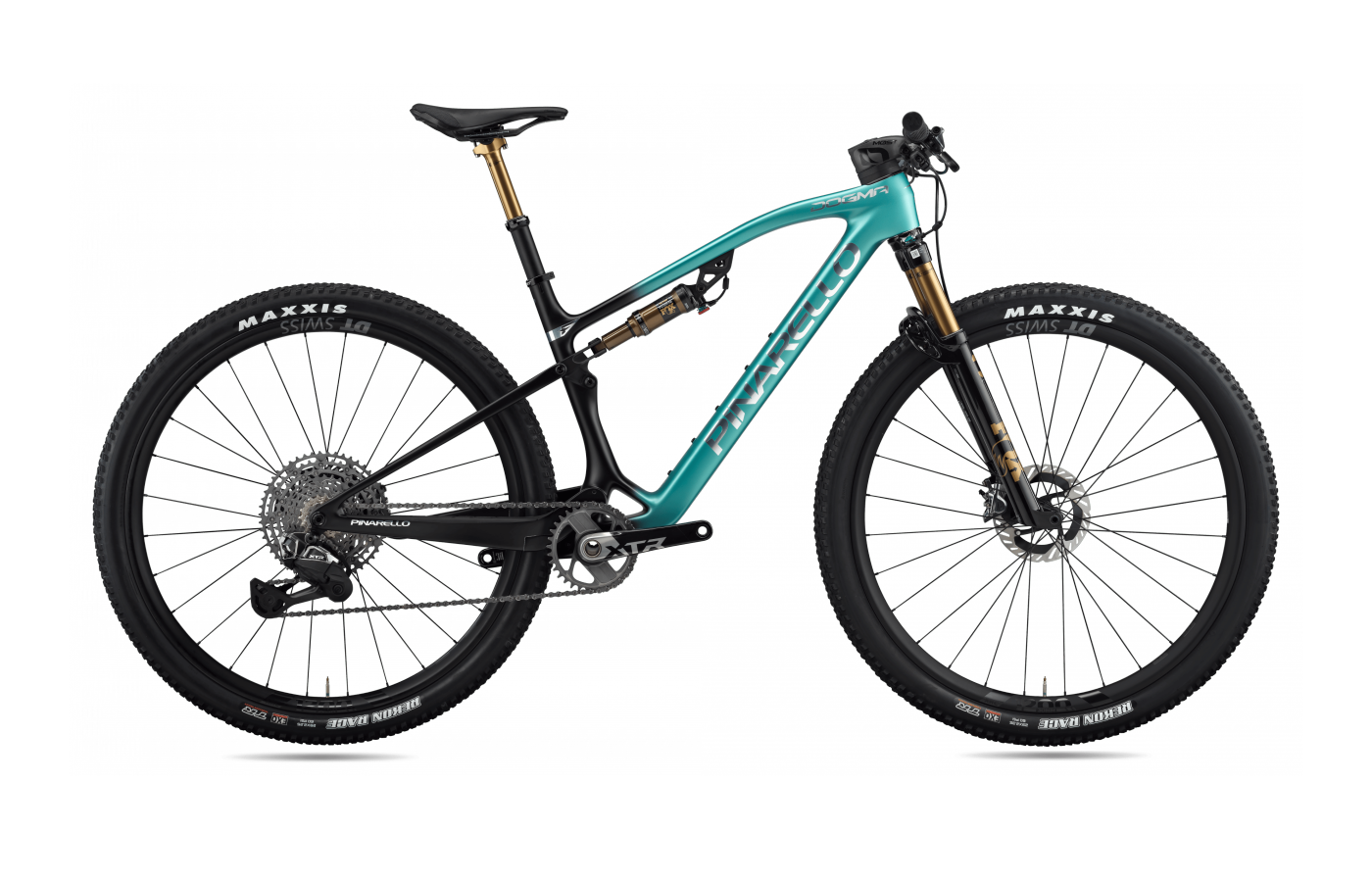
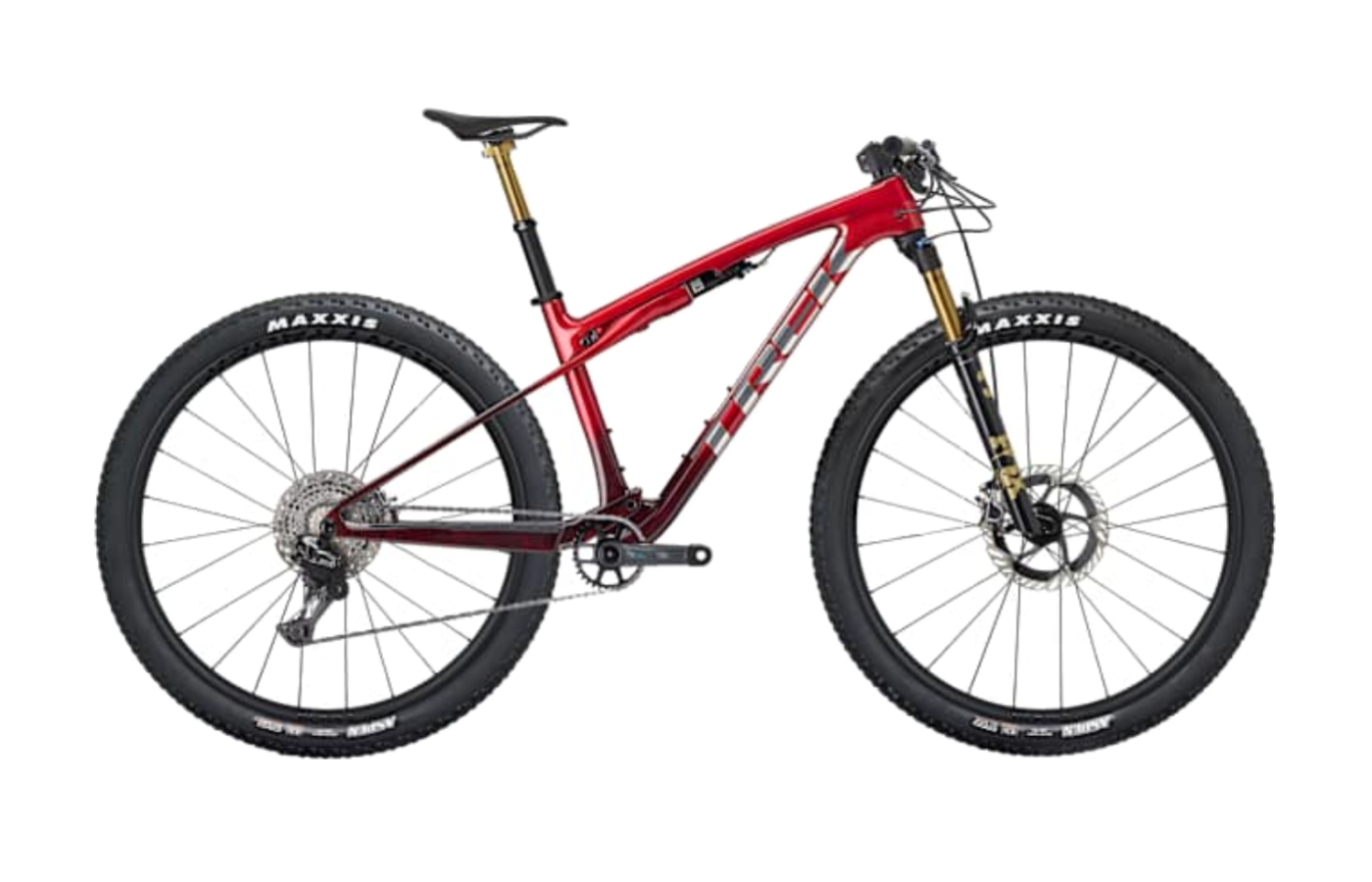
Two Olympic-grade XC weapons, two opposite philosophies.
The Dogma XC is the unfiltered race tool built around Pidcock's stiffness wishlist. The Supercaliber Gen 2 is the IsoStrut hardtail-replacement, refined for the modern technical XC course.
Dogma XC
- Unmatched chassis stiffness — Toray M40J carbon, triangulated BB area, asymmetric chainstays. Every watt goes to the rear wheel.
- More rear travel than the Supercaliber (100 mm vs. 80 mm), with a shock-mount swap to drop to 90 mm rear / 100 mm front for pure-XC courses.
- Twitchy, agile front end — short 427.5 mm chainstays and a stiff cockpit make it turn "on a dime" in tight switchbacks.
- Conservative 67.5-69.75-degree head tube and stiff cockpit make modern technical descents demanding — Pinkbike calls it "frightening" on steeps.
- $8,000 entry price with no truly affordable build; only four configurations exist.
Supercaliber
- Modern XC geometry — 67.5-degree head tube, 1153 mm wheelbase in ML, dropper post standard on every build. Confident on technical descents.
- Wide build range from $4,799 SL 9.6 up to $14,999 Flight Attendant — eight builds including the SL frame as a value entry.
- Wider tires stock (2.4 inch on most builds, vs. Pinarello's 2.25). Reviewers consistently said tire width unlocks the Supercaliber's descending potential.
- Only 80 mm of rear travel — bottoms out "harshly" on chunky terrain, and there's no easy shock-mount swap.
- IsoStrut needs ~10 hours of break-in (or extra lube) before it stops feeling stubborn out of the box.
Editor’s analysis
Both will win you a World Cup if your legs cooperate. Only one of them will be pleasant to ride afterwards.
On paper these bikes look like cousins: top-of-the-market XC race chassis, integrated cockpits, full Shimano XTR Di2 builds, both ridden to gold medals in the last two Olympic cycles. Spend a single hour reading reviews and the family resemblance breaks down. The Pinarello Dogma XC was developed inside three months by Tom Pidcock and Pauline Ferrand-Prevot with one stated priority: maximum stiffness. The Trek Supercaliber was redesigned to soften the Gen 1's nervous edges — slacker head tube, longer wheelbase, more travel.
The Dogma XC has more travel on paper — 100 mm rear / 100 mm front (with a 90/100 mm shock-mount option) versus the Supercaliber's 80 mm IsoStrut and 110 mm fork — but that does not translate to a softer ride. Reviewers describe the Pinarello as a "rigid chassis" that's "more frightening to ride on technical, steep descents," with one tester saying it "feels like a time trial bike on descents." The 69.75-degree head tube angle, 75.45-degree seat tube, and -18-degree integrated stem put you in a hyper-stretched road-racer position that reviewers say excels on hard-packed climbs and punishes you everywhere else.
The Supercaliber is a different argument. Trek slackened the head tube to 67.5 degrees, stretched the wheelbase, and built a structurally-loaded RockShox SIDLuxe IsoStrut shock that reviewers consistently call "telepathic" and "ruthlessly efficient." It bridges the gap between a hardtail and a 120 mm trail-XC bike: enough travel to keep you out of trouble, not so much that the pedaling response goes soft. Anti-squat is high — there's noticeable pedal kickback on rocky chatter — and the shock needs ~10 hours to bed in, but once it does, multiple reviewers call it the fastest XC bike they've ridden.
Put another way: the Dogma XC is a frame-up race weapon for riders who already win on hardtails and want a touch of squish for the rough stuff. The Supercaliber is a more honest full-suspension race bike — more capable when the course gets technical, and far more livable for the racer who actually rides their race bike during the week.
Where the builds differ.
Comparing our editor's-pick builds side-by-side. Winners highlighted row-by-row — lower price and weight, and the better-spec component, each mark a point.
Build variants & pricing
Pinarello sells four builds, all premium. Trek sells eight, from $4,799 to $14,999, including a value-tier SL frame.
Prices are current US MSRP. The XTR Di2 picks compare apples-to-apples — same drivetrain, same top carbon — but the Trek lands $2,500 cheaper. Pinarello's range simply doesn't go below $8,000; if your budget is under that, the Supercaliber SL is the only option in this comparison.
How they fit, how they steer.
Both at the fit-picked frame for a 5'8" rider — Pinarello M, Trek ML. Reach is within 5 mm (Pinarello 455 vs. Trek 450) and stack is within half a millimeter, but everything else diverges: head tube 2.25 degrees steeper on the Pinarello, seat tube 4.45 degrees steeper, chainstays 7.5 mm shorter.
Which size should I buy?
Pinarello runs S/M/L/XL; Trek adds an ML between M and L, which is what lands the Trek in a different size label for the same rider.
→These are starting points. Flexibility, riding style, and preferred position all shift the answer — if you’re between sizes, a professional fit beats a chart.
What the magazines said.
Published reviews from trusted cycling outlets. Click through for the full write-up.
Which one should you buy?
If you want the stiffest race bike money can buy and you're built like a pro, get the Dogma. If you want an XC race bike you can also descend fast on, get the Supercaliber.
Dogma XC
If your idea of a great ride is a hard-packed climb, you have a road or cyclocross background, and you can deal with a stiff, hyper-stretched cockpit on the descents — the Dogma XC delivers an unfiltered race experience that nothing else in the segment matches. It's the bike Pidcock asked for.
Supercaliber
If you race the modern World Cup-style course with chunky descents, want a dropper standard, and value a chassis that's still telepathic but won't beat you up — the Supercaliber Gen 2 is the smarter race bike for most riders. It also costs less and offers far more build options.
Questions buyers actually ask.
Short answers to the things we get emailed about most often.
01Which one descends better?
The Trek Supercaliber Gen 2, by a clear margin. Trek's 67.5-degree head tube angle, 1153 mm ML wheelbase, and standard dropper post combine to make it the more confident descender — reviewers describe it as "planted" and "predictable" at speed.
The Pinarello Dogma XC sits at a steeper 69.75-degree head tube with a -18-degree stem and an aggressive forward bias. Pinkbike called it "more frightening to ride on technical, steep descents," and Guy Kesteven said it "feels like a time trial bike on descents." Skilled racers can ride it fast — Pidcock obviously does — but it punishes the average rider on technical terrain.
02Which one climbs better?
Both are exceptional climbers, but they get there differently. The Pinarello Dogma XC is praised as a "rocket ship" on ascents — its hyper-stretched riding position and uncompromising stiffness make seated and standing power transfer essentially perfect on smooth gradients.
The Supercaliber Gen 2 is described as a "mountain goat" with "ridiculous urgency under power." Trek raised the main pivot 10 mm in Gen 2 to boost anti-squat, and the IsoStrut barely moves while pedaling. The trade-off is noticeable pedal kickback on rocky climbs.
For smooth fire-road climbs the Pinarello has the edge. On technical climbs with roots and chatter, the Supercaliber's slight bit of suspension activity often translates to better real-world traction.
03How much travel does each have?
Pinarello Dogma XC: 100 mm rear / 100 mm front in stock trim. The XX SL 120 build runs 100 mm rear / 120 mm front via a longer shock and Fox 34 fork, and the standard frame supports a 90 mm rear / 100 mm front shock-mount swap for pure XC courses.
Trek Supercaliber Gen 2: 80 mm rear (via the IsoStrut shock) / 110 mm front. There is no easy travel-adjust path — the IsoStrut is structural and the geometry is built around the 110 mm fork.
If raw travel matters to you, the Pinarello has 20 mm more rear, and a longer-travel build option.
04What about the integrated cockpits — can you adjust them?
Both bikes ship with one-piece integrated bar-stem cockpits, which is the modern XC norm. The Pinarello's Most Talon Ultra XC features a -18-degree negative-rise stem in 60-80 mm lengths, with a pronounced wing profile. Adjusting reach or stack means buying a new unit (and one reviewer flagged "excessive expense for replacement" in a crash).
The Trek's Bontrager RSL Integrated uses a -13-degree stem in 70/80/90 mm lengths depending on frame size. Same one-piece construction, same crash-replacement consideration. Trek's mid-tier SL builds (SL 9.7 and SL 9.6) ship with separate Bontrager Elite stem and bar instead, which is cheaper to service and adjust.
05Which one fits wider tires?
Trek Supercaliber Gen 2: 61 mm of tire clearance, with most builds shipping 29x2.4-inch tires (Bontrager Sainte-Anne RSL XR or Maxxis Aspen). Reviewers consistently noted that the 2.4 width is what unlocks the bike's descending capability.
Pinarello Dogma XC: 57.1 mm of clearance, with all four builds shipping 29x2.25 Maxxis Rekon Race tires.
Neither is a trail bike, but if you ride loose-over-hardpack or rocky XC the extra Trek width is meaningful.
06Why is the Pinarello so much more expensive at the entry level?
Pinarello's lineup is concise: four builds, $8,000 to $14,000. The base "100" build at $8,000 uses lower-grade Toray T900 UD carbon, SRAM GX Eagle AXS, and DT Swiss XR 1700 alloy wheels — the same shape as the flagship, with cheaper materials and parts.
Trek opens at $4,799 with the SL 9.6, which uses the slightly heavier SL OCLV carbon main frame but the same redesigned IsoStrut and rear triangle as the SLR. That's a fundamentally wider price spread — Trek built an explicit value tier into the platform; Pinarello did not.
07Are they both XC race bikes, or can one double as a trail bike?
Both are XC race bikes first. Neither is a substitute for a 120-130 mm trail bike.
The Supercaliber Gen 2 is closer to crossover-capable thanks to dropper-standard, 2.4-inch tires, and modern geometry — but reviewers still recommended a Trek Top Fuel for all-day epic rides on rough trails.
The Dogma XC is harder to recommend outside racing. The aggressive position, stiff cockpit, and conservative geometry mean reviewers explicitly noted neck and hand fatigue on longer non-race rides.
08Does either come with a power meter stock?
Neither flagship XTR Di2 build includes a power meter — both omit it, and reviewers have called this out as a notable miss at this price point.
On the Trek side, some SLR 9.8 X0 builds spec the SRAM X0 Eagle crankset with an integrated power meter. On the Pinarello side, no stock build includes one.
If a power meter is non-negotiable, factor in $400-700 for a Quarq, 4iiii, or pedal-based aftermarket option.
Similar bikes
If your priorities don’t map cleanly onto either of these, one of these adjacent bikes probably fits better.
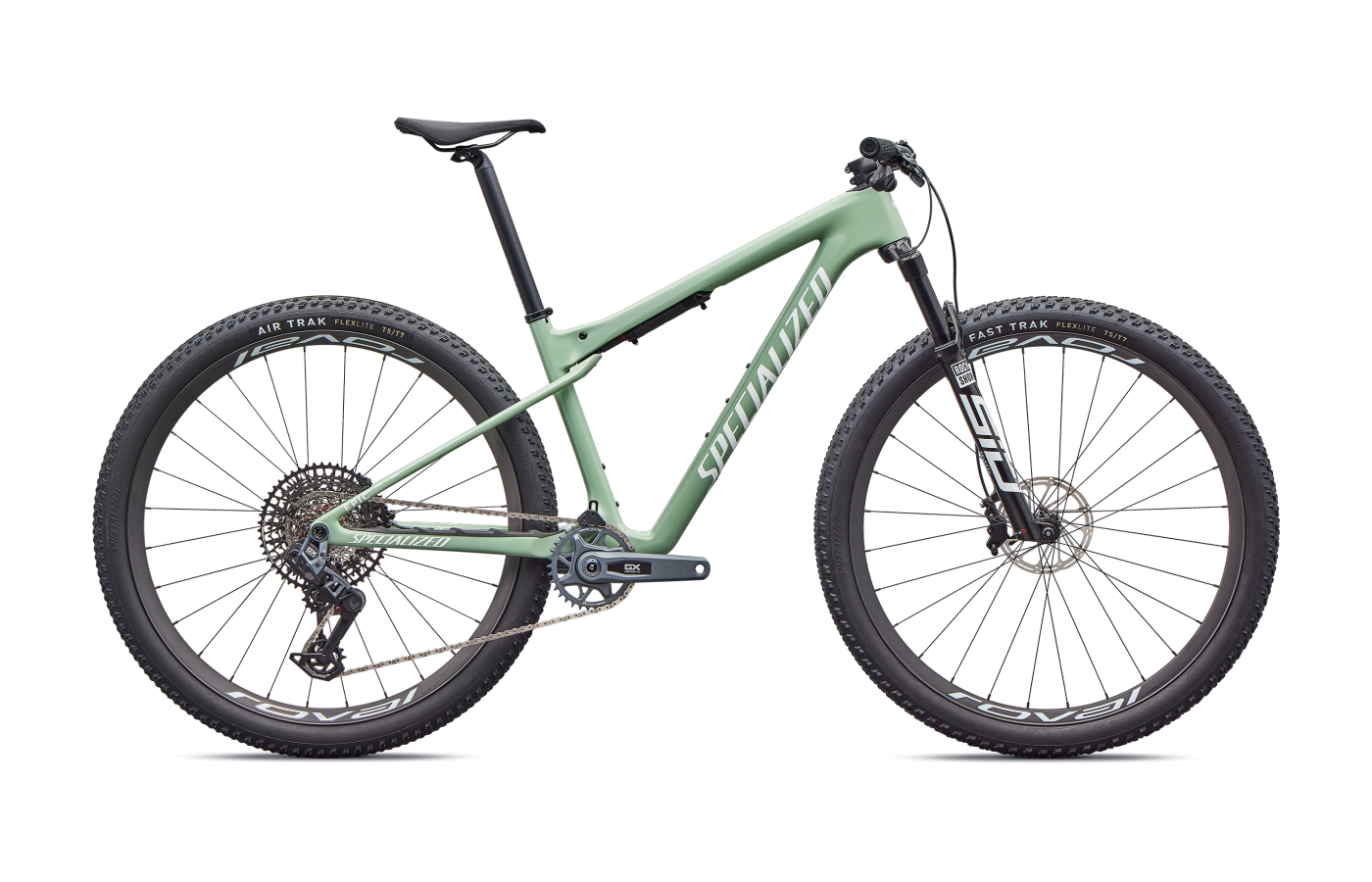
Epic World Cup
The Supercaliber's most direct rival — Specialized's pure-XC race chassis with a WCID shock and Brain damper for automatic firmness. If you like the IsoStrut philosophy but want Specialized's auto-tuning suspension, this is where you look.
Compare →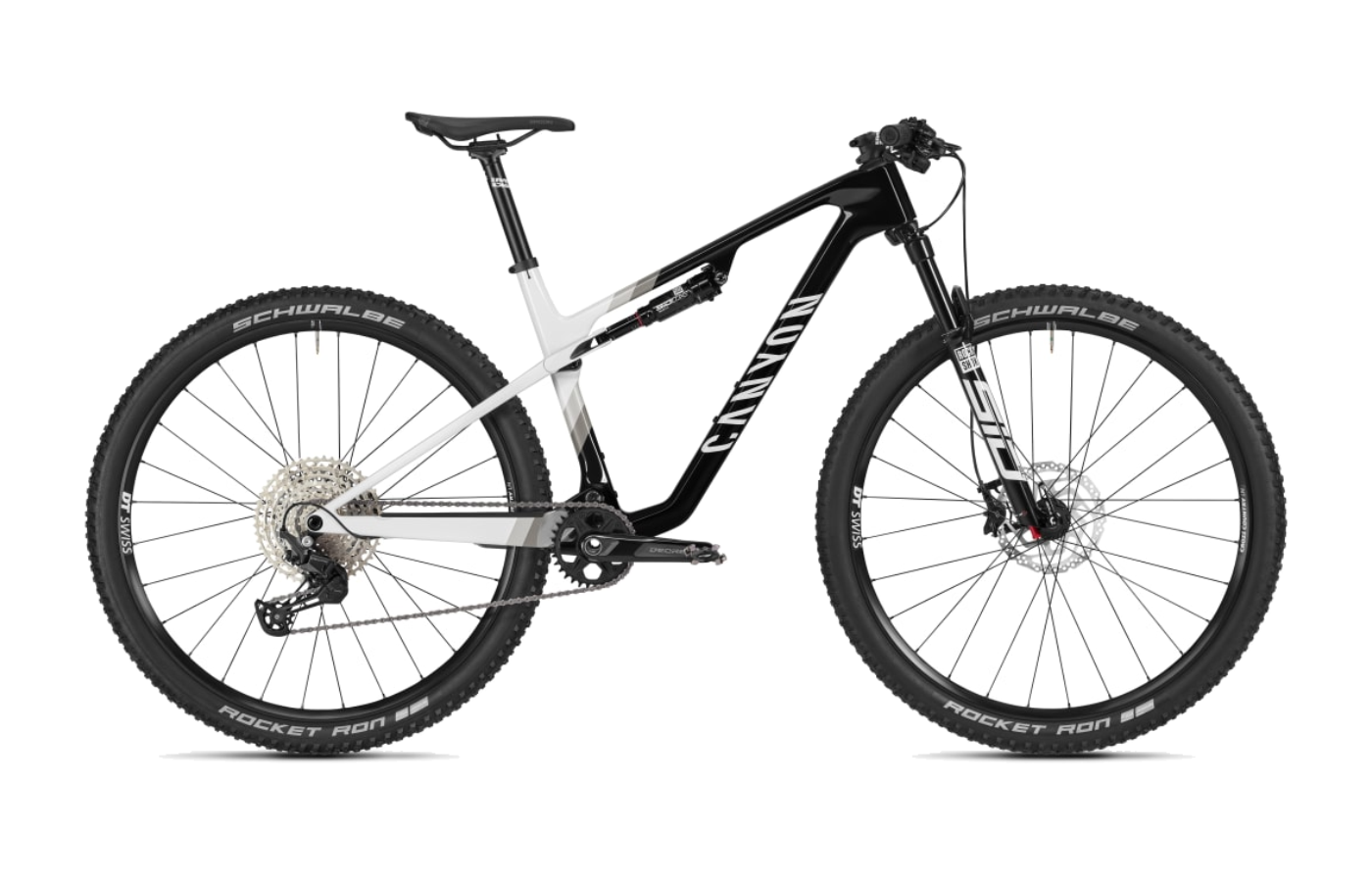
Lux World Cup
Canyon's perennial XC weight-weenie pick — direct-to-consumer pricing on a conventional, lightweight full-suspension XC platform. No proprietary shock to bed in, no cockpit lock-in, just a fast traditional race bike at notably lower money.
Compare →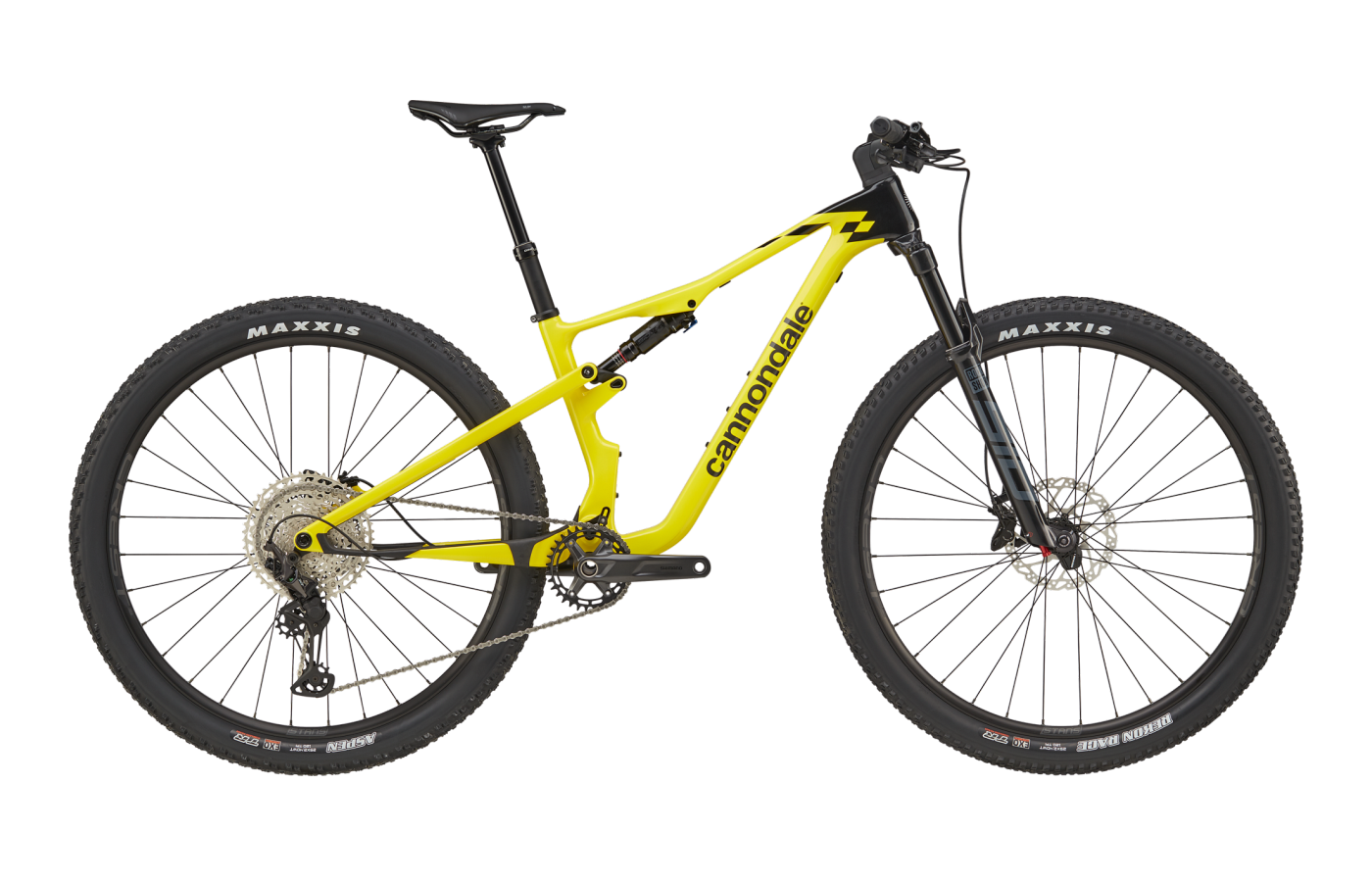
Scalpel
Cannondale's Scalpel takes the flex-stay approach with a more conventional shock layout and (on some builds) the unique Lefty fork. Praised for balancing compliance and efficiency without the proprietary-suspension lock-in of Trek or Pinarello.
Compare →