Phoenix
vsV10
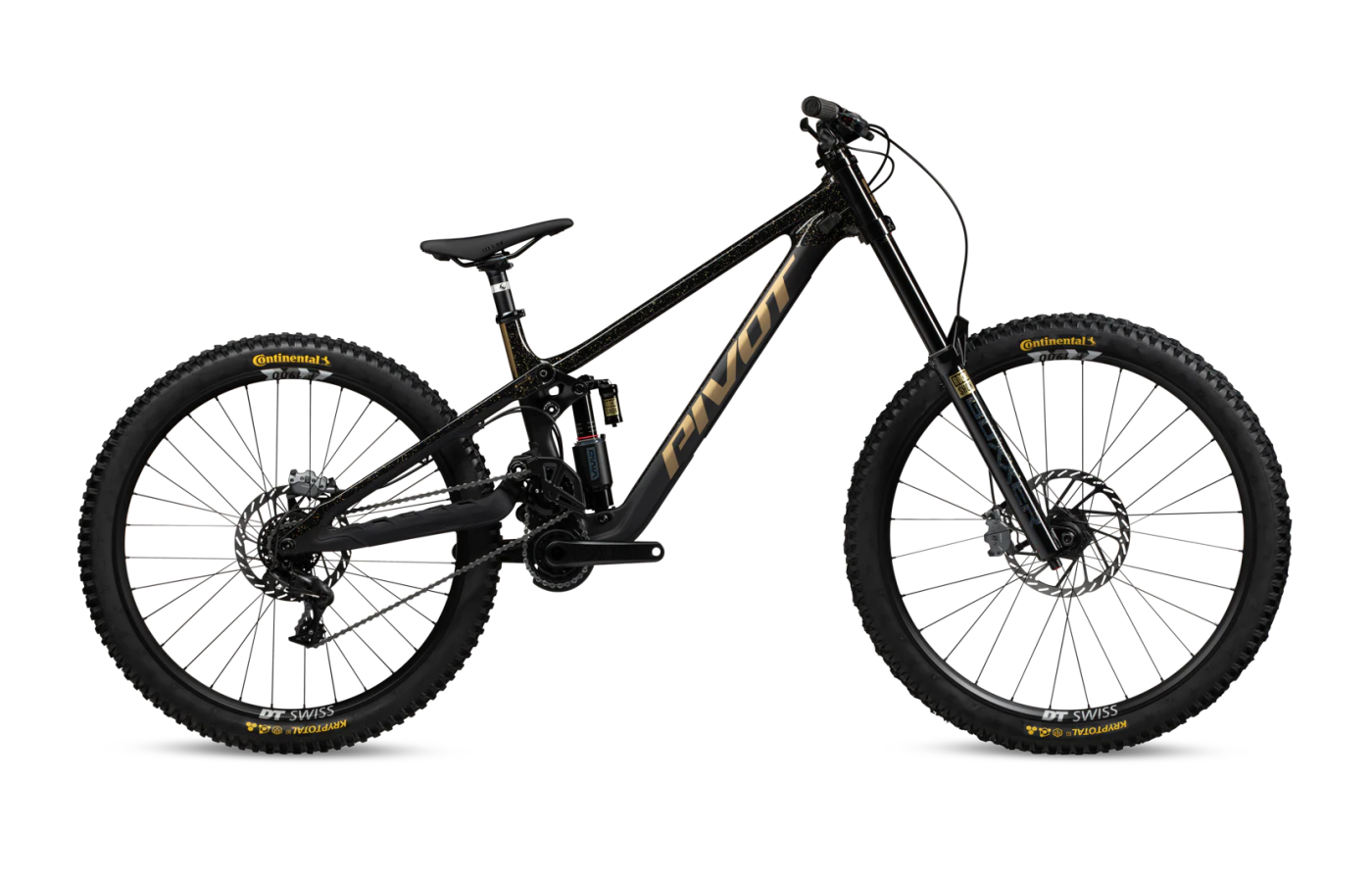
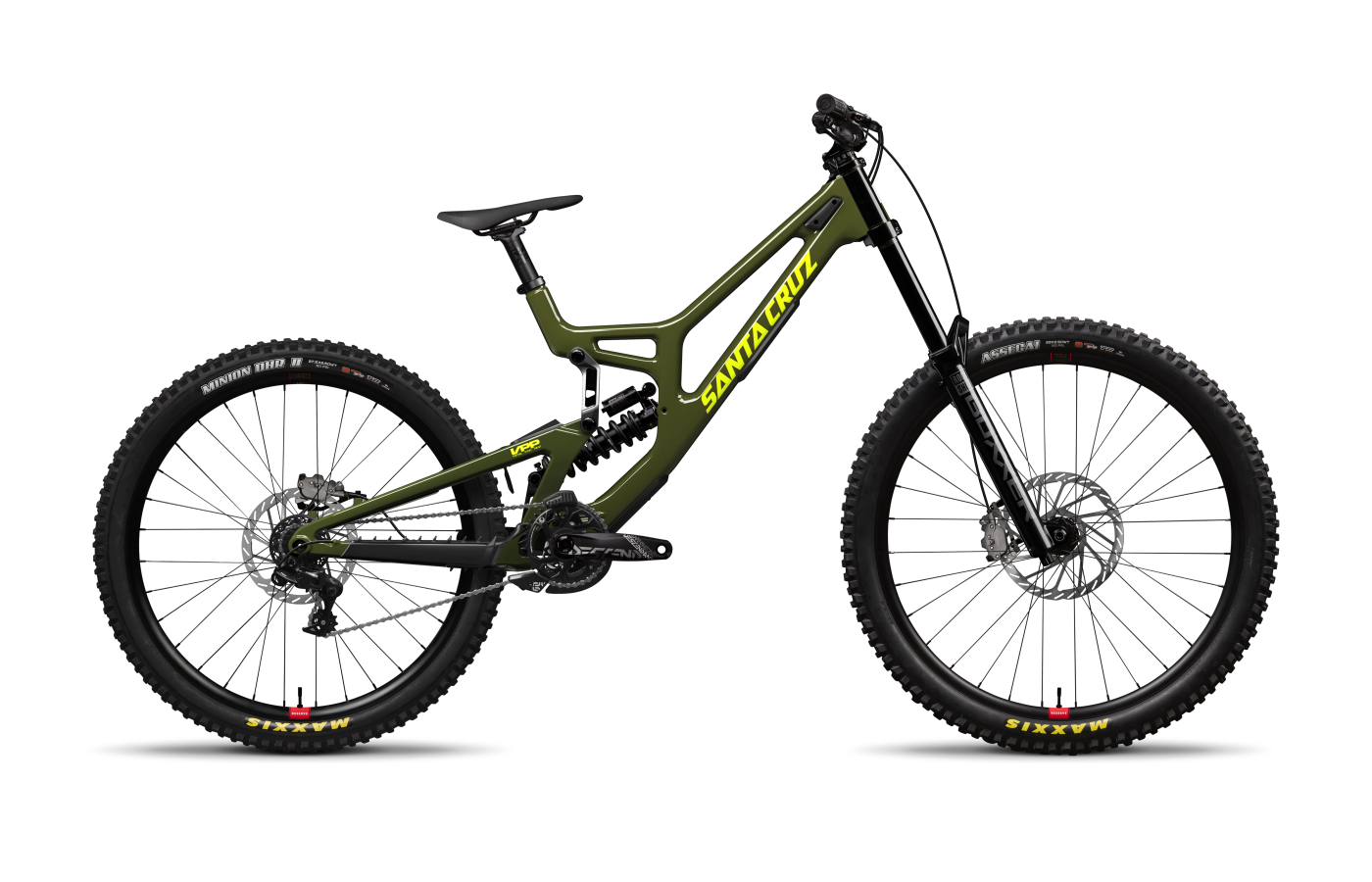
Two World Cup downhill bikes, two suspension religions.
The Pivot Phoenix is a featherweight high-pivot dual-chain experiment. The Santa Cruz V10 is the refined VPP that says no to idlers.
Phoenix
- DW6 high-pivot suspension — rearward axle path through small bumps generates traction reviewers describe as "glued to the ground."
- Genuinely light for DH at ~16.1 kg measured (size S3), among the lightest in 2024 group tests.
- Carbon cockpit on Pro Saint — Phoenix Team carbon bar, the only carbon cockpit in Enduro MTB's six-bike DH test.
- 440 mm chainstays across all four sizes — taller riders report front-end grip issues on flat corners.
- Dual-chain drivetrain needs a break-in tensioning and periodic checks for chain rattle at the intersection.
V10
- Massive in-the-box adjustability — three headset cups (+/- 8 mm reach), three chainstay lengths, and a BB/head-angle flip chip, all included.
- VPP mid-stroke support — stays poppy and pumpable instead of wallowing, with size-specific 440-465 mm chainstays.
- Lifetime frame and wheel warranty plus free pivot bearings for life — Santa Cruz's ownership package is the segment benchmark.
- Drop-in headset is a known dusty-condition creaker — needs cleaning and re-greasing more often than press-fit.
- Only the X01 build comes with the Fox DHX2 coil; lower builds use a RockShox coil.
Editor’s analysis
Same race paddock, opposite philosophies — one bike erases the bumps with rearward axle path, the other refuses the trade and engineers around it.
On paper the Pivot Phoenix and Santa Cruz V10 land in nearly the same place: 210 mm and 208 mm of rear travel, mullet wheels in the popular sizes, full-carbon frames, ~16 kg complete, prices that hover within $600 of each other. Both have World Cup pedigree — Bernard Kerr on the Phoenix, the Syndicate on the V10. From there the engineering choices diverge sharply.
The Pivot Phoenix runs Pivot's DW6 mid-high-pivot six-bar with a dual-chain mid-drive, a layout designed to give a rearward axle path through small bumps and then change direction deeper in the travel. Reviewers rave about the suspension itself — "sensitive," "super-plush," "glued to the ground" — but the bike has a 440 mm chainstay across all four sizes (S1–S4). On size S2 with a 62.5 deg head angle, that produces a sharp, agile feel testers loved on berms. Taller riders in the Pivot test reported a real struggle for front-end grip on flat corners and called the setup window "narrow."
The Santa Cruz V10 went the opposite way. The Syndicate engineers experimented with high pivots and idlers and rejected them, sticking with VPP for what they considered superior acceleration and maneuverability. The V10.8 instead leans on adjustability — three reach positions via interchangeable drop-in headset cups (+/- 8 mm), three chainstay lengths (440 / 445 / 450 mm on size M), and a flip-chip for BB height and head angle. The trade is more setup time and the occasional dusty-headset creak; the reward is a chassis riders consistently call "intuitive" and "Goldilocks," with mid-stroke support that doesn't wallow.
Put another way: the Pivot Phoenix asks you to ride aggressively forward and rewards you with mind-bending suspension. The Santa Cruz V10 asks you to spend an hour with the headset cups and rewards you with a bike that fits you specifically. If you're a privateer racer with a clear setup, the Phoenix's suspension might be the fastest thing in the paddock. If you're a bike-park regular who wants one downhill bike that adapts to whatever you're riding that weekend, the V10 is the safer bet.
Where the builds differ.
Comparing our editor's-pick builds side-by-side. Winners highlighted row-by-row — lower price and weight, and the better-spec component, each mark a point.
Build variants & pricing
Two builds per side, ~$1,500–$1,600 of range each. Both line up at GX DH on the lower build and a flagship coil setup on top.
Prices are current US MSRP. The Pivot Phoenix Pro Saint runs the Fox Float X2 air shock; the Santa Cruz V10 DH X01 ships with a Fox DHX2 coil. If you're racing long descents, that coil-vs-air difference is worth weighing.
How they fit, how they steer.
Phoenix S2 vs V10 size M — both fit-picked for a 5'8" rider. The Phoenix is 1 mm taller in stack, 13 mm longer in reach (460 vs 447 mm), and slacker by half a degree (62.5 vs 63.0). The V10 has 2 mm more chainstay (445 vs 443) and 3 mm more wheelbase.
Which size should I buy?
Both bikes recommend by reach and stack across four sizes; the Pivot uses a stack-fixed S1–S4 system, the V10 uses traditional S/M/L/XL with size-specific chainstays.
→These are starting points. Flexibility, riding style, and preferred position all shift the answer — if you’re between sizes, a professional fit beats a chart.
What the magazines said.
Published reviews from trusted cycling outlets. Click through for the full write-up.
Which one should you buy?
If you trust the Phoenix's high-pivot suspension and ride aggressively forward, get the Pivot. If you want a bike you can dial to your fit and trail, get the V10.
Phoenix
If you're chasing seconds on World Cup-style tracks and you value rear suspension that erases small bumps over chassis adaptability, the Phoenix is the sharper instrument. Light, sensitive, demanding — it rewards aggressive forward weight and punishes a passive rider.
V10
If you want one downhill bike for park laps, race weekends, and the occasional shuttle day with friends — and you'd rather adjust your bike than adjust your riding — the V10 is the rare DH platform that genuinely fits a range of riders out of the same box.
Questions buyers actually ask.
Short answers to the things we get emailed about most often.
01Which has better suspension?
Both are excellent, but the engineering philosophies are opposite. The Pivot Phoenix uses a DW6 mid-high-pivot six-bar with a dual-chain mid-drive — the rearward axle path through the early travel makes small bumps disappear, and reviewers consistently use words like "sensitive" and "glued to the ground." Pinkbike specifically credits the large 18-tooth idler and increased chain wrap for less drag than a typical high-pivot.
The Santa Cruz V10 sticks with the traditional VPP layout. Santa Cruz's engineers actually tested high-pivot prototypes and rejected them — they felt the VPP gave better acceleration and maneuverability. The V10.8's revised kinematics add mid-stroke support so it stays poppy through pumps and jumps instead of wallowing.
If you race tracks dominated by square-edge hits and rough rock gardens, the Phoenix's small-bump performance is the standout. If you ride more varied terrain with jumps and pumps, the V10's mid-stroke support is more useful more often.
02How much do they weigh?
Tested weights are remarkably close. Enduro MTB measured the Pivot Phoenix V5 at 16.1 kg in size S3, and Vital MTB measured a size S4 at 35.7 lb (16.19 kg). The Santa Cruz V10.8 DH X01 weighs 16.15 kg / 35.6 lb at the build level Velora tracks; Enduro MTB's larger size-L test bike came in at 16.6 kg.
For a true downhill race bike, both are exceptionally light — many enduro bikes weigh more. Reviewers note the Pivot's lightness can become a drawback on the very roughest, fastest tracks, where heavier bikes mute trail feedback better.
03What about chainstay length and sizing?
This is the biggest geometry difference. The Pivot Phoenix uses a single 440 mm static chainstay across all four sizes (S1–S4), which dynamically grows to roughly 455-457 mm at sag because of the high-pivot path. Pivot's engineers explicitly tested longer chainstays and felt they made the bike sluggish. Two YouTube reviewers at 6'1" and 6'4" reported a real struggle for front-end grip on flat corners and called the setup window "narrow."
The Santa Cruz V10 uses size-specific chainstays (440 mm on S, 445 on M, 450 on L, 455 on XL) plus a +/- 5 mm flip chip on each size. Pinkbike's tester moved his M from short to middle to load the front wheel and eliminate understeer on flatter tracks. If you're tall, the V10's longer rear center is a meaningful advantage.
04Are they 29" or mullet?
Both are mullet (29" front, 27.5" rear) by default. The Phoenix is mullet-only — there's no full-29 option even in size S4. The V10.8 is also mullet-only on S, M, and L; the XL is the exception, shipping as a full 29er. Pinkbike flagged this as a potential handcuff for tall riders who like the agility of a smaller rear wheel.
05How much adjustability is built in?
The V10 wins this round, by a lot. Out of the box, the Santa Cruz V10.8 ships with three interchangeable drop-in headset cups (-8 / 0 / +8 mm reach), three chainstay-length positions (-5 / 0 / +5 mm), and a lower shock flip-chip for BB height and head angle. All the hardware is in the box — no aftermarket parts needed.
The Pivot Phoenix has a geometry flip-chip (Low: 62.5 deg, High: ~63 deg) and a separate kinematic flip-chip for shock progression. Reach-adjust headsets are mentioned as compatible but not always included — Pinkbike notes riders "need to source aftermarket offset head cups," while Vital MTB says Pivot offers them. The Phoenix is adjustable, but the V10's package is more complete in the box.
06What's the deal with the Phoenix's two chains?
The Phoenix's dual-chain mid-drive is its most divisive feature. The first (short) chain runs from the chainring to a large 18-tooth idler; the second (long) chain runs from the idler to the cassette. Pivot's argument is that this gives you the bump-absorbing rearward axle path of a high-pivot without the drag penalty most idler bikes pay.
Reviewers report a brief break-in period — you'll need to re-tension the inner chain and re-torque the idler within the first few rides. After that, both Pinkbike and Vital MTB reported flawless operation with no dropped chains and no extra noticeable drag. The minor ongoing maintenance item is occasional chain rattle at the intersection point, which Enduro MTB recommends checking regularly.
07Have there been frame durability concerns?
The reviewers themselves did not report any frame failures on either bike during testing. Pinkbike, Vital MTB, and Enduro MTB all reported that the Phoenix's frame, bearings, and pivot hardware held up over a 10-day bike-park test session.
However, Pinkbike commenters raised allegations of multiple Phoenix frame failures at the pro and amateur level, including a reported frame snap involving Bernard Kerr at Hardline. These have not been corroborated by the reviewers and Pivot has not issued any public statement we're aware of. We're flagging it because it came up in published comments, not as confirmed fact.
The Santa Cruz V10's most-reported durability item is the drop-in headset, which can creak in dusty conditions and benefits from regular cleaning. Frame integrity has not been a meaningful complaint.
08What's the warranty and ownership package?
Santa Cruz offers a lifetime warranty on the V10 frame and Reserve wheels to the original owner, plus free replacement pivot bearings for life. Reviewers regularly cite this package as a real factor in the V10's value proposition versus competitors.
Pivot's specific warranty terms weren't extensively covered in the reviews we sourced, though they're a long-established brand with a US dealer network. If lifetime frame coverage and free bearings matter to you, the V10's package is the segment benchmark and a meaningful part of why it competes well at this price.
Similar bikes
If your priorities don’t map cleanly onto either of these, one of these adjacent bikes probably fits better.
Demo
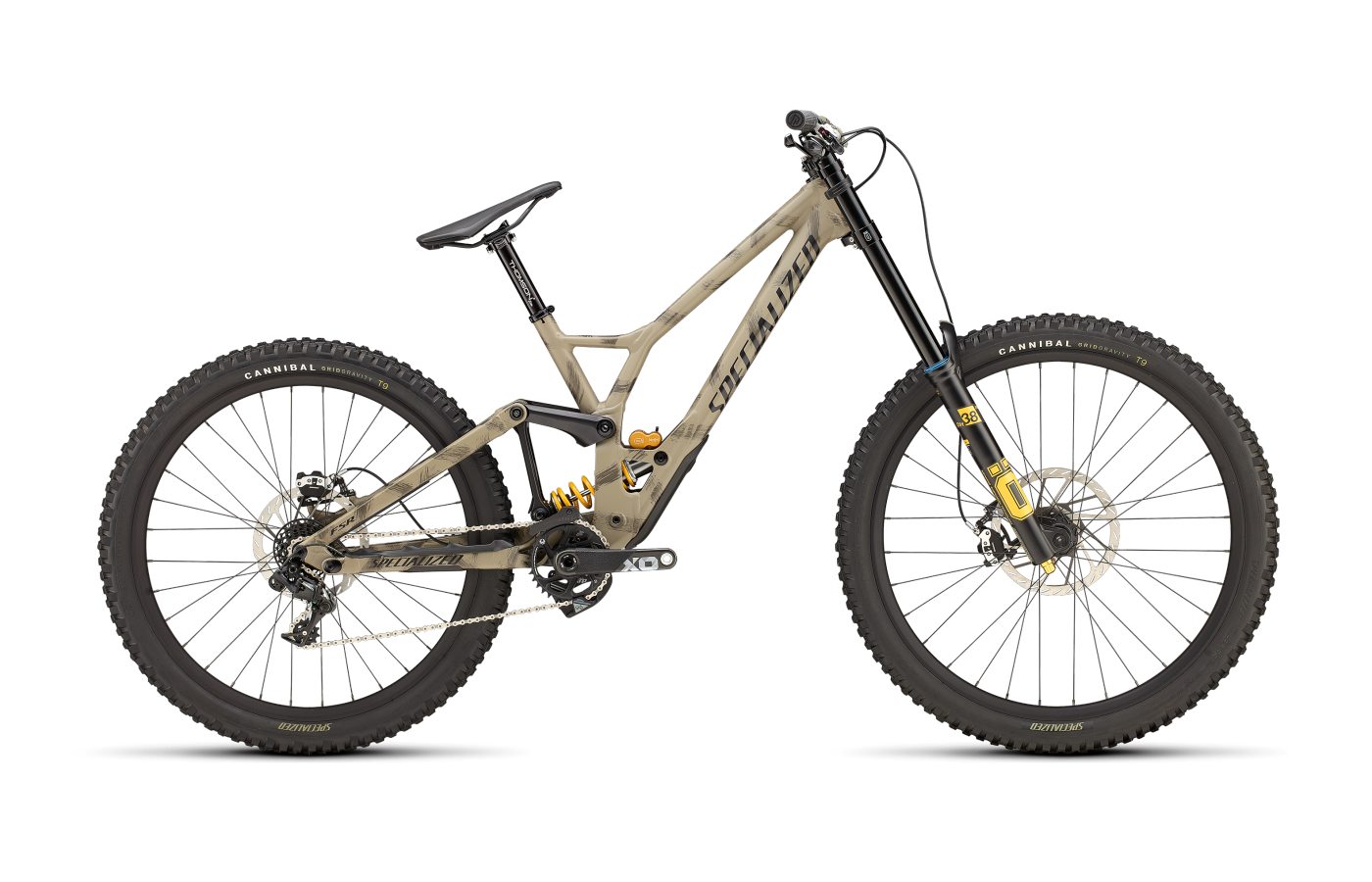
The Specialized Demo is the FSR-suspension counterpoint to both — predictable, proven, and the platform Loic Bruni has been winning World Cups on. If you want a less experimental layout than the Phoenix's dual chain, this is the safe race choice.
Compare →Session
The Trek Session shares the Phoenix's high-pivot philosophy with a single chain and Trek's adjustable Mino-Link geometry. If the Phoenix's suspension intrigues you but the dual-chain drivetrain feels like one too many maintenance items, the Session is the cleaner version of the idea.
Compare →Tues
The YT Tues is the direct-to-consumer way into a serious downhill platform at 30-40% less money. The trade is no dealer support and no demos — fine if you know your size and setup, harder if you don't.
Compare →