Rage
vsSpindrift
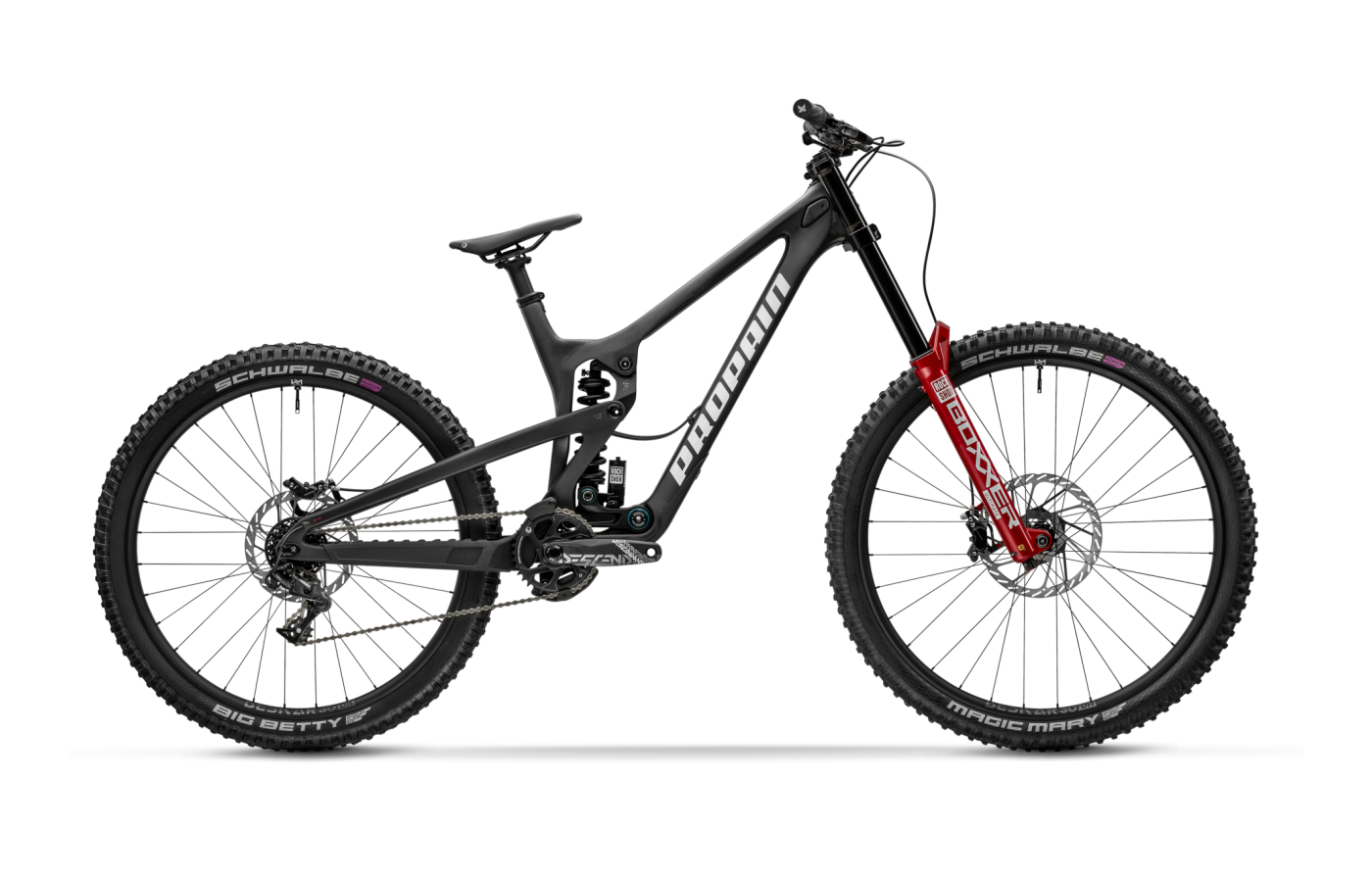
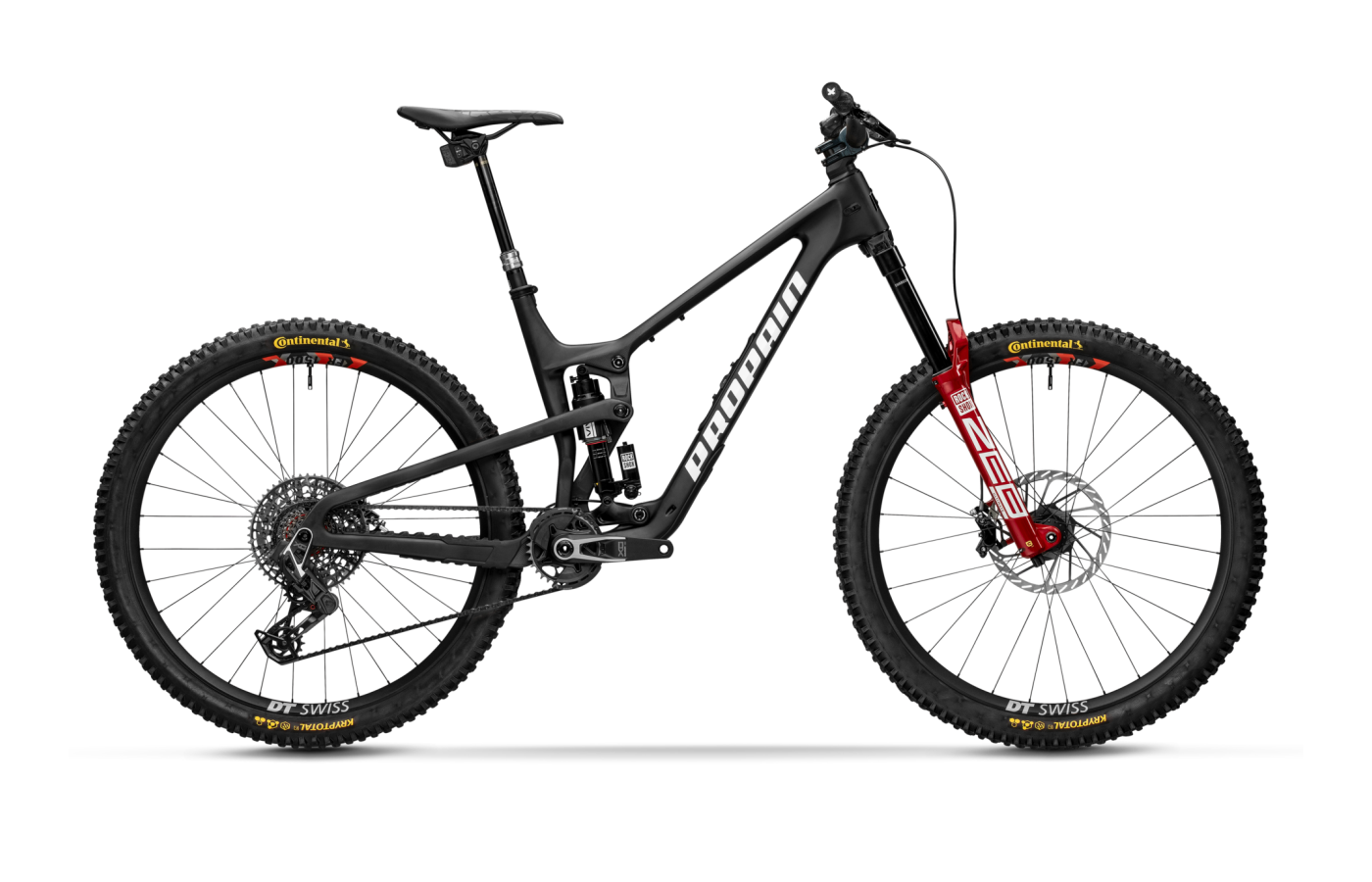
Two Propains, two definitions of gravity.
The Rage is a pure 215 mm DH race rig. The Spindrift 5 is a 180 mm freeride shapeshifter that actually pedals.
Rage
- 215 mm rear travel with 38% progression — supportive mid-stroke, bottomless ramp, forgives over-jumping to flat.
- Exceptional adjustability — mullet/29er flip chip, 445/460 mm chainstay flip chip, and a 1.5-inch head tube that takes angle and reach adjusters.
- Playful for a DH bike — reviewers consistently call out the pop off jumps and the sharp, confident cornering in tight berms.
- Not the most composed at all-out speed in rock gardens — gives up some isolation to the pure DH bulldozers.
- Rigid seatpost, 1x7 drivetrain, and dual-crown fork mean zero pedaling character — this is a shuttle/lift bike.
Spindrift
- Genuinely climbs — 116% anti-squat and a 78-degree effective seat tube let a 180 mm rig ascend like a trail bike; MBR rarely reached for the climb switch.
- Bottomless descending — around 27-40% progression and a high-leverage PRO10 curve soak square edges with DH-like plushness.
- Tailor-made via configurator — Propain's build-to-order system lets you pick fork travel, coil or air, dropper length, and tire casing before it ships.
- Firm, 'taut' off-the-top feel — less small-bump traction than softer-platform competitors like the Nomad.
- High seat tube and limited dropper insertion depth frustrate shorter riders and steep-terrain body English.
Editor’s analysis
Same brand, same PRO10 linkage, two completely different jobs — one is built to race the lift line, the other is built to earn the descent.
Both bikes share Propain's Blend Carbon layup, Pro10 dual-link suspension, and the direct-to-consumer price leverage that makes their builds look unreasonable on paper. From there they diverge hard. The Propain Rage is a 6th-generation, lift-accessed downhill bike with 215 mm of rear travel, a 200 mm dual-crown fork, 1x7 DH drivetrains, and a rigid seatpost on the top build. The Propain Spindrift is a 180 mm freeride/super-enduro platform with a 12-speed T-Type drivetrain, a dropper post, and geometry tuned so it can actually be pedaled to the top.
On geometry, the story is subtle but real. At their respective fit-picked sizes (L on the Rage, M on the Spindrift), head angles sit within half a degree — 63.0 on the Rage, 63.5 on the Spindrift — and both share a notably steep 78-79 degree effective seat tube. The headline differences are travel (215 mm vs 180 mm rear), fork duty (200 mm Boxxer/Fox 40 dual-crown on the Rage, 180 mm ZEB/38 single-crown on the Spindrift), and adjustability. The Rage ships with a flip-chip chainstay (445/460 mm), a mullet/29er flip chip, and a 1.5-inch head tube that accepts angle and reach adjusters. The Spindrift's chainstays are fixed at 445 mm across every size.
The Rage's reviews put it exactly where you'd expect: a 'raging descender' that's playful on jump lines, confident in berms, and surprisingly responsive out of corners thanks to a ~100% anti-squat. BikeRadar noted it's 'not quite as composed at high-speed as other downhill bikes' like a Glory — the PRO10 transmits a touch more feedback through the pedals in rock gardens — but it rewards active riders who want to pump, pop, and line-hunt rather than bulldoze. This is a dedicated gravity tool with no pedaling pretenses.
The Spindrift is the more interesting read. Pinkbike, MBR, and Enduro MTB all describe a bike that climbs well above its class — MBR called it 'exceptionally efficient pedaling for a 180 mm bike' — thanks to a 116% anti-squat and steep 78-degree seat angle. The trade-off: a firmer, 'tauter' initial-stroke feel, and a bike that can feel 'underwhelmed' on mellow trails. Choose it if you need to pedal to your descents. Choose the Rage if the descents are the only thing you do.
Where the builds differ.
Comparing our editor's-pick builds side-by-side. Winners highlighted row-by-row — lower price and weight, and the better-spec component, each mark a point.
Build variants & pricing
Rage spans $3,999-$7,389 across 4 builds; Spindrift spans $3,699-$8,769 across 4 builds — both direct-to-consumer, both configurable.
Prices are current US MSRP as listed by Propain's configurator. Both platforms let you swap suspension, wheels, and drivetrain tiers at order time, so the named builds are starting points rather than fixed kits.
How they fit, how they steer.
Rage on size L (reach 465 mm, stack 638 mm, 63.0 HTA, 79 effective STA) vs Spindrift on size M (reach 460 mm, stack 627 mm, 63.5 HTA, 78 STA). Reach lands within 5 mm; the Rage is slacker and taller up front, the Spindrift a half-degree steeper and a touch lower.
Which size should I buy?
Size recommendations are based on stack, reach, and effective top tube length. The Rage's size L corresponds to roughly the Spindrift's Size M in rider-fit terms — expect a frame-size label shift of one step across the range.
→These are starting points. Flexibility, riding style, and preferred position all shift the answer — if you’re between sizes, a professional fit beats a chart.
What the magazines said.
Published reviews from trusted cycling outlets. Click through for the full write-up.
Which one should you buy?
If you ride the lift or get shuttled and want a playful race-ready DH bike, get the Rage. If you need 180 mm of travel but also have to pedal up, get the Spindrift.
Rage
Lift days, shuttle days, and park laps where pedaling is irrelevant. The Rage is at its best on jump lines and steep, technical tracks — a tunable, playful DH bike that rewards active riders over bulldozers.
Spindrift
Riders who need DH-adjacent capability on descents but have to pedal back up — or to the top in the first place. The Spindrift is happiest on steep, fast terrain that you earned under your own power.
Questions buyers actually ask.
Short answers to the things we get emailed about most often.
01Rage or Spindrift for bike park laps?
For pure lift-accessed park riding, the Propain Rage is the tool. You get 215 mm of rear travel, a 200 mm dual-crown fork, and geometry that's been refined specifically for speed and composure on sustained descents.
The Propain Spindrift, especially in AL Park trim (not covered here), is genuinely capable in the park too — reviewers run it with a dual-crown and treat it like a light DH bike. But on the CF we're comparing, the Spindrift is asking to be pedaled. If you never pedal, you're paying for features you won't use.
02Can the Spindrift replace a DH bike?
For most park days and self-shuttled freeride, yes — that's exactly what Propain markets it for. 180 mm of travel plus the Pro10's bottomless progression handle botched landings and big compressions that would overwhelm a 160 mm enduro bike.
What it can't do is match the Rage's composure at full race pace over sustained rock gardens. Pinkbike and MBR both noted the Spindrift's 'taut' feel; the Rage's 35 mm extra rear travel and dual-crown fork buy real composure when speeds climb. If you race DH, buy the Rage.
03How different is the geometry between the two?
Closer than you'd think. At their fit-picked sizes the head angles are within half a degree (63.0 Rage / 63.5 Spindrift), reaches within 5 mm (465 Rage L / 460 Spindrift M), and both run a steep ~78-79 degree effective seat tube.
The meaningful differences are in adjustability and fork. The Rage has a flip-chip chainstay (445 or 460 mm), a wheelsize flip chip (MX or 29er), and a 1.5-inch head tube that accepts angle-adjust headsets. The Spindrift has fixed 445 mm chainstays across every size and a standard tapered head tube.
04Which pedals better on flat or climbing sections?
The Spindrift, by a wide margin. Its PRO10 tune targets ~116% anti-squat, and reviewers (Pinkbike, MBR, Awesome MTB) consistently report they never reach for the climb switch except on sustained road climbs.
The Rage pedals 'better than you might expect' for a DH bike — the same PRO10 platform delivers roughly 100% anti-squat — but it's still a 200 mm-fork, rigid-seatpost, 1x7 machine. You can spin between park features; you can't pedal it to the top of a real mountain.
05What's the tire clearance and wheel setup?
Both bikes default to burly downhill/freeride tires on wide DH rims. The Rage ships with NEWMEN Beskar 30 DH wheels on most builds and can run either full 29er or a mullet (29 front / 27.5 rear) via the linkage flip chip without breaking the geometry.
The Spindrift CF runs full 29er or MX via its own flip-chip setup, with DT Swiss FR 1500 wheels on the Ultimate build. If you're ordering, spec a proper Super DH or DH casing — reviewers warned that lighter EXO+/Super Trail tires get cut in hard freeride use.
06Are the suspension platforms actually the same?
The basic Pro10 dual-link layout is shared, but the kinematics are tuned very differently. The Rage runs around a 38% progression rate with ~100% anti-squat, aimed at coil shocks and bottomless DH support.
The Spindrift runs roughly 27-40% progression (depending on frame material) with a higher ~116% anti-squat, biased toward pedaling efficiency while still ramping hard enough for freeride hucks. Same linkage family, different personalities.
07How does Propain's direct-to-consumer model affect the buying experience?
Both bikes ship via Propain's online configurator, which is one of the most flexible in the industry — you pick fork travel, spring type, dropper length, tire casing, and cockpit width before the bike is built. Reviewers consistently flag this as a major value advantage vs shop-bought bikes you'd immediately upgrade.
The downside is no local dealer for test rides or warranty walk-ins, which matters more in North America than Europe. User reports (detailed by NSMB commenters) describe Propain's North American service as responsive — but you'll be shipping a bike back to a service center, not wheeling it across town.
08What's the warranty and long-term durability story?
Both frames carry Propain's 5-year frame warranty and are built to Category 5 (freeride/DH) standards — over 5,000 load cycles in internal testing. Frame durability is a consistent bright spot across reviews for both models.
Where reviewers raise flags is on OEM components: the Rage was described as 'not a quiet bike' with rattling in rock gardens, and some Fox Factory units on the Spindrift had reported topout knock or harsh-feeling forks. The configurator lets you route around this by picking Öhlins or RockShox — a real advantage of ordering direct.
Similar bikes
If your priorities don’t map cleanly onto either of these, one of these adjacent bikes probably fits better.
Tues
YT's direct-to-consumer DH flagship with serious World Cup pedigree — lines up closely with the Rage on price, travel, and philosophy, and is often the other bike on a value-minded DH shopper's shortlist.
Compare →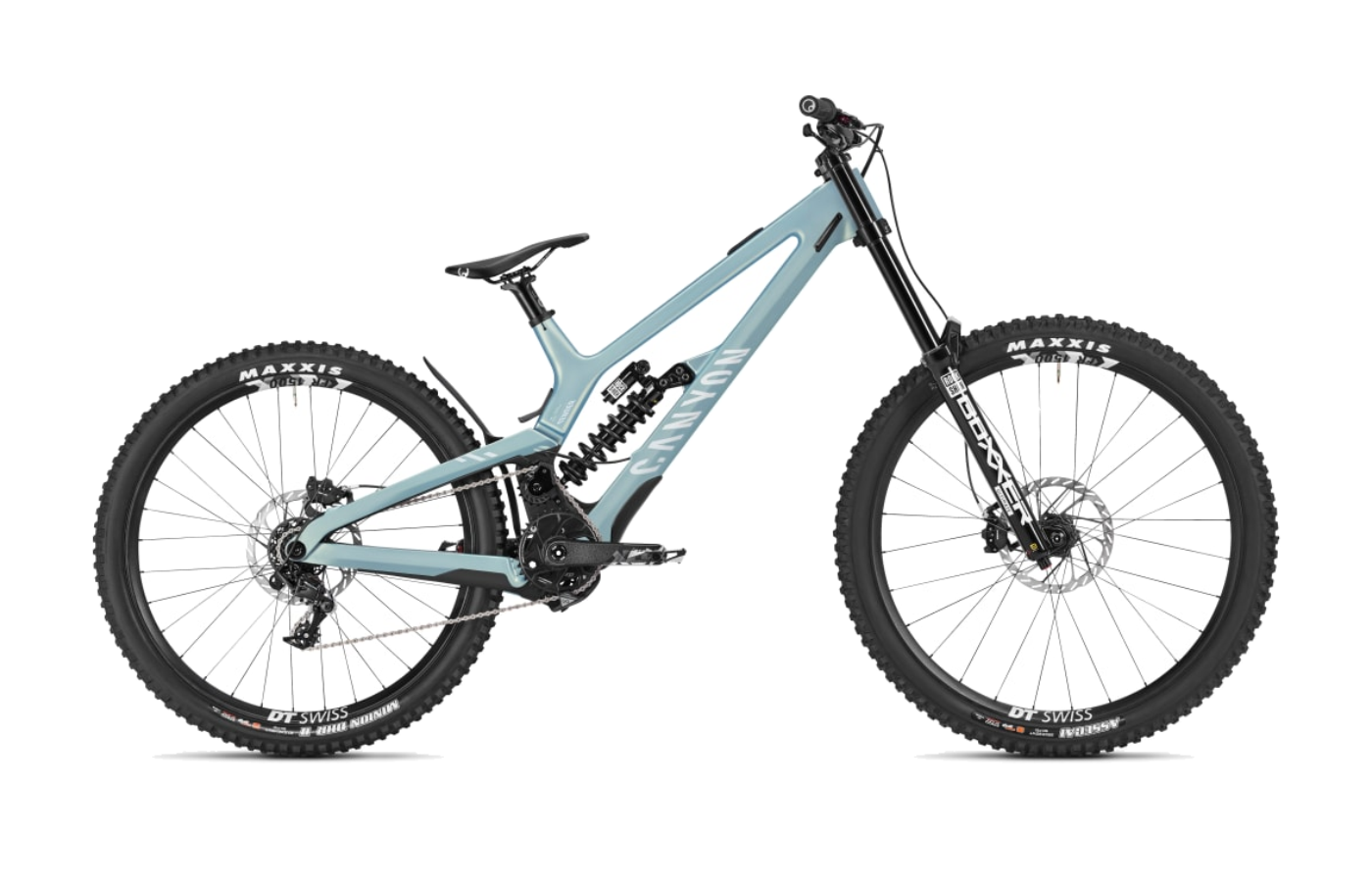
Sender
Canyon's dedicated DH race bike — another direct-to-consumer alternative to the Rage, with a slightly more polished consumer experience and a heavier race-oriented bias.
Compare →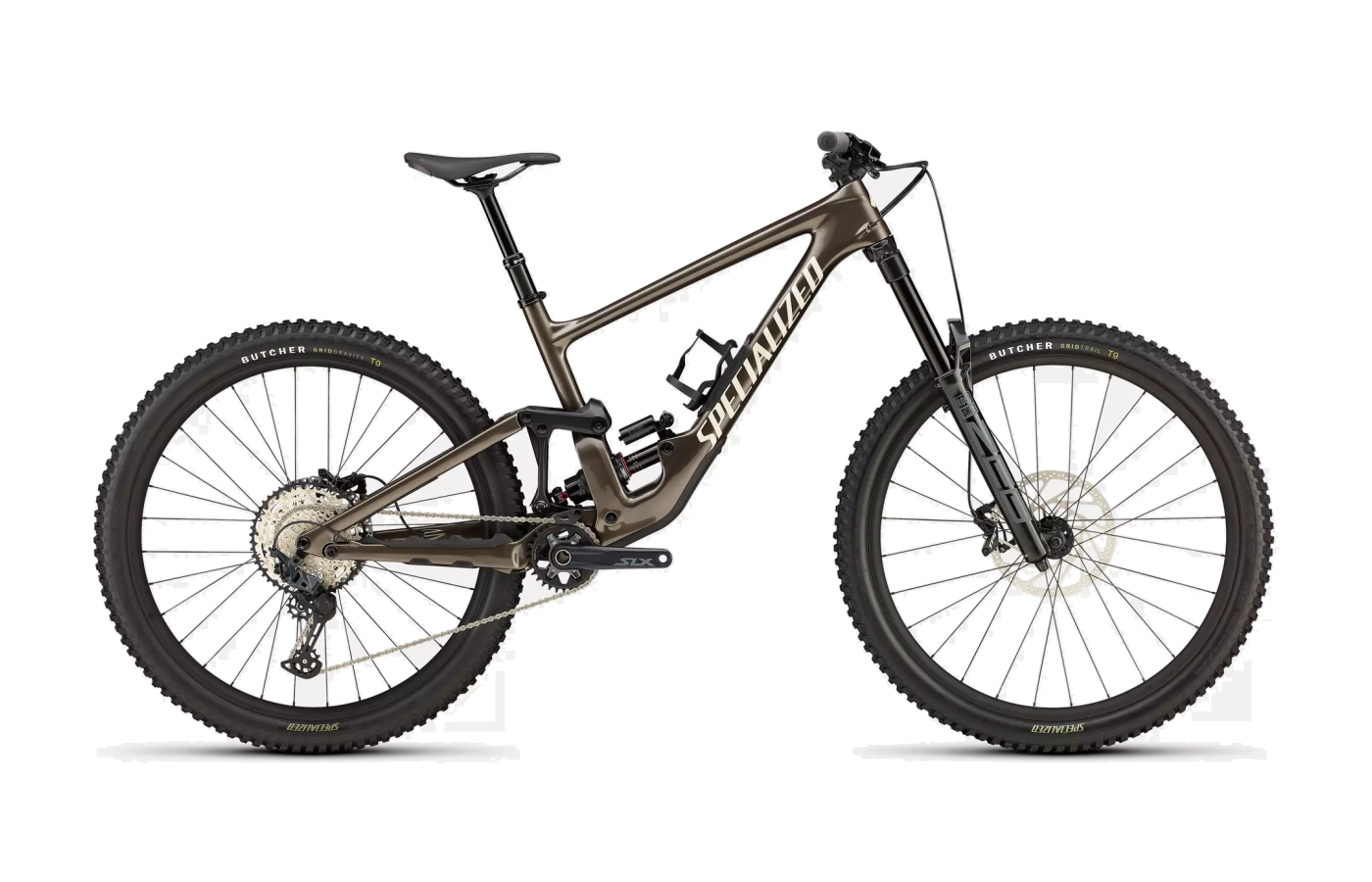
Enduro
Specialized's 170 mm enduro with FSR suspension and genuinely strong pedaling manners — a more trail-capable alternative to the Spindrift for riders who want a do-it-all big bike rather than a freeride specialist.
Compare →