Rascal
vsStumpjumper
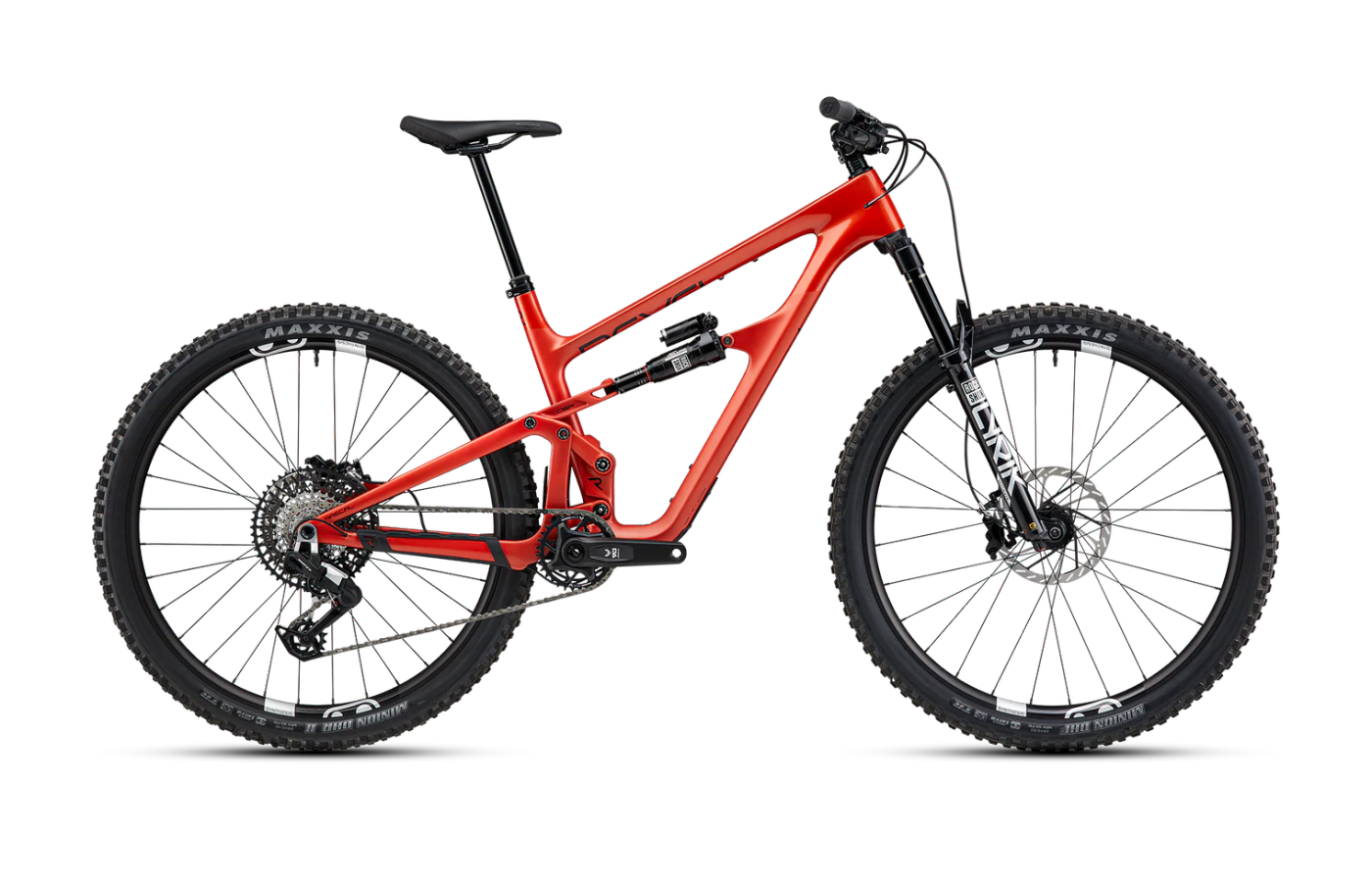
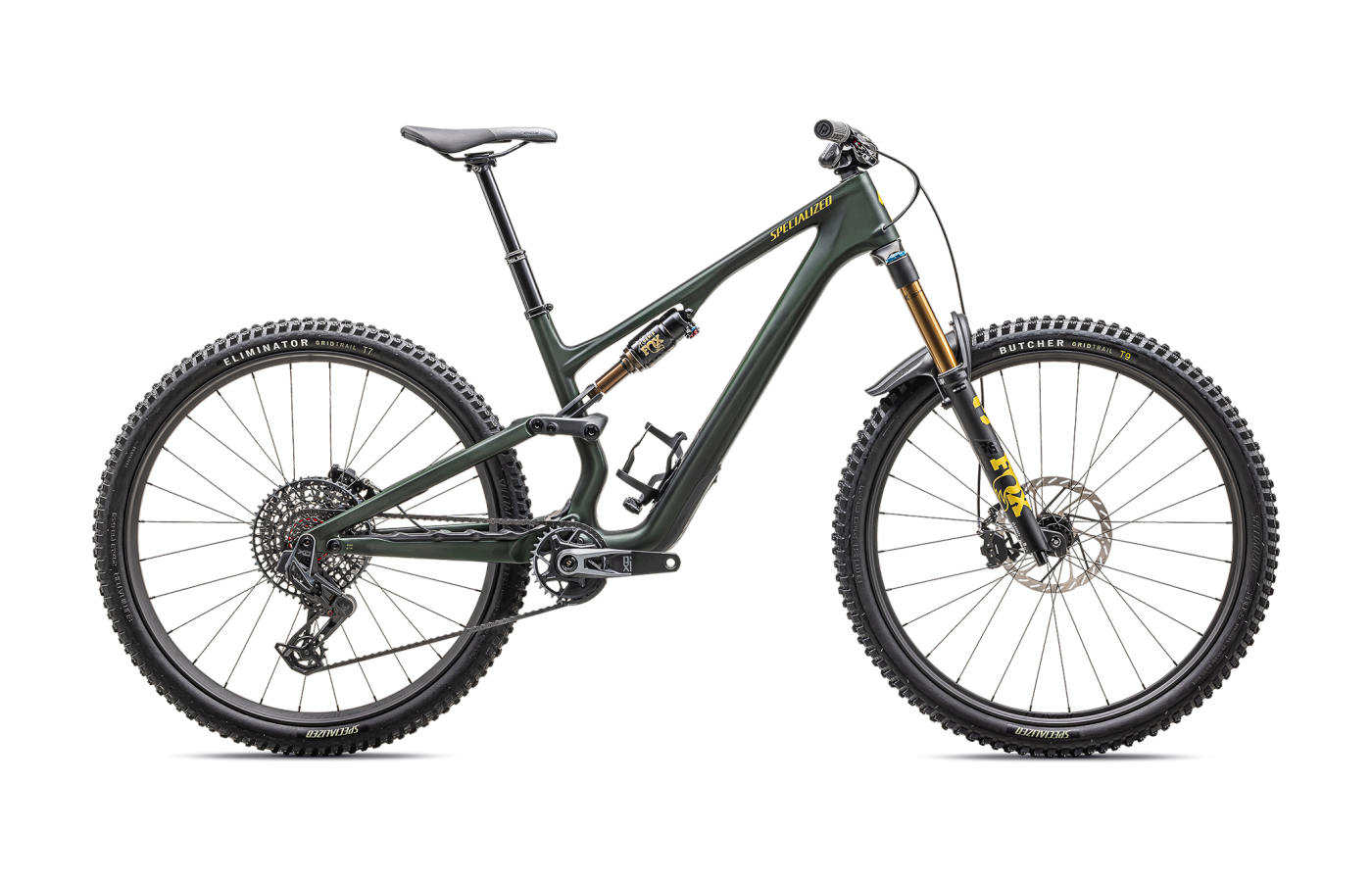
Two trail bikes, two mission statements.
The Revel Rascal is a 130/140 mm trail whippet built around CBF efficiency. The Specialized Stumpjumper 15 is a 145/150 mm shape-shifter with a proprietary GENIE shock and adjustable head angle.
Rascal
- Pedals like a hardtail — CBF anti-squat above 100% through most of the travel; reviewers consistently leave the climb switch open.
- Playful and precise — rewards an active, pumpy riding style on flow trails and rolling singletrack.
- Carbon-only frame with thoughtful detailing — threaded BB, titanium shock hardware, fully-guided internal routing, integrated linkage mud guard.
- Twitchy at speed in steep, chunky terrain — needs a calculated rider, not a brawler.
- Revel Bikes has ceased operations — long-term warranty and proprietary parts are uncertain.
Stumpjumper
- More travel, more composure — 145/150 mm and a 64.5° HTA make it confident on terrain that overworks the Rascal.
- Adjustable everything — HTA across 2.5° via headset cups, BB-height/CS flip chip, mullet-compatible, fork up to 160 mm.
- Lifetime frame warranty and lifetime pivot bearings, with global dealer support and SWAT in-frame storage.
- Carbon frames are wireless-electronic-only — no mechanical drivetrain option without going alloy.
- Proprietary GENIE shock raises long-term serviceability and resale concerns for some riders.
Editor’s analysis
Same category, same wheel size, completely different theories of what a trail bike should be — one rewards finesse, the other rewards adjustment.
On the surface they look like rivals: 29", carbon-frame, dual-link trail bikes within striking distance on price. Spend any time in the geometry chart and the spec sheet and they pull apart fast. The Revel Rascal runs 130 mm rear / 140 mm front travel on a fixed 65.5° head angle and a constant 436 mm chainstay across every size. The Specialized Stumpjumper runs 145 mm rear / 150 mm front, a 64.5° stock head angle that adjusts to 63° or 65.5° via headset cups, and size-specific chainstays from 430 mm to 445 mm.
The Revel Rascal is the bike for riders who like to feel everything. Its Canfield Balance Formula linkage holds anti-squat above 100% through most of the travel, which is a fancy way of saying it pedals with the climb switch wide open. Reviewers consistently describe it as "secretly fast" uphill, sporty and lively on flow trails, and rewarding for riders who generate speed by pumping rather than plowing. The flip side: the same short chainstays and steep-for-the-segment head angle can feel twitchy when the trail gets fast, chunky, and steep.
The Specialized Stumpjumper is the bike for riders who'd rather adjust than adapt. The GENIE rear shock — a dual-chamber air spring co-developed with Fox — runs supple and coil-like through the first 70% of travel, then ramps hard at the end-stroke, which Specialized claims is worth 57% more rear-wheel traction. Add the headset-cup head-angle adjustment, the BB flip chip, the size-specific chainstays, mullet compatibility, and the SWAT in-frame storage, and you get a bike reviewers consistently call a "true do-it-all" — capable from mile-muncher to bike-park sled depending on how you set it up.
One sober note: as of this writing, Revel Bikes has ceased operations. The Rascal frame and CBF platform are still excellent, but warranty and proprietary-part support are now dependent on liquidation inventory and possible third-party rescue. Specialized, by contrast, ships with a lifetime frame warranty and lifetime pivot bearing replacement, plus a global dealer network. That's not a tiebreaker on ride feel — but it absolutely is one on long-term ownership.
Where the builds differ.
Comparing our editor's-pick builds side-by-side. Winners highlighted row-by-row — lower price and weight, and the better-spec component, each mark a point.
Build variants & pricing
The Rascal lineup tops out at $5,199; the Stumpjumper 15 spans $2,999 alloy to $11,999 S-Works. We've matched X0 Transmission carbon-wheel builds for an apples-to-apples spec table.
Prices are current US MSRP. Note the editor's-pick price gap — the Stumpjumper 15 Pro at $7,999 sits roughly $2,800 above the Rascal X0 Transmission at $5,199 because Specialized's mid-platform adds the proprietary GENIE shock, SWAT storage, and adjustable geometry hardware. The Rascal closes some of that gap with a flatter pricing structure across its three Transmission tiers.
How they fit, how they steer.
Reach is virtually identical (Rascal M 451 mm vs Stumpjumper S3 450 mm) but the Stumpjumper sits 17 mm taller at the stack (627 vs 610), runs a head angle 1° slacker (64.5° vs 65.5°), and rolls 7 mm more trail (130 vs 123). Translation: the Rascal is sharper and lower; the Stumpjumper is more upright and more stable.
Which size should I buy?
Size recommendations based on stack, reach, and effective top tube. Specialized's S-sizing intentionally overlaps — many riders fit two adjacent S-numbers; the Rascal's traditional S/M/L/XL/XXL sizing has tighter bands.
→These are starting points. Flexibility, riding style, and preferred position all shift the answer — if you’re between sizes, a professional fit beats a chart.
What the magazines said.
Published reviews from trusted cycling outlets. Click through for the full write-up.
Which one should you buy?
If your trails reward finesse and you want one bike that climbs like an XC rig, get the Rascal. If you want one bike that adapts from trail to bike-park with the right setup, get the Stumpjumper.
Rascal
If your home trails are rolling, flowy, or technical-but-not-savage, and you ride to feel the trail rather than flatten it, the Rascal is the more rewarding tool. CBF efficiency makes long days feel shorter; the playful chassis pays back active body English with pop and speed.
Stumpjumper
If you want a single bike that handles bigger terrain, mid-week mile-mongering, and the occasional bike-park lap, the Stumpjumper 15 is purpose-built to flex. The GENIE shock plus geometry adjustability lets you re-tune the bike's character without buying a new one.
Questions buyers actually ask.
Short answers to the things we get emailed about most often.
01Which is better for technical climbing?
Both are excellent climbers, but they get there differently.
The Revel Rascal uses CBF suspension that holds anti-squat above 100% through most of its travel — reviewers consistently describe pedaling it with the climb switch open as the default, and several testers ran 30–35% sag without giving up climbing efficiency. It feels firm and direct under pedaling, almost hardtail-like.
The Stumpjumper 15 runs a quoted ~105–108% anti-squat at sag and uses the GENIE shock's supple initial stroke to maintain ground contact on chunky climbs. Specialized claims a 57% traction gain over the prior generation. The trade-off: it can feel slightly less firm than the Rascal under smooth, hard pedaling, which is what the two-position climb switch is for.
For smoother fire-road climbs, the Rascal feels more efficient. For root-and-rock technical climbs, the Stumpjumper's grip is the bigger weapon.
02Which is more capable on rough descents?
The Stumpjumper 15, by a clear margin. With 145 mm rear / 150 mm front travel, a 64.5° head angle (adjustable to 63°), and the GENIE shock's progressive end-stroke, it's a bike that genuinely handles bike-park-sized hits. Reviewers note it stays composed on terrain where the Rascal starts to feel overmatched.
The Rascal is a 130/140 mm trail bike with a 65.5° head angle and a relatively short 1,198 mm wheelbase in size Medium. On steep, fast, chunky descents, multiple reviewers describe it as twitchy and demanding precise line choice — it's a bike that rewards finesse, not brute force.
03How adjustable is each frame's geometry?
Revel Rascal: not adjustable. Fixed 65.5° head angle, fixed 436 mm chainstays across all sizes, no flip chips.
Specialized Stumpjumper 15: highly adjustable. Headset cups give you 63° / 64.5° / 65.5° head angle; a flip chip adjusts BB height and chainstay length; the frame is mullet-compatible with an aftermarket link; and the fork can be run up to 160 mm. Chainstays are also size-specific from the factory (430 mm on S1 to 445 mm on S5/S6).
04What's the deal with the GENIE shock — is it serviceable?
The GENIE is a Fox Float with one extra air chamber and one extra seal. Specialized has confirmed it uses mostly standard Fox internals, and most independent suspension shops can service it the same way they'd service any Fox Float — there's just one additional seal in the kit.
That said, it is proprietary, and that raises legitimate long-term concerns: future parts availability, second-owner upgradability, and resale of a non-standard shock. The frame uses a 210x55 mm shock, so you can swap to a standard non-GENIE shock if you ever want to — though the kinematics are tuned around the GENIE's specific air-spring curve, so it won't be a drop-in match.
05Is Revel still a going concern?
As of this writing, Revel Bikes appears to have ceased operations. Multiple reviewers covering the Rascal V2 in late 2024 and early 2025 confirmed the news, with speculation that Canfield (the suspension licensor) might support existing owners.
For a buyer, the practical implications are:
- Liquidation pricing on remaining inventory may be excellent.
- Frame warranty and proprietary-part replacement (linkages, bearings, hardware) are uncertain going forward.
- Most non-proprietary parts (suspension, drivetrain, cockpit) are aftermarket-serviceable as normal.
If you can buy at a discount and accept the support risk, the bike itself remains very good. If long-term warranty matters, that's a real point in the Stumpjumper's favor — Specialized backs the frame and pivot bearings for the original owner's lifetime.
06What sizes and rider heights do they fit?
Revel Rascal: Small, Medium, Large, XL, XXL. Reach runs 431 mm (S) to 528 mm (XXL); riders roughly 5'1" to 6'8" are covered.
Specialized Stumpjumper 15: S1 through S6. Reach runs 400 mm (S1) to 530 mm (S6); also covers riders from roughly 5'0" to 6'7". Specialized's S-sizing is intentionally overlapping — most riders fit two adjacent sizes, and the choice between them sets ride character (shorter S = playful, longer S = stable).
07Which has more tire clearance?
Revel Rascal: clears up to roughly 29 x 2.5" — Revel quotes 61 mm of chainstay clearance. Stock builds run a 29 x 2.4" Maxxis Dissector front and rear.
Specialized Stumpjumper 15: Specialized doesn't publish a hard clearance number, but the frame ships with 29 x 2.3" Butcher / Eliminator combos and is widely run with 2.4" tires. Larger sizes (S3–S6) run 29" rear out of the box; smaller sizes (S1–S2) run 27.5" rear by default.
Neither is a clearance limitation in practice — both sit firmly in 2.4–2.5" trail-tire territory.
08Which holds value better on the used market?
Historically, Specialized holds resale strongly thanks to brand recognition, dealer support, and the lifetime frame warranty (which transfers in spirit through the Specialized network even if not formally to second owners). Stumpjumper variants, especially carbon, are some of the most liquid trail bikes on the used market.
Revel has historically held value reasonably well as a boutique brand, but the recent operations cessation introduces real downside risk for resale — buyers will discount for warranty uncertainty and proprietary-part risk. Expect that to compress used Rascal pricing in the near term, which is bad for sellers and potentially good for buyers who don't mind the support uncertainty.
Similar bikes
If your priorities don’t map cleanly onto either of these, one of these adjacent bikes probably fits better.

Fuel EX
The other do-everything carbon trail bike, with Trek's IsoStrut rear linkage and Mino-Link geometry adjustment. A natural cross-shop with the Stumpjumper for riders who want adjustability and dealer support but prefer Trek's chassis feel.
Compare →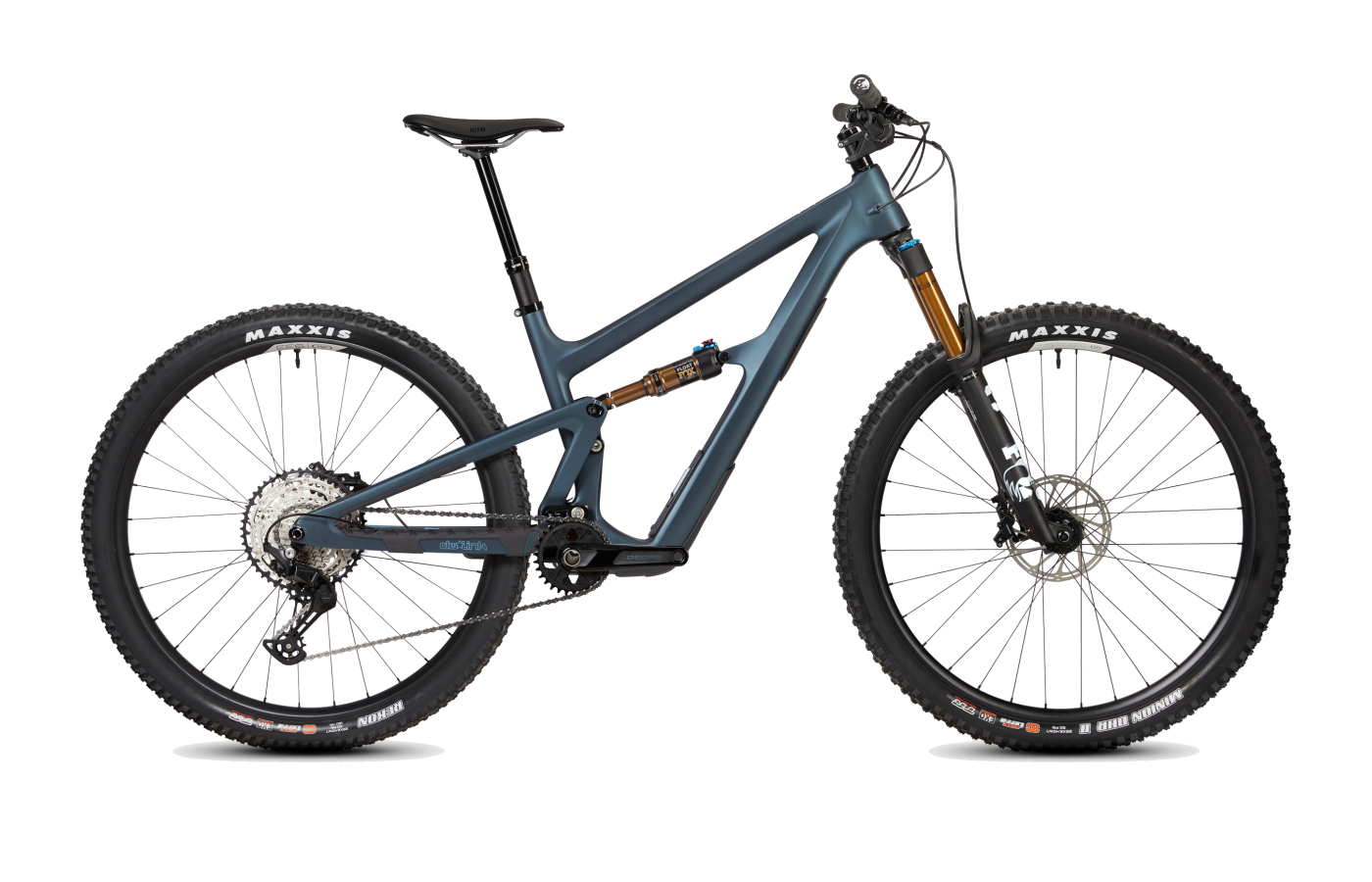
Ripley
Ibis's DW-Link short-travel trail bike — even more efficiency-focused than the Rascal, with a similarly playful and engaged personality. The right call if you love the Rascal's character but want a brand still standing behind its product.
Compare →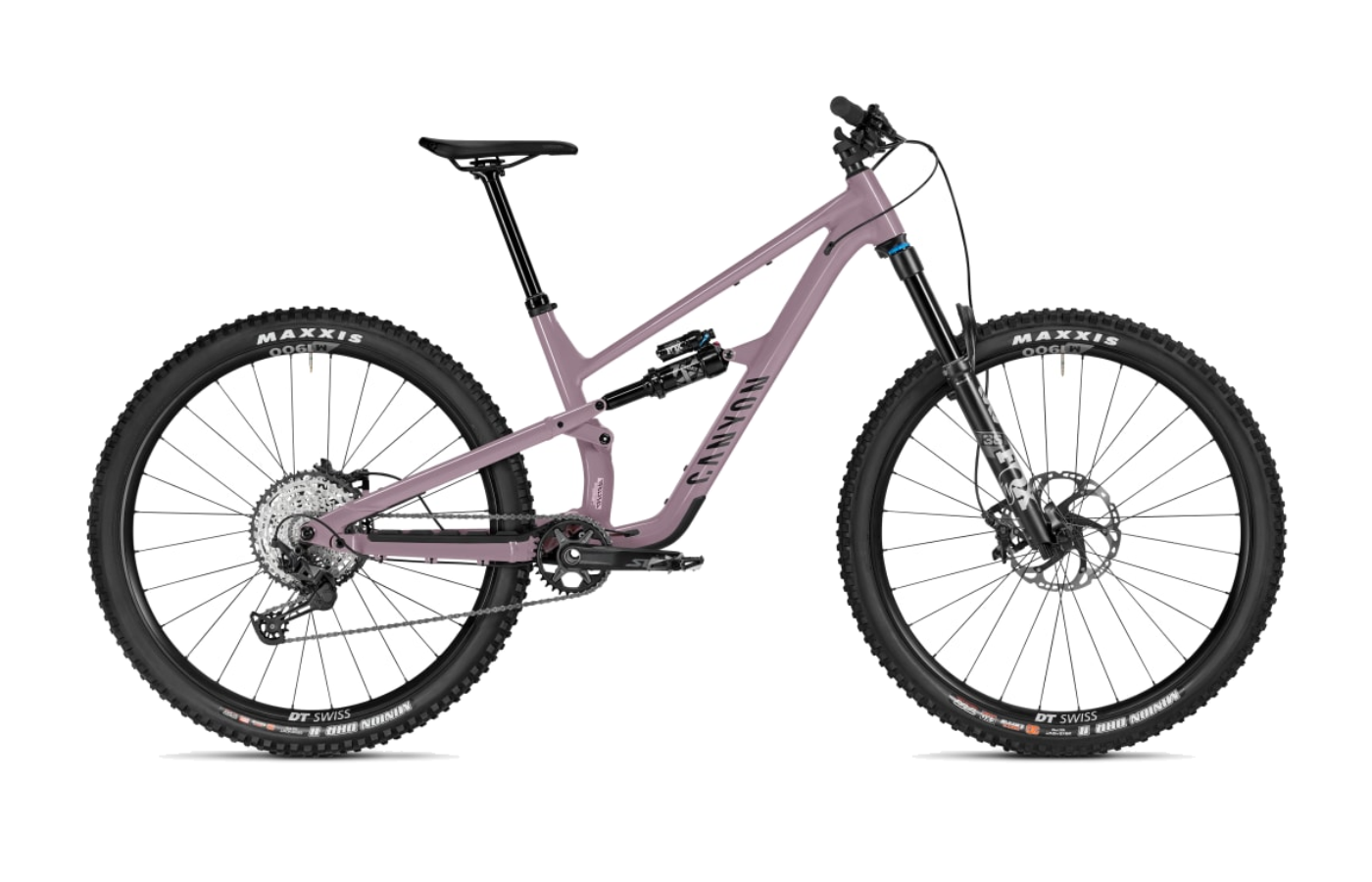
Spectral
Canyon's direct-to-consumer trail bike at a meaningfully lower price than either of these. Modern geometry, capable spec, and the catch you'd expect: no local dealer, no demos, sized-online-and-shipped.
Compare →