Rascal
vsSmuggler
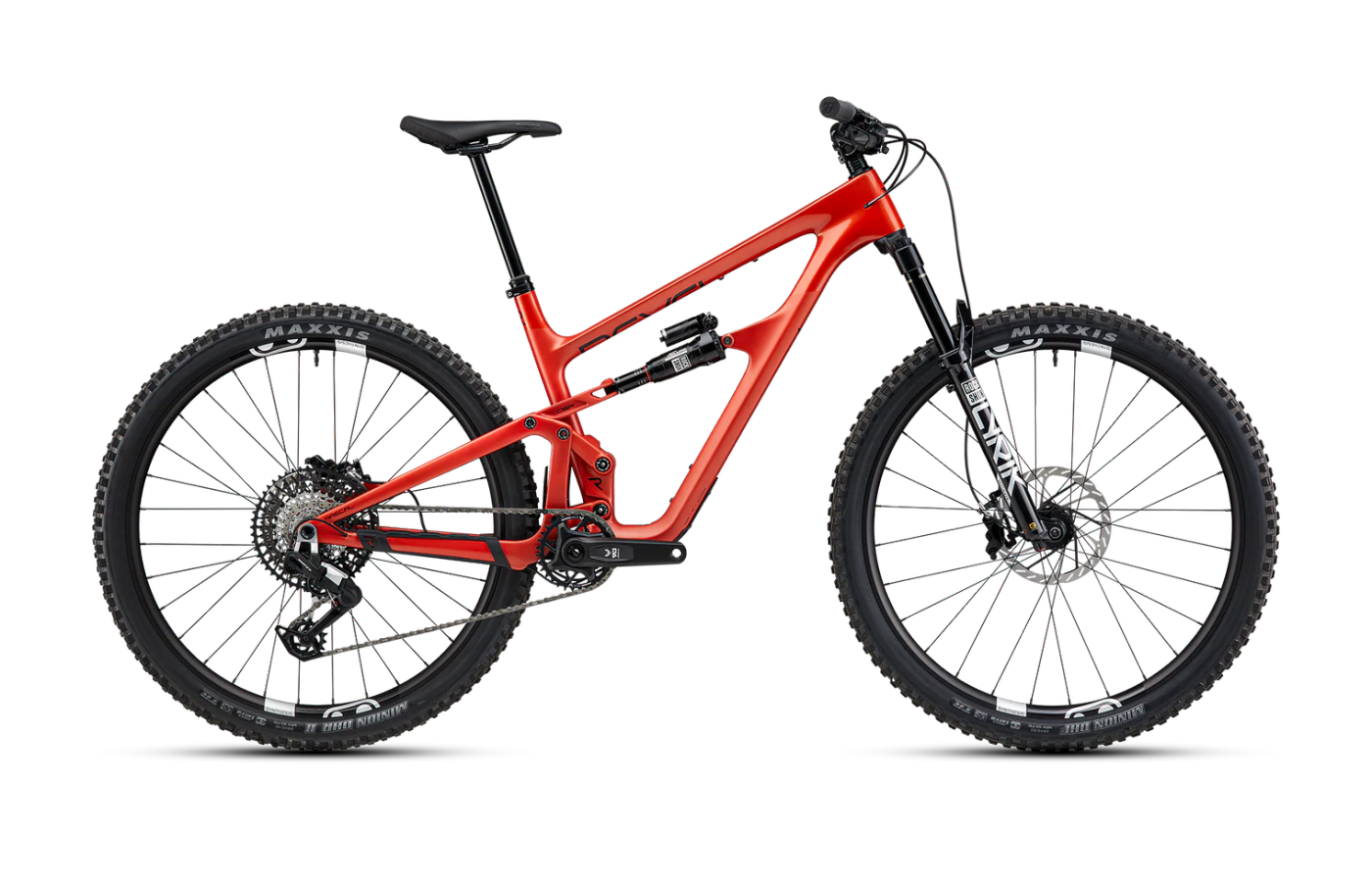
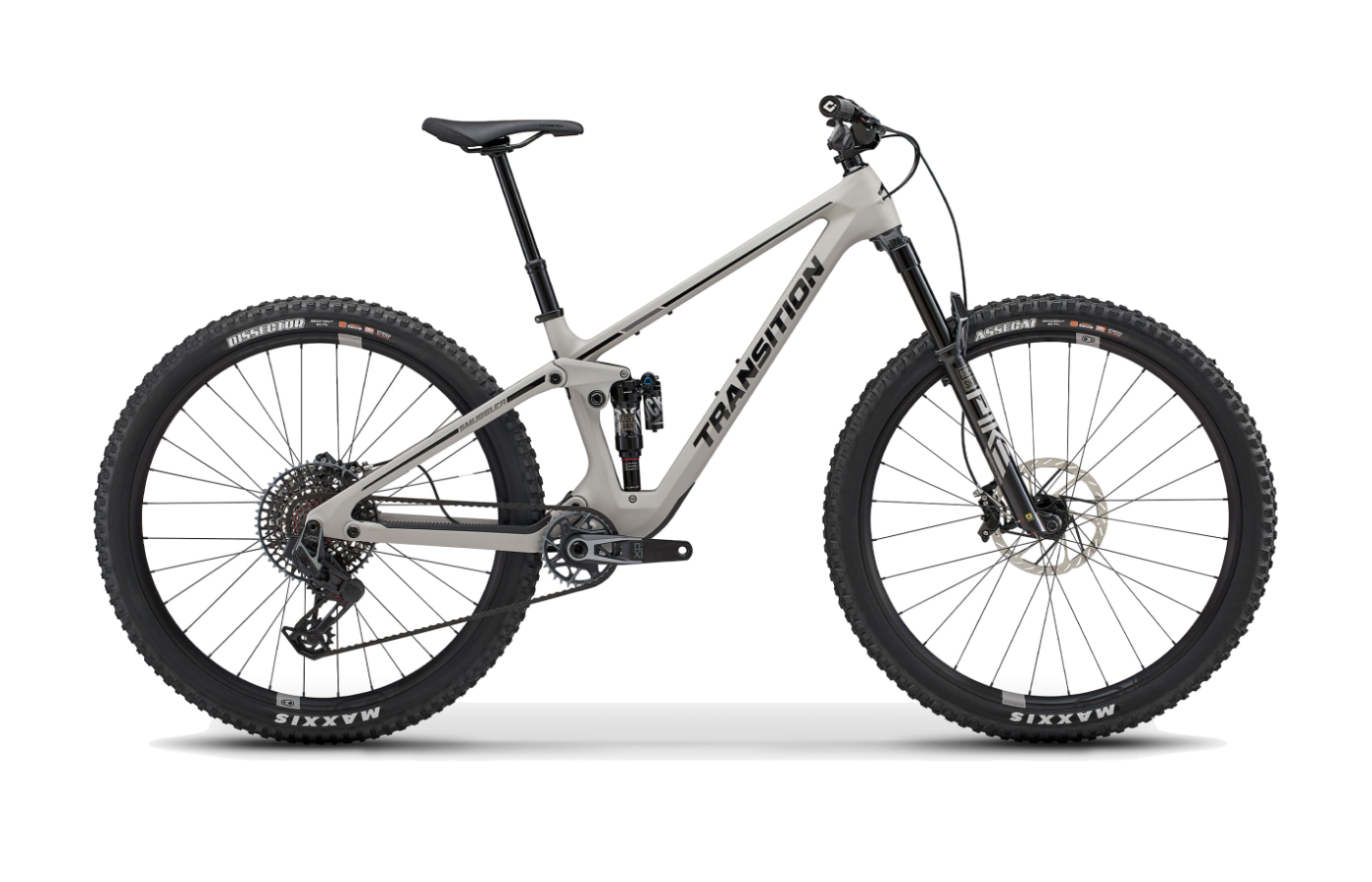
Two short-travel trail bikes, two attitudes.
The Rascal is the precision-tuned trail whippet built around CBF suspension. The Smuggler is a mini-enduro bike that just happens to ride a 130 mm shock.
Rascal
- CBF suspension is the headline — ~140% anti-squat means the climb switch stays untouched, and reviewers describe the rear end as a "calm but responsive little cloud."
- Lighter than its rivals — 13.5 kg / 29.8 lb on the X0 build (size Large), with a 20% stiffer rear triangle than V1.
- Sharp, agile handling — a true "trail whippet" that builds speed by pumping rather than plowing.
- Revel has reportedly ceased operations — warranty and spare-parts support is now uncertain.
- 65.5° head angle, 44 mm offset, and 40 mm stem can feel twitchy at speed; some testers swap to a 50 mm stem and higher-rise bar.
Smuggler
- Mini-enduro descending chops — 65° HTA, 35 mm BB drop, and 27% progressive rear let it handle terrain a 130 mm bike has no business on.
- Size-specific chainstays (435 mm S/M, 440 mm L–XXL) keep weight balanced for taller riders — a notable advantage over the Rascal's constant 436 mm.
- Wider build range — alloy Deore at $3,499 means a real entry point exists, where the Rascal floor is $4,999.
- The "Loam Cupboard" — an open BB-area cable port — funnels mud into the frame and was tied to premature bearing wear in multiple long-term tests.
- Cable rattle and chainslap noise were called out by Pinkbike and MBR; needs an aftermarket protector to quiet down.
Editor’s analysis
Same travel, same wheel size, same price ballpark — and almost no overlap in how they want to be ridden.
On paper the match is uncannily close. Both run 130 mm rear / 140 mm front, both spin 29ers, both lean on a Lyrik or Pike Ultimate up front and a Super Deluxe Ultimate at the back. Both are full-carbon trail platforms tuned for the do-everything middle of the market. But ride them back to back and the philosophies separate immediately.
The Revel Rascal is the precision instrument. Canfield's CBF dual-link delivers anti-squat in the 120–140% range up top, which is why reviewers say they never bother with the climb switch. The 65.5-degree head angle, 436 mm chainstays (the same number on every size), and 44 mm fork offset add up to what Pinkbike called a "trail whippet" — sharp, lively, eager to generate speed by pumping rather than plowing. It rewards an active rider on rolling terrain. Pointed down something gnarly and chunky, it'll work, but it doesn't beg for it.
The Transition Smuggler is the opposite read on the same travel number. A half-degree slacker head tube (65.0°), a 14 mm longer reach in size MD (460 vs. 451 mm), a 35 mm BB drop, and Transition's 27%-progressive Horst-link rear all combine to give it what reviewers repeatedly called a "mini-Sentinel" feel. It plows when the Rascal would tip-toe. The trade is climbing precision: the steep 78.6-degree seat angle keeps you over the bottom bracket, but the bike rewards momentum over snap.
There's also an elephant in the room. Revel Bikes has reportedly ceased operations, and reviewers in late 2024 / early 2025 flagged the warranty and spare-parts uncertainty as a real ownership risk. The frame and CBF design are still excellent — it's the post-purchase support that's now a question mark. Transition is still very much a going concern, with its "rider-owned" lifetime frame warranty intact.
Where the builds differ.
Comparing our editor's-pick builds side-by-side. Winners highlighted row-by-row — lower price and weight, and the better-spec component, each mark a point.
Build variants & pricing
Both span the carbon trail-bike middle, but the Smuggler casts a wider net — alloy Deore at $3,499 on one end, full XO AXS at $7,799 on the other.
Editor's picks are the SRAM X0 Transmission Kit on each side — same drivetrain tier, both with Ultimate-level RockShox suspension. Note the $2,600 price gap: the Rascal X0 is $5,199, the Smuggler XO is $7,799. The Rascal sells direct and undercuts the Smuggler at every matched tier.
How they fit, how they steer.
Both at the size-Medium fit-pick. The Smuggler is 9 mm longer in reach (460 vs. 451 mm), half a degree slacker (65.0° vs. 65.5°), and steeper at the seat (78.6° vs. 76°) — longer up front, more upright over the cranks.
Which size should I buy?
Size recommendations based on stack, reach, and effective top tube. The Rascal runs slightly more compact at every size; the Smuggler stretches longer across the range.
→These are starting points. Flexibility, riding style, and preferred position all shift the answer — if you’re between sizes, a professional fit beats a chart.
What the magazines said.
Published reviews from trusted cycling outlets. Click through for the full write-up.
Which one should you buy?
If you want a precise, efficient, pumpy trail whippet — get the Rascal. If you want a mini-enduro bike that pedals — get the Smuggler.
Rascal
If your trails are punchy, rolling, and reward riders who generate speed through the bike rather than over it, the Rascal is the sharper tool. CBF suspension is the real differentiator — most reviewers never touched the climb switch. Just price in the warranty risk while Revel's situation shakes out.
Smuggler
If you'd otherwise own a 150 mm bike but want something lighter that still pedals home, the Smuggler is the closer fit. Its slacker, longer geometry and progressive Horst-link let it punch into terrain a 130 mm bike has no business on. Tinkerers welcome — it rewards setup time.
Questions buyers actually ask.
Short answers to the things we get emailed about most often.
01Which one climbs better?
The Revel Rascal, on most climbs. Reviewers consistently say the CBF rear end is so well-balanced — anti-squat in the 120–140% range at the top of the travel — that they never reach for the climb switch, even at 35% sag. The Smuggler climbs well for its class thanks to a steep 78.6° seat tube angle, but its more active GiddyUp rear is more sensitive to sag setup; multiple reviewers found that running deeper than 30% turns it "boggy" and adds pedal strikes from the low 35 mm BB drop.
On smooth gravel road climbs, both are perfectly competent. The Rascal just wastes less energy.
02Which one descends harder?
The Transition Smuggler, by a clear margin in steep, chunky, high-speed terrain. Reviewers repeatedly reach for the phrase "mini-Sentinel" — the slacker 65° head angle, longer 460 mm reach in MD, lower BB, and 27% progressive Horst-link suspension let it handle bike-park-adjacent terrain that a typical 130 mm trail bike would shy away from.
The Rascal is no slouch downhill, but its calling card is precision and pop, not plow. As Pinkbike put it, the Rascal "doesn't encourage you to seek out gnarly terrain in an effort to feel something" — the Smuggler kind of does.
03Why is the Smuggler so much more expensive at the top?
At equivalent SRAM X0 AXS Transmission spec, the Rascal is $5,199 and the Smuggler is $7,799 — a $2,600 gap for what's, on paper, a comparable build (both Ultimate-level RockShox suspension, both X0 Transmission, both carbon).
Part of the gap is the wheelset: the Rascal X0 includes DT Swiss XMC 1501 carbon wheels, the Smuggler XO ships with Crankbrothers Synthesis Enduro Alloy. The bigger part is sales channel — Revel sells consumer-direct, Transition sells through dealers. At the bottom end the math flips: the Smuggler starts at $3,499 (alloy Deore), and the Rascal has no entry below $4,999.
04How does the suspension feel different?
Revel Rascal (CBF dual-link, 130 mm): firm pedaling platform with high anti-squat, very supportive mid-stroke for pumping and popping, and the kind of small-bump sensitivity that lets the rear wheel "yield dutifully" on choppy climbs. Reviewers describe it as "calm but responsive" rather than plush.
Transition Smuggler (Horst-link "GiddyUp," 27% progression): more open and active off the top, very poppy and resistant to bottom-out, but more sensitive to sag setup. NSMB and others noted some "initial harshness" in high-frequency chatter unless you tune volume spacers and pressure carefully. It's tunable — but it asks more of you.
05Should I worry about Revel as a brand?
Be aware of it. Multiple recent reviews and the late-2024 reports indicate Revel Bikes has ceased operations, which means warranty and spare-parts support for the Rascal — proprietary carbon links, frame hardware, RW30 wheel parts — is now uncertain. The bike itself is built well; it's the long-term ownership picture that changed.
The practical implications: existing inventory may sell at meaningful discounts (good), but you should plan to source generic replacements (bearings, hardware) yourself rather than relying on the brand. If long-term frame warranty matters, Transition's lifetime frame warranty makes the Smuggler the safer long-haul bet.
06Which is better for taller riders?
The Smuggler, geometrically. Transition uses size-specific chainstays — 435 mm on S/M, 440 mm on L through XXL — so the rear-to-front balance scales with the rider. Pair that with a longer reach across the size range (485 mm in LG, 510 mm in XL, 535 mm in XXL).
The Rascal holds chainstays at a constant 436 mm across all five sizes. Reviewers and commenters flagged this as "a touch unbalanced" on XL and XXL frames, where the front center stretches but the rear stays put. Smaller riders won't notice; 6'2"+ buyers should pay attention.
07What about tire clearance?
The Rascal is rated to 61 mm tire clearance — generous for a 130 mm trail bike. Stock tires are 29 x 2.4. The Smuggler ships with 29 x 2.5 Maxxis Assegai front / 2.4 Dissector rear (the EXO+ casing is well-spec'd for the bike's intended use).
Neither is a "plus tire" platform, but both have room for a beefier rear tire than they ship with — useful if you're pushing the Smuggler into rougher terrain or upgrading the Rascal's front tire for wet conditions.
08What are the most-cited stock-spec complaints?
Revel Rascal: the Continental Kryptotal/Xynotal Endurance-compound tires came up in nearly every review as "super sketchy" or "unrideable on wet rocks" in the PNW. Most testers swapped to softer compounds. Some also found the stock 40 mm stem and low-rise bar contribute to twitchy steering at speed, and recommended a 50 mm stem and higher-rise bar.
Transition Smuggler: the "Loam Cupboard" — an open cable port at the BB shell — funnels mud into the frame and was repeatedly tied to premature pivot bearing wear. Pinkbike replaced bearings after only 2–3 months on a dry-riding test. Cable rattle and chainslap noise were also widely reported; an aftermarket chainstay protector helps.
Similar bikes
If your priorities don’t map cleanly onto either of these, one of these adjacent bikes probably fits better.
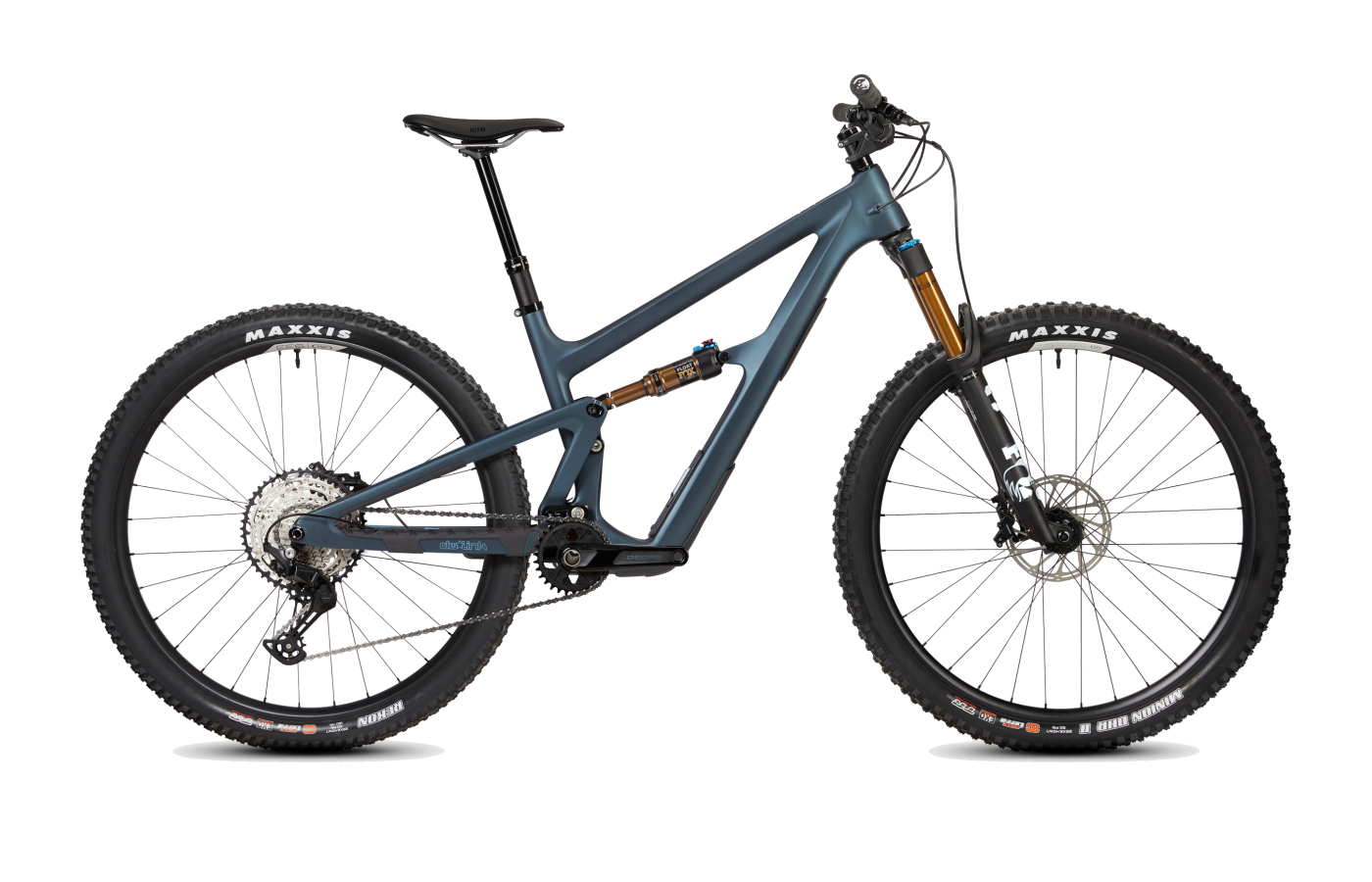
Ripley
Ibis Ripley — the closest spiritual sibling to the Rascal. DW-link suspension, smooth and efficient, and a longer-running brand if Revel's status is a concern.
Compare →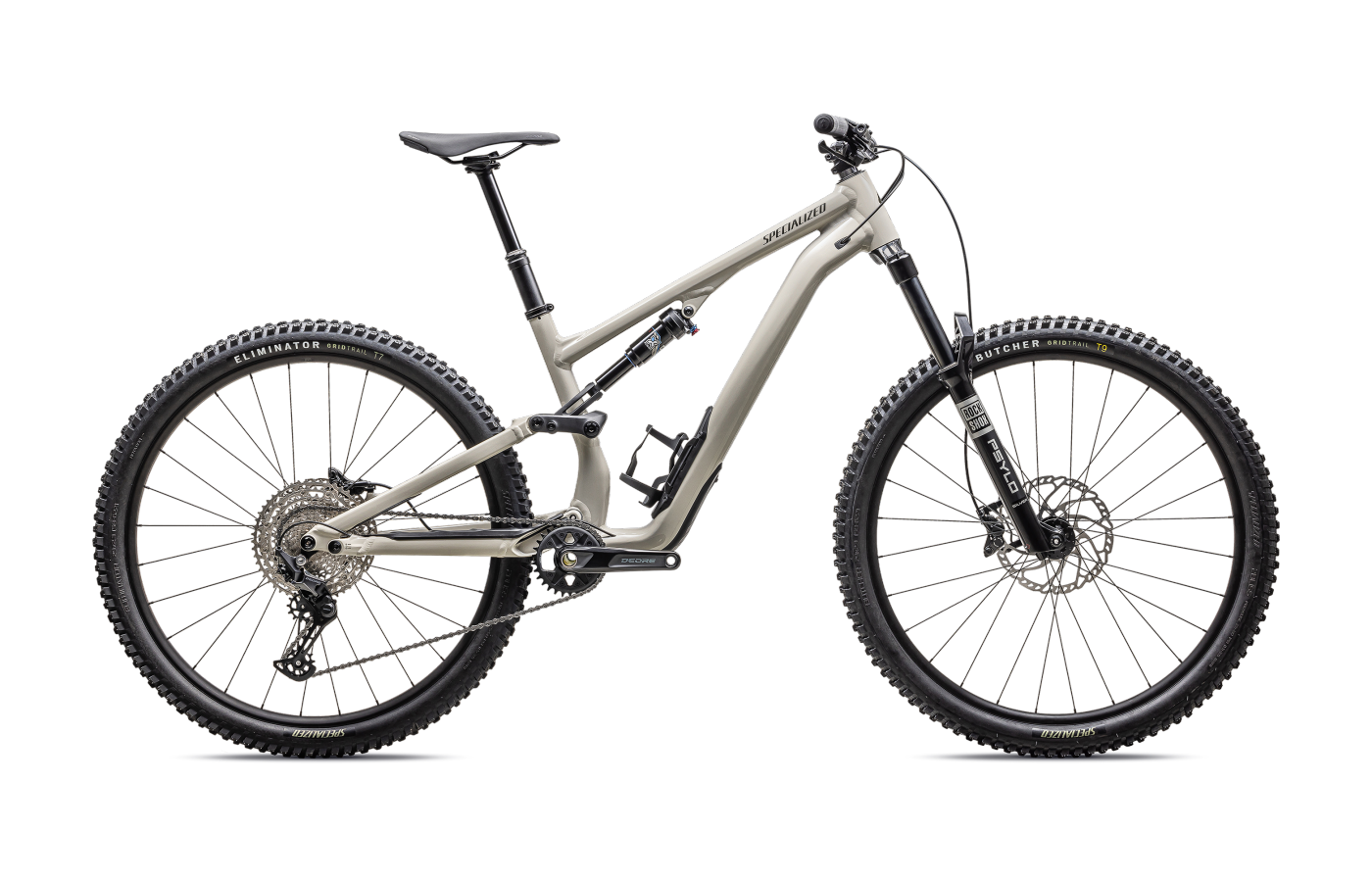
Stumpjumper
Specialized Stumpjumper — the canonical do-it-all trail bike, with adjustable geometry (flip-chip) that splits the difference between Rascal precision and Smuggler aggression.
Compare →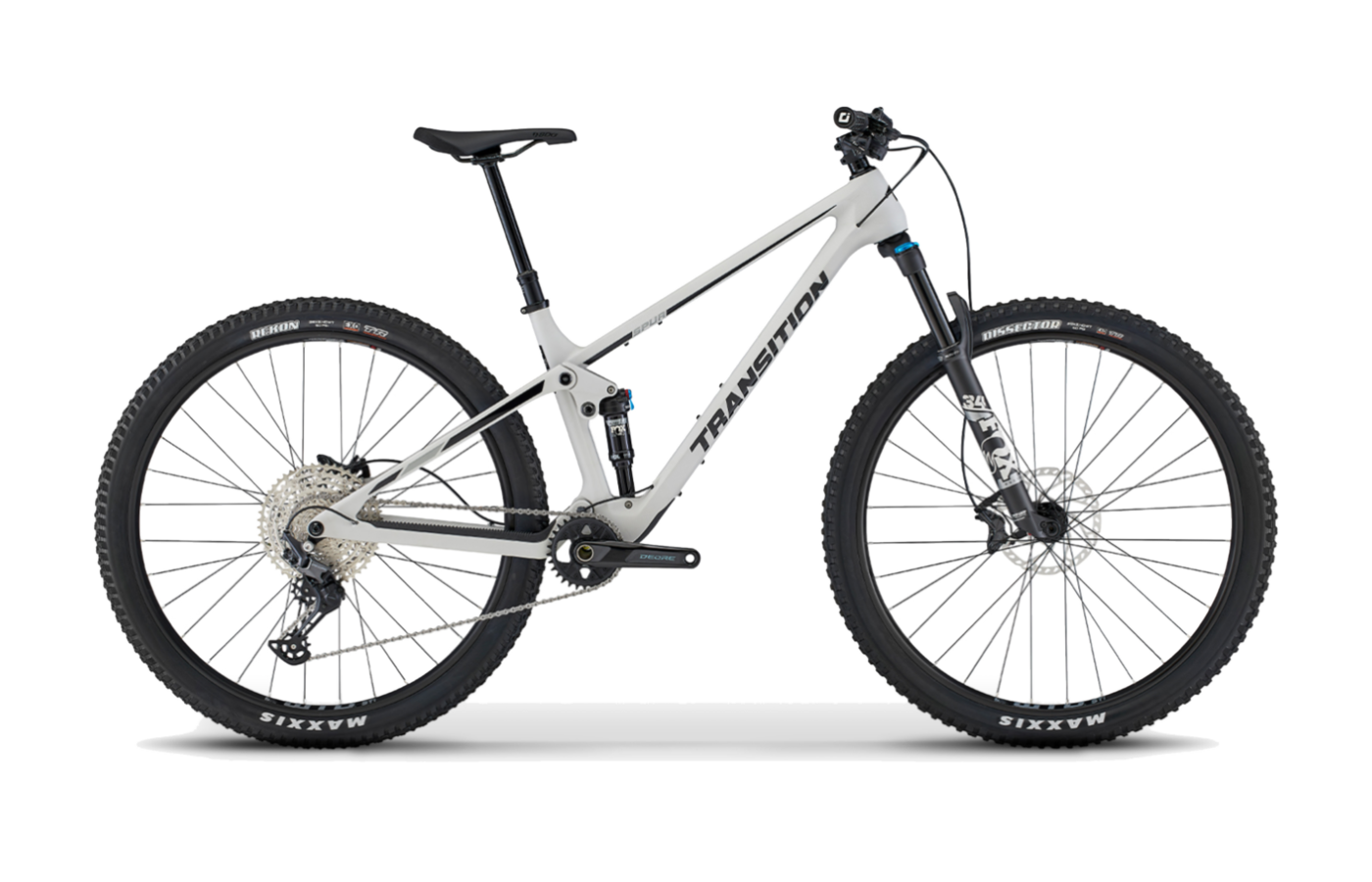
Spur
Transition Spur — the Smuggler's lighter, shorter-travel sibling. If the Smuggler reads as too much bike for your trails, the Spur is a true downcountry whippet that pedals like an XC race bike.
Compare →