Rover
vsStigmata
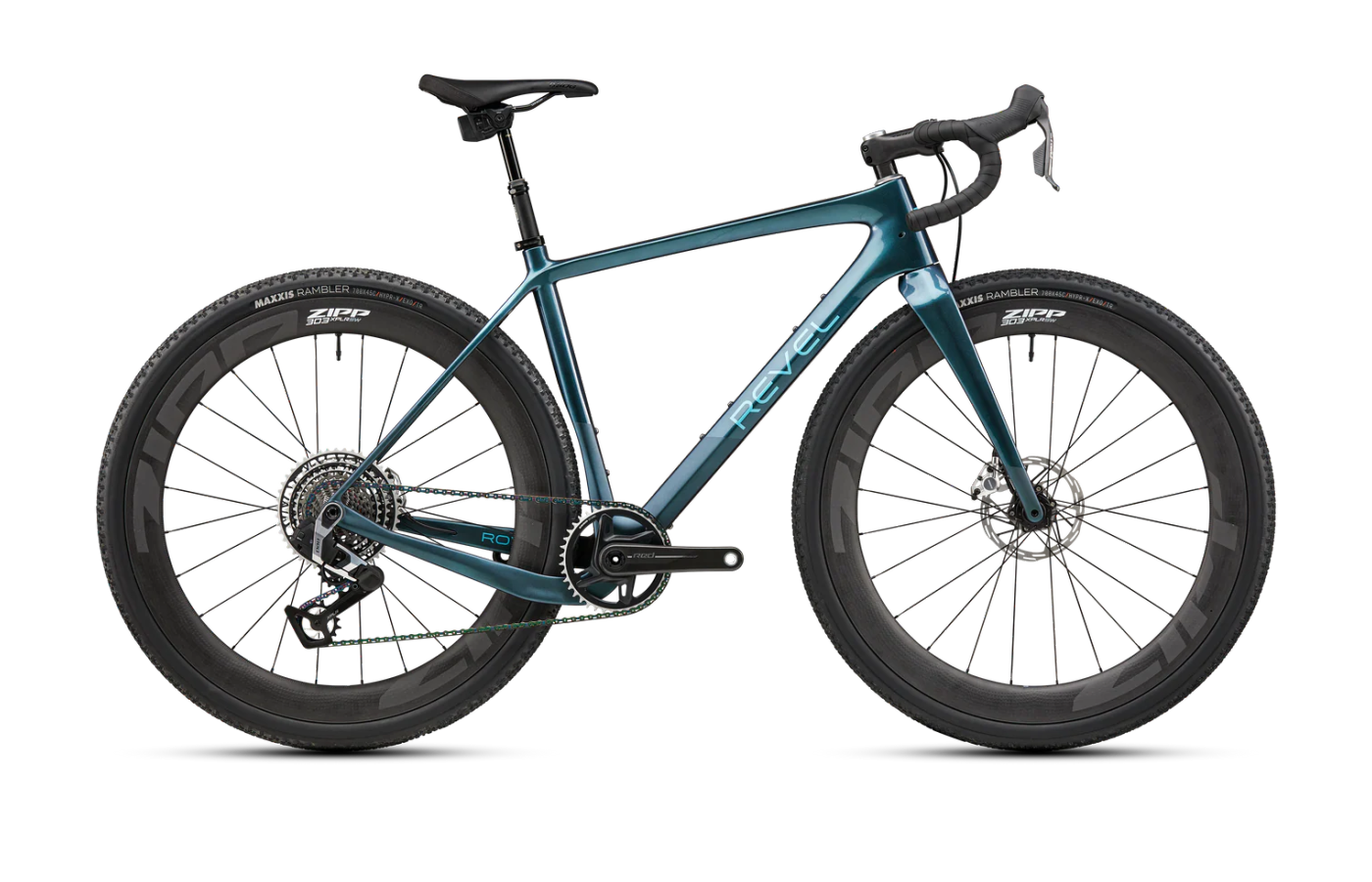
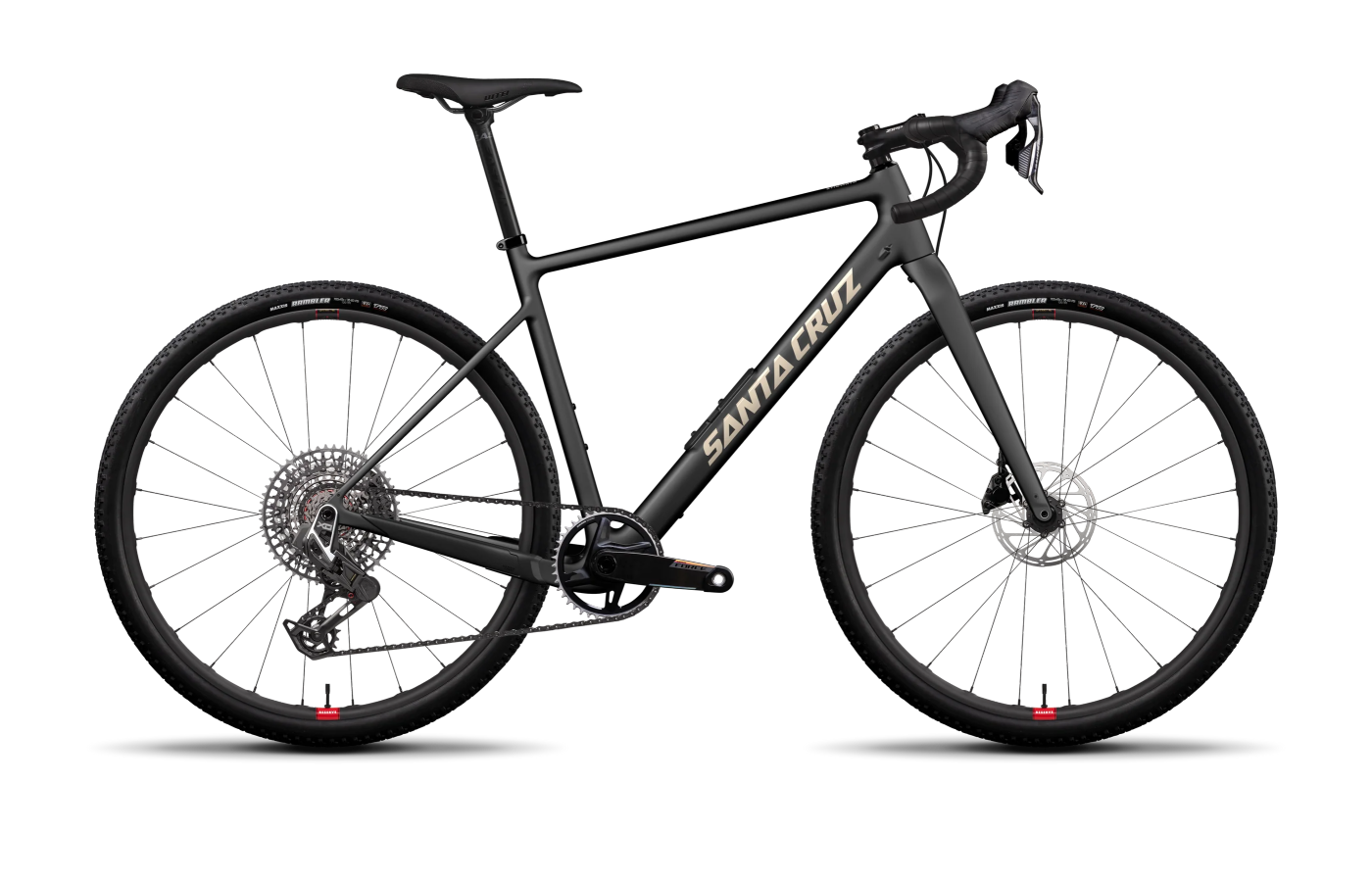
Two carbon gravel bikes, two off-road instincts.
The Revel Rover wins comfort through clever carbon layup. The Santa Cruz Stigmata wins it through slack geometry and a fork port for 40 mm of travel.
Rover
- Engineered compliance — carbon layup tuned for ride smoothness, not lab stiffness; reviewers call it "one of the more cushy carbon experiences" they've had.
- Lighter package — a size S GRX build comes in around 18 lb, with carbon-wheel upgrades dropping to 16.9 lb.
- Quicker steering — 69 mm trail and 420 mm chainstays make it eager on singletrack and punchy climbs.
- 1x-only — no 2x option for riders who want tighter gear steps on long pavement transfers.
- No rack, fender, or top-tube bosses — bikepacking means strap-on bags only.
Stigmata
- Stable in the chunk — a 69.5° head tube and 1,043 mm SM wheelbase make it "effortlessly stable" on rough descents.
- Suspension-corrected — the frame is built around a 430 mm axle-to-crown so you can add a 40 mm Rudy fork later without ruining geometry.
- Service-friendly — 68 mm BSA threaded BB, 27.2 mm round seatpost, UDH, and external cable routing through the head tube.
- Only one carbon grade (CC) — no cheaper layup option, so the $4,149 Apex is the entry point.
- Heavier than the Rover at every comparable build — claimed frame weight is 1,380 g.
Editor’s analysis
Both bikes lean hard into the rough stuff — but they get there from opposite ends of the engineering map.
The Revel Rover and Santa Cruz Stigmata both share a 50 mm tire clearance, both run carbon frames, and both come from brands that built their name in mountain biking. From there the philosophies diverge fast. The Revel Rover stays geometrically conservative — a 71.5° head tube, 69 mm of trail, 420 mm chainstays — and chases compliance through carbon layup. Santa Cruz Stigmata goes the other way: a 69.5° head tube, 423 mm chainstays, and a frame explicitly suspension-corrected for a 40 mm RockShox Rudy XPLR fork.
On dirt, this plays out exactly how the numbers suggest. Reviewers describe the Revel Rover as "sharp and eager on singletrack" with "accurate turn-in" — quicker steering, more rider input rewarded, a touch squirrely once you're truly fast and loose. The Santa Cruz Stigmata, by contrast, gets called "effortlessly stable in chunk" and a bike that makes the rider feel "more capable than they are." That stability comes at a cost: it requires more body english to flick around at low speed, and the slacker front end can wander on steep, technical climbs.
The build menus reflect the same divergence. The Revel Rover is 1x-only across the line — no 2x option, no rack or fender bosses, no suspension-corrected fork length. It's a focused tool. The Santa Cruz Stigmata supports both 1x and 2x, suspension or rigid, and ships with the "Glovebox" downtube storage and external cable routing through the head tube — features built for years of home-mechanic ownership. The Stigmata also costs more at every comparable tier: a Force AXS Rover lands at $4,199; the equivalent Force 1x AXS RSV Stigmata is $6,849.
Put another way: the Revel Rover is the gravel bike a mountain bike company built with the carbon expertise of a mountain bike company. The Santa Cruz Stigmata is a gravel bike a mountain bike company built with the geometry priorities of a mountain bike company. Both are excellent. They're answering different questions.
Where the builds differ.
Comparing our editor's-pick builds side-by-side. Winners highlighted row-by-row — lower price and weight, and the better-spec component, each mark a point.
Build variants & pricing
Both ranges span four-to-five build tiers built around SRAM XPLR drivetrains. The Revel Rover starts cheaper; the Santa Cruz Stigmata only sells CC carbon and tops out with optional Rudy suspension forks.
Prices are current US MSRP. The Stigmata commands roughly $2,000–$2,600 more than the Rover at equivalent SRAM tiers — that's the price of CC-only carbon, the Glovebox, and a frame engineered for suspension-fork compatibility.
How they fit, how they steer.
At the fit-picked sizes, the Stigmata sits 29 mm taller in stack (564 vs 535) and 7 mm shorter in reach (390 vs 397). The 2° slacker head tube and 27 mm longer wheelbase tell the rest of the handling story.
Which size should I buy?
Both bikes use Small/Medium/Large naming with overlapping coverage from XS/S up through XXL — pick the size whose stack and reach fall closest to your road-bike fit.
→These are starting points. Flexibility, riding style, and preferred position all shift the answer — if you’re between sizes, a professional fit beats a chart.
What the magazines said.
Published reviews from trusted cycling outlets. Click through for the full write-up.
Which one should you buy?
If you want a quick-handling carbon gravel bike that rewards an active rider, get the Revel Rover. If you want a confidence-inspiring chassis that can grow into a 40 mm-travel half-MTB, get the Santa Cruz Stigmata.
Rover
If your gravel days mix flowy singletrack, punchy climbs, and choppy fire roads — and you'd rather feel the bike respond to your inputs than be carried through chunder — the Rover's quicker steering and engineered compliance reward you for riding well. Lighter, livelier, and (at $4,199 in Force AXS trim) noticeably cheaper.
Stigmata
If you want a gravel bike that can hold its line through genuinely technical descents, accept a 40 mm suspension fork without skipping a beat, and stay easy to live with for a decade — this is it. The Glovebox, UDH, and CC-only carbon frame are built for the long haul.
Questions buyers actually ask.
Short answers to the things we get emailed about most often.
01Which one handles rough, technical descents better?
The Santa Cruz Stigmata, by a clear margin. Its 69.5° head tube angle, 1,043 mm wheelbase in size SM, and tall stack put the rider in a stable, planted position that reviewers describe as "effortlessly stable in chunk." Multiple testers reported their fastest descending times on it without realizing how fast they were going.
The Revel Rover's quicker 71.5° head angle and shorter 1,016 mm wheelbase make it more agile, but Velo's reviewer noted it "can feel a bit squirrely when it gets fast and loose."
02Which is more comfortable on long days?
Both are comfortable, but they get there differently. The Revel Rover chases compliance through carbon layup — Theradavist called it "the first carbon chassis I've ridden that feels smooth and doesn't leave me fatigued after rough and rugged roads."
The Santa Cruz Stigmata is engineered with a roughly 10–12% reduction in lateral and bottom-bracket stiffness vs. its Gen 3 predecessor, but its real comfort gain comes from the option to add a 40 mm RockShox Rudy XPLR fork. With the fork installed, reviewers describe the front end as "cush" and well worth the weight penalty on 250 km efforts.
03Can I run a suspension fork on either of them?
Only on the Santa Cruz Stigmata. The frame is suspension-corrected around a 430 mm axle-to-crown height, so you can swap to a 40 mm RockShox Rudy XPLR (or Fox 32 Taper-Cast) without ruining the geometry. Two of the stock builds even ship with the Rudy already installed.
The Revel Rover is rigid-only — its Revel Gravel Fork has a 47 mm offset and a fixed axle-to-crown that wasn't designed for a suspension swap.
04What's the maximum tire clearance on each?
Both clear 50 mm tires officially, which is gravel-bike-large. Both ship with 700×45c Maxxis Ramblers as the stock tire across most builds.
If you regularly run 50 mm rubber, double-check your wheel choice — wider internal rim widths (24+ mm) push tire casings outward and can eat into chainstay clearance on either bike.
05Can either run a 2x drivetrain?
Only the Santa Cruz Stigmata. Santa Cruz offers both 1x and 2x build configurations, and the frame supports a front derailleur mount for riders who want tighter gear steps for high-speed group rides on mixed surfaces.
The Revel Rover is 1x-only — the frame doesn't have the cable routing or front-derailleur mount for a 2x setup. Velo and GearJunkie both flag this as a limitation for riders who prefer a 2x road-style cassette.
06Which is better for bikepacking?
Neither is purpose-built for it, but the Stigmata is the more bikepacking-friendly of the two. It includes the "Glovebox" downtube storage, fender mounts, and a third bottle cage mount under the downtube — plus reviewers consistently praise it as "strong as an ox" for loaded use.
The Revel Rover has no rack, fender, or top-tube bosses at all. Bikepacking on the Rover means relying entirely on strap-on systems, which all four reviews flag as the bike's most-cited limitation.
07How serviceable are they at home?
Both score well — and notably better than most modern aero-integrated bikes.
The Revel Rover uses a 68 mm BSA threaded bottom bracket, fully guided internal routing for brakes and dropper, and a SRAM UDH. GearJunkie called the frame's threaded BB and UDH a meaningful long-term value.
The Santa Cruz Stigmata matches the BSA threaded BB and UDH, adds a refreshingly normal 27.2 mm round seatpost with an external collar, and uses internally guided cable tubes that enter the side of the head tube — meaning you can swap stems or bars without bleeding brakes. Velo's reviewer called it "one of the more home mechanic-friendly carbon gravel bikes you'll find."
08How do the prices compare across the build range?
The Revel Rover ranges from $3,220 (Shimano GRX 12) to $8,299 (SRAM Red AXS), with mid-tier Force AXS and Rival XPLR builds both at $4,199.
The Santa Cruz Stigmata ranges from $4,149 (SRAM Apex) to $7,549 (Force 1x AXS RSV with Rudy fork). Tier-for-tier, the Stigmata commands roughly $2,000–$2,600 more — a premium that buys CC-only carbon, the Glovebox, suspension-corrected geometry, and Santa Cruz's lifetime frame warranty.
Similar bikes
If your priorities don’t map cleanly onto either of these, one of these adjacent bikes probably fits better.
Hakka MX
If the Revel Rover's compliance-through-layup approach appeals but you want a more established carbon platform, the Ibis Hakka MX delivers similar ride character with a slightly more conservative geometry and broader build availability.
Compare →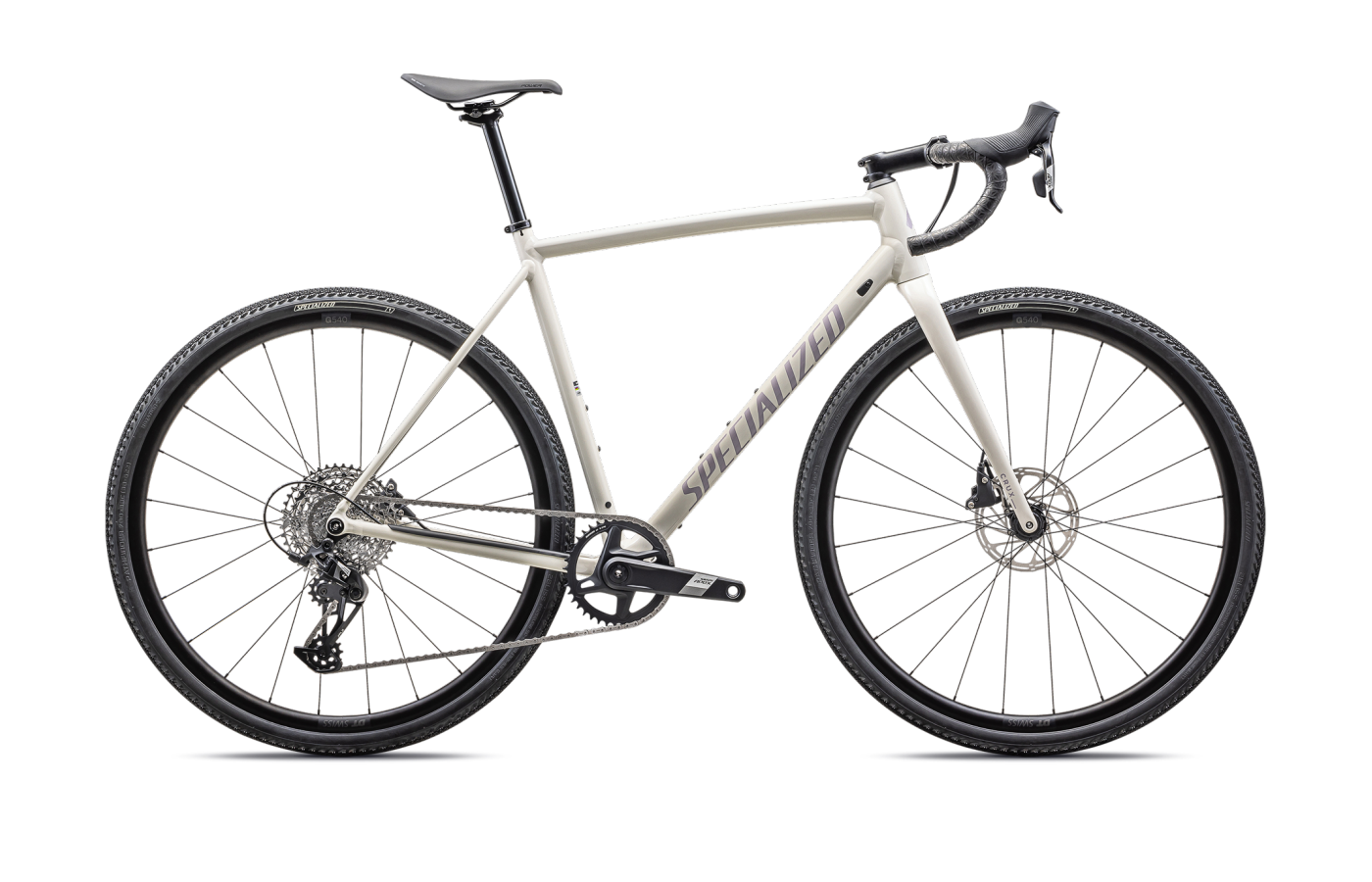
Crux
If the Santa Cruz Stigmata's race pedigree appeals but you'd rather chase grams than suspension-fork compatibility, the Specialized Crux is the lightest production gravel frame in the segment — sharp, racy, and built for going fast on dirt.
Compare →Szepter
If the Stigmata's slack-geometry, suspension-curious philosophy is what draws you, the YT Szepter takes the same brief further — slacker still, dropper post standard, suspension fork stock, and direct-to-consumer pricing that undercuts both bikes here.
Compare →