Altitude
vsEnduro
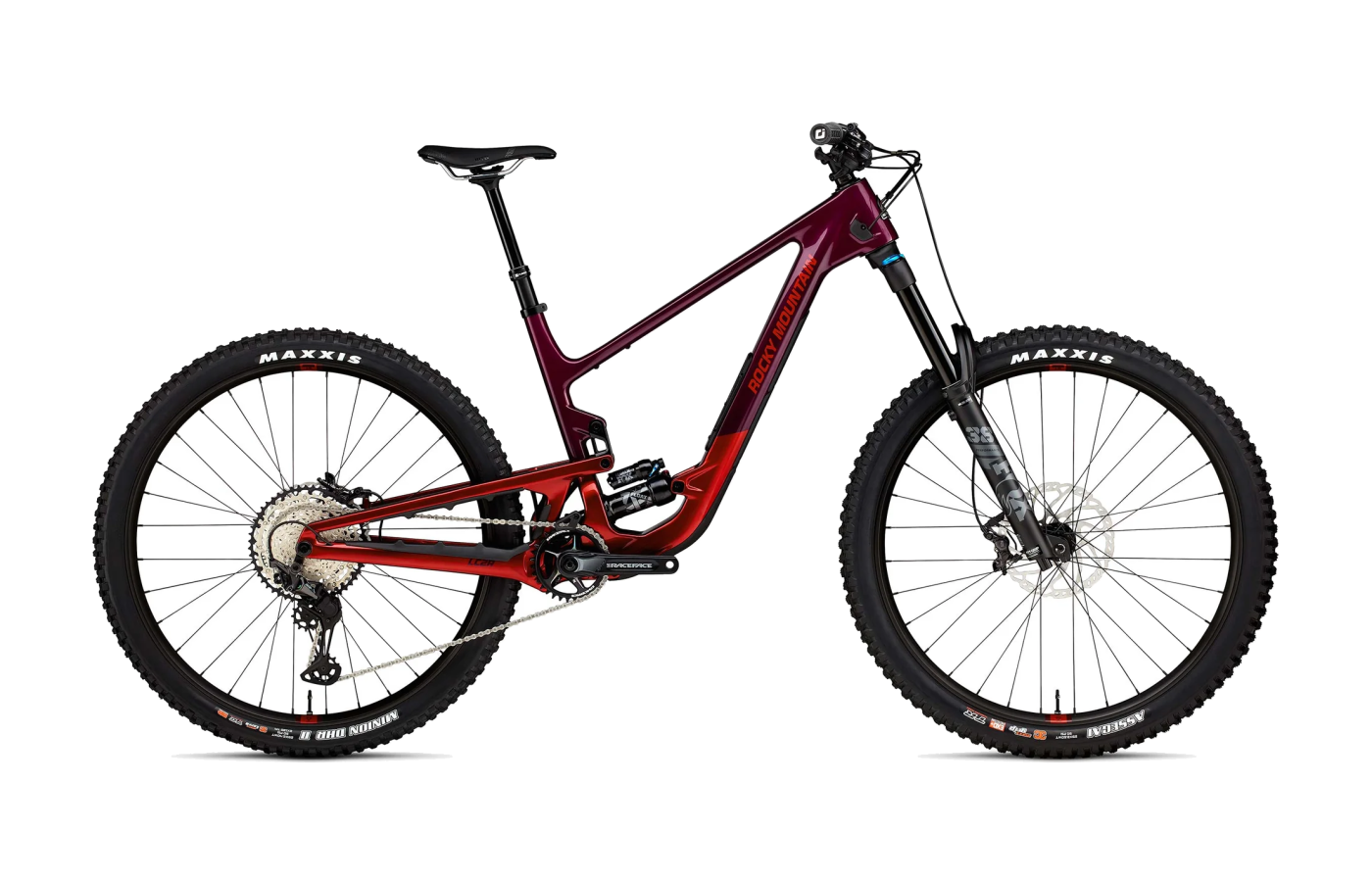
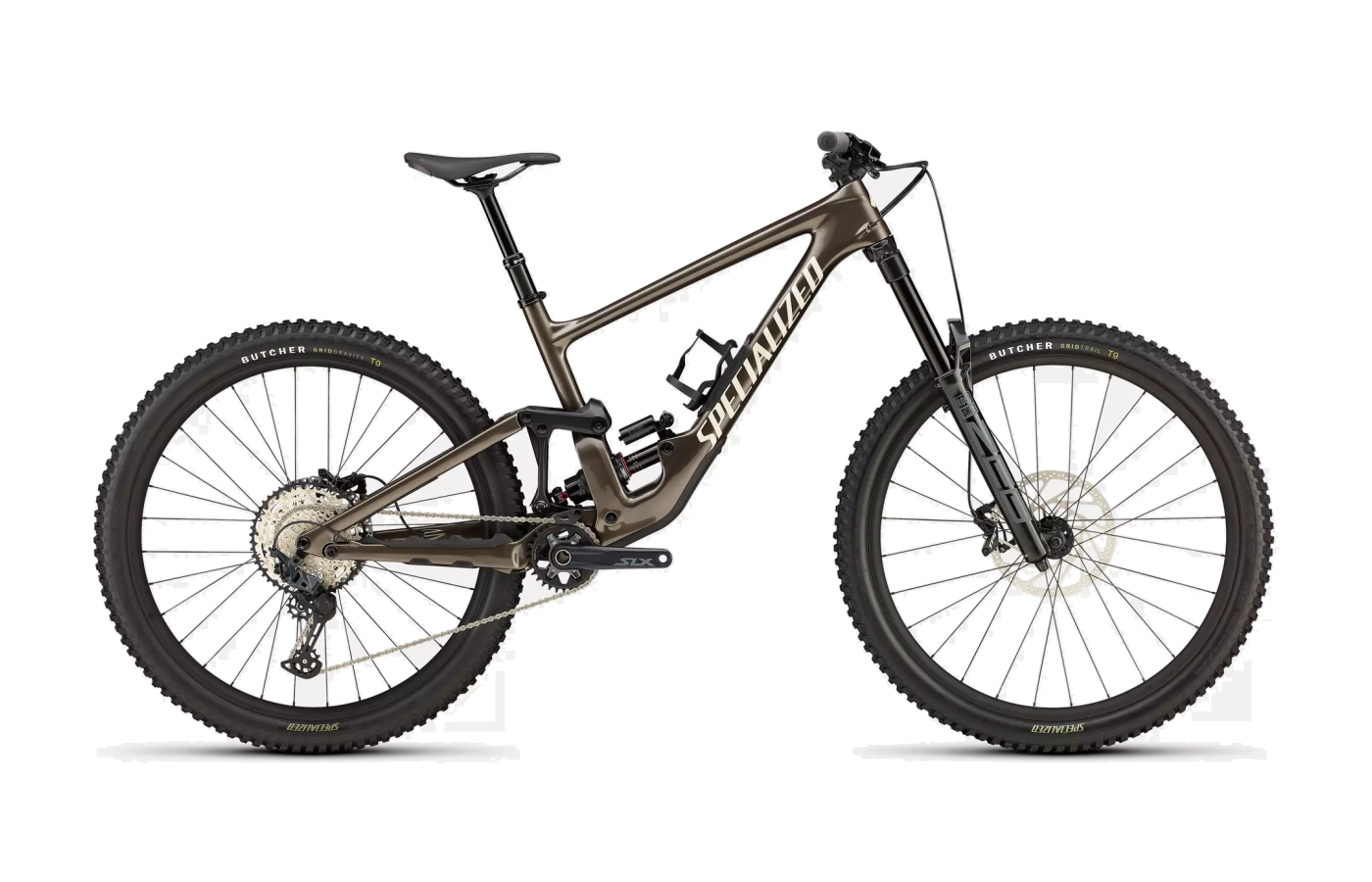
Two enduro race weapons, two ways to go fast.
The Rocky Mountain Altitude is the adjustable, low-slung bump-eraser. The Specialized Enduro is a carbon mini-DH bike that just happens to pedal.
Altitude
- Most adjustable chassis in the segment — Ride-4 flip chip plus reach-adjust headset cups give you four geometry settings and ±5 mm of reach.
- Race-ready out of the box — Maxxis Assegai/DHR II tires with CushCore Trail inserts pre-installed on the Carbon 50 and up.
- Lower entry price — the Alloy 30 starts at $3,999, $1,000 below the cheapest Enduro.
- Long wheelbase (1243 mm in size MD) and slack 62.9-degree head angle make it cumbersome in tight, slow technical sections.
- Recurring early-production niggles — main pivot bolt loosening and dropper rattle — show up across multiple long-term reviews.
Enduro
- Demo-derived rear suspension — a more rearward axle path that maintains momentum through repeated square-edged hits.
- Integrated SWAT downtube storage — routinely cited as 'so good it's hard to go back to bikes without it.'
- Slightly steeper, slightly shorter — 64.3-degree HTA and 442 mm stays make it a touch more nimble at slower speeds than the Altitude.
- Only two builds in the lineup, both carbon — no alloy option and no entry-level price.
- Stock Butcher GRID TRAIL tires are widely flagged as too light for the bike's capability — plan on an upgrade.
Editor’s analysis
Both bikes carry 160-170 mm of travel and a sub-64 head angle — the question isn't whether they descend, it's how they want you to ride them.
On the spec sheet, the Rocky Mountain Altitude and the Specialized Enduro look like the same animal: long, slack, carbon enduro race bikes with a 170 mm fork and travel measured in handfuls. Spend any time looking past the bullet points and the philosophies pull apart fast — one is a chassis you tune, the other is a chassis you commit to.
The Rocky Mountain Altitude is built around adjustability. Its LC2R dual-link suspension tucks the shock low in the frame for a planted, low-CG feel, then lets you fine-tune the ride through a Ride-4 flip chip and +/- 5 mm reach-adjust headset cups. Run it at 62.9 degrees and 450 mm chainstays on a Large for full-blast race mode, or steepen it up for tighter trails. The 160 mm of rear travel is on the lower end of the segment, but reviewers consistently call out that it eats square edges with the sensitivity of a longer-travel bike — the trade is a noticeable drop in 'pop' when the trail mellows out.
The Specialized Enduro doesn't really do nuance. It runs 170 mm front and rear, a 64.3-degree head angle, and 442 mm chainstays across every size, with a Demo-derived Horst-link layout designed to maintain momentum through square-edged hits. Reviewers describe it as a 'mini-DH bike' and a 'magic carpet' — the kind of bike that makes you reset your braking points on familiar trails. The S-sizing system lets you pick wheelbase by reach rather than seat tube length, so you choose your stability-vs-agility lane up front, then ride it.
Put another way: the Altitude wants you to dial in a setup. The Enduro wants you to point it at the steepest, fastest thing on the map and hold on. If you're a tinkerer who races multiple venues, the Altitude's adjustability is a real advantage. If you have one home zone and it's relentlessly steep, the Enduro is more bike, more committed, and asks fewer questions.
Where the builds differ.
Comparing our editor's-pick builds side-by-side. Winners highlighted row-by-row — lower price and weight, and the better-spec component, each mark a point.
Build variants & pricing
The Altitude scales from $3,999 alloy up to $5,799 carbon across five builds. The Enduro is carbon-only with just two — $4,999 and $8,499.
Prices are current US MSRP. Specialized doesn't sell an alloy Enduro or a build under $5k — if budget is the constraint, the Altitude is the only option here. Conversely, if you want a flagship AXS Transmission build, only the Enduro Pro currently offers it within this comparison.
How they fit, how they steer.
Altitude in size MD against the Enduro in S2 — the fit-picked sizes for the same rider on each bike. The Altitude sits 14 mm taller in stack, runs 13 mm longer in reach, and a notably slacker 62.9-degree head angle versus the Enduro's 64.3.
Which size should I buy?
Use stack and reach to pick a size on each bike — Specialized's S-sizing decouples seat tube from frame length, so don't size by seat tube alone.
→These are starting points. Flexibility, riding style, and preferred position all shift the answer — if you’re between sizes, a professional fit beats a chart.
What the magazines said.
Published reviews from trusted cycling outlets. Click through for the full write-up.
Which one should you buy?
If you race multiple zones and like to tune the bike to the trail, get the Altitude. If you have one steep, fast home venue and want a mini-DH bike, get the Enduro.
Altitude
If you race a varied calendar and want a chassis you can dial in for each venue — slacker for Whistler, steeper for tight Northeast tech — the Altitude's Ride-4 chip and reach-adjust headset earn their keep. The race-ready tires and CushCore inserts mean you're not spending another $400 to be ready for the start gate.
Enduro
If your trails are sustained, fast, and rough, and you'd happily trade some climbing manners for a bike that flat-out doesn't slow down, the Enduro is the more committed tool. The Demo-derived suspension carries momentum like nothing else in the class — and the SWAT box lets you ditch the pack on big-mountain days.
Questions buyers actually ask.
Short answers to the things we get emailed about most often.
01Which bike has more travel?
The Specialized Enduro, slightly. Both run a 170 mm fork, but the Enduro pairs it with 170 mm of rear travel, while the Rocky Mountain Altitude has 160 mm out back.
In practice, that 10 mm rear-travel difference is less meaningful than the suspension kinematics. The Enduro's Demo-derived rearward axle path is built to keep the rear wheel moving over square-edged hits — the Altitude's LC2R prioritizes a low center of gravity and a progressive ramp (around 36% total progression in published reviews).
02Which climbs better?
Closer than you'd think — and largely a wash on smooth fire-road climbs. Both bikes have steep effective seat tube angles (Altitude 77 degrees, Enduro 76 degrees) and reviewers from Pinkbike, Blister, and Singletracks consistently describe both as 'surprisingly efficient' for their travel.
On technical climbs, the Altitude has the edge — its LC2R suspension delivers what reviewers call 'an endless amount of traction,' clawing up loose, rooty pitches. The Enduro's 40% anti-squat increase makes it a 'firm pedaling platform' on smoother grades, but its longer wheelbase and lower bottom bracket can make tight switchbacks harder work.
03How adjustable is each bike?
The Altitude is the most adjustable bike in the class. Its Ride-4 flip chip offers four geometry positions (head angle 63-63.8 degrees, BB height changes), and reach-adjust headset cups give +/- 5 mm of reach. Reviewers note the 24 possible setting combinations are all in the usable range, and Medium-XL frames can run a mixed-wheel (mullet) setup.
The Enduro has a single flip chip at the lower shock mount (high/low settings) that swaps head angle between roughly 63.9 and 64.3 degrees and adjusts BB height. Its bigger fit lever is S-sizing — frame length is decoupled from seat tube, so you pick wheelbase by reach rather than rider height.
04What size should a 5'8" rider get?
For a 173 cm (5'8") rider, our fit algorithm picks Altitude size MD (450 mm reach, 630 mm stack) and Enduro S2 (437 mm reach, 616 mm stack).
The Enduro's S-sizing is unusual: S2 is the smallest of four sizes (S2-S5) and shares a seat tube length with S3 — so you size by preferred reach, not standover. If you want a longer wheelbase for stability, sizing up to S3 on the Enduro is reasonable for the same rider.
05Which is the better bike-park bike?
Both are well-suited, but for different reasons.
The Altitude ships park-ready: pre-installed CushCore Trail inserts and Maxxis MaxxGrip/MaxxTerra tires save you an immediate $300-400 in upgrades. Its low CG and bump-eraser feel reward shuttle laps and rough chunder.
The Enduro's 170 mm rear travel and Demo-derived kinematics make it more outright DH-capable — reviewers explicitly call it 'basically a DH bike without a dual crown fork.' But the stock Butcher GRID TRAIL tires are widely flagged as too light for park duty; plan on swapping to a DH-casing tire before your first lift day.
06What's the build quality and reliability story?
Both bikes have well-documented quirks.
The Altitude has a recurring main pivot bolt loosening issue on early units (resolved with proper Loctite per Rocky Mountain), and reviewers across Pinkbike, Blister, and NSMB note dropper-post rattle and internal cable noise. Rocky Mountain backs the frame with a 5-year transferable warranty.
The 2020-2021 Enduro had an infamous headset cracking issue that Specialized addressed for 2022+ frames. Reviewers also flag the suspension's 14 pivot bearings as a long-term maintenance cost. Specialized's warranty support is widely praised — riders who experienced the headset issue reported quick frame replacements.
07What are the standout frame features?
The Altitude carbon frames include the PenaltyBox 2.0 in-frame storage compartment (with a clever AirTag holder), threaded BSA bottom bracket, UDH derailleur hanger, and 2-bolt ISCG05 chainguide tabs.
The Enduro features Specialized's SWAT downtube storage with a hidden multi-tool in the steerer tube — universally praised by reviewers as the best-executed in-frame storage on the market. It also runs a threaded BSA bottom bracket and a SRAM Universal Derailleur Hanger. Both frames offer integrated chainstay and seatstay protection.
08Can I run a coil shock on either?
Yes on both. The Altitude explicitly offers a coil build (Alloy 70 Coil with Fox DHX2 Factory at $4,559), and reviewers strongly recommend coil for the LC2R platform — they describe it as feeling 'deeper, plusher, and gooier' than the air-shock version, with better small-bump compliance.
The Enduro doesn't ship with a coil shock from the factory, but its progressive leverage curve makes it well-suited to one. Pinkbike and Singletracks both note the frame's coil compatibility — the trade is potentially losing some of the 'pop' the air-sprung version retains.
Similar bikes
If your priorities don’t map cleanly onto either of these, one of these adjacent bikes probably fits better.
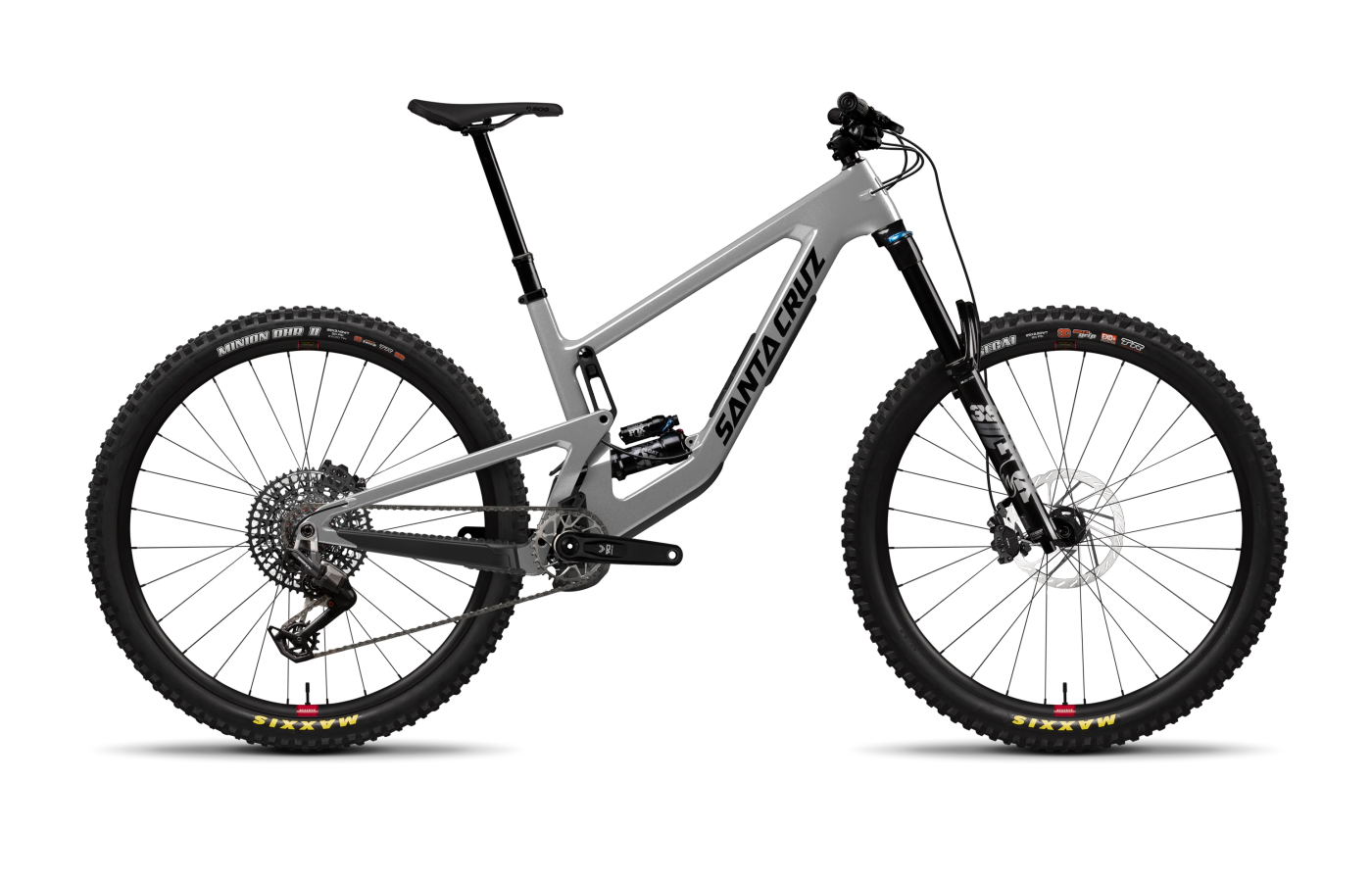
Megatower
The Megatower is the VPP-style alternative — long-travel, planted, and built around the same gravity-first brief as both bikes here. A natural cross-shop if you're already considering the Enduro.
Compare →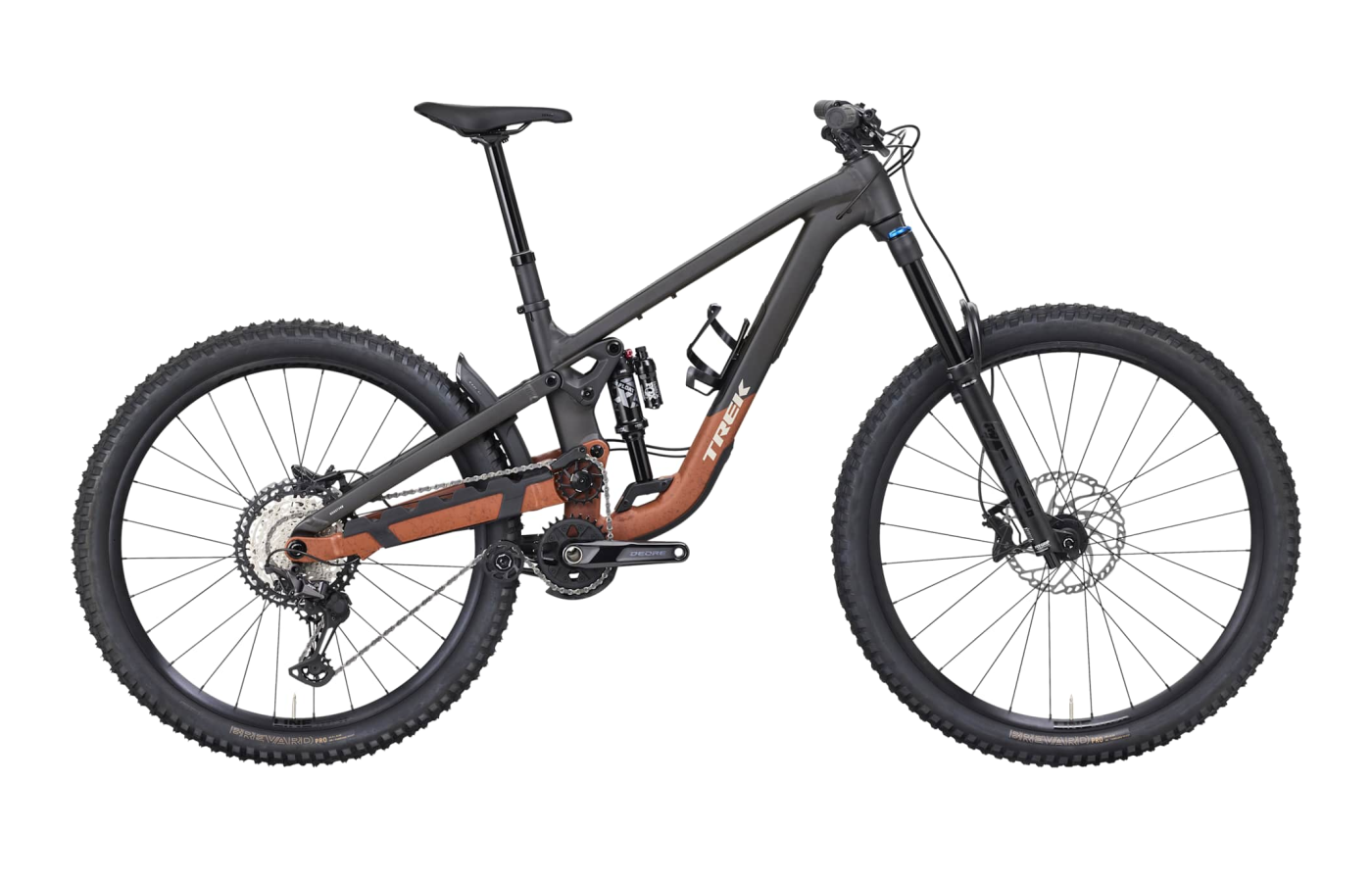
Slash
Trek's long-travel 29er with a more climbing-friendly bias than the Enduro and similar adjustability to the Altitude — worth a look if you want descending capability without quite this level of commitment.
Compare →Capra
The direct-to-consumer counterpunch — same gravity-focused brief at meaningfully lower prices, with the usual DTC catch of no local dealer support and no test rides.
Compare →