Fusion
vsMarlin
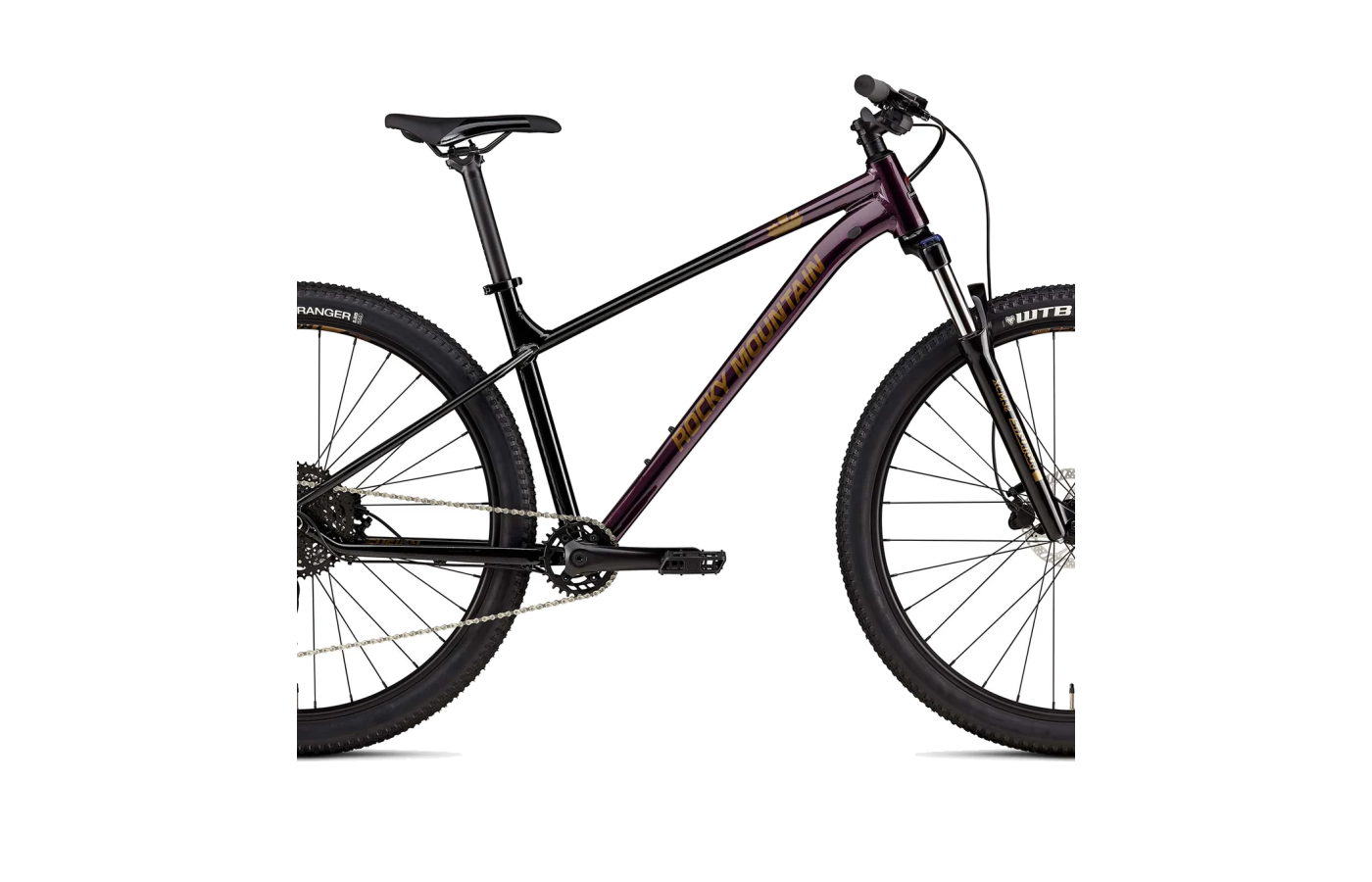
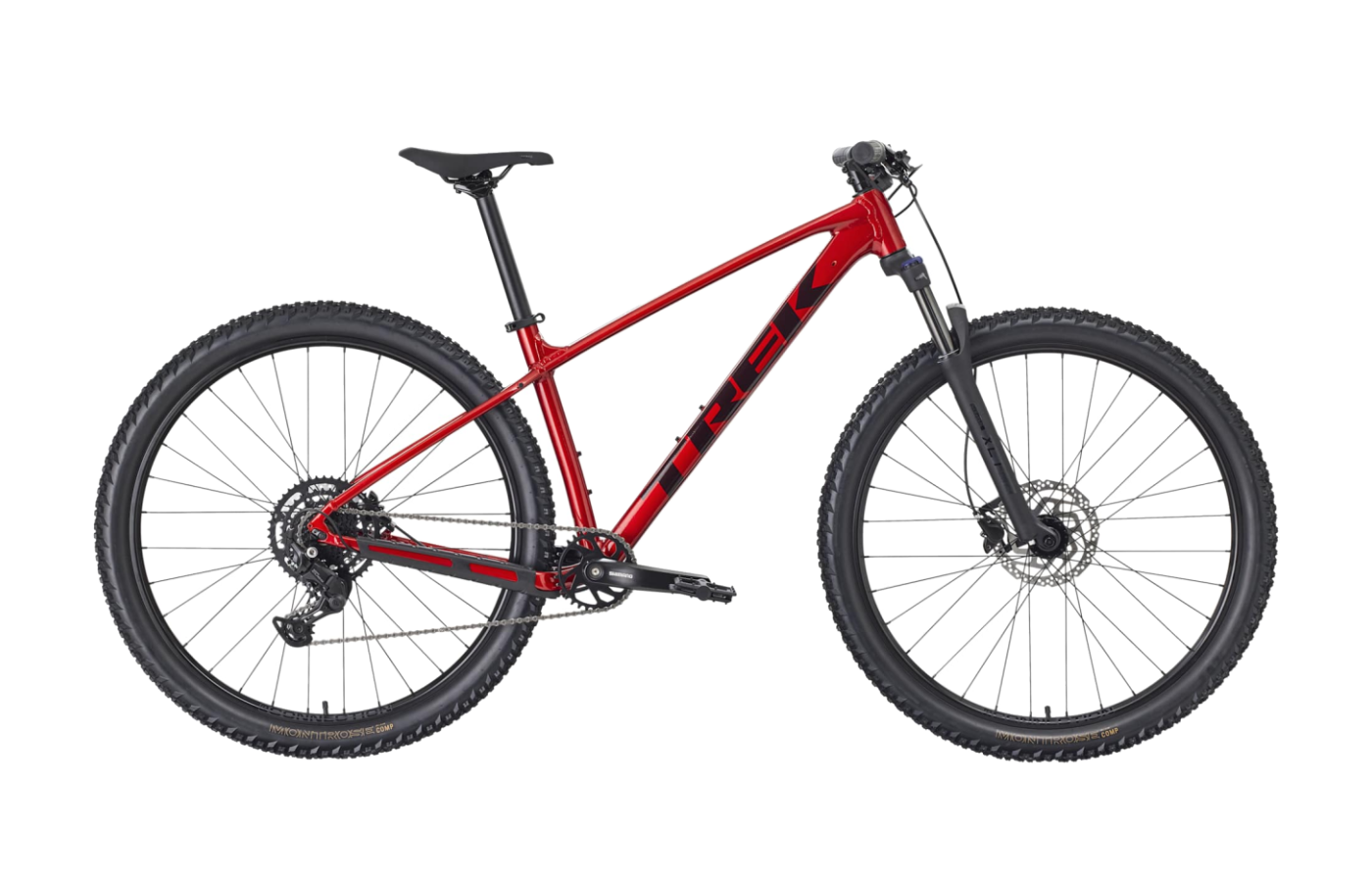
Two entry hardtails, two spec-sheet philosophies.
The Rocky Mountain Fusion arrives as a single $909 build — take it or leave it. The Trek Marlin ladders from $629 to $1,399, asking you to pick a lane.
Fusion
- 120 mm fork stock — more travel than any Marlin ships with, giving the Fusion a slightly more trail-oriented posture out of the box.
- Sharp single price at $909 — undercuts the closest Marlin trim (5 Gen 3 at $849) by a hair once you factor in the extra fork travel.
- Steeper 74.5° seat tube — a full degree steeper than the Marlin, placing the rider more directly over the pedals for climbing.
- Exactly one build — no budget step-down, no upgraded option.
- Review coverage is thin; fewer long-term reports to pressure-test durability claims.
Marlin
- Real build ladder from $629 to $1,399 — you can pick the spec that fits your budget and your trail ambitions.
- Modernized Gen 3 geometry — the 66.5° head angle and longer reach earned consistent praise for confidence on descents.
- Upgrade-friendly touches — internal dropper routing, rack/fender mounts, and Trek's lifetime frame warranty.
- Straight 44 mm head tube and ThruSkew rear axle limit aftermarket fork and wheelset upgrades.
- Lower Marlin trims use basic SR Suntour coil forks with no lockout — reviewers flagged noticeable pedal bob.
Editor’s analysis
This is a fight about how much bike you actually need to get started — and whether a bigger range of builds is worth the extra badge-hunting.
On paper, these two look identical. Both are aluminum hardtails with 66.5-degree head tube angles, both run 2.4-inch Maxxis Rekon tires, both sit firmly in the entry-XC / light-trail bracket. Put a beginner on either and they'll have a good time on a green or blue trail. The divergence is in how each brand packages the entry-level pitch.
The Rocky Mountain Fusion is a one-build catalog. There's the Fusion 10 at $909, and that's it — Shimano CUES 9-speed, SR Suntour XCM32 coil fork with 120 mm of travel, Rocky Mountain TR25 wheels, Maxxis Rekons. It's the classic single-SKU entry bike: pick your size, hand over the money, go ride. The 120 mm fork is the most interesting number on the spec sheet — 20 mm more than any Marlin ships with, which nudges the Fusion a hair toward trail duty.
The Trek Marlin is a four-build platform. The Marlin 4 ($629) runs a 3x7 drivetrain for total beginners; the Marlin 5 ($849) steps up to a 9-speed Shimano CUES with hydraulic brakes; the Marlin 6 ($999) adds a RockShox Judy coil and a 10-speed CUES; the Marlin 7 ($1,399) tops the range with an air-sprung Judy Silver, SRAM SX Eagle 1x12, and a TranzX dropper post. Reviewers consistently flag the Marlin 7 and 8 as the trail-ready picks — the cheaper builds are more squarely commuter-adjacent.
Put another way: if you know you want a single hardtail for mellow trails and light bikepacking, the Fusion 10's 120 mm fork and simple spec make it an honest starting point at a sharp price. If you want room to grow — or you want air-spring suspension and a dropper without waiting for Black Friday — the Marlin's Trek Marlin 7 is the bike that has the parts most first-time trail riders eventually wish they'd bought.
Where the builds differ.
Comparing our editor's-pick builds side-by-side. Winners highlighted row-by-row — lower price and weight, and the better-spec component, each mark a point.
Build variants & pricing
The Fusion comes in a single trim. The Marlin lineup spans four builds — entry-level to trail-ready.
Prices are current US MSRP. The Fusion's sole build sits between the Marlin 5 ($849) and Marlin 6 ($999); the Marlin 7 at $1,399 is a meaningfully different bike (air fork, dropper post, 1x12).
How they fit, how they steer.
Fusion MD and Marlin M — the fit-picked sizes for a 5'8" rider on each bike. Reach is near-identical (450 mm vs 440 mm); the Marlin stacks 11 mm taller for a more upright cockpit, while the Fusion's 7 mm longer chainstay and 5 mm longer wheelbase give it a slightly more planted feel.
Which size should I buy?
Size recommendations based on stack, reach, and effective top tube. The Marlin offers more size granularity (XS through XXL with an ML); the Fusion runs a simpler SM/MD/LG/XL.
→These are starting points. Flexibility, riding style, and preferred position all shift the answer — if you’re between sizes, a professional fit beats a chart.
What the magazines said.
Published reviews from trusted cycling outlets. Click through for the full write-up.
Which one should you buy?
If you want a single honest entry hardtail with a touch more fork travel, get the Fusion. If you want build-ladder choice and a path to a dropper-post trail bike, get the Marlin.
Fusion
If you want one hardtail, one price, one spec sheet to think about — and you like the 120 mm fork nudging the bike a hair toward trail duty — the Fusion 10 is the honest pick. It won't grow with you, but it will start you right.
Marlin
If you want to pick your spec — commuter-grade on the Marlin 4 or 5, trail-ready on the Marlin 7 with its air fork and dropper — the Marlin gives you the range the Fusion doesn't. The Gen 3 geometry earned its stripes from serious reviewers.
Questions buyers actually ask.
Short answers to the things we get emailed about most often.
01Which has more suspension travel?
The Rocky Mountain Fusion 10, by 20 mm. It ships with an SR Suntour XCM32 DS coil fork at 120 mm travel.
Every Trek Marlin Gen 3 build ships with 100 mm travel — RockShox Judy Silver air on the Marlin 7, RockShox Judy coil on the 6, SR Suntour XCT on the 5, and SR Suntour XCE 28 on the 4.
Trek does say the Marlin frame is rated for a 120 mm fork upgrade, so the gap is closeable — but only by spending more money on top of the purchase.
02Which is cheaper to get into?
The Trek Marlin 4 at $629 is the cheapest way onto either platform. The Fusion's only build is $909, and the closest Marlin trim by price is the Marlin 5 at $849.
If you'd rather spend up, the Marlin 7 tops the range at $1,399 — considerably more than the Fusion, but it's also the only build in either lineup that comes stock with an air-sprung fork and a dropper post.
03Which geometry is better for descending?
Both bikes run an identical 66.5-degree head tube angle, so on paper they're equally slack for the entry-XC / light-trail class.
The Marlin (size M) stacks 11 mm taller than the Fusion (size md) with a 10 mm shorter reach, which puts the rider in a more upright, confidence-inspiring position on descents. The Fusion's 7 mm longer chainstay (445 mm vs 438 mm) and longer wheelbase give it a more planted feel at speed but less agility in tight corners.
Reviewers consistently called the Gen 3 Marlin's descending manners a meaningful step up over its predecessor; the Fusion's descending behavior is less well-documented.
04Can I fit wider tires?
Both bikes ship with Maxxis Rekon 2.4-inch tires (29-inch on size M/md and up, 27.5-inch on smaller sizes), and reviewers note that both frames have meaningful clearance beyond the stock tire.
The Marlin review community has documented 2.4-inch tires fitting comfortably with room to spare, thanks to Trek's dropped drive-side chainstay. The Fusion doesn't publish an official max, but a 2.4-inch Rekon is the stock spec — plan for 2.4" as your confidently-fit ceiling on either bike.
05How upgradable are these frames?
The Marlin Gen 3 has a mixed upgrade story. On the good side: internal routing for a dropper post and a rated 120 mm fork upgrade. On the less-good side: a straight 44 mm head tube (upgrading to a tapered fork requires a new headset) and the 135x5 mm ThruSkew rear axle, which limits aftermarket wheelset options.
The Fusion 10 uses a zero-stack tapered head tube per the spec sheet — more fork-upgrade-friendly than the Marlin's straight head tube. Wheelset upgrades on the Fusion also hit similar axle-standard limitations at this price point.
For most beginners, none of this matters for the first two years. For riders who know they'll upgrade a fork, the Fusion's tapered head tube is a quiet long-term win.
06Which is the better commuter?
Both frames include rack and kickstand mounts, so either works as a daily driver.
The Marlin is the better-documented commuter — reviewers explicitly call out the "dual-duty" pitch, and Trek markets it as a commuter-and-trail package. The lower trims (Marlin 4 and 5) lean more strongly commuter than trail.
The Fusion 10 will do the job mechanically — frame mounts are there — but its review coverage is all trail-focused, so you're buying on spec sheet rather than road-tested reports for commuter use.
07What kind of warranty do they come with?
Trek offers a lifetime frame warranty to the original owner on the Marlin — cited by nearly every review as a significant long-term value factor.
Rocky Mountain's frame warranty on aluminum models is shorter (generally a 5-year frame warranty on alloy hardtails, per published policy). Component warranties vary by manufacturer on both bikes.
For a beginner hardtail that will see years of use before any upgrades, Trek's warranty is a meaningful tiebreaker.
08Which is the better all-around first mountain bike?
For most first-time trail riders, the honest answer depends on budget and build preference.
If you have ~$900 and want one clear choice, the Fusion 10's longer 120 mm fork and tapered head tube give it a slight edge as a long-term platform. If you want ~$629 to get started or want to stretch to $1,399 for a real trail-ready spec (air fork + dropper + 1x12), the Marlin's ladder gives you options the Fusion doesn't.
Both bikes will easily handle green and blue trails. Neither is built for black-diamond terrain — that's Trek Roscoe or Rocky Mountain Growler territory.
Similar bikes
If your priorities don’t map cleanly onto either of these, one of these adjacent bikes probably fits better.
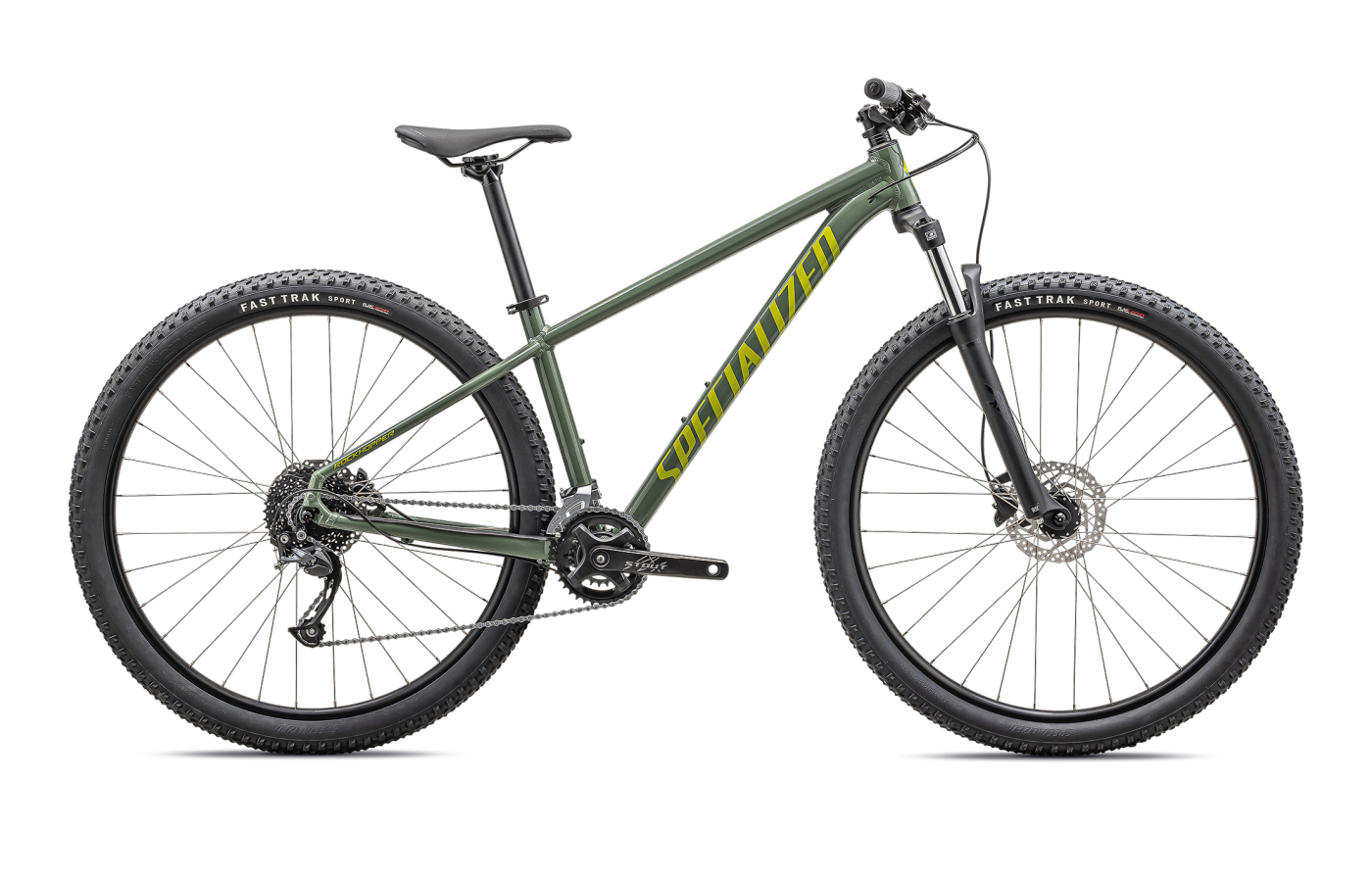
Rockhopper
A longtime entry-hardtail benchmark — the Rockhopper's scale of production and wide size run (11 sizes!) makes it the easiest bike in this class to actually buy in your size.
Compare →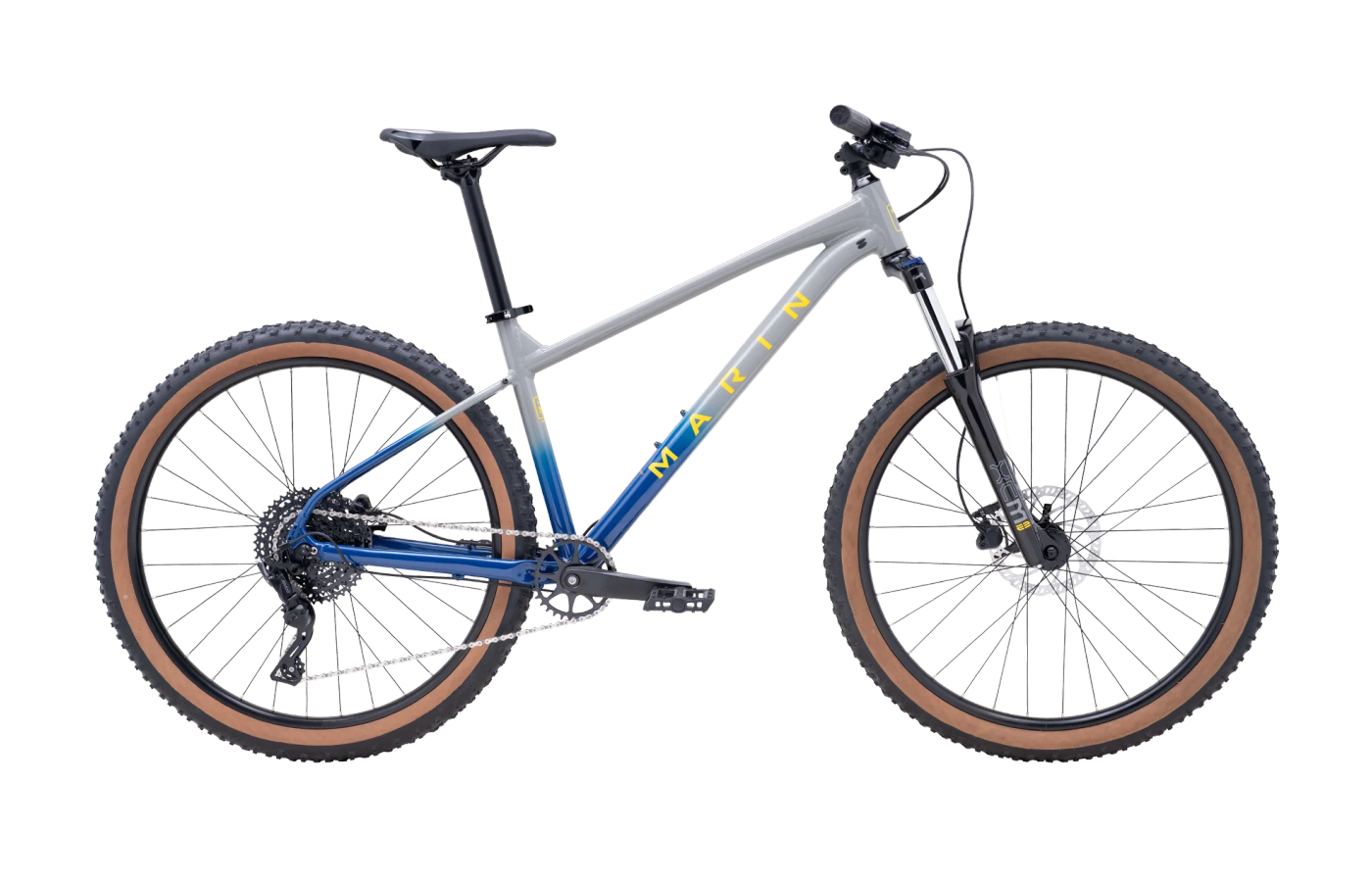
Bobcat Trail
Marin's entry-trail contender — punches above its price with modern geometry and is a common cross-shop for the Marlin in the sub-$1,500 bracket.
Compare →Roscoe
The Roscoe is what the Marlin reviewers keep pointing you toward when you outgrow the Marlin — longer-travel fork, burlier spec, and a real trail personality if you know you want it from day one.
Compare →