Cutthroat
vsStigmata
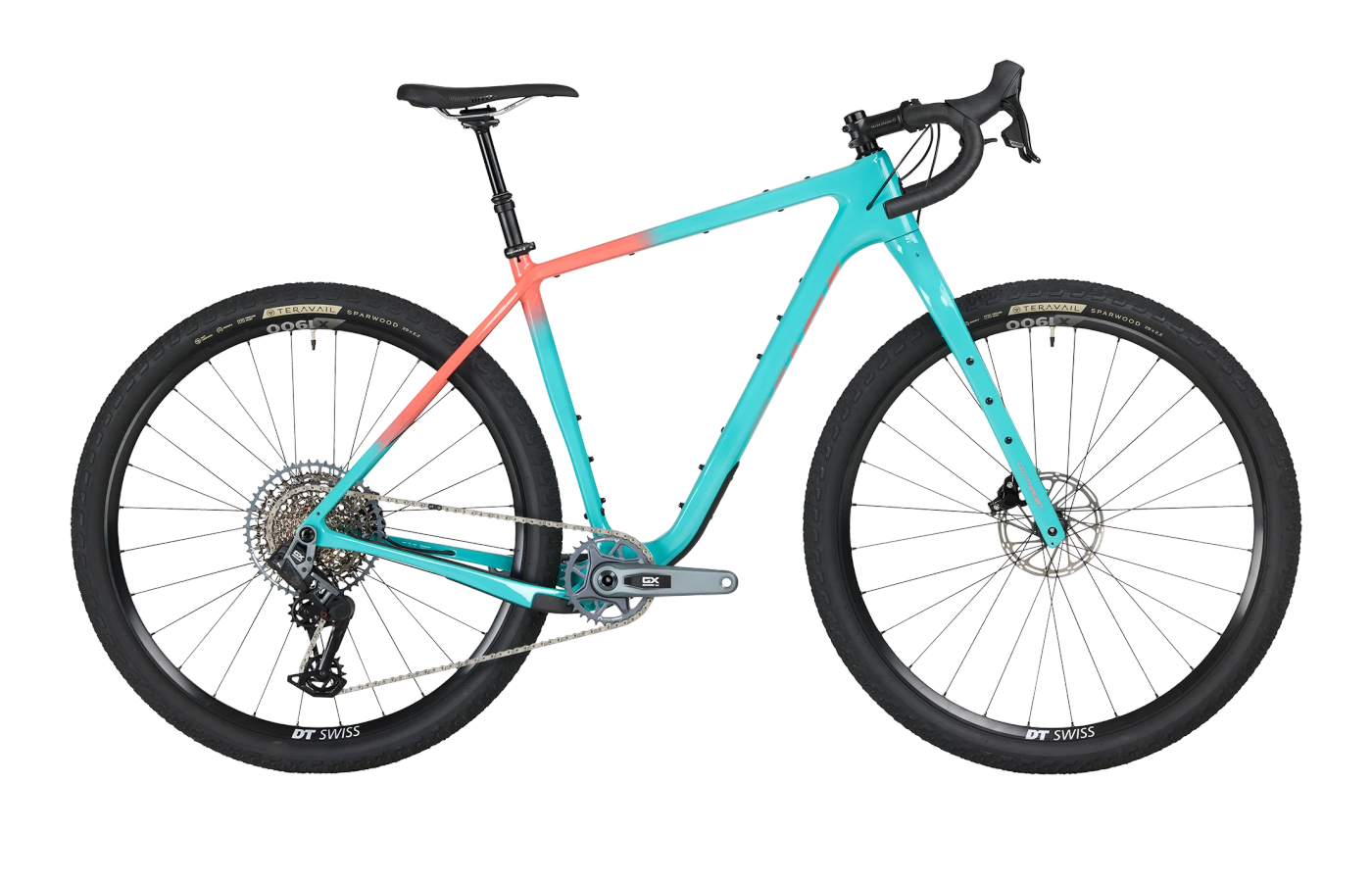
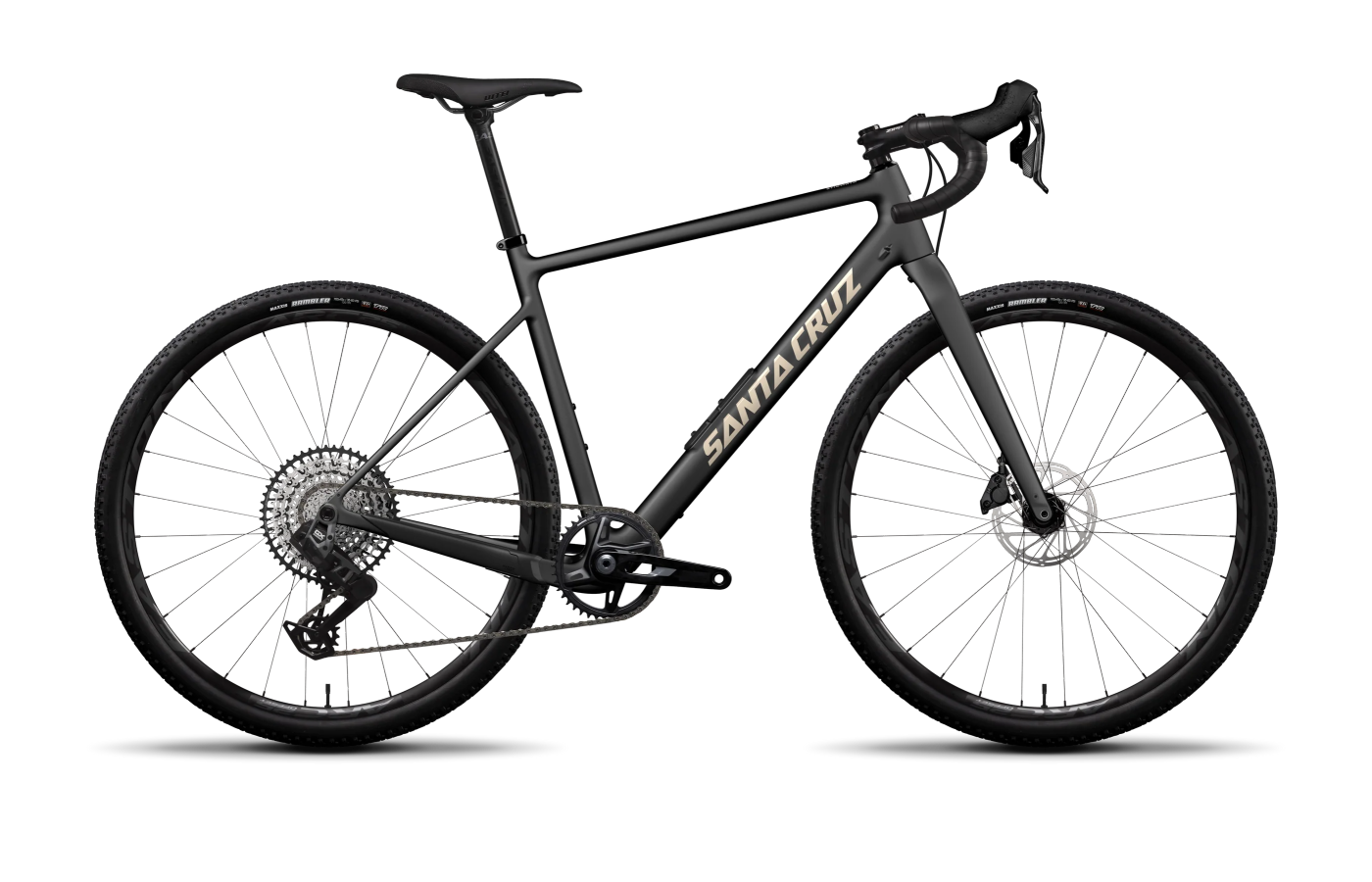
Two drop-bar mountain bikes, two missions.
The Cutthroat is a Tour Divide rig built to swallow gear and miles. The Stigmata is a progressive race bike built to underbike singletrack.
Cutthroat
- Massive tire clearance — 61 mm officially, with a stock 29x2.2" Teravail Sparwood that rolls fast and floats over chunk.
- Bikepacking-first chassis — 20+ mounting points, a direct-mount frame pack, and a 619.5 mm stack built for all-day posture.
- Always-on compliance — Class 5 VRS frame and 32%-more-compliant V2 fork damp washboard without adding suspension weight.
- Long, slack geometry asks for real rider input in tight, slow switchbacks.
- Press-fit BB92 bottom bracket — a recurring complaint, even if Salsa's tolerances mostly contain the creak.
Stigmata
- Progressive geometry — 69.5° HTA, 30 mm more reach, and a 70 mm stem make it stable in the chunk yet snappy on tight turns.
- Suspension-corrected — add a 40 mm Rudy fork later without ruining the geometry; rigid out of the box if you want it.
- Mechanic-friendly — threaded BSA bottom bracket, 27.2 mm round seatpost, UDH, external head tube routing. No proprietary cockpit games.
- Heavier than the lightest carbon racers — claimed 1,380 g frame, ~120 g over the Stigmata 3.
- Tire clearance maxes at 50 mm — wide for gravel, but well short of the Cutthroat's 29 x 2.4" headroom.
Editor’s analysis
Both wear drop bars and carbon — but one is built for days on the bike, the other for hours in the chunk.
The Salsa Cutthroat and Santa Cruz Stigmata land in the same off-road-leaning corner of gravel, and at first glance they share the same playbook: long wheelbase, slack head angle, suspension-corrected fork, mountain-bike-flavored geometry. But the missions diverge sharply once you look past the silhouettes.
The Salsa Cutthroat is purpose-built around the Tour Divide — 2,745 miles of remote dirt from Banff to Antelope Wells. That charter is visible everywhere: 29x2.2" tires with clearance up to 61 mm, more than 20 frame mounts, a direct-mount frame pack, and a 619.5 mm stack on the size 56 that puts you in a posture you can actually hold for fourteen hours. Salsa's Class 5 VRS — outward-curving seatstays and a redesigned fork claiming 32% more compliance than the V1 — keeps the chassis quiet without strapping a shock to the front. It's the bike you take when stopping isn't an option.
The Santa Cruz Stigmata 4 is a different animal: a CC carbon race chassis aimed at fast, rough, increasingly mountain-bike-like courses. Santa Cruz dropped lateral and BB stiffness 10–12% versus the Stigmata 3, slackened the head tube to 69.5°, stretched reach by ~30 mm, and locked in a 70 mm stem across every size to keep low-speed steering snappy. The frame is suspension-corrected for a 40 mm RockShox Rudy fork, and reviewers describe later braking, more apex commitment, and one tester noting their fastest-ever descent times. Tire clearance tops out at a 50 mm — generous, but a full 11 mm narrower than the Cutthroat.
Put another way: the Salsa Cutthroat is the bike you buy when 'gravel' means a week of dirt and freeze-dried meals. The Santa Cruz Stigmata is the bike you buy when 'gravel' means Unbound, the local underbike loop, and a course that should probably have a hardtail on the start list. Both are excellent. They are not interchangeable.
Where the builds differ.
Comparing our editor's-pick builds side-by-side. Winners highlighted row-by-row — lower price and weight, and the better-spec component, each mark a point.
Build variants & pricing
Both lineups span ~$3.5k of range. Cutthroat starts cheaper at $3,499 with a 2x GRX build; Stigmata starts at $4,149 with mechanical Apex.
Prices are current US MSRP. The Stigmata is CC carbon only — Santa Cruz doesn't sell a lower-grade C version of this frame. The Cutthroat's GRX 810 2x is the only 2x build in either lineup.
How they fit, how they steer.
Cutthroat 56 vs. Stigmata SM — the fit-picked sizes for a 5'8" rider on each. The Salsa sits 55.5 mm taller in stack with 5 mm less reach; chainstays are 22 mm longer (445 vs. 423 mm) and the wheelbase is 47 mm longer. One bike is built to hold a line. The other is built to flick.
Which size should I buy?
Size picks are anchored on stack, reach, and effective top tube. The Cutthroat runs in cm sizing (52–60); the Stigmata uses XS–XXL — the middle sizes overlap closely on reach but the Salsa always sits taller.
→These are starting points. Flexibility, riding style, and preferred position all shift the answer — if you’re between sizes, a professional fit beats a chart.
What the magazines said.
Published reviews from trusted cycling outlets. Click through for the full write-up.
Which one should you buy?
If you'll spend days self-supported on dirt, get the Salsa Cutthroat. If you'll race underbike-style courses on singletrack and chunky fire roads, get the Santa Cruz Stigmata.
Cutthroat
If your calendar has multi-day routes on it — GDMBR, BWR, your own stitched-together adventure — this is the benchmark. The cargo capacity, the all-day posture, and the always-on compliance add up to a bike you can ride for as long as your legs hold out.
Stigmata
If most of your riding is challenging gravel races and singletrack you 'shouldn't' be on — and you want a bike that's easy to live with for years — the Stigmata's progressive geometry and refreshingly normal standards make it the smarter buy. Add the Rudy fork later when you're ready.
Questions buyers actually ask.
Short answers to the things we get emailed about most often.
01Which has more tire clearance?
The Salsa Cutthroat, by a clear margin. Officially the Cutthroat takes 29 x 2.4" tires (~61 mm), with reviewers reporting fork clearance for as much as 2.8" in practice. The Santa Cruz Stigmata maxes out at 50 mm in 1x trim — generous for a gravel race bike, but well short of the Salsa.
If you ever plan to share the rig with a rigid mountain bike role, the Cutthroat is the only one of the two that comfortably crosses over.
02Can either run a suspension fork?
Yes — both are suspension-corrected, but for very different forks.
Cutthroat: the 483 mm axle-to-crown carbon fork is designed to swap with a 100 mm 29er suspension fork (think SID, Reba) without altering the geometry — basically turning the bike into a rigid drop-bar XC rig with on-demand front travel.
Stigmata: suspension-corrected around a 430 mm axle-to-crown, designed for a 40 mm RockShox Rudy XPLR or Fox 32 Taper-Cast. The Force AXS RSV Rudy build ships with the Rudy from the factory.
03Which climbs better?
Both are competent climbers, but the answer depends on what kind of climbing.
The Cutthroat has a steep 74.25–74.5° seat tube angle that puts you over the pedals well for long, seated grinds — exactly what bikepacking demands. Reviewers note it 'prefers taking things easy' off the line but is one of the more efficient bikes in its category once up to speed. Out-of-saddle steep efforts are where the wheelbase and stack start to feel like work.
The Stigmata's 74° seat tube is similar, and the lighter complete builds (~9.4 kg for the Rival 1x AXS) accelerate more readily. The slack 69.5° head tube can let the front wheel wander on very steep, slow technical climbs — adding weight to the bars handles it.
04How does the press-fit bottom bracket on the Cutthroat hold up?
It's the most-cited critique of the bike. The Cutthroat uses a BB92 press-fit that several reviewers (Bicycling, Road.cc, Biketour-global, GearJunkie) flagged as a known creaking risk. Salsa's defense is that BB92 enables the tire clearance, shorter chainstays, and stiffness profile they wanted.
In practice, Bikepacking.com reported zero issues over 1,400+ miles on the V1 and again on the V2. The Stigmata 4 sidesteps the debate entirely with a standard 68 mm English-threaded bottom bracket — one of the reasons reviewers call it 'mechanic-friendly.'
05How does the geometry actually compare for a 5'8" rider?
On a size 56 Cutthroat vs. a size SM Stigmata — the fit-picked sizes for a 173 cm rider on each — the differences are large.
Stack: Cutthroat 619.5 mm vs. Stigmata 564 mm. The Salsa sits 55.5 mm taller, which is a full posture's worth of difference.
Reach: 385 mm vs. 390 mm. Within 5 mm.
Chainstays: 445 mm vs. 423 mm. The Stigmata's 22 mm shorter rear end is a big part of why it feels so much easier to flick.
Head tube angle: 69° vs. 69.5°. Effectively a wash.
06How much can these carry for bikepacking?
The Cutthroat is one of the most cargo-friendly drop-bar bikes on the market. It has 20+ mounts across the frame and fork — three-pack mounts on each fork leg, top tube mounts, multiple cage bosses inside the front triangle (up to three on larger sizes) — and a custom direct-mount frame pack that bolts to the frame without straps. It's the integrated solution.
The Stigmata 4 takes a different approach: it has the in-down-tube 'Glovebox' storage with neoprene tool/tube wallets, plus subtle fork and rear fender mounts, but no rack mounts and far fewer cage bosses. It's built for a saddle bag and a frame bag, not a full Tour Divide kit.
07Carbon, threaded BB, UDH — is one easier to live with long-term?
The Stigmata wins this clearly. Its 68 mm threaded BSA bottom bracket, 27.2 mm round seatpost with external collar, UDH derailleur hanger, and external head tube routing (no headset cable nightmare) make it one of the more home-mechanic-friendly carbon gravel bikes on the market.
The Cutthroat is well-built and the carbon frame and Reserve-equivalent components hold up to long miles, but the press-fit BB and Salsa's proprietary direct-mount bag system mean a few more things you need a torque wrench and patience for.
08Which is the better single-bike-quiver pick?
Depends on which side of gravel your year leans toward.
If you want one bike that can do a Sunday gravel ride and a multi-day self-supported tour, the Cutthroat is hard to beat — it sacrifices some tarmac efficiency but covers more terrain on the rough end.
If you want one bike that can do a gravel race, your local underbike singletrack loop, and the occasional all-day mixed-surface ride, the Stigmata is the more versatile platform — start rigid, add a Rudy fork later when you decide you want it. Neither is a great pavement-first bike. For that, look elsewhere.
Similar bikes
If your priorities don’t map cleanly onto either of these, one of these adjacent bikes probably fits better.
Grizl
Canyon's progressive-geometry adventure-gravel rig — similar 50 mm clearance and underbike attitude as the Stigmata at direct-to-consumer pricing. Catch is no local dealer support; best if you know your fit.
Compare →
Fargo
If the Cutthroat isn't mountain-bike enough for you, Salsa's steel Fargo gives even more clearance and an indestructible drop-bar hardtail feel. Heavier, but fixable anywhere with cantilever-friendly toughness.
Compare →Szepter
YT's direct-to-consumer answer to the suspension-equipped Stigmata — even more aggressive geometry and an integrated rear fender. Built for the rider who would genuinely rather be on a hardtail.
Compare →