Cutthroat
vsCheckpoint
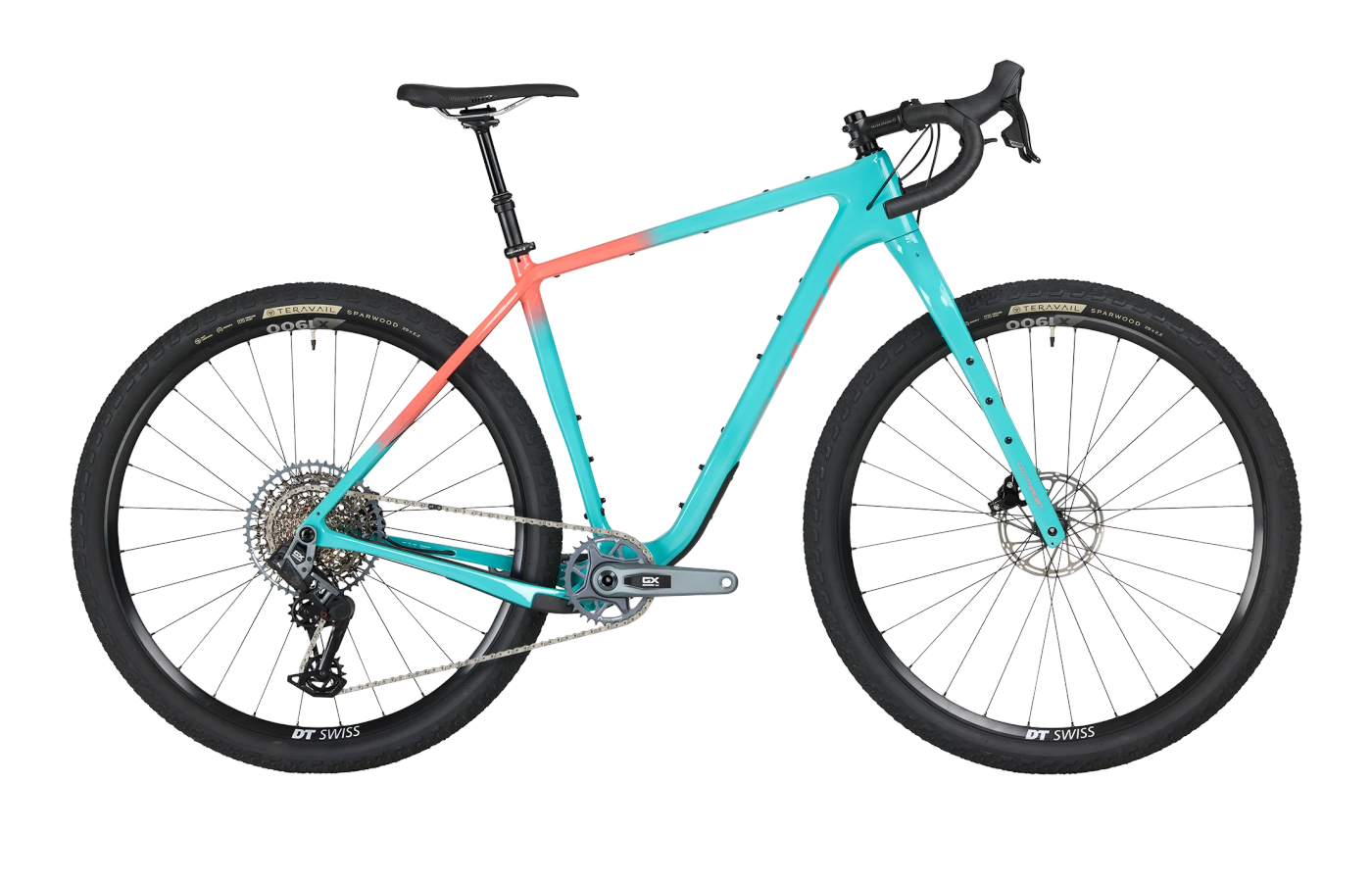
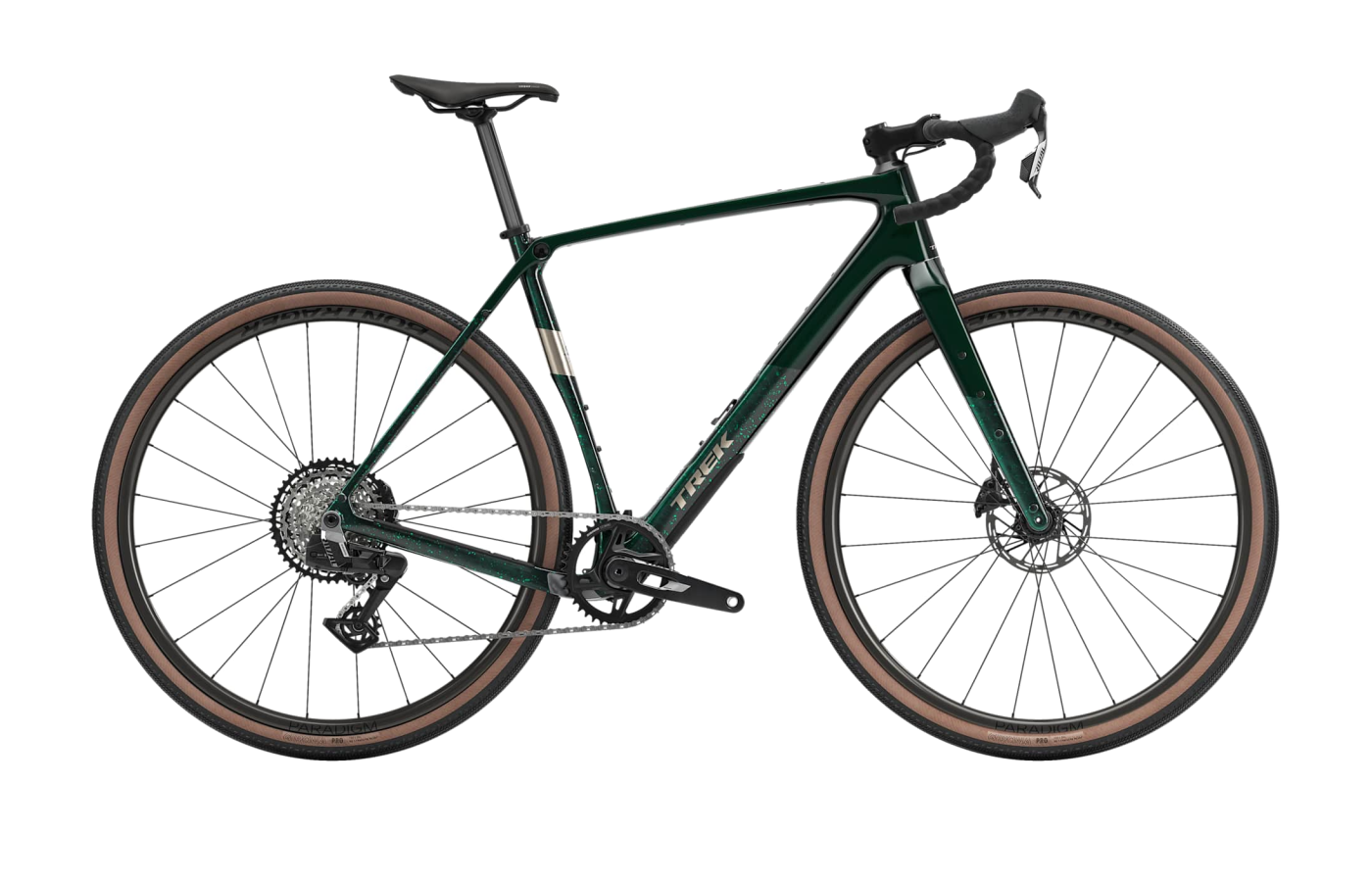
Two gravel bikes, two zip codes.
The Salsa Cutthroat is a drop-bar 29er built for the Tour Divide. The Trek Checkpoint is an endurance-gravel all-rounder with a race bike's manners.
Cutthroat
- Unmatched off-road capability — 69 degree HTA, 29x2.4" clearance, suspension-corrected fork. Rides like a rigid XC hardtail with drop bars.
- 20+ mount points and a direct-mount frame bag — engineered end-to-end for self-supported bikepacking.
- Full-carbon across the range — even the $3,499 entry build gets the same frame and fork as the flagship.
- No alloy option — entry price is $3,499, well above the Checkpoint's $1,599 floor.
- Press-fit BB92 bottom bracket — long-running creaking concern even if most testers don't experience it.
Checkpoint
- Price floor at $1,599 — the ALR 3 gets you on a Gen 3 Checkpoint platform for less than a third of the Cutthroat's cheapest build.
- IsoSpeed rear and 50 mm tire clearance — endurance-gravel comfort without giving up pavement speed.
- T47 threaded BB, UDH, and internal downtube storage — modern, serviceable frame standards top to bottom.
- 50 mm tire clearance is generous for gravel but 11 mm narrower than the Cutthroat's 61 mm — no 2.2" MTB tires here.
- Through-the-headset cable routing on mechanical ALR builds is a known service-cost risk.
Editor’s analysis
This isn't a gravel-vs-gravel comparison. It's how far off the pavement do you actually go — and what you're willing to give up on the way back.
Drop them on the same fire road and the differences look small. Side by side on a spec sheet, they look like different bikes entirely. The Salsa Cutthroat runs 29x2.2" MTB tires with clearance for a 2.4". The Trek Checkpoint ships 700x42 road-gravel tires and clears a 50 mm. The Cutthroat's fork is suspension-corrected for a 100 mm travel 29er fork; the Checkpoint's fork is a standard carbon gravel fork. One is a drop-bar mountain bike pretending to be a gravel bike. The other is an endurance road bike pretending to be a gravel bike. Both are honest about it.
Geometry tells the same story. At a fit-matched size — 56 cm on the Salsa Cutthroat, S on the Trek Checkpoint for a 5'8" rider — the Cutthroat runs a 69 degree head tube, a 1,090 mm wheelbase, and 445 mm chainstays. The Checkpoint is 71.4 degrees, 1,022 mm, and 430 mm. That's a 2.4 degree slacker head angle and a 68 mm longer wheelbase on the Salsa. The Cutthroat stays planted at 30+ mph through chunder; the Checkpoint is nippier at low speed and more cooperative on tight switchbacks.
Comfort comes from different systems. Salsa leans on its Class 5 VRS frame and a V2 fork claimed at 32 percent more compliance than the previous version — both ends doing the work. Trek does it from the rear with an IsoSpeed decoupler and from the front with tire volume. Reviewers describe the Cutthroat as "barely feel a thing no matter how aggressive the gravel gets" and the Checkpoint as a "calming sensation" that takes the edge off washboard without muting feedback. Different philosophies, both effective — the Salsa is better on rougher stuff, the Trek is better when most of your miles are smoother.
Put another way: the Salsa Cutthroat is the bike you buy when the gravel runs out and you keep going. The Trek Checkpoint is the bike you buy when most of your rides end at a coffee shop and some of them end at a campsite.
Where the builds differ.
Comparing our editor's-pick builds side-by-side. Winners highlighted row-by-row — lower price and weight, and the better-spec component, each mark a point.
Build variants & pricing
The Salsa is carbon-only and starts at $3,499; the Trek spans $1,599 alloy up to $6,499 carbon flagship.
Editor's picks are tier-matched at SRAM Rival AXS — the 2nd-from-top carbon build on each side. The Cutthroat pairs Rival shifters with a GX Eagle MTB rear (a mullet setup, wider range), while the Checkpoint runs a road-style Rival XPLR rear. That $1,700 price gap reflects real platform character, not a spec mismatch.
How they fit, how they steer.
Fit-picked for a 5'8" rider on each bike. The Cutthroat runs a 2.4 degree slacker head angle, a 68 mm longer wheelbase, and 15 mm longer chainstays — a substantially more stable, MTB-leaning platform. Reach is near-identical (385 vs 386 mm); the Salsa's stack is 63 mm taller.
Which size should I buy?
Size recommendations based on stack, reach, and effective top tube. Sizing conventions differ (Salsa uses cm, Trek uses letter sizes), but the ranges overlap closely for most riders.
→These are starting points. Flexibility, riding style, and preferred position all shift the answer — if you’re between sizes, a professional fit beats a chart.
What the magazines said.
Published reviews from trusted cycling outlets. Click through for the full write-up.
Which one should you buy?
If your rides end where the pavement ends, get the Cutthroat. If most of your rides end at a coffee shop with some gravel in between, get the Checkpoint.
Cutthroat
If you're riding the Tour Divide, a multi-day gravel route, or anything where the terrain gets genuinely rough and you're carrying your life on the bike, this is still the benchmark. Slack, stable, comfortable, and suspension-fork-ready when you need more.
Checkpoint
If you want one bike for commuting, fast gravel, weekend group rides, and the occasional overnight, this is the more versatile tool. Lighter-leaning geometry, a cheaper entry point, and modern frame standards throughout.
Questions buyers actually ask.
Short answers to the things we get emailed about most often.
01Which is better for bikepacking the Tour Divide or similar routes?
The Salsa Cutthroat, without much contest. Salsa literally designed the Cutthroat for the Tour Divide — the route is printed on the downtube — and the geometry, 20+ mount points, 29x2.4" tire clearance, and suspension-corrected fork all point at self-supported, rough-terrain riding.
The Trek Checkpoint is a capable bikepacker for smoother routes and lighter loads (it has integrated frame bag mounts and a 50 mm clearance), but the 71.4 degree head angle and 1,022 mm wheelbase aren't built for the same kind of loaded, chunky-descent riding.
02What's the maximum tire clearance on each?
Salsa Cutthroat: 29x2.4" officially — roughly 61 mm. Some reviewers report the fork can clear up to 2.8", though Salsa's published figure is 2.4".
Trek Checkpoint: 700x50 mm officially. Most riders on gravel routes will run the stock 42 mm or step up to a 45 mm for mixed terrain.
The 11 mm gap isn't small — the Cutthroat is essentially a drop-bar MTB on tire size; the Checkpoint is at the high end of what you'd call a gravel bike.
03Can I run a suspension fork?
Salsa Cutthroat: Yes, by design. The Cutthroat's 483 mm axle-to-crown rigid fork is suspension-corrected for a 100 mm travel 29er fork — you can swap in a RockShox SID or similar without throwing off the geometry. This is a deliberate upgrade path for riders heading into rougher terrain.
Trek Checkpoint: Gen 3 is advertised as compatible with short-travel suspension forks (per Velo's review of the ALR). It wasn't designed around this the way the Cutthroat was, so expect some geometry shifts, but it's supported.
04Does the Checkpoint's IsoSpeed really make a difference?
Reviewers consistently describe it as "subtle" rather than dramatic — you don't feel it bouncing like a suspension element, but the "calming sensation" over washboard and the lack of rear-end battering are real. The decoupler works without sapping lateral stiffness, so pedaling efficiency stays intact.
The Salsa Cutthroat takes a different approach — its Class 5 VRS is distributed through the frame and fork (the V2 fork is claimed at 32% more compliance than the previous one), so compliance comes from both ends. On rougher terrain, the Salsa's integrated approach wins; on smoother gravel, the IsoSpeed is plenty.
05Which has the better frame for long-term ownership?
Both carry lifetime frame warranties. The Trek Checkpoint Gen 3 has the more modern frame standards — T47 threaded bottom bracket, UDH, internal downtube storage, and integrated frame bag mounts. The Cutthroat still uses a press-fit BB92, which reviewers note has a reputation for creaking, though Salsa defends the choice on tire-clearance and chainstay-length grounds.
On the Trek ALR (mechanical) builds, the through-the-headset cable routing is a known maintenance concern — one review cited shift-cable replacements running up to $200 in labor vs. $25 on externally routed bikes. The AXS electronic builds sidestep that.
06What size should I get if I'm 5'8"?
Salsa Cutthroat: a 56 cm is the fit-picked size based on stack and reach — 619.5 mm stack, 385.3 mm reach.
Trek Checkpoint: a size S is the fit-picked size — 556 mm stack, 386 mm reach.
Reach is nearly identical at this fit point (within 1 mm), but the Cutthroat's stack is 63 mm taller, so the Salsa puts you significantly more upright. That matches its endurance-bikepacking intent.
07Which is better on pavement?
The Trek Checkpoint, by a meaningful margin. Its 42 mm road-gravel tires, steeper 71.4 degree head angle, and shorter wheelbase make it livelier on smooth surfaces — several reviewers describe it as having "road bike-like pickup and acceleration."
The Salsa Cutthroat runs 2.2" MTB tires stock. It's surprisingly fast on pavement once it's rolling — one reviewer clocked 37-38 mph — but it "prefers taking things easy when you accelerate" and won't match a proper gravel bike on road manners.
08Why is the Salsa so much more expensive at the entry level?
The Cutthroat is carbon-only — every build, from $3,499 up, gets the same high-modulus carbon frame and fork. There's no alloy version.
The Checkpoint splits into two frame tiers: the alloy ALR ($1,599-$2,299) and the carbon SL ($3,499-$6,499). The ALR shares the same geometry, 50 mm clearance, and UDH as the SL, just without IsoSpeed and downtube storage — which is why multiple reviewers call the ALR 5 the best sub-$2,000 gravel bike on the market. If you want to spend under $3k, the Checkpoint is the only option between these two.
Similar bikes
If your priorities don’t map cleanly onto either of these, one of these adjacent bikes probably fits better.

Fargo
The Cutthroat's steel-framed older sibling — same adventure DNA, more compliant material, even more upright. If you're drawn to the Cutthroat's ethos but prefer steel's forgiving ride and slower pace, the Fargo is the move.
Compare →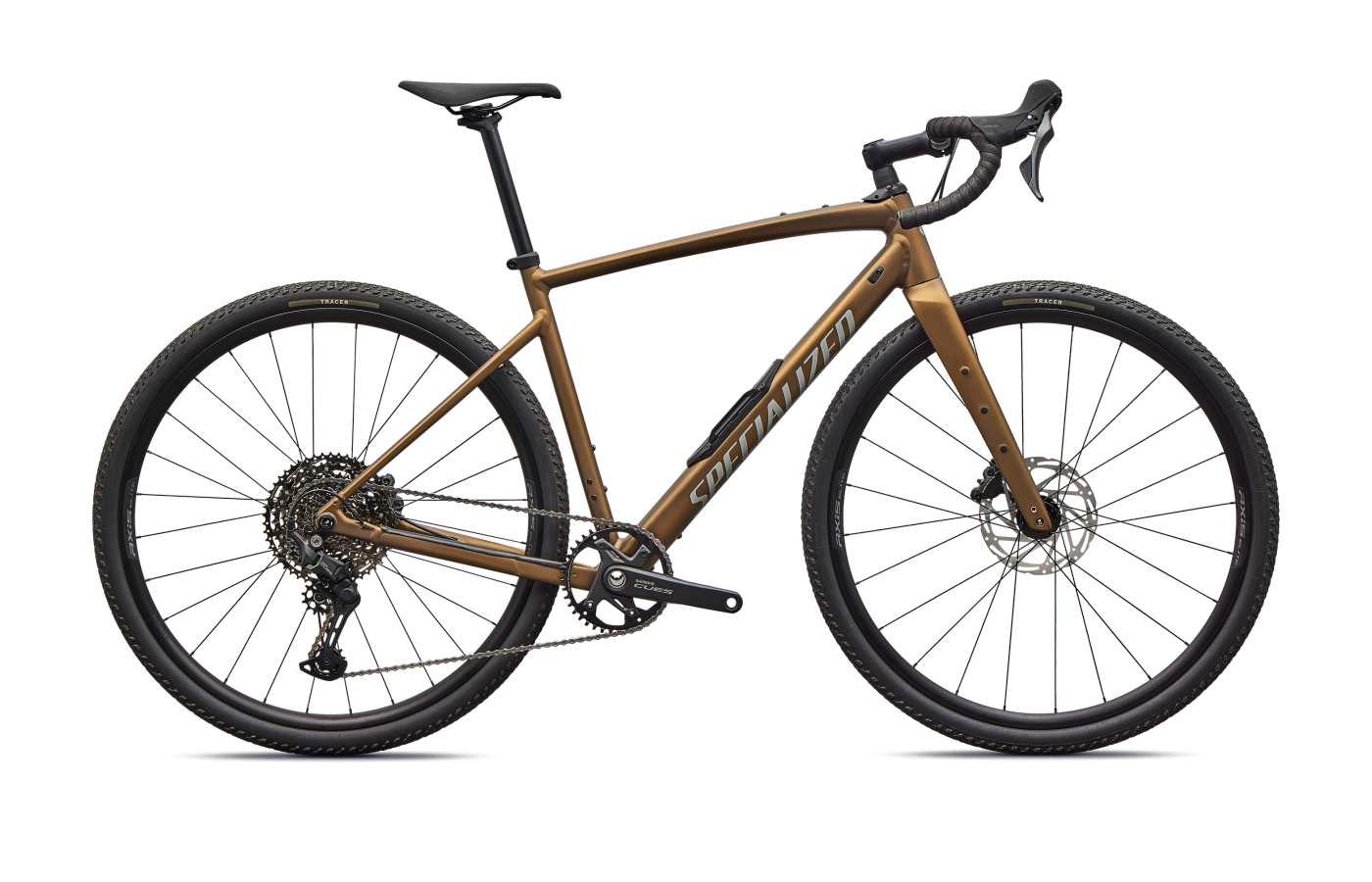
Diverge
Specialized's Future Shock gives the Diverge a different answer to gravel compliance — 20 mm of headset-mounted suspension up front instead of compliant tubes. A real alternative if you want active front-end damping without a full suspension fork.
Compare →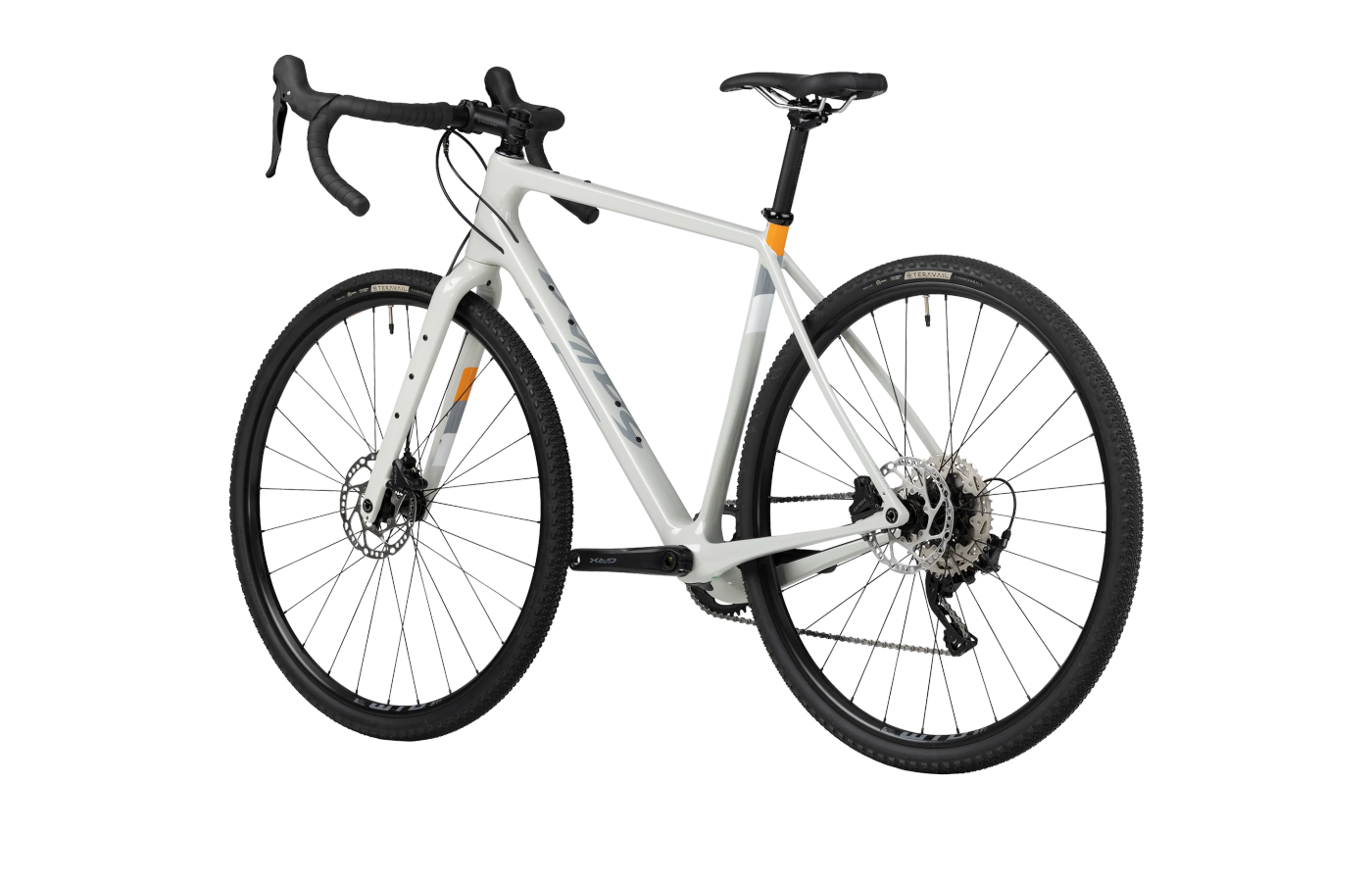
Warbird
If most of your gravel riding is racing, not bikepacking, the Warbird is Salsa's answer — sharper geometry, lighter build, 700c wheels. Closer in spirit to the Checkpoint than to the Cutthroat despite sharing a brand with the latter.
Compare →