Horsethief
vsSpearfish
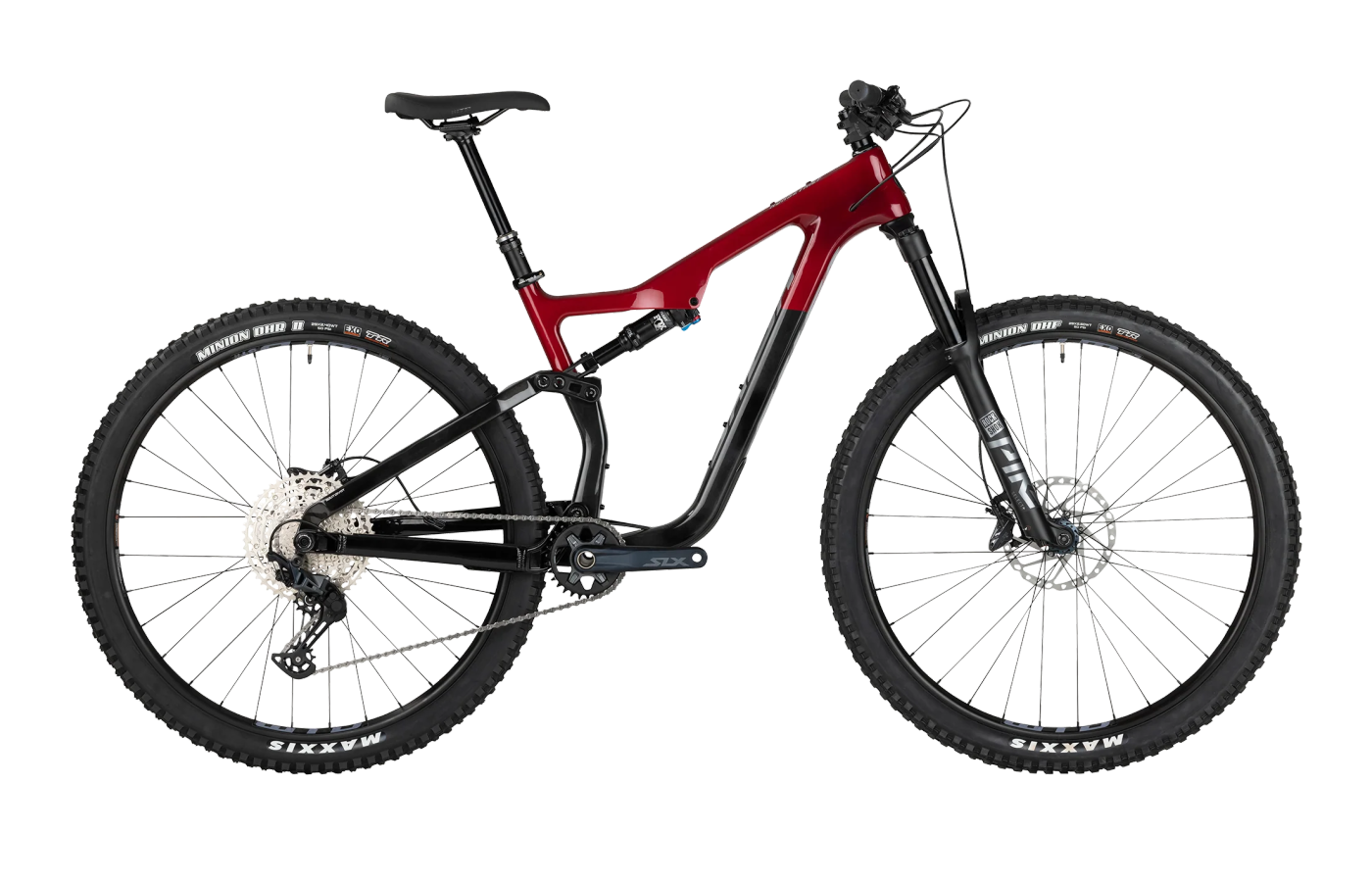
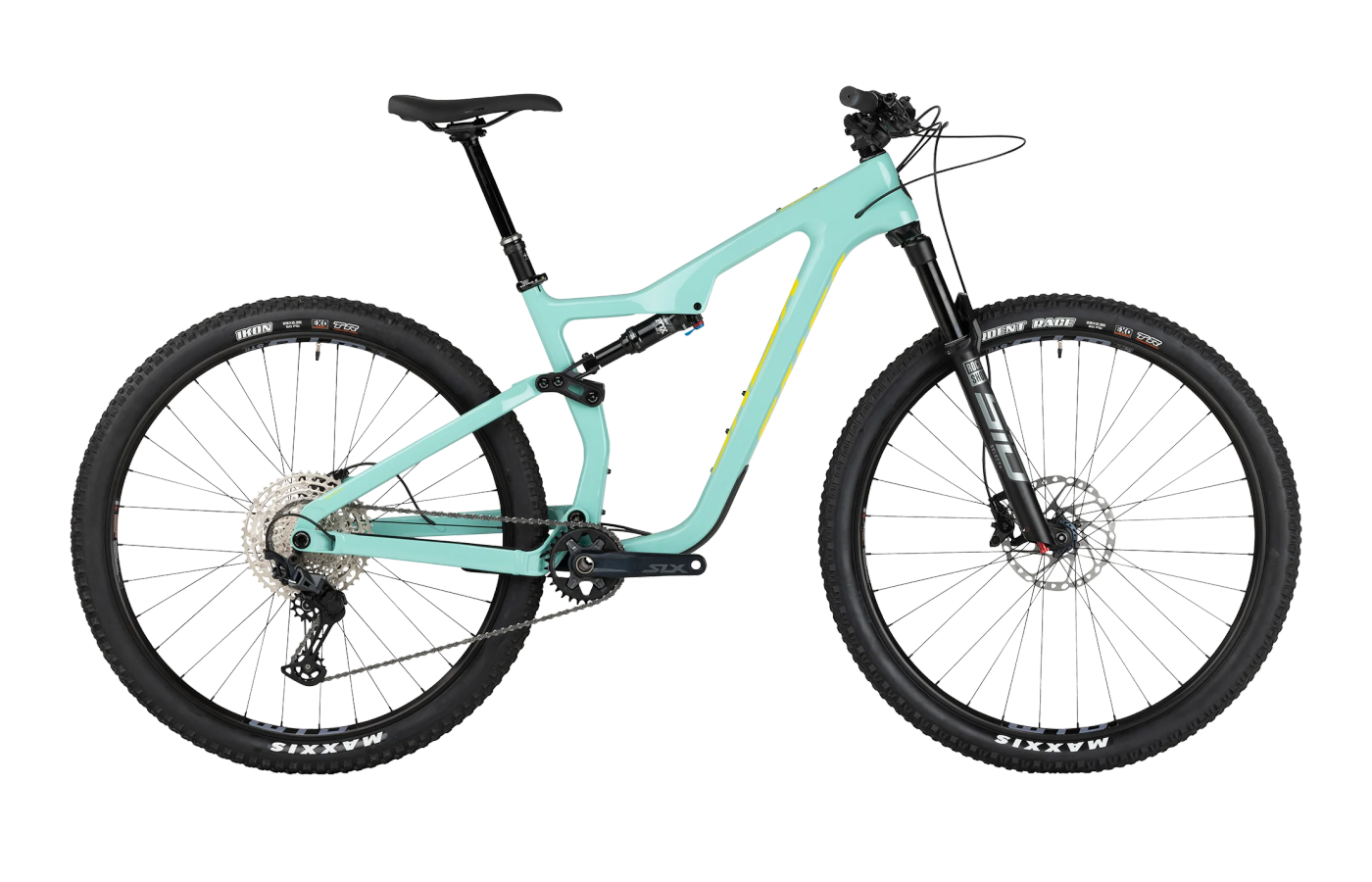
Same family, two very different jobs.
The Horsethief is the easy-going 140/120 trail bike. The Spearfish is the modern downcountry rocket — lighter, steeper, faster.
Horsethief
- Alloy entry point at $1,999 — the cheapest way into a Split Pivot trail platform.
- Confident, predictable handling — stable wheelbase, burly Maxxis DHF/DHR II tires, comfortable upright posture.
- Full build range — four trims from alloy Deore through carbon XT, alloy and carbon both available.
- Geometry is conservative by 2025 standards — slacker seat tube, less efficient climbing posture.
- Super Boost 157 mm rear hub limits aftermarket wheel options.
Spearfish
- Modern XC geometry — 77.3-degree seat tube and 470 mm reach make it a measurably faster climber.
- Lighter chassis — Deluxe carbon frame is 1,940 g (size M), 542 g lighter than the previous-gen Spearfish.
- Bikepacking-friendly frame — up to three bottle mounts plus a top-tube fuel mount on larger sizes.
- Carbon-only — no alloy build, so the entry price is $1,649 for Deore alloy on the Horsethief vs $3,999 for the cheapest carbon Spearfish.
- Stock Teravail Camrock tires roll fast but lack bite in loose or wet conditions per multiple reviews.
Editor’s analysis
Both bikes share Salsa's Split Pivot suspension and the adventure DNA — but six years of geometry evolution sit between them.
The Salsa Horsethief and Salsa Spearfish look like cousins on paper — both 29ers, both Split Pivot, both 120 mm of rear travel — but they're aimed at different riders. The Horsethief is the older platform (a V3 design dating to 2019) carrying a 140 mm fork, a 66.8-degree head angle, and a 73.4-degree seat tube. It's a comfortable, stable trail bike that reviewers consistently call "mild-mannered" and a "quiver killer" for moderate terrain.
The Salsa Spearfish is a ground-up 2025 redesign that drops the alloy option entirely and goes carbon-only, with two layups (Standard and a 255 g lighter Deluxe). It runs 120 mm at both ends, a slacker 66.3-degree head angle, and a dramatically steeper 77.3-degree seat tube — almost four degrees forward of the Horsethief. That seat angle plus a 470 mm reach (size Medium) creates a forward, race-oriented climbing position that one Bike Rumor reviewer credited with "knocking over 3 minutes off my previous best time" on a benchmark climb.
The Horsethief, by contrast, picks comfort over urgency. The shorter 432 mm reach and 73.4-degree seat tube put you upright and centered — better for all-day stability, less efficient for hammering. Its longer-travel fork and burlier stock tires (Maxxis DHF/DHR II 2.5/2.4) point clearly toward chunkier trails than the Spearfish's fast-rolling Teravail Camrock 2.4s. The Horsethief still wins on Super Boost 157 mm rear hub stiffness; the Spearfish moved to the more standard Boost 148, which is friendlier for future wheel swaps.
Put simply: the Salsa Horsethief is the bike you buy if your rides are about the trail. The Salsa Spearfish is the bike you buy if your rides are about the time. There's overlap in the middle — both are happy on a flowy weekday loop — but the edges of each bike's character pull in opposite directions.
Where the builds differ.
Comparing our editor's-pick builds side-by-side. Winners highlighted row-by-row — lower price and weight, and the better-spec component, each mark a point.
Build variants & pricing
Horsethief spans $1,999–$4,499 across alloy and carbon. Spearfish is carbon-only, $1,649 alloy holdover excepted, and climbs to $10,999 at the top.
Prices are current US MSRP. The Spearfish's $1,649 Deore is an alloy V1 holdover from the prior generation — every other Spearfish build is on the new 2025 carbon platform. If you want a carbon Spearfish, plan on $3,999 minimum.
How they fit, how they steer.
Compared at the fit-picked sizes for a 5'8" rider — Medium Horsethief, Small Spearfish. The Spearfish runs 4 degrees steeper at the seat tube (77.3 vs 73.4) and 0.5 degrees slacker at the head (66.3 vs 66.8); reach is 18 mm longer (450 vs 432) despite being a size smaller.
Which size should I buy?
Recommendations based on stack, reach, and effective top tube. The Spearfish runs longer per size — most riders should consider one size smaller than their Horsethief size.
→These are starting points. Flexibility, riding style, and preferred position all shift the answer — if you’re between sizes, a professional fit beats a chart.
What the magazines said.
Published reviews from trusted cycling outlets. Click through for the full write-up.
Which one should you buy?
If you want a comfortable, do-it-all trail bike that won't break the bank, get the Horsethief. If you want speed, efficiency, and modern XC geometry, get the Spearfish.
Horsethief
If your rides are about flowing through varied terrain — moderate climbs, fun descents, the occasional chunky section — and you'd rather not spend $4,000 to get there, the Horsethief still nails the brief. The alloy builds are the value play; the carbon SLX is the sweet spot.
Spearfish
If you race XC, ride long, or like climbing hard, the Spearfish's geometry and weight are a measurable advantage. Reviewers were knocking minutes off climb PRs without trying. Just bring the budget — and consider swapping the stock tires if your trails get loose.
Questions buyers actually ask.
Short answers to the things we get emailed about most often.
01Which one climbs faster?
The Spearfish, by a meaningful margin. Its 77.3-degree seat tube angle puts the rider directly over the bottom bracket — Bike Rumor's reviewer reported knocking over 3 minutes off a previous best on a benchmark climb. The Deluxe-carbon GX build also weighs around 26.4 lb (size L, actual), versus roughly 30–31 lb for a comparable carbon Horsethief.
The Horsethief's 73.4-degree seat tube is nearly four degrees slacker — comfortable, but reviewers explicitly noted it doesn't "line the rider up for the most efficient power transfer."
02Which one descends better?
Closer than you'd expect, but the Horsethief edges it on rougher terrain. It runs a 140 mm fork (vs 120 mm on the Spearfish) and ships with grippier Maxxis DHF/DHR II tires. The Spearfish has a slacker head angle on paper (66.3 vs 66.8) and a longer wheelbase, but reviewers consistently flag the stock SID/Fox 34 SL forks as "a little flexy in the rough stuff" and the Camrock tires as light on grip.
If your descents are smooth and flowy, the Spearfish will feel sharper. If they're chunky, the Horsethief is the more composed tool.
03Why is there no alloy Spearfish?
Salsa redesigned the Spearfish for 2025 around carbon only — citing weight and stiffness goals that were hard to hit in alloy. The $1,649 "Deore" Spearfish in the lineup is actually a holdover alloy V1 build from the previous generation, not the new platform.
If you want a new-design Spearfish, the entry price is $3,999 for the C Deore 12. If you want a Salsa trail bike under $2,000, the alloy Horsethief Deore is your only option.
04How much travel does each one have?
Horsethief: 140 mm front / 120 mm rear (with a Fox Float DPS or RockShox Deluxe shock).
Spearfish: 120 mm front / 120 mm rear, though the frame supports forks up to 130 mm if you want to slacken the head angle and add a touch more cushion. Multiple reviewers suggested a 130 mm fork upgrade for more aggressive use.
05What about the Super Boost vs Boost rear hub?
The Horsethief uses Super Boost 157 mm rear hub spacing. The Spearfish moved to the more standard Boost 148 mm for 2025.
For most riders this is invisible — the bike works either way. But if you're planning to upgrade wheels later, Boost 148 has a much wider aftermarket selection. Super Boost is the older, less common standard.
06Are these good bikepacking bikes?
Both fit Salsa's adventure DNA. The Spearfish has the more aggressive bikepacking spec — up to three water bottle mounts on larger sizes, top-tube fuel mounts, and threaded mounts "for carrying bottles, tools, and even hard-mounted bags" (PinkBike). It also lacks in-frame storage, which a couple of reviewers flagged as a missed opportunity.
The Horsethief has dual bottle mounts on every size and a top tube mount. It's heavier and slower, but the longer fork and burlier tires make it more capable on rough remote terrain.
07Which holds up better long-term?
Both share Salsa's well-regarded Split Pivot suspension, with no recurring durability complaints in the reviewed builds. The Horsethief alloy frames are essentially bombproof — heavier, but no carbon-impact concerns. The Spearfish's carbon Deluxe layup is lighter and uses higher-modulus carbon; reviewers noted molded rubber chainstay and downtube protection but flagged the press-fit BB92 bottom bracket as a long-term maintenance concern (creaking, shorter lifespan than threaded).
No warranty differences between the two — both are covered by Salsa's frame warranty.
08What about tire clearance?
Both frames clear up to roughly 2.4"–2.5" 29er tires comfortably. The Horsethief ships with Maxxis Minion DHF 2.5" up front and DHR II 2.4" rear stock; the Spearfish ships with Teravail Camrock 2.4" both ends. Neither is intended as a plus-tire (2.6"+) platform, but you have room to step up to a more aggressive 2.5" trail tire on either.
Similar bikes
If your priorities don’t map cleanly onto either of these, one of these adjacent bikes probably fits better.
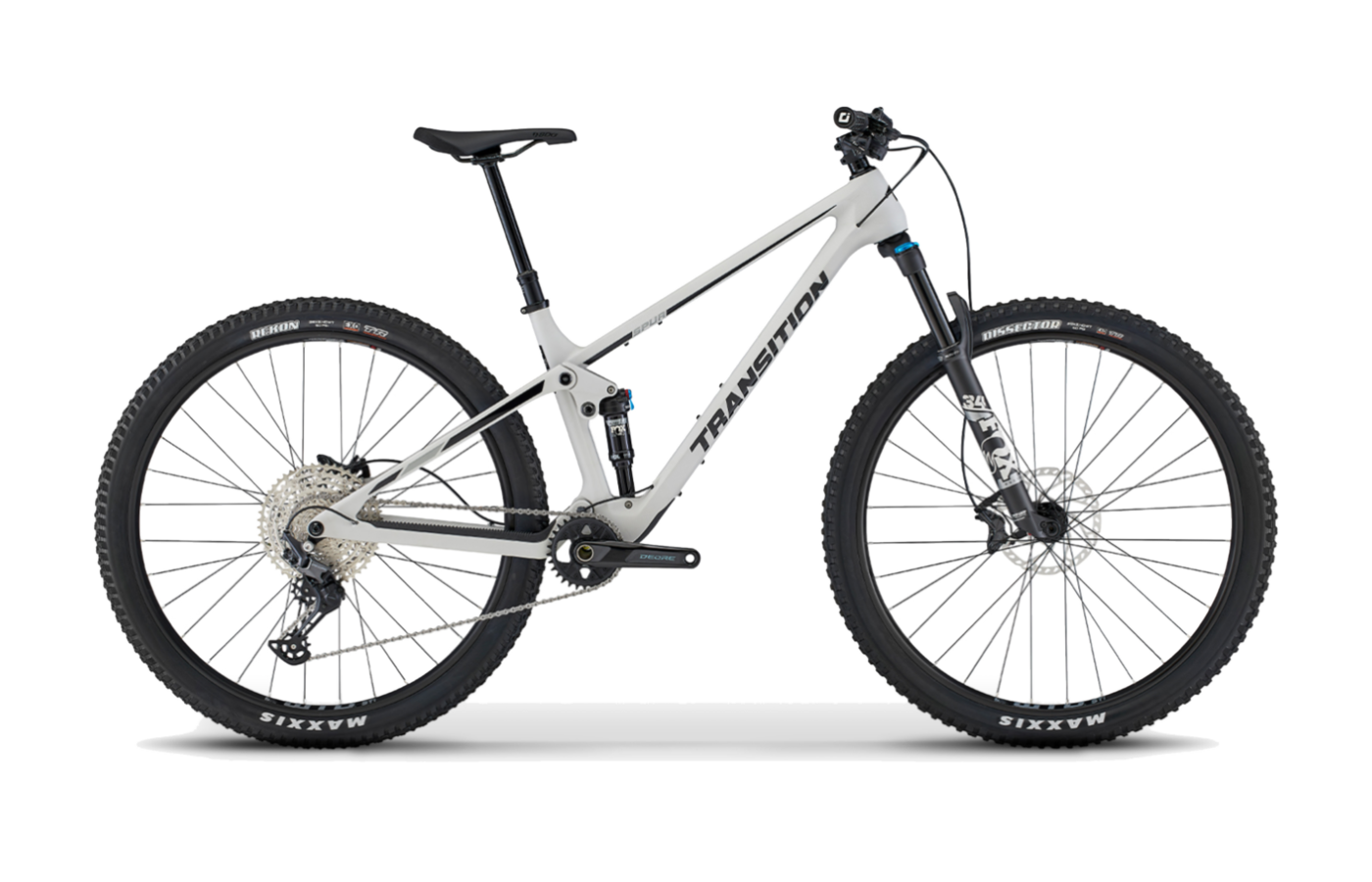
Spur
The Transition Spur is the prototypical downcountry bike and the Spearfish's most direct competitor — 120/120 mm travel, light, playful, and famously over-capable on descents for its travel class. If the Spearfish appeals but you want a more proven carbon-only platform, this is the one to demo against it.
Compare →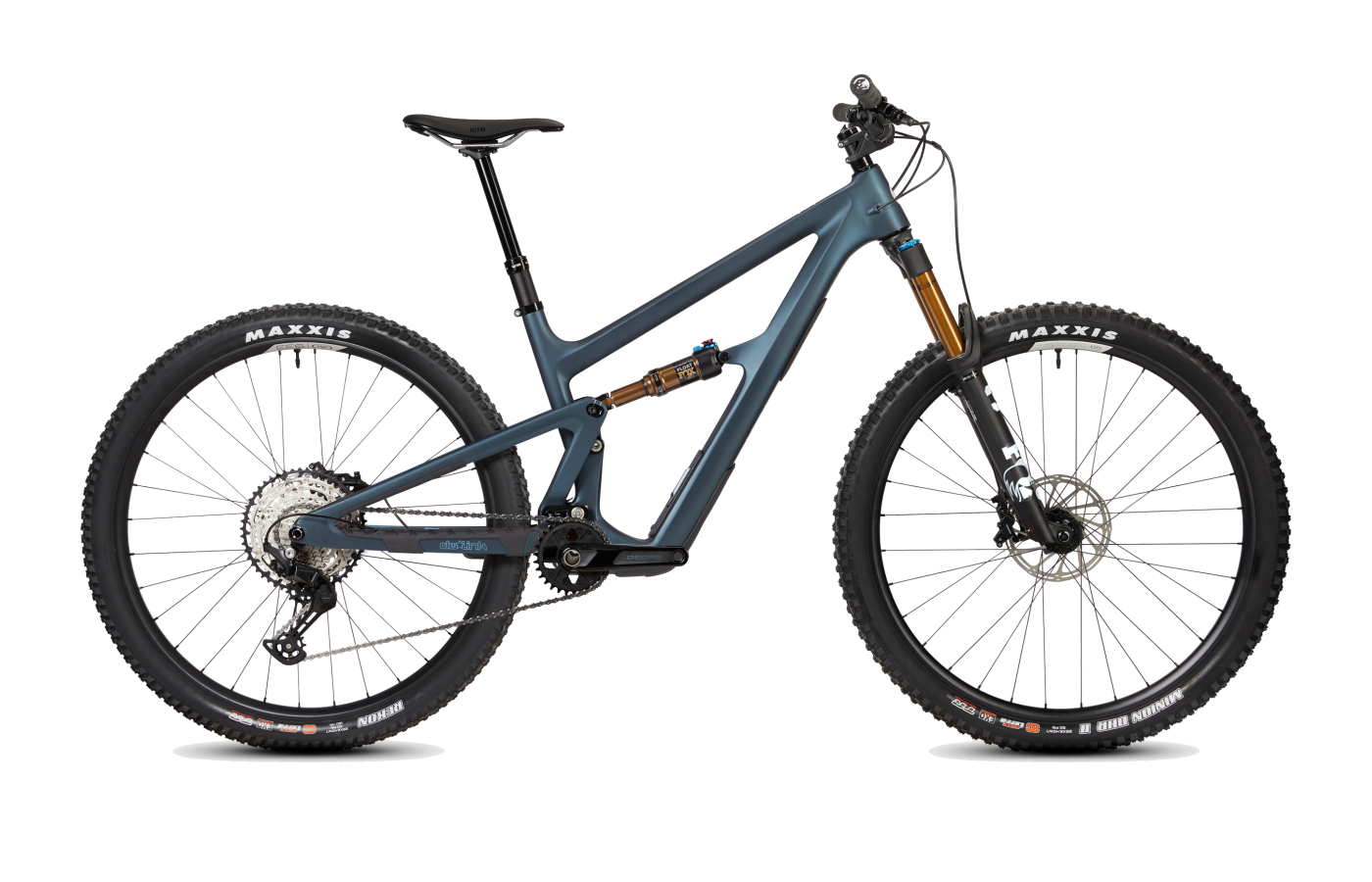
Ripley
The Ibis Ripley splits the difference — 130 mm front, 120 mm rear, with the playful, lively character Ibis is known for. Better than the Horsethief on rough trails, more efficient than most longer-travel bikes — a real all-rounder if neither Salsa quite hits the mark.
Compare →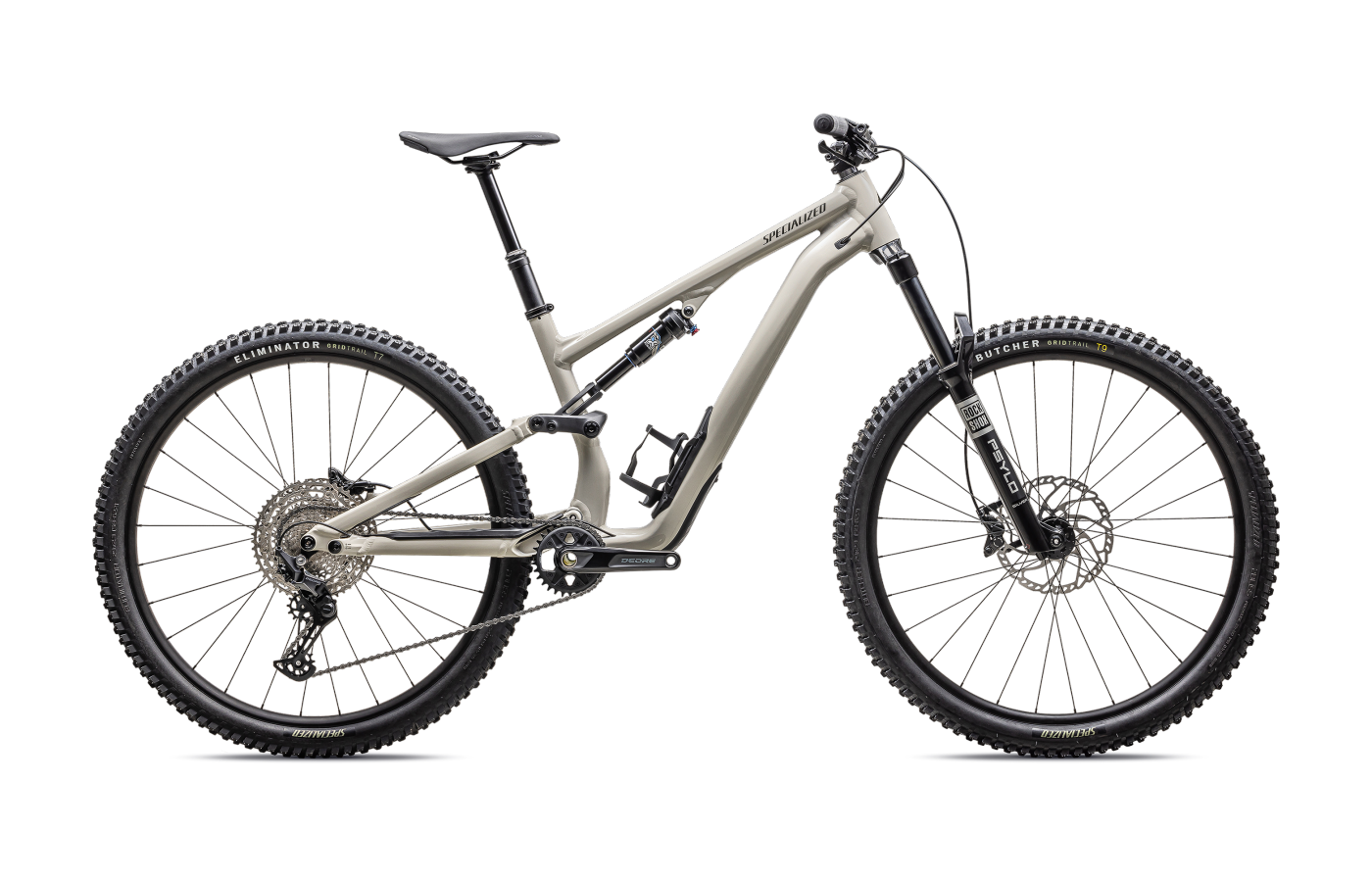
Stumpjumper
If the Horsethief's geometry feels too conservative for what you actually ride, the Specialized Stumpjumper is the natural step up — 130–140 mm of travel, more aggressive geometry, and the SWAT in-frame storage the Salsas don't offer.
Compare →