Blur
vsEpic Evo
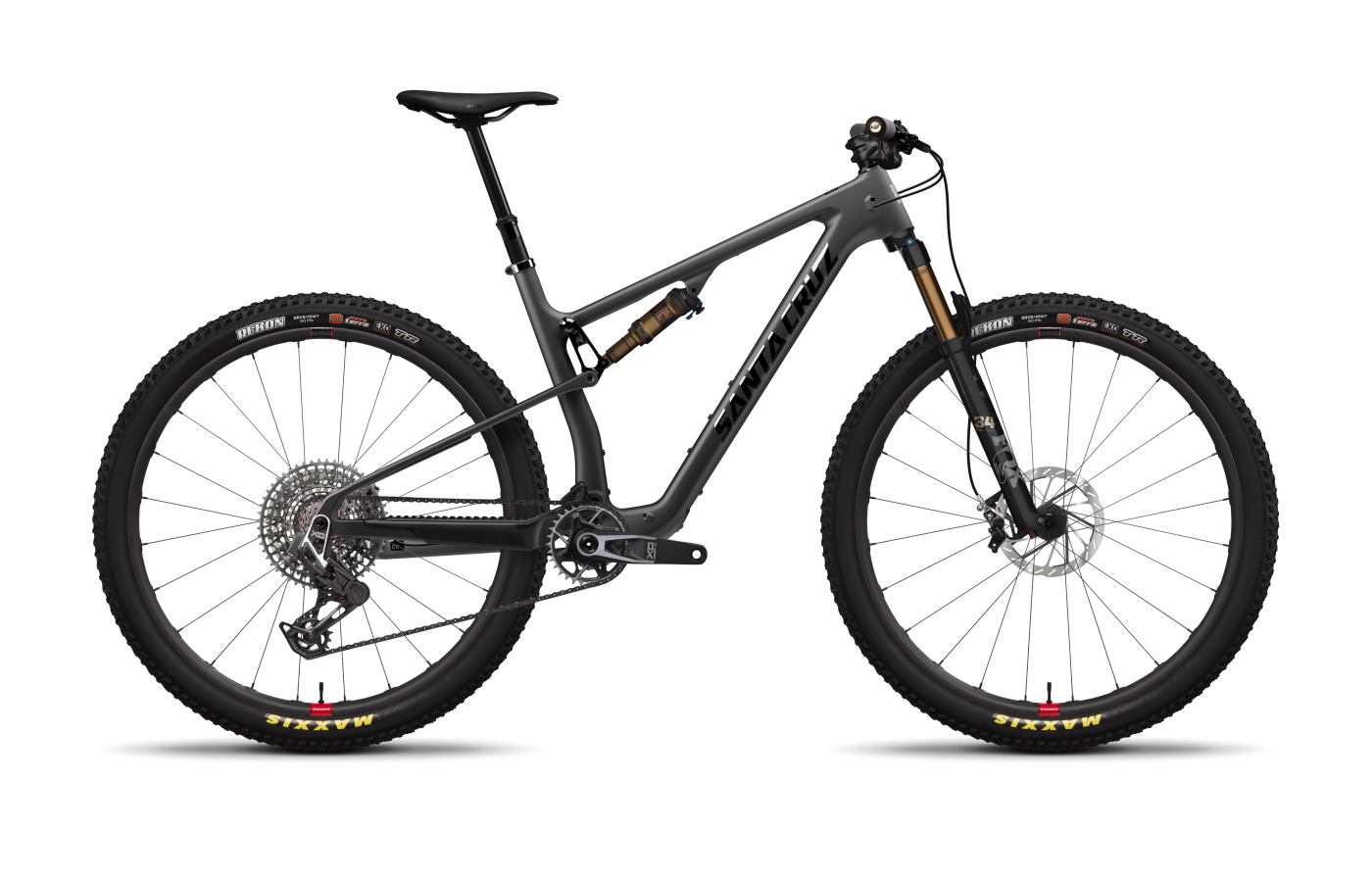
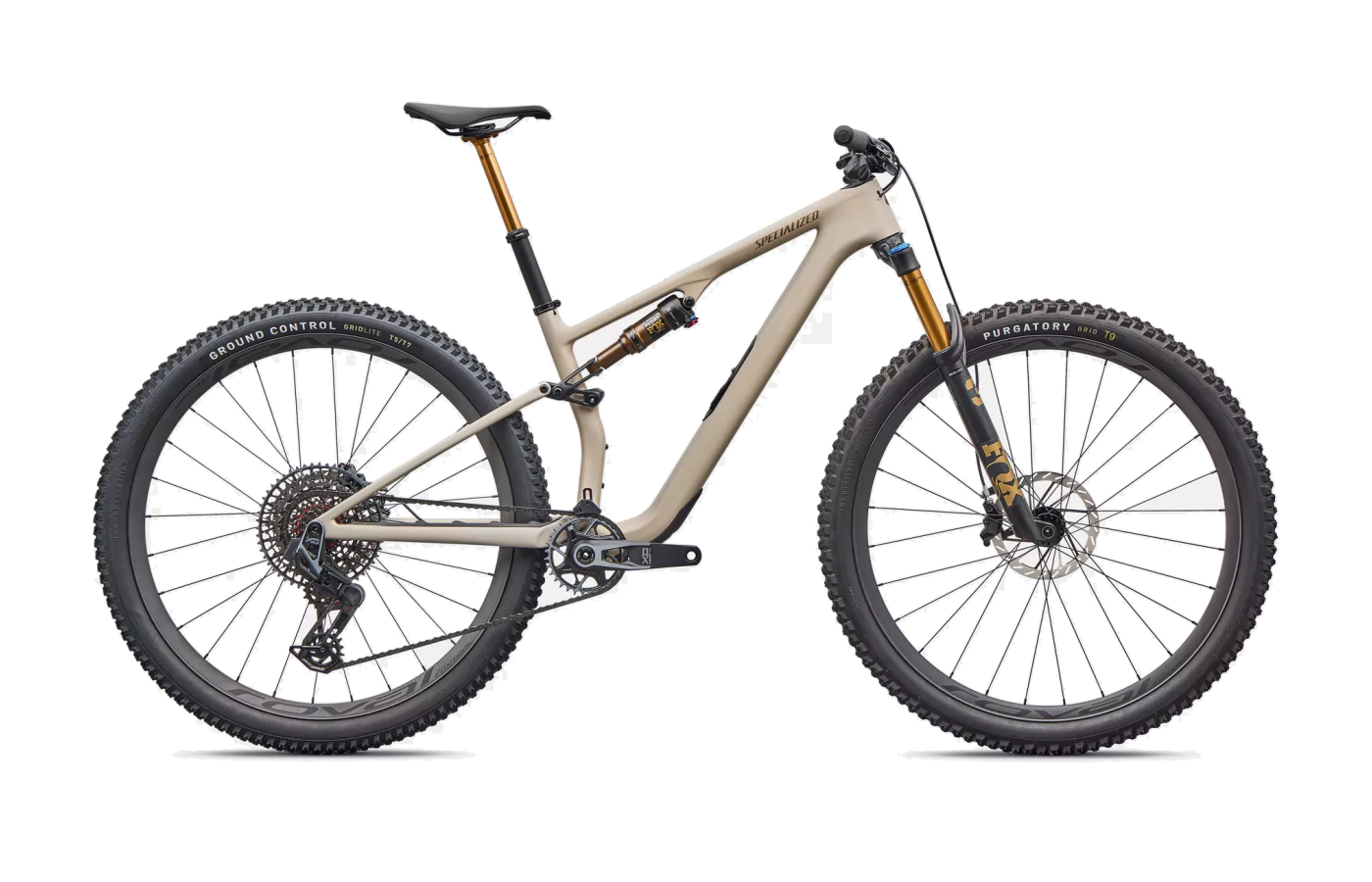
Two short-travel philosophies, one trail.
The Blur is the technical-climbing scalpel built around traction. The Epic Evo is a downcountry rocket built to keep you on the gas.
Blur
- Class-leading climbing traction — low anti-squat keeps the rear wheel glued to roots and loose rock where stiffer bikes spin out.
- Lighter, more agile feel — 1,157 mm wheelbase (M) and 433 mm chainstays make tight switchbacks effortless.
- Lifetime frame, bearing, and Reserve wheel warranty — Santa Cruz's long-term ownership story is the segment benchmark.
- Active suspension bobs on smooth climbs unless you use the lockout.
- Steeper head angle and shorter wheelbase feel flighty at high descending speeds.
Epic Evo
- Trail-bike descending capability — 65.4° head angle, 130 mm fork, and SRAM Code brakes punch well above 120 mm.
- Firm, efficient pedaling platform — Ride Dynamics tune mainlines watts to the rear wheel on smooth climbs.
- SWAT 4.0 downtube storage and 25-year frame warranty — a genuinely useful tool kit hidden in the frame plus long-term coverage.
- Stiff, demanding ride that hangs up on roots if you don't actively press into the shock.
- Skittish front end at the limit on lightweight stock tires — many testers swap to GRID Trail casings.
Editor’s analysis
Both bikes carry race DNA into 120 mm of travel — but where the Blur tries to preserve you, the Epic Evo tries to unleash you.
On paper, the Santa Cruz Blur and Specialized Epic Evo land in the same downcountry bracket — both run 29-inch wheels, both pair a 120 mm fork with around 115–120 mm of rear travel, both target the rider who wants to win an XC race on Saturday and a Strava PR on Sunday. Look closer and the engineering philosophies diverge almost immediately.
The Santa Cruz Blur is the technical climber. Santa Cruz deliberately ran low anti-squat on the new Superlight flex-stay platform, prioritizing rear-wheel traction over a stiff pedaling platform — the rear wheel literally sucks itself to the ground over stepped roots. With a 67.1° head angle, 433 mm chainstays in size M, and a 1,157 mm wheelbase, the Blur is the agile, surgical option for tight, undulating singletrack. You will reach for the lockout on smooth fire roads.
The Specialized Epic Evo picks the opposite fight. Specialized stretched the geometry to a 65.4° head angle (low setting), bumped fork travel to 130 mm, and bolted on SRAM Code brakes typically reserved for trail and enduro bikes. The Ride Dynamics shock tune is firm-platform-then-blow-off — efficient on the climbs, demanding on the descents. The 1,183 mm wheelbase (M) is 26 mm longer than the Blur, and the slack front end means the Epic feels stable at speeds where the Blur starts to feel flighty.
Put another way: the Blur is the bike for the marathon racer who wants to outlast the field on hour four of a stage race. The Epic Evo is the bike for the XC rider who refuses to slow down on the descent — and is fit enough to keep pedaling a stiff, demanding platform between features.
Where the builds differ.
Comparing our editor's-pick builds side-by-side. Winners highlighted row-by-row — lower price and weight, and the better-spec component, each mark a point.
Build variants & pricing
Both lineups start under $5k and stretch past $13k. The Blur splits its mid-range between XC (107 mm rear) and Trail (115 mm rear) configurations of the same frame.
Prices are current US MSRP. The Blur's CC-carbon builds carry a price premium over Specialized's FACT 11m models at the same component tier — about $1,000 step up at the X0 level. Specialized splits the carbon into S-Works 12m and 11m for the rest of the range.
How they fit, how they steer.
Both at size M — the fit-picked size for a 5'8" rider. The Epic Evo is 7 mm longer in reach, sits 4 mm taller in stack, runs a 26 mm longer wheelbase, and slackens the head angle by roughly 1.7° (65.4° vs 67.1°). The Blur is the shorter, steeper, more agile bike; the Epic is the longer, slacker, more planted one.
Which size should I buy?
Size recommendations based on stack, reach, and effective top tube. The Blur tops out at XL; the Epic Evo also offers XS, opening the lineup to shorter riders.
→These are starting points. Flexibility, riding style, and preferred position all shift the answer — if you’re between sizes, a professional fit beats a chart.
What the magazines said.
Published reviews from trusted cycling outlets. Click through for the full write-up.
Which one should you buy?
If your rides reward grip and agility on technical climbs, get the Blur. If they reward stability and confidence on the descents, get the Epic Evo.
Blur
If your typical day is three hours of rooty, undulating singletrack — and your idea of fast is keeping the rear wheel hooked up where everyone else spins out — the Blur is the tool. The active suspension preserves your legs on long stage races and the lifetime frame and bearing warranty rewards keeping the bike for years.
Epic Evo
If you're an XC rider who refuses to slow down for descents — and you've got the fitness and skills to push a firm, demanding 26-pound bike down trails meant for 150 mm rigs — the Epic Evo unlocks more terrain than any other bike in this travel class. Reward for active, locked-in riders.
Questions buyers actually ask.
Short answers to the things we get emailed about most often.
01Which is the better climber?
Depends on the climb. On smooth fire roads the Specialized Epic Evo is firmer and more efficient — the Ride Dynamics shock tune resists pedal bob and mainlines watts to the rear wheel. On steep, rooty, technical climbs the Santa Cruz Blur wins by a wider margin: Santa Cruz deliberately ran low anti-squat so the rear wheel stays planted instead of skipping off roots and rocks.
Reviewers consistently described the Blur as the fastest singletrack climber in field testing; reviewers described the Epic as a smooth-road rocket that can hang up on square-edge roots unless you actively press into the shock.
02Which is the better descender?
The Specialized Epic Evo, comfortably. A 65.4° head angle (low setting), 130 mm fork, 1,183 mm wheelbase (M), and SRAM Code 4-piston brakes give it real trail-bike composure on steep terrain. The Blur's 67.1° head angle and 1,157 mm wheelbase make it feel agile and surgical on the way up, but several reviewers called it 'flighty' or 'twitchy' at high descending speeds.
That said, the Epic still rewards an active rider — its lightweight frame and stock GRID-casing tires can feel skittish in rock gardens compared to a true 140–150 mm trail bike.
03How much travel does each bike actually have?
Santa Cruz Blur: the V4 frame is sold in two configurations on the same chassis — an XC build with 100 mm front / 100 mm rear (later updated to 120 mm fork on current builds), and a TR (Trail) build with a 120 mm fork and 115 mm of rear travel. The Trail configuration is what you'll find on most current Blur builds, including the editor's pick.
Specialized Epic Evo: 130 mm front / 120 mm rear across the entire range. There is no XC-only variant — the standard Epic 8 (non-Evo) covers that role with 120 mm front and rear.
04What's the maximum tire clearance?
Santa Cruz Blur: roughly 61 mm — comfortably runs the stock 2.4-inch Maxxis Rekon Race or Rekon WT.
Specialized Epic Evo: roughly 60 mm — also rated for 2.4-inch tires (stock Specialized Purgatory front / Ground Control rear).
Neither is a plus-tire bike, and neither has meaningful headroom beyond a true 2.4. If you want to run anything wider, look at a dedicated trail or downcountry frame with a longer rear-end.
05How do they handle long-term ownership and maintenance?
Santa Cruz offers a lifetime frame warranty, lifetime pivot-bearing replacement, and a lifetime warranty on the optional Reserve carbon wheels. The Superlight flex-stay design also reduces total bearing count compared to the previous VPP linkage, which means fewer service points. Long-term reviewers did flag occasional pivot creaking and called out the gap between the rear triangle and seat tube as a debris-trap to monitor.
Specialized backs the frame with a 25-year warranty and uses a pivotless flex-stay rear triangle for the same reason — fewer bearings to service. Reviewers flagged the integrated steering stop and headset covers as creak-prone, and the S-Works build routes cables through the headset, which complicates hose changes (the FACT 11m frames on Pro/Expert/Comp use traditional cable ports).
06Why pick the X0 AXS Trail RSV over the lighter X0 AXS RSV on the Blur?
The Trail RSV uses the same frame as the XC version but ships with a 120 mm Fox 34SC fork, a longer-stroke shock for 115 mm of rear travel, and Maxxis Rekon WT tires instead of the lighter Rekon Race. It costs the same. The XC build is the right choice if you race XCO short-track or marathon on smoother courses; the Trail build is the apples-to-apples match against the Epic Evo's 130/120 mm trail-leaning configuration.
07Can either bike replace a 140 mm trail bike?
The Epic Evo comes closer than any 120 mm-rear bike has a right to. The slack head angle, 130 mm fork, and Code brakes let it survive double-black trails — but reviewers consistently noted that it 'rewards precise riding' and demands a 'locked-in' pilot. It is not a couch.
The Blur is more honest about its XC roots. It will descend confidently on flowy trails and tight technical terrain, but at high speeds on aggressive lines, you will feel the shorter wheelbase and steeper head angle. If you ride bike-park flow trails or chunky descents weekly, look at a Stumpjumper or Hightower instead.
08Which has the better build value at the X0 tier?
The Epic Evo Pro at $8,299 undercuts the Blur X0 AXS Trail RSV at $9,349 by roughly $1,050 with a similar X0 Transmission drivetrain. Specialized makes up the gap by spec'ing a FACT 11m frame instead of the lighter S-Works 12m used on the flagship — the Blur's CC carbon is closer in grade to Specialized's S-Works tier. So the Epic Evo Pro is cheaper, the Blur is using a higher-grade frame at this price point. You're buying chassis on the Santa Cruz; you're buying components on the Specialized.
Similar bikes
If your priorities don’t map cleanly onto either of these, one of these adjacent bikes probably fits better.
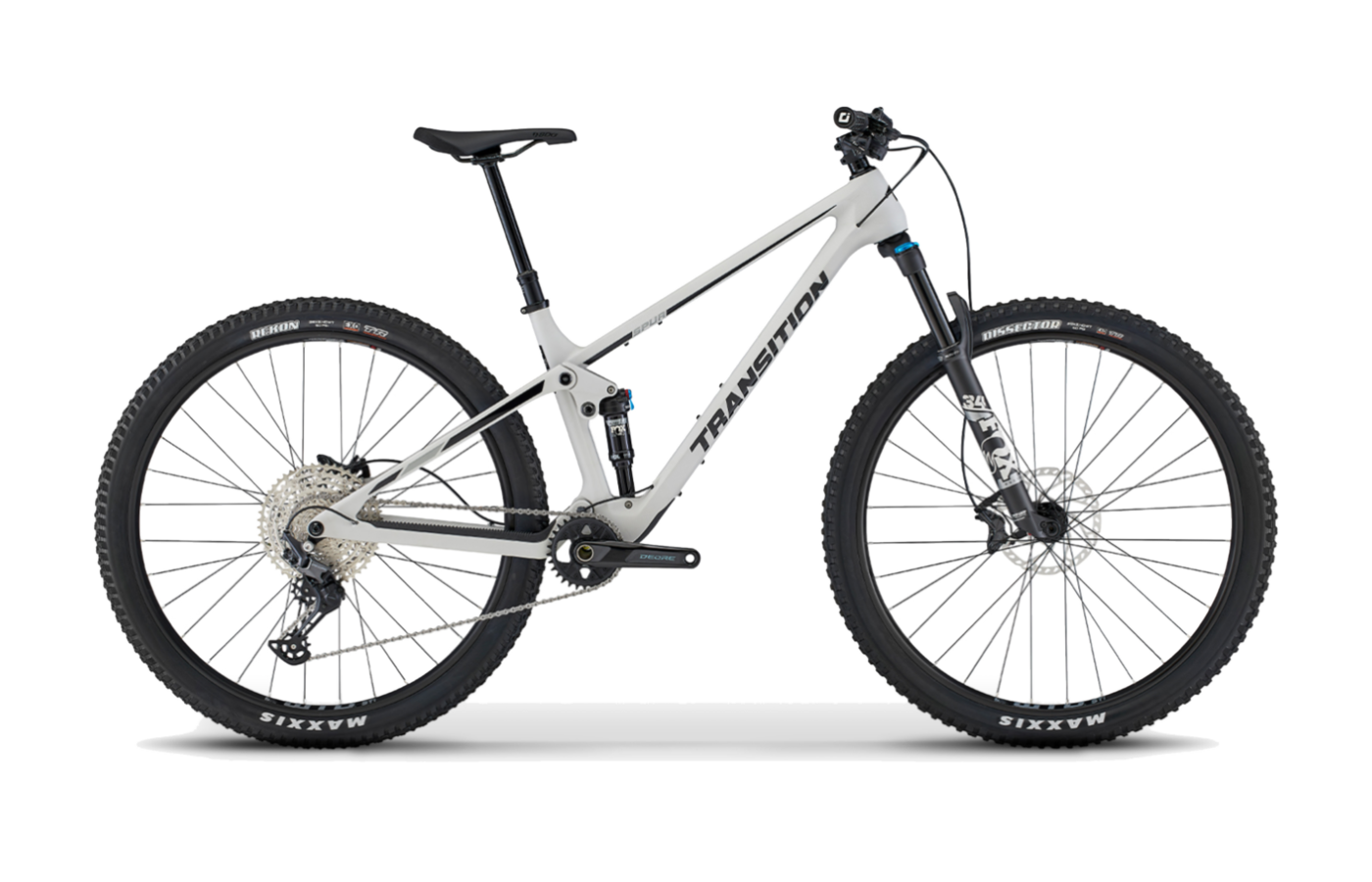
Spur
The bike that defined the modern downcountry category — more playful and fun-first than the Epic Evo, more capable on descents than the Blur. Best if you can't decide between the two and want the middle path.
Compare →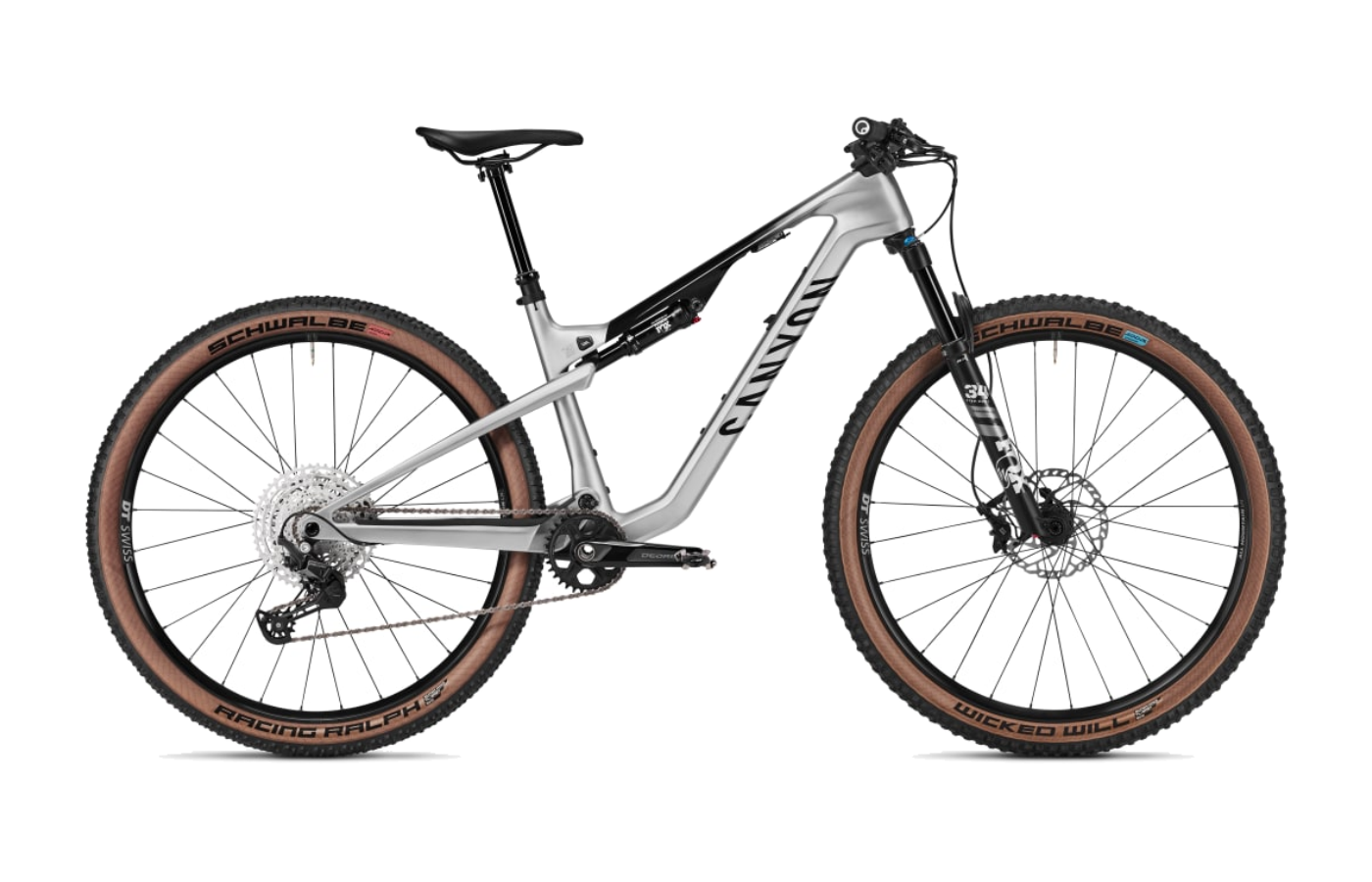
Lux Trail
Direct-to-consumer pricing on a similar 120/115 mm travel bracket — typically ~30% less money for an equivalent component spec. The catch is no local dealer for fit and warranty work.
Compare →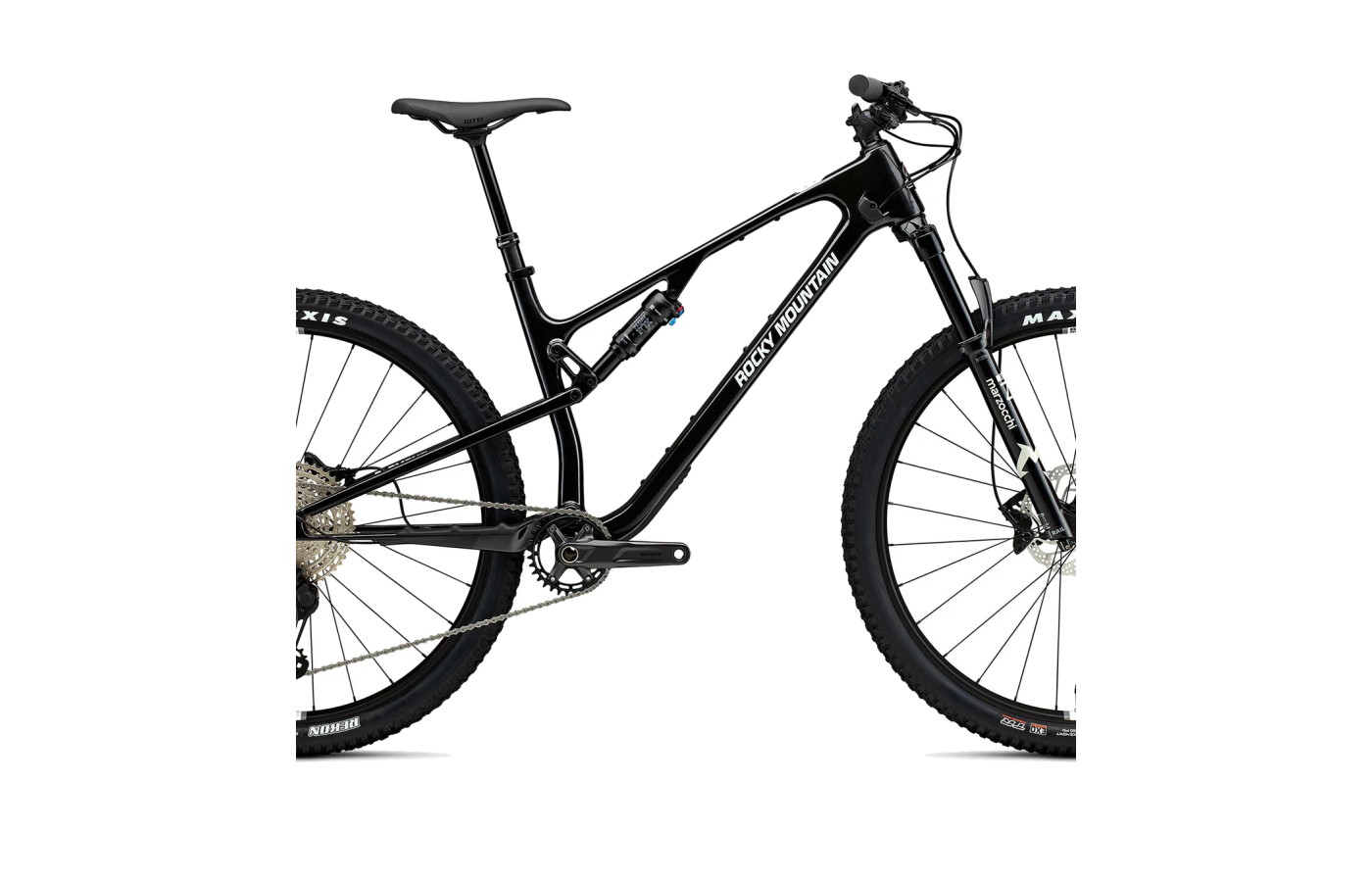
Element
If the Epic Evo isn't slack or stable enough, the Element pushes geometry further into trail-bike territory while keeping XC weight. Best for riders who want the Epic's descending mindset with even more headroom.
Compare →