Blur
vsSupercaliber
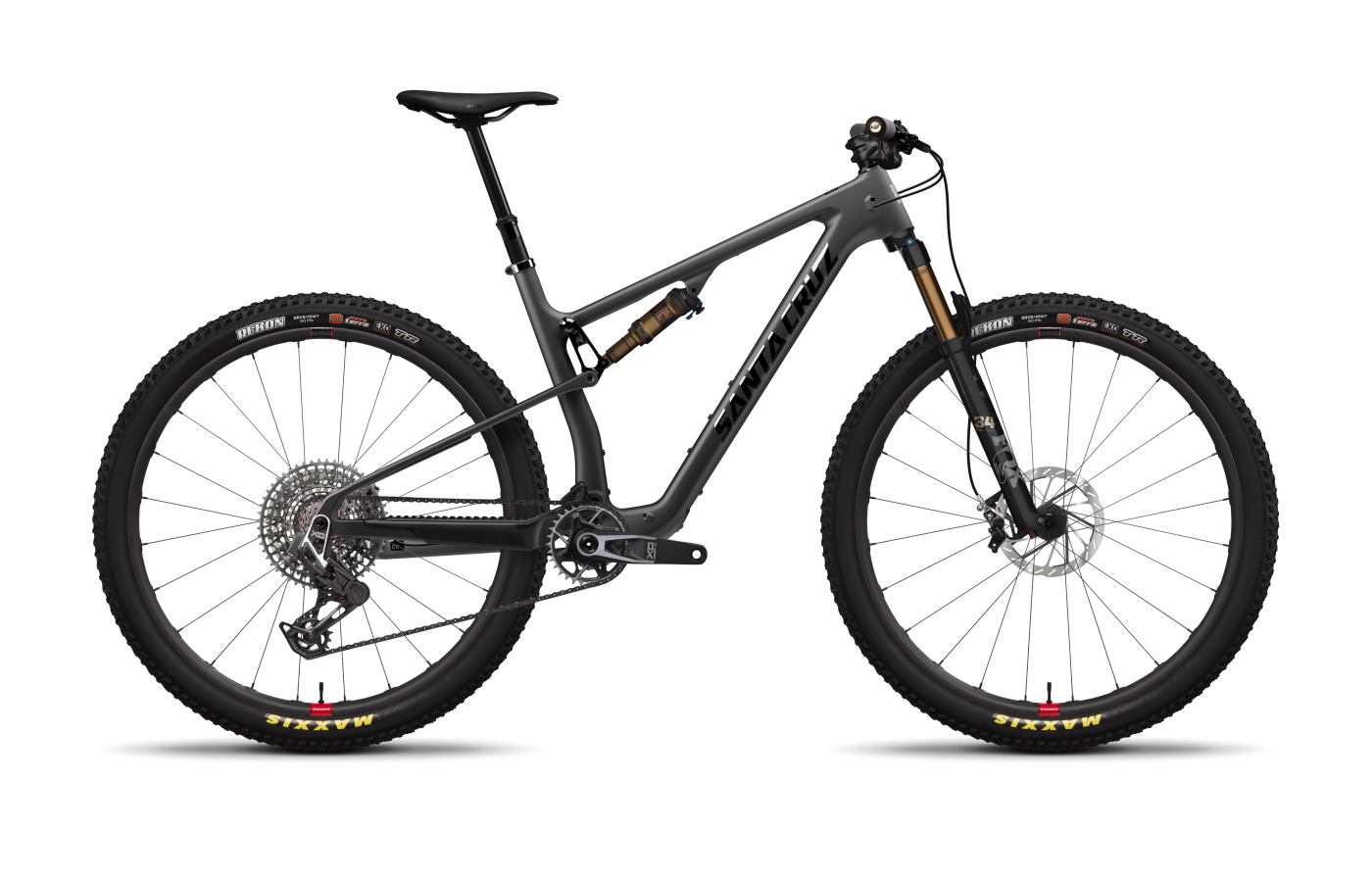
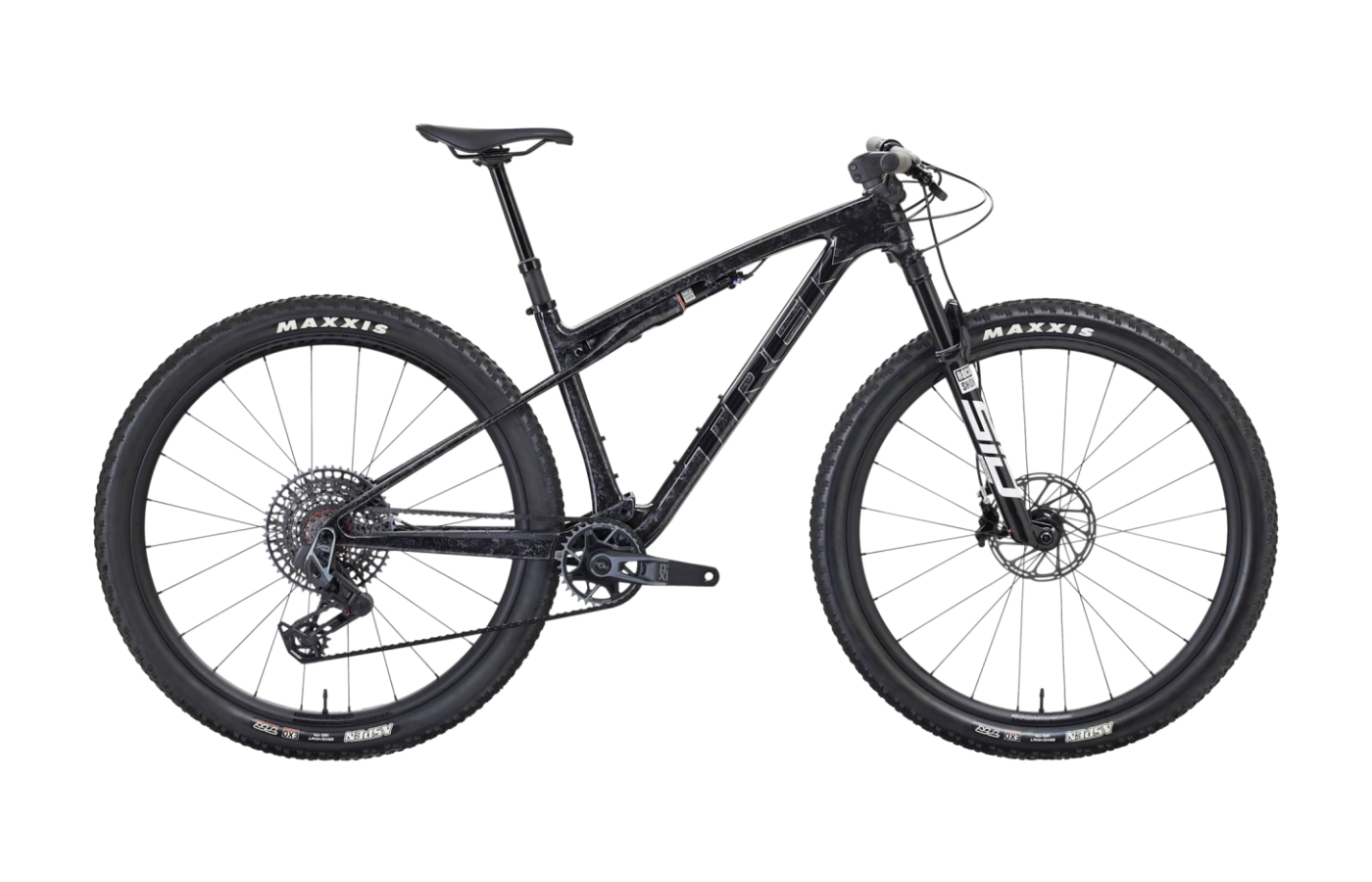
Two short-travel XC bikes with opposite suspension philosophies.
The Blur trades anti-squat for traction and trail-bike comfort. The Supercaliber turns the rear shock into a structural strut and chases watts.
Blur
- More travel, more comfort — 115 mm rear / 120 mm front absorbs trail chatter the Trek transmits straight through.
- Class-leading climbing traction — low anti-squat keeps the rear wheel hooked on rooty technical climbs.
- Lifetime warranty stack — frame, pivot bearings, and Reserve carbon wheels all covered for the original owner.
- Visible pedal bob on smooth climbs without engaging the lockout.
- Carbon C builds ($4,649–$6,949) are heavier than equivalent-priced Trek SL builds.
Supercaliber
- Hardtail-like pedal response — high anti-squat and IsoStrut rigidity deliver "ego-boosting" standing sprints.
- Lighter at the top end — SLR 9.9 builds hit 10.08 kg / 22.23 lbs, around 1 kg under equivalent Blur trim.
- Broadly modernized geometry — 67.5 degree HTA and longer wheelbase fix the nervous handling of Gen 1.
- 80 mm of rear travel bottoms out harshly on chunky descents.
- IsoStrut needs ~10 hours of break-in before the suspension feels supple — multiple reviewers reported a stubborn first ride.
Editor’s analysis
Same wheel size, almost the same weight, and a 35 mm difference in rear travel that defines two completely different ways to win an XC race.
On paper these are direct rivals — both 29ers, both around 11 kg in mid-tier carbon trim, both pitched at the cross-country racer who refuses to ride a hardtail. Look closer and the engineering is opposite. The Santa Cruz Blur runs 115 mm of rear travel through a flex-stay single pivot tuned with deliberately low anti-squat. The Trek Supercaliber runs 80 mm through the IsoStrut — a RockShox SIDLuxe that doubles as a load-bearing frame member — with anti-squat dialed up to feel almost hardtail-firm.
The Santa Cruz Blur is the marathon weapon. Reviewers consistently called the rear end "active," "plush," and able to "suck itself to the ground" on rooty technical climbs — at the cost of visible pedal bob on smooth fire road unless you reach for the lockout. The 67.1 degree head angle on the TR builds and the 120 mm fork make it one of the most descent-capable bikes in the XC class, and the C-frame builds run as low as $4,649. It rewards a high-cadence, seated rider who wants the suspension to do the survival work.
The Trek Supercaliber is the opposite tool. Reviewers called it "ruthlessly efficient," compared the standing-sprint response to a lightweight eMTB, and noted the open compression mode "feels like the pedal mode on a normal shock." Geometry got dragged into the modern era for Gen 2 — 67.5 degree head angle, 110 mm fork, 17 mm longer wheelbase than Gen 1 — but the 80 mm of rear travel still announces itself on chunky terrain with a metallic bottom-out. This is a 90-minute XCO bike that happens to be survivable for longer.
Put plainly: the Blur is the bike you buy if your races are four hours long and the trail is wet, rooty, and full of janky compressions. The Supercaliber is the bike you buy if your races are 90 minutes, mostly seated, and you've watched your power file enough times to know that 80 mm is plenty.
Where the builds differ.
Comparing our editor's-pick builds side-by-side. Winners highlighted row-by-row — lower price and weight, and the better-spec component, each mark a point.
Build variants & pricing
Both ranges span around $9,000, top to bottom. The Blur opens at $4,649; the Supercaliber opens at $4,799 — but the Trek's price ladder spans two distinct frames (SL and SLR) where the Blur splits between C and CC carbon.
Prices are current US MSRP. The editor's picks are matched at SRAM X0 AXS T-Type drivetrain and high-modulus carbon (Santa Cruz CC vs Trek SLR), within ~$350 of each other — the cleanest apples-to-apples comparison the two lineups allow.
How they fit, how they steer.
Different sizing conventions land the same 173 cm rider on a Blur M and a Supercaliber ML. The Trek runs 12 mm longer reach (450 vs 438), a 0.4 degree slacker head angle (67.5 vs 67.1), and a 2 mm longer chainstay — a touch more stable up front, slightly tighter at the rear.
Which size should I buy?
Use the size picker to compare frame fit across the full range. Trek offers an extra ML size between M and L, useful for riders who fall between conventional sizes.
→These are starting points. Flexibility, riding style, and preferred position all shift the answer — if you’re between sizes, a professional fit beats a chart.
What the magazines said.
Published reviews from trusted cycling outlets. Click through for the full write-up.
Which one should you buy?
If you race for hours on technical terrain, get the Blur. If you race for 90 minutes and want the lightest, firmest pedaling platform, get the Supercaliber.
Blur
If your race is three hours of wet roots and your back gives out before your legs do, the Blur's extra travel and traction-first suspension keep you fast when you're exhausted. It's also the better choice if you want one bike that can handle a 50-mile XC race AND a casual trail ride.
Supercaliber
If your race is 90 minutes long, mostly seated, and decided in standing sprints out of corners, the Supercaliber's IsoStrut delivers the most direct pedal response in the class. The trade-off is that 80 mm of travel makes itself known when the trail gets chunky.
Questions buyers actually ask.
Short answers to the things we get emailed about most often.
01Which one climbs better?
Depends on the climb. On smooth fire roads or paved transitions, the Trek Supercaliber is the more efficient platform — high anti-squat and the IsoStrut rigidity mean the bike barely moves under power, and reviewers describe standing sprints as "instant forward motion."
On technical, rooty, or stepped climbs, the Santa Cruz Blur is consistently faster. Santa Cruz deliberately tuned the rear end with low anti-squat so the wheel stays planted; one reviewer called it the "fastest singletrack climber" in their field test. The trade-off is visible pedal bob on smooth ground unless you flip the lockout.
02Which one descends better?
The Santa Cruz Blur, by a meaningful margin. The TR builds run a 120 mm fork and 115 mm of rear travel, and the 67.1 degree head angle gives it more in common with a downcountry bike than a pure XC racer. Reviewers consistently noted it could absorb "chunky" terrain that the Supercaliber would bottom out on.
The Trek Supercaliber Gen 2 is a huge step forward over Gen 1 — slacker 67.5 degree head tube, 17 mm longer wheelbase, dropper post standard — but 80 mm of rear travel is still 80 mm. Multiple reviewers described a "harsh, metallic" sensation when the IsoStrut hits its limit on hard compressions.
03Is the IsoStrut reliable, and how is it serviced?
Mostly yes, with caveats. The Gen 2 IsoStrut is now made by RockShox (the previous Gen used a Fox-built unit) and shares 38 mm stanchions with the Zeb enduro fork. Service intervals are 100 hours for the air can, double a standard SIDLuxe.
Two recurring issues from reviewers: (1) units are arriving from the factory with insufficient lubrication, leading to a "stubborn" first 10 hours of riding — check and top up if it feels harsh out of the box, and (2) one reviewer (Escape Collective) reported a damper leak early in testing. The Blur's standard shock mounting is more conventional and any shop can service it.
04Which has the better warranty?
Santa Cruz is the broader package. Lifetime warranty on the frame, lifetime warranty on the pivot bearings (with replacement parts mailed free), and lifetime warranty on Reserve carbon wheels for the original owner.
Trek offers a lifetime frame warranty for the original owner. The IsoStrut is covered under standard suspension terms. Both brands offer crash-replacement programs.
05Can either run a longer-travel fork?
The Santa Cruz Blur is sold in two configurations on the same frame — XC at 100 mm travel with a 100 mm fork, and TR at 115 mm with a 120 mm fork. Going beyond 120 mm voids the warranty.
The Trek Supercaliber Gen 2 geometry is designed around a 110 mm fork, with Trek officially listing 100–120 mm as the supported range. Going to 120 mm slackens the head tube about a half degree but raises the bottom bracket and shortens the reach.
06How do the carbon frame tiers compare?
Both brands sell two carbon tiers on the same mold. Santa Cruz offers Carbon C (the more affordable layup, ~250–350 g heavier) and Carbon CC (the high-modulus race layup). Trek offers SL OCLV (heavier, includes molded-in cable guide tubes) and SLR OCLV (lighter, omits guide tubes to save ~200–250 g).
For most non-pro racers the C and SL frames offer better value — same geometry, same lifetime warranty, better long-term serviceability in the case of the Trek SL, which adds those internal cable guides that the SLR omits.
07Which has more tire clearance?
Both frames clear up to a 2.4-inch (61 mm) tire, which is the modern XC standard. The Blur ships with 2.4-inch Rekons or Rekon Race tires across the entire build range.
The Trek Supercaliber ships with 2.4-inch tires on most builds, but the flagship SLR 9.9 XX Flight Attendant goes to 2.2-inch Pirelli Scorpions to save weight — multiple reviewers (BikeRadar, Flow MTB) called those too narrow for the bike's modernized geometry and recommended an immediate swap to 2.4-inch rubber.
08Which holds resale value better?
Both hold value well within the high-end XC segment, but Santa Cruz has historically held a slight edge in the used market — production runs are smaller and the lifetime bearing/wheel warranty transfers some value to second buyers.
The Trek Supercaliber is newer to Gen 2 (2024 model year), so long-term resale data is still thin. The proprietary IsoStrut is a double-edged sword: the bike's distinctive look helps brand recognition, but a future buyer is locked into Trek's service network for damper work.
Similar bikes
If your priorities don’t map cleanly onto either of these, one of these adjacent bikes probably fits better.
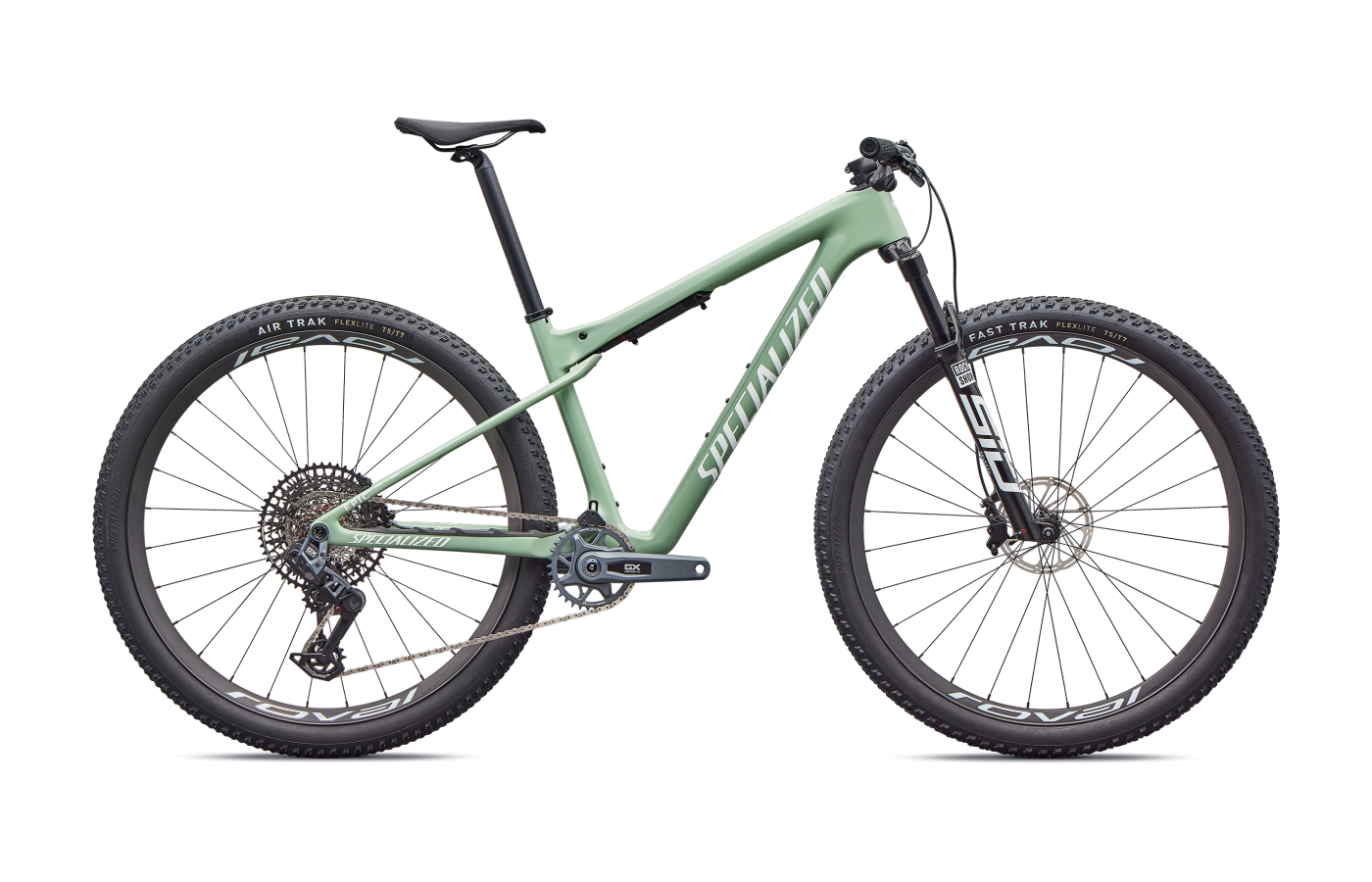
Epic World Cup
The Trek Supercaliber's most direct rival — Specialized's own integrated-shock XC weapon, with an air-spring tuning that achieves IsoStrut-like efficiency without a remote lockout. If you want sprint-firm pedaling without the IsoStrut's break-in quirks.
Compare →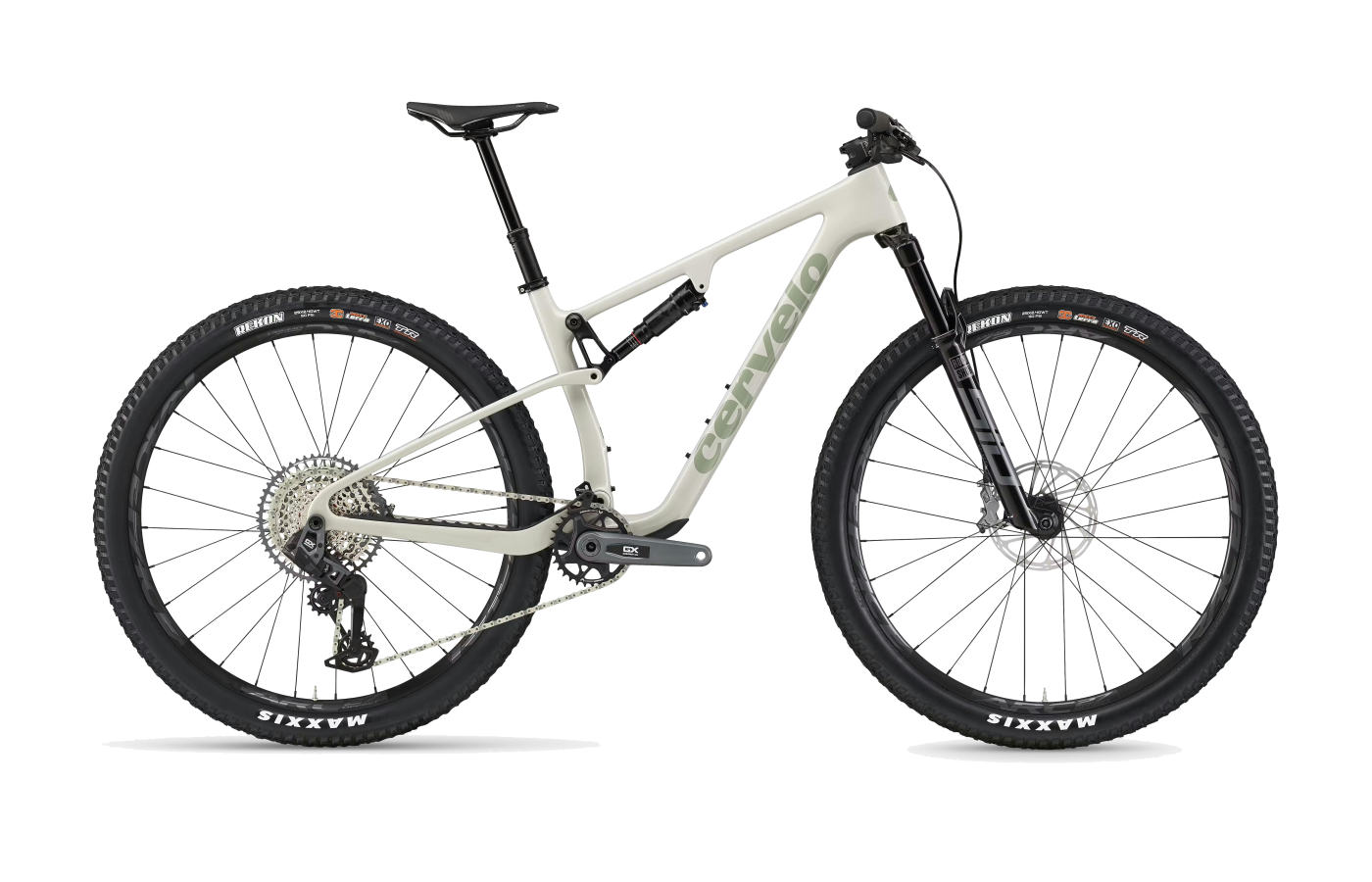
ZFS-5
Same flex-stay DNA as the Blur but in a sharper, more race-focused package. The ZFS-5 is the choice for a rider who wants the Santa Cruz suspension character with steeper, more aggressive XC geometry.
Compare →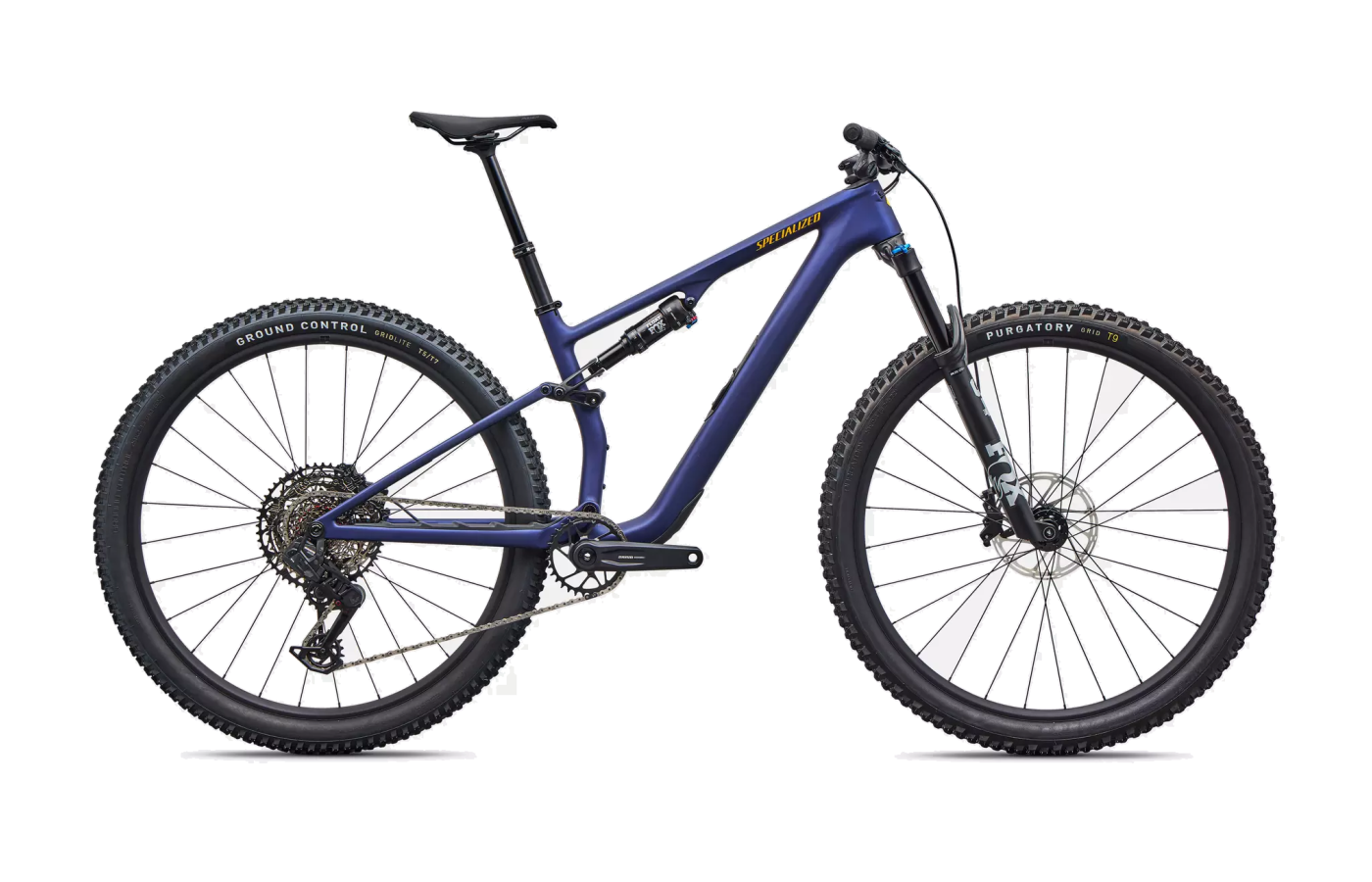
Epic Evo
If neither bike has enough travel for your terrain, the Epic Evo runs 120 mm front and rear with genuine downcountry geometry — closer to a trail bike that can still race XC than a race bike that can ride trail.
Compare →