Bronson
vsPatrol
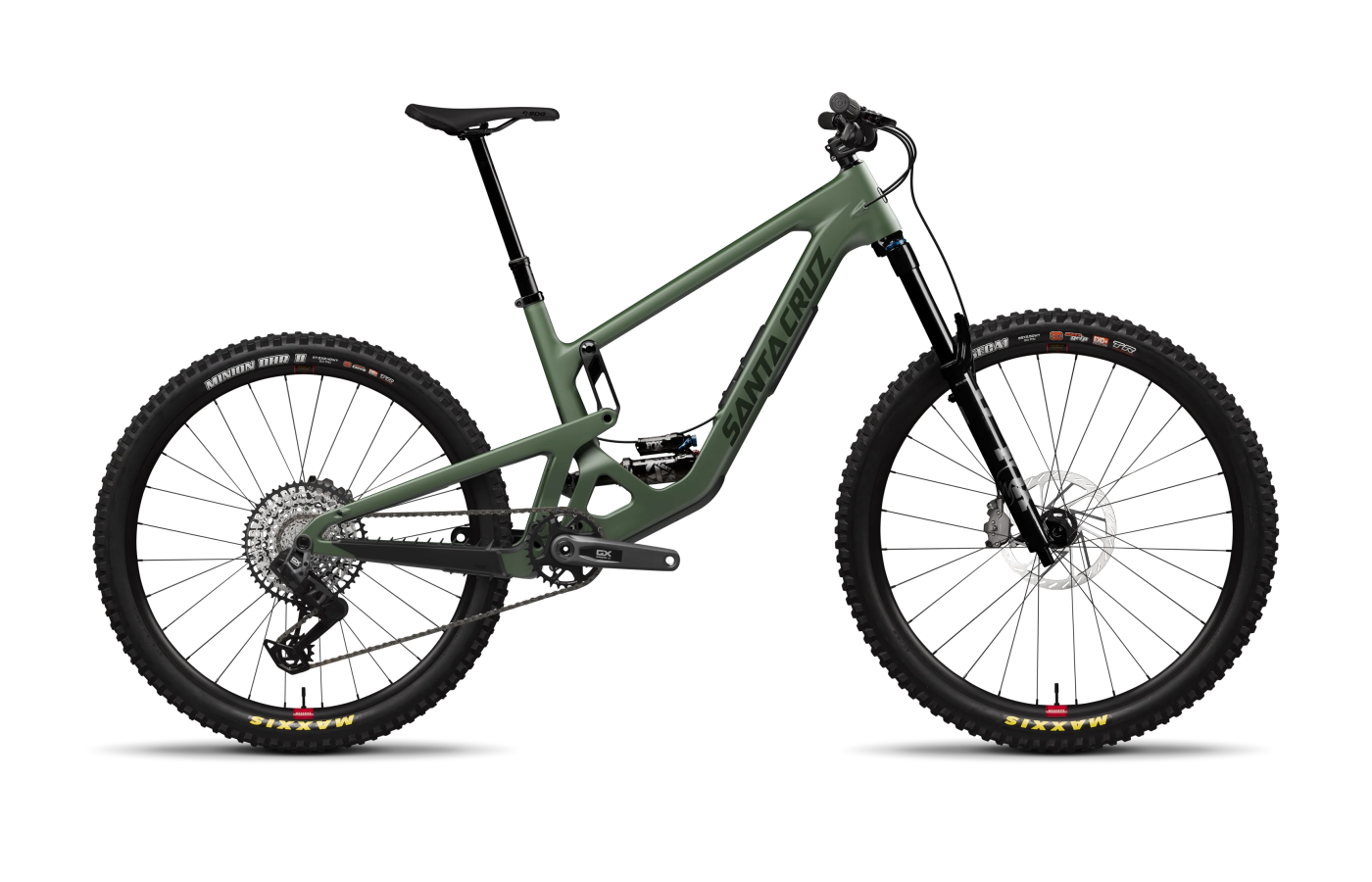
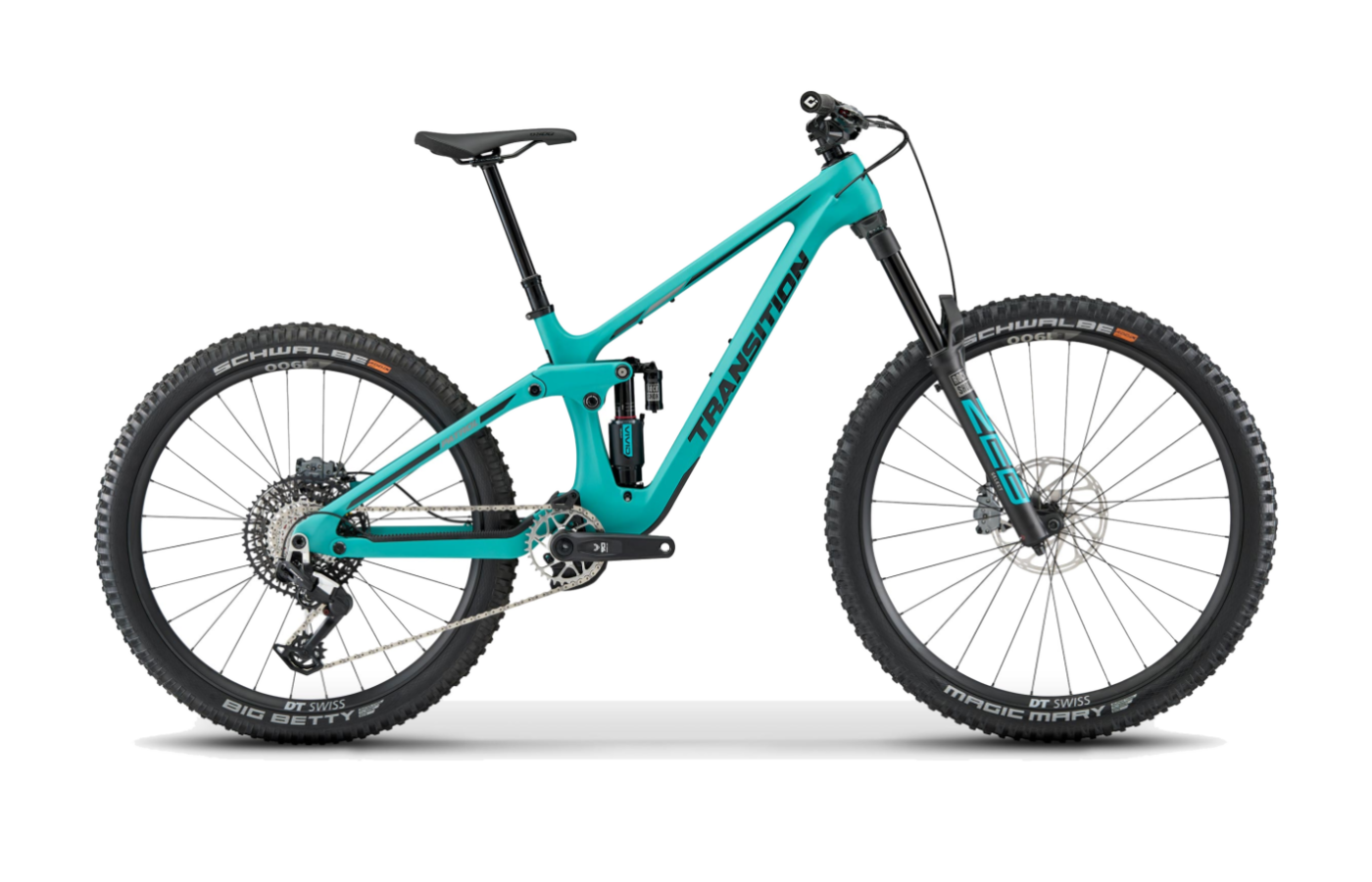
Two mullets, two attitudes.
The Bronson is the polished do-everything mullet trail bike. The Patrol is a freeride-leaning party machine with a downhill-bike head angle.
Bronson
- Polished all-rounder — supportive VPP suspension and balanced geometry that flatter mixed terrain rather than specializing.
- Lifetime frame and bearing warranty — Santa Cruz replaces pivot bearings free for the life of the bike.
- Composed climber — steep enough seat angle and high enough anti-squat that the climb switch rarely earns its keep.
- Carbon-only lineup pushes the entry price above $4,999 — no aluminum option this generation.
- Towering front end can feel rear-biased in flat corners until you drop spacers or shift weight forward.
Patrol
- Freeride-ready chassis — 1.5-inch straight head tube takes a dual-crown fork; rear shock can be stroked to 170 mm.
- Snappy, communicative ride — GiddyUp layout and slack head angle reward active riders in steep, technical, jump-heavy terrain.
- Lower entry price — alloy builds start at $3,999, undercutting the Bronson's carbon-only floor by a thousand-plus.
- Very low bottom bracket — pedal strikes are a recurring complaint even with 165 mm cranks.
- Carbon GX AXS Carbon build is the only carbon option; alloy frame weighs roughly 4.6 kg with shock.
Editor’s analysis
Same wheel recipe, very different chefs — one is built to flatter every rider on every trail, the other rewards riders who like the bike fighting back a little.
The Santa Cruz Bronson and Transition Patrol both run the same mixed-wheel formula — 29-inch front, 27.5-inch rear — and both target the rider who wants one capable trail/enduro bike. That's about where the agreement ends. Santa Cruz pitches the Bronson as a Goldilocks bike: 150 mm rear, 160 mm fork, 64.2-degree head angle, the kind of geometry that flatters most trails most days. Transition treats the Patrol as a freeride rig in trail-bike clothing — 160 mm rear, 160 mm fork, 63.5 degrees in the high setting (63 in low), and a 1.5-inch straight head tube that legally takes a dual-crown fork.
On paper that's a small head-angle delta. On trail it isn't. The Patrol sits 9 mm lower in stack, runs a 5 mm shorter rear center (434 vs 439 mm at the comparable size), and carries an effective seat-tube angle nearly a full degree steeper (78.8 vs 77.9). It corners harder, climbs more upright, and pedals into rock strikes more often — that low bottom bracket is the price of the rest of the package. The Bronson keeps its bottom bracket higher and its front end taller, which is why reviewers consistently describe it as planted and intuitive, and why a few of them gripe about a "towering" front end on flatter corners.
Suspension philosophies diverge too. The Bronson's lower-link VPP runs around a 2.5:1 leverage ratio and is universally described as supportive in the mid-stroke, with enough anti-squat that reviewers say the climb switch is mostly decorative. The Patrol's GiddyUp layout is more active and more communicative — "pilot, not passenger" comes up in nearly every review — at the cost of a slightly narrower setup window and the option to stroke the shock to 65 mm for 170 mm of rear travel if you want a near-park bike.
The simplest framing: the Bronson is the bike to buy when you want one trail bike that handles 90% of riding gracefully. The Patrol is the bike to buy when you already know you want to spend the day in jump lines, steep loamers, and the occasional bike-park lap, and you'd rather have engagement than polish.
Where the builds differ.
Comparing our editor's-pick builds side-by-side. Winners highlighted row-by-row — lower price and weight, and the better-spec component, each mark a point.
Build variants & pricing
Bronson is carbon-only and runs $4,999–$9,349 across seven kits. Patrol spans a wider range — alloy from $3,999, carbon up to $6,999 — across four kits.
Prices are current US MSRP. The editor's-pick GX AXS Carbon trims tier-match almost exactly: same SRAM GX AXS Transmission drivetrain, both on carbon frames, $7,249 vs $6,999. The headline platform difference is suspension travel (Bronson 150 mm rear, Patrol 160 mm rear) and the fork they ship with — RockShox ZEB Ultimate on the Patrol, Fox 36 Performance Elite on the Bronson.
How they fit, how they steer.
Bronson size m vs Patrol size MD — the fit-picked sizes for a 5'8" rider on each bike. The Patrol sits 9 mm lower in stack, runs a 5 mm shorter rear center, a steeper 78.8° seat tube angle, and 0.7° slacker head tube angle (63.5° vs 64.2°). Reach is within 5 mm.
Which size should I buy?
Both ranges are conservative-to-modern in reach, with Bronson stepping up in 25 mm jumps across five sizes and Patrol in 25–35 mm jumps across four.
→These are starting points. Flexibility, riding style, and preferred position all shift the answer — if you’re between sizes, a professional fit beats a chart.
What the magazines said.
Published reviews from trusted cycling outlets. Click through for the full write-up.
Which one should you buy?
If you want one mullet trail bike for everything — get the Bronson. If you want a freeride-flavored mullet that thrives on steep, jumpy, bike-park-adjacent terrain — get the Patrol.
Bronson
If you want a single bike that climbs efficiently, handles flow trails with poise, and still has the chassis to hold up at an enduro race, the Bronson is the polished pick. The lifetime bearing warranty seals the case for buyers who plan to keep the bike for many seasons.
Patrol
If most of your riding is steep, technical, jumpy, or bike-park-adjacent, and you'd rather have a bike that talks back than one that smooths everything out, the Patrol is the sharper tool. Dual-crown compatibility and 170 mm potential mean it grows with you.
Questions buyers actually ask.
Short answers to the things we get emailed about most often.
01Which is better for bike-park days?
The Patrol, by a comfortable margin. It's slacker (63.5° vs 64.2° head angle), runs 10 mm more rear travel (160 vs 150 mm), accepts a dual-crown fork, and can be stroked to 170 mm rear travel with a 65 mm shock. Reviewers explicitly call out park-friendly traits — including dual-crown-fork compatibility via the 1.5-inch straight head tube — that the Bronson doesn't share.
The Bronson is happy at the bike park, but it's tuned more for a trail rider who occasionally laps lifts than a park rider who occasionally pedals.
02Which one climbs better?
The Bronson, modestly. Both have steep effective seat angles (Bronson 77.9° at size m, Patrol 78.8° at MD) that keep the rider centered, but the Bronson's lower-link VPP suspension has enough anti-squat that multiple long-term reviewers describe the climb switch as decorative.
The Patrol pedals well for what it is, but the slacker head angle introduces some front-wheel flop in tight switchbacks, and the very low bottom bracket means more pedal strikes in technical terrain. Several reviewers run it in the High geometry setting on most trails specifically for the extra clearance.
03How different is the geometry, really?
More different than the head-angle delta suggests. At the fit-picked compared sizes (Bronson m, Patrol MD):
- Head tube angle: Bronson 64.2°, Patrol 63.5° (0.7° slacker)
- Reach: Bronson 460 mm, Patrol 455 mm (5 mm shorter)
- Stack: Bronson 632 mm, Patrol 623 mm (9 mm lower)
- Chainstay: Bronson 439 mm, Patrol 434 mm (5 mm shorter)
- Wheelbase: Bronson 1,240 mm, Patrol 1,231 mm (9 mm shorter)
- Seat tube angle: Bronson 77.9°, Patrol 78.8° (steeper)
The Patrol is lower, slacker, and steeper-seated — more downhill-flavored at both ends.
04Can I run a coil shock on either?
Yes on both. Santa Cruz explicitly redesigned the V4 Bronson's VPP layout to accommodate coil and air shocks, and the leverage curve (around 2.5:1 average) is friendly to either. The Patrol ships with a RockShox Vivid Ultimate air shock on the GX AXS Carbon build and accepts coil swaps; reviewers have run EXT Arma and Fox DHX2 coils on it without issue.
For most trail riders, the stock air shocks are the right call. Coil makes more sense if you're doing repeated long descents or bike-park time.
05What's the catch on the Patrol's low bottom bracket?
Pedal strikes — frequently and consistently called out across reviews. Even with the stock 165 mm short cranks, testers report "smacking cranks all day long" in technical pedaling sections. Several solutions are common in the community: run the geometry flip-chip in the High setting, install 155 mm cranks, or simply accept that timing your pedal strokes through chunk is part of the deal.
The upside is what that low BB does for cornering — reviewers nearly unanimously praise how the Patrol "rails" turns. It's a deliberate trade.
06Which has the better warranty and long-term support?
Both are very good, with different emphases. Santa Cruz offers a lifetime warranty on the frame and free lifetime pivot bearing replacement, plus the "No Missed Rides" parts program. Multiple reviewers cited this as the strongest single argument for the Santa Cruz Tax.
Transition also offers a lifetime frame warranty and is widely praised for parts availability — including selling model-specific touch-up paint, which several long-term reviewers said they actually needed because the paint chips easily. Maintenance-wise, the Patrol gets credit for external rear-brake routing (easy to swap) and a threaded BB; reviewers note it doesn't have rubber bearing-bolt seals, so wet-climate owners may go through pivot bearings faster than on the Bronson.
07Why do the editor's-pick prices differ?
They're tier-matched, not price-matched. The Bronson GX AXS ($7,249) and Patrol GX AXS Carbon ($6,999) both run the same SRAM GX Eagle AXS Transmission drivetrain on a carbon frame — that's the apples-to-apples spec comparison. The $250 gap reflects platform pricing (Santa Cruz tends to run a couple-hundred-dollar premium across the board), wheelset choice, and fork tier (Fox 36 Performance Elite on the Bronson vs RockShox ZEB Ultimate on the Patrol).
If budget is the deciding factor, the Patrol's alloy lineup starts at $3,999, more than $1,000 below the Bronson's $4,999 carbon entry. There's no equivalent low-cost Bronson.
08Which holds up better in wet, muddy conditions?
The Bronson has the edge for low-maintenance ownership in wet climates. Long-term reviewers note that Santa Cruz uses sealed pivot interfaces and a bearing rather than a bushing at the shock mount, and the lifetime free bearing replacement program means consumables are a non-issue.
The Patrol's pivot bearings lack external rubber gaskets over the bolts — one long-term tester predicted owners in wet conditions would need to replace bearings more often. Paint is also widely reported as fragile on the Patrol, though Transition sells matched touch-up paint directly.
Similar bikes
If your priorities don’t map cleanly onto either of these, one of these adjacent bikes probably fits better.
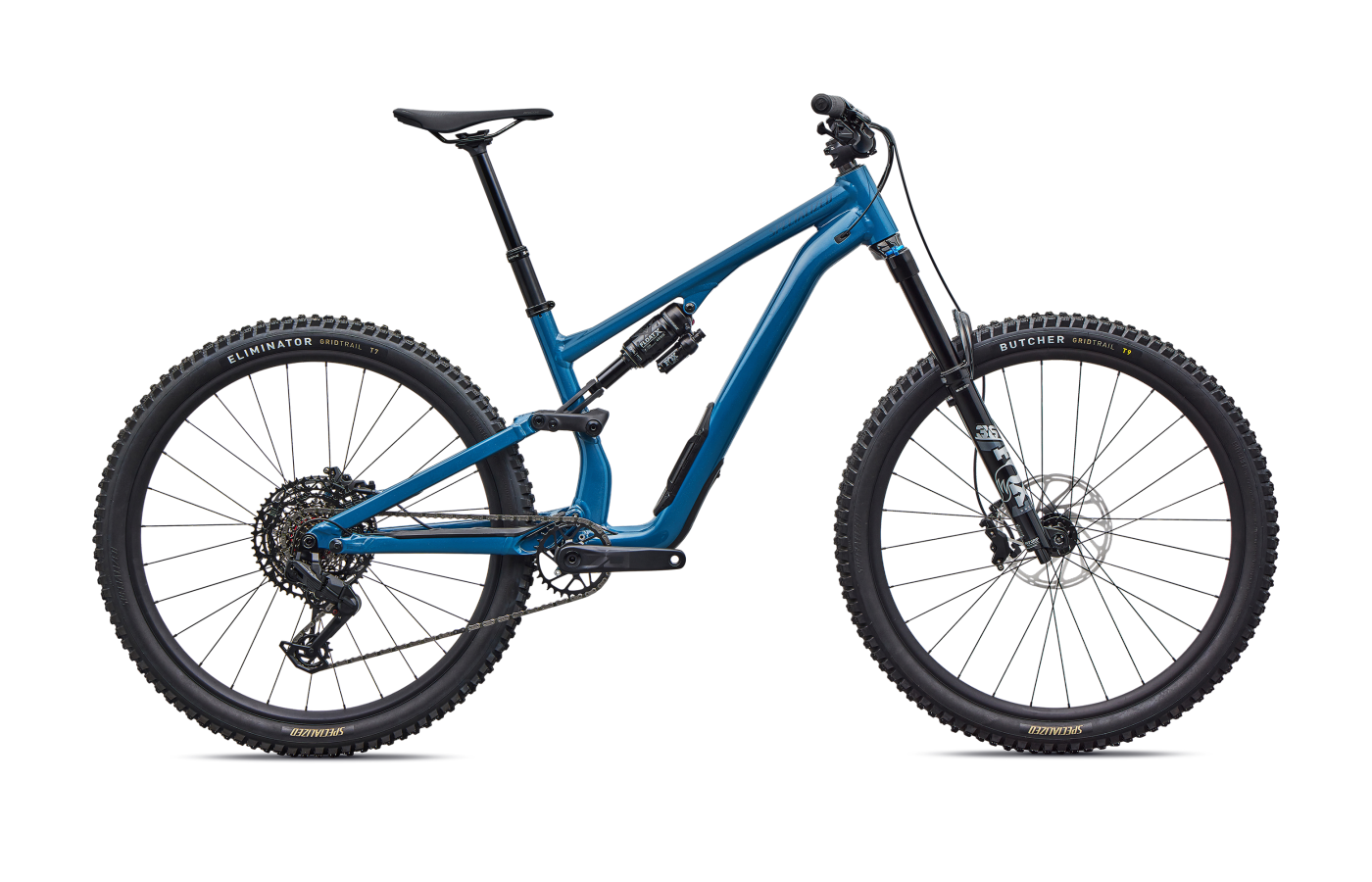
Stumpjumper Evo
Specialized's Stumpjumper Evo runs a similar travel envelope with multiple flip-chip geometry positions and a mullet-compatible link. A softer, more compliant feel than the Bronson — and a wider range of fit positions if you can't decide between the two attitudes here.
Compare →Spire
Transition's own Spire is the full-29 cousin of the Patrol — same brand DNA, but 170 mm of travel and the rollover of a big rear wheel for riders who want plow stability over mullet snap.
Compare →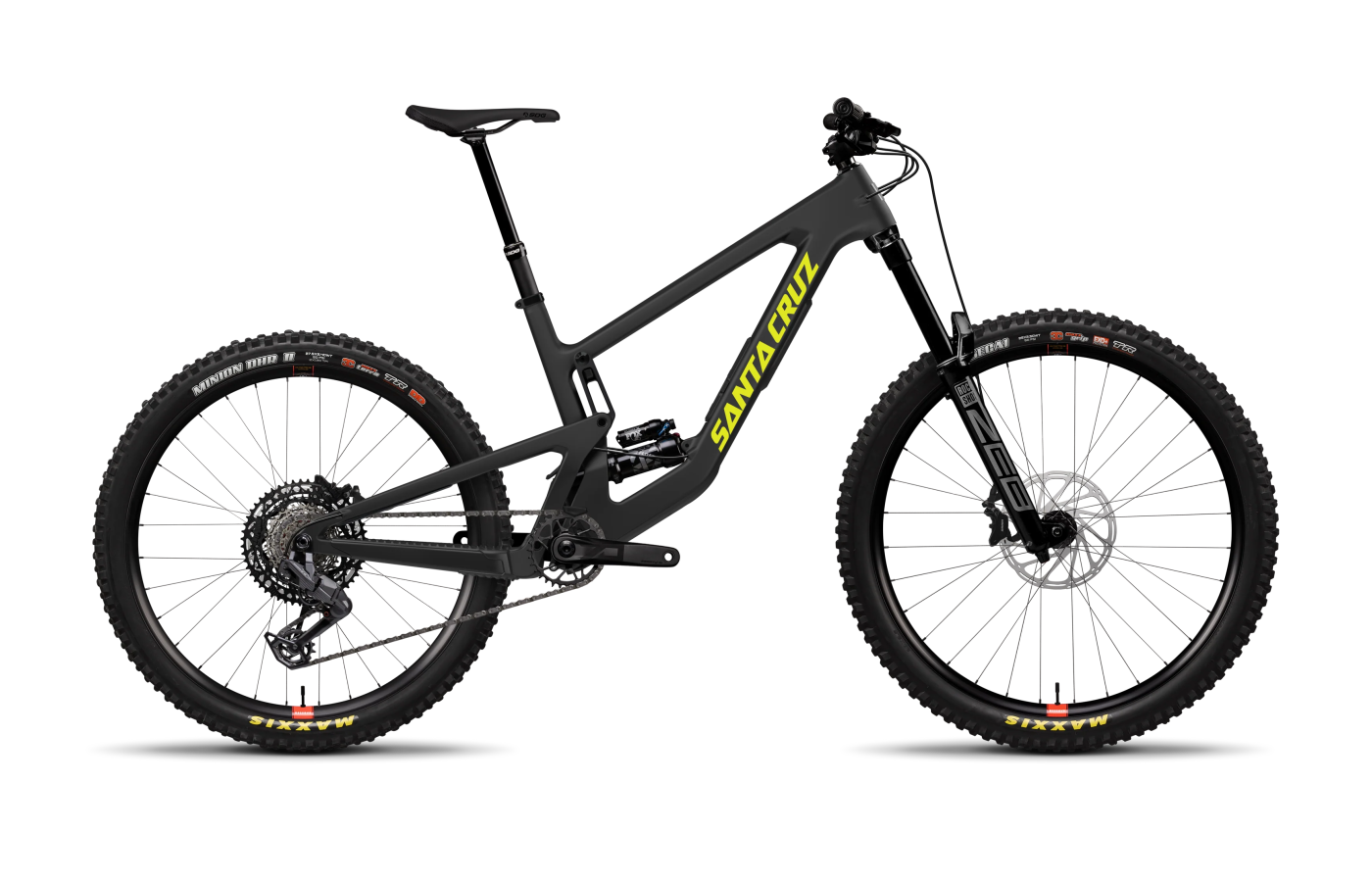
Nomad
Santa Cruz's Nomad is the bigger brother to the Bronson — 170 mm rear, slacker, mullet — for riders who like the Bronson's polish but find 150 mm gets overwhelmed in steep enduro terrain.
Compare →