Highball
vsProcaliber
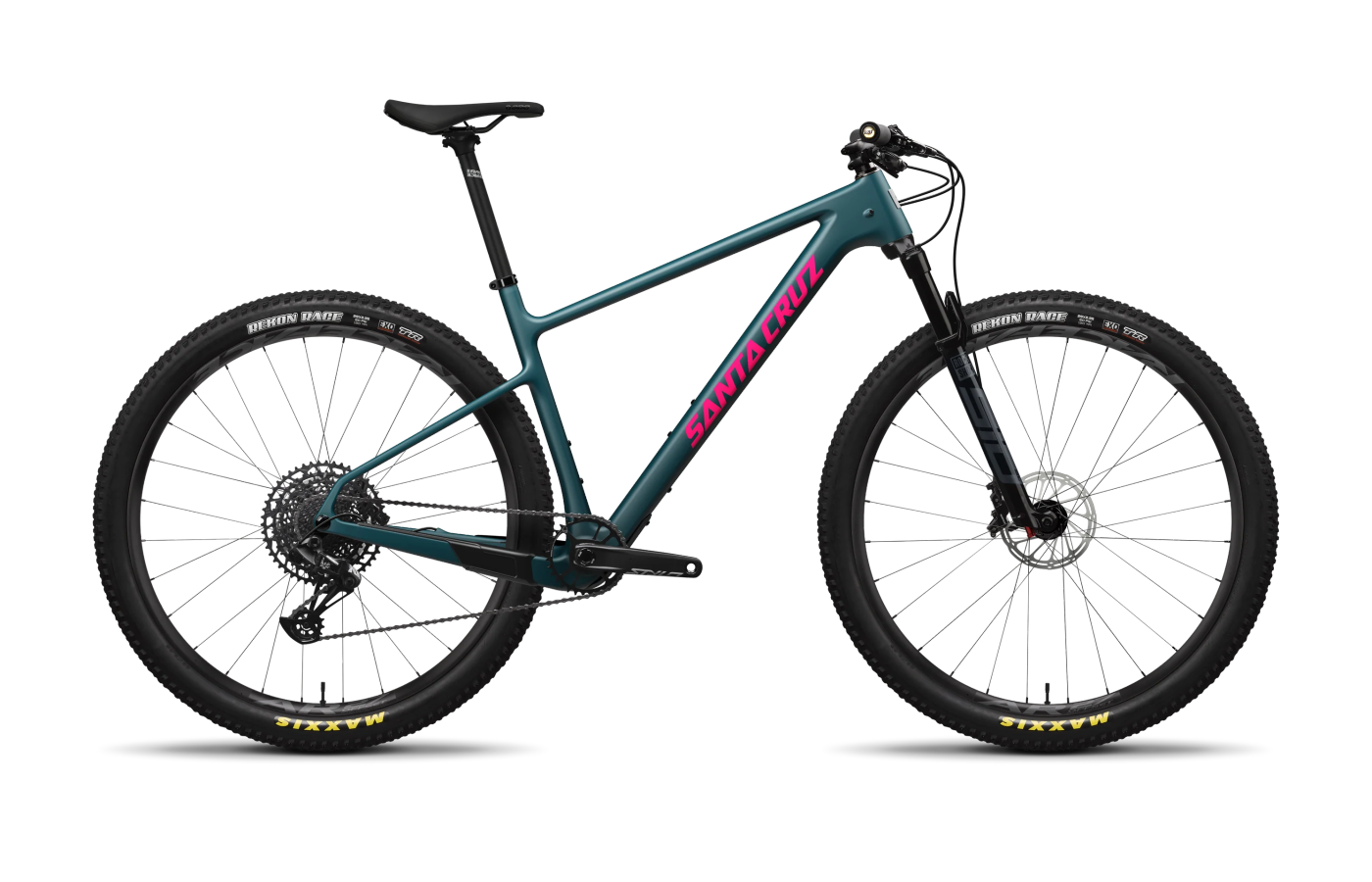
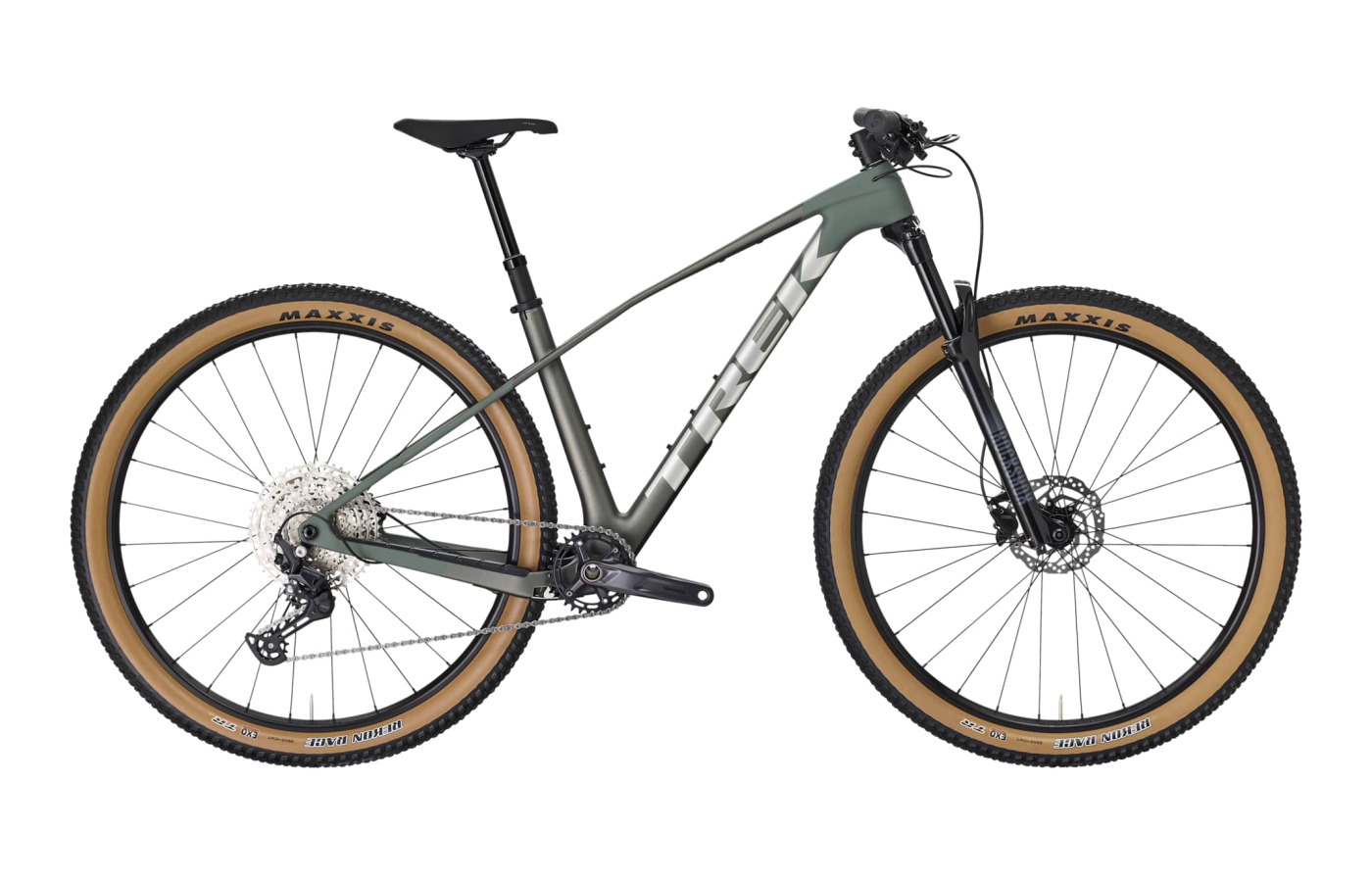
Two carbon hardtails, two different price brackets.
The Highball is a boutique XC platform with a 'soft hardtail' carbon layup. The Procaliber is Trek's mass-market race chassis at half the entry price.
Highball
- Genuinely compliant carbon layup — the dropped seat-stay junction gives a 'soft hardtail' feel reviewers consistently call out.
- Stable on fast descents — a 1,145 mm wheelbase (size M) with 426 mm chainstays keeps it composed where lighter XC bikes get twitchy.
- Long upgrade headroom — the same Carbon C frame scales from $3,299 NX up to a $7,899 X0 AXS RSV build with Reserve carbon wheels.
- Entry price is roughly double the Procaliber's — no carbon build under $3,000.
- 100 mm fork limits how rough the descents can get before you're out of travel.
Procaliber
- Best carbon-XC value here — $2,699 gets you the same OCLV chassis Trek puts under the $4,500 9.7.
- Modern downcountry geometry — 120 mm fork, 67-degree head angle, 435 mm chainstays (ML), and a 309 mm BB make it 'zingy' and flickable.
- Cleaner long-term ownership — side-entry cable ports (no headset routing), 31.6 mm dropper-friendly seat tube, UDH hanger.
- 9.5 Gen 3 spec is functional but basic — Shimano Deore drivetrain and a Judy Gold fork (vs SID on the Highball R).
- The 309 mm bottom bracket is pedal-strike-prone in technical, rocky climbs.
Editor’s analysis
Both bikes solve the same engineering problem — how to make a hardtail comfortable enough to race for hours — and arrive at the answer from opposite ends of the price ladder.
The Santa Cruz Highball and Trek Procaliber are both carbon 29er XC hardtails on a 100–120 mm fork, but the lineups barely overlap on price. The Highball starts at $3,299 with SRAM NX and tops out at $7,899; the Procaliber's only carbon build is the 9.5 Gen 3 at $2,699, with the alloy 6 below it at $1,799. If you're shopping under $3k, the Procaliber is the only carbon answer here. Above $4k, it's a Highball decision.
The Santa Cruz takes the boutique route. Its Carbon C frame drops the seat-stay/seat-tube junction roughly two inches below the top tube to add vertical compliance — a ~25 lb bike that reviewers consistently call a 'soft hardtail' that 'makes steep hills feel flat.' Geometry is long and stable: 440 mm reach and a 1,145 mm wheelbase in size M, with tucked 426 mm chainstays and a steep 73.5-degree seat angle that puts you over the cranks for sustained climbing. It runs a 100 mm RockShox SID and is most at home on long marathon-style days where efficiency and vibration damping matter more than absorbing big hits.
Trek's Gen 3 Procaliber takes the structural-flex route. The new IsoBow design replaces the old IsoSpeed decoupler with a hollowed-out top-tube/seat-stay junction — no pivots, no bearings, just engineered carbon flex. Reviewers split on whether you can actually feel it (BikeRadar called the effect subtle), but they agree the frame is stiff under power and 'snappy' out of the saddle. Trek bumps fork travel to 120 mm and slackens the head angle to 67 degrees, then keeps the chainstays short (435 mm in ML) and the bottom bracket low (309 mm) for flickable, downcountry-friendly handling. Pedal strikes in technical terrain are the trade-off.
Critically, Trek runs a single OCLV Mountain Carbon frame across the carbon lineup — the entry-level 9.5 gets the same 1,200 g chassis as the flagship 9.7. So the cheaper Procaliber really is a long-term upgrade platform, not a watered-down version. The Highball doesn't offer that pitch; it offers a more refined ride feel out of the box, a longer wheelbase for descent stability, and the boutique cachet — for roughly twice the entry price.
Where the builds differ.
Comparing our editor's-pick builds side-by-side. Winners highlighted row-by-row — lower price and weight, and the better-spec component, each mark a point.
Build variants & pricing
The Procaliber tops out where the Highball begins — Trek's whole lineup ($1,799 alloy, $2,699 carbon) lives below the Highball's $3,299 entry.
Prices are current US MSRP. The two platforms barely overlap on price: the Procaliber 9.5 Gen 3 ($2,699) is the only carbon Trek offering, while the Highball R ($3,299) is the cheapest carbon Santa Cruz. We've matched the editor's-pick builds at the lowest carbon rung on each side, but the price gap reflects real platform positioning, not a tier mismatch we can hide.
How they fit, how they steer.
Highball M vs Procaliber ML — the fit-picked sizes for a 5'8" rider on each. Reach is within 5 mm (440 vs 445), but the Trek sits 9 mm taller in stack, runs 9 mm longer chainstays, and pairs a 67-degree head angle with a 1-degree slacker seat tube — a noticeably more upright, downcountry-leaning fit.
Which size should I buy?
Recommendations come from stack, reach, and effective top tube. The Highball's M and the Procaliber's ML map to similar body proportions despite the different label.
→These are starting points. Flexibility, riding style, and preferred position all shift the answer — if you’re between sizes, a professional fit beats a chart.
What the magazines said.
Published reviews from trusted cycling outlets. Click through for the full write-up.
Which one should you buy?
If you want the most refined carbon hardtail and have $3,300+ to spend, get the Highball. If you want carbon XC under $3k with room to grow, get the Procaliber.
Highball
If your weekends look like five-hour rides with serious vertical, fire-road approaches into singletrack, and the occasional XC race, the Highball is the more refined tool. The dropped-stay compliance pays back over long days, and the geometry stays composed when the descents open up.
Procaliber
If you want a modern carbon XC platform without spending Santa Cruz money, the 9.5 Gen 3 is the obvious pick — the same OCLV chassis as the flagship for $2,699, with downcountry geometry and a 120 mm fork. Plan to upgrade the drivetrain and fork over time; the frame is the long-term keeper.
Questions buyers actually ask.
Short answers to the things we get emailed about most often.
01Which one is more comfortable on long rides?
The Highball, by most reviewer accounts. Santa Cruz's dropped seat-stay junction (about two inches below the top tube) introduces real vertical compliance into the rear triangle, and testers consistently describe the bike as a 'soft hardtail' that damps washboard and high-frequency chatter.
Trek's IsoBow design aims at the same goal via a structural cutout in the top tube, but reviewers were split — BikeRadar's tester 'struggled to feel masses of difference' and credited most of the Procaliber's compliance to the high-volume 2.4-inch tires rather than the frame.
02Which one is faster on technical descents?
The Procaliber, on paper. It runs a 120 mm RockShox SID up front (vs 100 mm on the Highball), a 67-degree head angle, and a 309 mm bottom bracket — all of which add stability and confidence when the trail points down.
The Highball is no slouch on descents — the long 1,145 mm wheelbase (size M) keeps it composed at speed — but it's running 20 mm less travel and was designed around marathon efficiency more than downcountry capability.
03Why is the Highball so much more expensive?
Two reasons. First, Santa Cruz only sells the Highball in carbon — the cheapest build is the R at $3,299 with SRAM NX. Trek offers an alloy Procaliber 6 at $1,799 alongside the carbon 9.5 Gen 3 at $2,699, so the brand's entry point is just lower.
Second, the brand premium is real. Even comparing carbon-to-carbon, the Highball's frame engineering (the dropped-stay compliance, the more aggressive geometry numbers) and the boutique positioning push the platform $600+ above the equivalent Procaliber rung.
04Will the cheap Procaliber ride like the expensive one?
Frame-wise, yes. Trek uses a single OCLV Mountain Carbon frame across the entire carbon lineup — the 9.5 Gen 3 gets the same ~1,200 g chassis as the top 9.7. The IsoBow design, geometry, fork travel, and frame compliance characteristics are identical.
What changes between builds is everything bolted on: the 9.5 ships with Shimano Deore and a RockShox Judy Gold fork; higher builds get GX Eagle Transmission, a SID fork, and carbon wheels. So the entry build is a legitimate long-term frame, just with components you'll want to upgrade.
05How much travel does each one have?
Highball: 100 mm front (RockShox SID), zero rear — it's a true hardtail with a short-travel XC fork.
Procaliber Gen 3: 120 mm front (RockShox SID on higher builds, Judy Gold on the 9.5), zero rear. The Procaliber's extra 20 mm of front travel is the biggest single difference between the two and is what gives it the 'downcountry' label.
06Which is better for racing XC?
Either, depending on the course. The Highball is the more traditional race tool — lighter (top builds are around 22.4 lb / 10.15 kg), longer wheelbase, sharper seat angle for sustained climbing, 100 mm fork to keep the front low. Better for marathon-style and climbing-heavy events.
The Procaliber Gen 3 is built for the more technical modern XC course — slacker head angle, more travel, dropper-post-friendly seatpost diameter, four-piston brakes on the carbon model. Better for shorter, descent-heavy World Cup-style tracks.
07Can I run a dropper post on either?
Yes on the Procaliber — Trek moved to a standard 31.6 mm seat tube specifically to make aftermarket dropper installation straightforward.
Yes on the Highball, but with a smaller catalog of options — Santa Cruz uses a 27.2 mm seatpost diameter, which adds a touch of natural flex and saves weight but limits dropper choice. Most XC droppers are made in 30.9 and 31.6 mm; 27.2 mm options exist (like the OneUp Components V3) but the selection is thinner.
08Which holds up better long-term?
Both are well-built carbon hardtails with no rear pivots or bearings to service, so both are fundamentally low-maintenance. The Procaliber Gen 3 picks up extra durability points for ditching the old IsoSpeed mechanical decoupler in favor of the structural IsoBow (no moving parts to wear), and for using side-entry cable ports instead of headset routing.
The Highball's Carbon C frame has a long enough track record in Santa Cruz's lineup that frame failures are rare. The bigger long-term cost difference is component replacement — premium kit on the higher Highball builds will be more expensive to refresh than the Procaliber's mainstream Shimano/SRAM parts.
Similar bikes
If your priorities don’t map cleanly onto either of these, one of these adjacent bikes probably fits better.
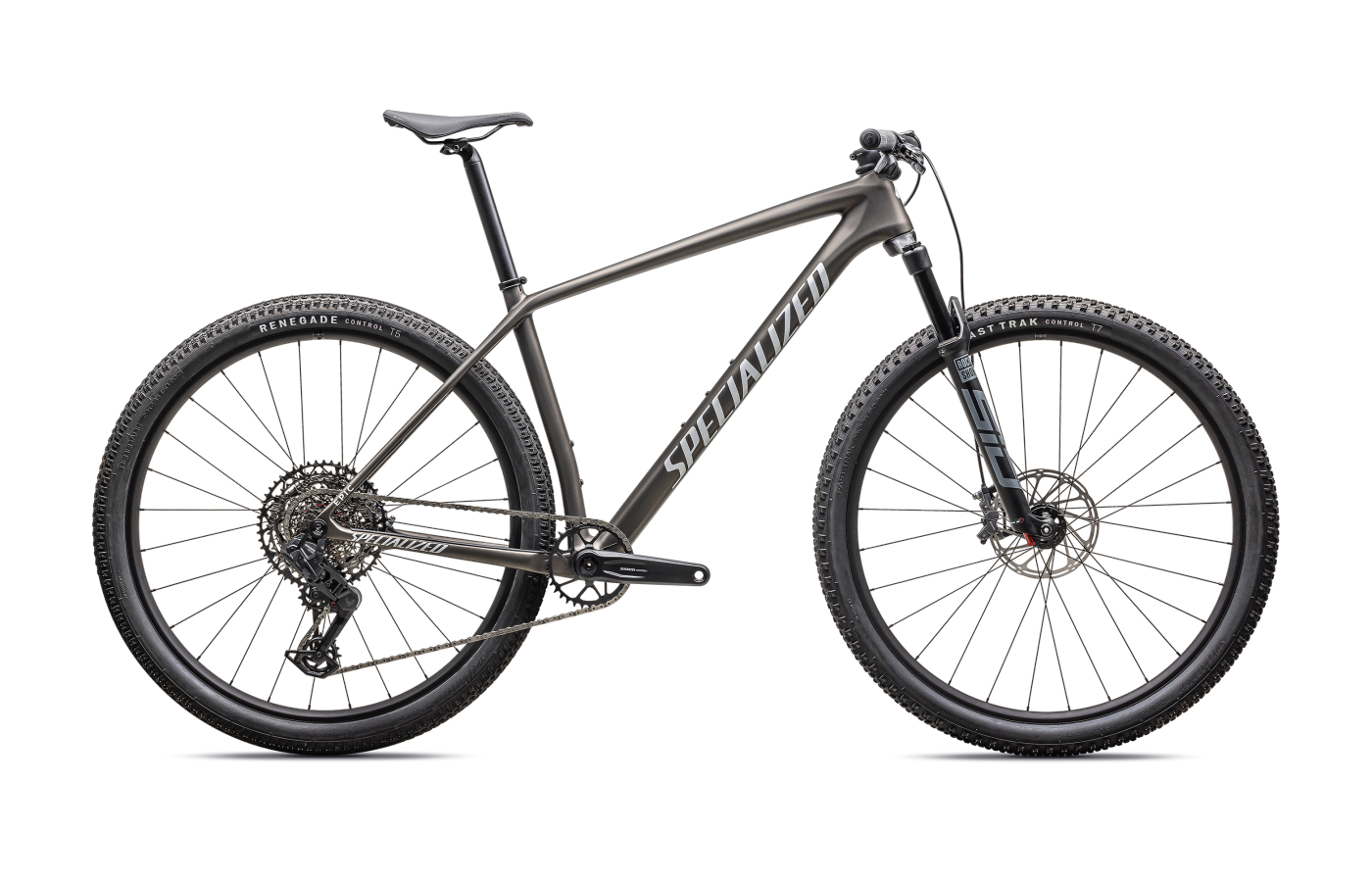
Epic Hardtail
The pure-race option — Specialized's lightest carbon hardtail with no flex tech, no IsoBow, no dropped stays. If you want the lowest weight and don't care about engineered compliance, this is the answer.
Compare →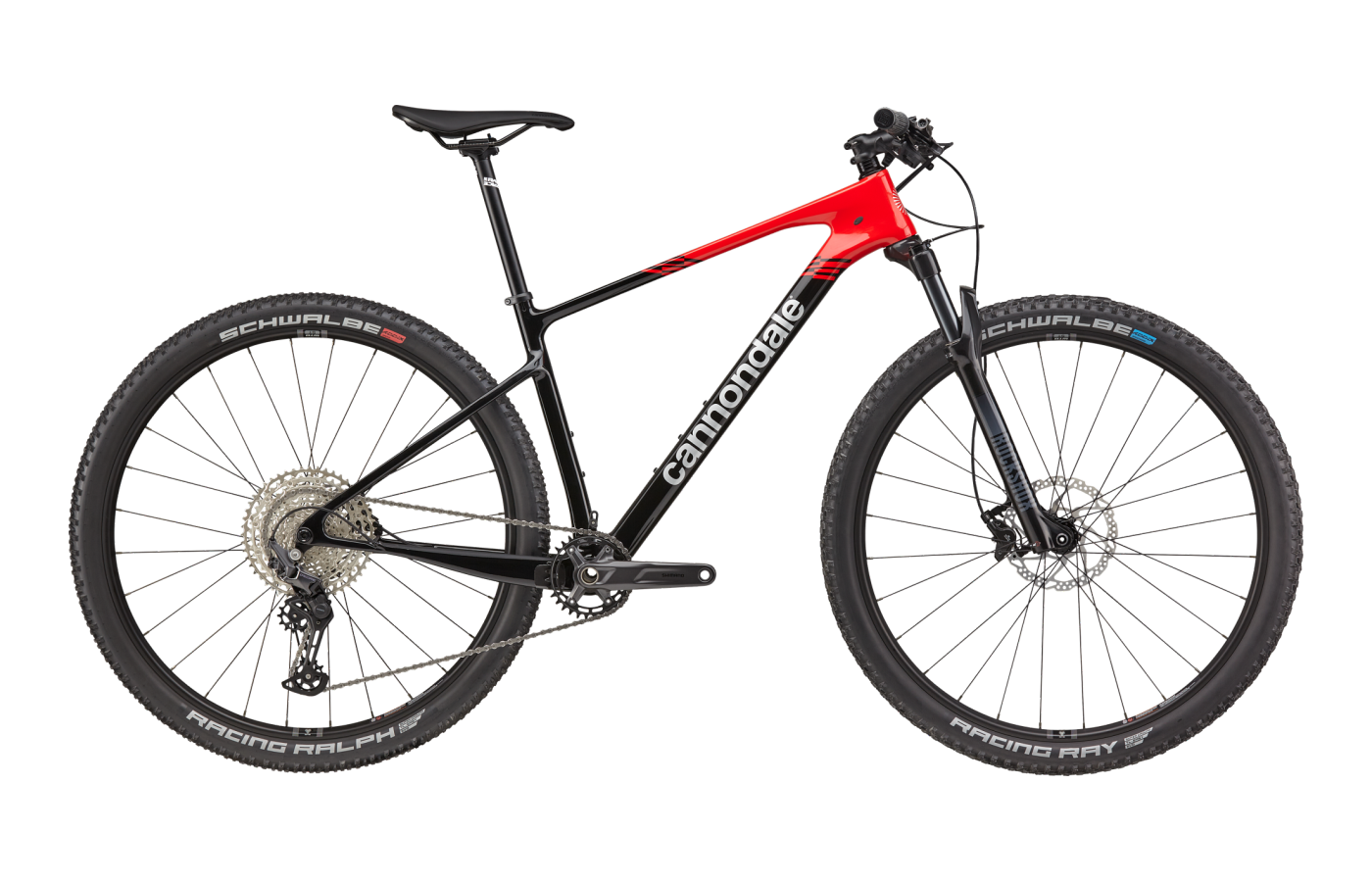
Scalpel HT
Cannondale's flex-stay take, built around a slacker 66.5-degree head angle. More descent-focused than either of these — closer to a downcountry hardtail than a pure XC race tool.
Compare →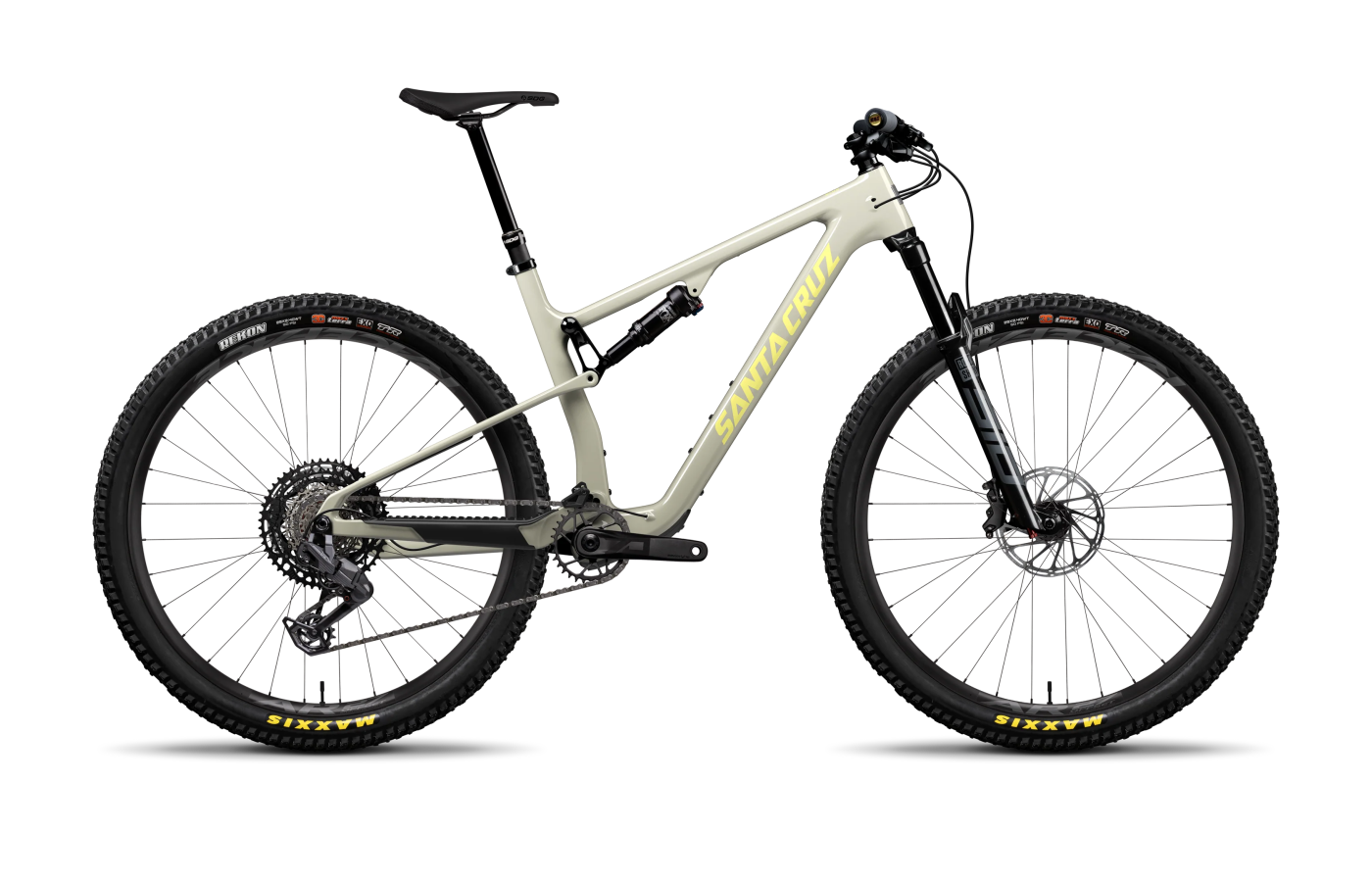
Blur
Santa Cruz's full-suspension XC bike. Same brand, same race DNA as the Highball, but with 100 mm of rear travel — pick this if 'soft hardtail' still sounds too harsh.
Compare →