Megatower
vsEnduro
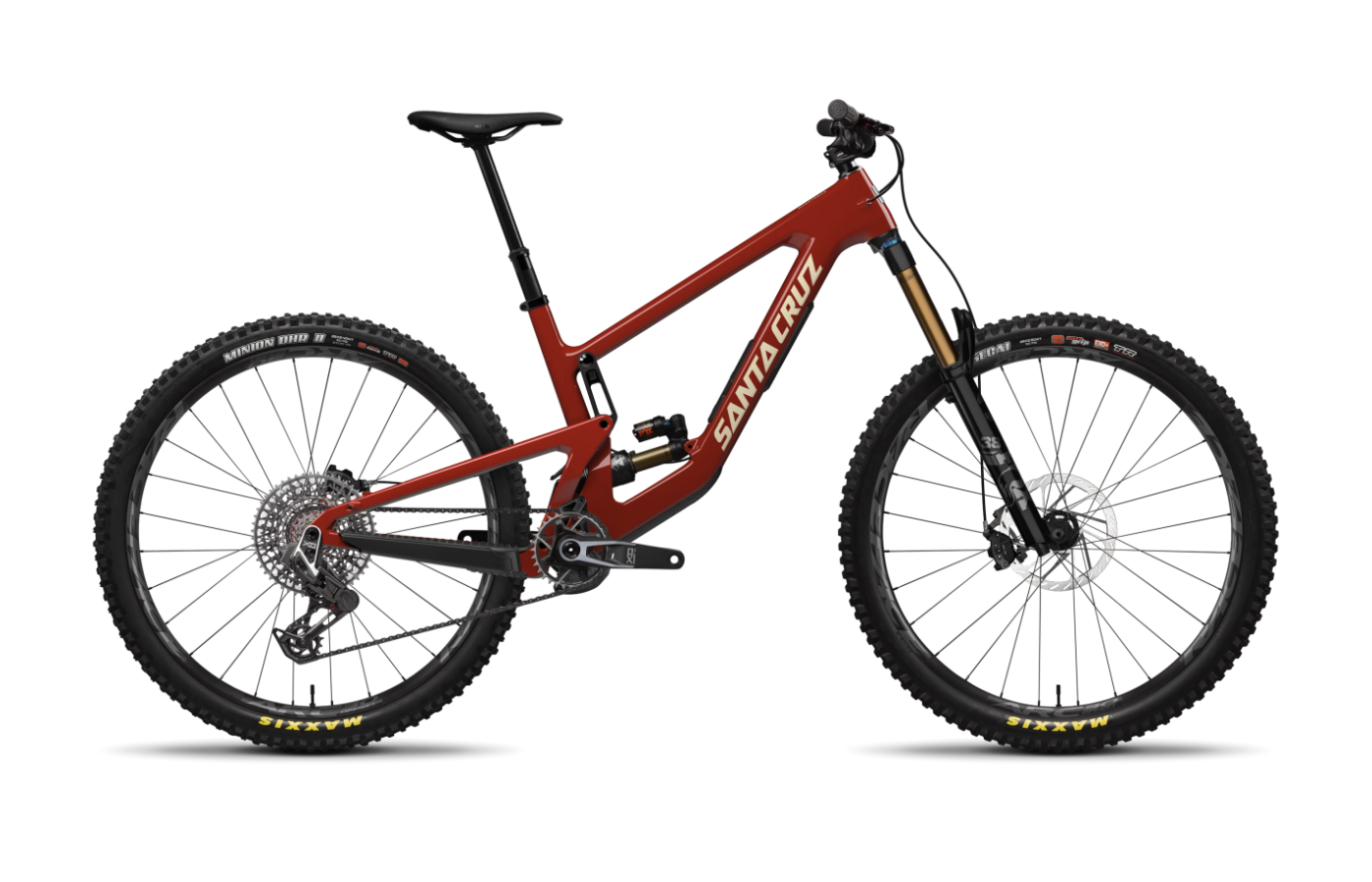
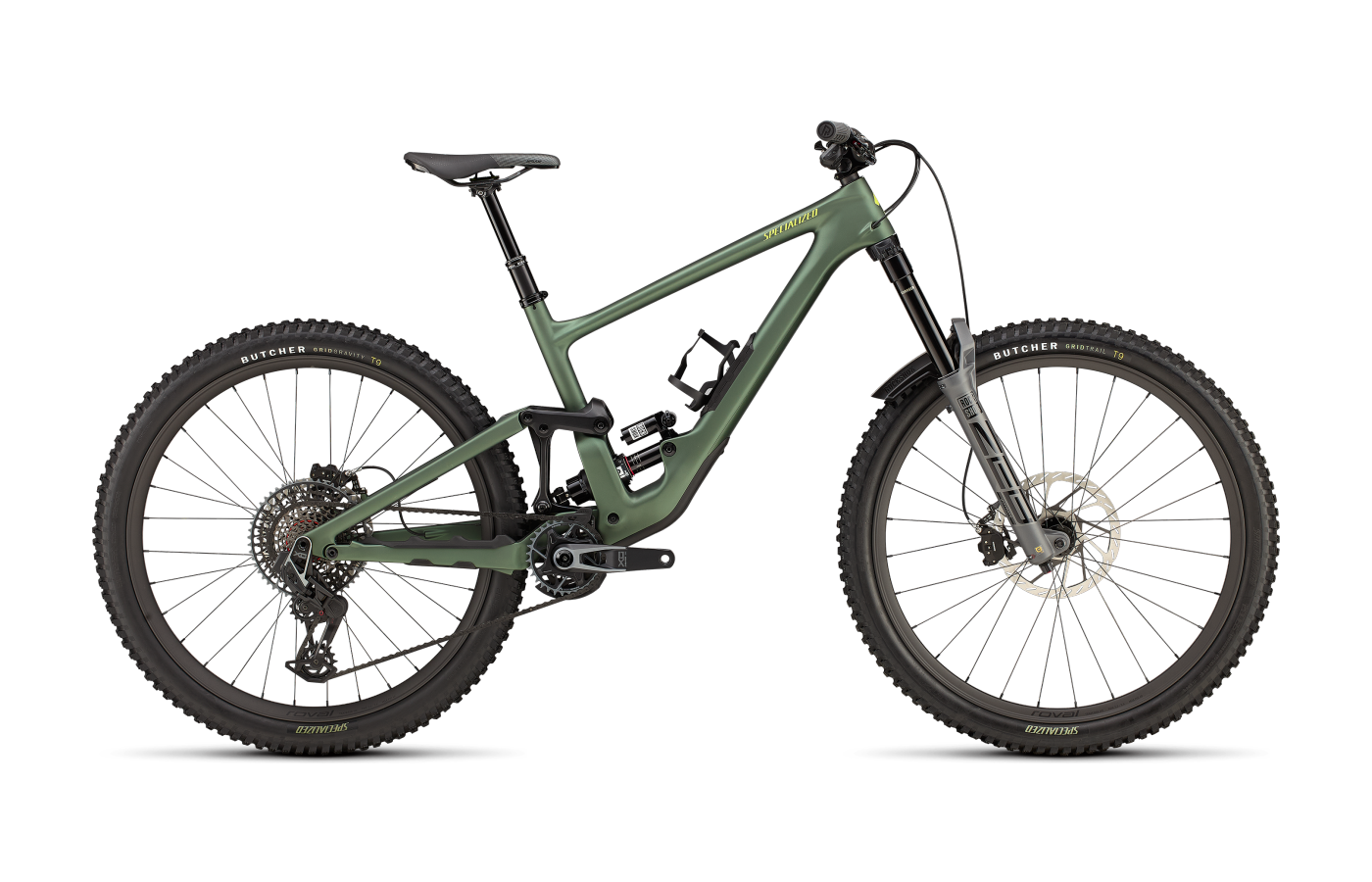
Two carbon-only enduro bruisers, two suspension religions.
The Megatower is a refined VPP charger that rewards aggressive input. The Enduro is a Demo-derived magic carpet that calms the chaos.
Megatower
- Size-specific chainstays (437 mm on Medium, 447 mm on XXL) keep every rider centered between the wheels.
- Sharper, more supportive platform — mid-stroke pop and 77.4° seat angle make it the more capable technical climber.
- Glovebox storage and grease ports — in-frame tool wallet and lower-link grease ports lower long-term ownership friction.
- Stiff CC chassis plus carbon wheels can feel chattery on high-frequency bumps.
- Carbon-only with no entry-level alloy build — the floor is just over $6k.
Enduro
- Demo-derived rear suspension — the rearward axle path swallows square-edge hits and carries momentum like a mini-DH bike.
- More plush, more forgiving — reviewers consistently use "magic carpet" and "calms the chaos" to describe the rear end.
- Lower entry price — the Comp build starts at $4,999, $1,100 below the cheapest Megatower.
- Slacker effective seat angle (76°) climbs less efficiently than the Megatower on long, steep grinds.
- Fixed 442 mm chainstays across all S-sizes — taller riders don't get the long rear end the Megatower offers.
Editor’s analysis
Both bikes commit to a sub-64-degree head angle and 170 mm of fork — but they get to high-speed composure through opposite philosophies.
On paper the Santa Cruz Megatower and Specialized Enduro look like the same bike: 29-inch wheels, carbon-only frames, slack head angles, and roughly 170 mm of travel front and rear. Both have been pushed to enduro race podiums in the last few seasons, both ship with SRAM X0 Transmission at the top of the range, and both refuse to sell you an alloy version. Spend any real time on the numbers and the personalities split fast.
The Megatower is the more recent design and the more refined climber. Santa Cruz's revised VPP suspension delivers 165 mm of rear travel through a longer-stroke shock, lifting anti-squat enough that reviewers like MBR call it "spritely" for the category. Size-specific chainstays (437 mm on the Medium, 447 mm on the XXL) keep every rider centered between the wheels — a detail the Enduro does not match. The trade-off is a stiff chassis: with the CC frame and Reserve carbon wheels, BikeRadar and Pinkbike both flagged a "chattery" feel on high-frequency bumps. It rewards aggressive input. It does not coddle.
The Enduro picks a lane and stays in it. Specialized borrowed the rear-suspension layout from their Demo downhill bike, with a rearward axle path that lets the rear wheel get out of the way of square-edge hits. Reviewers call the result a "magic carpet" and a "mini-DH bike" — it carries momentum through chunder where the Megatower will skim and chatter. The 170 mm of rear travel and the lower bottom bracket genuinely flatten rough trails. The cost is a heavier-feeling, slightly busier climber and a bike that goes "boring" on flatter ground where you have to pump for speed.
Put another way: the Megatower is the bike you buy when you want one capable enduro rig that can also winch up a 2,000-foot fire road without making you hate it. The Enduro is the bike you buy when most of your day is shuttle laps, bike-park runs, or steep, chunky descents that you earn the hard way.
Where the builds differ.
Comparing our editor's-pick builds side-by-side. Winners highlighted row-by-row — lower price and weight, and the better-spec component, each mark a point.
Build variants & pricing
The Megatower spans four builds from $6.1k to $9.7k. The Enduro is just two builds — Pro at $8.5k and Comp at $5k.
Prices are current US MSRP. Specialized's lineup is unusually thin; if you want a build between $5k and $8.5k, the Megatower is the only option here. Both platforms are carbon-only, which sets a high entry price relative to direct-to-consumer rivals like YT or Canyon.
How they fit, how they steer.
Compared at the fit-picked sizes for a 5'8" rider: Megatower size M (455 mm reach, 625 mm stack) vs Enduro S2 (437 mm reach, 616 mm stack). The Megatower runs 0.5° slacker at the head tube (63.8° vs 64.3°) and 5 mm shorter at the chainstay (437 mm vs 442 mm) — both bikes pick stability, the Santa Cruz just leans further into it.
Which size should I buy?
Sizing is picked from stack, reach, and effective top tube. Specialized's S-sizing decouples reach from seat tube height, so a single S-size can fit a wider range of rider heights than the Megatower's traditional S-XXL labels.
→These are starting points. Flexibility, riding style, and preferred position all shift the answer — if you’re between sizes, a professional fit beats a chart.
What the magazines said.
Published reviews from trusted cycling outlets. Click through for the full write-up.
Which one should you buy?
If you want one bike that climbs and descends seriously, get the Megatower. If most of your day is downhill and you want maximum forgiveness in the rough, get the Enduro.
Megatower
If you earn your descents on long fire-road climbs and want a bike that's still composed at "warp speed" when you point it down, the Megatower is the more complete tool. The supportive VPP platform and steeper seat angle make 2,000-foot climbing days genuinely manageable for a 170 mm rig.
Enduro
If most of your riding is steep, chunky, or shuttle-fed and you want a bike that calms the chaos rather than rewarding aggression, the Enduro is the benchmark. The Demo-derived rear end carries speed through square-edge hits in a way nothing else in the segment quite matches.
Questions buyers actually ask.
Short answers to the things we get emailed about most often.
01Which has more rear-wheel travel?
The Specialized Enduro, by 5 mm. The Enduro runs 170 mm front and 170 mm rear. The Santa Cruz Megatower V2 runs 170 mm front and 165 mm rear — Santa Cruz uses a longer-stroke shock (62.5 mm) to deliver that travel through a flatter leverage curve.
In practice the difference is small. The bigger gap is in suspension character: the Enduro's Horst-link rear with its rearward axle path feels plusher on square-edge hits, while the Megatower's VPP feels more supportive in the mid-stroke.
02Which one climbs better?
The Megatower, fairly clearly. The Megatower's effective seat tube angle is 77.4° on the Medium and steepens to 77.8° on Large and up — that puts the rider directly over the bottom bracket on steep pitches. The Enduro sits at a 76° effective seat angle, which several reviewers (Pinkbike, Enduro MTB) noted slackens further at full extension for taller riders, leading to a stretched-out climbing position.
The Megatower's revised VPP also has more anti-squat than the Enduro's Horst link, so it pedals firmer without needing the climb switch on most ascents. Specialized's 40% anti-squat bump for the 2020 Enduro helped, but it's still the busier climber of the two.
03Can I run a coil shock on either?
Yes on both, but the Enduro is the more obvious candidate. Specialized designed the Horst-link kinematics with enough end-stroke progression that Pinkbike and Singletracks both flagged it as coil-friendly out of the box. A coil pushes the Enduro further toward "monster truck" territory.
The Megatower can take a coil too — Santa Cruz's revised VPP has a flatter leverage curve than the V1 — but reviewers like Blister noted that the air-shock support is part of the bike's poppy character. A coil here trades pop for plushness more noticeably than on the Enduro.
04What's the maximum tire clearance?
Megatower: 63.5 mm clearance, which comfortably accommodates the stock Maxxis Assegai 29x2.5 / Minion DHR II 29x2.4 combo with room to go wider.
Enduro: 58.4 mm clearance, ships with Specialized Butcher 29x2.3 (T9 Gripton) front and rear. Both stay well within standard enduro tire sizing — neither is tight.
05Which is the better value at the entry-level price?
The Specialized Enduro Comp at $4,999 is the cheapest way into either platform. It comes with a Shimano SLX 12-speed mechanical drivetrain, RockShox Zeb Select fork, Vivid Select Plus shock, and alloy wheels — same FACT 11m carbon frame as the $8,499 Pro.
The Megatower 90 at $6,099 is the entry to the Santa Cruz line and comes with the SRAM 90 Eagle T-Type drivetrain, Fox 38 Performance fork, and the heavier C-layup carbon. You're paying $1,100 more to start, but you get a wireless drivetrain and a more recent frame design.
06Are the editor's-pick builds really comparable?
Yes — that's the point of the picks. The Megatower X0 AXS at $8,699 and the Enduro Pro at $8,499 are within $200 of each other, both run SRAM X0 Eagle AXS Transmission, and both use the top-tier carbon layup each brand offers (CC for Santa Cruz, FACT 11m for Specialized).
The spec table compares those two builds head-to-head. The biggest spec gap is at the rear shock — the Enduro Pro ships a RockShox Vivid Ultimate, while the Megatower X0 AXS ships a Fox Float X2 Factory. Both are flagship-tier dampers with high- and low-speed compression adjusters.
07Why is the Megatower lineup so much wider?
Santa Cruz offers four builds spanning $6,099 to $9,749 across two carbon layups (C and CC). Specialized offers only two builds — a $4,999 Comp and an $8,499 Pro — with no S-Works tier in this generation's current lineup.
If your budget lands between $5k and $8.5k, the Megatower is effectively the only option of these two. Specialized's gap between Comp and Pro is one of the wider price jumps in the enduro category.
08Both have internal-storage compartments — how do they compare?
Santa Cruz's Glovebox opens via a latch on the underside of the down tube and ships with a fitted Tool Wallet and Tube Purse. Reviewers from Evo and NSMB called the kit "worth their weight in gold," though one BikeRadar tester noted the seal is not 100% waterproof during pressure washes.
Specialized's SWAT Box has been around since 2014 and is widely considered the original. It opens via a lever on the down tube and accommodates a tube, CO2, and a small multi-tool — Specialized also hides a SWAT multi-tool in the steerer tube on most builds. Pinkbike's Mike Kazimer summed it up: "so good it's hard to go back to bikes without it."
Similar bikes
If your priorities don’t map cleanly onto either of these, one of these adjacent bikes probably fits better.
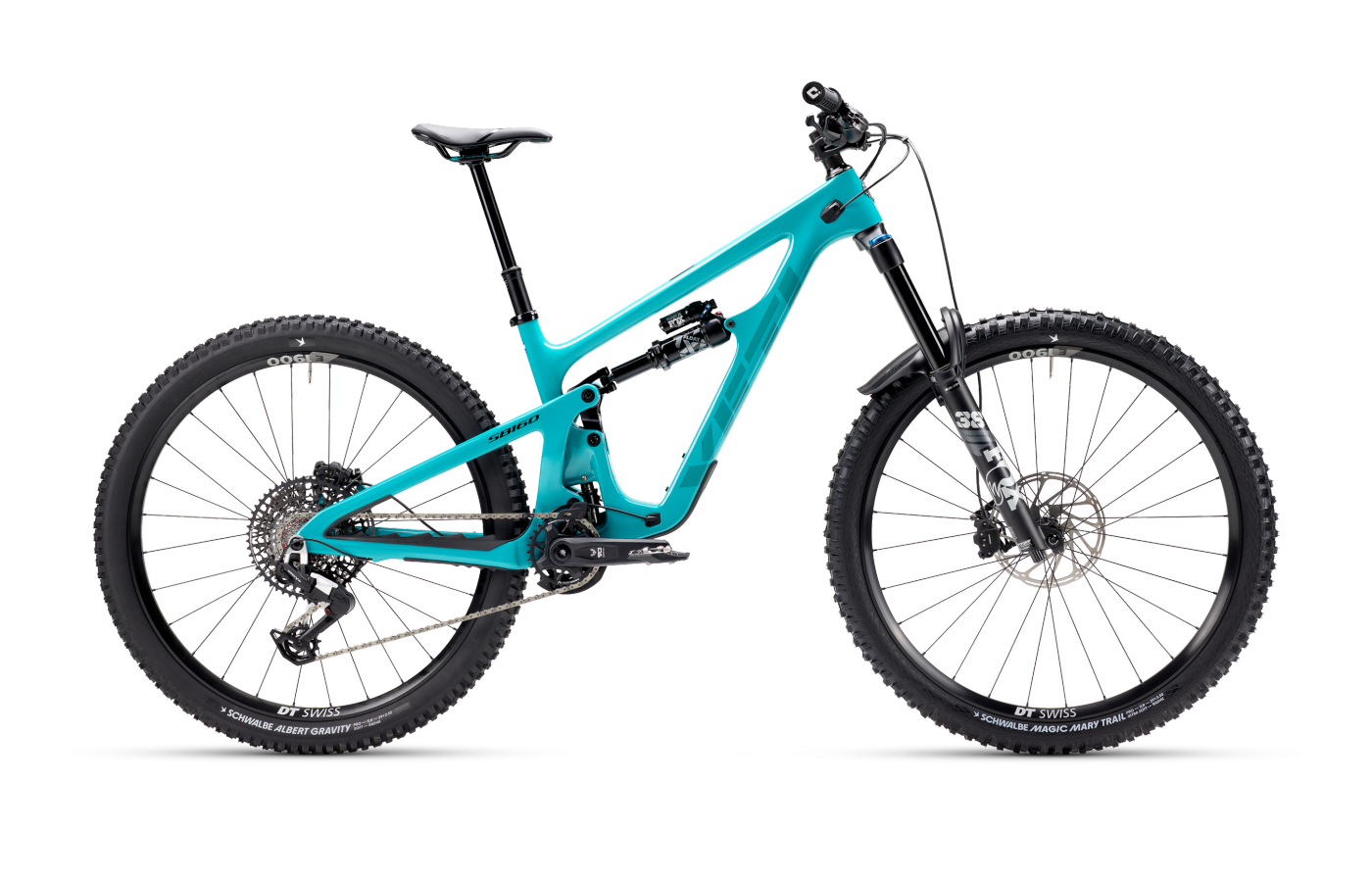
SB160
Yeti's Switch Infinity-equipped enduro racer — a more refined, race-bred handling character than the Megatower with a similarly poppy mid-stroke. Comes at a Santa Cruz-equivalent premium.
Compare →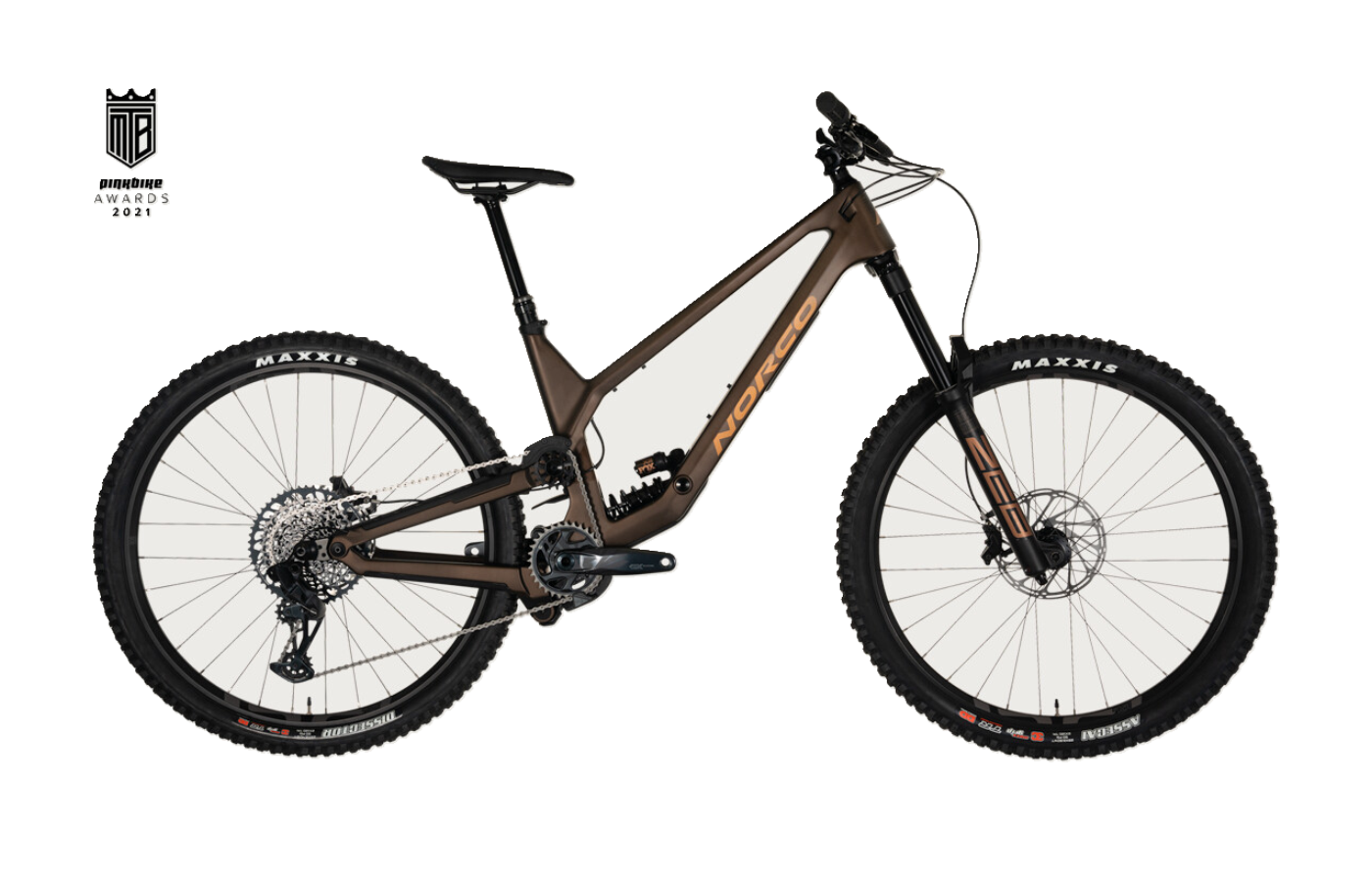
Range
Norco's high-pivot Range out-plows even the Enduro on raw, technical tracks — the rearward axle path is unmatched. The trade is more weight and a less efficient pedal stroke.
Compare →Spire
Transition's Spire matches the Megatower's aggressive geometry but with a more linear suspension feel and an alloy frame option for riders not willing to pay the carbon premium.
Compare →