Nomad
vsV10
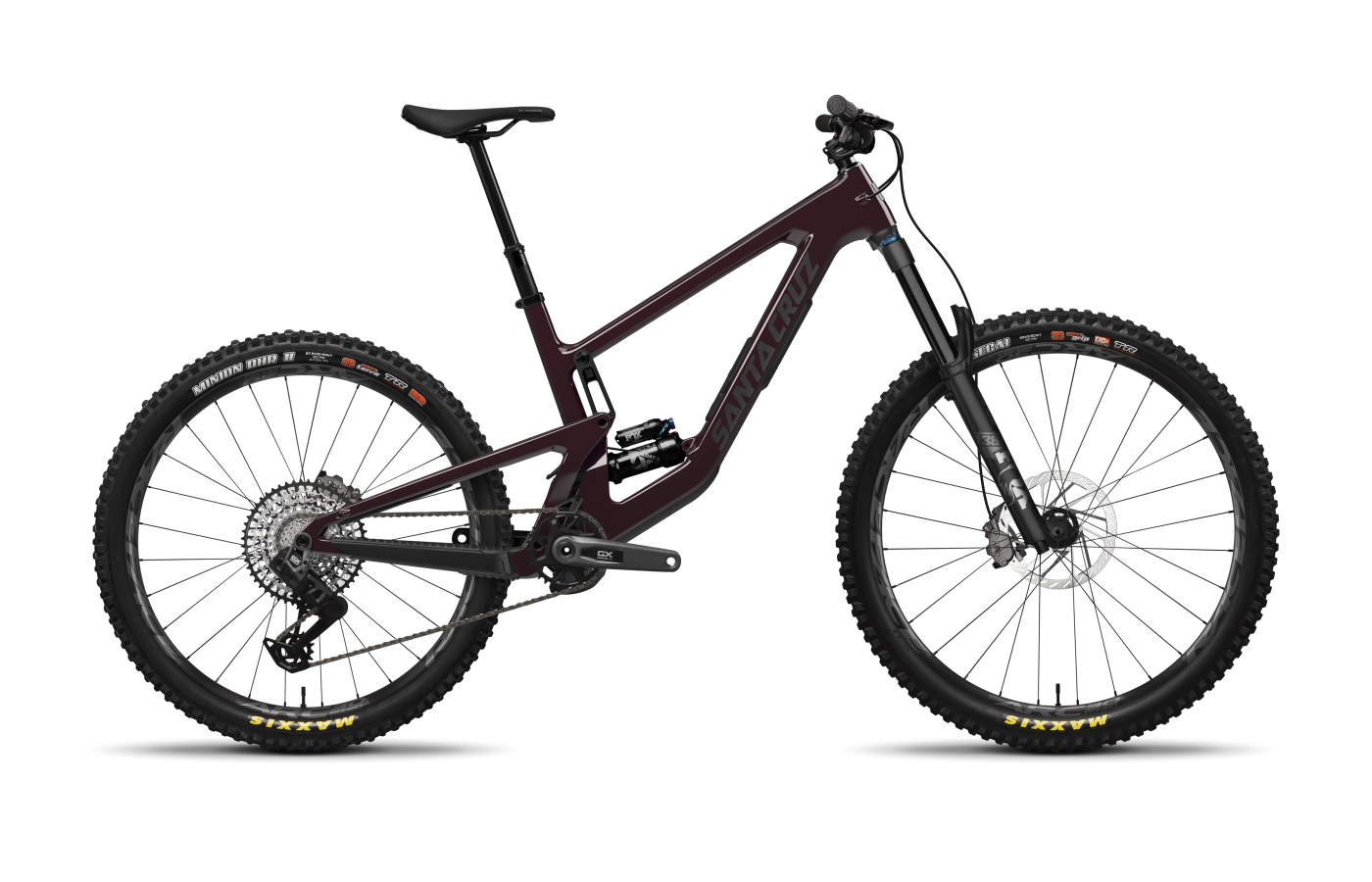
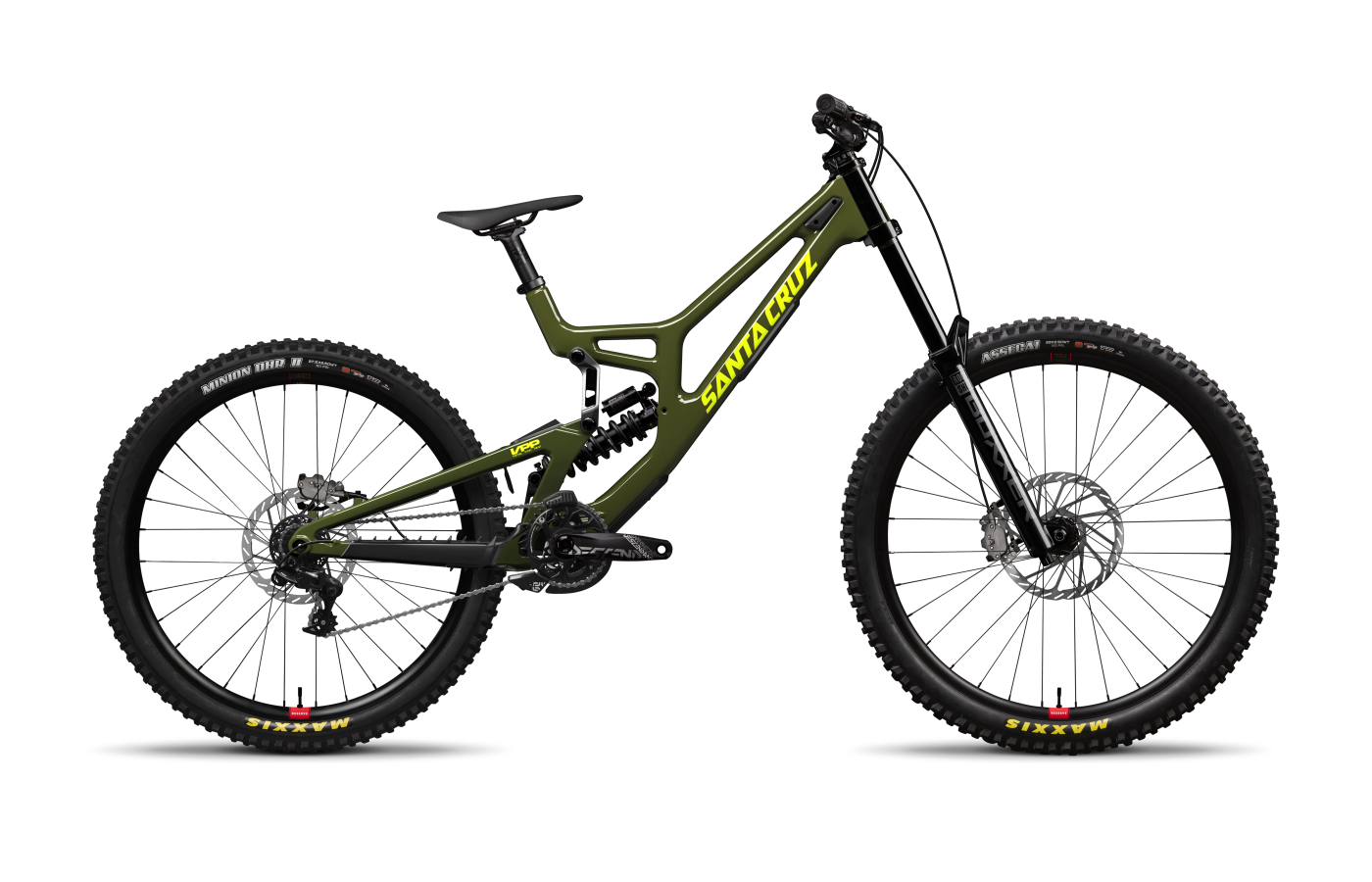
Two VPP bruisers, two very different jobs.
The Nomad is a 170 mm self-shuttling enduro that lives in the bike park on weekends. The V10 is a 208 mm World Cup race chassis that never pretends to pedal.
Nomad
- Actually pedals up — a 77.4-degree seat angle and 12-speed Transmission make full self-shuttle days realistic.
- Mullet agility — size-specific 440 mm chainstays (M) keep the 27.5-inch rear feeling 'shifter-kart' quick without the high-speed twitch most mullets have.
- Lower price floor and wider build range — five builds from $5,149 to $9,749 vs. the V10's two.
- Stock EXO+ tires on air-shock builds get cooked fast — reviewers report sidewall punctures on the first descent.
- Low 343 mm BB (low setting) leads to frequent pedal strikes on technical climbs.
V10
- 208 mm of composure — reviewers describe technical sections at 'half speed' once the chassis settles in.
- Endlessly adjustable — plus or minus 8 mm reach, plus or minus 5 mm chainstay, and a BB/HTA flip chip, all with the necessary parts in the box.
- Race-spec everywhere — CC carbon only, dedicated DH tires, 7-speed DH drivetrain, BoXXer or Fox 40 dual-crown fork.
- 7-speed 11–25t cassette and no left shifter make it useless for any meaningful climbing.
- Only two builds in the lineup — no entry-level path in, the cheapest is $7,049.
Editor’s analysis
These bikes share a logo, a suspension layout, and a paint booth. They share almost nothing else.
On paper the Santa Cruz Nomad and Santa Cruz V10 look like cousins — same VPP linkage, same mixed-wheel format in the comparable sizes, same Carbon CC option, and a pricing ceiling within $1,000 of each other. Spend any time with the geometry and the spec sheets and the family resemblance dissolves immediately.
The Nomad V6 packs 170 mm of travel into a 1,239 mm wheelbase (size M, low setting) with a 63.8-degree head angle and a 77.4-degree effective seat angle. It has a 12-speed SRAM Transmission, room for a water bottle, and Glovebox in-frame storage. Reviewers consistently call it a 'self-shuttling' bike — it climbs well enough to pedal up Squamish or Pisgah for a full day, then descends like a serious enduro sled. The mullet rear end and size-specific 440 mm chainstays (M) keep it noticeably more flickable than full 29ers like the Megatower.
The V10.8 is a different animal. 208 mm of rear travel, 203 mm fork, a 63-degree head angle, a 1,275 mm wheelbase at the same size M, and a 7-speed gravity-only drivetrain with no left shifter. Reviewers across PinkBike, Enduro MTB, and Revolutionmtb describe the ride as a 'flying carpet' or a 'cheat mode' for technical terrain — composure that lets the rider erase old braking points. Geometry is endlessly tunable in the box: drop-in headset cups for plus or minus 8 mm of reach, dropout chips for plus or minus 5 mm of chainstay, a flip-chip for BB and head angle.
Put plainly: the Santa Cruz Nomad is what you buy when you want one mountain bike and most of your fun happens on the descent. The Santa Cruz V10 is what you buy when shuttle days, lift tickets, and race plates already make up the bulk of your calendar.
Where the builds differ.
Comparing our editor's-pick builds side-by-side. Winners highlighted row-by-row — lower price and weight, and the better-spec component, each mark a point.
Build variants & pricing
The Nomad spans roughly $4,600 of price range across five builds; the V10 has just two, both at the upper end.
Prices are current US MSRP. The V10 only ships in two builds — DH S ($7,049, RockShox BoXXer Base + Vivid Coil) and DH X01 ($8,899, Fox 40 Factory + DHX2 Coil) — both on the same CC carbon frame.
How they fit, how they steer.
Both compared at size M. The V10 sits 8 mm taller, 8 mm shorter in reach, with a 0.8-degree slacker head angle, 5 mm longer chainstays, and 36 mm more wheelbase — every number pushes toward straight-line stability over agility.
Which size should I buy?
Size recommendations based on stack, reach, and effective top tube. The Nomad covers a wider range (S–XXL); the V10 stops at XL and switches to a full 29er at that size.
→These are starting points. Flexibility, riding style, and preferred position all shift the answer — if you’re between sizes, a professional fit beats a chart.
What the magazines said.
Published reviews from trusted cycling outlets. Click through for the full write-up.
Which one should you buy?
If you want one mountain bike for everything from pedal days to bike park, get the Nomad. If you want a dedicated race weapon for shuttle and lift laps only, get the V10.
Nomad
If you live near steep, chunky terrain and want a bike that survives 3,000-vertical-foot pedal days but still hits the biggest lines in the park, the Nomad is one of the most refined platforms in the category. The mullet handling, in-frame Glovebox, and 12-speed Transmission make it the rare 170 mm bike you can actually own as your only bike.
V10
If your riding is shuttle laps, lift access, and the occasional race plate, the V10 is a World Cup chassis at a 'masses' price point. It rewards an active, dynamic rider with mid-stroke support and immense mechanical grip — and lets the passive rider hide behind 208 mm of travel when needed.
Questions buyers actually ask.
Short answers to the things we get emailed about most often.
01Can the Santa Cruz V10 be pedaled to the trailhead?
Not realistically. The V10 has a 7-speed SRAM DH cassette (11–25t) and no left shifter — you have ~30% of the gear range of a normal mountain bike, and you can't shift the front (there is no front). Reviewers consistently describe it as a shuttle, lift, or push-up bike.
The Nomad, by contrast, has a 12-speed SRAM Transmission with a 10–52t cassette and a 77.4-degree seat angle that puts you in a workable climbing position. Reviewers call the Nomad a 'self-shuttling' bike — meaning yes, you can pedal it back up for another lap.
02Which one is faster on a downhill track?
The V10, almost certainly, on anything resembling a real DH track. It has 38 mm more rear travel (208 mm vs 170 mm), a 0.8-degree slacker head angle (63 vs 63.8), 36 mm more wheelbase at size M, a dual-crown 200–203 mm fork, and DH-casing MaxxGrip tires front and rear.
The Nomad would be faster on shorter, more pedal-y enduro stages where weight (~16 kg vs ~16.7 kg for the V10) and the ability to actually pedal between sections matter. On a pure gravity track with a lift to the top, the V10 wins.
03How do the geometries compare at size M?
Compared at the fit-recommended size M:
- Reach: Nomad 455 mm vs V10 447 mm (Nomad 8 mm longer)
- Stack: Nomad 625 mm vs V10 633 mm (V10 8 mm taller)
- Head angle: Nomad 63.8 vs V10 63 (V10 0.8 deg slacker)
- Chainstay: Nomad 440 mm vs V10 445 mm (V10 5 mm longer)
- Wheelbase: Nomad 1,239 mm vs V10 1,275 mm (V10 36 mm longer)
- Seat tube angle: both 77.4 degrees
The V10 also offers plus or minus 8 mm of reach via drop-in headset cups and plus or minus 5 mm of chainstay via dropout chips, so its numbers above are the middle setting.
04Are both bikes mixed-wheel (mullet)?
Yes — both bikes ship as mullet (29-inch front, 27.5-inch rear) in the sizes most riders will buy.
The Nomad V6 is mullet-only across the entire size range (S through XXL). The V10.8 is mullet in S, M, and L, but switches to a full 29er at XL — Santa Cruz's call to give taller riders the bigger rear wheel. PinkBike noted some XL-sized racers may prefer to stay on the smaller wheel for maneuverability, but it isn't an option.
05Why does the V10 have only two builds?
Downhill bikes are a small market. Santa Cruz keeps the V10 at two builds — DH S ($7,049, RockShox BoXXer Base + Vivid Select+ Coil, SRAM GX 7-speed) and DH X01 ($8,899, Fox 40 Factory + DHX2 Coil, SRAM X01 DH 7-speed) — both on the same flagship CC carbon frame.
The Nomad sells in five trims because enduro is a much larger category. If you want a Santa Cruz DH bike for under $7,000, your only path is the used market.
06What's the editor's-pick build on each side?
On the Nomad, the GX AXS at $7,249 — full SRAM Transmission, Fox 38 Performance Elite GRIP X2 fork, Reserve alloy wheels. It's where the spec catches up with the frame's ambition without paying the X0 / Reserve carbon premium.
On the V10, the DH S at $7,049 — RockShox BoXXer Base, Vivid Select+ coil, SRAM GX DH 7-speed, same CC carbon frame as the flagship. Reviewers note the S build keeps the GRIP2-class damping characteristics even without Kashima coatings.
These two are within $200 of each other and both sit one tier down from their respective flagships, so the comparison is roughly apples-to-apples on component grade.
07What about durability and warranty?
Both bikes get Santa Cruz's industry-leading support package: a lifetime frame warranty to the original owner, lifetime bearing replacement on all pivot bearings, and a lifetime warranty on Reserve wheels.
The most-cited 'known issue' on the Nomad V6 is that the in-frame Glovebox isn't fully watertight — items inside can get damp during washes. On the V10.8, the most-cited issue is that the drop-in headset cups can pick up dust and creak, requiring weekly cleaning in dry, dusty conditions.
Reviewers report the SRAM Code brakes on both can run hot under heavier riders on long descents — bumping to 220 mm rotors or upgrading pads is a common move.
08Can I swap a coil shock onto the Nomad?
Yes, and reviewers from BikeRadar, MBR, and Vital MTB consistently suggest it for riders who lean into the bike's bike-park identity. The stock air shocks (Fox Float X2 / Float X) are praised for small-bump compliance but tend to feel less supportive on jump lines.
A RockShox Super Deluxe Coil or Fox DHX2 in 230x65 mm fits the frame and reportedly transforms the bike's mid-stroke feel. Note that Santa Cruz's 'Low' flip-chip setting adds progressivity that pairs well with a coil shock.
Similar bikes
If your priorities don’t map cleanly onto either of these, one of these adjacent bikes probably fits better.
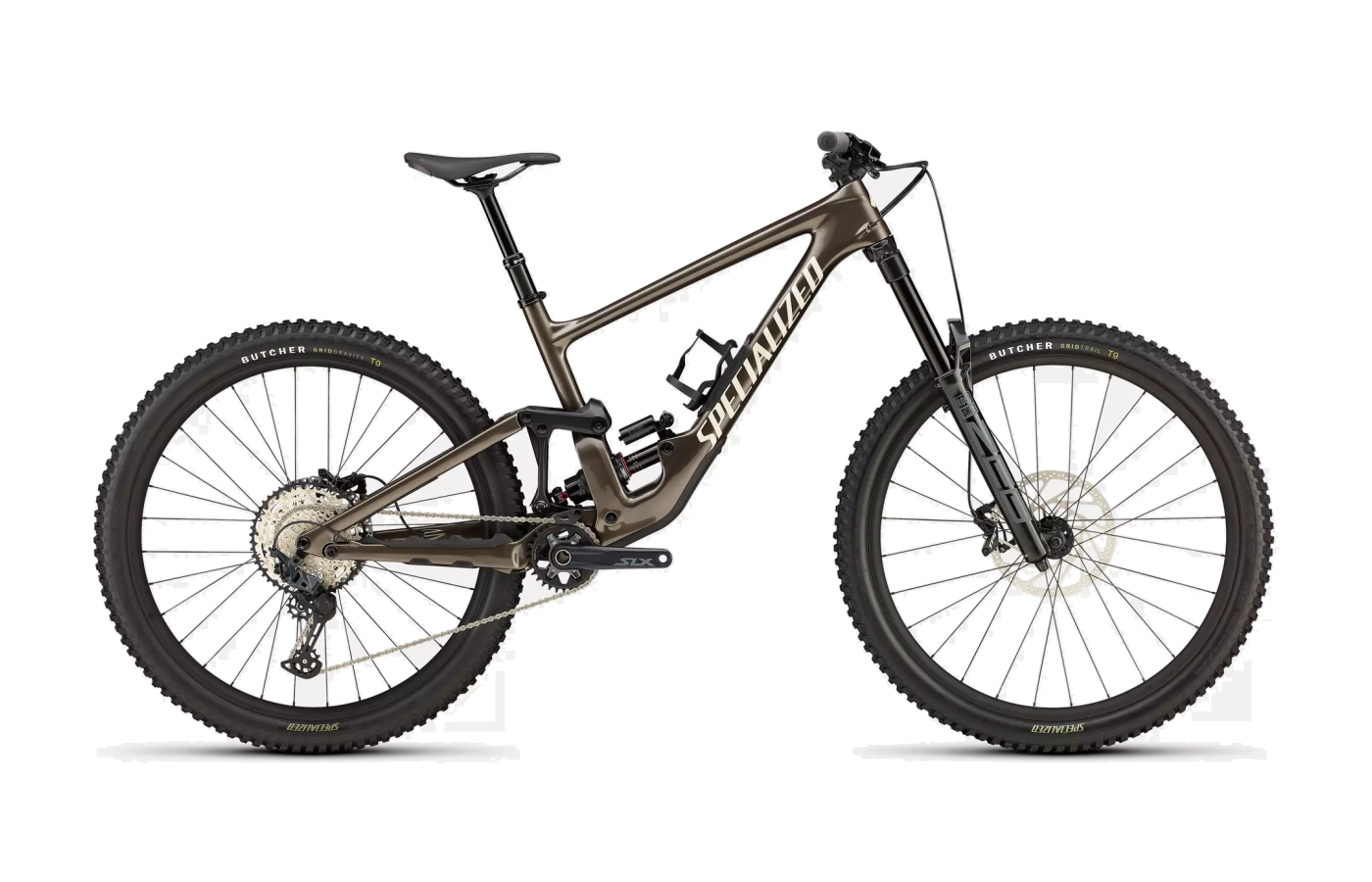
Enduro
The Nomad's most direct rival — a similarly composed 170 mm enduro from Specialized that reviewers describe as slightly more supple over high-speed roots and rocks. If you'd rather not pay the Santa Cruz boutique tax, this is the first place to look.
Compare →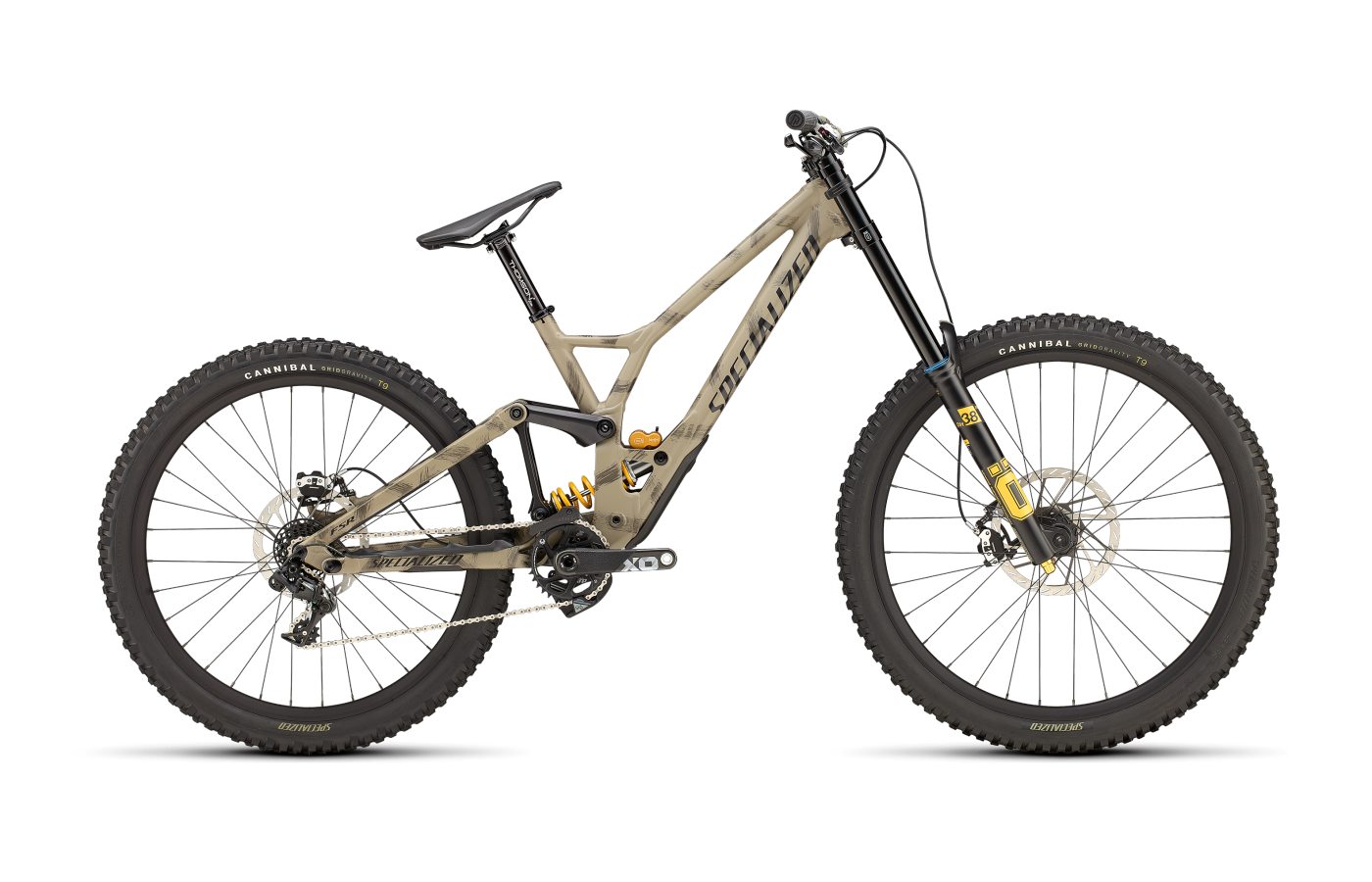
Demo
Specialized's gravity-only platform — the V10's most natural cross-shop. Comparable 200 mm-class travel and World Cup pedigree, with Specialized's typical aggressive geometry and a slightly different rear-end character.
Compare →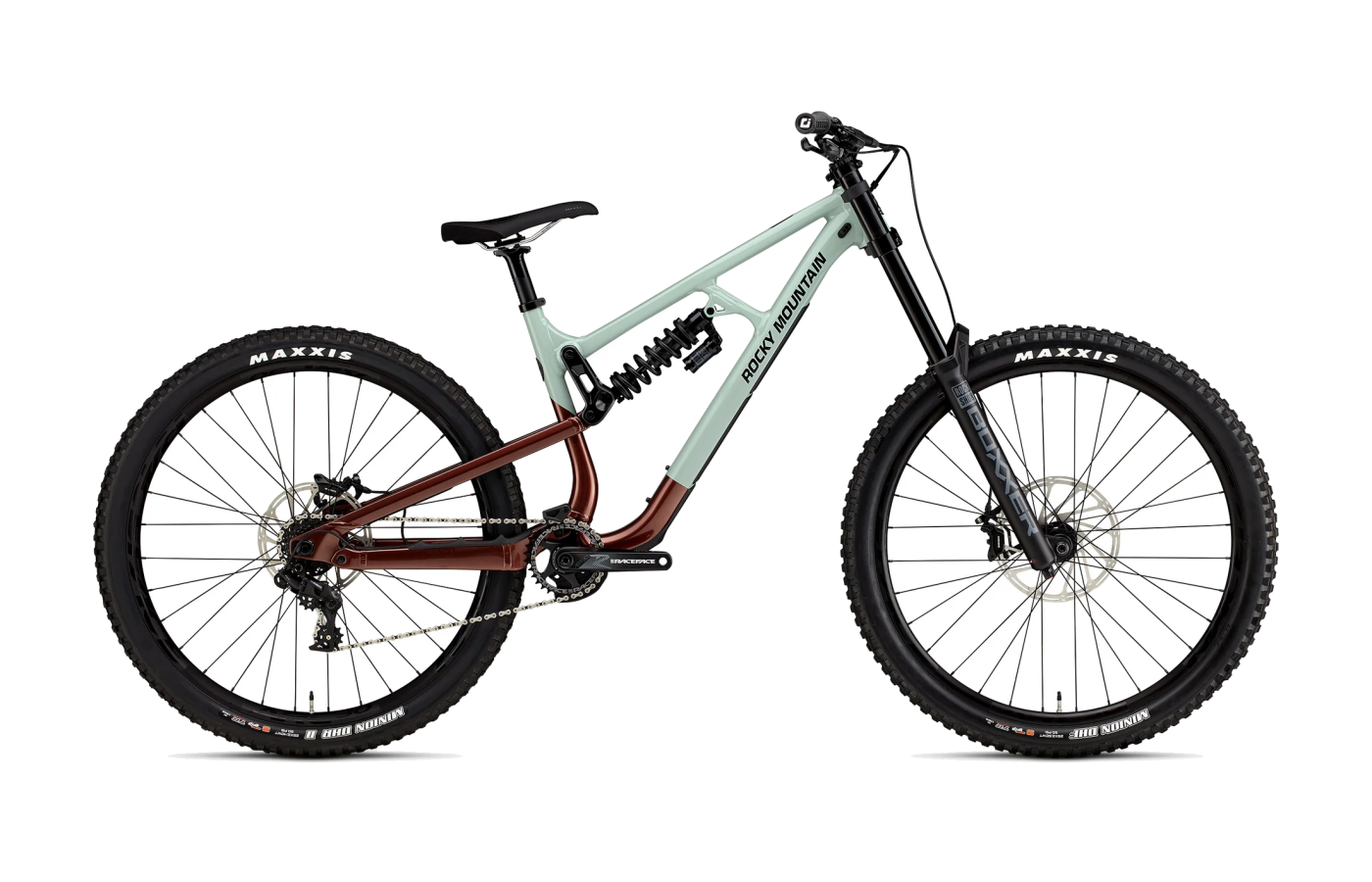
Slayer
Rocky Mountain's park-leaning rival to the Nomad — available in aluminum, more rugged in spec, and often cheaper for equivalent components. Pick this if you'd rather have replaceable, beat-on-able frame material than carbon weight savings.
Compare →