Allez Sprint
vsRoubaix
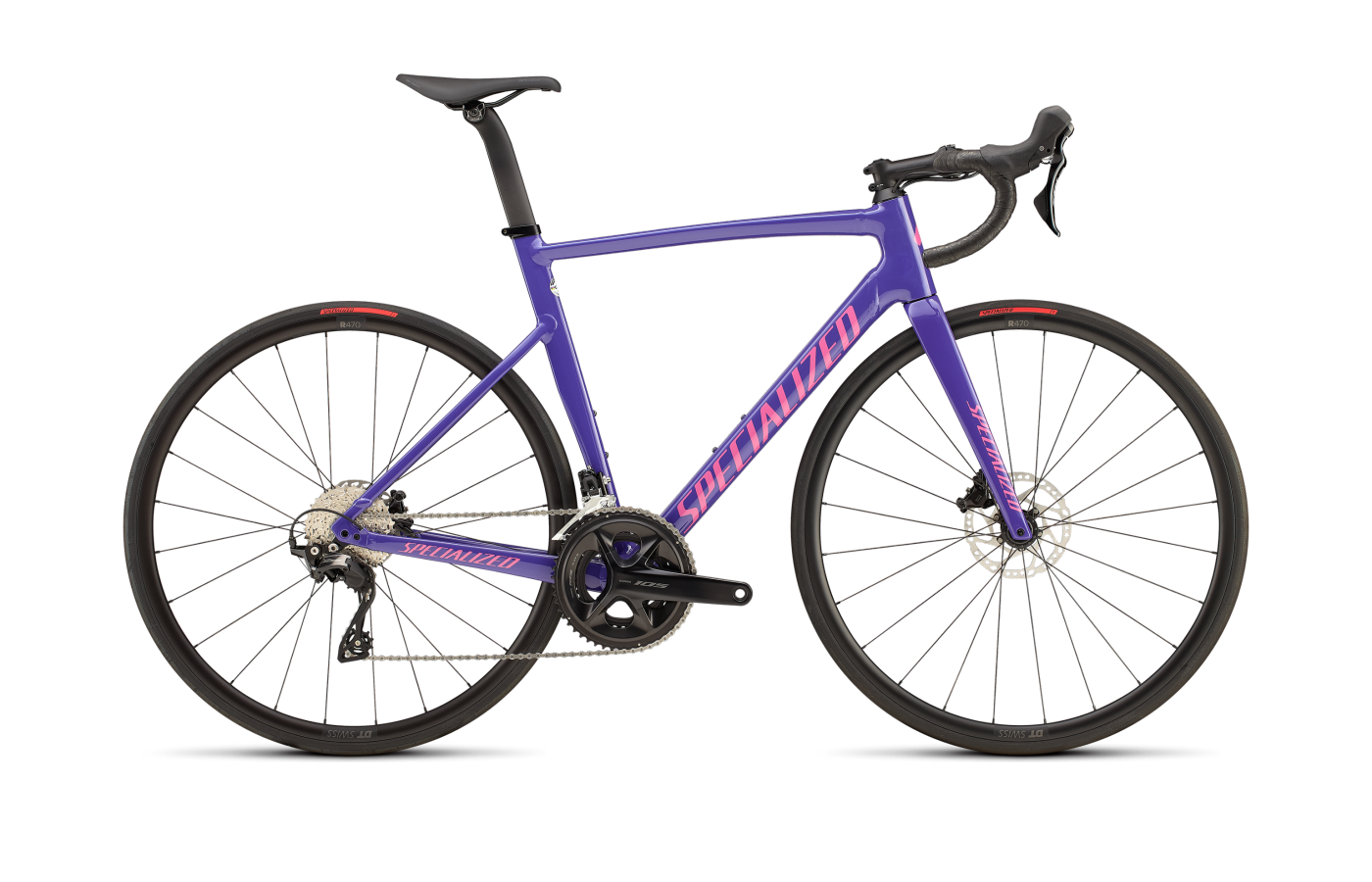
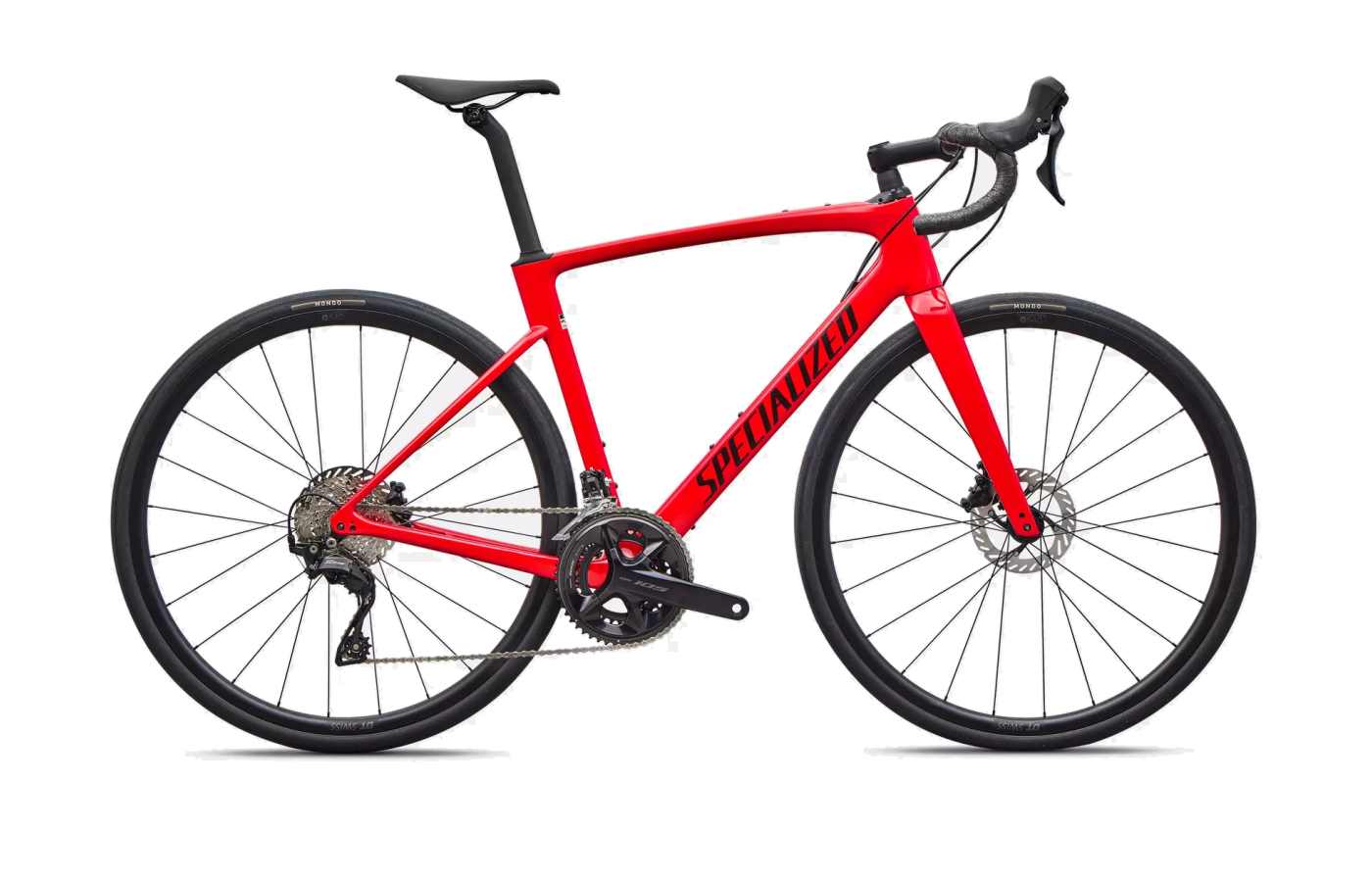
Same brand, opposite philosophies.
The Allez Sprint is a stripped-down alloy crit weapon. The Roubaix SL8 is a suspended carbon endurance flagship built to swallow rough roads.
Allez Sprint
- Tarmac SL7 geometry and S-Works carbon fork on an alloy frame for under $2,600 — a rare trickle-down bargain.
- Outrageously stiff — SmartWeld construction makes power transfer immediate, with reviewers noting riders can lift the rear wheel during sprints.
- Threaded BSA bottom bracket and standard stem/bar make it home-mechanic friendly compared with most modern aero bikes.
- Aluminum chassis transmits significant road buzz — testers describe long days as "energy-sapping."
- Stock 26 mm Turbo Pro tires and DT R470 alloy wheels are universally panned as the build's weak link.
Roubaix
- Future Shock 3.0 front suspension delivers 20 mm of axial travel that erases road buzz and keeps the front wheel "vacuumed to the asphalt."
- Massive 38 mm tire clearance (40 mm measured per reviewers) genuinely doubles the bike as a light-gravel machine.
- Lineup spans $2,799 to $12,499 across 15 builds — far more entry points than the Allez Sprint.
- Heavier than a pure race bike — ranges from 9.46 kg (Tiagra) down to 7.2 kg (S-Works), with mid-tier builds around 8.5–9 kg.
- Tall stack and 15 mm-rise Hover bar limit how low you can get — riders who want an aggressive position will fight the geometry.
Editor’s analysis
This is the rare same-brand matchup where the only thing the two bikes share is the badge — one is a sushi knife, the other is a Cadillac.
The Specialized Allez Sprint borrows the Tarmac SL7's geometry, fork, and seatpost and ports the whole package onto a hydroformed E5 aluminum frame. Reviewers from Velo to BikeRadar describe it as a "hardtail for the road" — outrageously stiff, ultra-reactive, and built for the one-hour intensity of a criterium. It tops out at $2,599 for the Shimano 105 mechanical Comp build, with the frameset itself being the headline value: it includes the same S-Works carbon fork found on a $3,300 Tarmac frameset.
The Specialized Roubaix SL8 is the polar opposite. A FACT 10R/12R carbon frame, a Future Shock 3.0 cartridge giving 20 mm of axial travel at the front, an AfterShock D-shaped Pavé seatpost flexing 18 mm at the rear, and tire clearance up to 38 mm. Its 15-build lineup runs from $2,799 (Tiagra) to $12,499 (S-Works Dura-Ace Di2 or Red AXS). The pitch is simple: Specialized's "smoother is faster" mantra, with a chassis tuned for 200 km days on broken pavement.
On geometry, the Allez Sprint at size 52 measures a 552 mm stack and 364 mm reach with a 71-degree head tube and 64 mm trail. The Roubaix at size 54 climbs to 585 mm stack and 381 mm reach with a 72.3-degree head tube and 61 mm trail — and that's before you add the Future Shock and the 15 mm-rise Hover bar. The Allez forces you low; the Roubaix sits you up and isolates you.
Put another way: the Allez Sprint is the bike you buy if your weekends are 60-minute crits and town-sign sprints. The Roubaix SL8 is the bike you buy if your weekends are 6-hour epics on roads no one else wants to ride.
Where the builds differ.
Comparing our editor's-pick builds side-by-side. Winners highlighted row-by-row — lower price and weight, and the better-spec component, each mark a point.
Build variants & pricing
The Allez Sprint tops out at $2,599; the Roubaix starts at $2,799 and climbs to $12,499. Tier parity means picking mechanical 105 on both sides — the Allez Comp and the Roubaix SL8 Sport.
Prices are current US MSRP. Note the lineup gap: the Allez Sprint has no Di2, no electronic, and no carbon options — its priciest build sits below the Roubaix's third-cheapest. If you want Ultegra Di2, Force AXS, or a power meter, only the Roubaix offers them.
How they fit, how they steer.
Different sizes for the same 5'8" rider — the Allez Sprint's 52 has a 552 mm stack, the Roubaix's 54 climbs to 585 mm. The Roubaix runs 1.3 degrees steeper at the head tube (72.3° vs 71°) but 3 mm tighter trail (61 vs 64 mm) and 5 mm shorter chainstays.
Which size should I buy?
Both ranges run from 44 to 61. Sizes don't translate one-to-one — the Roubaix sits taller throughout, and the Future Shock adds another 20 mm of effective stack.
→These are starting points. Flexibility, riding style, and preferred position all shift the answer — if you’re between sizes, a professional fit beats a chart.
What the magazines said.
Published reviews from trusted cycling outlets. Click through for the full write-up.
Which one should you buy?
If you race crits and live in the drops, get the Allez Sprint. If you ride long, ride rough, or want one bike for everything from centuries to light gravel, get the Roubaix.
Allez Sprint
If your riding is fast group hammers, town-sign sprints, and the occasional Tuesday-night crit, the Allez Sprint delivers Tarmac SL7 geometry and feel for less than a third of the price. Plan to upgrade the wheels — the frame can take it.
Roubaix
If your weekends are 4-hour-plus rides on broken tarmac, gravel detours, and whatever the road throws at you, the Roubaix SL8 is the clear pick. Future Shock plus 38 mm clearance plus mudguard mounts make it a true four-season bike.
Questions buyers actually ask.
Short answers to the things we get emailed about most often.
01Is the Allez Sprint really as stiff as a carbon race bike?
Reviewers consistently describe the Allez Sprint as "a hardtail for the road," with multiple sources (Velo, Cyclist Magazine, Road.cc) noting that the SmartWeld construction and one-piece bottom bracket/down tube produce power transfer that rivals or exceeds the Tarmac SL7. One Cyclist Magazine reviewer noted that the bike is so reactive that the rear wheel can momentarily lift during an out-of-saddle sprint.
The trade-off is that it transmits everything else too — road buzz, vibration, surface chatter. Several testers called the ride "energy-sapping" over multi-hour days.
02How much suspension does the Roubaix actually have?
20 mm at the front via the Future Shock 3.0 cartridge — that's axial travel directly above the head tube, isolating the rider from impacts without changing wheelbase or steering geometry. About 18 mm of claimed flex at the rear through the D-shaped Pavé seatpost, which clamps 65 mm lower than a standard collar to expose more flexible material.
Reviewers consistently note that the front feels significantly more active than the rear, and that the system is best appreciated on rough roads — on smooth tarmac, the imbalance is more obvious.
03What's the maximum tire clearance on each?
Allez Sprint: 32 mm officially. Multiple reviewers note that the stock 26 mm Turbo Pro tires are the build's biggest weakness — swapping to 28 or 30 mm tubeless rubber transforms the ride.
Roubaix SL8: 38 mm officially, with reviewers measuring closer to 40 mm on the wide Roval Terra rims. With mudguards installed, you're limited to roughly 35 mm.
The Roubaix's clearance is genuinely game-changing — Cycling Weekly and Road.cc both describe it as enabling true light-gravel use.
04Can I race a crit on the Roubaix?
You can, but it's not what it's built for. The Roubaix's tall stack, slacker head angles in smaller sizes, and 9-kg-ish weight at mid-tier work against you in twitchy criterium corners and short, punchy efforts. It's also got a higher front end that's hard to get aero on.
For crits, the Allez Sprint — which copies the Tarmac SL7's race geometry exactly — is a much better tool. That's literally what it was designed for.
05Is the Roubaix worth it over the Allez Sprint if I just want comfort?
It depends on what's making you uncomfortable. If your complaint is road buzz on long rides, swapping the Allez's stock 26 mm tires for 30 mm tubeless at lower pressure solves a surprising amount of it — and saves you thousands of dollars.
If your complaint is broken pavement, big impacts, or long days where you genuinely fatigue from vibration, the Future Shock and Pavé seatpost on the Roubaix do something tires alone can't replicate. Reviewers note the Roubaix lets riders rack up 200 km days "free of aches and pains."
06Why does the Allez Sprint top out at $2,599 while the Roubaix climbs to $12,499?
Specialized positions them at opposite ends of the lineup. The Allez Sprint is a single-tier alloy platform — no Di2 builds, no electronic shifting, no high-end wheels stock. It's intentionally a frame-first value play with workhorse parts you're expected to upgrade.
The Roubaix is the brand's endurance flagship and gets the full ladder: 105 mechanical at the bottom, all the way up to S-Works FACT 12R with Dura-Ace Di2 or SRAM Red AXS at the top. If you want a $10k aero-endurance dream bike, only the Roubaix offers it.
07What about climbing? Which is faster uphill?
The Allez Sprint is lighter — the Comp build comes in at 8.68 kg vs the Roubaix SL8 Sport at 9.03 kg. At the flagship level, the gap stays similar (S-Works Roubaix is 7.2–7.6 kg). Reviewers note that the Allez's stiffness rewards out-of-saddle attacks.
But the Roubaix isn't a slouch — Cyclist and Granfondo both noted it climbs better than its endurance billing suggests, and the Future Shock barely activates under standing climbing efforts because the loads are mostly lateral. For most riders on most climbs, a few hundred grams matters less than fit and freshness.
08Both are Specialized — can I just take either to a Specialized dealer?
Yes. Both share dealer support, the same lifetime frame warranty to the original owner, and Specialized's crash-replacement program. Service parts (Future Shock cartridges, headset hardware, seatposts) are guaranteed available for at least seven years after a model's production ends.
The one wrinkle: the Roubaix's Future Shock and AfterShock seatpost clamp use proprietary parts that must come from Specialized. The Allez Sprint is mostly standard hardware aside from its aero seatpost.
Similar bikes
If your priorities don’t map cleanly onto either of these, one of these adjacent bikes probably fits better.
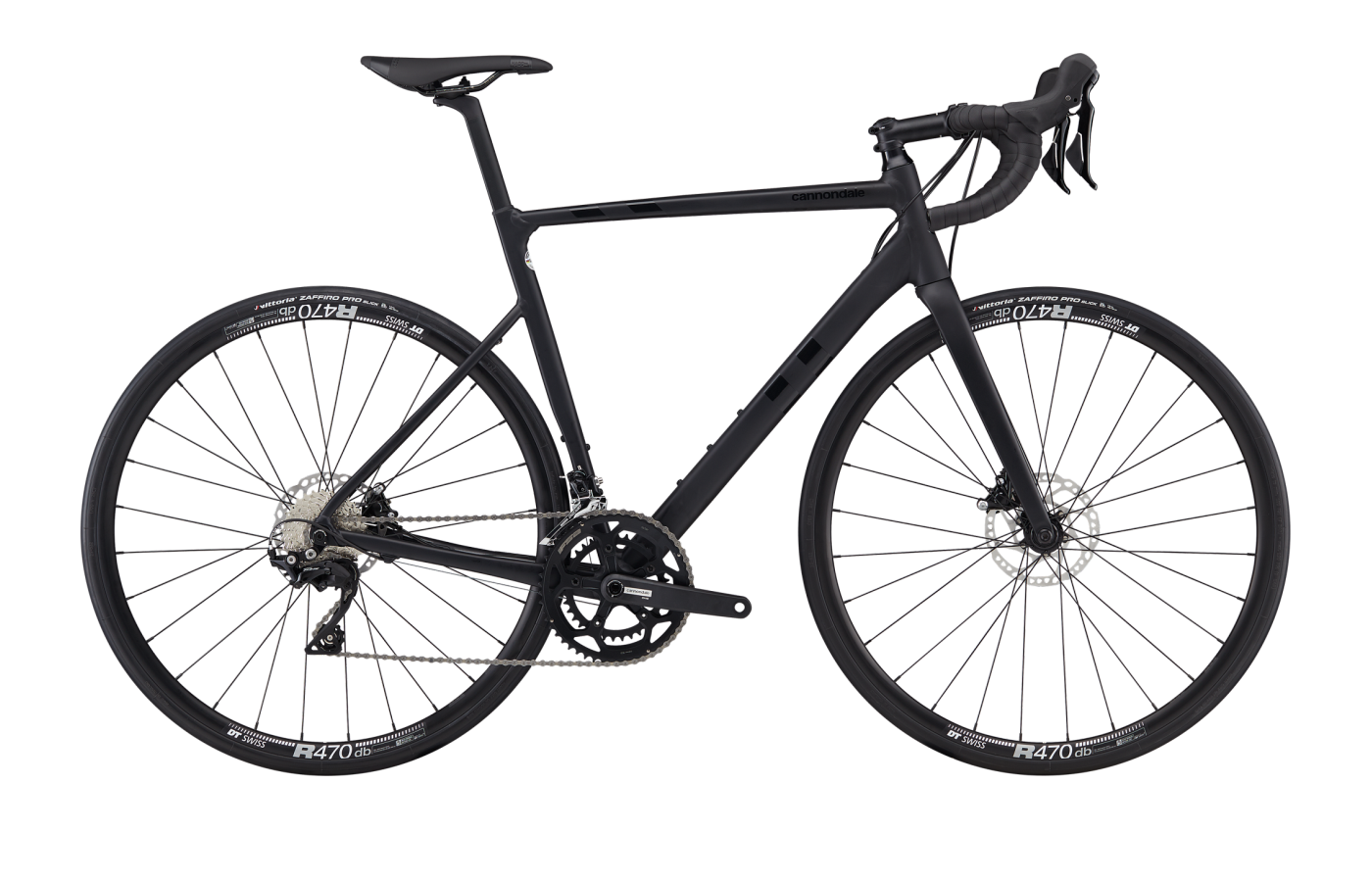
CAAD13
The Allez Sprint's longest-running rival — Cannondale's CAAD13 offers a slightly smoother alloy ride and more traditional aesthetic for less money. The bike to cross-shop if you want race geometry without Specialized's premium.
Compare →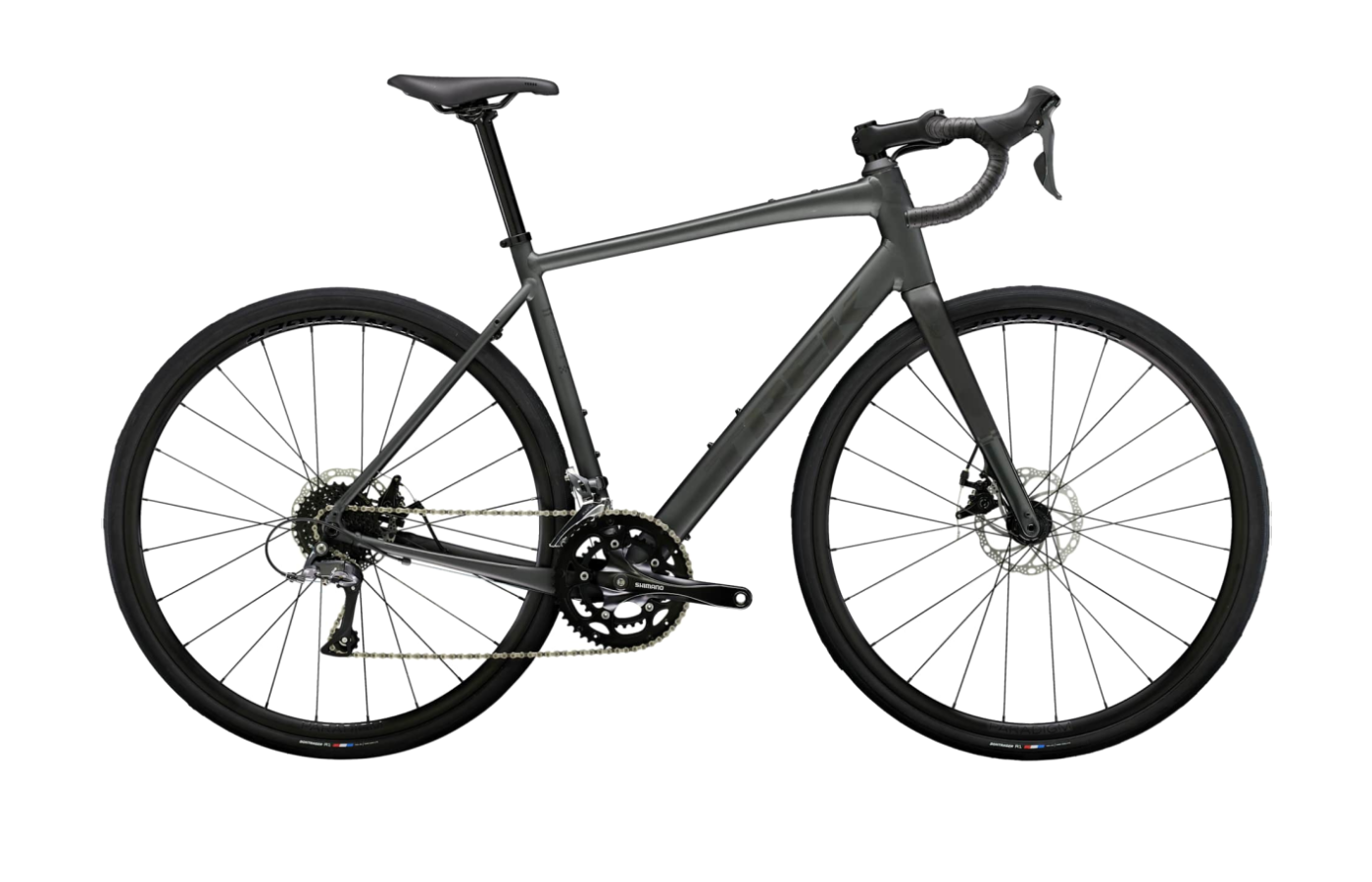
Domane
Trek's direct counter to the Roubaix, with IsoSpeed decouplers front and rear instead of a suspension cartridge. Different philosophy, same goal — comfort without giving up race-bike feel.
Compare →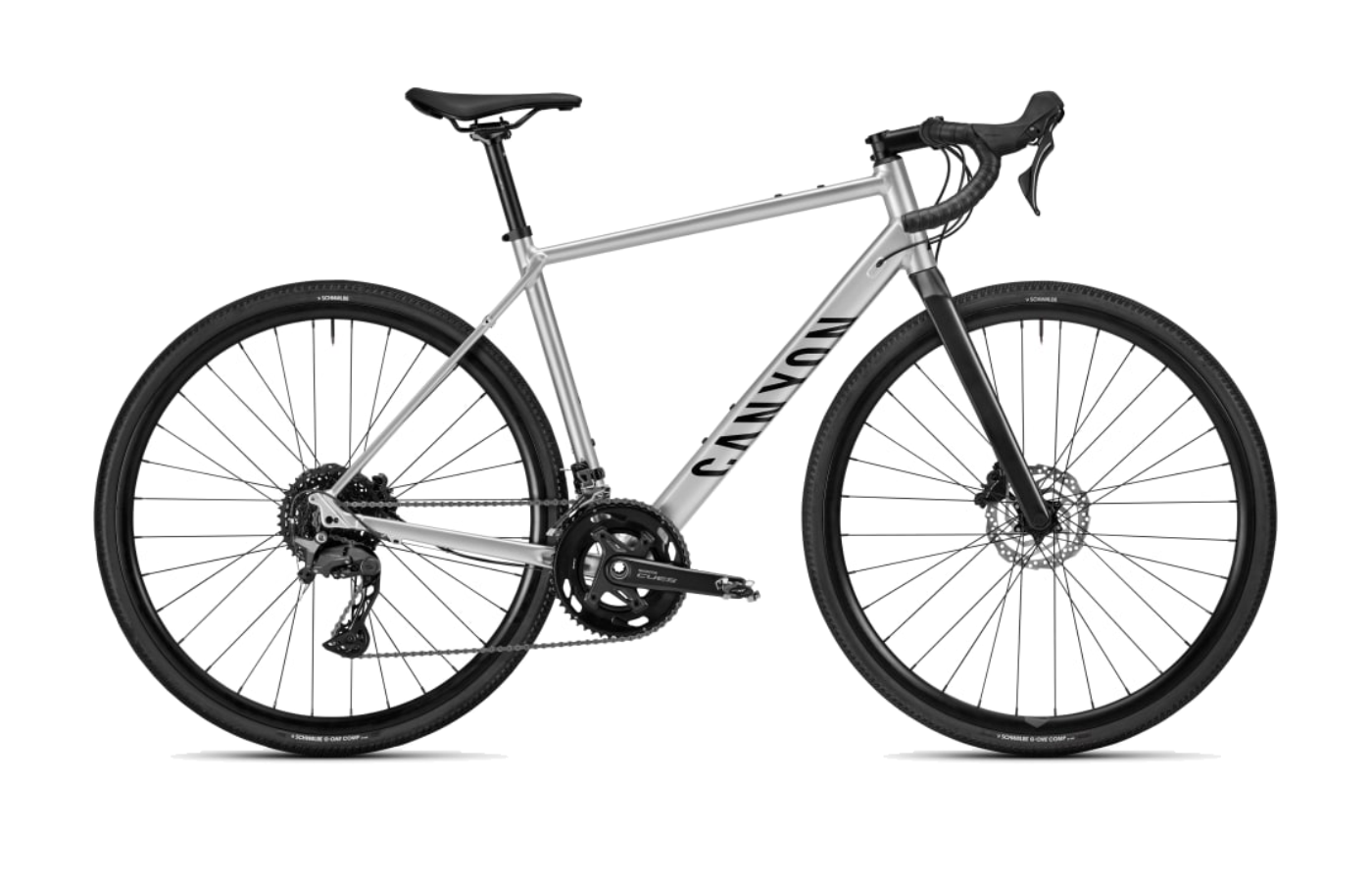
Endurace
Canyon's endurance carbon at direct-to-consumer pricing — typically delivers a tier higher on groupset and wheels for the same money as the Roubaix. The catch: no dealer, no demo, no Future Shock.
Compare →