Enduro
vsStumpjumper
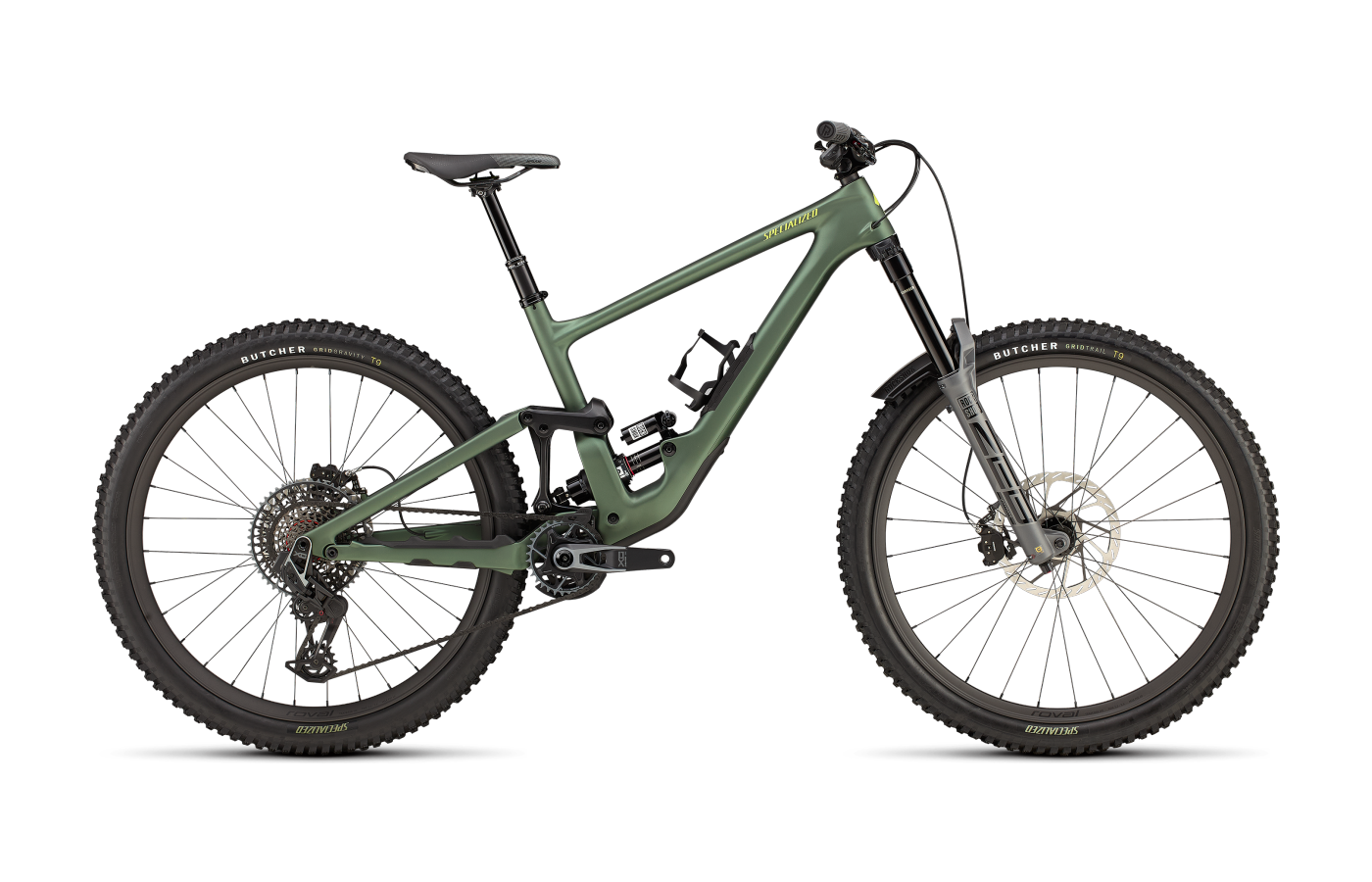
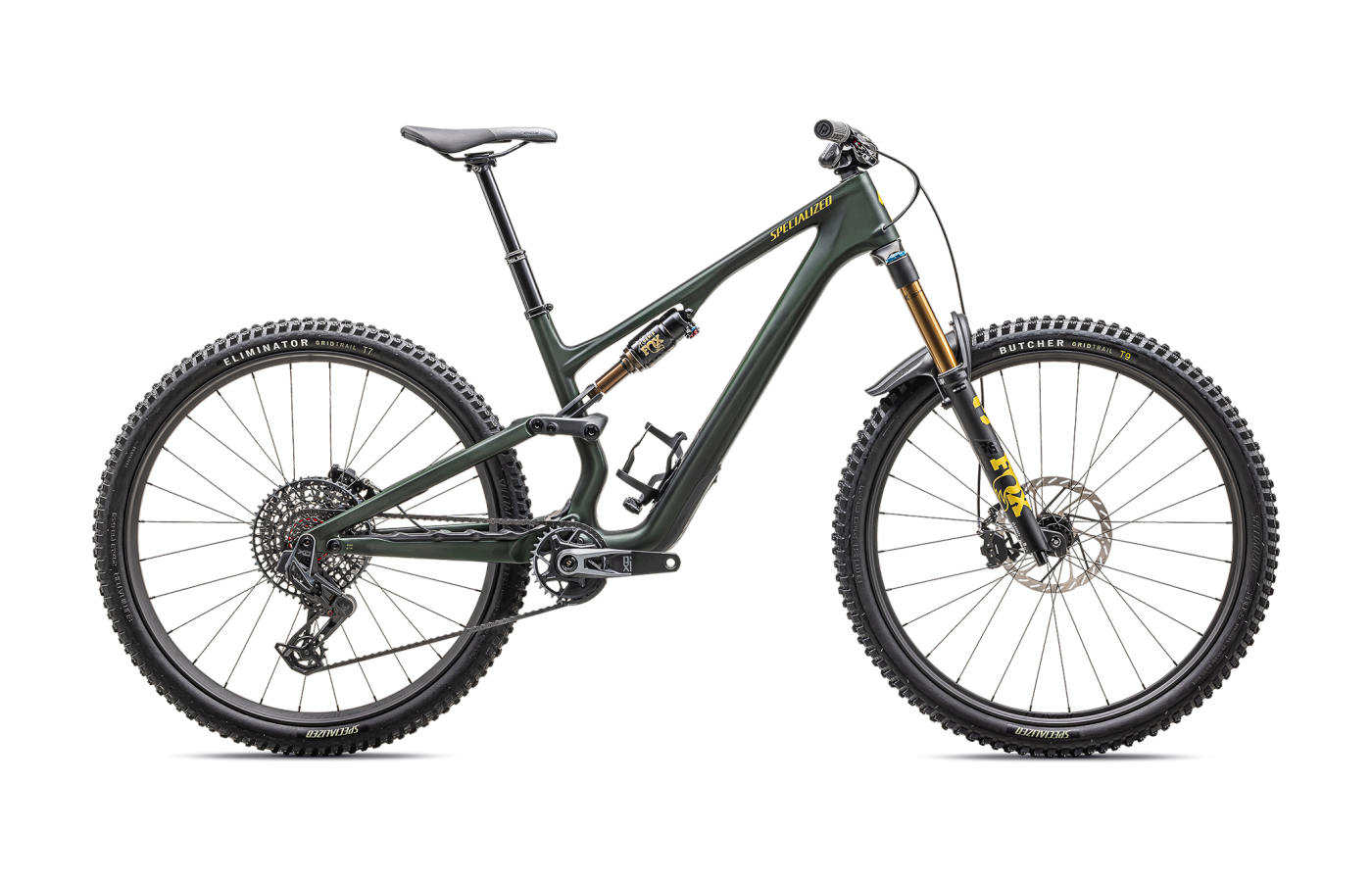
Same brand, two very different missions.
The Enduro is a 170 mm gravity tool borrowed from Specialized's downhill program. The Stumpjumper 15 is a 145 mm do-everything trail bike built around a clever new shock.
Enduro
- Mini-DH composure — 170 mm of travel and a Demo-derived rearward axle path that erases square-edge hits at speed.
- Proven gravity chassis — FACT 11m carbon across every build, with the same SWAT downtube storage and threaded BB throughout.
- Carries momentum like nothing else in the segment — multiple reviewers reported needing to reset their braking points on familiar trails.
- Only two builds, both expensive ($4,999 and $8,499) — no entry-level path in.
- Ground-hugging character can feel boring or sluggish on mellow, rolling trails.
Stumpjumper
- Genuine quiver-of-one breadth — climbs efficiently with ~105% anti-squat, descends well above its 145 mm class.
- GENIE shock works — supple initial stroke for traction, hard ramp-up at the end that resists bottom-out on big hits.
- Nine builds spanning $2,999 to $11,999 , with adjustable headset cups and flip chip for tuning the geometry to your trails.
- Carbon frames are wireless-drivetrain only — no Shimano mechanical option on any carbon build.
- GENIE is a proprietary shock; long-term parts and service support is a fair concern.
Editor’s analysis
Both wear the Specialized badge and the same FACT 11m carbon, but they're solving opposite problems — one wants to descend faster than physics allows, the other wants to do the whole ride.
Specialized literally lifted the Enduro's rear linkage from the Demo downhill bike. The result is 170 mm of travel front and rear, a 64.3-degree head angle, and a rearward axle path that lets the rear wheel get out of the way of square-edge hits. Reviewers used phrases like 'mini-DH bike,' 'magic carpet,' and 'it felt like cheating' so consistently that they read like a press kit. It's a racing tool, and on chunky high-speed descents nothing in this segment is composed in quite the same way.
The Stumpjumper 15 is the opposite kind of bet. Specialized merged the old Stumpjumper and Stumpjumper EVO into a single 145 mm platform, then handed it the proprietary Fox GENIE shock — a dual-chamber air spring that runs supple and 'coil-like' for the first 70% of travel before a band closes off the outer chamber and ramps progression hard. The pitch is one bike that climbs efficiently, supports flow-trail pumping, and still resists bottom-out on the occasional huck. Reviewers largely buy it.
Geometry tells the same story. Compared mid-size for mid-size, the Enduro sits lower in stack, runs a 7 mm longer chainstay (442 vs 435), and a slightly longer wheelbase. The Stumpjumper has a 1-degree steeper effective seat angle (77 vs 76) and an adjustable head angle from 63 to 65.5 degrees via headset cups, so you can dial it from quasi-DH to almost-XC. The Enduro's geometry doesn't move.
The honest framing: the Specialized Enduro is the bike you buy when most of your rides involve a chairlift, a shuttle, or a punishing descent that the climb is just the price of. The Specialized Stumpjumper is the bike you buy when you want one bike for everything, and the descents in your life top out at 'rowdy' rather than 'gnarly.'
Where the builds differ.
Comparing our editor's-pick builds side-by-side. Winners highlighted row-by-row — lower price and weight, and the better-spec component, each mark a point.
Build variants & pricing
The Enduro lineup is small and premium; the Stumpjumper 15 spans nine builds from a $2,999 alloy entry point to a $11,999 S-Works LTD with electronic suspension.
Prices are current US MSRP. The Enduro only comes in two builds (Comp and Pro) and starts at $4,999 — there's no alloy version and no entry-level option. The Stumpjumper 15 starts at $2,999 in alloy if budget is the deciding factor.
How they fit, how they steer.
Compared at the fit-picked size for each bike — S2 on the Enduro, S3 on the Stumpjumper 15. The Stumpjumper sits 11 mm taller in stack and 13 mm longer in reach; the Enduro runs a 7 mm longer chainstay and a 1 degree slacker seat angle.
Which size should I buy?
Specialized's S-sizing decouples reach from seat tube height on both bikes — pick on reach and ride feel rather than your usual T-shirt size.
→These are starting points. Flexibility, riding style, and preferred position all shift the answer — if you’re between sizes, a professional fit beats a chart.
What the magazines said.
Published reviews from trusted cycling outlets. Click through for the full write-up.
Which one should you buy?
If most of your rides are shuttle laps, bike park, or steep gnar, get the Enduro. If you want one bike that climbs, descends, and does Saturday epics, get the Stumpjumper 15.
Enduro
If your home trails are steep, fast, and chunky — or you spend real time at the bike park — the Enduro's 170 mm chassis and Demo-derived linkage will flatter your descending and forgive bad lines. It will also feel like overkill on anything mellower than that.
Stumpjumper
If you want one bike for technical climbs, flow trails, occasional big-mountain days, and the rare bike-park trip, the Stumpjumper 15's GENIE shock and adjustable geometry give you a wider operating window than any 145 mm bike has a right to. It's the safer 'quiver of one' pick.
Questions buyers actually ask.
Short answers to the things we get emailed about most often.
01How much travel does each bike have?
Specialized Enduro: 170 mm front and 170 mm rear — full enduro/mini-DH territory.
Specialized Stumpjumper 15: 145 mm rear and 150 mm front on most carbon builds. The two coil-shock variants (the $7,999 Stumpjumper 15 and the $5,499 Alloy) bump the fork to 160 mm. The S1 size gets a 140 mm fork with a slightly shorter shock stroke.
That 25–30 mm gap is real, and reviewers consistently describe the Enduro as a 'mini-DH bike' and the Stumpjumper as a 'do-it-all' trail platform.
02Which one climbs better?
The Stumpjumper 15, comfortably. It's lighter (claimed 13.99 kg for the Pro vs 16.04 kg for the Enduro Pro — over 2 kg), runs a steeper effective seat tube angle (77 degrees vs 76), and the GENIE shock keeps anti-squat around 105% for a taut pedaling platform.
The Enduro climbs better than its travel suggests — Specialized increased anti-squat 40% with this generation and the threaded BB, steep-ish 76-degree seat angle, and active rear end give it real technical-climbing traction. But it still rides like a 35-pound enduro bike, and reviewers were near-unanimous that it 'needs gravity on its side to truly shine.'
03Which descends better?
The Enduro, on anything steep, fast, or rough. The 170 mm of travel, the Demo-derived rearward axle path, and the slack 64.3-degree head angle let it carry speed through chunder that the Stumpjumper has to pick its way through. Reviewers across Pinkbike, Bike Magazine, Singletracks, and Enduro MTB used the same language: 'magic carpet,' 'iron out everything,' 'it felt like cheating.'
The Stumpjumper 15 descends remarkably well for 145 mm — the GENIE shock's progressive ramp resists bottom-out on big hits — but it isn't pretending to match a 170 mm gravity sled.
04What about the geometry differences?
Comparing mid-size on each platform — Enduro S2 vs Stumpjumper 15 S3:
Enduro: 437 mm reach, 616 mm stack, 64.3° head angle, 442 mm chainstay, 1217 mm wheelbase, 76° seat angle.
Stumpjumper 15: 450 mm reach, 627 mm stack, 64.5° head angle, 435 mm chainstay, 1213 mm wheelbase, 77° seat angle.
The Stumpjumper sits taller and slightly steeper out of the box, but its geometry is adjustable — headset cups let you run a 63°, 64.5°, or 65.5° head angle, plus a flip chip on the chainstay. The Enduro's geometry is fixed apart from a flip chip that swaps between 63.9° and 64.3°.
05What's the deal with the GENIE shock?
The GENIE is a Specialized-Fox collaboration — a dual-chamber air shock with a large outer air sleeve that gets isolated by a 'GENIE band' once the shock passes ~70% of travel. The result: coil-like suppleness off the top, then a hard progressive ramp at the end of the stroke to resist bottom-out.
Reviewers consistently liked it. Flow Mountain Bike called bottom-out control 'outrageously good.' The footnote: it's proprietary, so long-term service depends on Specialized continuing to support it. The bike accepts standard 210x55 mm shocks if you ever want out, but tuning a third-party shock to the Stumpjumper's linkage isn't trivial.
06Are there cheaper builds available?
Stumpjumper 15: yes — nine builds, starting at $2,999 for the Deore-equipped alloy version, $3,999 for the SLX alloy Comp Alloy, and $5,999 for the carbon Expert.
Enduro: no. The lineup is two builds — the Comp at $4,999 (Shimano SLX, RockShox Zeb Select fork) and the Pro at $8,499 (SRAM X0 Transmission, RockShox Zeb Ultimate). There is no alloy Enduro.
If entry-level pricing matters, the Stumpjumper is the only door in.
07Can I run a coil shock on either?
Enduro: yes — reviewers explicitly highlight the progressive leverage curve as coil-friendly, and several testers swapped the stock air shock for a coil to lean further into the 'monster truck' character.
Stumpjumper 15: yes, and Specialized ships two coil builds from the factory — the $7,999 Stumpjumper 15 (Öhlins TTX 22 M Coil with Öhlins RXF38 fork at 160 mm) and the $5,499 Alloy (FOX DHX coil with FLOAT 38 fork at 160 mm). These coil builds bias the platform meaningfully toward the descending end of its range.
08Do they share parts or features?
Quite a few. Both use Specialized's SWAT downtube storage door, both have threaded bottom brackets, both run FACT 11m carbon on the carbon builds, and both ship with the same Roval Traverse wheel family (HD on the top Enduro, SL II on the top Stumpjumper) and Specialized Butcher tires. Both come with Specialized's lifetime frame warranty and lifetime pivot bearing replacement to the original owner.
The biggest divergence: carbon Stumpjumper 15 frames are wireless-only (no internal routing for mechanical shifting), while the Enduro retains conventional cable routing even though both Enduro builds happen to ship with wireless drivetrains.
Similar bikes
If your priorities don’t map cleanly onto either of these, one of these adjacent bikes probably fits better.
Spire
The Spire is the closest direct rival to the Enduro — 170 mm of travel, slack geometry, and a singular focus on going down fast. Transition's reputation is 'fun first,' so it tends to feel a touch more playful than the plow-bike Enduro.
Compare →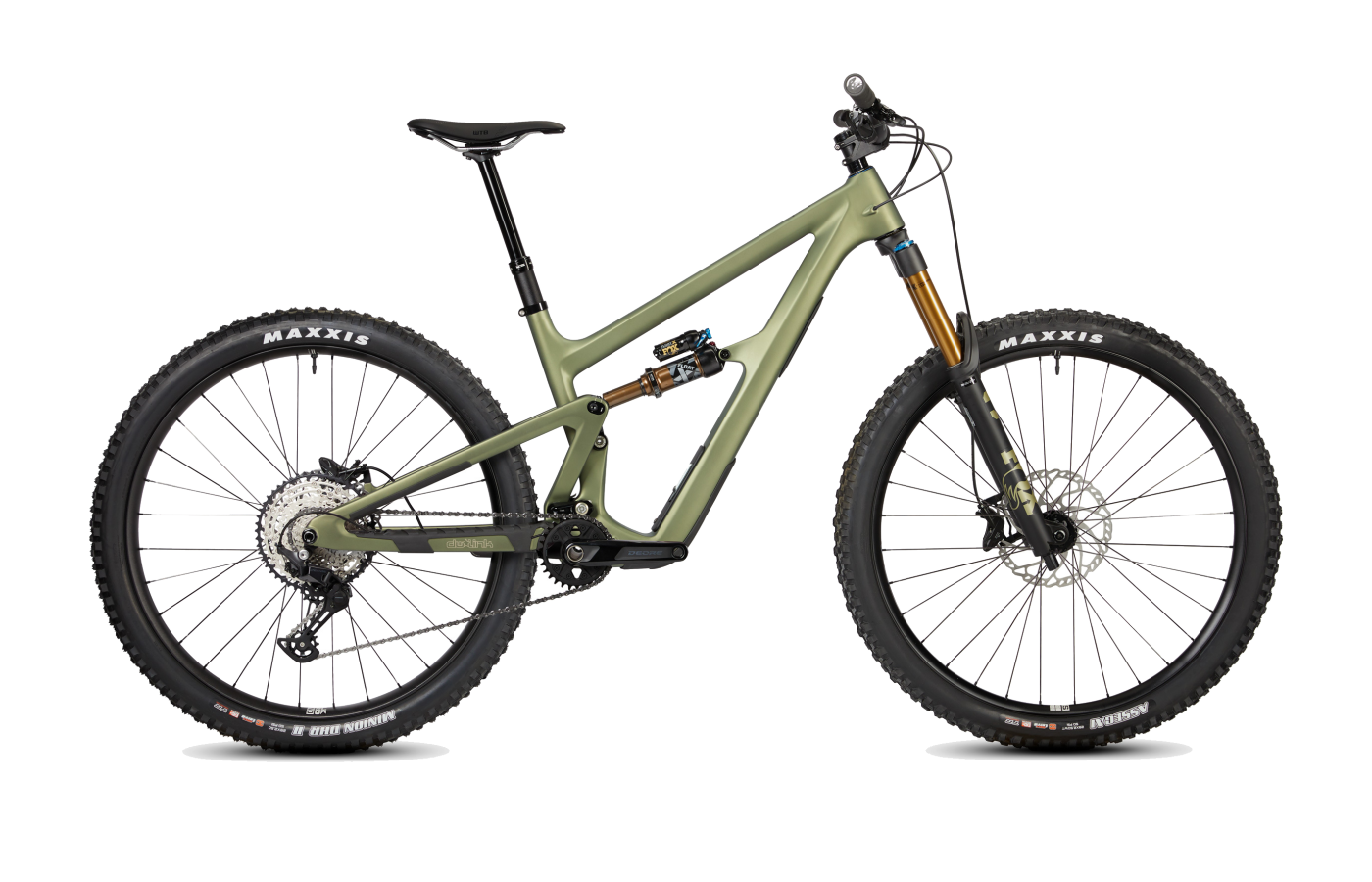
Ripmo
The Ripmo is the Stumpjumper 15's most direct rival — 145 mm rear and 160 mm front, with Ibis's DW-Link suspension that's long had a reputation for unusually good climbing efficiency. A solid choice if the GENIE shock's proprietary nature gives you pause.
Compare →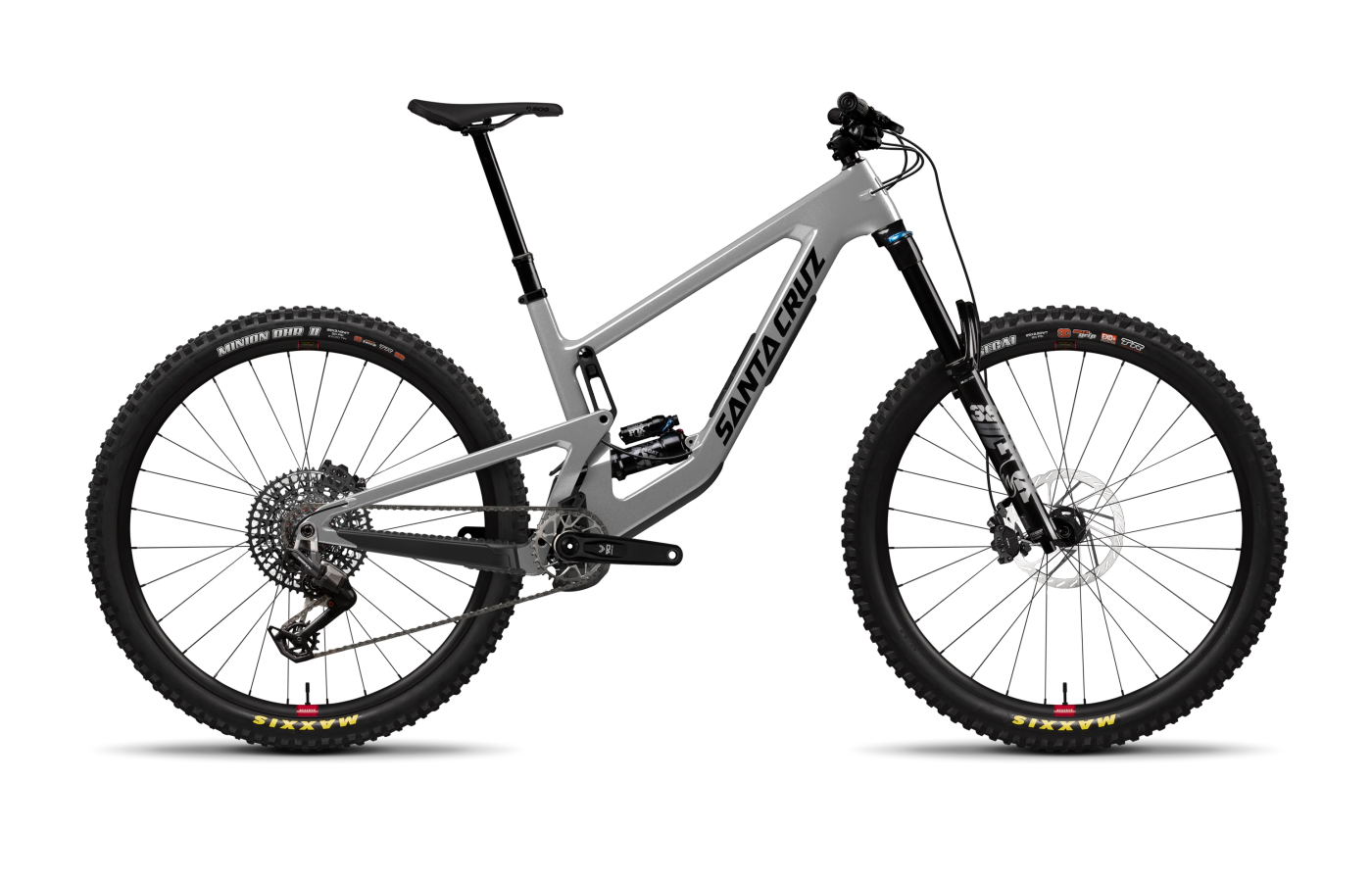
Megatower
Santa Cruz's enduro race platform — lower-link VPP suspension, 165 mm rear travel, and a similarly stable, ground-hugging ride. The natural cross-shop for the Enduro if you want a different brand's take on the same brief.
Compare →