Enduro
vsStumpjumper Evo
One brand, two completely different jobs.
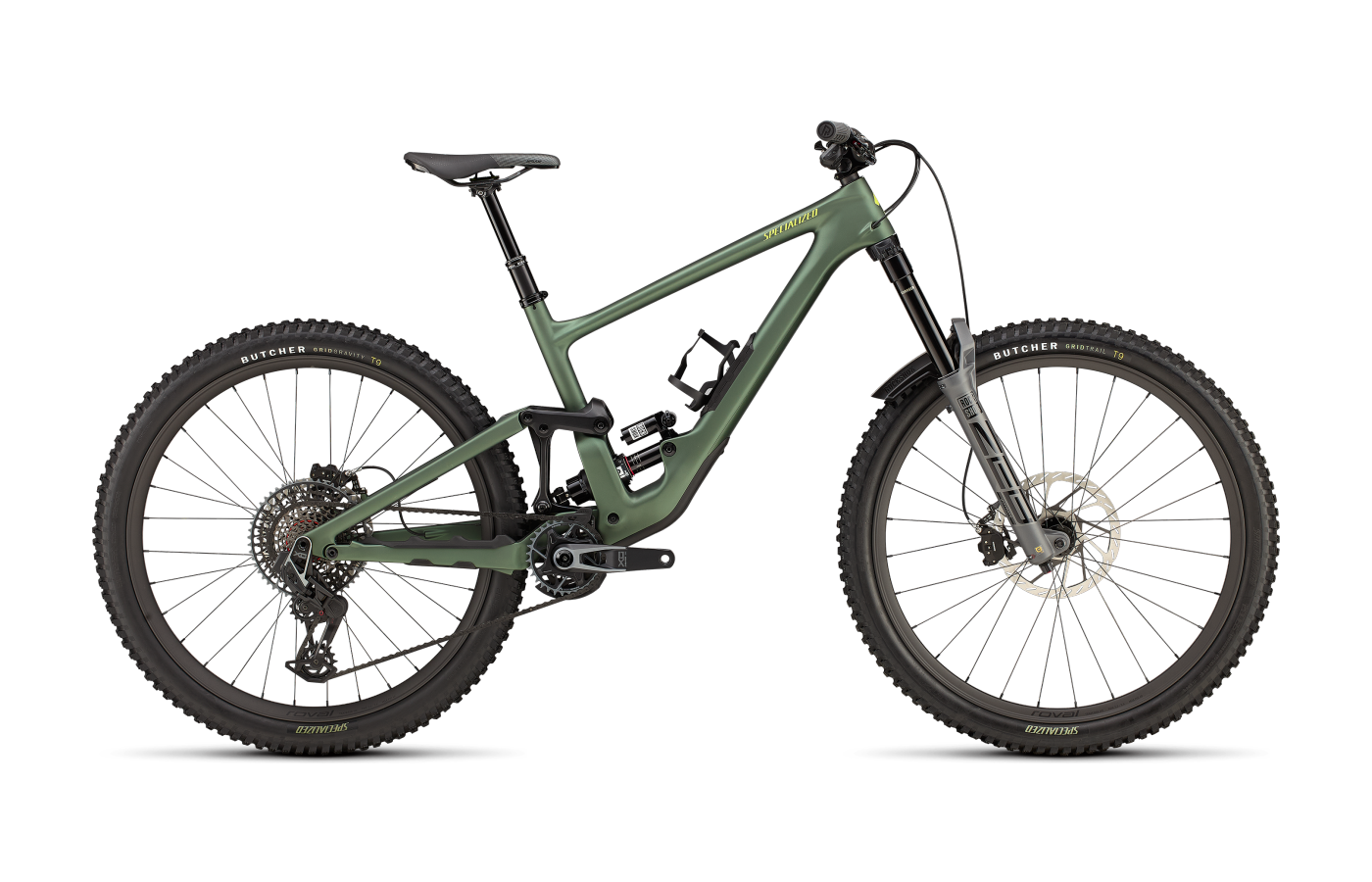
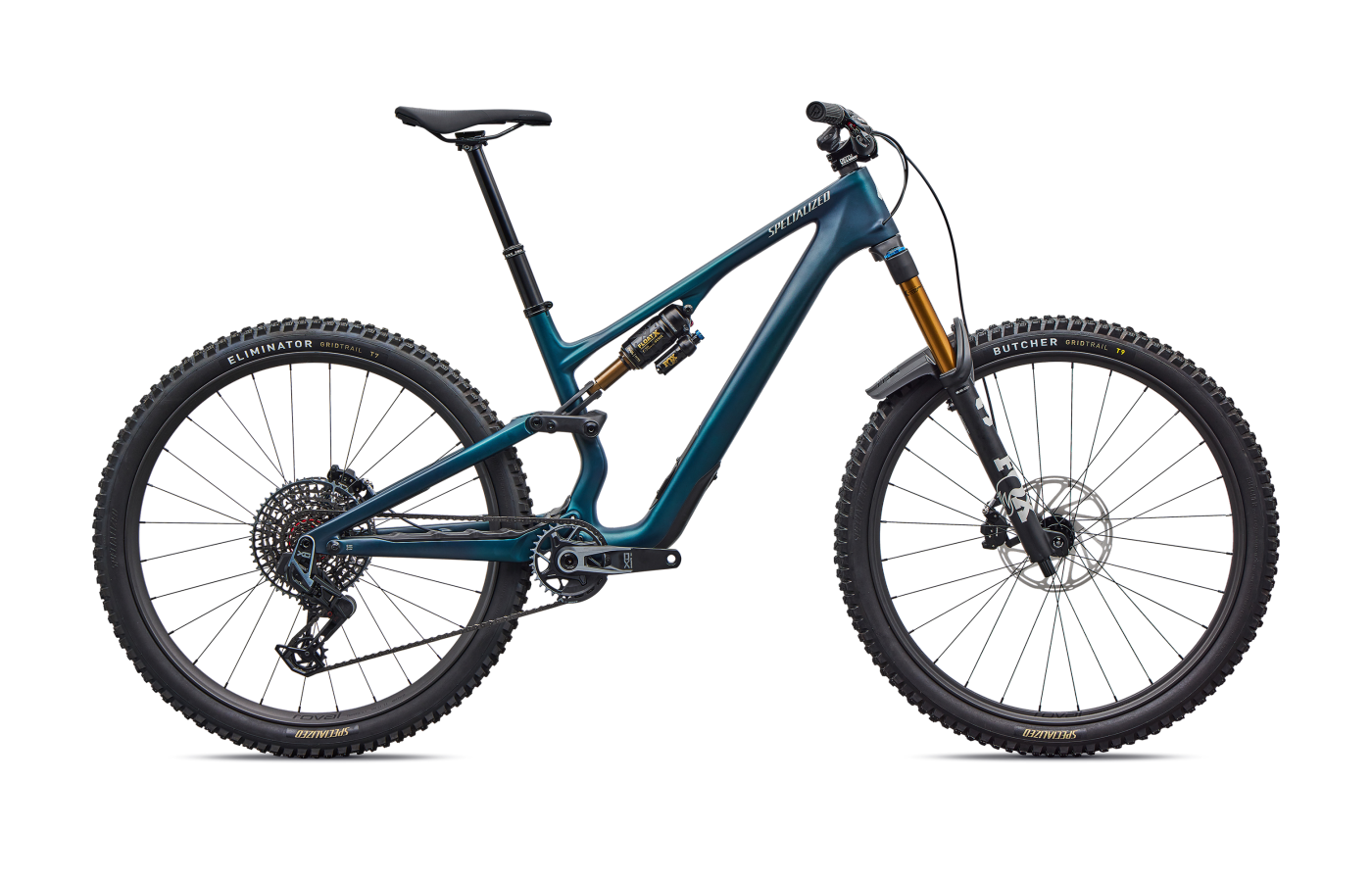
The Specialized Enduro is a 170 mm gravity sled built off the Demo's DNA. The Stumpjumper Evo is the do-it-all 145 mm trail bike with a clever rear shock.
Enduro
- True gravity chassis — 170/170 mm travel, 64.3 degree HTA, Demo-derived rearward axle path that just doesn't slow down on chunder.
- 'Calm the chaos' descender — reviewers across Pinkbike, Bike Magazine, and Enduro MTB use phrases like 'magic carpet' and 'it was like cheating.'
- Carbon frame at the Comp price — the $4,999 Comp shares the same FACT 11m chassis as the $8,499 Pro.
- Only two builds in the lineup right now — no S-Works flagship, no entry under $5k.
- Long, heavy, ground-hugging — feels muted on flatter, less technical trails.
Stumpjumper Evo
- GENIE rear shock — hyper-supple coil-like initial stroke, hard end-stroke ramp; reviewers call bottom-out control 'outrageously good.'
- Three headset cups + flip chip — 63, 64.5, or 65.5 degree HTA on the same frame; tune it XC-trail or bike-park-trail.
- Wide build range, lighter chassis — six builds from $3,999 alloy to $11,299 S-Works; carbon Pro is 14.05 kg.
- Carbon frames are wireless-only — no mechanical drivetrain routing on FACT 11m models.
- Stock Grid Trail tires are universally flagged as too thin for the bike's downhill capability.
Editor’s analysis
This isn't a flagship-vs-flagship fight — it's a question of what kind of day you're shaping the bike around.
On paper both bikes wear the FACT 11m carbon badge, both ship with SWAT downtube storage, and both will descend faster than 95% of the people who buy them. But pull the geometry chart and the suspension numbers and the philosophies split immediately.
The Specialized Enduro is a 29" gravity bike with 170 mm front and rear, a 64.3 degree head angle, and a chassis that reviewers consistently call a 'mini downhill bike.' The rearward axle path is lifted from the Demo, and the bike is happiest when it's pointed down something steep, fast, and ugly. It climbs better than its travel suggests — Specialized cranked anti-squat 40% versus the prior generation — but at 16 kg with a 1217 mm wheelbase even at our S2 fit size, it's not a bike that flatters mellow trails.
The Specialized Stumpjumper Evo runs 160 mm of fork with 145 mm rear travel and a Fox-developed GENIE shock with a dual-chamber air spring — supple in the first 70% of stroke, then a hard ramp-up via a closed-off outer chamber. Three headset cups (63 / 64.5 / 65.5 degrees) and a flip chip mean you can dial the same frame from XC-leaning trail bike to bike-park-curious enduro substitute. It's nearly two kilos lighter than the Enduro at our editor's-pick spec (14.05 kg vs 16.04 kg) and noticeably more agile in tight terrain.
Put another way: the Specialized Enduro is the bike you buy when 'how rough?' is no longer a question you ask before dropping in. The Specialized Stumpjumper Evo is the bike you buy when you want one bike to handle the climb, the bike park lap, and the four-hour singletrack day with equal grace.
Where the builds differ.
Comparing our editor's-pick builds side-by-side. Winners highlighted row-by-row — lower price and weight, and the better-spec component, each mark a point.
Build variants & pricing
The Stumpjumper Evo lineup spans $3,999 to $11,299 across six builds; the Enduro is currently just two — $4,999 Comp and $8,499 Pro.
Editor's pick on each side is the X0 AXS Transmission carbon build — Enduro Pro at $8,499, Stumpjumper Evo Pro at $7,999. Both run the same drivetrain tier and the same FACT 11m frame, so the spec table reflects platform differences rather than groupset asymmetry.
How they fit, how they steer.
Specialized's S-sizing decouples reach from seat tube height, so a 5'8" rider lands on S2 on the Enduro and S3 on the Stumpjumper Evo. At those sizes the Stumpy actually has 13 mm more reach (450 vs 437), a 0.2 degree slacker HTA, and a 7 mm shorter chainstay — the Enduro's stretch comes from front-center and travel, not effective top tube.
Which size should I buy?
Both bikes use Specialized's reach-based S-sizing — pick by reach and ride feel, not seat tube length. Most riders straddle two sizes and choose based on whether they want stability or maneuverability.
→These are starting points. Flexibility, riding style, and preferred position all shift the answer — if you’re between sizes, a professional fit beats a chart.
What the magazines said.
Published reviews from trusted cycling outlets. Click through for the full write-up.
Which one should you buy?
If the climb is a chairlift or a fire road and the descent is the whole point, get the Enduro. If you're riding everything in between, get the Stumpjumper Evo.
Enduro
If your weekends look like Whistler shuttles, EWS-style race stages, or repeat laps of the steepest local DH, the Enduro is the sharper tool. The 170/170 travel, slack HTA, and Demo-derived axle path turn rough into smooth and let you carry speed where other bikes panic. Just accept that climbs and mellow trails will feel like work.
Stumpjumper Evo
If one bike has to handle the climb, the singletrack loop, the bike park lap, and the occasional big-mountain day, the Stumpjumper Evo is the more honest answer. The GENIE shock punches above its 145 mm travel number, and the adjustable geometry means you can re-spec the bike's character without touching the frame.
Questions buyers actually ask.
Short answers to the things we get emailed about most often.
01Which one descends faster on truly rough trails?
The Specialized Enduro, with real margin. 170 mm of travel front and rear, a 64.3 degree head angle, and the Demo-derived rearward axle path mean it carries speed through square-edged chatter that the Stumpjumper Evo simply has to brake for.
Reviewers describe it as a 'mini downhill bike' that 'calms the chaos' — Bike Magazine literally said it 'felt like cheating' on familiar trails. The Stumpjumper Evo is no slouch on descents, but at 145 mm rear and 160 mm front it asks more of your line choice.
02Which is the better climber?
The Specialized Stumpjumper Evo, comfortably. At our editor's-pick spec it weighs 14.05 kg vs 16.04 kg for the Enduro Pro — almost two kilograms less to drag uphill. The 77 degree effective seat tube angle (S3) and shorter 1213 mm wheelbase make it nimbler on switchbacks and steep pitches.
The Enduro climbs surprisingly well for its category thanks to a 40% bump in anti-squat over the prior generation, but reviewers consistently note it's 'a bit of a pig' on tight, low-speed climbs and works best when there's elevation worth winching up to.
03How much travel does each bike actually have?
Specialized Enduro: 170 mm front (RockShox Zeb) and 170 mm rear (RockShox Vivid air shock, 205x60 trunnion) — symmetric, gravity-focused.
Specialized Stumpjumper Evo: 160 mm front (Fox 36, all sizes except S1) and 145 mm rear (Fox Float X with Specialized GENIE shock, 210x55). The GENIE's dual-chamber design gives it a coil-like feel for the first 70% of stroke and then ramps hard, so it punches above the 145 mm number — but it's still not a 170 mm bike.
04Is the GENIE shock on the Stumpjumper Evo a gimmick?
No, but it's a system, not a marginal tweak. The dual-chamber air spring uses a large outer chamber for the first 70% of travel (supple, traction-heavy) and then closes that chamber off via a 'GENIE band' to drastically ramp progression at end-stroke. Reviewers consistently report being unable to bottom it out 'despite ugly hucks-to-flat.'
The trade-off is proprietary: you can swap to a standard 210x55 shock if you want, but you lose the defining trait of the bike. Service uses mostly standard Fox internals plus one extra seal.
05Which is more adjustable?
The Stumpjumper Evo, by a wide margin. It ships with three eccentric headset cup options (63, 64.5, or 65.5 degree HTA) and a flip chip at the rear linkage, so the same frame can be tuned from a near-XC trail bike to a bike-park-curious enduro substitute.
The Enduro has a basic high/low flip chip at the shock mount that nudges BB height and HTA by about 0.4 degrees — useful, but not in the same league. If you don't know exactly what geometry you want, the Stumpy gives you more room to find out.
06Are the carbon frames mechanical-shifting compatible?
Stumpjumper Evo carbon: No. The FACT 11m frames are wireless-only — they lack the routing for mechanical derailleur cables. You're committed to SRAM Transmission or Shimano Di2.
Stumpjumper Evo alloy: Yes — the M5 alloy frame retains mechanical cable routing.
Specialized Enduro: Internal cable routing supports mechanical drivetrains. If you want to run a wired Shimano XT or SLX setup, the Enduro is one of the few high-end frames that still allows it.
07What about tire clearance and stock tires?
Specialized Enduro: Clearance for ~58 mm tires (well over 2.4"). Stock Butcher GRID Trail front / GRID Gravity rear in 29x2.3" — the gravity-casing rear is appropriate for the bike, but the GRID Trail front is a known weak point for aggressive riders.
Specialized Stumpjumper Evo: Same 29x2.4" Butcher front / Eliminator rear setup, both in GRID Trail casing. Reviewers across Pinkbike, Flow Mountain Bike, and Singletracks flag the tire casing as the bike's biggest spec weakness — most aggressive riders swap to GRID Gravity or Maxxis DoubleDown immediately.
08Which holds long-term value better?
Both come with lifetime frame warranty and lifetime pivot bearing replacement for the original owner — Specialized's standard. Crash replacement pricing is offered on both.
The Stumpjumper Evo lineage (going back to the original Stumpjumper in 1981) is one of the longest-running model lines in mountain biking, and used demand for the carbon Pro and S-Works builds is consistently strong. The Enduro is a more specialist platform with a smaller used market, which can mean either a better deal as a buyer or a slower sale as a seller.
Similar bikes
If your priorities don’t map cleanly onto either of these, one of these adjacent bikes probably fits better.
Megatower
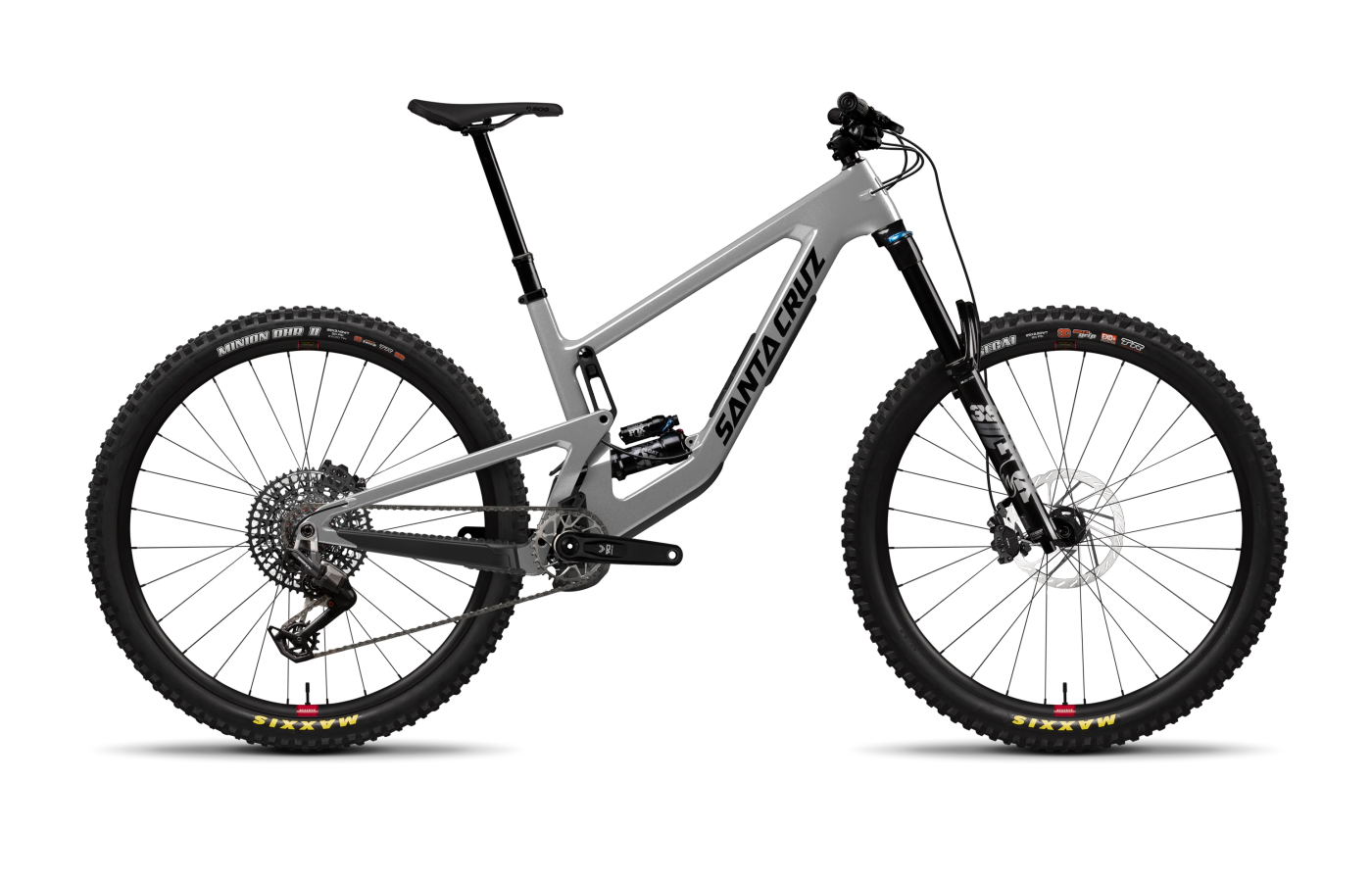
Same 170 mm travel and aggressive geometry as the Specialized Enduro, but with Santa Cruz's VPP linkage — riders who want a more supportive pedaling platform under power often prefer it to the Enduro's deeper-feeling FSR.
Compare →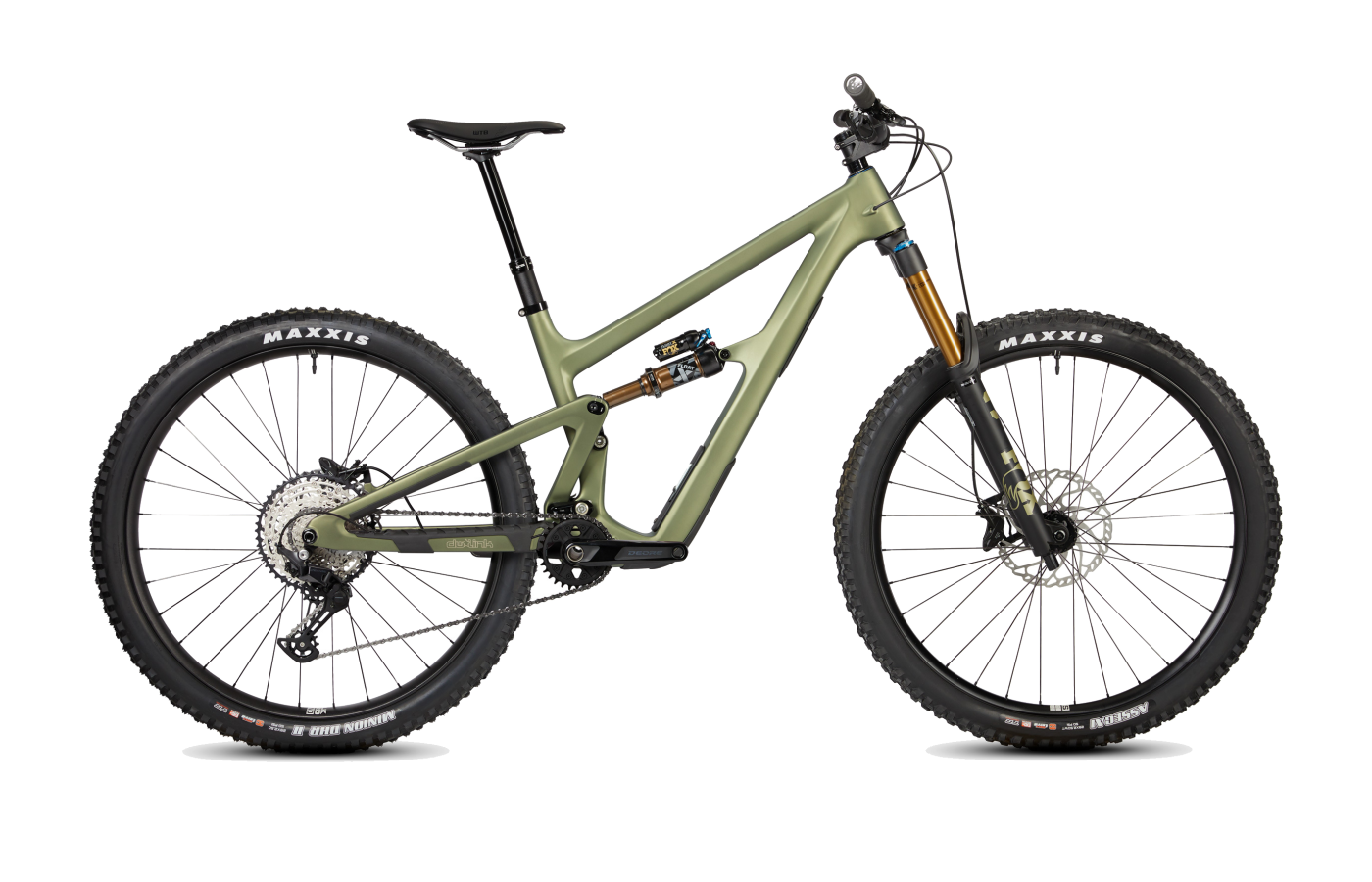
Ripmo
The Ibis Ripmo is the obvious cross-shop to the Stumpjumper Evo — DW-link rear suspension with a famously efficient pedaling character and a more conventional air spring, no proprietary shock to worry about for service.
Compare →Spire
If the Specialized Enduro's 64.3 degree head angle still feels conservative for your terrain, the Transition Spire pushes further toward DH geometry with a simple, rebuildable design and zero proprietary anything.
Compare →