Enduro
vsSpire
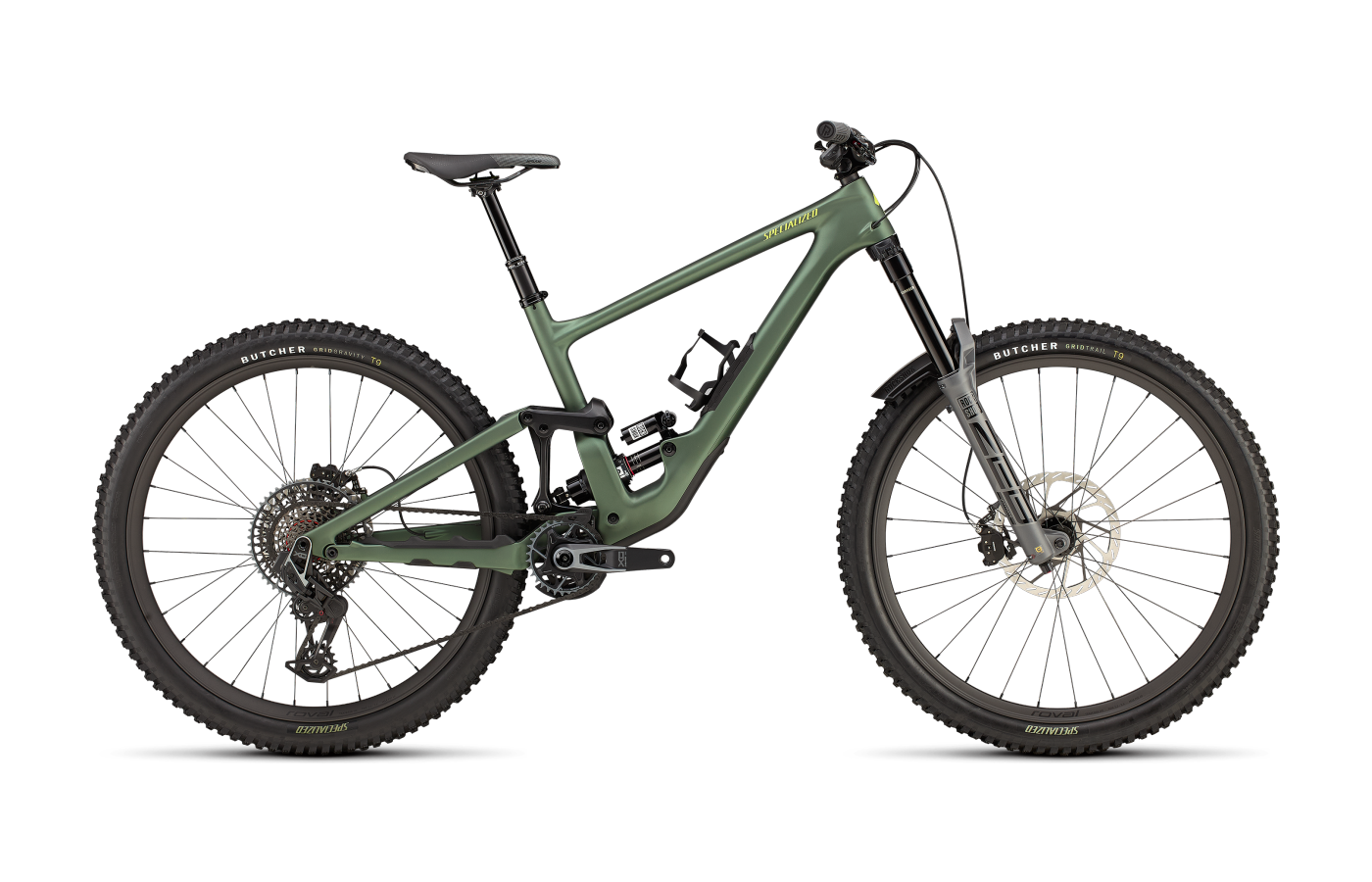
Two 170 mm enduro bikes, two very different missions.
The Specialized Enduro is a mini-DH race tool built to calm chaos. The Transition Spire is a long, slack 'nimble bruiser' that still wants to leave the ground.
Enduro
- DH-bike composure — rearward axle path and 40% more anti-squat give a 'magic carpet' feel that lets you reset braking points.
- SWAT integrated storage — downtube box and steerer-tube multi-tool make all-day rides without a pack genuinely workable.
- Surprisingly capable climber — a 76-degree effective seat angle and firm pedaling platform let it 'winch up' technical climbs better than its travel suggests.
- Carbon-only: no alloy frame option, and the cheapest build is $4,999.
- Ground-hugging character can feel muted or 'boring' on mellower, flatter terrain.
Spire
- Lively for a 170 mm bike — GiddyUp suspension stays poppy and supportive instead of wallowing through the mid-stroke.
- Alloy frame option — $4,199 Alloy Eagle 70 build undercuts every Enduro by $800, with a $2,299 alloy frameset for custom builders.
- Steep 78.8-degree seat angle (at MD) keeps the front wheel planted on technical climbs without saddle gymnastics.
- Frame transmits more feedback through repetitive square-edged hits than the Enduro.
- Alloy builds run heavy — 35–37 lb — and feel sluggish on flat trails.
Editor’s analysis
Both pack 170 mm front and rear, both ride 29ers, both ask for steep terrain — but one plows, and the other parties.
On paper these bikes look like twins: 170 mm front and rear, 29-inch wheels, threaded BB, carbon flagship at roughly $8k. Spend any time reading the test reports and the philosophies split immediately. The Specialized Enduro borrows its rear suspension from the Demo downhill bike — a more rearward axle path, a 40% bump in anti-squat, and a leverage curve tuned to swallow square edges. The Transition Spire uses a four-bar GiddyUp layout designed to feel poppy and active, with a head angle that drops to 62.5 degrees in the low setting and a wheelbase that stretches past 1300 mm in the larger sizes.
The Specialized Enduro is the racer. Reviewers reach for the same words across years: 'magic carpet,' 'calms the chaos,' 'it was like cheating.' The 64.3-degree HTA and 442 mm chainstays — fixed across all four sizes — give it a stable, ground-hugging feel that lets you carry ridiculous speed through chunder. The penalty is character: more than one tester called it 'boring' on mellower trails, and reviewers consistently note it 'craves speed' to come alive.
The Transition Spire is more of a longer-legged Sentinel than a downhill bike with the dual crown removed. The slacker 63-degree head angle and longer wheelbase deliver World Cup DH-grade stability, but the GiddyUp suspension stays supportive enough to pop off side hits and hold mid-stroke through compressions. The trade is harshness: testers consistently report more feedback through the rear end on repetitive square-edged hits than the Enduro delivers, and the alloy versions tip the scales at 35–37 lb.
Put another way: the Specialized Enduro is the bike you buy when your goal is to win the descent. The Transition Spire is the bike you buy when your goal is to enjoy it — and to still get airborne on the way down.
Where the builds differ.
Comparing our editor's-pick builds side-by-side. Winners highlighted row-by-row — lower price and weight, and the better-spec component, each mark a point.
Build variants & pricing
The Spire spans wider — $4,199 alloy entry to $7,699 carbon flagship. The Enduro is carbon-only and starts at $4,999.
Prices are current US MSRP. Specialized doesn't offer the Enduro in alloy — if you want this much travel under $4,500, the Spire's $4,199 Alloy Eagle 70 (or the $2,299 alloy frameset) is the only path. The editor's-pick column shows the carbon flagship from each side: SRAM Eagle Transmission, RockShox Zeb Ultimate fork, RockShox Vivid Ultimate shock — apples-to-apples.
How they fit, how they steer.
The Specialized Enduro at S2 sits 3 mm lower in stack with 23 mm less reach than the Transition Spire at MD. The Spire is slacker by 1.3 degrees (63 vs 64.3), with a 40 mm longer wheelbase and 4 mm longer chainstays — the long, slack, neutral-position climber.
Which size should I buy?
Size recommendations based on stack, reach, and effective top tube. The Enduro uses S-sizing (S2–S5); the Spire uses traditional SM–XXL labels.
→These are starting points. Flexibility, riding style, and preferred position all shift the answer — if you’re between sizes, a professional fit beats a chart.
What the magazines said.
Published reviews from trusted cycling outlets. Click through for the full write-up.
Which one should you buy?
If you race enduro and want the most fatigue-reducing chassis on the market, get the Enduro. If you want a 170 mm bike that still feels playful between the chaos, get the Spire.
Enduro
If your goal is to go faster on the gnarliest tracks you ride — alpine chunder, bike-park laps, podium hunting — the Enduro's mini-DH suspension and SWAT storage are the most refined tools in the segment. Expect to pay a premium and accept a muted feel on mellow trails.
Spire
If you climb to the top of every descent and want a long-travel bike that still wants to pop off side hits and roots, the Spire is the answer. The alloy builds bring the price floor down hard, and the lifetime frame warranty is a real long-term value lever.
Questions buyers actually ask.
Short answers to the things we get emailed about most often.
01Which descends faster on truly rough terrain?
The Specialized Enduro, by consensus. Its rearward axle path and Demo-derived kinematics let the rear wheel get out of the way of square-edged hits, which testers describe as a 'magic carpet' feel that requires resetting braking points on familiar trails.
The Transition Spire is no slouch — its 62.5-degree HTA in the low setting and 1300+ mm wheelbase deliver World Cup DH-grade stability — but reviewers consistently report it transmits more feedback on repetitive chunder than the Enduro does.
02Which climbs better?
Closer than you'd guess. Both pedal well for 170 mm bikes thanks to firm anti-squat platforms. The Transition Spire has a steeper effective seat tube angle (78.8 degrees at MD vs the Enduro's 76 degrees), which keeps the front wheel planted on steep climbs without saddle gymnastics.
The Enduro's 76-degree seat angle slackens noticeably for taller riders at full saddle extension, often forcing a saddle slide forward. On flat traverses, the Enduro's slightly lighter carbon flagship (16.04 kg vs 15.84 kg editor's-pick build) is roughly a wash.
03Carbon vs alloy — which Spire build is the value sweet spot?
The Alloy Eagle 90 at $5,599. You get the same RockShox Zeb Ultimate fork and SRAM Eagle 90 Transmission drivetrain as the carbon flagship, just on the alloy frame and with a Super Deluxe Ultimate (instead of Vivid Ultimate) shock. The frame penalty is roughly 1.5–2 lb of weight.
If you want the full carbon flagship, the Carbon Eagle 90 at $7,699 adds the Vivid Ultimate shock and the lighter chassis. The entry-level Alloy Eagle 70 at $4,199 is the cheapest way into the platform, but the RockShox Domain Gold fork is a clear downgrade from the Zeb.
04Can I run a coil shock on either?
Yes on both. The Specialized Enduro's progressive leverage curve was specifically designed with coil compatibility in mind — multiple reviewers noted it pairs well with a coil for an even more 'monster truck' feel, at the cost of some pop.
The Transition Spire is also coil-compatible, and Transition's 'Engineered to Party' ethos extends to dual-crown fork compatibility on the frame — meaning you can build a true bike-park rig on the same chassis.
05What about wheel size — can I run a mullet setup?
The Transition Spire ships set up for 29 front and rear, but Transition explicitly supports running a 27.5" rear wheel via the flip chip's high setting. That makes mullet conversions clean and supported.
The Specialized Enduro is 29-only across all four sizes (S2–S5). Specialized doesn't officially sanction a mullet conversion on this generation — riders have run them, but you're outside warranty territory.
06How serviceable is each frame?
Both use threaded bottom brackets and SRAM's Universal Derailleur Hanger (UDH) — both important wins for long-term ownership.
The Specialized Enduro has 14 suspension bearings, which one Pinkbike reviewer flagged as 'isn't going to be cheap' to replace over the bike's life. Specialized's warranty has been strong, including for the well-documented headset-cracking issue on early 2020–2021 frames (since fixed).
The Transition Spire runs external rear-brake routing — uglier but materially easier for shop swaps. Owners report linkage bolts on the alloy frame are 'soft' and prone to stripping if torqued aggressively. Transition offers a lifetime frame warranty to the original owner.
07Which has better tire clearance?
The Specialized Enduro has roughly 58 mm of measured clearance — well beyond what any 29er enduro tire actually needs, so practically you can run any 2.5" or 2.6" gravity casing without issue.
Transition doesn't publish a clearance figure for the Spire, but reviewers and stock builds consistently run 2.5" Schwalbe or Maxxis gravity tires without trouble. Neither bike is a clearance constraint in real-world enduro use.
08Which is better for bike-park laps?
Both are bike-park weapons, but they reward different riding styles. The Specialized Enduro is the choice if you want to plow lines as fast as possible — its 'magic carpet' suspension reduces fatigue on long shuttle days and lets you hold higher speeds through the rough.
The Transition Spire is the choice if you want to mix in jump lines, side-hits, and trick lines — its more poppy GiddyUp suspension stays engaging when the trail gets less violent. The Spire's dual-crown compatibility also means it can grow into a true park-only build later.
Similar bikes
If your priorities don’t map cleanly onto either of these, one of these adjacent bikes probably fits better.
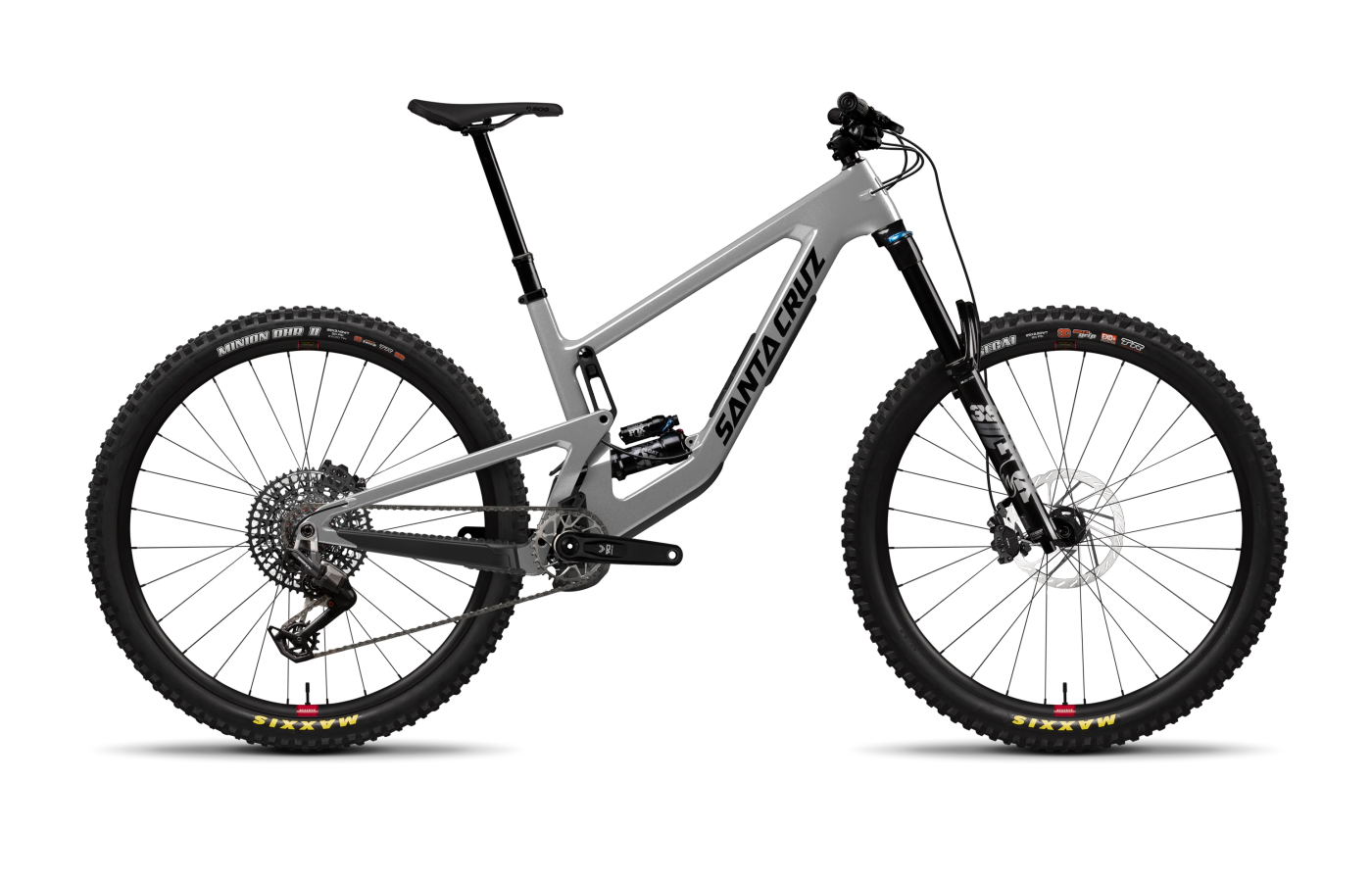
Megatower
The middle path — more agile than the Spire, more poppy than the Enduro, and Santa Cruz's lifetime bearing warranty takes the long-term sting out of all those linkage pivots.
Compare →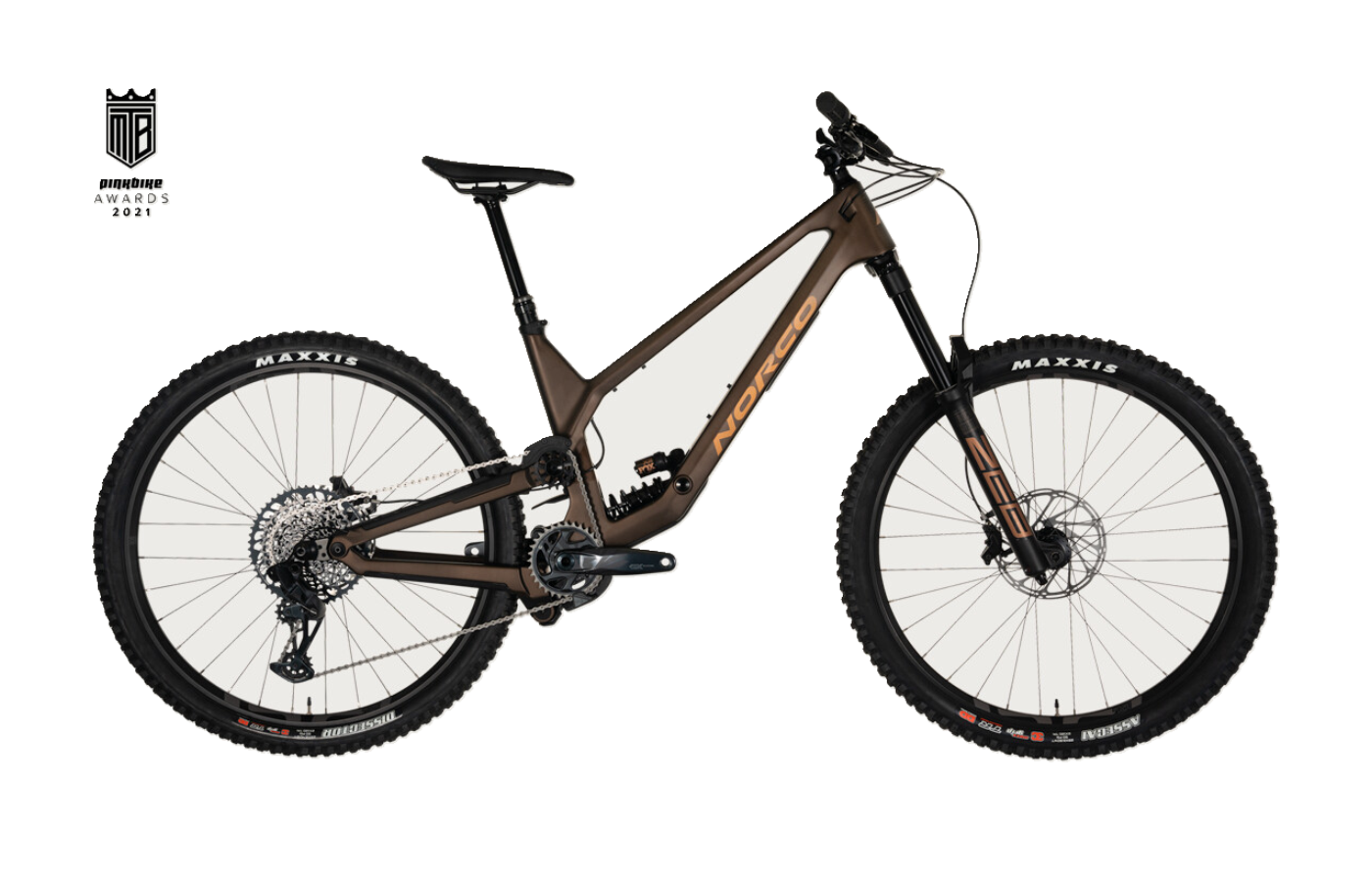
Range
If the Enduro's 'momentum carry' speaks to you and you want more of it, the Range's high-pivot layout is the next step — square edges essentially disappear, at the cost of some drivetrain drag and added complexity.
Compare →
Status 170
Specialized's budget-friendly alloy take on a 170 mm bike — a more playful, park-oriented personality at roughly half the Enduro's price, if you can live without the SWAT box and carbon chassis.
Compare →