Epic Evo
vsStumpjumper
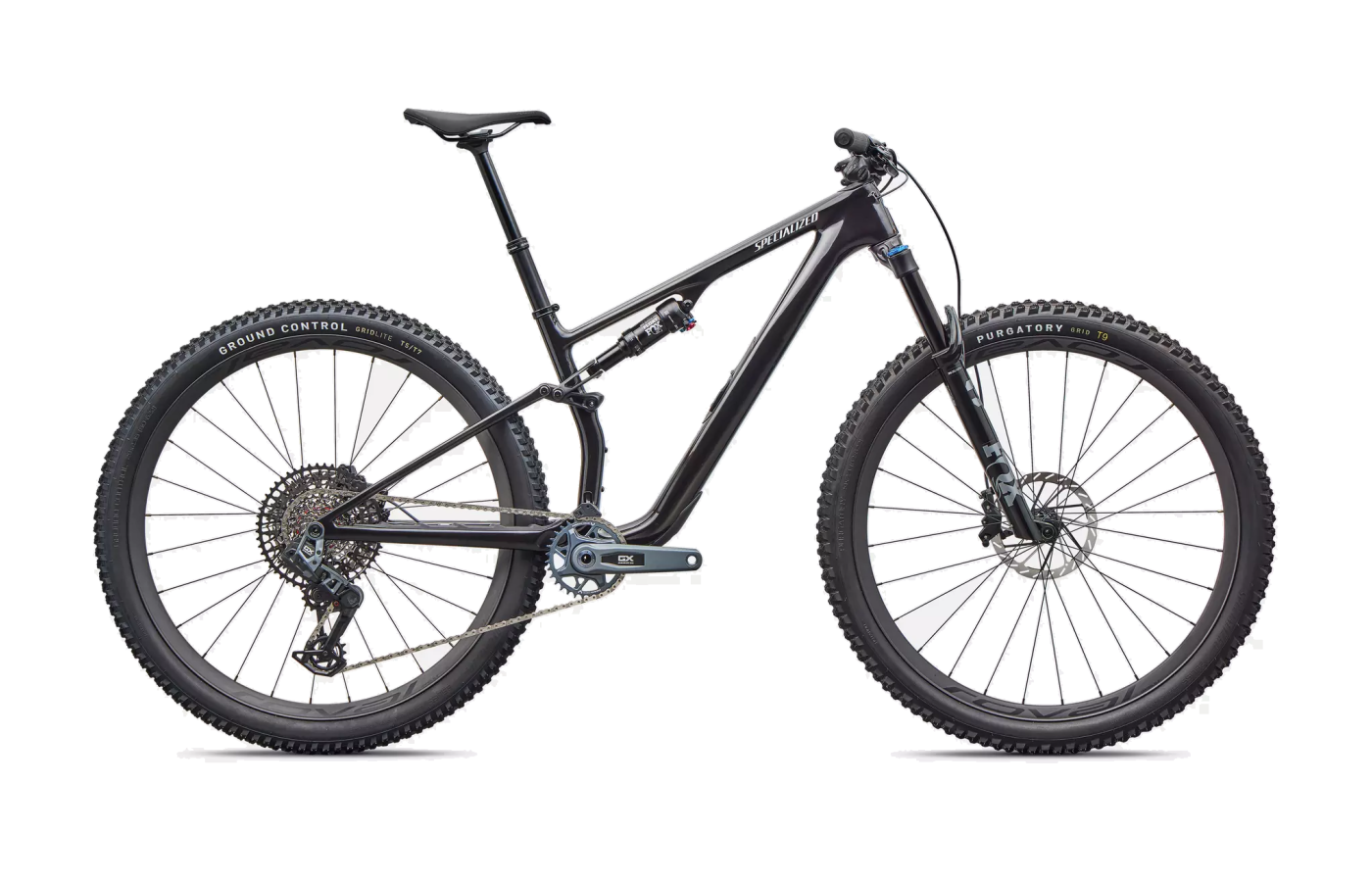
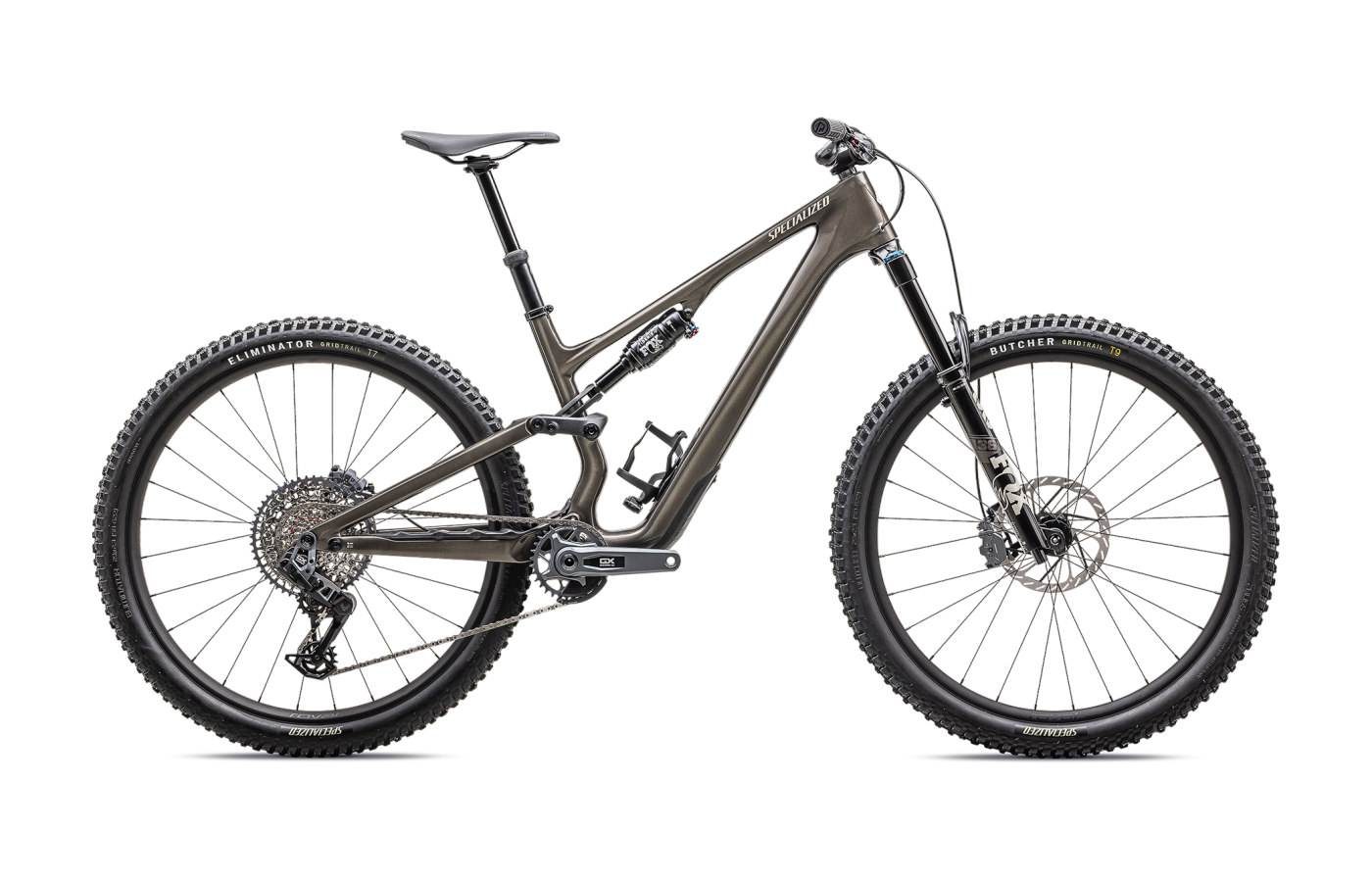
Two Specialized trail bikes, drawn from opposite ends of the travel spectrum.
The Epic Evo is an XC race frame bulked up for trail duty. The Stumpjumper 15 is an all-mountain chassis with a supple new shock that climbs better than it should.
Epic Evo
- Climbs like an XC bike — reviewers repeatedly call it a "rocket" and a "climbing machine," with a stiff, direct rear end that mainlines power to the wheel.
- Lighter by 2–3 kg — the mid-tier carbon Epic Evo Expert is 11.91 kg (26.3 lb); the equivalent Stumpjumper 15 Expert is 14.47 kg (31.9 lb).
- Cheaper entry — the Epic Evo Comp starts at $4,399 vs $2,999 for the alloy Stumpjumper, but the cheapest carbon Stumpy is $4,999.
- Regressive, firm off-the-top shock tune can feel harsh on chatter and hang up on square-edged roots.
- Less descent-capable — 120 mm rear travel plus lightweight carbon wheels limits how hard it can be pushed before the chassis feels "skittish."
Stumpjumper
- Genie rear shock — dual-chamber air spring is supple through the first 70% and progressive at the end; praised as "coil-like" with near-bottomless bottom-out control.
- Adjustable head angle — 63° / 64.5° / 65.5° via flip-chip headset cups, plus a flip-chip, plus optional mullet compatibility.
- Proper trail fork and brakes — 150 mm Fox 36 and SRAM Maven brakes on higher builds; reviewers consistently call it "stable at speed" and "ready for bike park."
- Carbon frames are wireless-only — no mechanical drivetrain routing, which locks you into SRAM AXS Transmission.
- Alloy builds are heavy (up to 16.9 kg / 37 lb), and stock alloy wheels on lower builds are flagged as "under-gunned" for the chassis.
Editor’s analysis
Same brand, same factory, same SWAT downtube — and two almost opposite answers to what is a one-bike quiver in 2025?
On paper these are both mid-travel carbon 29ers from Specialized. In practice they're built from different DNA. The Epic Evo is the World Cup XC frame with 10 extra millimeters of fork travel, a 130 mm Fox 34, and Code brakes — an XC racer that will survive a double-black. The Stumpjumper 15 is the merged 2020-era Stumpy and Stumpy Evo: one 145 mm chassis with a 150 mm Fox 36, adjustable head angle (63° / 64.5° / 65.5°), and the new dual-chamber Fox Genie shock.
Travel is the headline. The Epic Evo runs 130/120 mm front/rear; the Stumpjumper 15 runs 150/145 mm. That's 25 mm more rear squish and a 20 mm burlier fork — meaningful on anything rougher than a fire road. More important is how each bike uses its travel. Reviewers describe the Epic Evo's rear end as "regressive" and "proper harsh" off the top, with a firm pedaling platform you have to actively press into on technical climbs. The Stumpjumper's Genie shock is the opposite: coil-like through the first 70% of travel, then a hard ramp-up that, per Flow Mountain Bike, never gets to full travel even on "ugly hucks-to-flat."
Geometry follows the same story. At their fit-picked sizes for a 5'8" rider — Medium on the Epic Evo, S3 on the Stumpjumper — the Stumpjumper sits 26 mm taller in the stack (627 vs 601 mm), 0.9° slacker at the head tube (64.5° vs 65.4°), and 2° steeper at the seat (77° vs 75°). Reach is nearly identical (450 vs 445 mm); chainstays are both 435 mm; wheelbase is 30 mm longer on the Stumpjumper. It's the sharper front-end XC position versus a more centered, descent-ready trail stance.
Put another way: the Epic Evo is the bike you buy when you race XC and want one bike that will also do trail days. The Stumpjumper 15 is the bike you buy when you want one mountain bike, full stop — and you're willing to give up the last few watts of climbing efficiency to get a suspension platform that actually disappears underneath you.
Where the builds differ.
Comparing our editor's-pick builds side-by-side. Winners highlighted row-by-row — lower price and weight, and the better-spec component, each mark a point.
Build variants & pricing
The Epic Evo runs $4,399–$13,999 across seven builds; the Stumpjumper 15 runs $2,999–$11,999 across nine (four of them alloy). Both tier-match on GX AXS Transmission at $6,499 and $5,999 respectively — our pick.
Prices are current US MSRP. Both carbon frames are electronic-drivetrain only — if you want mechanical shifting on a Stumpjumper, you have to step down to the alloy chassis. The Epic Evo is carbon only.
How they fit, how they steer.
Compared at size M (Epic Evo) and S3 (Stumpjumper) — the fit-picked sizes for a 5'8" rider. The Stumpjumper sits 26 mm taller in the stack, 0.9° slacker at the head tube, and 2° steeper at the seat tube. Reach is within 5 mm; chainstays are identical at 435 mm.
Which size should I buy?
Size recommendations use stack, reach, and effective top tube. Specialized's S-Sizing on the Stumpjumper (S1–S6) intentionally overlaps with the Epic Evo's traditional XS–XL — pick by reach first, not label.
→These are starting points. Flexibility, riding style, and preferred position all shift the answer — if you’re between sizes, a professional fit beats a chart.
What the magazines said.
Published reviews from trusted cycling outlets. Click through for the full write-up.
Which one should you buy?
If you race or chase PRs and want one bike that can also handle double-blacks, get the Epic Evo. If you want one mountain bike that does everything from midweek laps to bike-park days, get the Stumpjumper 15.
Epic Evo
If your calendar has race numbers on it, you chase climbing PRs, and your idea of a "trail day" is pushing a light bike harder than it wants to go — the Epic Evo rewards a present, active rider with a frame that accelerates like an XC bike and survives terrain a pure XC bike wouldn't.
Stumpjumper
If you want a single trail bike that handles midweek tech climbs, weekend shuttle laps, and the occasional bike-park day — the Stumpjumper 15's adjustable geometry and Genie shock give up surprisingly little climbing efficiency while adding a huge amount of descending capability.
Questions buyers actually ask.
Short answers to the things we get emailed about most often.
01Which one climbs better?
The Epic Evo, clearly. It's 2.5 kg lighter in equivalent trim (11.91 kg vs 14.47 kg at the Expert tier), runs a firmer, more regressive shock tune, and sits in a more forward XC position. Reviewers from Mountain Bike Action call it a "rocket" that "lunges forward with every pedal stroke."
The Stumpjumper 15 is no slouch thanks to a 77° seat tube angle (vs 75° on the Epic Evo) and the Genie shock's strong anti-squat, but it carries more weight and more travel — on a long fire-road climb, the Epic Evo will open a gap.
02Which one descends better?
The Stumpjumper 15, by a clear margin. 150 mm up front vs 130 mm, 145 mm in the rear vs 120 mm, a 64.5° head tube angle vs 65.4°, a Fox 36 fork vs a Fox 34, and the Genie shock's progressive bottom-out control all add up to a bike that can be pushed into terrain the Epic Evo doesn't want to see.
The Epic Evo is survivable on double-black trails — reviewers confirm this — but it demands a locked-in, line-picking rider. The Stumpjumper eats bad line choices for breakfast.
03What's the actual travel on each bike?
Epic Evo: 130 mm front (Fox 34), 120 mm rear.
Stumpjumper 15: 150 mm front (Fox 36) and 145 mm rear on most builds. Size S1 gets a 140 mm fork; the coil-shock Alloy build and the S-Works LTD step up to a 160 mm Fox 38.
That's 20 mm more fork and 25 mm more rear travel on the Stumpjumper — a genuine category difference, not a marketing one.
04How adjustable is the geometry?
The Stumpjumper 15 is the more adjustable bike by a wide margin. Flip-chip headset cups give you a 63° / 64.5° / 65.5° head tube angle, there's a flip-chip in the rear linkage, and an aftermarket mullet link lets you run a 27.5" rear wheel on the 29/29 sizes (S3–S6).
The Epic Evo has a two-position flip-chip that shifts the head angle between 65.4° (Low) and 65.9° (High) and adjusts BB height. Less range, and the "low" setting is still steeper than the Stumpjumper's "high."
05What's the Genie shock, and is it reliable?
The Genie is a Fox-built air shock with a second, outer air chamber that's active through the first 70% of travel. Once a sliding "Genie band" closes off that outer chamber, the spring curve ramps up hard for the last 30% — supple initial stroke, coil-like mid-stroke, strong bottom-out.
Reliability reports so far are clean. Specialized says service uses mostly standard Fox Float internals plus one extra seal, so any Fox-authorized suspension shop can service it. The long-tail worry is parts availability in 5–10 years, which is a legitimate concern with any proprietary shock.
06Are both compatible with mechanical drivetrains?
No. Both carbon frames (all Epic Evo builds, the carbon Stumpjumper 15 builds) are wireless-only — the frames lack internal routing for a mechanical rear derailleur. If you want a mechanical Shimano or SRAM drivetrain, your only option in this matchup is a Stumpjumper 15 Alloy build, which retains cable routing.
07Which has more tire clearance?
The Stumpjumper 15 — it ships with 29x2.3" Butcher/Eliminator tires and reviewers regularly run 2.4–2.5" casings without trouble.
The Epic Evo clears roughly a 2.35" tire (measured ~59.7 mm in our data) and ships with a 2.4" Purgatory front / 2.35" Ground Control rear. Enough for most trail use, but you won't fit the burlier 2.5–2.6" tires that some Stumpjumper riders prefer for chunky terrain.
08Which one should I buy if I already own a hardtail or XC bike?
The Stumpjumper 15. The Epic Evo largely overlaps with a modern XC hardtail's mission — fast, efficient, aggressive geometry, willing to climb — just with 120 mm of rear travel added. If you already own a hardtail or a pure XC bike, doubling up doesn't make sense.
The Stumpjumper 15 gives you genuinely different capability: a bike that handles terrain your XC bike can't, and covers bike-park days, rowdy weekend rides, and trail tech that overwhelms a short-travel chassis.
Similar bikes
If your priorities don’t map cleanly onto either of these, one of these adjacent bikes probably fits better.
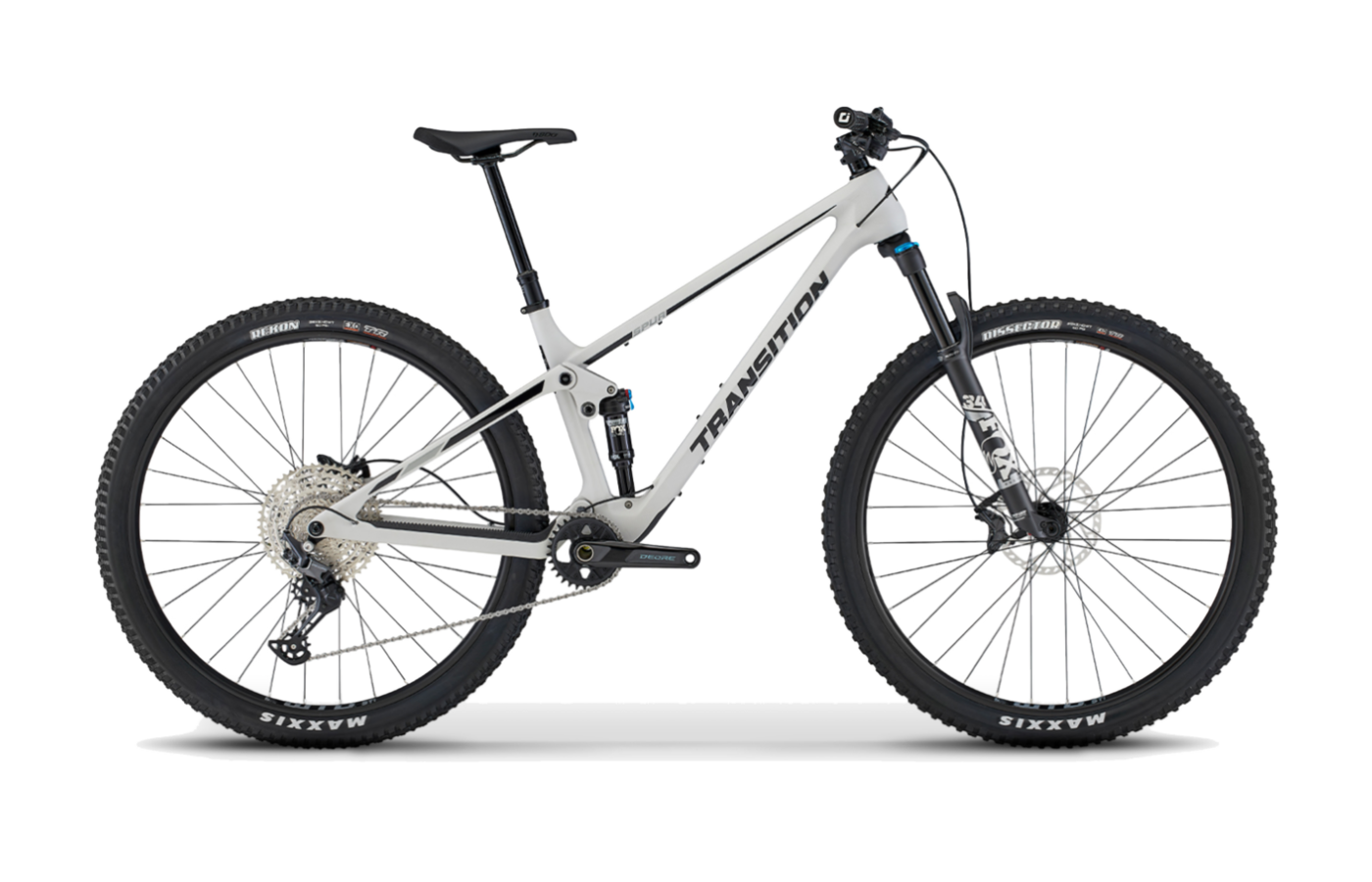
Spur
The Epic Evo's closest rival — similar weight and travel, but with a more intuitive, less regressive suspension platform. Worth a demo if the Epic's firm-off-the-top character has ever bothered you.
Compare →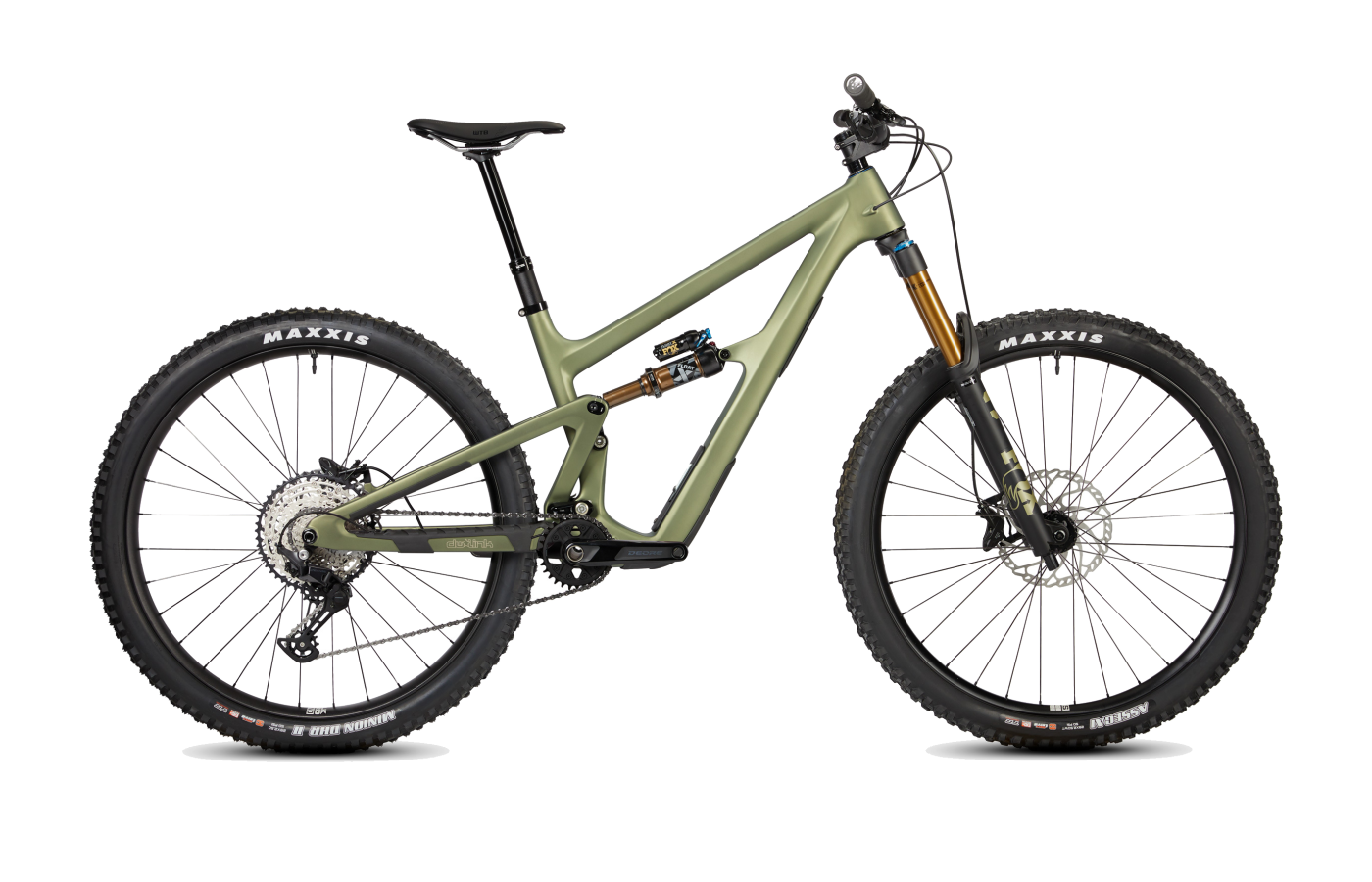
Ripmo
Ibis's long-travel DW-link trail bike — the benchmark for efficient climbing with 145+ mm of travel. No SWAT storage and no mullet flexibility, but the pedaling platform is a cleaner, simpler story than the Genie shock.
Compare →
Fuel EX
Trek's do-it-all trail bike — highly adjustable like the Stumpjumper, with an IsoStrut rear end and, critically, mechanical drivetrain compatibility on the carbon frame. The choice if you don't want to be locked into wireless.
Compare →