Epic Evo
vsTop Fuel
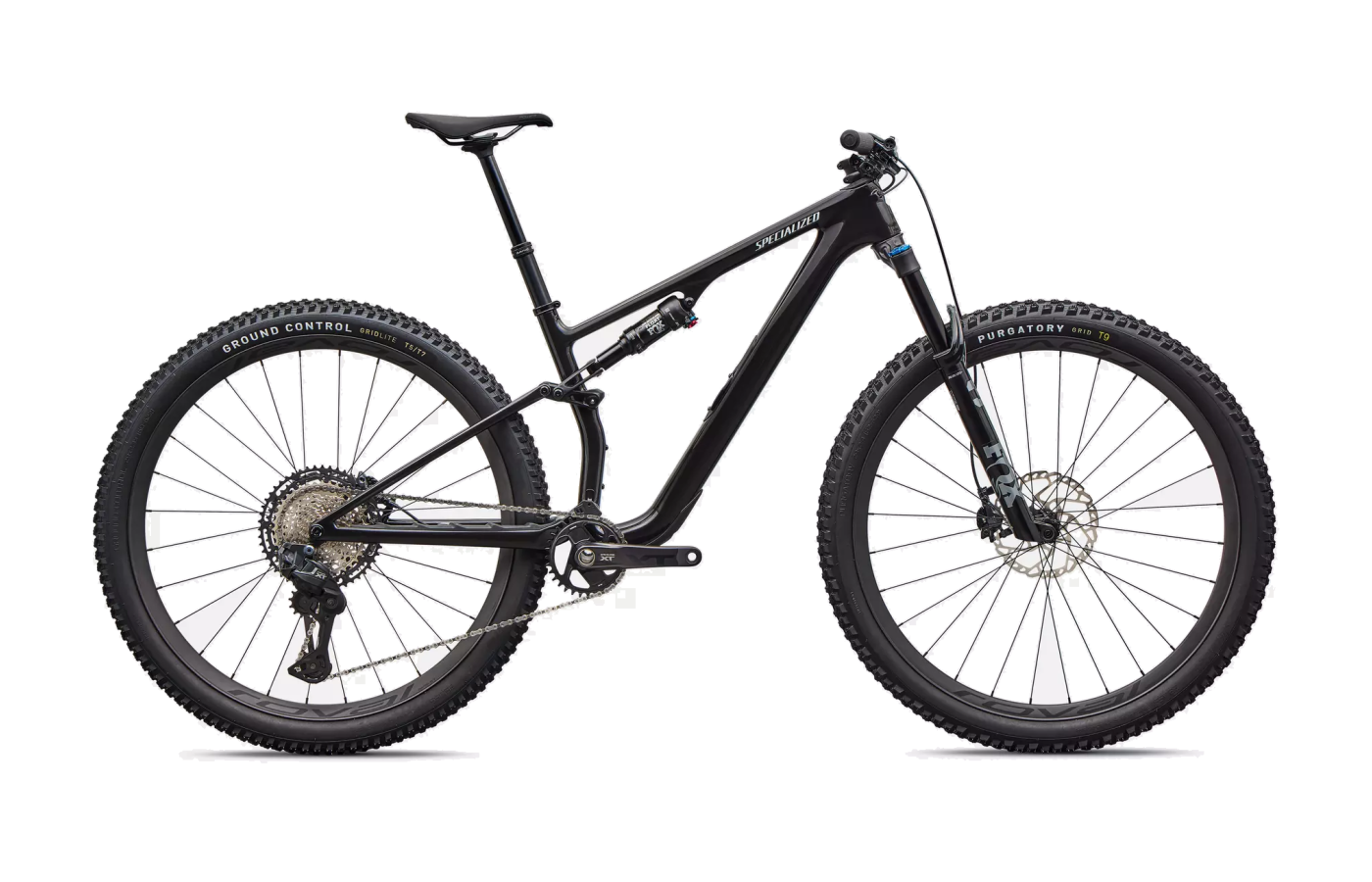
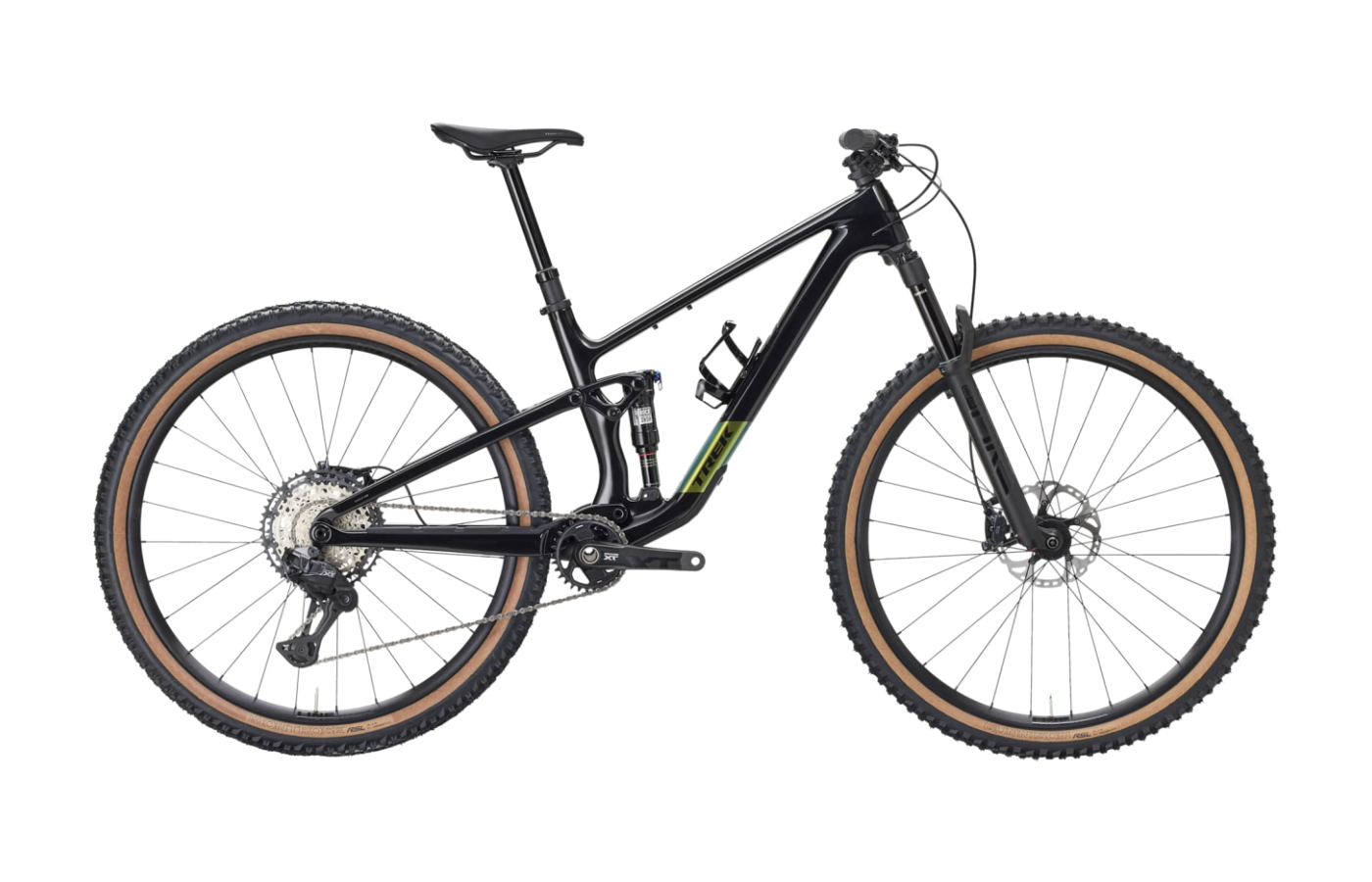
Two short-travel bikes chasing the same lap — in opposite directions.
The Epic Evo is an XC racer that grew a 130 mm fork. The Top Fuel is a trail bike that went on a diet — and picked up a 4-way Mino Link on the way out.
Epic Evo
- Lighter at equivalent spec — the XT Di2 Expert hits 11.85 kg vs. 14.00 kg for Trek's equivalent XT Di2 build, a ~2.2 kg gap that shows up on every climb.
- Sharper pedaling feel — the digressive shock tune and flex-stay rear deliver a firm, direct platform that mainlines wattage to the rear wheel.
- Gravity-grade stoppers stock — 4-piston SRAM Code / Motive brakes across the EVO range, unusual at this travel bracket.
- Firm shock tune can feel harsh on chattery terrain — reviewers repeatedly called it "hardtail-like" on roots and fire-road corrugations.
- Stock 150 mm dropper on size Medium is short by modern trail standards; many riders will swap it.
Top Fuel
- Shape-shifting geometry — the 4-position Mino Link adjusts head angle AND suspension progression independently, so one frame covers XC race to 140 mm trail.
- More compliant, quieter chassis — Trek deliberately softened the frame for Gen 4; the ABP rear stays active under braking where flex-stay bikes deflect.
- Wider tire clearance — 63.5 mm vs. the Epic Evo's 59.7 mm, enough for a true 2.5" front tire without drama.
- Heavier by a noticeable margin at every tier — 2+ kg over the equivalent Epic Evo at the XT Di2 build.
- Stock SRAM Level Bronze brakes on mid-tier builds are widely panned as underpowered for the chassis's descending capability.
Editor’s analysis
Both bikes claim the 120 mm rear / 130 mm front "downcountry" middle — but one is a surgical instrument, and the other is a Swiss Army knife.
On paper, the two are almost identical: 120 mm rear, 130 mm front, 29" wheels, carbon main triangle, UDH dropouts, and downtube storage. Both ride on 435 mm chainstays in size M and a ~65-degree head angle. But ride them back-to-back and the philosophies diverge immediately — and they diverge in the frame, not the spec sheet.
The Epic Evo is an Epic 8 race frame with a 130 mm fork bolted to it. Specialized uses a pivotless carbon flex-stay rear — no bearing at the seatstay, just engineered vertical flex — and a digressive "Ride Dynamics" shock tune that stays firm off the top, then blows off on bigger hits. The result, per Blister and Singletracks: "every ounce of your effort through the pedals is mainlined to the rear wheel," but the ride is "purposeful," "high-strung," sometimes "harsh" on chatter. It rewards locked-in, active riders — and punishes lazy ones.
The Top Fuel is built from the other direction. Trek took a full four-bar ABP linkage, deliberately reduced frame stiffness for better compliance (Flow and Bicycling both flagged this as intentional), and added a 4-position Mino Link that lets you swap between 14% and 19% progression, plus high/low geo. Stock it's a 120/130 mm downcountry rig; remove a shock spacer and swap a fork and you've got a 130/140 mm trail bike on the same frame. NSMB called it a "quiet overachiever" — the whole point is that it doesn't have a single sharp personality.
Put another way: the Epic Evo is the bike you buy when you know your local trails and you want to go faster on them. The Top Fuel is the bike you buy when you want one frame to adapt to three different riding moods over three years of ownership.
Where the builds differ.
Comparing our editor's-pick builds side-by-side. Winners highlighted row-by-row — lower price and weight, and the better-spec component, each mark a point.
Build variants & pricing
Both ladders span roughly $4,200–$10,500 at the carbon tier, with flagship S-Works and RSL halos above that. The Epic Evo goes one build higher at $13,999; Trek caps at $10,499.
Prices are current US MSRP. We picked the XT Di2 builds on each side — $6,799 a piece, same drivetrain, same brake tier — so the spec table below compares the platforms, not the groupsets bolted to them.
How they fit, how they steer.
Both at size M — the fit-picked size for a 5'8" rider. The Top Fuel runs 7 mm longer in reach (452 vs. 445), 2 mm lower in stack, and a notably steeper 77.3° seat tube angle vs. the Epic Evo's 75°. Chainstays match at 435 mm.
Which size should I buy?
Size recommendations based on stack, reach, and effective top tube. The Trek offers an ML that splits the M/L gap — useful if you're between sizes on a traditional 4-size lineup.
→These are starting points. Flexibility, riding style, and preferred position all shift the answer — if you’re between sizes, a professional fit beats a chart.
What the magazines said.
Published reviews from trusted cycling outlets. Click through for the full write-up.
Which one should you buy?
If you want a sharper, lighter tool that rewards active riding, get the Epic Evo. If you want one frame that can be three different bikes over its lifetime, get the Top Fuel.
Epic Evo
If most of your riding is climbing PRs and fast, flowy singletrack, and you prefer a bike that rewards clean line choice over one that forgives lazy ones, the Epic Evo is the sharper tool. Lighter, more direct, and tuned to mainline your fitness into speed.
Top Fuel
If you want one bike that races a 50-mile marathon one weekend and runs a 140 mm fork with mullet wheels the next, the Top Fuel is the chameleon. Heavier than the Specialized, yes — but quieter, more composed, and adjustable in ways the Epic Evo simply isn't.
Questions buyers actually ask.
Short answers to the things we get emailed about most often.
01Which is lighter?
The Epic Evo, meaningfully. In matched XT Di2 trim at $6,799, the 8 EVO Expert hits 11.85 kg (26.1 lb) vs. 14.00 kg (30.9 lb) for the Trek 9.8 XT Di2 — a ~2.15 kg / 4.7 lb gap.
The flagship builds close the gap a little but not much: the S-Works 8 EVO is 11.17 kg, the Top Fuel RSL is 11.98 kg. The Specialized wins on weight at every tier because the flex-stay rear and 12m/11m carbon layup save grams that Trek's four-bar linkage spends on compliance and adjustability.
02Which climbs better?
Depends on what kind of climbing. On smooth fire-road grinds, the Epic Evo — it's lighter, and the digressive shock tune stays firm off the top so virtually none of your wattage goes into pedal bob.
On technical, rooty climbs, reviewers split. Singletracks said the Epic Evo's rear tire can "hang up on roots" in open mode unless you actively "press into the shock" to actuate travel. The Top Fuel's more active ABP rear claws for traction where the Specialized skips. Heavier riders who prefer a planted, seated climbing position often prefer the Trek; light riders who pump the bike up a climb prefer the Epic Evo.
03Which is more capable on descents?
At stock travel (120 mm rear / 130 mm front) they're closer than you'd expect, but the Top Fuel has a higher ceiling.
The Epic Evo's 65.4° head angle (low) and slack geometry make it surprisingly composed, but its stiff, lightweight frame and thin-casing tires mean it demands an "active, locked-in" pilot on chunky trails. The Top Fuel's ABP keeps the suspension active under braking, and the frame can be boosted to 130 mm rear / 140 mm front by swapping a shock spacer and fork — at which point reviewers at MBR and Pinkbike say it genuinely competes with short-travel enduro bikes. You can't do that with the Epic Evo without re-buying the whole bike.
04How much tire can each fit?
Epic Evo: 59.7 mm clearance — comfortable with the stock 2.4" Purgatory / 2.35" Ground Control combo, tight with anything larger.
Top Fuel: 63.5 mm clearance — will swallow a true 2.5" front tire with room for mud. Trek also lists the frame as mullet-compatible (27.5" rear), which the Epic Evo is not.
05How different is the geometry at size M?
Epic Evo M: 445 mm reach, 601 mm stack, 65.4° HTA (low), 75° STA, 435 mm chainstays, 1183 mm wheelbase.
Top Fuel M (low): 452 mm reach, 599 mm stack, 65.9° HTA, 77.3° STA, 435 mm chainstays, 1185 mm wheelbase.
The headline differences: the Top Fuel is 7 mm longer in reach and 2.3° steeper at the seat tube — noticeably more roomy standing and more upright seated. Chainstays and wheelbase match almost exactly. If you're on the fence between sizes, the Top Fuel's longer reach at M might save you from sizing up.
06Is the Trek's 4-position Mino Link actually useful?
Yes, more than a typical flip-chip. Standard Mino Links only swing geometry; Trek's version toggles geometry AND suspension progression independently, giving four permutations: high/linear, high/progressive, low/linear, low/progressive.
BikeRadar and Flow both called the low/progressive setting the trail-riding sweet spot (14%→19% progression, 65.5° HTA); the high/linear setting is the XC race setup (66° HTA, firmer feel). Reviewers actually used it across long test periods — it's not a gimmick. The Epic Evo has a simpler flip-chip that only toggles HTA (65.4° / 65.9°) and BB height.
07Can I race XC on either of these?
The Epic Evo is closer to a race bike out of the box — it shares the Epic 8 race frame with a longer fork, and at the S-Works build (11.17 kg) it's within shouting distance of the dedicated Epic.
The Top Fuel is a tougher race choice in stock trim (14 kg at the XT Di2 tier is heavy for a start line), but in Trek's "XC mode" — 120 mm fork, lighter wheels, high/linear Mino Link — Flow measured it at 11.2–11.8 kg, and Trek Factory Race has run a similar setup at World Cups. Neither replaces a pure Supercaliber/Epic World Cup if podiums are the goal.
08What about warranty and long-term ownership?
Both platforms come with a lifetime frame warranty to the original owner. Specialized backs it with a 25-year commitment that reviewers specifically flagged as a value-add.
Both frames use UDH dropouts (standard derailleur-hanger, easy to source), threaded BBs (no press-fit creaks), and internal downtube storage. Trek's pivot bolts are etched with torque specs — a nice touch. Specialized's flex-stay rear eliminates a set of pivot bearings entirely, which is one fewer service item. Flow flagged the Top Fuel's paint as chip-prone and noted a missing drainage hole below the shock mount; no equivalent complaints came up for the Epic 8 frame.
Similar bikes
If your priorities don’t map cleanly onto either of these, one of these adjacent bikes probably fits better.
Spur
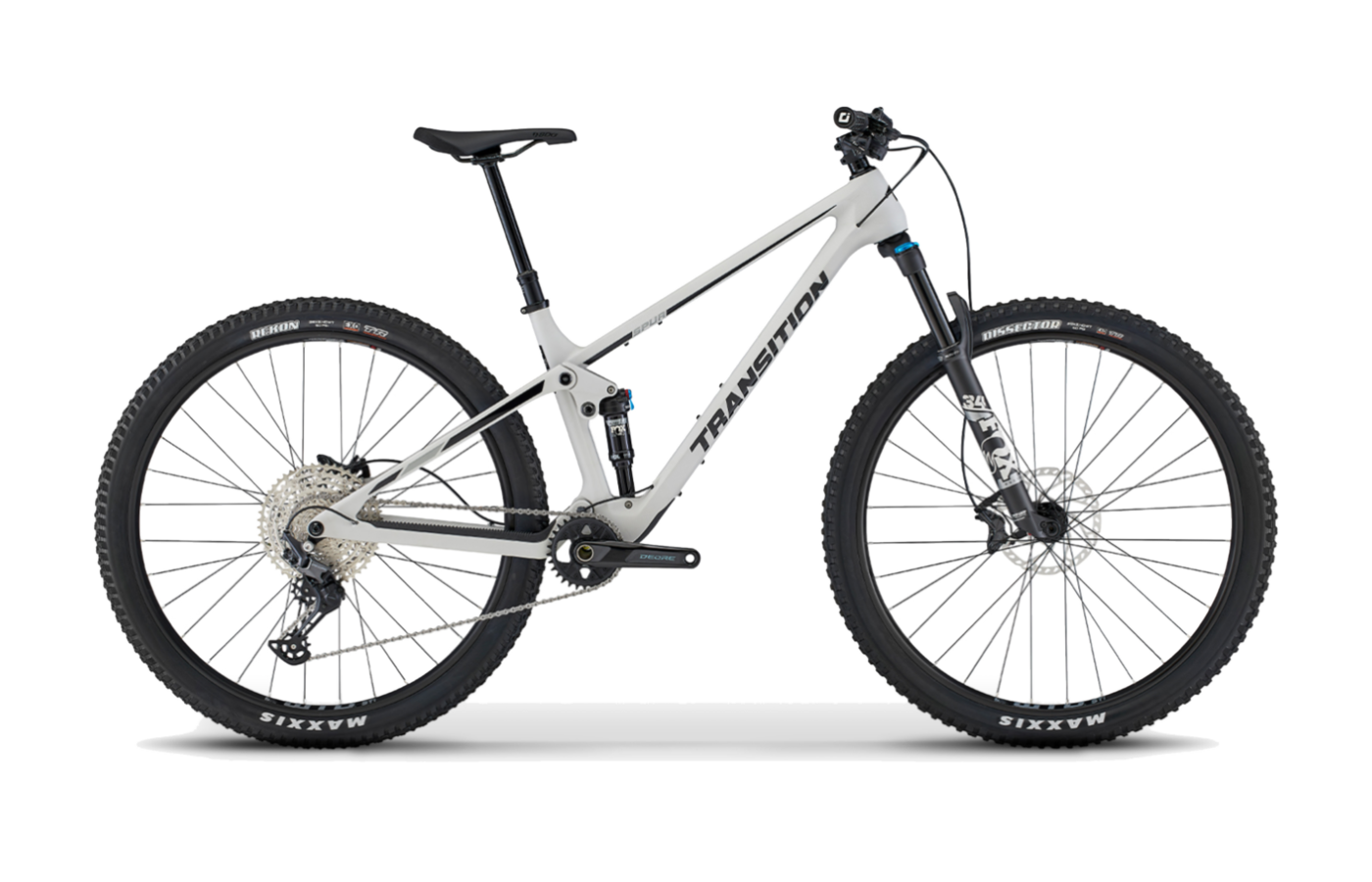
The category benchmark. Similar 120 mm platform, lighter than either of these, with a pop-and-flick personality that's more playful than the Trek's composed feel and more forgiving than the Specialized's race edge.
Compare →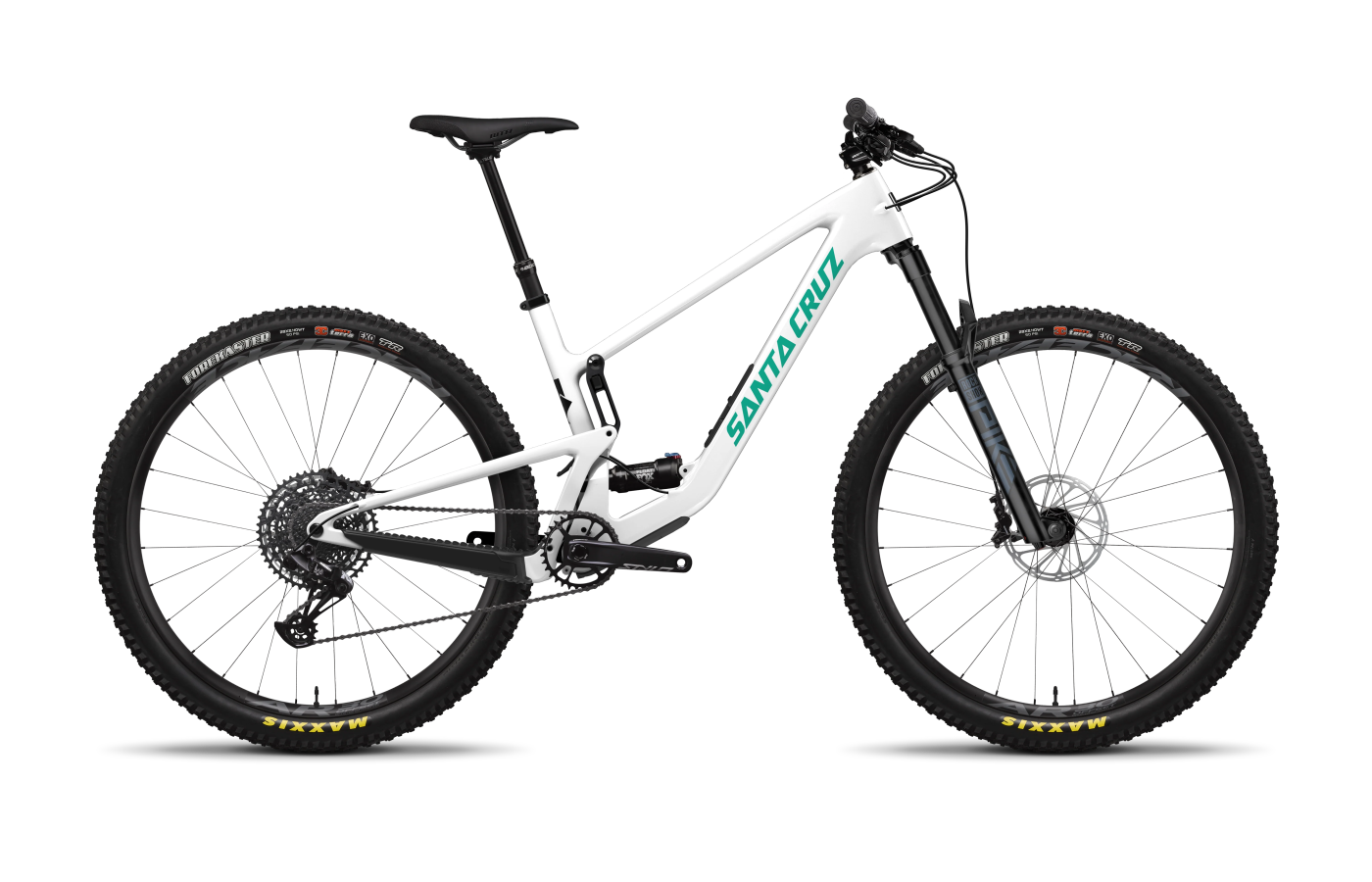
Tallboy
If the Top Fuel feels too XC and the Epic Evo too demanding, the Tallboy's VPP rear is deeper and plusher on descents — at the cost of some climbing crispness.
Compare →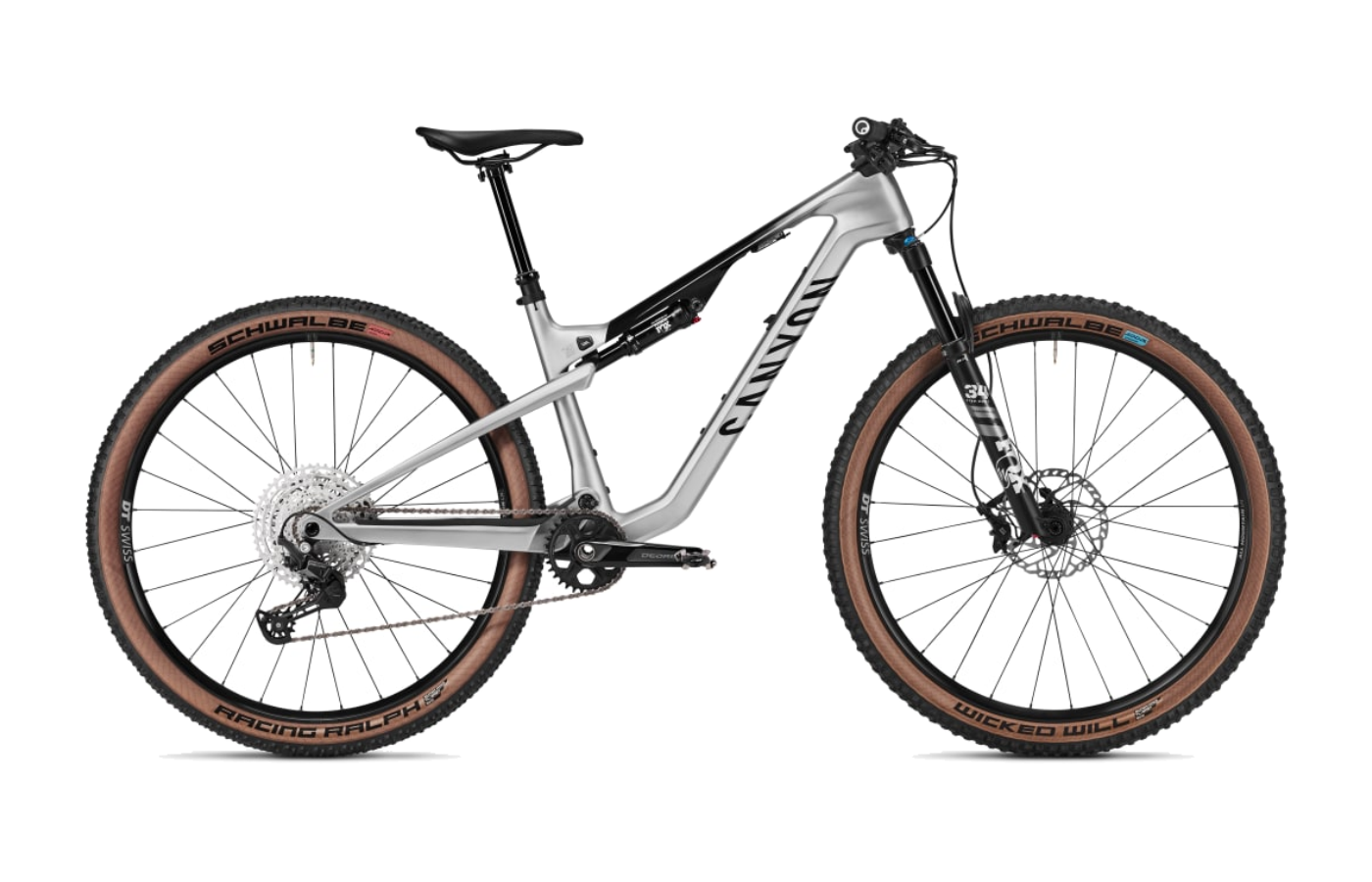
Lux Trail
Direct-to-consumer pricing gets you Epic Evo-style efficiency for less money. Closer to pure marathon racer than either of these — lighter, less descent-capable, no local dealer.
Compare →