Specialized Epic HardtailvsRockhopper
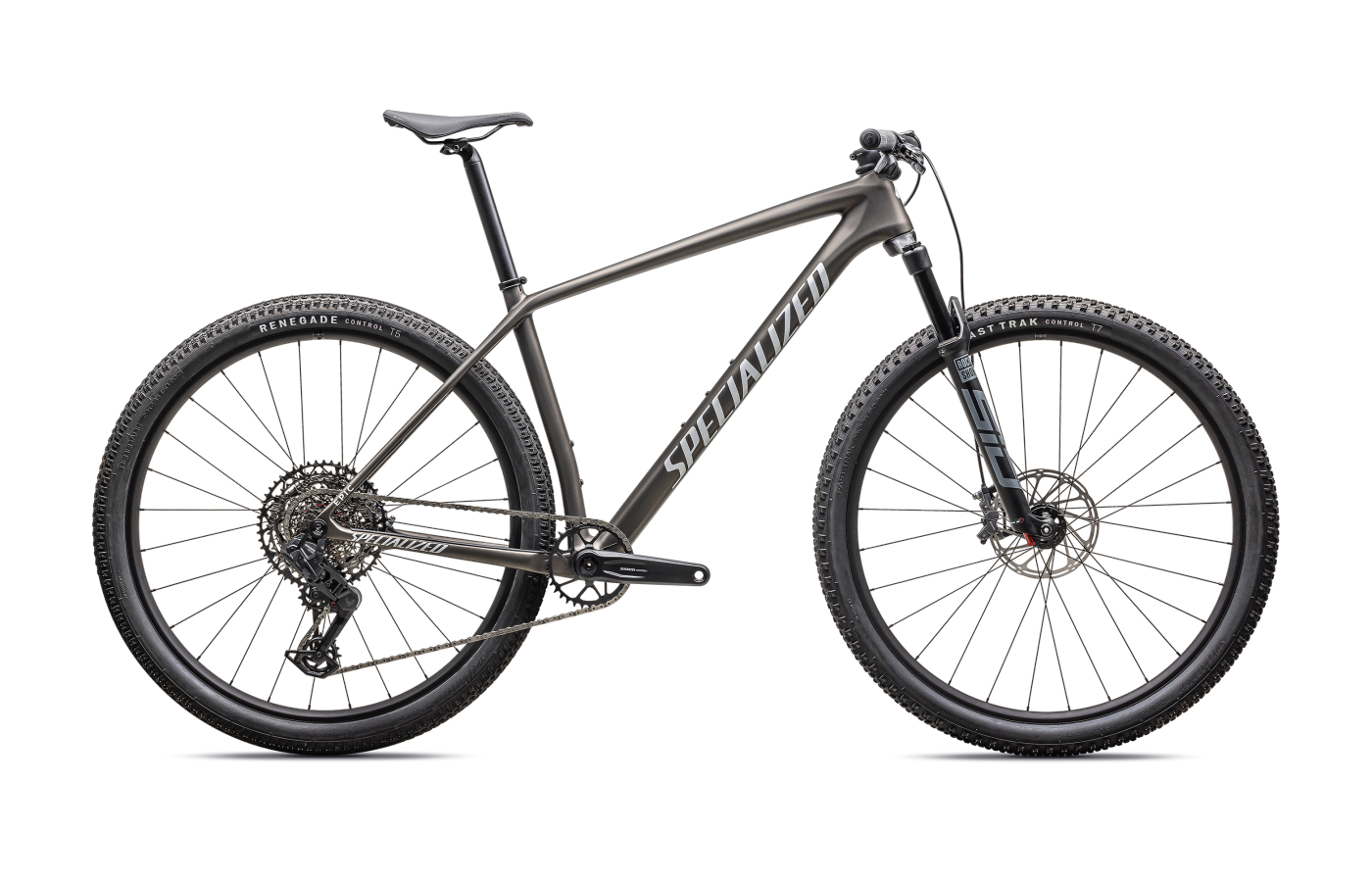
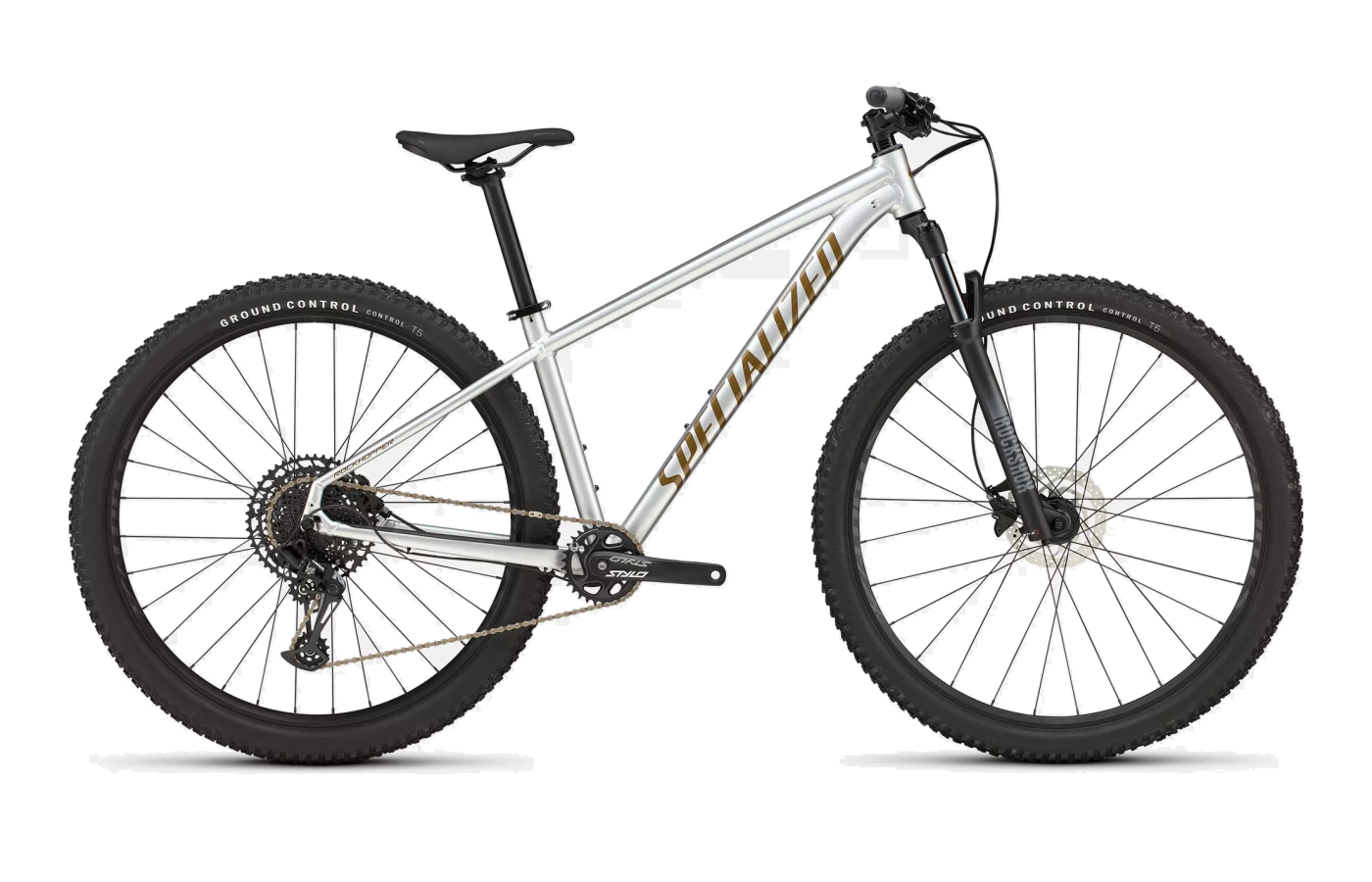
One reviewer describes the Specialized Epic Hardtail as a bike that "sprints like a scorched feline," a vivid nod to the obsessive weight-shaving that defines this racing platform. It occupies a different universe of performance than the Rockhopper, which serves as a sturdy, accessible entry point for those just testing the dirt. This comparison looks at whether the legendary Rockhopper name holds its own against a dedicated World Cup racing machine.

Overview
The Epic Hardtail is a surgical tool for the tape-lined world of cross-country racing, where every gram is treated like a personal insult. Its frame is a high-tech carbon shell—weighing as little as 760g in its S-Works guise—built for riders who measure success in minutes saved on climbs. Specialized moved away from the punishing, rigid feel of old-school racers by thinning the stays and arcing the seat tube, making the chassis surprisingly tolerable for long, high-intensity sessions. In contrast, the Rockhopper serves the masses with a dependable A1 aluminum frame that stays consistent across the entire range, from the budget-conscious Sport to the Expert. It is the bike that gets people into the woods, offering enough capability to handle blue trails without requiring a bank loan. The Rockhopper acts as a versatile mile-muncher for local loops and light trail duty, whereas the Epic is a focused weapon specifically engineered for the starting grid. While the Epic is a "frame-first" investment that riders typically upgrade over time, the Rockhopper is usually bought to be ridden stock. The Rockhopper’s massive size range, from XXS to XXL, ensures a fit for almost anyone, but it lacks the sophisticated carbon engineering and modern axle standards that make the Epic a world-class performer. The choice here isn't just about price, but about whether you need a specialized racing instrument or a durable all-rounder.
Ride and handling
Climbing on the Epic Hardtail is an exercise in immediate gratification. There is zero delay in forward propulsion, and the bike feels "road bike light" even on steep fire roads. The 68.5-degree head angle and reduced fork offset keep the front wheel from wandering, giving it a stable feel that belies its record-breaking low weight. On technical descents, the Epic surprises with its composure, though without a dropper post, the high saddle still makes steep rock rolls feel more precarious than they should. Handling on the Rockhopper is characterized by a whippy and agile nature on mellow trails, sharing that same 68.5-degree head angle with its more expensive sibling. However, as speeds climb, it can become nervous and twitchy. The short reach and 740mm bars make the front end feel frantic on rougher terrain, requiring constant micro-corrections from the rider. While the Epic’s Brain suspension keeps it firm for sprints, the Rockhopper’s entry-level forks—especially the coil units on the Sport and Comp—can feel like a pogo stick, bucking the rider after hitting significant obstacles. Comfort tells two different stories across these frames. The Epic uses its complex carbon layup to mute high-frequency vibrations, whereas the Rockhopper’s stiff aluminum frame feels harsh and chattery when the terrain becomes chunky. Both use the comfortable Bridge saddle, but the Epic's engineered flex makes it the superior choice for staying fresh during a multi-hour race. The Rockhopper Expert’s air-sprung RockShox Judy is a massive step up from the lower-tier coil forks, but it still struggles to maintain control over repeated large hits compared to the more refined dampers found on the Epic. Technical performance is further separated by the axle standards. The Rockhopper’s quick-release axles introduce noticeable flex under heavy cornering loads. The Epic uses thru-axles and a stiff Boost rear end, allowing it to carve through berms with a level of precision the Rockhopper cannot match. This makes the Epic feel resolute through choppy rock and root gardens where the Rockhopper might start to feel unglued.
Specifications
The single biggest technical hurdle for the Rockhopper is the straight 1-1/8" head tube and quick-release axles. These dated standards effectively kill the upgrade path; you will not easily find a modern, high-performance fork or a Boost-standard wheelset that fits this frame. The Epic, meanwhile, uses a threaded bottom bracket and 12x148mm Boost spacing, creating a future-proof platform for years of component swaps. If you buy a Rockhopper, you are largely married to its stock configuration. Looking at the build kits, the Rockhopper Elite and Expert offer impressive value with Shimano MT200 brakes, which reviewers called "best-in-class" for reliability and feel. The shift to 1x drivetrains—like the Shimano Deore 1x11 or SRAM SX Eagle 1x12—gives the higher Rockhopper builds a modern feel that avoids the clunky jumps of the 2x systems found on the base models. These wide-range cassettes ensure that even the heavier aluminum frame rarely leaves you struggling on steep ascents. The Epic's value is more focused on the chassis itself. Even the entry-level Epic Hardtail includes a sub-1kg frame that outclasses almost anything in its price bracket, even if the kit brings up the rear with heavier SRAM NX or SX parts. Higher builds like the S-Works feature no-holds-barred specs including wireless AXS shifting and power meters. For the Rockhopper, the Expert build is the clear winner, featuring tubeless-ready wheels and an air fork, features that are rare at its price point and significantly improve the off-road experience.
| Hardtail | Rockhopper | |
|---|---|---|
| FRAMESET | ||
| Frame | Specialized FACT 11m, Progressive XC Geometry, Rider-First Engineered™, threaded BB, UDH, 12x148mm rear spacing, internal cable routing | Specialized A1 Premium Butted Alloy, zero-stack head tube, internal cable routing, 135x9mm forged dropouts, chainstay-mounted disc brake, replaceable alloy derailleur hanger, stealth rack mounts, dropper post compatible |
| Fork | Rockshox SID SL, Rush RL Damper, Debon Air, 15x110mm, 44mm offset, S-XL: 110mm Travel, XS: 90mm Travel | SR Suntour XCM 27.5/29, 30mm stanchions, Rx Tune, coil spring, QR, 80/90/100mm travel (size-specific), 42mm offset |
| Rear shock | — | |
| GROUPSET | ||
| Shift levers | Sram AXS POD Controller | Shimano Altus, RapidFire Plus, 9-speed |
| Front derailleur | Shimano Altus FD-M2020, 2-speed | |
| Rear derailleur | SRAM S-1000 Eagle Transmission | Shimano Altus RD-M2000, 9-speed, Shadow Design |
| Cassette | SRAM XS 1270 Transmission, 10-52t | SunRace, 9-speed, 11-36T |
| Chain | SRAM GX Transmission | KMC X9EPT, 9-speed, anti-corrosion coating w/ reusable Missing Link |
| Crankset | SRAM S1000 Eagle, DUB, 165/170/175mm, 34T | Stout 2x, forged alloy |
| Bottom bracket | SRAM DUB Threaded Wide | Square-tapered, 73mm, internal bearings, 122.5mm spindle |
| Front brake | SRAM Level Bronze 2-piston, Stealth | Shimano BR-MT200 hydraulic disc |
| Rear brake | SRAM Level Bronze 2-piston, Stealth | Shimano BR-MT200 hydraulic disc |
| WHEELSET | ||
| Front wheel | Specialized 29, 27mm inner width, 28h, tubeless ready; Specialized alloy, sealed cartridge bearings, 6-bolt, 15x110mm thru-axle, 28h; DT Swiss Industry | Specialized alloy, disc only, double-wall, 25mm inner width, 32h; Formula 6-bolt disc, 100x9mm, quick-release, 32h; Stainless, 14g |
| Rear wheel | Specialized 29, 27mm inner width, 28h, tubeless ready; Specialized alloy, sealed cartridge bearings, 6-bolt, 12x148mm thru-axle, 28h; DT Swiss Industry | Specialized alloy, disc only, double-wall, 25mm inner width, 32h; Formula SP-2125, 6-bolt freehub disc, 135x9mm, quick-release; Stainless, 14g |
| Front tire | Specialized Fast Trak, Control Casing, T7 Compound, 29x2.35 | Fast Trak Sport |
| Rear tire | Specialized Renegade, Control Casing, T5 Compound, 29x2.35 | Fast Trak Sport |
| COCKPIT | ||
| Stem | Specialized, 3D-forged alloy, 4-bolt, 7-degree rise | Stout 3D-forged alloy, 31.8mm, 6-degree rise |
| Handlebars | Specialized Alloy Minirise, 10mm rise, 750mm, 31.8mm clamp | Alloy Mini Rise, 9-degree backsweep, 15mm rise, 31.8mm |
| Saddle | Body Geometry Power Sport, steel rails | Bridge Sport, steel rails, 155/143mm |
| Seatpost | Specialized Alloy, Single Bolt, 30.9mm | Alloy, 2-bolt clamp, 30.9mm |
| Grips/Tape | Specialized Trail Grips | Specialized Trail Grips, lock-on |
Geometry and fit comparison
Both bikes adopt a 68.5-degree head angle, which is fairly radical for cross-country and helps both machines feel calm on technical descents. However, the fit differs significantly. The Epic Hardtail is longer and lower, with reach figures that grew 12-14mm over the previous generation to provide a more centered, aggressive stance. For a size Large, the Epic stretches out to a 455mm reach, compared to the Rockhopper’s 445mm. That 10mm difference, paired with the Epic's lower stack height, puts the rider in a more powerful, aerodynamic position. The Rockhopper’s geometry aims for an upright, comfortable ride suited for beginners. Its seat tube angle is surprisingly steep—measured at 74.5 degrees on some models—which is a massive advantage on steep climbs. The Epic matches this with a 74-degree seat angle, ensuring both bikes excel at uphill grinds. Because the Rockhopper uses shorter reach numbers, it feels smaller than the Epic when standing on the pedals, making it easier to maneuver at low speeds but less stable when the trail opens up. Specialized uses Rider-First tuning on the Epic to ensure the carbon layup feels the same for an XS rider as it does for an XXL rider. The Rockhopper attempts something similar with its RxTune suspension, which varies fork travel from 80mm to 100mm based on the frame size. However, the Rockhopper's stem lengths increase as the frame size grows, which can make the steering feel sluggish for taller riders. The Epic keeps stems short (60-75mm) across the board to maintain a sharp, nippy edge in tight singletrack.
| FIT GEO | Hardtail | Rockhopper | |
|---|---|---|---|
| Stack | — | 616 | — |
| Reach | — | 425 | — |
| Top tube | — | 608 | — |
| Headtube length | — | 95 | — |
| Standover height | — | 695 | — |
| Seat tube length | — | 400 | — |
| HANDLING | Hardtail | Rockhopper | |
|---|---|---|---|
| Headtube angle | — | 68.5 | — |
| Seat tube angle | — | 73.5 | — |
| BB height | — | 310 | — |
| BB drop | — | 62 | — |
| Trail | — | 97 | — |
| Offset | — | 42 | — |
| Front center | — | 696 | — |
| Wheelbase | — | 1128 | — |
| Chainstay length | — | 440 | — |
Who each one is for
Specialized Epic Hardtail
The Epic is for the racer who obsesses over Strava segments and weekend podiums. If your ideal Sunday involves 3,000 feet of climbing and tight, technical singletrack where you want every watt to count, this is the chassis you should own. It serves the rider who values a world-class carbon frame enough to tolerate entry-level components in the short term, knowing they will eventually upgrade to a high-end SID fork and carbon wheels.
Specialized Rockhopper
The Rockhopper is for a beginner mountain biker who is curious about the sport and wants to try it out without needing a bank loan. It is perfect for exploring green and blue trail center loops or taking on light bike-packing duties. If you want a bike that looks expensive and stops reliably but don't plan on racing World Cup courses or spending thousands on aftermarket parts, the Rockhopper Expert is the right call.