Specialized Epic HardtailvsTrek Procaliber
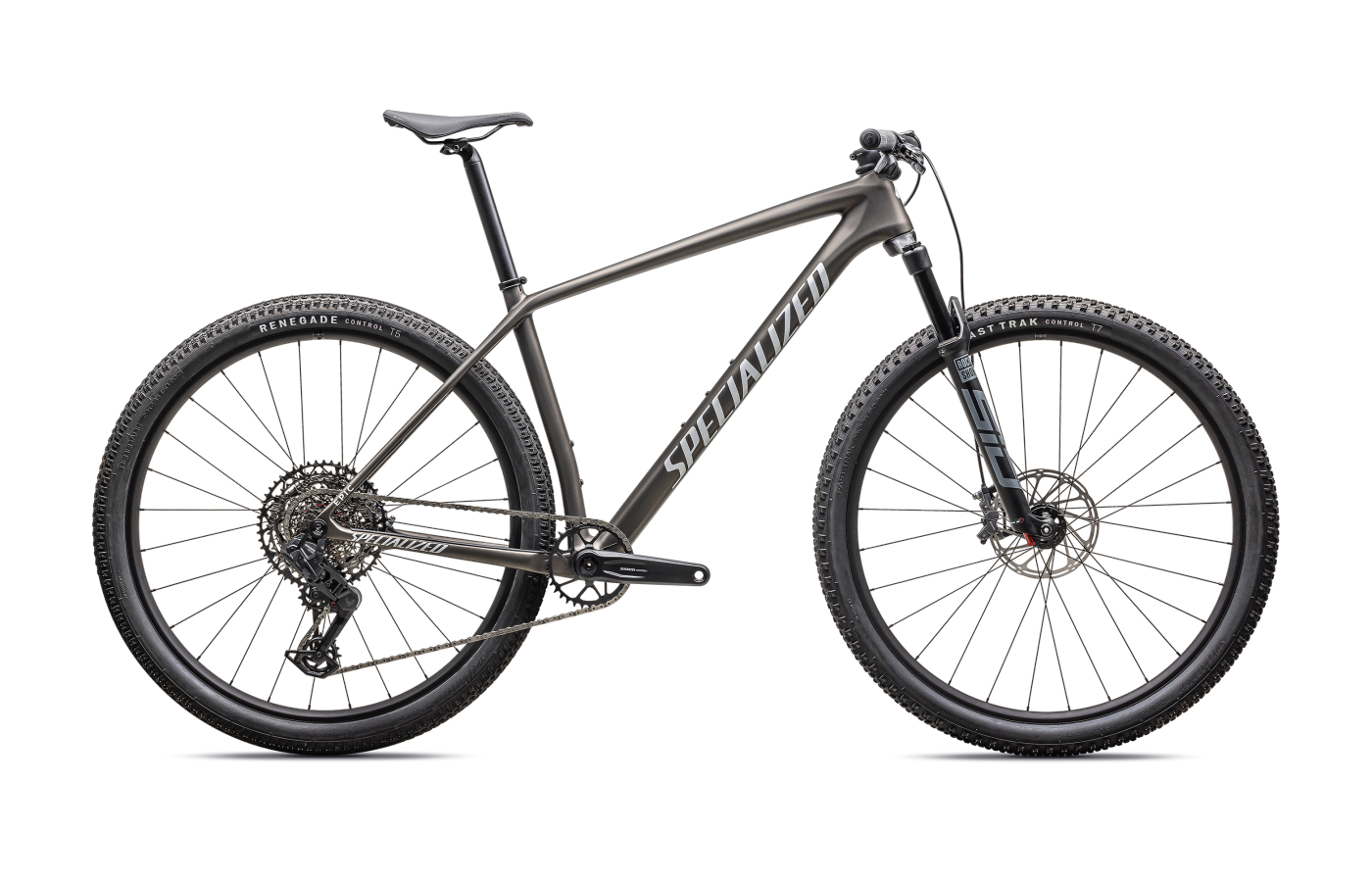
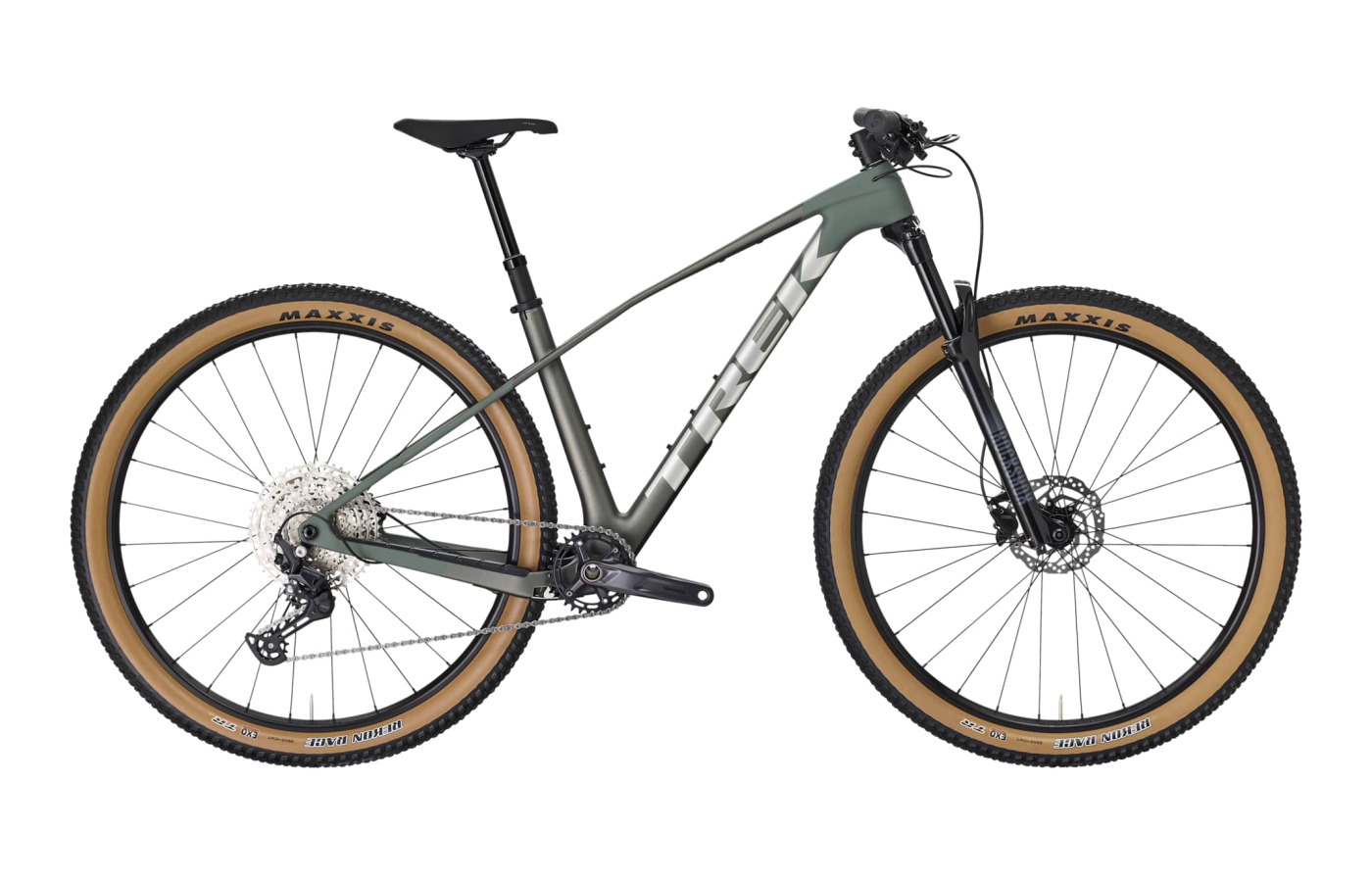
The Specialized Epic Hardtail is a weight-weenie's fever dream that finally learned how to descend, while the Trek Procaliber Gen 3 is a trail-hardened racer that effectively admits 100mm of travel isn't enough anymore. Choosing between them is a matter of deciding whether you want a frame that feels like it might float away uphill or one that won't punish you for taking the B-line back down.

Overview
The Epic Hardtail remains defined by its obsession with the scale, with Specialized stripping away every gram of carbon to produce a frame that weighs less than a full water bottle. It is a pure racing chassis that has slowly grown more practical for the privateer, ditching press-fit bottom brackets and skinny seatposts for a threaded shell and 30.9mm diameter. In contrast, the Trek Procaliber has moved away from the mechanical complexity of the IsoSpeed decoupler in favor of the IsoBow—a structural "hole" in the frame designed to provide compliance without the maintenance headache of pivots and bearings. While Specialized focuses on maintaining consistent stiffness across sizes with its "Rider-First" tuning, Trek has leaned into a "down-country" lite philosophy by bumping travel to 120mm across the board. The Epic is the bike you choose for the steepest climbs and the most agonizing marathon distances where every gram of rotational weight matters. The Procaliber acts as a rowdier daily driver, offering a rowdier geometry that feels more at home on modern, chunky XC courses than a traditional "organ-jarring" hardtail ever would.
Ride and handling
Riding the Epic Hardtail feels like "sprinting like a scorched feline," as its lateral stiffness makes out-of-the-saddle efforts feel incredibly efficient. The 2020 redesign added a level of composure that was missing from older generations; with its slacker 68.5-degree head angle and reduced fork offset, it no longer feels like you are "fearing for your life" on technical descents. However, it still rewards a precise pilot who can pick a line through rock gardens, as the 100mm of travel remains the limiting factor when the trail gets truly messy. The Procaliber Gen 3 feels significantly more "trail-friendly" due to that 120mm fork and a 67-degree head angle, which calms the handling enough that you can let off the brakes and enjoy the flow. Trek’s IsoBow system is more subtle than the marketing might suggest; while it dulls hard impacts, high-volume 2.4-inch tires do most of the heavy lifting for comfort. The bike sits very low with a 309mm bottom bracket height, making it a joy to rail through corners, but it requires careful timing to avoid smashing your cranks on stumps during technical climbs. Specialized’s Brain technology on the higher-end RockShox SID forks offers a unique, firm pedaling platform that automatically opens up on hits, which is perfect for racers who hate reaching for a lockout lever. Trek takes a more traditional approach with remote lockouts but uses a stout 35mm chassis on the SID that resists "twists and twangs" under load better than the lighter stanchions of the past. Between the two, the Specialized feels like a dedicated climbing instrument, while the Trek provides a more planted, confident sensation when gravity takes over.
Specifications
Component choices often highlight a "frame-first" investment strategy for the Specialized. On entry-level builds like the Epic Hardtail Carbon, the spec can feel lackluster, often pairing a basic RockShox Judy Gold with a heavy SRAM NX/SX drivetrain that lacks the "zip" found on the S-Works models. It is a world-class chassis let down by kit that brings up the rear. Trek, by comparison, offers more cohesive packages in the mid-range; for example, the Procaliber 9.7 comes with SRAM’s GX Eagle Transmission and carbon wheels, which handle shifts under full pedaling load much better than the mechanical SRAM kits found on mid-tier Specialized bikes. Trek uses the exact same OCLV carbon frame across all Gen 3 models, from the budget 9.5 to the top-end 9.7. This means you get the same structural IsoBow compliance and 120mm capability regardless of what you spend. Specialized splits the line between its elite FACT 12m S-Works frame and the FACT 11m carbon found on other models, though even the heavier Specialized frame remains incredibly light at sub-1,000 grams. Both brands have finally moved to more universal standards: Specialized returned to a threaded bottom bracket, and Trek adopted a standard 31.6mm seatpost diameter, ensuring both bikes are easy to live with long-term.
| Hardtail | Procaliber | |
|---|---|---|
| FRAMESET | ||
| Frame | Specialized FACT 11m, Progressive XC Geometry, Rider-First Engineered™, threaded BB, UDH, 12x148mm rear spacing, internal cable routing | Alpha Platinum Aluminum, tapered head tube, internal routing, BSA 73, hidden rack and kickstand mounts, UDH, Boost148, 12mm thru axle |
| Fork | Rockshox SID SL, Rush RL Damper, Debon Air, 15x110mm, 44mm offset, S-XL: 110mm Travel, XS: 90mm Travel | RockShox Judy Silver, Solo Air spring, TurnKey lockout, tapered steerer, 42mm offset, Boost110, 15mm Maxle Stealth, 120mm travel |
| Rear shock | — | |
| GROUPSET | ||
| Shift levers | Sram AXS POD Controller | Shimano Deore M6100, 12-speed |
| Front derailleur | — | |
| Rear derailleur | SRAM S-1000 Eagle Transmission | Shimano XT M8100, long cage |
| Cassette | SRAM XS 1270 Transmission, 10-52t | Shimano Deore M6100, 12-speed, 10-51T |
| Chain | SRAM GX Transmission | Shimano Deore M6100, 12-speed |
| Crankset | SRAM S1000 Eagle, DUB, 165/170/175mm, 34T | Shimano MT512, 30T ring, 55mm chainline (Size S,M: 170mm length; Size ML,L,XL: 175mm length) |
| Bottom bracket | SRAM DUB Threaded Wide | Shimano BB-MT501 BSA |
| Front brake | SRAM Level Bronze 2-piston, Stealth | Shimano MT200 hydraulic disc |
| Rear brake | SRAM Level Bronze 2-piston, Stealth | Shimano MT200 hydraulic disc |
| WHEELSET | ||
| Front wheel | Specialized 29, 27mm inner width, 28h, tubeless ready; Specialized alloy, sealed cartridge bearings, 6-bolt, 15x110mm thru-axle, 28h; DT Swiss Industry | Bontrager Kovee, double-wall, Tubeless Ready, 28-hole, 23mm internal width, Presta valve; Shimano TC500 alloy, Center Lock, 110x15mm thru axle |
| Rear wheel | Specialized 29, 27mm inner width, 28h, tubeless ready; Specialized alloy, sealed cartridge bearings, 6-bolt, 12x148mm thru-axle, 28h; DT Swiss Industry | Bontrager Kovee, double-wall, Tubeless Ready, 28-hole, 23mm internal width, Presta valve; Shimano TC500 alloy, Center Lock, 148x12mm thru axle |
| Front tire | Specialized Fast Trak, Control Casing, T7 Compound, 29x2.35 | Maxxis Rekon Race, Tubeless Ready, EXO casing, folding bead, 60tpi, 29x2.40 (Sizes S/M/ML/L/XL) |
| Rear tire | Specialized Renegade, Control Casing, T5 Compound, 29x2.35 | Bontrager Sainte-Anne Pro XR, Tubeless Ready, dual compound, aramid bead, 60tpi, 29x2.20 (Sizes S/M/ML/L/XL) |
| COCKPIT | ||
| Stem | Specialized, 3D-forged alloy, 4-bolt, 7-degree rise | Bontrager Comp/Elite, 31.8mm, Blendr compatible, 7° (Size S: 50mm; M/ML: 60mm; L: 70mm; XL: 80mm) |
| Handlebars | Specialized Alloy Minirise, 10mm rise, 750mm, 31.8mm clamp | Bontrager alloy / Bontrager Comp alloy, 31.8mm (Size S/M: 5mm rise, 720mm width; Size ML/L/XL: 15mm rise, 750mm width) |
| Saddle | Body Geometry Power Sport, steel rails | Verse Short, steel rails, 145mm width |
| Seatpost | Specialized Alloy, Single Bolt, 30.9mm | Bontrager Line Dropper, MaxFlow, internal routing, 31.6mm (Size S/M: 100mm travel, 310mm length; Size ML/L: 150mm travel, 410mm length; Size XL: 170mm travel, 450mm length) |
| Grips/Tape | Specialized Trail Grips | Bontrager XR Trail Comp / Trek Line Comp, nylon lock-on |
Geometry and fit comparison
The geometry deltas reveal two different definitions of a modern XC bike. The Trek is notably slacker and longer, with a 67-degree head angle compared to the Specialized's 68.5 degrees. This 1.5-degree difference, paired with the Trek's longer 1155mm wheelbase (size ML), creates a much more stable platform for high-speed descending. Specialized uses a 42mm fork offset to keep its steering stable yet sharp, but it cannot match the stability that Trek’s 120mm-optimized geometry provides. Reach on the Trek is fairly generous at 445mm for a size ML, while Specialized typically runs slightly shorter top tubes across the range. For riders who prefer a more stretched-out and aggressive racing stance, the Specialized still provides that low at the front power position. Trek compensates for its longer reach with short 430mm chainstays on smaller sizes to maintain a nippy handling character that avoids feeling like a long-travel sled. Trek’s inclusion of a Medium-Large size is a massive win for those middle-of-the-bell-curve riders who often feel cramped on a medium but over-reached on a large. The Specialized has a slightly steeper 74-degree seat tube angle compared to Trek's 72-degree actual (74.3 effective) angle, which keeps the rider's weight centered for technical climbing. If you are a rider with shorter limbs, the Trek's 758mm standover height and shorter head tube make it easier to dial in a powerful fit without feeling like you are perching on top of the bike.
| FIT GEO | Hardtail | Procaliber | |
|---|---|---|---|
| Stack | — | 614 | — |
| Reach | — | 460 | — |
| Top tube | — | 628 | — |
| Headtube length | — | 90 | — |
| Standover height | — | 763 | — |
| Seat tube length | — | 460 | — |
| HANDLING | Hardtail | Procaliber | |
|---|---|---|---|
| Headtube angle | — | 67 | — |
| Seat tube angle | — | 72.5 | — |
| BB height | — | 309 | — |
| BB drop | — | 64 | — |
| Trail | — | — | — |
| Offset | — | 43 | — |
| Front center | — | — | — |
| Wheelbase | — | 1171 | — |
| Chainstay length | — | 435 | — |
Who each one is for
Specialized Epic Hardtail
If your idea of a perfect Saturday is 4,000 feet of climbing over 40 miles of high-alpine fire roads and smooth singletrack, the Epic Hardtail is the better tool. It fits the weight-conscious racer who counts every gram and wants a chassis that feels like it is actively helping you fly up the mountain. If you plan to build up a sub-19-pound featherweight for marathon racing and value the simplicity of a threaded bottom bracket, this is the one.
Trek Procaliber
Choose the Procaliber Gen 3 if your local XC races look more like mini-enduros, with rock gardens and drops that make 100mm forks cry. It works well for the rider who wants a hardtail that can double as a fast trail bike, benefiting from the extra 20mm of travel and a more forgiving 67-degree head angle. If you value a single high-quality frame across all price points and want a bike that rails corners like it is on tracks, the Trek is the winner.