Epic
vsSupercaliber
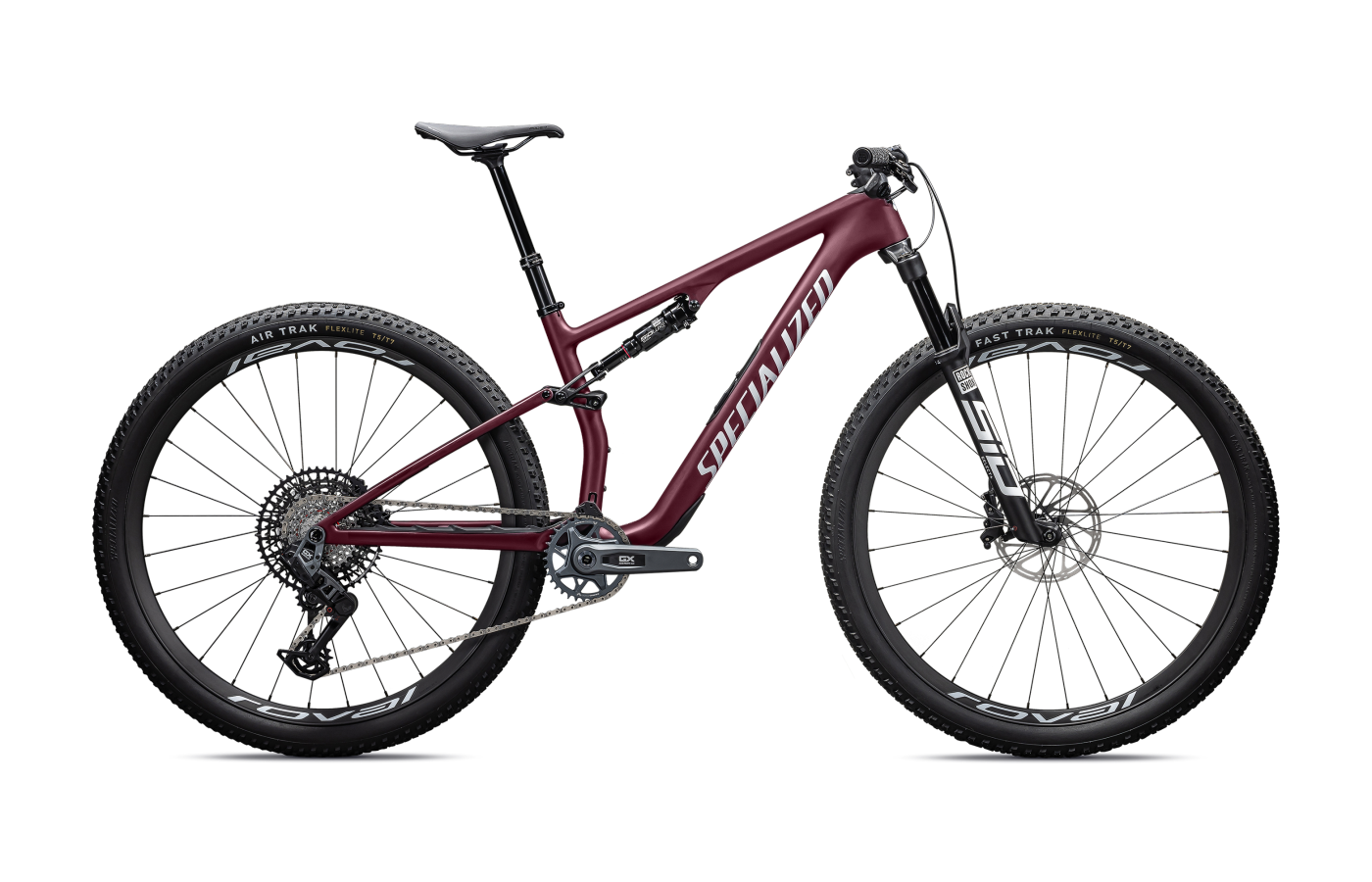
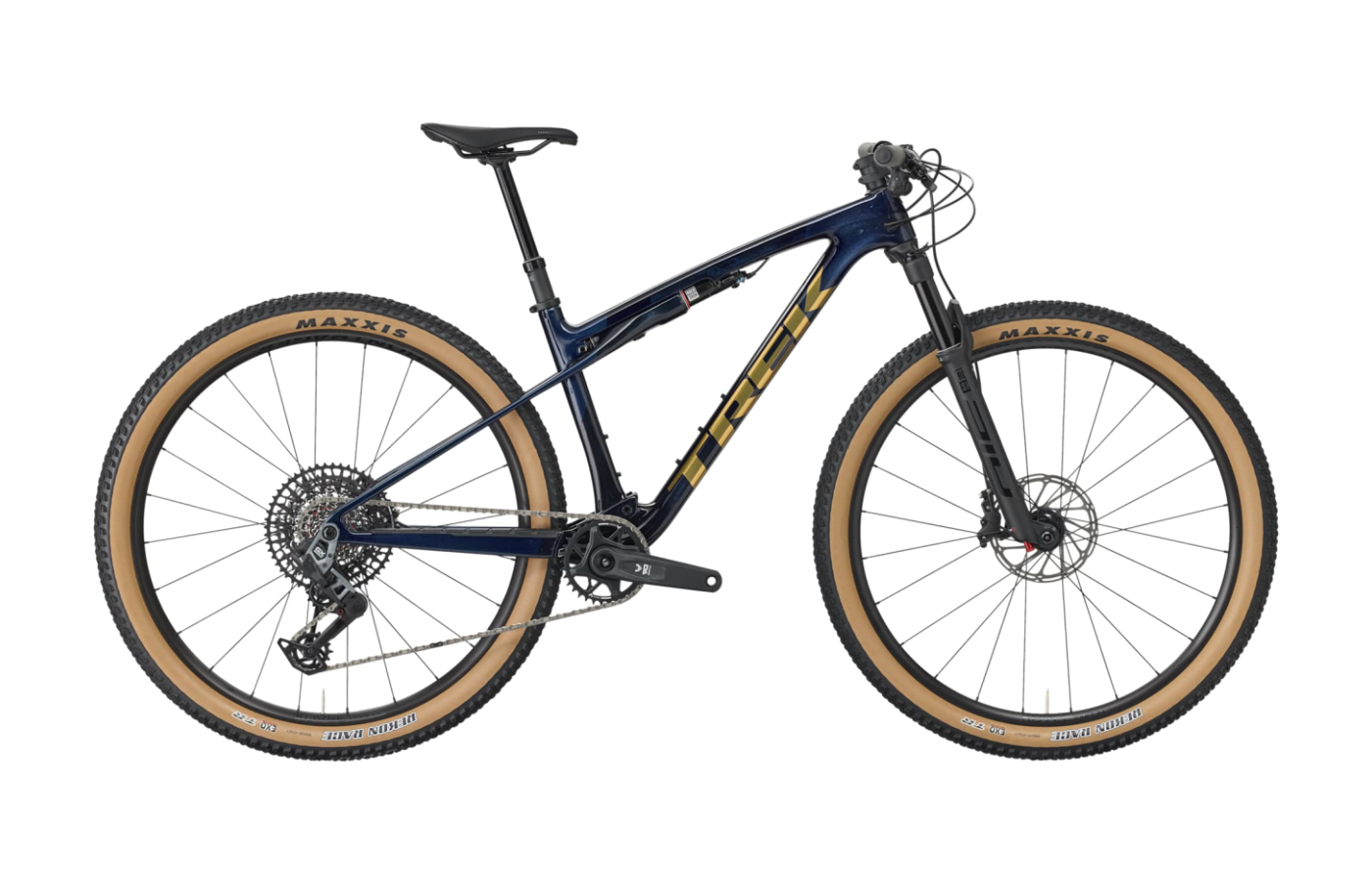
Two XC race bikes, two ideas of what 'fast' means.
The Epic 8 is a 120 mm trail-curious racer that descends like a downcountry bike. The Supercaliber is an 80 mm hardtail-killer that lives to climb.
Epic
- 120 mm of useful travel — a 12% increase in bump absorption over the Epic 7, with a slack 65.9° HTA that descends like a trail bike.
- "Magic Middle" shock tune — digressive damping that pedals firm and breaks open on hits, no remote required.
- SWAT downtube storage — rattle-free, sealed, no-fuss in-frame stash on every build in the range.
- Heavier than the Supercaliber at equivalent build levels — at the Expert tier, ~11.15 kg vs ~12.18 kg, but the Trek is the lighter bike at higher trims.
- Mid-tier 8 Comp builds (~11.7 kg) are portly for a dedicated XC race bike.
Supercaliber
- Ruthless pedaling efficiency — raised main pivot and high anti-squat make the lockout almost superfluous.
- IsoStrut rigidity — the integrated shock acts as a structural member, giving "telepathic" cornering and minimal lateral flex.
- Dropper post standard across the range — even on the SL 9.6 entry build, no upgrade required.
- 80 mm rear travel runs out on chunky terrain — bottom-out feel is described as "metallic" and "harsh."
- Frame requires ~10 hours of bedding-in before the IsoStrut feels genuinely supple.
Editor’s analysis
This isn't a better-or-worse fight. It's a question of where you race — the rocky, technical descents of a modern World Cup loop, or the smooth, punchy power circuits where the climber wins.
On paper, the Specialized Epic and Trek Supercaliber occupy the same shelf: full-carbon, sub-11 kg, race-bred, $4.5–15k. Both have been ridden to UCI World Cup wins. Both share 29" wheels and 435 mm chainstays. But the second you start reading numbers off the geometry chart, the divergence is obvious — and it's a divergence of intent, not execution.
The Specialized Epic 8 is the wider bike. 120 mm of travel front and rear, a 65.9° head tube angle (in the low setting), and Specialized's custom "Magic Middle" SIDLuxe tune that gives a firm pedaling platform but blows open on impact. Reviewers across PinkBike, Flow, and BikeRadar describe it as a "featherweight trail bike" — composed at speed, planted in corners, and willing to take lines that would have been suicidal on the previous Epic. It's the bike to buy if your local race courses include actual rock gardens.
The Trek Supercaliber Gen 2 picks the opposite lane and sharpens it. 110 mm fork, 80 mm rear, a 67.5° head angle, and the proprietary IsoStrut shock built directly into the top tube as a structural member. Anti-squat is high enough that reviewers leave the lockout open all day. It's a "rocket" on climbs, "telepathic" through pinpoint corners, and — at the upper limit of its 80 mm — it bottoms out hard on chunky terrain. Escape Collective and BikeRadar both flag it as the front-runner for pure XC racing where smooth-ish courses reward the climber.
Put another way: the Epic 8 is the bike for the racer who's tired of getting blown up on the descents. The Supercaliber is the bike for the racer who knows they win on the climbs.
Where the builds differ.
Comparing our editor's-pick builds side-by-side. Winners highlighted row-by-row — lower price and weight, and the better-spec component, each mark a point.
Build variants & pricing
Both platforms span ~$4.5k to ~$15k. The Epic 8's mid-tier Expert is widely cited as the sweet spot; on Trek, the SL 9.7 plays the same role at a lower price.
Editor's picks are tier-matched at SRAM GX AXS Transmission to make the spec table apples-to-apples. The Trek SL 9.7 ($6,499) uses Trek's SL-grade carbon — a step below the SLR layup used on its $9k+ builds — which mirrors Specialized's FACT 11m vs S-Works FACT 12m split. Prices are current US MSRP.
How they fit, how they steer.
Compared at size M (Specialized) and ML (Trek) — both reach 450 mm, but the Epic sits 8 mm taller in stack with a 1.6° slacker head angle. Both run 435 mm chainstays. The Epic is the more stable platform; the Trek is the more upright climber.
Which size should I buy?
Size recommendations are based on stack, reach, and effective top tube. The Trek's ML slot bridges its M and L; the Epic's M is the closest analog.
→These are starting points. Flexibility, riding style, and preferred position all shift the answer — if you’re between sizes, a professional fit beats a chart.
What the magazines said.
Published reviews from trusted cycling outlets. Click through for the full write-up.
Which one should you buy?
If you race on technical, descent-heavy courses, get the Epic. If you race on punchy, climb-heavy power circuits, get the Supercaliber.
Epic
If your local race courses include actual rock gardens, sustained chunky descents, or marathon-length efforts where fatigue management matters, the Epic 8 is the more capable platform. The 120 mm of travel and 65.9° head angle let you stay off the brakes longer and recover on the way down.
Supercaliber
If most of your racing is 60–90 minute power efforts on smooth or flowy XC courses, the Supercaliber's IsoStrut and high anti-squat will make every watt count. It climbs like a hardtail and corners like a thoroughbred — descend within its 80 mm and you'll out-pace anything in the segment.
Questions buyers actually ask.
Short answers to the things we get emailed about most often.
01Which is faster on technical descents?
The Specialized Epic 8, comfortably. With 120 mm of travel front and rear and a 65.9° head tube angle in the low setting, the Epic descends with composure that reviewers (PinkBike, Flow, BikeRadar) repeatedly describe as "trail bike-like."
The Supercaliber's 80 mm rear travel and 67.5° HTA are competitive on smoother courses, but several reviewers noted it bottoms out "harshly" on chunky terrain. If your race courses include genuine rock gardens or sustained rough descents, the Epic is the safer choice.
02Which climbs better?
The Trek Supercaliber, especially on smooth or flowy climbs. Trek raised the main pivot 10 mm in Gen 2 to increase anti-squat, and the result is a bike multiple reviewers describe as a "rocket" or "mountain goat" under pedaling load. The IsoStrut barely moves while climbing seated, and the lockout is often "superfluous."
The Epic 8 is no slouch — its "Magic Middle" tune and 75.5° seat tube angle keep the rider centered for technical climbs — but it's heavier in equivalent trim and trades some climbing snap for descending capability.
03How much travel does each have?
Specialized Epic 8: 120 mm front, 120 mm rear — a substantial bump from the previous-gen Epic's 100 mm.
Trek Supercaliber Gen 2: 110 mm front, 80 mm rear — up from 100/60 mm in Gen 1, but still notably shorter than the Epic on both ends.
For context: the Supercaliber is closer to a hardtail with a small comfort cushion; the Epic is closer to a downcountry/short-travel trail bike.
04What's the maximum tire clearance?
Epic 8: 59.7 mm (about 2.35"), and most builds ship with 2.35" Specialized Fast Trak / Air Trak combos.
Supercaliber Gen 2: 61 mm (about 2.4"), and most Gen 2 models ship with 2.4" Maxxis Aspens or Bontrager Sainte-Anne RSLs. The flagship SLR 9.9 XX is the exception — it ships with 2.2" tires to save weight, which several reviewers (BikeRadar, Flow) flagged as too narrow for modern XC courses.
Neither is a trail bike — for anything rougher than fast XC singletrack, look at the Epic 8 EVO or a dedicated short-travel trail bike.
05Is the IsoStrut reliable?
Mostly yes — but with caveats. The Gen 2 IsoStrut is now built by RockShox (not Fox), uses 38 mm stanchions shared with the Zeb enduro fork, and can be serviced with a standard 4 mm hex key. Trek doubled the recommended air-can service interval to 100 hours.
That said, Flow Mountain Bike and Escape Collective both reported issues — Flow's strut arrived under-lubricated from the factory and felt harsh until topped up; Escape Collective experienced a damper leak early in testing. If you buy one, check the lubrication out of the box, and budget for proprietary service down the road.
06Do both come with a power meter standard?
Epic 8: Quarq spider-based power meters come stock on the S-Works ($14,999) and 8 Pro ($10,999) builds.
Supercaliber: No stock power meter on any build — including the $14,999 SLR 9.9 XX Flight Attendant. PinkBike specifically called this out as a competitive miss given that "almost everyone is training with power" at this level.
If a stock power meter matters, the Epic wins on value at the high end.
07Which has better in-frame storage?
The Epic 8, by a wide margin. Specialized's SWAT 4.0 downtube storage is on every build in the Epic 8 range and is described by reviewers as "flush," "rattle-free," and the most precise in-frame system on the market.
The Supercaliber Gen 2 has no in-frame storage. You'll be running a tool strap or saddle bag if you want to carry tubes, CO2, or a multi-tool.
08What warranty do they come with?
Both frames are covered by lifetime frame warranties to the original owner against manufacturing defects. Trek's warranty is widely regarded as one of the most rider-friendly in the industry.
Both brands also offer crash-replacement pricing for owners who damage a frame in a crash — typically 40–60% off a new frame, varying by region and dealer.
Similar bikes
If your priorities don’t map cleanly onto either of these, one of these adjacent bikes probably fits better.
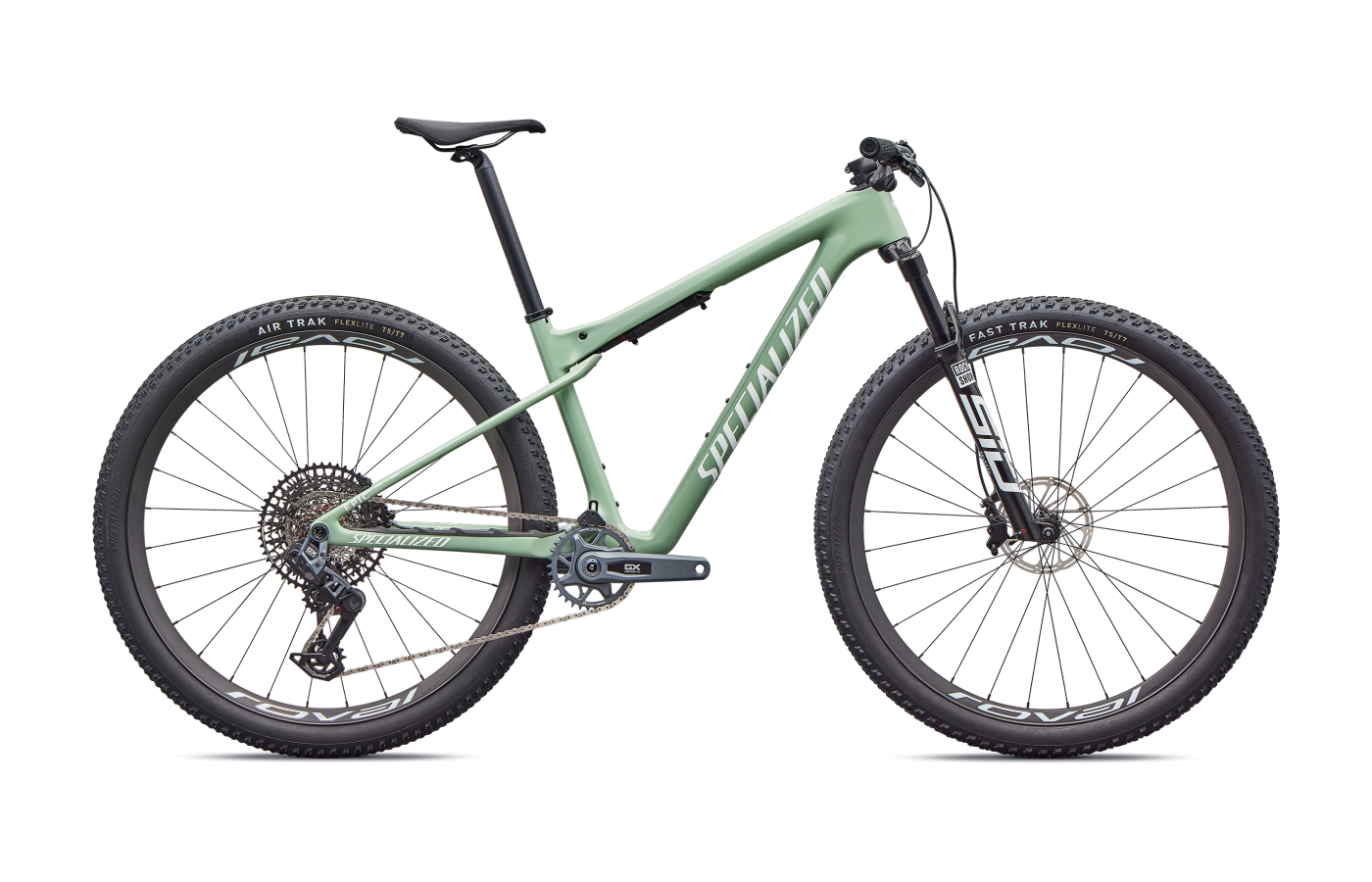
Epic World Cup
The Specialized answer to the Supercaliber. 75 mm of rear travel via a non-Brain shock with adjustable negative air spring — same hardtail-adjacent intent as the Trek, but with the SWAT storage and dealer network of the Epic ecosystem.
Compare →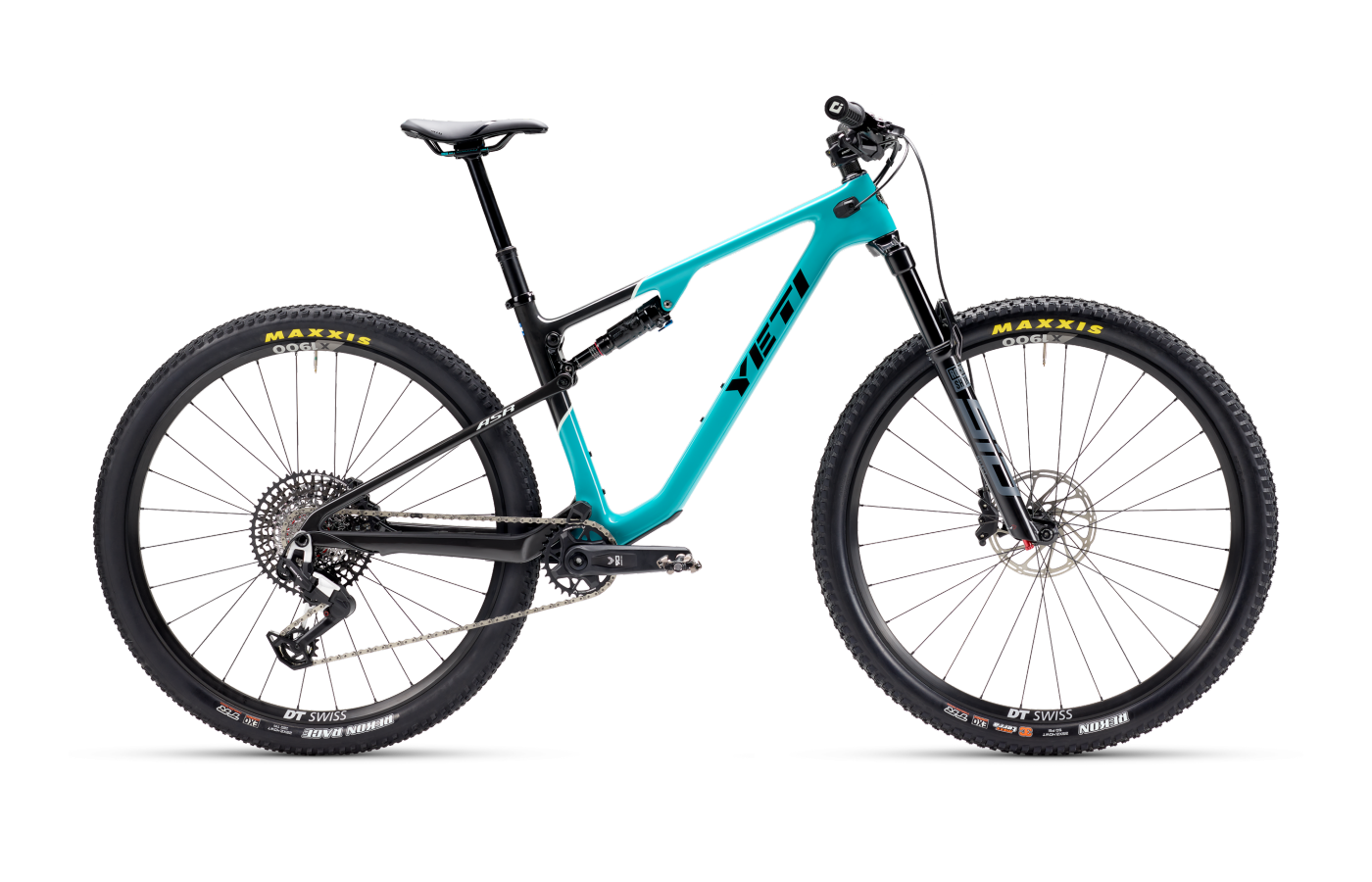
ASR
Yeti's purebred 115 mm racer. Single-pivot flex-stay design like the Epic, lighter than both Epic and Supercaliber, with the boutique pedigree and price tag to match. The pick if you want Specialized's geometry philosophy with extra grams shaved.
Compare →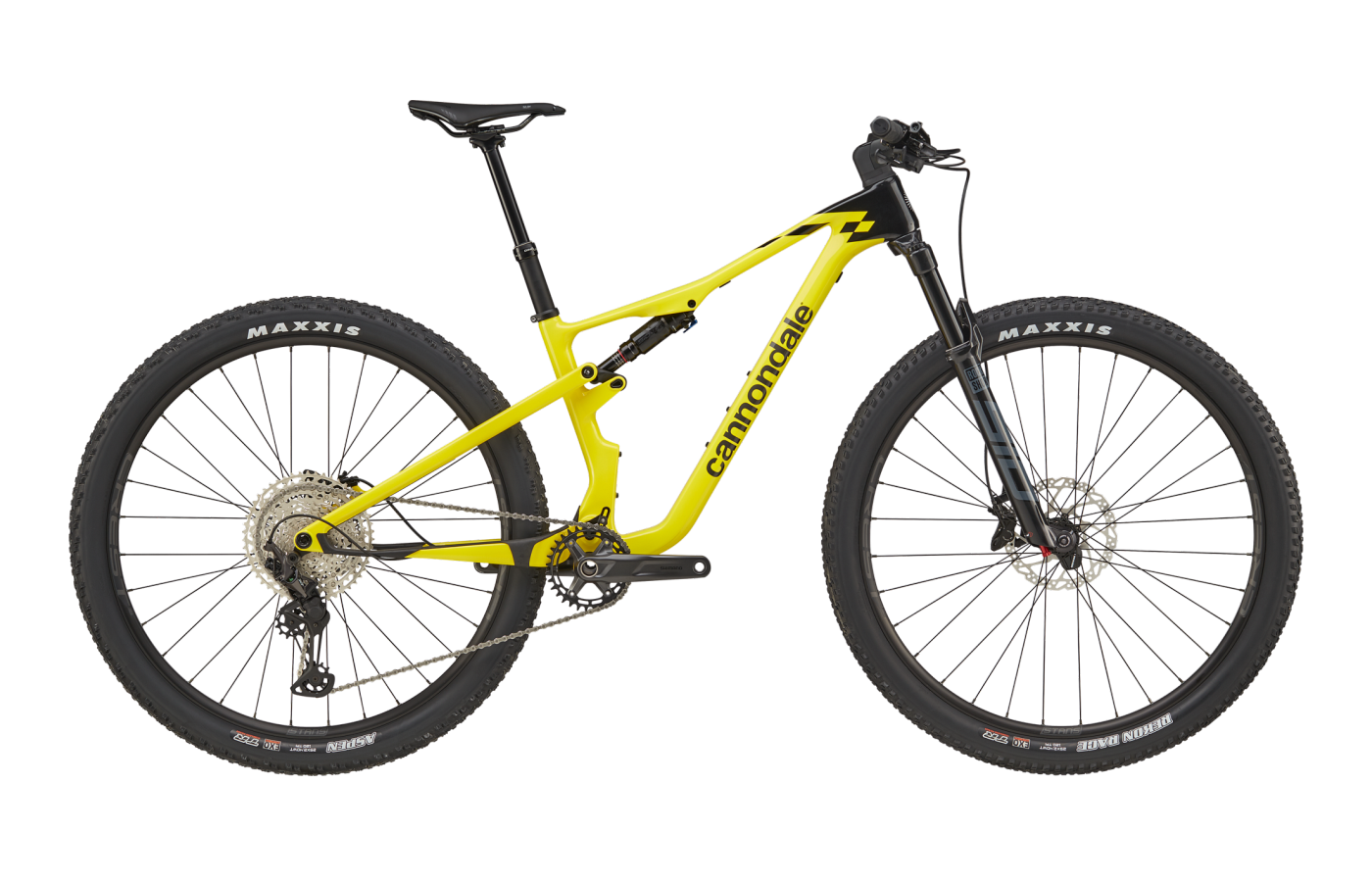
Scalpel
Cannondale's 120 mm answer. A flex-pivot chainstay (no rear pivot bearing) gives a slightly more supple open-mode feel than the Epic, with similar travel and a similar trail-curious geometry. Worth a test ride if you find the Epic too firm in Magic Middle.
Compare →