Epic World Cup
vsSupercaliber
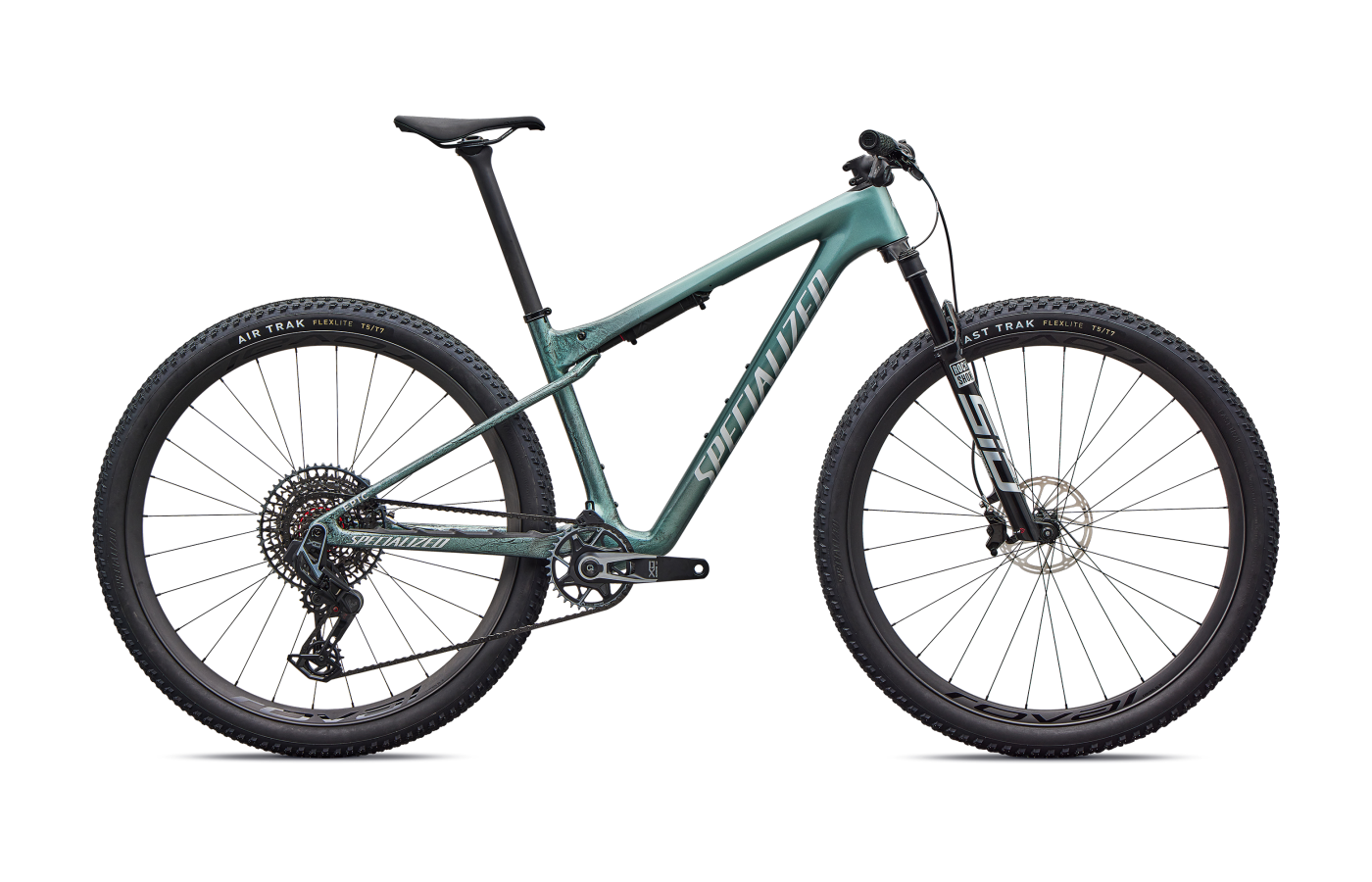
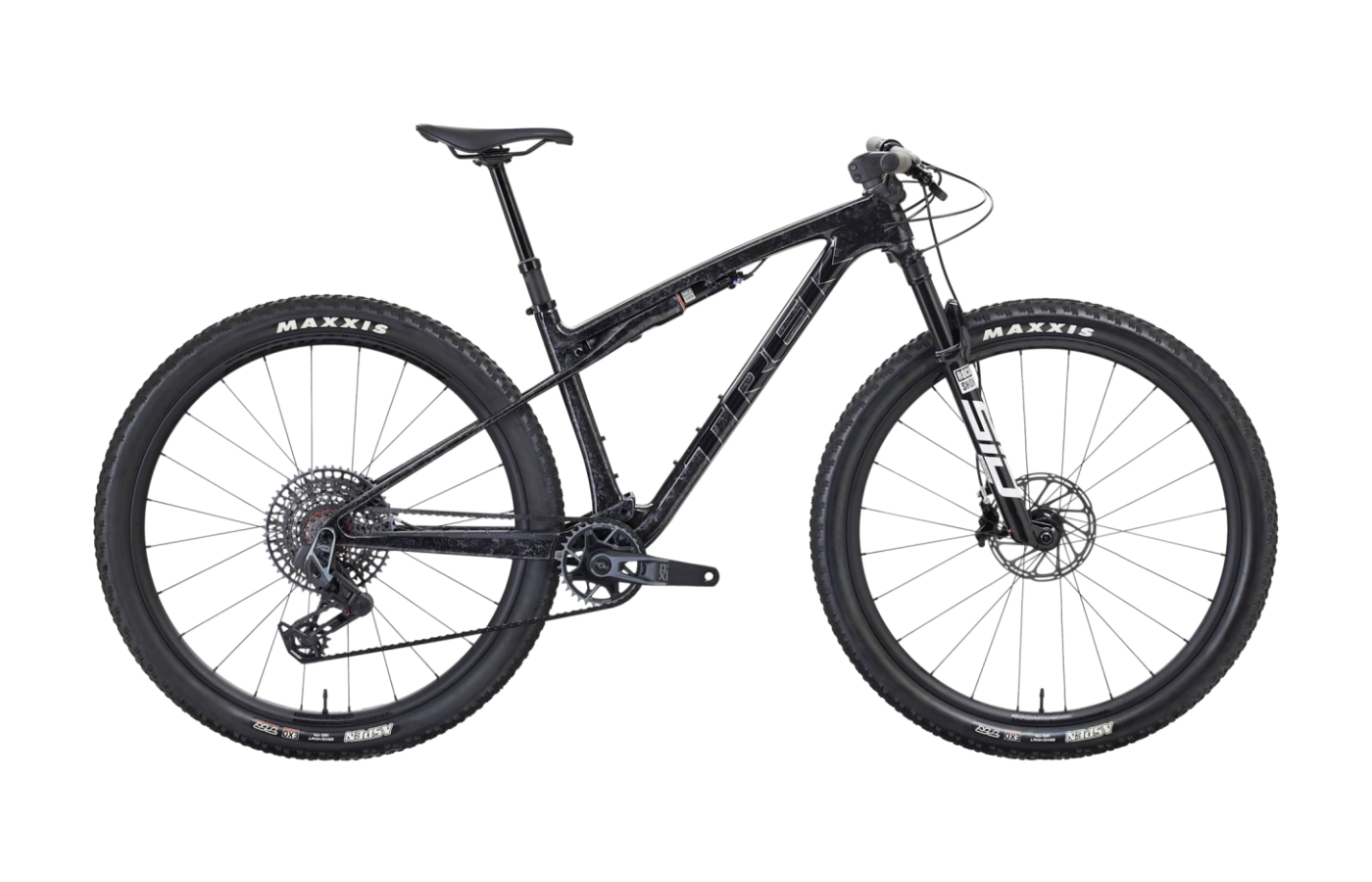
Two hardtail-killers, two suspension tricks.
The Epic World Cup tunes a special air-spring shock to feel locked-out at zero sag. The Supercaliber bolts the shock into the frame as a structural member.
Epic World Cup
- Tunable lockout via air spring — the SIDLuxe WCID's 'Gulp' settings let you dial in anything from rigid hardtail to 10% active sag, no remote needed.
- Slacker, more stable geometry at 66.5° HTA with 113 mm trail — confidence-inspiring on fast descents for an XC bike.
- Cleaner cockpit — no lockout cable means an uncluttered integrated bar and one less thing to fiddle with mid-race.
- No dropper post on any stock build — budget another $300–$700 to make it a real trail bike.
- Headset cable routing is a maintenance liability — reviewers report grit ingress and bearing wear after months.
Supercaliber
- Dropper post standard on every model — from the $4,799 SL 9.6 to the $14,999 SLR 9.9 Flight Attendant.
- Wider build range — SL frame builds open the platform at $4,799, where the Epic World Cup floor is $6,699.
- More travel, more capability — 80 mm rear / 110 mm front and a 17 mm longer wheelbase than Gen 1 make rough courses more survivable.
- IsoStrut needs ~10 hours of bedding-in before it stops feeling harsh — and reviewers report under-lubed shocks from the factory.
- No stock power meter even on $11k+ flagships — Specialized includes one on Pro and S-Works.
Editor’s analysis
Both bikes set out to do the same thing — kill the XC hardtail — and arrived at almost opposite suspension philosophies to get there.
On the start line, the Specialized Epic World Cup and Trek Supercaliber look like cousins: hardtail silhouettes with a rear shock crammed under the top tube, 29-inch wheels, race geometry, integrated cockpits. Spend a ride on each and the family resemblance ends. The Epic World Cup uses 75 mm of rear travel through a proprietary RockShox SIDLuxe WCID that you tune by air-spring sag — 0% for hardtail-firm, 10% for active. The Supercaliber Gen 2 runs 80 mm through the IsoStrut, a SIDLuxe damper bolted into the frame as a structural member, with a conventional remote lockout.
The Specialized Epic World Cup is the carving knife. Reviewers describe the suspension as 'pretty much locked-out' in its firm setting, with rocket-like acceleration and cornering precision that comes from a slack-for-XC 66.5-degree head angle and 430 mm chainstays. The trade-off is on-trail feedback: at zero sag the rear wheel can skitter on roots and the integrated Roval bar gets called 'harsh' more than once. There is no dropper post on any stock build — Specialized expects you to add one.
The Trek Supercaliber is the ruthless efficiency machine that's been refined into something more livable. Gen 2 added 20 mm of rear travel, slackened the head angle from 69 to 67.5 degrees, lengthened the wheelbase 17 mm, and — critically — ships every model with a dropper post. Reviewers consistently call out 'mountain goat' climbing and 'telepathic' handling, with the caveat that the IsoStrut needs roughly 10 hours of bedding-in before it loses its initial harshness. It's also broader: SL frames start at $4,799, where the Epic World Cup starts at $6,699.
Put another way: the Specialized Epic World Cup is a specialist tool you buy because you race short-track XCO and want the firmest pedaling platform on the market. The Trek Supercaliber is the bike you buy when you want race-tier efficiency but also want to finish a 6-hour marathon, descend with the dropper down, and not write a $7k check to start.
Where the builds differ.
Comparing our editor's-pick builds side-by-side. Winners highlighted row-by-row — lower price and weight, and the better-spec component, each mark a point.
Build variants & pricing
Trek's lineup is twice as deep — eight builds from $4,799 to $14,999 vs. three Specialized builds from $6,699 to $11,999.
Prices are current US MSRP. Editor's picks are tier-matched at SRAM X0 AXS Transmission (Specialized Pro $8,399 vs Trek SLR 9.8 X0 AXS T-Type $8,999) — the cleanest apples-to-apples shootout in the lineups.
How they fit, how they steer.
M Epic vs ML Supercaliber — the fit-picked sizes for a 173 cm rider on each bike. The Epic sits 10 mm taller in stack with a 10 mm shorter reach and a full degree slacker head angle (66.5° vs 67.5°). Trek runs 5 mm longer chainstays and a 1° tighter trail figure.
Which size should I buy?
Trek splits the middle with both M and ML; Specialized jumps straight from M to L, so taller riders may need to size up earlier.
→These are starting points. Flexibility, riding style, and preferred position all shift the answer — if you’re between sizes, a professional fit beats a chart.
What the magazines said.
Published reviews from trusted cycling outlets. Click through for the full write-up.
Which one should you buy?
If you race 90-minute XCO and want the firmest pedaling platform made, get the Epic World Cup. If you race marathon, want a dropper, or need to spend less than $7k, get the Supercaliber.
Epic World Cup
If your races finish in under two hours on punchy, smooth courses where every watt matters, the Epic World Cup's air-spring lockout is the sharpest pedaling tool in the segment. Slack geometry and short stays give you confidence on the descents — provided you accept the BYO-dropper tax and maintain the headset religiously.
Supercaliber
If you want race-grade efficiency that still survives a 6-hour day with a dropper down on chunky descents, the Supercaliber Gen 2 is the more livable platform. Eight builds from $4,799 give you a real ladder; the trade-off is the IsoStrut's bedding-in period and the missing power meter on flagship trim.
Questions buyers actually ask.
Short answers to the things we get emailed about most often.
01Which bike has more travel?
The Trek Supercaliber by a hair: 80 mm rear and 110 mm front, vs. 75 mm rear and 110 mm front for the Specialized Epic World Cup. In practice the gap is smaller than the numbers suggest — the Epic is designed to run at 0–10% sag (functionally hardtail-like in the firm setting), while the Supercaliber runs more conventional sag. So the Trek uses more of its travel more of the time.
02Which climbs more efficiently?
Both are class-leading climbers, but the Epic World Cup has the edge on smooth, hard climbs — at 0% sag the rear suspension is effectively locked out, with reviewers calling it 'pretty much locked-out' and 'hardtail-like' in pedaling response.
The Supercaliber wins on chunky climbs. High anti-squat keeps it composed under power, and reviewers note the rear wheel tracks better than the Epic's over roots and rocks. Trek's lockout exists but multiple reviewers call it 'superfluous' for most rides.
03Do they come with dropper posts?
Trek: yes, on every build from the $4,799 SL 9.6 to the $14,999 SLR 9.9 Flight Attendant.
Specialized: no, on any build. Reviewers universally flag this as the Epic World Cup's biggest miss — budget $300–$700 to add one, and assume you'll do it before your first technical descent.
04How does the suspension lockout work on each?
Specialized uses no remote at all. The SIDLuxe WCID rear shock has three 'Gulp' settings (Firm / Medium / Active) that you set before the ride by adjusting the negative air spring. Firm runs at 0% sag and feels like a hardtail; Active runs at 10% sag and provides genuine compliance. You cannot change it on the fly.
Trek uses a TwistLoc bar-mounted remote that locks out the IsoStrut and fork together. Two positions: open and locked. You can flick it mid-ride.
05Is the integrated cockpit serviceable?
Both ship one-piece carbon bars on top builds, and both make stem-length changes expensive. The Specialized Roval Control SL is fixed bar roll and was specifically called out for harshness — reviewers report 'pummeled palms and sore wrists' on longer rides.
The Bontrager RSL Integrated has the same stiffness complaint but Trek varies the stem length per frame size (70 mm on M/ML, 80 on L, 90 on XL) so you're more likely to get the right cockpit out of the box.
06Which has a wider build range?
The Supercaliber by a wide margin. Trek offers eight builds from $4,799 (SL 9.6) to $14,999 (SLR 9.9 XX Flight Attendant), with multiple options at each tier and both SL and SLR carbon grades.
The Epic World Cup is three builds: Expert at $6,699 (FACT 11m, GX AXS), Pro at $8,399 (FACT 11m, X0 AXS), and S-Works at $11,999 (FACT 12m, XX SL Flight Attendant). If you want to spend under $6,500, the Trek is your only option here.
07Do either include a power meter?
Specialized includes a power meter on the Pro ($8,399, Quarq spider-based) and S-Works ($11,999) builds. Not on the Expert.
Trek does not include a power meter on any stock build, even the $14,999 SLR 9.9 XX Flight Attendant. Reviewers — including PinkBike — have called this out as the most glaring spec miss in Trek's lineup, since 'almost everyone is training with power' at this level.
08Which is the better all-day trail bike?
Neither — both are XC race tools first. But of the two, the Supercaliber is more livable. The dropper post comes stock, the suspension is more conventionally active once bedded in, and reviewers consistently say it's more comfortable past the 2-hour mark.
The Epic World Cup, especially in its firm setting, becomes 'fatiguing' on longer rides per multiple reviewers. If 'all-day trail bike' is in your question, look at the Specialized Epic EVO or Trek Top Fuel instead.
Similar bikes
If your priorities don’t map cleanly onto either of these, one of these adjacent bikes probably fits better.
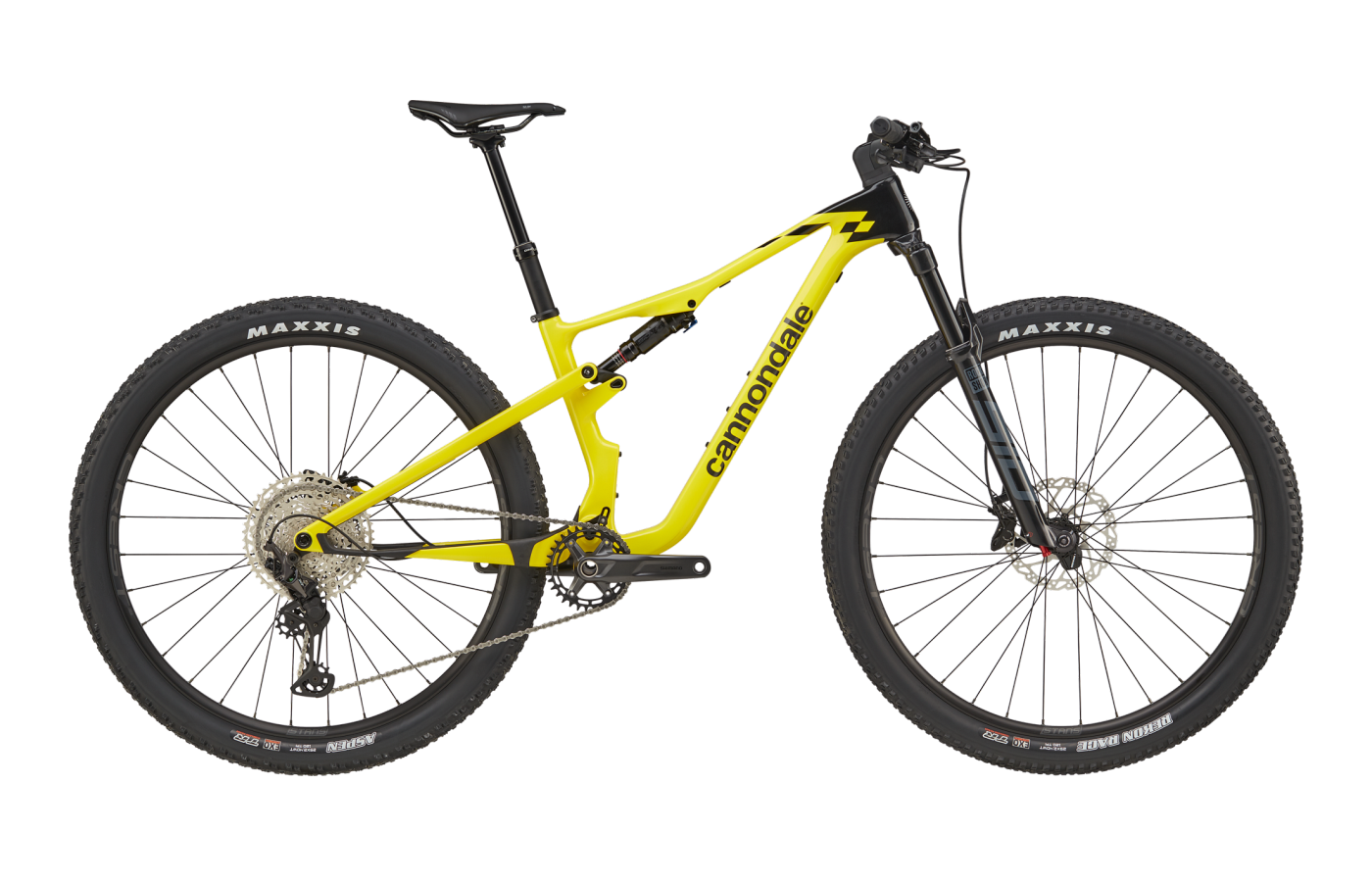
Scalpel
The conventional 120 mm-travel XC race bike, no proprietary shock tricks. More descending comfort and a more familiar suspension feel — for riders who want race pedigree without the bedding-in or BYO-dropper hassle.
Compare →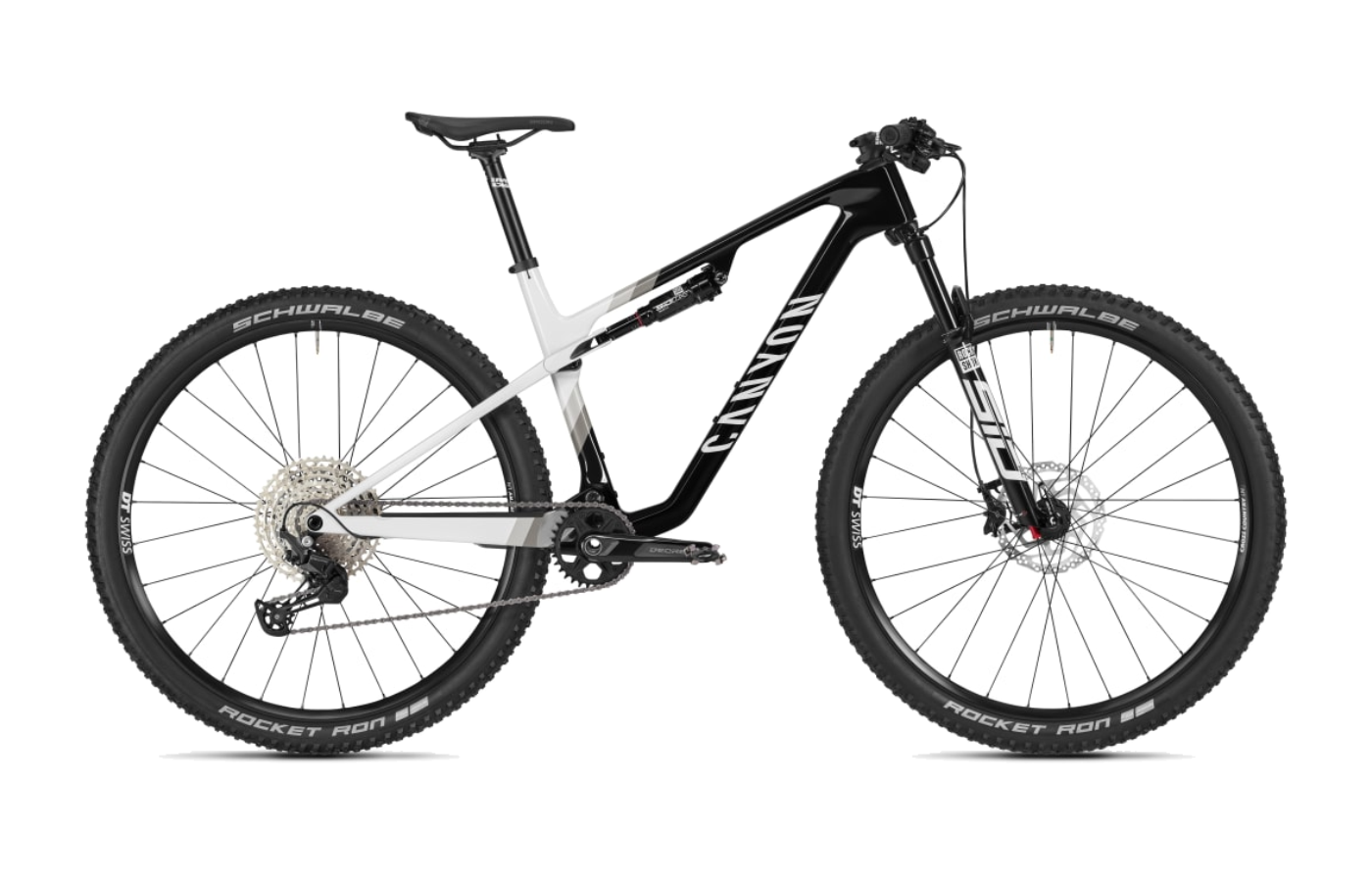
Lux World Cup
Canyon's direct-to-consumer aggressor undercuts both Trek and Specialized on price while keeping race weight low. The catch is the usual DTC trade-off — no dealer, no demo, fit at your own risk.
Compare →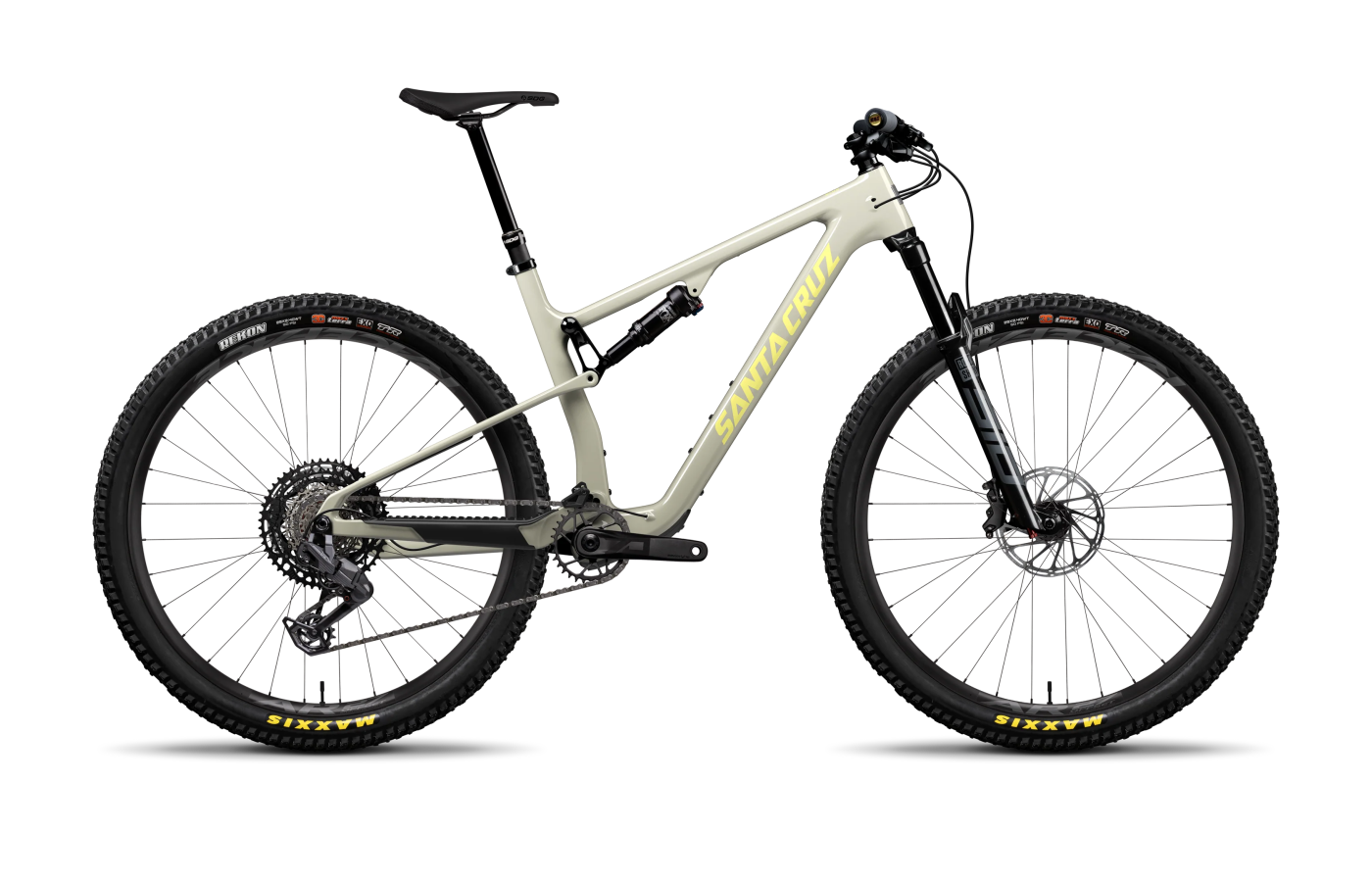
Blur
Santa Cruz's flex-stay design ditches the proprietary shock entirely — easier to service, more predictable feel, plusher than either the IsoStrut or the WCID. A safer bet if you plan to keep the bike five years.
Compare →