Rockhopper
vsMarlin
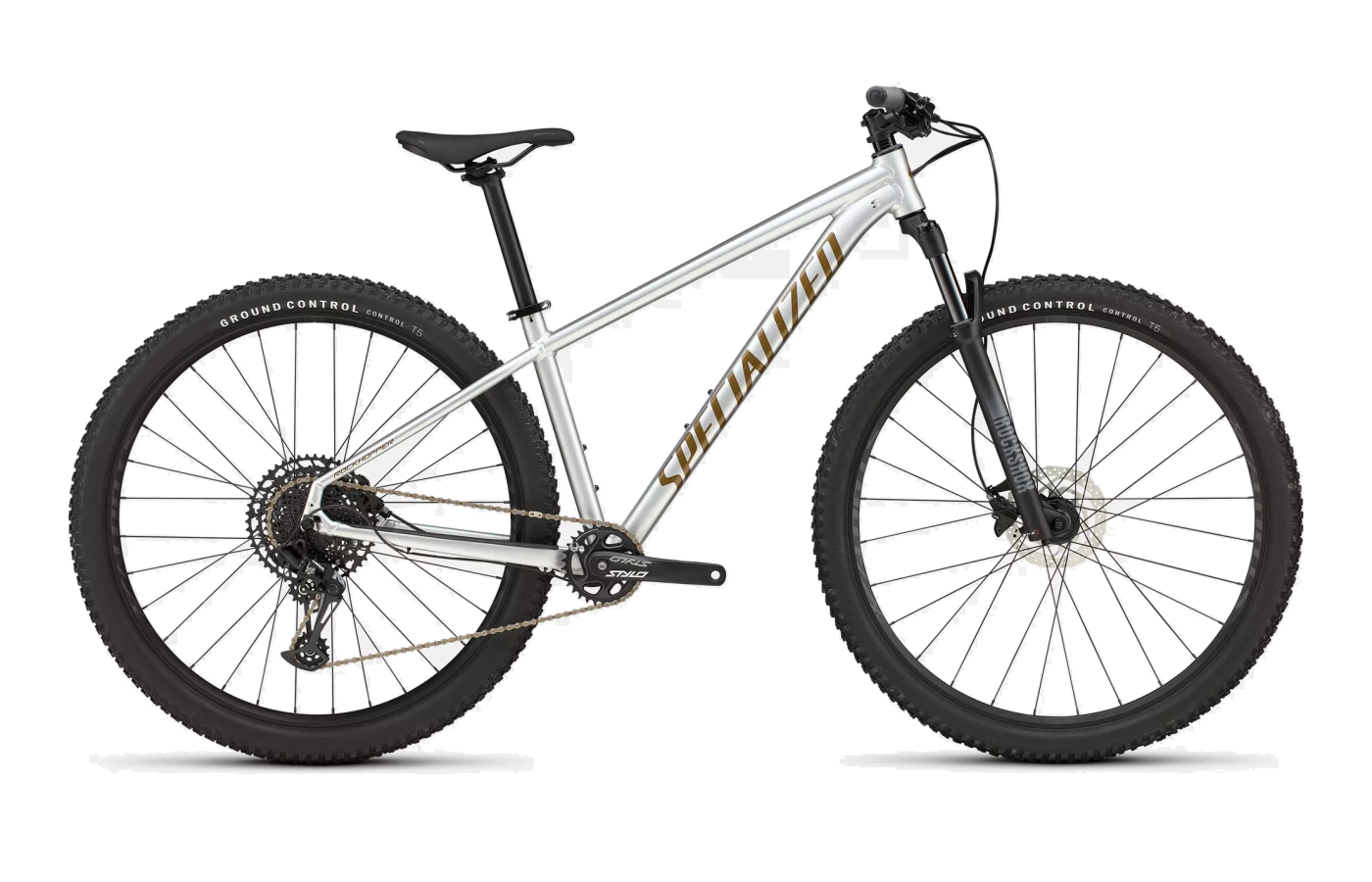
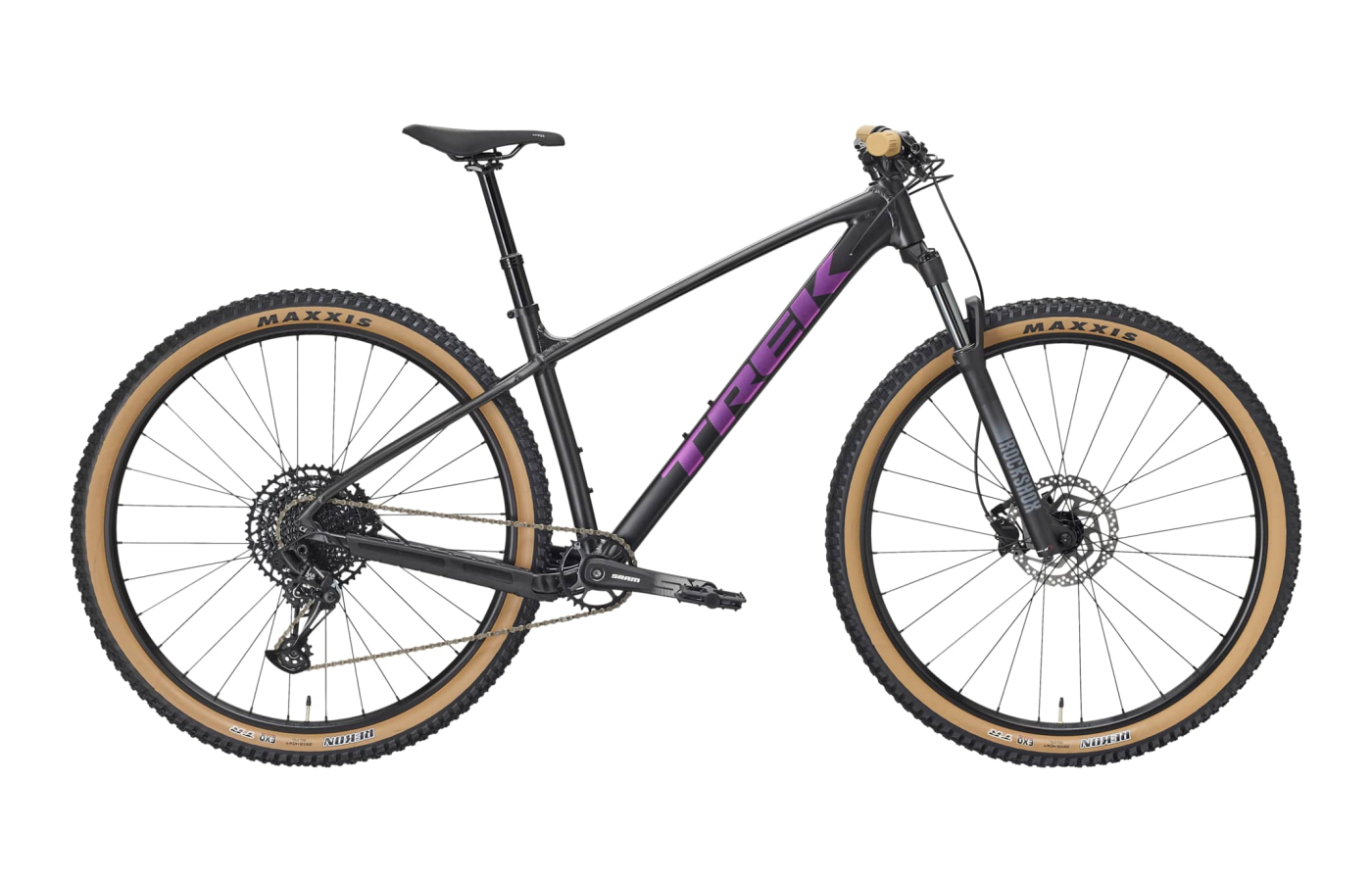
Two entry hardtails, two eras of geometry.
The Rockhopper is a lightweight XC mile-muncher built on conservative geometry. The Marlin Gen 3 is a slacker, longer trail-leaning hardtail that prioritizes descending confidence.
Rockhopper
- About 1 kg lighter at matched price — 13.12 kg on the Expert vs 14.15 kg on the Marlin 7, a real climbing advantage.
- Wider build range — nine builds from $649 to $1,299, including both 27.5 and 29 wheel options.
- Quick, agile XC handling — short 425 mm reach and 68.5° HTA make tight singletrack feel playful.
- Twitchy and pitched-forward on steep descents — the conservative geometry runs out of room above blue-grade trails.
- Straight 1-1/8 head tube and 9 mm QR axles severely limit fork and wheel upgrade paths.
Marlin
- Modern trail-ready geometry — 66.5° HTA, 440 mm reach on M, 1,163 mm wheelbase. Composed where the Rockhopper isn't.
- 2.4-inch Maxxis tires stock — more volume, more grip, more comfort than the Rockhopper's 2.35 Ground Controls.
- Dropper-ready frame and ThruSkew rear axle — better internal routing and a more secure rear interface than the Specialized's open-dropout QR.
- Heavier across the range — 14.15 kg on the Marlin 7 vs 13.12 kg on the Rockhopper Expert.
- Still uses straight head tube and front QR; truly modern fork upgrades require a headset swap.
Editor’s analysis
Same shop window, same price bracket, completely different design philosophies — one wants to climb, the other wants to descend.
On paper the Specialized Rockhopper Expert and Trek Marlin 7 Gen 3 look like twins: alloy frames, 100 mm RockShox Judy air forks, SRAM SX Eagle 12-speed, $1,299 vs $1,399. Spend a minute with the geometry charts and the resemblance evaporates.
The Rockhopper is the older soul. A 68.5-degree head tube angle and a 425 mm reach (size L-29) make it whippy, snappy, and quick to change direction — reviewers consistently call it a 'mile-muncher' that punches above its weight on climbs. At 13.12 kg in the Expert build it's roughly a kilogram lighter than the Marlin, and that shows up every time the trail tilts up. The frame's geometry shares DNA with Specialized's race-oriented Epic, and it rewards an active, precise riding style.
The Trek Marlin is a generation behind in age and a generation ahead in geometry thinking. The Gen 3 update slackened the head angle a full three degrees to 66.5°, stretched reach to 440 mm on a size M (longer than the Rockhopper's L), and grew the wheelbase to 1,163 mm — 35 mm longer than the equivalent Specialized. It runs a 2.4-inch Maxxis Rekon as standard versus the Rockhopper's narrower 2.35-inch Ground Control. The result is a bike that feels stable and planted on descents where the Rockhopper starts to feel twitchy.
Where the Rockhopper still wins clean is the upgrade-and-feature ledger of the broader platform: nine builds spanning $649 to $1,299, more frame sizes (XS through XXL with both 27.5 and 29 wheels), and a roughly 1 kg weight advantage at matched price. Where the Marlin wins clean is anything pointed downhill: longer wheelbase, slacker front end, fatter tires, and a dropper-routed frame with a true 'ThruSkew' rear axle that's friendlier to upgrade than the Rockhopper's straight head tube and 9 mm QR. Pick by terrain — not by spec sheet.
Where the builds differ.
Comparing our editor's-pick builds side-by-side. Winners highlighted row-by-row — lower price and weight, and the better-spec component, each mark a point.
Build variants & pricing
Both platforms cover the entry-level hardtail price band, but the Rockhopper's lineup is twice as deep — nine builds vs four.
Prices are current US MSRP. The Rockhopper's $649 Altus build undercuts anything Trek offers; conversely, Trek's flagship Marlin 7 ($1,399) sits $100 above the Rockhopper Expert. Editor's picks chosen for drivetrain and fork-tier parity (SRAM SX Eagle 12-speed + RockShox Judy air, ~$100 apart).
How they fit, how they steer.
Sizes labeled differently — both are the fit-picked size for the same rider. The Marlin's reach is 15 mm longer than the Rockhopper despite being a nominally smaller frame, and its head angle is 2° slacker. Wheelbase differs by 35 mm.
Which size should I buy?
Size recommendations based on stack, reach, and effective top tube. The Rockhopper offers more granular sizing including 27.5 wheel options on smaller frames; the Marlin runs a single wheel size per nominal frame.
→These are starting points. Flexibility, riding style, and preferred position all shift the answer — if you’re between sizes, a professional fit beats a chart.
What the magazines said.
Published reviews from trusted cycling outlets. Click through for the full write-up.
Which one should you buy?
If you'll spend most of your time climbing or covering ground on smooth singletrack, get the Rockhopper. If you want to learn descending without the bike fighting you, get the Marlin.
Rockhopper
If your typical ride is twenty miles of undulating singletrack, fire roads, or trail-center loops with significant pedaling, the Rockhopper's 13.12 kg weight and steep seat tube reward the effort. It's also a sensible NICA high-school race choice and a strong commuter/light-trail crossover.
Marlin
If you're learning to descend and want a bike with a wider margin for error, the Marlin's modern geometry and 2.4-inch tires provide the safety net. It's also the better dual-duty pick for riders who commute weekdays and explore green/blue trails on weekends.
Questions buyers actually ask.
Short answers to the things we get emailed about most often.
01Which is the better climber?
The Rockhopper, fairly clearly. The Expert build comes in at 13.12 kg vs the Marlin 7's 14.15 kg — about a kilogram of difference at matched price. Reviewers consistently single out the Rockhopper's 'zippy, direct feel' and 'urgent and fast' character on climbs. The seat tube angle is similar on paper (73.5° vs 73.4°), but the Rockhopper's lower weight and stiffer-feeling alloy do most of the work.
Neither bike is a featherweight by modern XC standards, but if your local trails average more elevation gain than they do flow, the Rockhopper is the easier ride to push uphill.
02Which is more confident on descents?
The Marlin Gen 3, by a meaningful margin. The 66.5° head tube angle is a full 2° slacker than the Rockhopper's 68.5°, the wheelbase is 35 mm longer, and the reach is 15 mm longer (440 mm on size M vs 425 mm on the Rockhopper L). Reviewers describe the Marlin as 'stable and planted' on light trails, while the Rockhopper is repeatedly called 'twitchy' or 'nervous' at speed.
The Marlin also runs 2.4-inch Maxxis Rekon tires stock vs the Rockhopper's 2.35-inch Ground Controls — extra tire volume helps stability on rough or loose terrain.
03What's the maximum tire clearance?
Rockhopper: roughly 60 mm (about 2.35 inches) at the chainstays. The bike ships with 2.35-inch Ground Control tires, which is essentially the practical ceiling.
Marlin Gen 3: 2.4-inch — Trek dropped the drive-side chainstay specifically to make room for the 29x2.4 Maxxis Rekons that come stock. Reviewers note 'a bit of room to spare' beyond that.
Neither is a plus-tire bike, but the Marlin's extra volume meaningfully improves rough-trail comfort.
04Can I upgrade these later?
Both frames have significant upgrade limits that affect long-term value:
The Rockhopper uses a straight 1-1/8 head tube and 9 mm quick-release axles front and rear. Most modern aftermarket forks need a tapered steerer; modern wheelsets use Boost thru-axle spacing. Reviewers (Bike Perfect, off.road.cc) flag this as the bike's biggest long-term weakness.
The Marlin has the same straight head tube limitation (a fork upgrade requires a headset swap) and uses Trek's 'ThruSkew' rear hybrid axle. ThruSkew is more secure than open-dropout QR but still isn't a true thru-axle.
For either bike, plan to ride stock until you're ready for a different frame entirely.
05Does the Marlin come with a dropper post?
Not on the Marlin 7 Gen 3 specifically — Trek includes a TranzX dropper on the Marlin 8 Gen 3 (older lineup naming) and the frame is internally routed for one. The Marlin 7 Gen 3 ships with a fixed seatpost.
Neither Rockhopper build includes a dropper, though the frame is dropper-compatible with internal routing — a common first upgrade reviewers recommend for either bike.
06Which fork should I expect?
Both editor's-pick builds come with the RockShox Judy with Solo Air spring, TurnKey lockout, and 100 mm of travel — the same family of fork on both sides. Reviewers describe it as a 'quantum leap' over the coil Suntour forks found on cheaper builds, but still 'agricultural' at the limit.
Lower-tier builds on either platform substitute SR Suntour XCM or XCE coil forks. If you can stretch to the air-sprung Judy on either bike, the suspension upgrade is worth more than most spec differences.
07What about wheel sizes?
Rockhopper: offers both 27.5 and 29-inch wheels depending on frame size. XS and S are 27.5; M comes in either 27.5 or 29; L, XL, XXL are 29.
Marlin Gen 3: XS and S use 27.5 wheels; M, ML, L, XL, XXL all use 29.
For a 5'8" rider, both bikes default to 29 inch — better rollover on obstacles, slightly less snap. Smaller riders benefit from the 27.5 fitment on the smaller sizes.
08What's the warranty story?
Trek offers a lifetime frame warranty to the original owner against manufacturing defects — reviewers consistently call this a 'killer argument' at this price point.
Specialized offers a lifetime frame warranty as well on the Rockhopper to the original owner. Both brands include their own crash-replacement programs.
Given the dealer networks involved, both bikes are also among the easiest to get serviced — most cities have at least one Trek and one Specialized shop.
Similar bikes
If your priorities don’t map cleanly onto either of these, one of these adjacent bikes probably fits better.
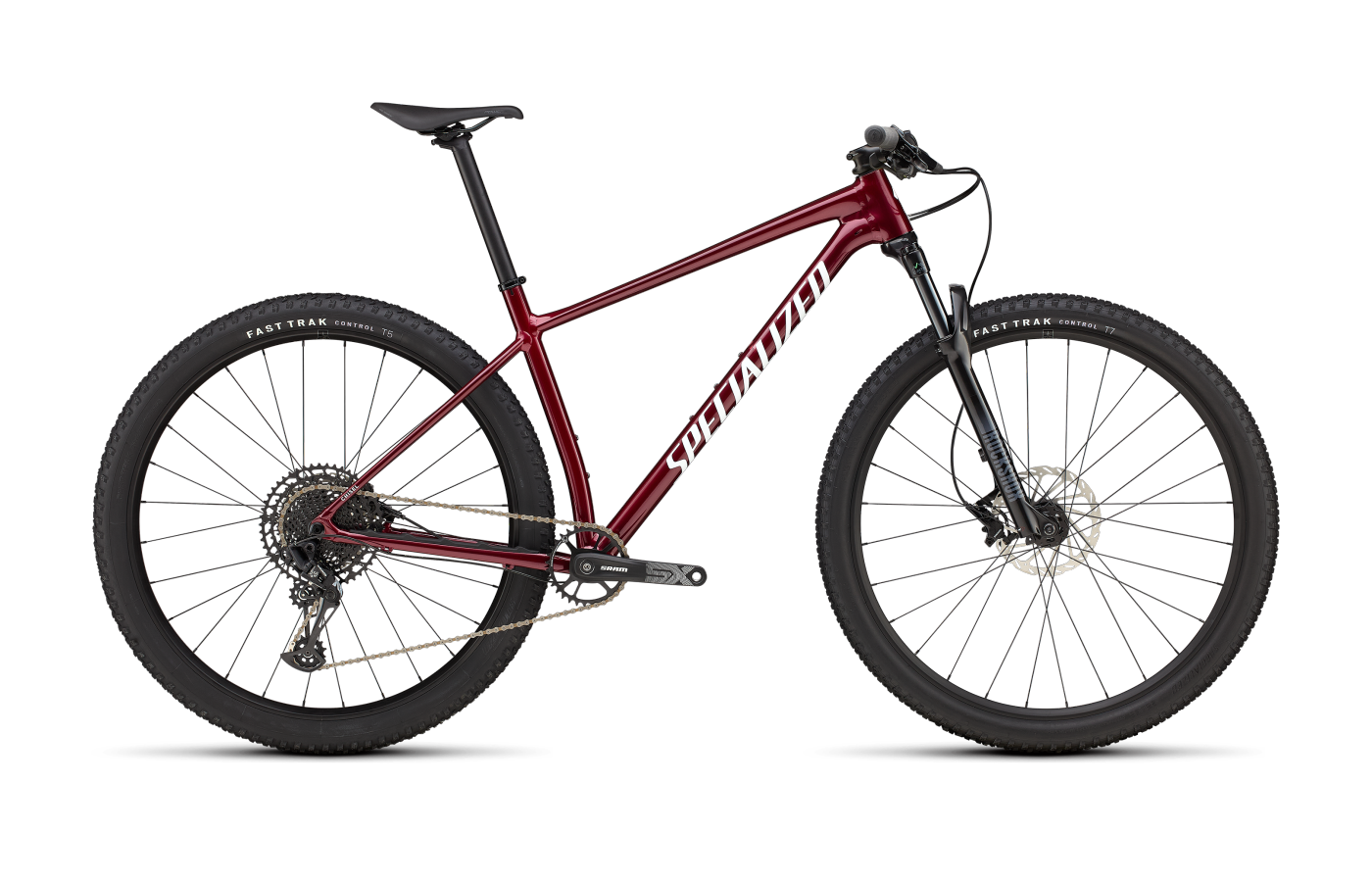
Chisel
If you love the Rockhopper's XC speed but want a thoroughly modern frame — tapered head tube, Boost thru-axles, lighter weight — the Specialized Chisel is the logical step up without changing the platform's character.
Compare →Roscoe
If the Marlin's 100 mm of travel feels limiting and you actually want to ride black trails, the Trek Roscoe runs 140 mm of travel and plus-sized tires for genuine trail-bike capability.
Compare →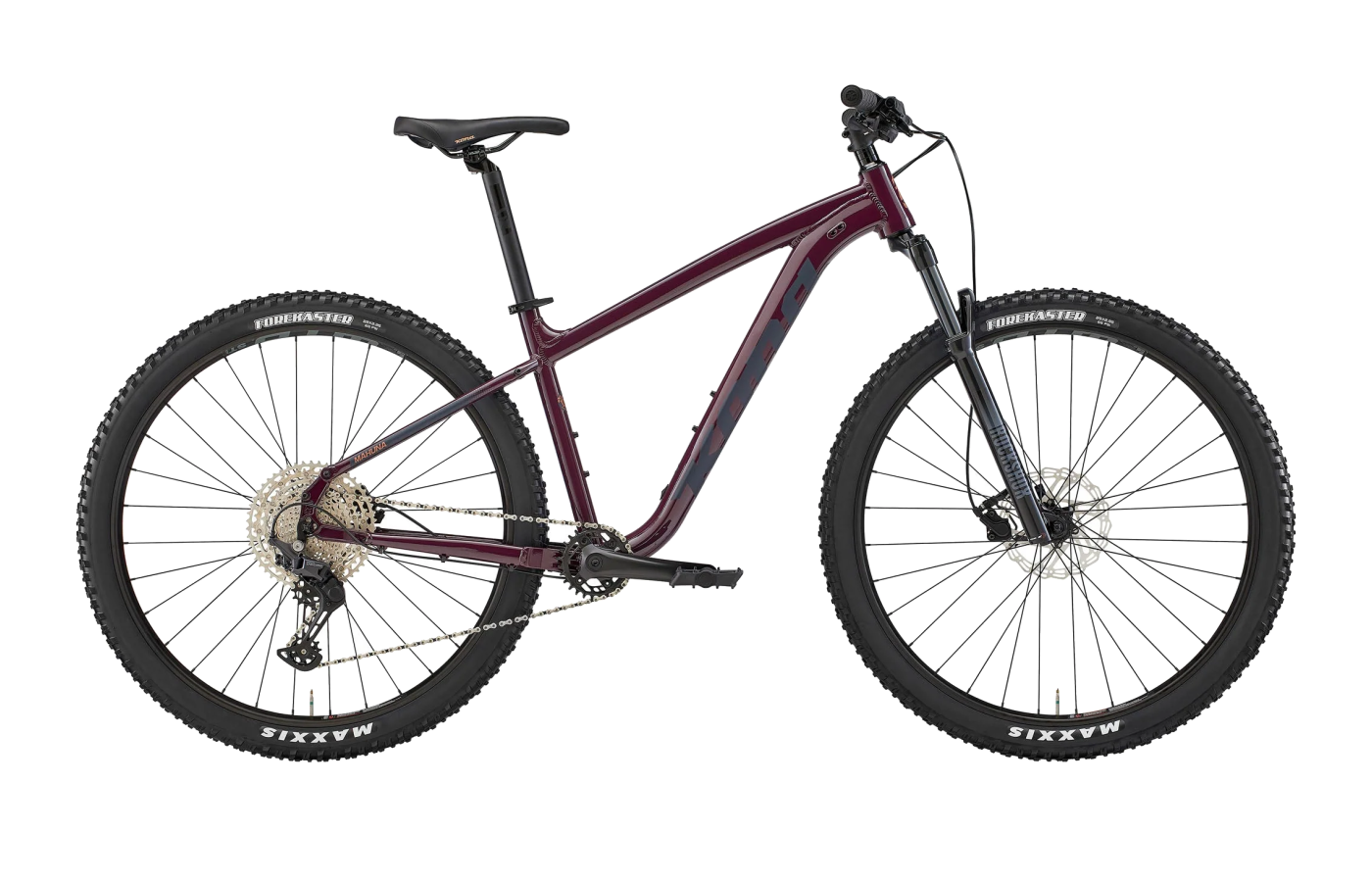
Mahuna
The Kona Mahuna splits the difference — a 29er with a more robust component package than either bike here, sitting comfortably between the XC-focused Rockhopper and the trail-leaning Marlin.
Compare →