Roubaix
vsDomane
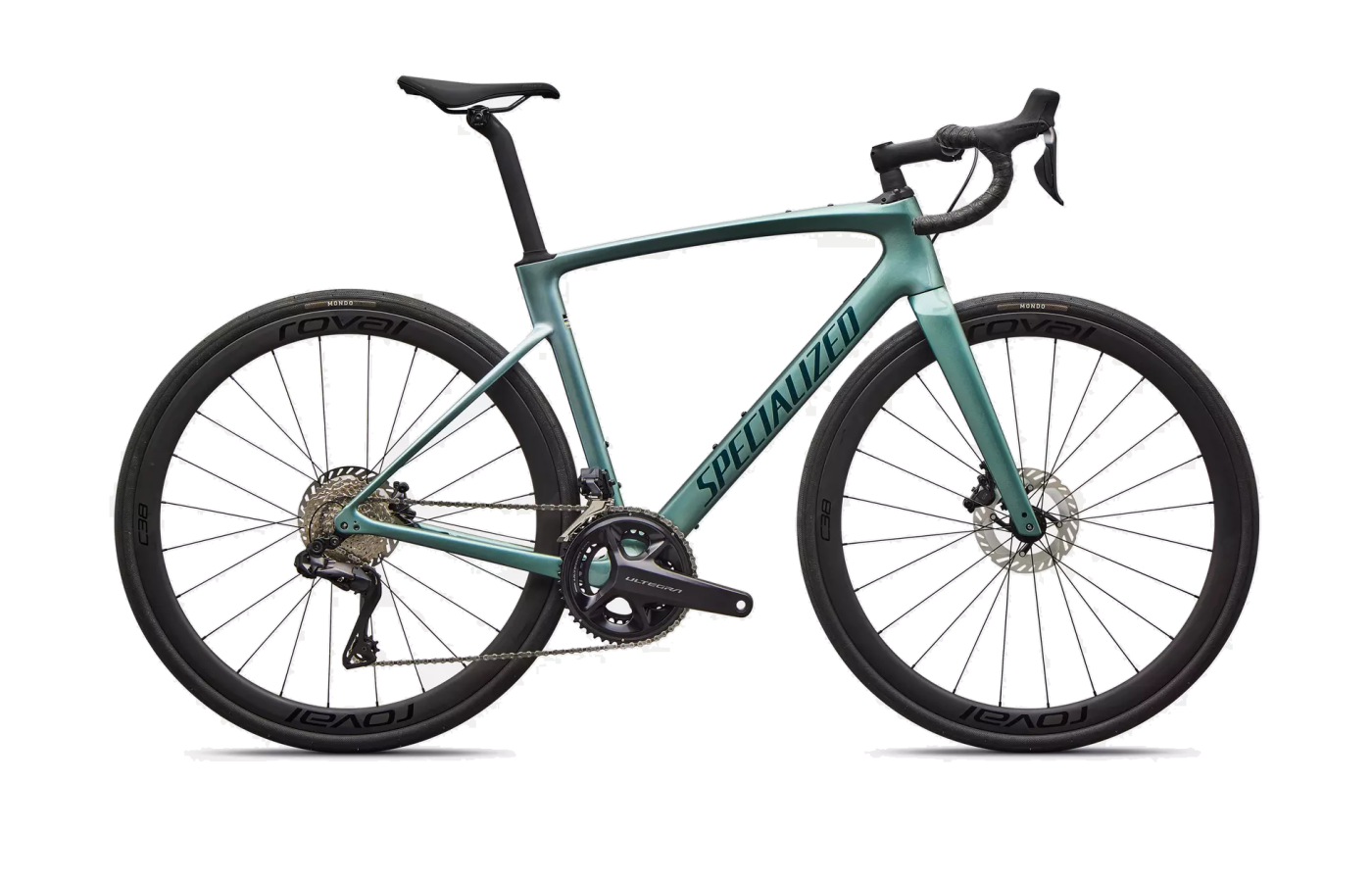
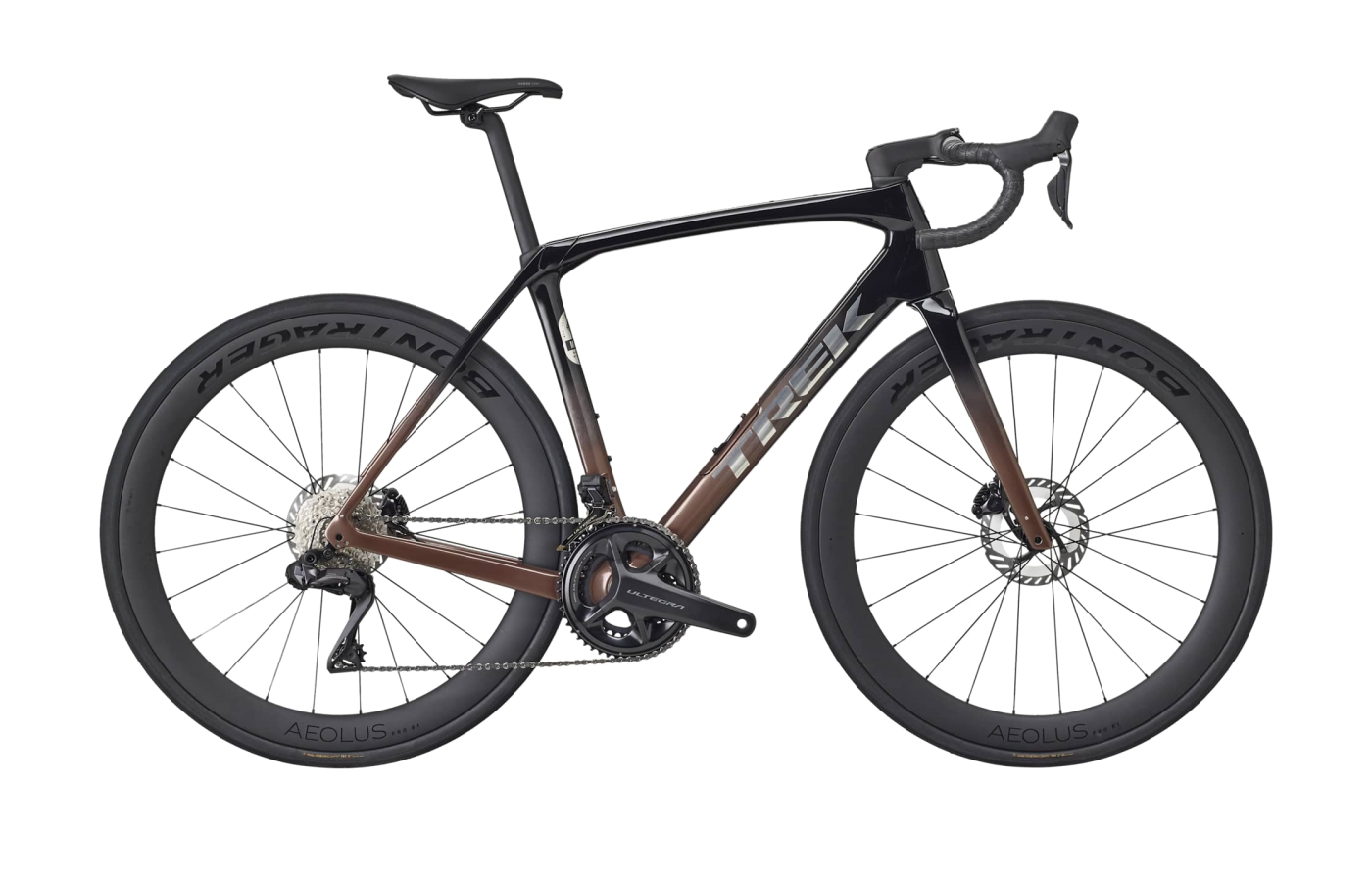
Two endurance icons, two compliance theories.
The Specialized Roubaix puts a 20 mm spring under your stem. The Trek Domane flexes the seat tube and lets the tires do the rest.
Roubaix
- Best-in-class front-end compliance — 20 mm of Future Shock travel does what tires alone can't on broken pavement.
- Simpler long-term ownership — external cable routing, threaded BSA BB, no headset-bearing teardown for hose bleeds.
- Up to 40 mm measured tire clearance — wide enough to genuinely double as a light-gravel bike.
- Adds ~200 g for the Future Shock hardware vs a rigid frame.
- Future Shock height limits how low you can get the bar — not for riders chasing a race-low position.
Domane
- Lighter, sportier frame — Gen 4 shed roughly 300 g and feels noticeably snappier than Gen 3.
- Internal downtube storage — a genuinely excellent feature that lets you ditch the saddle bag.
- Wider price ladder — starts at $1,199 in alloy and scales to $12,499, vs $2,799 to start on the Specialized Roubaix.
- Fully internal cable routing through the headset makes bearing service costly and labor-intensive.
- Recurring seatpost-creak/slip issue on early Gen 4 frames — multiple wedge revisions later, still flagged in long-term reviews.
Editor’s analysis
This isn't really a fight about which bike is faster — it's a fight about how you'd like to be insulated from the road.
The Specialized Roubaix and the Trek Domane sit in the same endurance bracket and chase the same buyer: someone who wants a fast road bike that still works on chip-seal, century rides, and the occasional gravel shortcut. Both clear up to 38 mm officially (closer to 40 mm measured on either platform), both come in carbon and alloy, and both span from sub-$3k to $12.5k. On paper they're twins.
Spend ten minutes looking at how they get there, though, and the philosophies split. The Specialized Roubaix uses an active mechanical solution — Future Shock 3.2 (Expert/Comp) or 3.3 (Pro/S-Works) gives you 20 mm of axial travel under the bar, with a Pavé carbon seatpost and dropped clamp doing the work in the rear. The Trek Domane is the opposite school: Gen 4 deleted the front IsoSpeed entirely, kept a non-adjustable rear IsoSpeed decoupler tuned to the previous gen's softest setting, and dropped 300 g in the process. The Trek leans on tires for front compliance; the Specialized doesn't have to.
On the road, the difference shows up as feel. The Specialized Roubaix is the calmer, more isolated ride — Future Shock genuinely smooths potholes and broken tarmac in a way frame flex can't. Reviewers consistently call it "vacuumed to the asphalt" on descents. The Trek Domane is more conventional and a touch sportier post-diet — planted thanks to a 80 mm bottom bracket drop, with a long wheelbase that tracks straight at speed but slows the initial turn-in. Both will let you ride longer than a race bike. The Specialized Roubaix lets you ride rougher.
Where the Trek Domane bites back is integration and practicality. Internal downtube storage is genuinely useful, the Kammtail-shaped tubes are slipperier than the Specialized Roubaix's profile, and Trek's lineup runs all the way down to a $1,199 alloy AL 2 — the Specialized starts at $2,799. The Specialized Roubaix counters with simpler maintenance (external cable routing, threaded BSA BB, no headset-bearing teardown for hose work) and the only mechanical front suspension in the segment. Pick your tradeoff: practicality or plushness.
Where the builds differ.
Comparing our editor's-pick builds side-by-side. Winners highlighted row-by-row — lower price and weight, and the better-spec component, each mark a point.
Build variants & pricing
Both lineups span roughly $10k. The Specialized starts at $2,799 in carbon; the Trek starts $1,600 lower in alloy.
Prices are current US MSRP. The Specialized Roubaix is carbon-only — there is no alloy build. If your budget is below $2,500, the Trek Domane AL series (from $1,199) is the only option in this comparison.
How they fit, how they steer.
The Specialized Roubaix size 54 sits 39 mm taller (585 vs 546 mm stack) and 13 mm longer in reach (381 vs 368 mm) than the Trek Domane size 50 — even before you add the Future Shock's height to the front end. The Trek's head angle is 1.2 degrees slacker (71.1 vs 72.3) but trail is essentially identical at ~60 mm.
Which size should I buy?
Sizing labels differ across brands — the Trek runs 47–62, the Specialized 44–61. Both have wide ranges and overlap in the middle, but the Specialized goes one size smaller on the bottom end.
→These are starting points. Flexibility, riding style, and preferred position all shift the answer — if you’re between sizes, a professional fit beats a chart.
What the magazines said.
Published reviews from trusted cycling outlets. Click through for the full write-up.
Which one should you buy?
If your roads are rough and you want the smoothest endurance bike money buys, get the Specialized Roubaix. If you want a sportier all-rounder with internal storage and a true entry-level price, get the Trek Domane.
Roubaix
If your weekly loops include cracked tarmac, fire-road shortcuts, or genuinely broken pavement, the Future Shock is a tangible advantage that frame flex cannot replicate. Pick this if you'd trade 200 g and some integration polish for the most isolated ride in the endurance category.
Domane
If you want a sportier endurance bike that still soaks up long days, the lighter Gen 4 frame and 80 mm bottom bracket drop make it the more conventional, more integrated choice. Internal storage and a build ladder that starts at $1,199 are genuine differentiators.
Questions buyers actually ask.
Short answers to the things we get emailed about most often.
01Which is more comfortable on rough roads?
The Specialized Roubaix, decisively, on the worst surfaces. The Future Shock provides 20 mm of axial travel under the bar — a mechanical solution no amount of seatpost flex or tire volume can match for absorbing square-edged hits like potholes or expansion joints. Reviewers consistently describe it as "game-changing" on broken pavement.
On smoother chip-seal and high-frequency buzz, the gap closes considerably. The Trek Domane's rear IsoSpeed decoupler combined with 32–38 mm tubeless tires handles vibration well — many reviewers note that modern wide tires alone now do most of what the old front IsoSpeed used to do.
02Which climbs better?
The Trek Domane is the lighter platform — Gen 4 shed roughly 300 g over Gen 3, and the SLR 7 hits 7.99 kg in size 56 vs 8.17 kg for the comparable Specialized Roubaix SL8 Expert. That's roughly 200 g, or about 0.3% of total system weight for a 70 kg rider — measurable but not dramatic.
More importantly, the Specialized Roubaix's Future Shock can exhibit some bob for heavier riders out of the saddle on the softer spring settings (Cycling Weekly's 90+ kg reviewer flagged this; lighter reviewers reported negligible bob). The S-Works/Pro Future Shock 3.3 has an on-the-fly damping dial that mitigates this; the Expert/Comp's Future Shock 3.2 needs a spring or preload swap at home.
03What's the maximum tire clearance?
Specialized Roubaix: 38 mm officially (40 mm measured by reviewers), 35 mm with full mudguards.
Trek Domane: 38 mm officially (also measured up to 40–41 mm by reviewers).
In practice they're a wash. Both are wide enough to genuinely run as light-gravel bikes if you swap to knobbier rubber. Neither is a substitute for a dedicated gravel bike on rough singletrack.
04Does the Trek Domane really have a seatpost-creaking issue?
It's been a recurring complaint on Gen 4. The IsoSpeed wedge clamping the seatpost has gone through multiple revisions (Trek released Revision 2 and Revision 4 wedges) to address creaking and slipping reported by long-term reviewers and owners — particularly riders over 80 kg. The fix usually involves the updated wedge plus a generous application of carbon paste.
If you're buying a new Domane today, the bike should ship with the latest wedge. If you're buying used, ask about the wedge revision and check the post for slip marks before you commit.
05How serviceable is each bike's cable routing?
The Specialized Roubaix uses largely external cable routing — a deliberate consequence of the Future Shock design. Hose bleeds, lever swaps, and stem changes are straightforward. Reviewers cite this as a long-term ownership win.
The Trek Domane runs cables fully internally through the headset bearings — sleek, but the upper bearing is exposed to road spray and sweat with no secondary lip seals. Replacing those bearings means disconnecting hydraulic lines and re-taping the bar, which adds shop labor cost. If you ride year-round in wet conditions, factor this in.
06Is internal storage actually worth it?
Trek's downtube storage compartment on every carbon Domane is widely praised — it holds a tube, CO2, tire levers, and a small multitool with room left over. For long unsupported rides it lets you ditch the saddle bag and cleans up the bike's lines.
The Specialized Roubaix doesn't offer internal storage. It does add fender mounts, a top tube bag mount, and a third bottle cage mount in Gen 4 (SL8) — useful for bikepacking and four-season riding, but you're still carrying tools externally.
07Which has the more upright fit?
Both bikes run tall stacks, but the Specialized Roubaix is taller in absolute terms — 585 mm stack on a size 54 vs 546 mm on a size 50 Trek (the fit-equivalent Trek size for a 5'8" rider). The Specialized also adds Future Shock height and the Specialized Hover bar's 15 mm of additional rise.
If you're coming from a race bike and want the most upright endurance fit possible, the Specialized Roubaix is the bike. If you want endurance comfort but still want some saddle-to-bar drop available, the Trek Domane gives you more room to come down.
08Can either bike take fenders for year-round riding?
Yes — both have full fender mounts and rear rack mounts. The Specialized Roubaix SL8 retains 35 mm of tire clearance with fenders fitted; the Trek Domane is similar in practice. Both make solid year-round commuter or winter-training platforms, particularly with the wider tire clearance compared to most race bikes.
Similar bikes
If your priorities don’t map cleanly onto either of these, one of these adjacent bikes probably fits better.
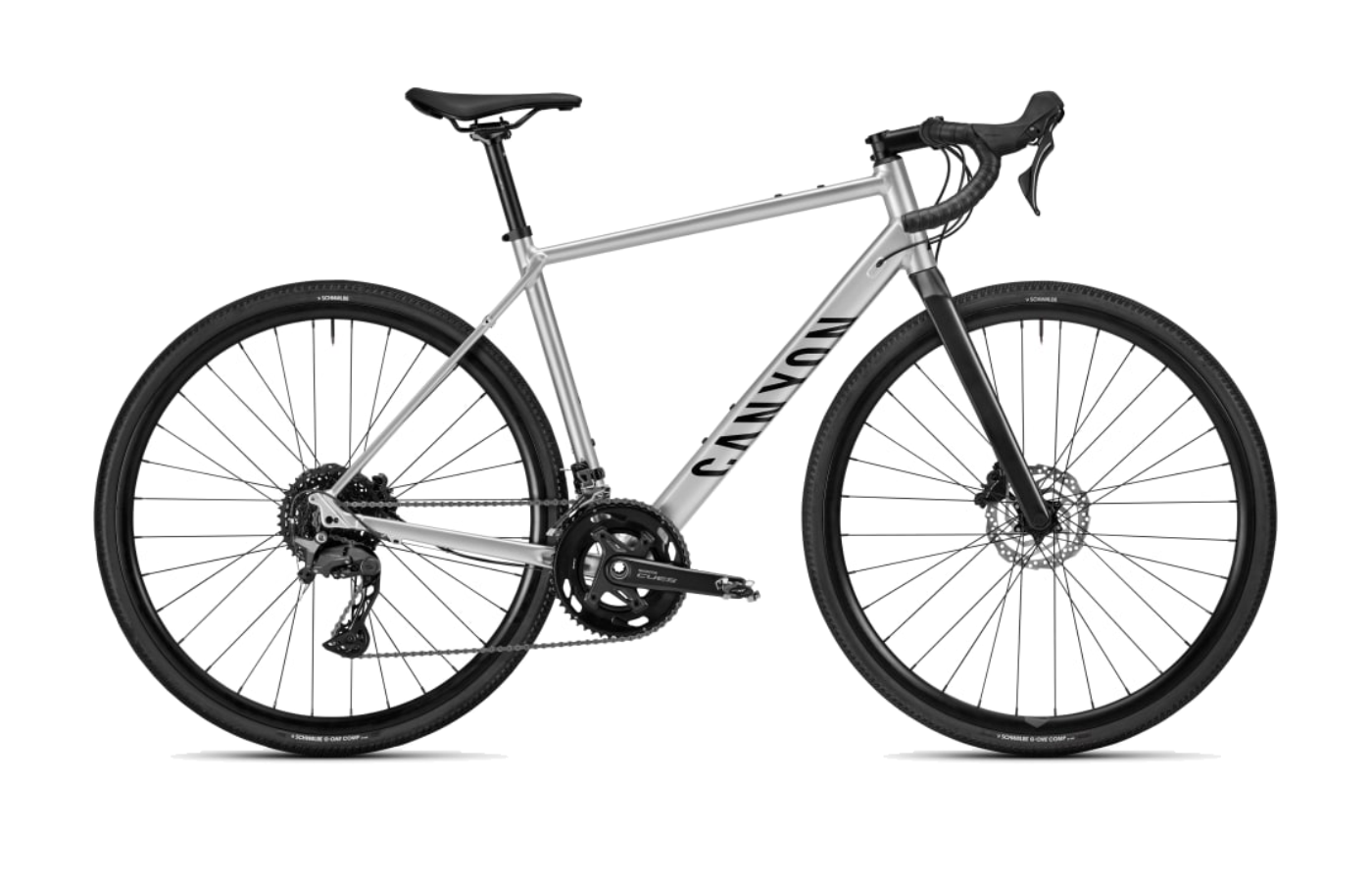
Endurace
The value play — Canyon's direct-to-consumer pricing typically gets you a tier-up groupset for the money, with no mechanical suspension hardware to add weight. The catch is no local dealer for fit or warranty walk-ins.
Compare →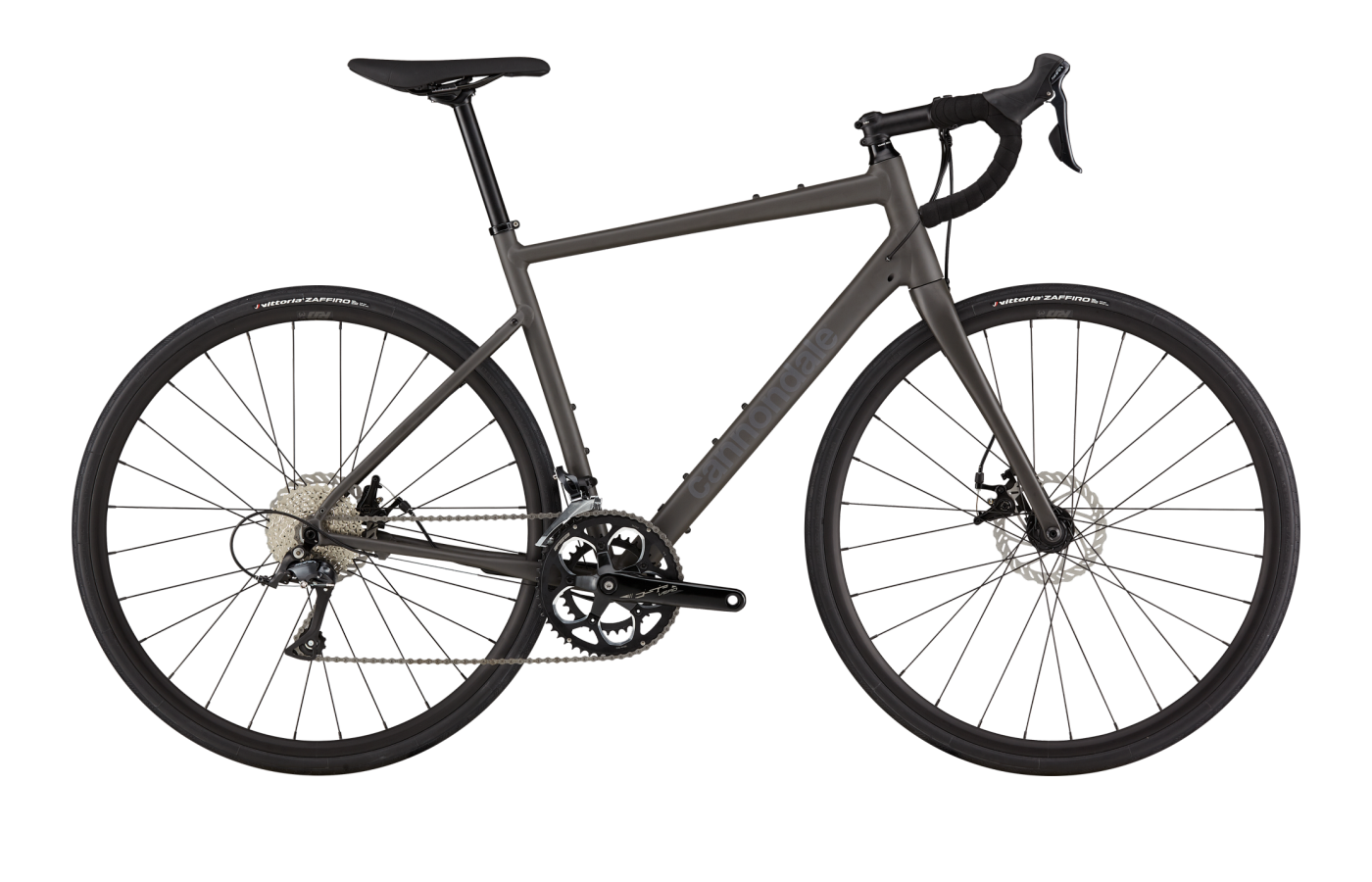
Synapse
Cannondale's endurance flagship leans further into safety integration with optional SmartSense lighting and radar — a different answer to the long-solo-ride problem than mechanical compliance.
Compare →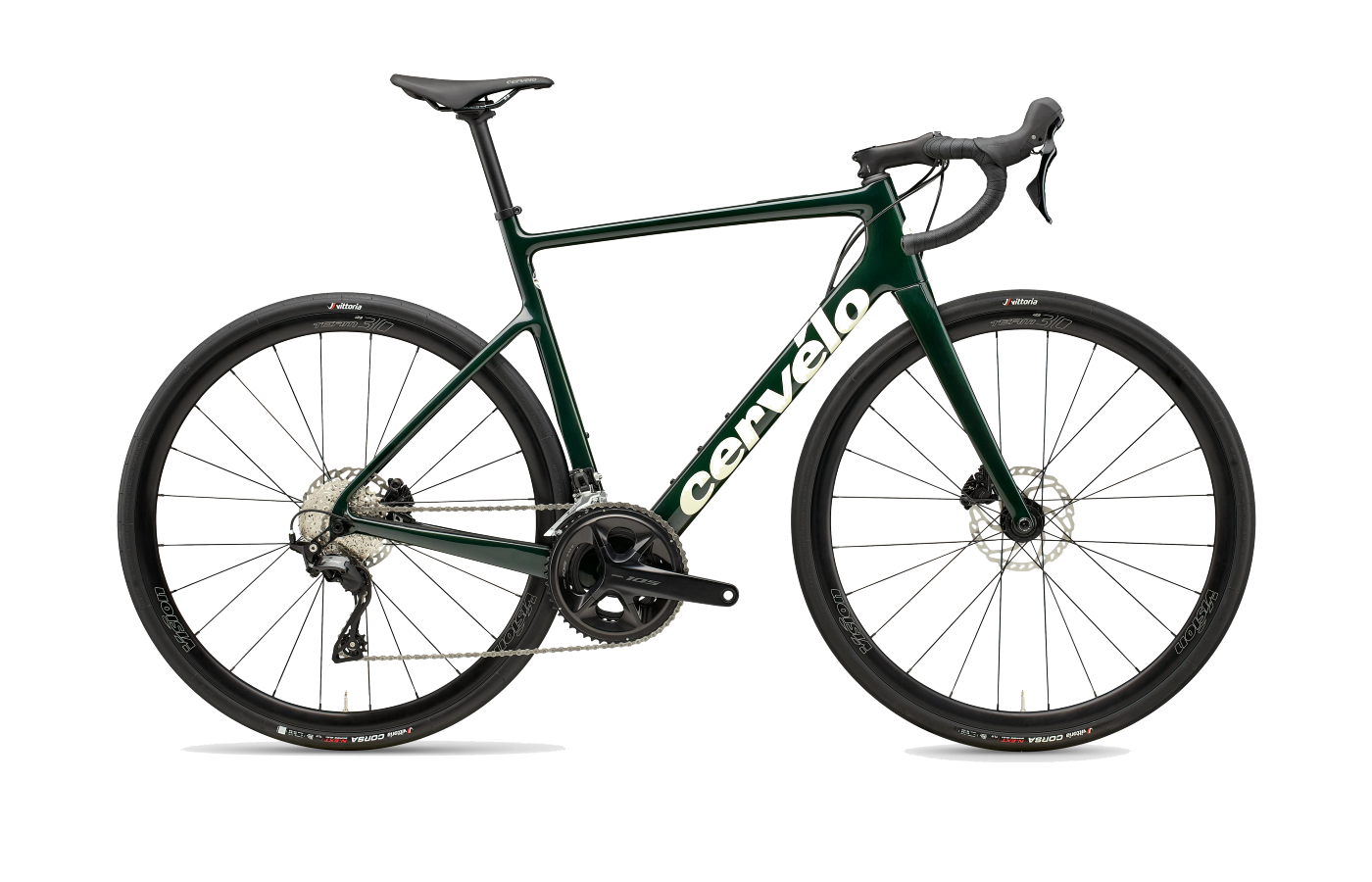
Caledonia
Cervelo's take is sharper-handling and more road-race-flavored than either of these two — better if you want endurance comfort but most of your riding is still fast group rides on chip-seal, not light gravel.
Compare →